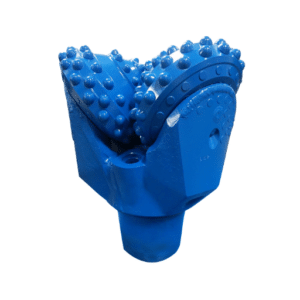
A crew lead named Marco watched his bullet teeth core barrel burn through a full set of B47K19H teeth in nine meters of granite. The bore log said weathered rock to 22 meters, then intact granite below. His crew crossed the contact on a Tuesday and kept feeding teeth for six more days before anyone priced a roller bit barrel. Six sets of teeth, four nights of welding, and one expensive lesson in core barrel teeth selection.
The frustrating part is that everyone on that site knew roller beats bullet in hard granite. The comparison was never the problem. The expensive decisions were spec-level: which tooth model, how many teeth on the ring, which holders, and when to switch tools. Those decisions are where coring budgets live, and almost nobody writes about them.
This guide works through the spec side of core barrel teeth selection in the order a project demands it. You will decode tooth model numbers, count teeth for your barrel diameter, and choose between holders and weld-on blocks. Then you will learn to read wear patterns on the ring, set switch signals before the project starts, and close with a worked cost-per-meter coring budget. For a broader look at selection logic across types of rotary drilling bits, see our rotary drilling bit selection guide.
In short:
- Match the tool type to the rock: bullet teeth to roughly 100 MPa, roller bits above it, cross cutters for jointed rock and core breaking.
- Decode the model number and count the teeth for your diameter before you order.
- Treat holders and weld-on blocks as part of the system, and read wear patterns on the ring.
- Set switch thresholds before mobilization, and budget teeth by cost per meter.
If your bore log and barrel diameter are already in hand, we can shortcut the spec work. Request a matched core barrel teeth package with models, counts, and spares sized to your formation.
What Core Barrel Teeth Do

Core barrel teeth are replaceable cutting tools mounted on the cutting ring at the base of a core barrel. The ring cuts an annular groove into the rock, the freed core rises into the barrel, and the teeth absorb the impact, abrasion, and crowd force of the cut.
Core barrel cutting tools fall into three families by cutting action. Bullet teeth attack with a concentrated carbide point, roller bits crush rock on rotating cones, and cross cutters shear with flat, intersecting edges.
Our bullet, roller, and cross cutter comparison covers the three core barrel teeth types in detail, so this guide stays at the spec level: which model, how many, and what it costs.
Match the Cutting Tool to the Rock
How to choose core barrel teeth starts with the rock report, not the tool catalog. Pull the uniaxial compressive strength (UCS) and rock quality designation (RQD) for every unit, then map the tool to the layer.
A bullet teeth core barrel suits medium rock up to roughly 100 MPa, including weathered formations, boulders, cobbles, and reinforced concrete. A roller bit core barrel takes homogeneous hard rock; supplier specifications rate roller barrels across 80 to 350 MPa with penetration of 300 to 800 mm per hour. A cross cutter core barrel handles jointed, fractured rock under 100 MPa and doubles as the core-breaking tool when a long core jams inside the barrel.
For the full 50/100 MPa ground-matching framework and barrel type taxonomy, see our core barrel selection guide for foundation drilling. If you are still deciding between coring and augering entirely, our core barrels versus auger bits in rock comparison covers that choice. This article picks up where both end: the cutting ring itself.
Decoding Core Barrel Teeth Model Numbers
Model decoding is the first spec step in core barrel teeth selection. Tooth model numbers look arbitrary, but they encode the size class and duty grade of the tooth.
In the B47K family, the trailing number tracks the size class of the shank and carbide tip, and the H suffix marks a heavy duty build. A B47K22H core barrel tooth is larger and heavier than a B47K17H, built for harder duty. Exact conventions vary by manufacturer, so confirm shank diameter and holder fit before ordering.
| Model | Type | Duty | Typical Ground | Field Notes |
|---|---|---|---|---|
| C30 / C31HD | Bullet, round shank | Standard | Soft to medium rock, concrete | Common light-duty starter |
| 3050 / 3060 / 3065 | Bullet, round shank | Standard to medium | Weathered rock, gravel | Ascending size steps |
| B47K17H | Bullet | Heavy | Mixed ground, weathered rock | Light end of the B47K ladder |
| B47K19H / 19.5H | Bullet | Heavy | Gravel, weathered rock | The workhorse class |
| B47K20H | Bullet | Extra heavy | Hard weathered rock, cobbles | Step up for impact |
| B47K22H | Bullet | Extra heavy | Hard rock contacts, boulders | Top of the ladder |
| AS weld-on blocks | Fixed cutters | Heavy | Long runs to 100 MPa | Welded, no holder needed |
Suppliers list B85 and B43H shank classes alongside these teeth, because the shank class decides the holder. A holder bored for one class will not grip another securely, and a loose tooth wears the pocket oval within hours. For deeper coverage of bullet tooth sizes and holder options, see our guide to bullet teeth for foundation drilling.
How Many Teeth: Core Barrel Teeth Selection by Diameter

Tooth count is the least discussed decision in core barrel teeth selection, and it sets how crowd force divides across the ring. Supplier specifications give the working ranges. JZTG’s bullet teeth barrels scale from 6 teeth at DN600 to 42 teeth at DN3000, with shell thickness growing from 16 to 25 mm of Q355B steel as diameter rises.
| Barrel Diameter | Bullet Teeth Qty | Shell Thickness (mm) |
|---|---|---|
| DN600 | 6 | 16 |
| DN1000 | 12 | 20 |
| DN1500 | 18 | 20 |
| DN2000 | 27 | 25 |
| DN2500 | 33 | 25 |
| DN3000 | 42 | 25 |
DRILLNOVA’s tables tell the same story from the other side: 6 to 33 bullet teeth across 600 to 2,500 mm, and 4 to 20 roller inserts on the roller bit line. The logic is constant. Too few teeth overload each tip and chip the carbide. Too many divide the available crowd force until no tooth bites, and the ring polishes rock instead of cutting it.
Geometry decides how those teeth share the work. A staggered arrangement keeps at least one tooth engaged at every rotation angle, which smooths torque and reduces chatter. A double-cambered cutting surface helps the barrel track straight and move chips off the face. The outer teeth travel fastest and cut the perimeter, so they wear first and deserve the heavier-duty grade on the ring. For detailed maintenance guidance, see our Rotary Drilling Bit Maintenance and Replacement Guide.
Holders and Weld-On Blocks in Core Barrel Teeth Selection
A replaceable teeth core barrel runs round shank chisels in welded holders. The holder system makes changeout fast: knock out the worn tooth, seat the new one, and the ring is back to spec in minutes per position. That speed is the main reason bullet teeth barrels dominate medium rock work.
Weld-on teeth and AS weld-on blocks take the other trade. They cost less per cutting edge and hold alignment through long coring runs, but every replacement needs cutting and welding labor in the yard. A long, steady run in uniform rock justifies weld-on blocks. A mixed profile with frequent changeouts favors holders.
Holders wear on their own schedule, and a worn holder destroys new teeth. The bore that grips the shank opens up under vibration until the pocket runs oval, and every tooth you install in it chatters and wears flat on one side. Use the field rule: seat a new tooth and try to rock it by hand. Visible movement means the holder needs replacement, not the tooth. Check the Kelly box and shell welds at the same inspection, since the 130, 150, and 200 mm Kelly box connections take the same punishment as the ring. If you need to understand the types of rotary drilling bits, please read our article about Types of Rotary Drilling Bits.
Reading Wear Patterns on the Cutting Ring

The ring tells you whether your core barrel teeth selection is working if you read it at every pull. Four patterns cover most of what goes wrong.
Even tip wear across the ring means the teeth match the ground. Keep the setup and the inspection rhythm.
One-sided or outer-edge wear points to alignment, not metallurgy. A maintenance lead named Lena kept finding outer teeth worn to one side on a metro station job. Her crew checked the mast and found a persistent tilt that loaded one side of the ring. A mast correction cut their tooth consumption roughly in half, with no change in tooth model.
Chipped tips mean the duty grade is too light for the abrasiveness. Tooth bodies run 42CrMo alloy steel, and the tungsten carbide grade trades toughness against hardness: YG11C tolerates more impact, while harder grades wear slower but chip more easily. Step up one grade when quartz content rises.
Polished tips with collapsing penetration mean the teeth are rubbing, not cutting. The usual causes are too many teeth on the ring or carbide worn past its useful life. Pull the barrel and count before you blame the steel.
If you need a detailed comparison, please read our article on Roller Bit vs Bullet Tooth.
Switch Signals: When to Change Tools Mid-Project
The most expensive coring habit is feeding bullet teeth into ground that has outgrown them, as Marco learned. Disciplined core barrel teeth selection sets the switch signals before mobilization, when the decision is cheap.
The bullet-to-roller signal is penetration collapse plus accelerating changeouts past a hard contact. Field reports put the practical penetration rate near 1.5 meters per hour. When penetration falls well below the supplier’s rated band and stays there, the roller bit barrel pays for itself.
Field comparisons credit roller bits with 5 to 7 meters per hour in hard granite against 2 to 3 for bullet teeth. Roller bits demand roughly 20 to 40 percent more torque, so confirm the rig can pull it before you switch.
The cross cutter signal is core jamming inside the barrel. When a long core wedges inside the barrel and will not lift, a cross cutter pass breaks it into removable pieces. Supplier case studies report core recovery improving from 60 to 85 percent after switching to cross cutters with a double tube barrel in broken ground. An internal wedge plate, offered on bullet teeth barrels, solves milder extraction problems without a second tool. To make the best choice for you, please read our article on rotary drilling bit selection.
Cost Modeling: A Coring Teeth Budget for One Barrel
Core barrel teeth selection closes with arithmetic, because the cheapest tooth on the shelf is rarely the cheapest meter in the hole. Fold tooth cost, changeout downtime, and rig rate into one number:
Cost per meter = (teeth cost + rig hourly rate x changeout hours) / meters drilled per set
A contractor named Suresh priced a 12-pile bridge foundation with a granite contact at mid-depth, about 400 meters of coring. His under-spec option was running B47K19H bullet teeth through the granite at roughly 35 meters per set. His matched option was a roller bit barrel for the granite section at a far higher tool cost, but only two bit changes for the whole scope.
Run the math at a rig and crew cost of $400 per hour and one hour per changeout. The bullet teeth need about 12 changeouts, roughly 12 rig hours of downtime, plus 12 sets of teeth. The roller bit barrel needs about 2 changes, roughly 2 rig hours, plus the barrel and inserts. Even before tooth invoices, the matched option saves about 10 rig hours, and rig hours dominate the arithmetic. Treat these as field example numbers; your ground, rig rate, and tooth life set the real margin.
Spares follow the same logic. Keep one full changeout set per barrel on site, plus holders, clips, and weld-on blocks for the ring. If you want this budget worked on your own project, send the bore log, barrel diameter, and rig model. Our team will return a comparison of under-spec, matched, and heavy-duty options. Get a matched coring teeth budget before you commit to the order.
Core Barrel Teeth Selection Checklist

Complete these eight core barrel teeth selection checks before you order for any coring scope:
- Confirm the rock data. UCS and RQD for every unit, plus contact depths.
- Pick the tool type. Bullet to roughly 100 MPa, roller above it, cross cutter for jointed rock and core breaking.
- Decode the model. Match the size class and duty grade to the hardest layer, not the average.
- Count the teeth. Use the diameter tables; expect 6 teeth at DN600 rising to 42 at DN3000.
- Choose holders or weld-on. Holders for mixed profiles, weld-on blocks for long uniform runs.
- Set the switch thresholds. Penetration floor and changeout frequency are written into the method statement.
- Stock the spares. One full changeout set per barrel, plus holders, clips, and blocks.
- Schedule ring inspections. Teeth and wear patterns at every pull, holders, and Kelly box on a fixed cycle.
If the bucket fleet needs the same discipline, our drilling bucket teeth selection guide applies the same system logic to buckets, and the principles carry straight across.
FAQ
What are core barrel teeth?
Core barrel teeth are replaceable cutting tools mounted on the cutting ring at the base of a core barrel. Bullet teeth fracture rock with a carbide point, roller bits crush it on rotating cones, and cross cutters shear it with flat edges. The ring cuts an annular groove so the core can rise into the barrel.
How do I choose core barrel teeth for hard rock?
Read the UCS and RQD from the borehole log first. Use bullet teeth up to roughly 100 MPa and roller bits above it. Decode the model number for the right duty grade, count teeth by barrel diameter, and set a penetration floor as your switch signal before mobilization.
When should I use a roller bit core barrel instead of bullet teeth?
Switch when the ground exceeds about 100 MPa and stays homogeneous, or when penetration collapses, and changeouts accelerate past a hard contact. Field reports place the practical switch line at 1.5 meters per hour. Confirm your rig can supply the extra 20 to 40 percent torque roller bits demand.
What is a cross cutter core barrel used for?
A cross cutter core barrel handles jointed and fractured rock under 100 MPa, where flat intersecting edges shear better than points. Its second job is core breaking: when a long core jams inside the barrel, a cross cutter pass breaks it into removable pieces and restores progress.
How many teeth does a core barrel need?
Count scales with diameter and ground strength. Supplier specifications run from 6 bullet teeth at DN600 to 42 at DN3000, and 4 to 20 roller inserts across the same range. Too few teeth overload each tip; too many divide the crowd force until the ring polishes instead of cutting.
How often should core barrel teeth be replaced?
Inspect at every pull and replace teeth when tips chip, wear unevenly, or penetration drops at constant parameters. Field-reported tooth life runs from tens of meters in quartz-rich sandstone to well over a hundred in limestone; our core barrel guide details the ranges by formation. Budget by cost per meter, not calendar days.
Conclusion
Core barrel teeth selection is a spec decision in a fixed order. Match the tool type to the rock, decode the model for the duty grade, and count the teeth for your diameter. Choose holders or weld-on blocks for the profile, read the wear at every pull, and switch tools on a written threshold. Budget the whole ring by cost per meter, never by unit price.
Marco’s project told the ending. The roller bit barrel went down in week seven, cut the remaining granite at a steady rate, and his teeth invoice for the month fell by half. The granite had not changed. The specification had.
If you want teeth, holders, and spares sized to your barrel and formation, send us your bore log, barrel diameter, and rig model. The engineering team at Changsha Mingyi Machinery Equipment Co., Ltd. will return a matched core barrel teeth selection with a cost-per-meter budget for your project.