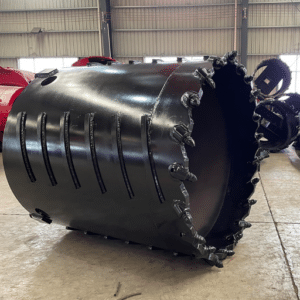
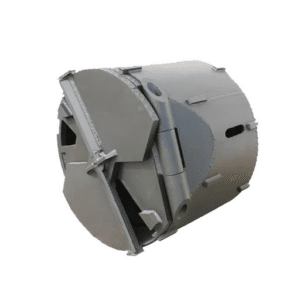
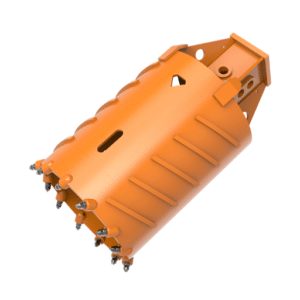
A drilling contractor in Guangxi spent three weeks replacing bullet teeth every two days on a core barrel cutting through fractured granite. The teeth were sharp, but they chipped against the quartz-rich rock. After switching to cross cutters with stronger carbide edges, tooth life doubled and the crew finished the boreholes on schedule.
The teeth on a core barrel are the contact point between your rig and the ground. Their shape, material, and cutting action determine how fast you drill, how often you stop to replace wear parts, and how much each meter costs. Yet many contractors select core barrel teeth based on price or habit rather than ground conditions.
This guide compares the three most common types of core barrel teeth: bullet teeth, roller bits, and cross cutters. You will learn how each one works, where it performs best, and how to choose the right cutting tool for your next project.
Need more information about the core barrel? Please check out our article about Core Barrel for Foundation Drilling.
What Are Core Barrel Teeth?
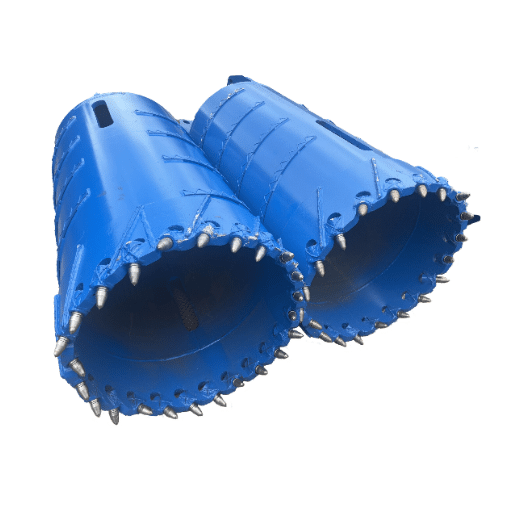
Core barrel teeth are the cutting elements mounted on the bottom or face of a core barrel. They break, grind, or fracture the rock so the barrel can advance into the formation. The teeth attach to a cutting head or core bit and are usually replaceable when they wear down.
Most core barrel teeth use a steel body with a tungsten carbide insert or tip. Carbide provides hardness and wear resistance, while the steel body absorbs impact and supports the insert. The geometry of the tooth controls how it engages the rock, how the cuttings form, and how quickly heat and stress build up at the cutting surface.
Because the teeth do the actual cutting, their condition directly affects penetration rate, vibration, fuel consumption, and the load on the rig. Worn or incorrectly matched teeth turn a productive borehole into a slow, expensive operation.
Bullet Teeth for Core Barrels
Bullet teeth are conical cutting tools with a sharp tungsten carbide tip. Their pointed shape concentrates force on a small area of rock, which makes them effective at initiating fractures and penetrating medium-hard formations.
Design and Construction
A typical bullet tooth has a rounded or parabolic carbide tip mounted on a cylindrical steel shank. The tip angle, carbide grade, and shank length vary depending on the application. Some designs include a retainer or sleeve for easy replacement in the cutting head.
Best Ground Conditions
Bullet teeth perform well in:
- Medium-hard rock such as limestone and sandstone
- Mixed soil-rock layers
- Weathered or fractured formations
- Clay-bound aggregates
They are often used as general-purpose teeth because they balance penetration speed with reasonable service life in variable ground.
Advantages
- High penetration rate in the right conditions
- Lower cost per tooth than roller bits or premium cross cutters
- Good performance in mixed formations
- Widely available and easy to replace
Limitations
- Tip can chip in very hard or abrasive rock
- Shorter life than roller bits in hard formations
- Less effective in intact, high-strength rock
- Requires frequent inspection in abrasive conditions
Roller Bits for Core Barrels
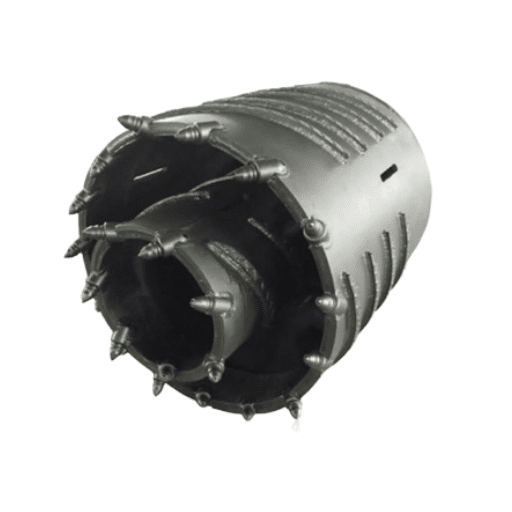
Roller bits use rotating cones with hardened steel or carbide inserts to crush and grind rock. Instead of scraping or fracturing with a fixed point, the roller cones turn as the core barrel rotates, applying continuous pressure across multiple cutting edges.
Design and Construction
Roller bits for core barrels are smaller than the tricone bits used in oil and gas drilling. They typically contain two or three cones mounted on bearings, with tungsten carbide inserts arranged in a pattern that matches the target rock type.
Best Ground Conditions
Roller bits excel in:
- Very hard and abrasive rock such as granite and basalt
- Intact formations with high compressive strength
- Deep drilling operations where tooth life is critical
- Conditions where bullet teeth wear too quickly
Advantages
- Long service life in hard rock
- Steady, controlled penetration
- Distributes wear across multiple cutting edges
- Reduces frequency of replacement in demanding formations
Limitations
- Higher initial cost than bullet teeth
- Lower penetration rate in soft or fractured rock
- Requires adequate rig torque and rotation speed
- More complex to inspect and maintain
Cross Cutters for Core Barrels
Cross cutters, sometimes called cross bits or cross-type cutting teeth, have a flat or chisel-shaped cutting edge that extends across the width of the tooth. This geometry produces a shearing or scraping action rather than a concentrated point load.
Design and Construction
Cross cutters feature a steel body with a wide carbide cutting edge. The edge may be straight, slightly curved, or formed with multiple angles to improve chip formation and reduce plugging. They are often arranged in rows around the cutting head of the core barrel.
Best Ground Conditions
Cross cutters work well in:
- Hard, abrasive, and fractured rock
- Formations with frequent changes in hardness
- Conditions where chip evacuation is a challenge
- Applications requiring a balance between penetration and durability
Advantages
- Strong cutting edge resists chipping
- Good performance in abrasive and fractured formations
- Efficient chip formation and removal
- Longer life than bullet teeth in many hard rock conditions
Limitations
- Higher cost than standard bullet teeth
- Can experience uneven wear if not aligned correctly
- Requires careful selection of carbide grade and edge geometry
- May produce larger cuttings that affect flushing
Bullet Teeth vs Roller Bits vs Cross Cutters: Comparison

| Factor | Bullet Teeth | Roller Bits | Cross Cutters |
|---|---|---|---|
| Cutting action | Point impact and fracturing | Crushing and grinding | Shearing and scraping |
| Best rock hardness | Medium-hard | Very hard | Hard to abrasive |
| Penetration rate | High in suitable conditions | Moderate to low | Moderate |
| Service life | Moderate | Long in hard rock | Long in abrasive rock |
| Initial cost | Lower | Higher | Medium-high |
| Maintenance frequency | Moderate | Lower | Moderate |
| Ideal application | General-purpose foundation drilling | Hard, intact rock | Hard, fractured, abrasive rock |
This comparison provides a starting point, but the best choice always depends on the specific ground conditions, rig capacity, and project goals.
How to Choose the Right Core Barrel Teeth
Selecting the right core barrel teeth is not a one-size-fits-all decision. Contractors who match the tooth type to the formation reduce downtime, lower wear-part costs, and improve overall drilling efficiency.
Assess Rock Hardness and Abrasiveness
Start with the geotechnical report. Identify the compressive strength, mineral content, and abrasiveness of the rock. Hard, silica-rich formations require more durable cutting tools than softer carbonate rocks. If you need more detailed information, you can read our article on Rock Core Barrel Drilling.
Consider the Core Barrel Drilling Tool Design
The type of core barrel and cutting head influences which teeth will fit and perform best. Heavy-duty rock core barrels may accommodate larger roller bits or reinforced cross cutters, while smaller barrels may be limited to bullet teeth.
Match Tooth Type to Drilling Objective
If speed is the priority and the rock is medium-hard, bullet teeth are usually the right choice. If the rock is extremely hard and tooth life matters most, roller bits are often better. For abrasive, fractured formations, cross cutters provide a strong middle ground.
Factor in Rig Torque and Rotation Speed
Roller bits require sufficient torque to turn the cones effectively. Bullet teeth and cross cutters rely more on rotation speed and downward pressure. Match the tooth type to the power characteristics of your rig.
Calculate Total Cost of Ownership
The cheapest tooth is not always the most economical. Factor in replacement frequency, labor time, rig downtime, and fuel consumption. A more expensive roller bit or cross cutter may cost less per meter if it lasts significantly longer.
Core Barrel Teeth Maintenance and Replacement
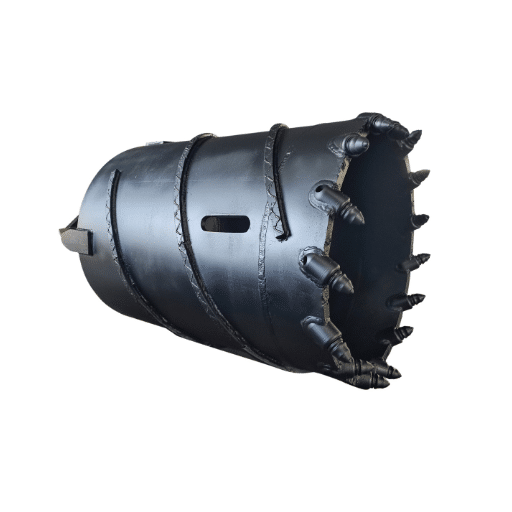
Even the best core barrel teeth wear out. Regular inspection and timely replacement protect both the cutting head and the rig from unnecessary stress.
Inspection Checklist
- Check carbide tips for rounding, chipping, or cracking
- Look for uneven wear patterns across the cutting head
- Inspect retainers and sleeves for looseness
- Verify that teeth are seated firmly in their pockets
- Monitor penetration rates and vibration levels
Common Failure Modes
- Chipping from impact with hard inclusions
- Abrasive wear in silica-rich rock
- Thermal damage from inadequate flushing
- Loosening due to improper installation
- Uneven wear from unbalanced rotation
Replacement Timing
Replace teeth when the carbide tip shows significant rounding or when penetration rates drop noticeably. Waiting too long increases load on the remaining teeth, the cutting head, and the rig itself.
Storage and Handling Tips
- Store replacement teeth in a dry environment
- Protect carbide tips from impact during transport
- Clean seats and retainers before installing new teeth
- Use the correct installation tools to avoid damaging the shank
Conclusion
The right core barrel teeth can transform a difficult drilling job into a predictable, efficient operation. Bullet teeth offer speed and value in medium-hard formations. Roller bits deliver long life in the hardest rock. Cross cutters provide durability and balance in abrasive, fractured conditions.
Remember these key points:
- Match the tooth type to the rock hardness and abrasiveness.
- Consider the full cost of ownership, not just the price per tooth.
- Inspect teeth regularly and replace them before performance drops.
- Align tooth selection with your core barrel drilling tool and rig capacity.
If you need help selecting core barrel teeth, cutting heads, or complete core barrel assemblies for your foundation project, contact Changsha Mingyi Machinery Equipment Co., Ltd. for expert recommendations.