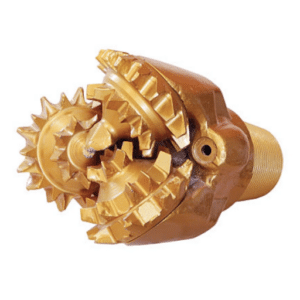
A contractor in Malaysia burned through three sets of flat teeth in one week on a weathered sandstone site. After switching to B47K22H bullet teeth, the same crew finished the project with one set and cut drilling time by 30%. The difference was not the rig. It was the tooth.
Every contractor who has drilled through rock knows the sound. The bit chatters. Progress slows to a crawl. Then the teeth give out completely.
In most cases, the problem isn’t the rig or the operator. It’s the wrong cutting tool for the ground.
This guide explains everything you need to know about bullet teeth. You’ll learn what they are, how they work, which model to choose for your ground conditions, and how to install and maintain them for maximum service life. By the end, you’ll have the data to match the right tooth to your project and stop wasting time on replacements.
Want a shortcut? If you need help selecting bullet teeth for a specific project, contact our engineering team for a free consultation.
What Are Bullet Teeth?

Bullet teeth are conical carbide-tipped cutting tools used in rotary drilling rigs, augers, buckets, and core barrels for foundation construction. Their conical shape concentrates cutting force onto a small contact area, allowing efficient penetration into soil, rock, and mixed formations.
A standard bullet tooth has three main parts:
- Carbide tip: The hardened cutting point that contacts the ground
- Steel body: The alloy shank that absorbs impact and transmits torque
- Retaining system: A circlip, spring washer, or friction fit that locks the tooth into its holder
The name “bullet tooth” comes from the rounded, tapered profile that resembles a bullet. This geometry is not cosmetic. It determines how force transfers into the material, how the tooth rotates under load, and how quickly it wears.
Bullet teeth differ from flat teeth in both shape and function. Flat teeth shear material with a broad edge. Bullet teeth attack the ground at a point. Point-attack penetration works better in hard and abrasive conditions because it concentrates the rig’s torque into a smaller area, producing higher pressure at the contact point.
At Changsha Mingyi, we manufacture bullet teeth for foundation drilling tools compatible with Bauer, Soilmec, Liebherr, and other major rig brands.
How Bullet Teeth Work
Bullet teeth operate on a simple principle: concentrated force drives a hard point into the ground, fracturing material ahead of the tool. Understanding this mechanism helps you diagnose problems and select the right tooth for each formation.
The Cutting Mechanism
When a drilling bucket or auger rotates, each bullet tooth strikes the ground in sequence. The carbide tip makes contact first. Because the tip is small and extremely hard, it generates high localized stress. This stress exceeds the compressive strength of most soils and many rocks, causing the material to fracture or crush.
Once the surface breaks, the body of the tooth widens the fracture. Rotation lifts the broken material into the bucket or up the auger flights. The cycle repeats with each revolution.
Self-Rotation and Self-Sharpening
One key advantage of bullet teeth is self-rotation. Because the tooth sits loosely in its holder, friction from the ground causes it to spin slowly during drilling. This rotation distributes wear evenly around the carbide tip instead of flattening one side.
Even wear maintains a sharp profile longer. A flat tooth stays fixed and develops a single flat spot. A bullet tooth rotates and wears concentrically. This self-sharpening effect extends service life and keeps penetration rates consistent.
Force Concentration
The contact area of a B47K22H bullet tooth is roughly 300 square millimeters. A comparable flat tooth may have 1,200 square millimeters or more. With the same downward force from the rig, the bullet tooth produces roughly four times the pressure at the cutting face. That is why bullet teeth outperform flat teeth in rock and dense formations.
What Are Bullet Teeth Made Of?
Material quality separates a reliable bullet tooth from one that fails prematurely. The two critical components are the carbide tip and the steel body.
Carbide Tip: YG11C Grade
The cutting tip is made from tungsten carbide, a composite of tungsten and cobalt. The grade matters. YG11C is the industry standard for foundation drilling bullet teeth. It contains approximately 11% cobalt binder, which provides a balance between hardness and toughness.
- Hardness: HRC 88 to 92
- Grain size: Medium to coarse (better impact resistance than fine grain)
- Cobalt content: ~11%
Higher cobalt content increases toughness but reduces hardness. Lower cobalt increases hardness but makes the tip brittle. YG11C sits in the middle. It offers enough hardness to cut abrasive rock without chipping under impact.
For extremely hard rock, some manufacturers use YG13C or custom grades. For soft soil, YG8C may suffice but wears faster.
Steel Body: 42CrMo or 35MnB
The steel shank must absorb vibration, resist bending, and hold the carbide insert securely. Common grades include:
| Steel Grade | Hardness (HRC) | Key Properties |
|---|---|---|
| 42CrMo | 40 to 45 | High fatigue strength, good toughness, common for heavy-duty teeth |
| 35MnB | 38 to 43 | Good hardenability, cost-effective, used for standard-duty teeth |
Both grades are heat-treated after machining to achieve the target hardness. A body that is too soft bends and loosens the carbide insert. A body that is too hard becomes brittle and may fracture at the shank.
Retaining Systems
Bullet teeth lock into holders using one of three methods:
- Circlip: A spring steel ring that snaps into a groove on the tooth shank and the holder pocket. Common on B47K series teeth.
- Spring retainer: A coil spring that pushes the tooth against a shoulder. Common on BK series teeth.
- Friction fit: A tight press fit with no additional hardware. Used on some C31HD applications.
The circlip system is most common in foundation drilling because it allows quick field replacement without welding.
Hardfacing and Wear Protection
Some bullet teeth include a hardfacing layer on the upper body. This layer, typically made of tungsten carbide particles embedded in a weld matrix, protects the steel from abrasive wear as the tooth penetrates the ground. Hardfacing extends life in sandy or gritty conditions where the body itself would erode.
Types of Bullet Teeth for Drilling

Not all bullet teeth are built for the same job. Selecting the right type means matching the tooth design to your formation hardness, drilling speed, and tool configuration.
Standard Bullet Teeth
Standard bullet teeth suit soft to medium ground. They feature a standard carbide tip diameter and a basic steel body without extra hardfacing. These are cost-effective for clay, sand, and loose soil where extreme wear resistance is unnecessary.
Reinforced Bullet Teeth
Reinforced models add a thicker carbide tip and a reinforced shank shoulder. The extra material at the tip-shank junction reduces the risk of breakage in mixed formations with occasional rock fragments.
Heavy-Duty Bullet Teeth
Heavy-duty bullet teeth target hard rock and abrasive conditions. They feature larger carbide tips, full hardfacing on the body, and premium steel grades. These models cost more upfront but deliver significantly longer service life in demanding ground.
B47K Series
The B47K series is the most widely used bullet tooth family in foundation drilling worldwide. Originally developed by Betek, the B47K naming convention has become an industry standard.
| Model | Shank Diameter | Carbide Diameter | Typical Application |
|---|---|---|---|
| B47K19H | 30 mm | 19 mm | Medium rock, mixed formations |
| B47K22H | 30 mm | 22 mm | Hard rock, abrasive conditions |
The number in the model name refers to the carbide tip diameter in millimeters. A B47K22H has a 22 mm carbide tip. A B47K19H has a 19 mm tip. The larger tip provides more cutting material and better heat dissipation in hard rock.
C31HD Series
The C31HD series is a lighter-duty alternative. It uses a 25 mm shank and a smaller carbide tip.
| Model | Shank Diameter | Carbide Diameter | Typical Application |
|---|---|---|---|
| C31HD | 25 mm | 17 mm | Soft to medium soil, clay, sand |
C31HD teeth are common on smaller rigs, tractor-mounted augers, and soil drilling buckets. They are less expensive than B47K models but wear out faster in rock.
BK Series
The BK series (BK47, BKH47) uses a different retaining system with a spring clip instead of a circlip. Some operators prefer this system for faster replacement in the field.
| Model | Shank Diameter | Retaining System | Typical Application |
|---|---|---|---|
| BK47 | 30 mm | Spring clip | General purpose, medium conditions |
| BKH47 | 30 mm | Spring clip, heavy-duty | Hard rock, reinforced design |
If you’re unsure which types of auger teeth suit your rig, start with the B47K series. It’s the most versatile and widely compatible option. Want to learn more about the bullet teeth series? Please check out our article on B47K, C31HD, and BK Series Bullet Teeth.
Bullet Teeth vs Flat Teeth vs Roller Bits
Choosing between bullet teeth, flat teeth, and roller bits depends on formation hardness, project duration, and total cost. Here is how they compare.
Cutting Mechanism Comparison
- Bullet teeth: Point-attack penetration. Best for rock and mixed formations. Self-rotating.
- Flat teeth: Shear cutting with a broad edge. Best for soft soil and clay. Fixed position.
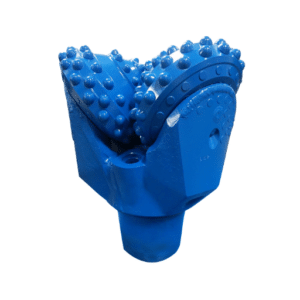
- Roller bits: Rolling cones with multiple inserts. Best for very hard rock and boulders. High initial cost.
If you want to know a detailed comparison of Bullet Teeth and Roller Bit, please check out our article on Bullet Teeth vs Roller Bit.
Performance by Formation Hardness
| Formation Type | Compressive Strength | Best Tool | Why |
|---|---|---|---|
| Clay, silt | 0 to 5 MPa | Flat teeth | Fast, low cost, efficient shearing |
| Sand, gravel | 5 to 20 MPa | Flat or bullet | Flat teeth work; bullet teeth last longer |
| Weathered rock | 20 to 60 MPa | Bullet teeth | Point attack outperforms shear |
| Hard rock | 60 to 100 MPa | Bullet teeth or roller bits | Bullet teeth work; roller bits faster but cost more |
| Very hard rock | 100+ MPa | Roller bits | Bullet teeth wear too quickly |
Cost and Service Life
In soft soil, flat teeth are cheaper and faster. In rock, bullet teeth cost more per tooth but last longer and drill faster. Roller bits have the highest upfront cost and the longest life in extreme conditions.
The key insight: don’t choose based on tooth price alone. Total cost per meter drilled is what matters.
A contractor in Ohio learned this the hard way. Running a tractor auger in clay with undersized C31HD teeth, he replaced teeth every 40 meters. After upgrading to B47K19H teeth and switching to an excavator mount with more torque, he pushed past 120 meters per set. The more expensive teeth cost less per meter because they last three times longer and are drilled faster.
If you want to know a detailed comparison of bullet teeth and flat teeth, please check out our article on Bullet Teeth vs Flat Teeth.
Matching Bullet Teeth to Ground Conditions
The most common mistake in tooth selection is guessing. Here is a data-driven approach.
MPa-Based Selection Matrix
Use the estimated compressive strength of your formation to pick the right tooth.
| Ground Condition | MPa Range | Recommended Tooth | Expected Life (meters) |
|---|---|---|---|
| Clay, soft soil | 0 to 10 | C31HD or flat teeth | 200 to 400 |
| Sand, gravel | 10 to 30 | B47K19H | 150 to 250 |
| Weathered rock | 30 to 60 | B47K19H or B47K22H | 80 to 150 |
| Hard rock | 60 to 100 | B47K22H or BKH47 | 40 to 80 |
| Very hard rock | 100+ | Roller bits | N/A |
Important: these ranges are estimates. Actual life depends on drilling speed, torque, tooth quality, and operator technique. Aggressive drilling with high RPM and low torque wears teeth faster than controlled rotation with adequate down pressure.
When to Use Hybrid Configurations
Some contractors mix tooth types on the same tool. A common setup places bullet teeth on the outer perimeter of a bucket where cutting speed is highest, and flat teeth in the center where penetration is slower. This hybrid approach balances cost and performance in mixed formations.
For rock auger drilling, bullet teeth on the pilot and outer cutters provide the penetration needed to break the face. For soil auger drilling, flat teeth or C31HD bullet teeth may be sufficient.
Field Testing
If you don’t know your ground conditions precisely, start with a middle-ground option like B47K19H. Monitor wear after the first 20 meters. If the carbide tip shows minor rounding, you’ve got the right tool. If the tip is flattened or chipped, step up to a larger carbide or heavy-duty model.
If you want to understand the applications of Bullet Teeth, please check out our article about How Bullet Teeth Are Used.
Bullet Teeth Specifications and Technical Data

Exact specifications matter when you are ordering replacements or designing a custom tool. Here are the key dimensions and ratings for common models.
Steel and Carbide Specifications
| Property | Standard Spec | Premium Spec |
|---|---|---|
| Carbide grade | YG11C | YG13C or custom |
| Carbide hardness | HRC 88 to 92 | HRC 86 to 90 |
| Steel grade | 35MnB | 42CrMo |
| Steel hardness | HRC 38 to 43 | HRC 40 to 45 |
| Retaining system | Circlip | Circlip or spring |
Dimensional Data
| Model | Overall Length | Shank Diameter | Carbide Diameter | Weight (approx.) |
|---|---|---|---|---|
| B47K19H | 95 mm | 30 mm | 19 mm | 0.75 kg |
| B47K22H | 99 mm | 30 mm | 22 mm | 0.85 kg |
| C31HD | 80 mm | 25 mm | 17 mm | 0.45 kg |
| BK47 | 95 mm | 30 mm | 19 mm | 0.72 kg |
| BKH47 | 100 mm | 30 mm | 22 mm | 0.90 kg |
Shank and Carbide Size Guide
- 25 mm shank: C31HD series. Fits smaller holders. Used on light-duty rigs.
- 30 mm shank: B47K and BK series. Fits standard holders like B43H and B85/2. Most common in foundation drilling.
- 38 mm shank: Heavy-duty and custom applications. Rare in standard buckets.
Carbide tip sizes follow a similar pattern:
- 17 mm: Light duty, soft ground
- 19 mm: General purpose, medium rock
- 22 mm: Heavy duty, hard rock, extended life
If you need exact compatibility data for your rig model, contact our engineering team with your machine specifications.
Installation and Replacement
Proper installation prevents tooth loss, holder damage, and uneven wear. Follow these steps for reliable results.
Holder Types and Compatibility
Bullet teeth mount in welded pockets or bolt-on holders. Common holder models include:
| Holder Model | Fits Tooth Series | Mounting Method |
|---|---|---|
| B43H | B47K series | Weld-on pocket |
| B85/2 | B47K series | Weld-on pocket, reinforced |
| C30 | C31HD series | Weld-on or bolt-on |
Always match the holder to the tooth shank diameter. A 30 mm tooth in a 25 mm holder will not seat correctly. A 25 mm tooth in a 30 mm holder will wobble and wear the pocket. For detailed installation and welding guidance, refer to our bullet teeth holders guide.
Welding Parameters for Holders
When welding a holder onto a bucket or auger plate, use these general parameters as a starting point:
- Electrode: E7018 or equivalent low-hydrogen rod
- Amperage: 140 to 180 A, depending on plate thickness
- Preheating: 100 to 150 degrees C for high-carbon steels
- Cooling: Allow slow cooling; do not quench
Poor welding causes the most holder failures. A cracked weld sends shock loads into the tooth and shank, leading to premature breakage.
Tooth Installation Steps
- Clean the holder pocket. Remove dirt, slag, and worn retainer fragments.
- Check the circlip or spring. Replace if bent, cracked, or worn.
- Insert the tooth shank into the pocket. Push until the retainer groove aligns.
- Verify the tooth rotates freely. It should spin by hand with light friction.
- Install the retainer. For circlips, press evenly until it snaps into place.
Torque and Alignment
Teeth must sit at the correct angle. Most holders position the tooth at 35 to 45 degrees from the cutting plane. An incorrect angle reduces penetration and accelerates wear on one side.
Replacement timing: do not wait for total failure. Replace teeth when the carbide tip wears down to 50% of its original height. Worn teeth increase drilling time and load the remaining teeth unevenly.
For a full breakdown of how bullet teeth perform in hard rock specifically, see our bullet teeth for hard rock drilling guide.
Maintenance and Wear Monitoring
A simple inspection routine extends tool life and prevents catastrophic failure.
Daily Inspection Checklist
- Check each tooth for carbide loss, cracking, or rounding
- Verify retainers are in place and not stretched
- Inspect holder welds for cracks or corrosion
- Rotate or replace any tooth that does not spin freely
- Clean mud and debris from pockets before installation
Visual Wear Indicators
| Condition | What You See | Action |
|---|---|---|
| New | Sharp carbide point, full height | Install and monitor |
| Worn | Rounded tip, 25% height loss | Plan replacement soon |
| Critical | Flattened tip, 50% height loss | Replace immediately |
| Failed | Missing carbide, cracked shank | Replace and inspect the holder |
Storage Best Practices
Store spare teeth in a dry environment. Moisture causes rust on the steel shank, which can seize the tooth in the holder. Keep retainers in sealed bags to prevent corrosion.
For detailed maintenance and inspection guidance, see our bullet teeth maintenance guide.
Cost Analysis: Cost Per Meter

The real cost of a bullet tooth is not the purchase price. It is the cost per meter drilled.
Upfront Cost Comparison
| Tool Type | Approximate Cost per Tooth | Typical Setup (8 teeth) |
|---|---|---|
| Flat teeth | 15 to 25 | 120 to 200 |
| C31HD bullet teeth | 25 to 40 | 200 to 320 |
| B47K19H bullet teeth | 40 to 60 | 320 to 480 |
| B47K22H bullet teeth | 55 to 80 | 440 to 640 |
| Roller bit inserts | $200+ | $1,600+ |
Service Life and Cost Per Meter
In 60 MPa sandstone, the math changes:
| Tool Type | Life per Set (meters) | Total Cost | Cost per Meter |
|---|---|---|---|
| Flat teeth | 20 to 30 | $200 | 6.67 to 10.00 |
| B47K19H | 80 to 120 | $400 | 3.33 to 5.00 |
| B47K22H | 100 to 150 | $560 | 3.73 to 5.60 |
In this scenario, B47K19H bullet teeth cost roughly half per meter compared to flat teeth. The upfront investment pays back quickly in hard ground.
In soft clay, flat teeth may still win on cost per meter because they drill fast and replacement is cheap. The decision depends on your formation.
If you want to understand how pricing varies by model and quantity, our bullet teeth price guide breaks down cost factors and bulk ordering strategies.
When Bullet Teeth Pay for Themselves
Switch to bullet teeth when:
- Formation hardness exceeds 30 MPa
- You replace flat teeth more than once per 50 meters
- Drilling speed drops below target due to tooth wear
- You see shank bending or holder damage from excessive load
If you need to select a bullet teeth manufacturer, please read our article on How to Choose a Bullet Teeth Manufacturer.
Custom Bullet Teeth Manufacturing
Standard catalog teeth work for most projects. Custom manufacturing solves edge cases.
When to Consider Custom Teeth
- Your ground conditions fall outside standard MPa ranges
- You need a specific carbide grade for extended life
- Standard shank diameters do not fit your holders
- You want hardfacing applied to specific areas only
- OEM replacement parts are unavailable or overpriced
Changsha Mingyi Custom Capabilities
At Changsha Mingyi Machinery Equipment Co., Ltd., we produce bullet teeth with:
- Custom carbide grades (YG8C through YG15C and beyond)
- Tailored shank geometries for non-standard holders
- Hardfacing patterns optimized for your soil type
- OEM-compatible dimensions for Bauer, Soilmec, and other rigs
- Engineering consultation to match tooth design to project requirements
We have supplied custom drilling augers and replacement teeth for projects in Southeast Asia, the Middle East, Africa, and South America. Our engineering team reviews your soil reports and rig specifications before recommending a tooth configuration.
For help making this decision based on your specific ground conditions, our guide on how to choose bullet teeth walks through a step-by-step selection process.
Frequently Asked Questions
What are bullet teeth?
Bullet teeth are conical carbide-tipped cutting tools used on rotary drilling rigs, augers, buckets, and core barrels. Their pointed shape concentrates cutting force, making them effective in rock and mixed formations.
What are bullet teeth made of?
Bullet teeth consist of a tungsten carbide tip (typically YG11C grade, HRC 88 to 92) brazed onto an alloy steel body (commonly 42CrMo or 35MnB, heat-treated to HRC 40 to 45).
How long do bullet teeth last?
Service life varies by formation. In soft clay, a C31HD tooth may last 200 to 400 meters. In hard rock, a B47K22H may last 40 to 80 meters. Monitor wear and replace when the carbide tip loses 50% of its original height.
When should I replace bullet teeth?
Replace bullet teeth when the carbide tip is worn down by half, when the shank shows cracks, or when the tooth no longer rotates freely in the holder. Don’t delay. Worn teeth damage holders and slow drilling.
Are bullet teeth compatible with all rigs?
Bullet teeth are compatible with most rotary drilling rigs when paired with the correct holder. The B47K series fits standard 30 mm holders used on Bauer, Soilmec, Liebherr, and similar machines. Always verify the shank diameter before ordering.
Conclusion
Bullet teeth are not just another wear part. They are a precision tool that can cut your cost per meter, reduce downtime, and extend the life of your drilling equipment.
Here are the key takeaways:
- Match the tooth model to your formation hardness using MPa ranges
- B47K19H suits medium rock; B47K22H suits hard rock; C31HD suits soil
- Total cost per meter matters more than the upfront tooth price
- Install teeth correctly and inspect them daily
- Replace teeth at 50% wear to protect holders and maintain speed
- Consider custom manufacturing for non-standard applications
If you are planning a project and need help selecting the right bullet teeth, Changsha Mingyi Machinery Equipment Co., Ltd. offers engineering consultation, custom manufacturing, and fast global delivery. Contact our team for a free bullet teeth consultation tailored to your ground conditions.