A contractor in Jakarta drilled through 18 meters of clay and silt without problems. Then the kelly bar slowed, the rig strained, and progress stopped at a limestone shelf no one had modeled accurately. The team tried a rock drilling bucket first. After four hours, the teeth were flattened and the borehole was out of round. They switched to a bullet-tooth core barrel the next morning. By midday, the rock socket was clean, round, and ready for reinforcement. The right core barrel didn’t just save the shift. It saved the schedule.
Most foundation projects look straightforward on paper. Soil layers, borehole diameter, pile depth, and concrete volume are all planned. But hard rock, boulders, and karst formations turn predictable work into a tooling decision. A core barrel is the tool that makes those transitions possible.
This guide explains what a core barrel is, how it works, and how to choose the right type for your foundation project. You’ll learn how core barrels differ from drilling buckets and augers, which cutting structure matches each rock strength, and what operating parameters produce the best results. If you need background on the cutting tools used in core barrels, our bullet teeth guide covers the tooth models and specifications in detail.
Need help matching a core barrel to your ground conditions? Contact our engineering team to discuss diameters, cutting structures, and custom configurations.
What Is a Core Barrel?

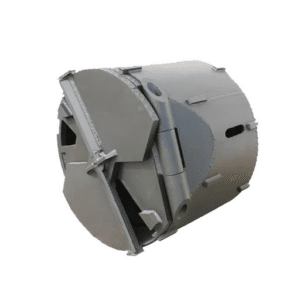
A core barrel is a cylindrical drilling tool that cuts an annular ring into rock or concrete, leaving a central core that can be broken and removed. Unlike a drilling bucket, which excavates the full cross-section, or an auger, which lifts soil continuously along helical flights, a core barrel removes only the outer ring. The central core remains intact until it is extracted or broken free.
This annular cutting method has two advantages in hard ground. First, it reduces the cutting area and the torque required to penetrate strong rock. Second, it produces a cleaner borehole with less disturbance to the surrounding formation. For foundation contractors, that means better pile-to-rock contact and more reliable load transfer.
A typical foundation core barrel includes:
- Barrel body: A thick-walled steel cylinder that carries the cutting load and stabilizes the borehole
- Cutting ring or head: The lower edge that holds teeth, roller bits, or cross cutters
- Kelly box or adapter: The top connection that mates with the rig’s kelly bar or drive system
- Stabilizers or wear bands: Optional features that keep the barrel centered and reduce vibration
- Inner tube (double/triple tube designs): A separate sleeve that protects the core sample during recovery
Core barrels are used most often in bored pile construction, bridge foundations, marine structures, and geotechnical investigations. The global core barrel market is valued at approximately 1.8 billion in 2025 and is projected to reach 2.6 billion by 2034, driven by mining, oil and gas, and construction demand.
How Core Barrels Work in Foundation Drilling
The operating cycle of a core barrel is simple in concept but depends on precise rig control. The barrel is lowered to the bottom of the borehole, rotation begins, and downward force is applied. The cutting structure at the base grinds or fractures the rock in an annular path. The central core remains standing inside the barrel until it is long enough to be broken off and removed.
For foundation work, the goal is usually not sample preservation. It’s a rock socket formation. The contractor needs a clean, full-diameter hole drilled to the specified depth in competent rock. Once the core barrel reaches design depth, the remaining core is broken with the barrel or removed with a grabbing tool. The hole is then cleaned and prepared for reinforcement and concrete placement.
Three variables control performance:
- Torque: Must be sufficient to turn the barrel against rock resistance without stalling
- Crowd pressure: The downward force that keeps the cutting structure engaged
- Rotational speed: Must match the cutting structure and formation hardness
If any one of these is wrong, the result is slow penetration, overheating, premature wear, or jamming. We cover operating parameters in detail later in this guide.
Want to see how the right barrel geometry improves drilling speed? Our engineering team can review your rig specs and recommend a core barrel configuration matched to your ground. Contact us for a consultation.
Types of Core Barrels
Foundation contractors use several core barrel designs. The right choice depends on whether you need core sample recovery, fast rock socket drilling, or boulder penetration.
Single Tube Core Barrels
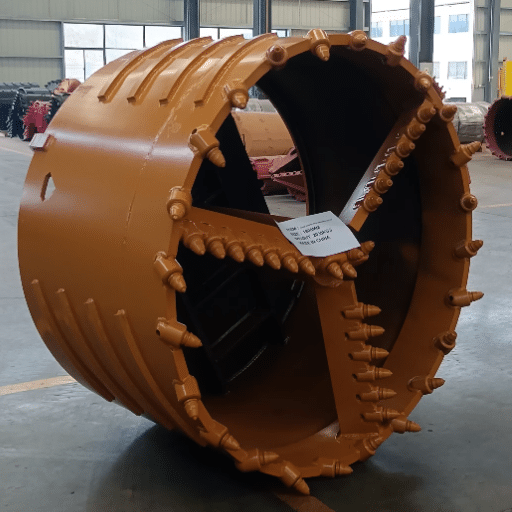
A single tube core barrel has one outer cylinder. It is the simplest and most robust design for foundation drilling. Cutting structures mount directly on the lower edge of the barrel. This design is common in large-diameter bored pile work because it is strong, easy to maintain, and tolerant of rough handling.
The disadvantage is that the core sample is exposed to drilling fluid and rotation inside the barrel. For foundation work, where sample quality is usually secondary to hole quality, this is rarely a problem.
Double Tube Core Barrels
A double tube core barrel has an outer rotating barrel and an inner stationary tube. The inner tube holds the core while the outer tube rotates and cuts. This design reduces core disturbance and improves recovery in fractured or weathered rock.
Double tube barrels are common in geotechnical investigations and medium-depth foundation work where some core integrity is needed. They are also used when formation evaluation influences pile design.
Triple Tube Core Barrels
A triple tube core barrel adds a third split inner sleeve that protects the core during extraction. These systems can achieve near-complete recovery in broken, unconsolidated, or fractured formations.
Triple tube designs are not typically needed for standard bored piles, but they are valuable in difficult ground where accurate core logging determines foundation strategy. Mining and exploration contractors use them more frequently than general foundation contractors.
Wireline Core Barrels
Wireline core barrels allow the inner tube to be retrieved through the drill string without pulling the entire barrel from the hole. A wireline winch lowers a retrieval tool, latches onto the inner tube, and lifts it to the surface.
This design is most common in deep geotechnical and mineral exploration drilling. In foundation work, wireline systems appear on specialized rigs where continuous core recovery is required at depth.
Bullet Tooth Core Barrels
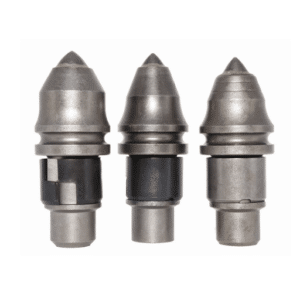
Bullet tooth core barrels use tungsten carbide bullet teeth mounted on the cutting ring. These teeth fracture rock by point loading and are effective in medium-hard rock, concrete, and reinforced concrete.
Bullet tooth core barrels are versatile and relatively easy to maintain. Individual teeth can be replaced when worn, which reduces operating costs. They are the most common choice for foundation rock sockets in the 50 to 100 MPa range.
Roller Bit Core Barrels
Roller bit core barrels use tri-cone or single roller cutters that crush and grind hard rock. They are designed for very strong rock formations, typically above 100 MPa compressive strength.
Roller bit barrels require more torque and precise control than bullet tooth designs, but they penetrate hard rock that would quickly destroy other cutting structures. They are common in quarrying, mining, and deep foundation work in crystalline rock.
Cross Cutter Core Barrels
Cross cutter core barrels have intersecting cutting arms that break the central core into pieces. They are used after a bullet tooth or roller bit pass, or in jointed and fractured rock below 100 MPa.
The main advantage is core removal. When a long central core jams inside the barrel, a cross cutter breaks it free and allows drilling to continue.
Grabbing Style Core Barrels
Grabbing style core barrels, sometimes called claw or segmented core barrels, use a grabbing mechanism to pull rock cores or boulders from the hole. They are effective in fractured ground, gravel, and boulder layers where other tools cannot achieve continuous cutting.
| Core Barrel Type | Best Formation | Typical Diameter | Main Use |
|---|---|---|---|
| Single tube | Competent to fractured rock | 600-2500 mm | Bored pile rock sockets |
| Double tube | Fractured or weathered rock | 100-300 mm | Geotechnical cores, medium piles |
| Triple tube | Broken, unconsolidated ground | 100-250 mm | Exploration, difficult ground |
| Wireline | Deep coring | 75-150 mm | Exploration, deep geotechnical |
| Bullet tooth | Medium-hard rock, concrete | 600-2500 mm | Foundation drilling |
| Roller bit | Very hard rock >100 MPa | 600-2500 mm | Hard rock sockets, mining |
| Cross cutter | Jointed rock, core breaking | 600-2500 mm | Core removal, fractured ground |
| Grabbing style | Boulders, fractured loose ground | 800-2500 mm | Boulder layers, cleanup |
Core Barrel Cutting Structures: Bullet Teeth, Roller Bits, and Cross Cutters
The cutting structure is the most important selection decision after barrel type. It determines how the rock is fractured, how fast the barrel penetrates, and how often cutters must be replaced.
Bullet Teeth for 50 to 100 MPa Rock
Bullet teeth concentrate the load on small carbide points. This point loading exceeds the compressive strength of most medium-hard rocks and causes localized fracture. Bullet teeth work best in limestone, sandstone, weathered granite, and reinforced concrete.
Common tooth models include B47K, B85, C31HD, and C21HD, depending on barrel diameter and rock abrasiveness. For a detailed comparison of these models, see our B47K, C31HD, and BK series guide.
Expected tooth life varies widely. In moderately abrasive limestone, a set of bullet teeth may last 80 to 150 meters. In quartz-rich sandstone, life can drop to 30 to 60 meters. Monitoring wear patterns and rotating tooth positions helps extend service life.
Roller Bits for Rock Above 100 MPa
Roller bits use rotating cones with hardened inserts that crush rock under high load. They are the standard choice for granite, basalt, gneiss, and other crystalline rocks above 100 MPa.
Roller bit core barrels need high torque and crowd pressure. They also need effective flushing to remove cuttings and cool the bearings. If the rig is undersized, roller bits will stall or wear prematurely.
Cross Cutters for Jointed Rock and Core Breaking
Cross cutters use intersecting blades or arms to break the central core. They are most useful when the remaining core becomes too long to remove easily, or when the formation is jointed and unstable.
Cross cutters are often run after a bullet tooth pass. They can also be used as the primary tool in heavily fractured ground where intact cores are impossible.
| Cutting Structure | Best Rock Strength | Best Formation | Tooth Replacement Frequency |
|---|---|---|---|
| Bullet teeth | 50-100 MPa | Limestone, sandstone, concrete | Moderate |
| Roller bits | >100 MPa | Granite, basalt, hard crystalline rock | Lower, but cutters cost more |
| Cross cutters | <100 MPa, jointed | Fractured rock, core breaking | High on blades |
| Grabbing style | Loose, bouldery | Gravel, boulders, collapse zones | As needed |
Core Barrel vs Drilling Bucket vs Rock Auger

Foundation contractors often ask whether a core barrel, drilling bucket, or rock auger is the right tool for a given formation. The answer depends on ground strength, formation integrity, and hole diameter.
A drilling bucket excavates the full cross-section and works well in soil, clay, sand, and soft or weathered rock. In hard rock, the cutting edges and teeth wear quickly and penetration slows to a stop.
A rock auger uses helical flights to lift cuttings continuously. It is efficient in soft to medium rock and cohesive soils, but it struggles in very hard rock and loose or fractured ground where flights cannot maintain pressure.
A core barrel cuts only an annular ring, which reduces cutting area and torque demand in hard rock. It is the best choice when rock strength exceeds 70 to 100 MPa, when hole quality matters, or when boulders and karst formations interrupt normal drilling. If you need a more detailed comparison, you can read our article on Core Barrel vs Drilling Bucket vs Auger.
| Factor | Drilling Bucket | Rock Auger | Core Barrel |
|---|---|---|---|
| Best ground | Soil, clay, soft rock | Medium rock, cohesive soil | Hard rock, boulders, concrete |
| Typical rock limit | <70 MPa | 30-80 MPa | >70 MPa, up to very hard rock |
| Cutting action | Full-section excavation | Continuous helical cutting | Annular ring cutting |
| Cuttings removal | Lifted in bucket | Transported by flights | Broken and lifted separately |
| Hole quality | Moderate | Moderate | High |
| Speed in right ground | Fast | Fast | Slower, but productive in hard rock |
Matching Core Barrels to Ground Conditions
Ground condition assessment should drive every core barrel decision. Three factors matter most: rock strength, fracture frequency, and abrasiveness.
Rock Strength
Rock strength is usually expressed as unconfined compressive strength (UCS) in MPa. Simple guidelines:
- Below 50 MPa: A rock drilling bucket or heavy-duty auger may work. Consider a bullet tooth core barrel only if the formation is variable or contains boulders.
- 50 to 100 MPa: Bullet tooth core barrel is usually the best choice.
- Above 100 MPa: Roller bit core barrel is normally required.
These boundaries are not absolute. A 90 MPa quartzite is more abrasive than a 90 MPa limestone and will wear bullet teeth faster. Always confirm with trial drilling when ground data is limited.
Fracture Frequency
In highly fractured rock, cores break easily and jamming is common. A cross-cutter or double/triple tube system improves recovery and reduces downtime. In massive competent rock, single tube or bullet tooth barrels penetrate efficiently.
Abrasiveness
Quartz content, grain size, and cementation determine abrasiveness. Abrasive formations wear carbide and steel quickly. In these conditions, use premium carbide grades, hardfacing on the barrel body, and monitor wear bands closely.
A project engineer in Vietnam faced exactly this problem. The geotechnical report listed sandstone at 65 MPa, but the quartz content was high. A standard bullet tooth core barrel lost 40% of its cutting points in 25 meters. After switching to a higher-grade carbide and adding hardfacing, the same barrel completed 70 meters with only one tooth replacement cycle.
Core Barrel Specifications and Sizing
Core barrel sizing must match the borehole diameter, the kelly box on the rig, and the available torque. Foundation contractors typically work with diameters from 600 mm to 2500 mm, while exploration drilling uses standardized sizes such as BQ, NQ, HQ, and PQ.
Foundation Barrel Diameters
Foundation core barrels are built to match the pile diameter. Common ranges:
- 600-1000 mm: Common for building piles and light infrastructure
- 1000-1500 mm: Standard for bridges, heavy buildings, and marine piles
- 1500-2500 mm: Large-diameter piles, caissons, and special foundations
Larger diameters require proportionally more torque and crowd pressure. A 2000 mm roller bit barrel may need twice the torque of a 1000 mm barrel in the same rock.
Kelly Box and Adapter
The kelly box is the square or hexagonal socket at the top of the barrel that connects to the rig’s kelly bar. Common sizes include 130 mm, 150 mm, and 200 mm. The barrel must match the rig. Adapters are available, but they add height and reduce stiffness.
Material Specifications
Foundation core barrels are usually built from high-strength steel such as Q355B or 42CrMo. Cutting rings may be reinforced with a wear-resistant plate or hardfacing. For severe conditions, the barrel body can be lined with hardfacing beads to resist abrasion.
Exploration Standard Sizes
Geotechnical and exploration core barrels follow DCDMA standards:
| Size | Hole Diameter | Core Diameter |
|---|---|---|
| BQ | 60 mm | 36.5 mm |
| NQ | 75.7 mm | 47.6 mm |
| HQ | 96 mm | 63.5 mm |
| PQ | 122.6 mm | 85 mm |
Rig Compatibility and Operating Parameters

A core barrel can’t perform if the rig is undersized. The three operating parameters must be matched to the barrel diameter and rock strength.
Torque Requirements
Torque demand increases with barrel diameter and rock strength. Approximate guidelines for foundation core barrels:
- 600-1000 mm bullet tooth barrel: 80-150 kNm
- 1000-1500 mm bullet tooth barrel: 150-250 kNm
- 1500-2000 mm bullet tooth barrel: 250-400 kNm
- Roller bit barrels: Add 20-40% more torque than equivalent bullet tooth barrels
These are rough estimates. Dense granite will demand more torque than fractured limestone at the same diameter.
Crowd Pressure
Crowd pressure keeps the cutters engaged. Too little pressure causes polishing and overheating. Too much pressure causes premature bearing failure in roller bits or tooth fracture in bullet tooth designs.
Typical crowd pressure ranges from 100 to 300 kN for foundation barrels, depending on diameter and formation. The operator should monitor the penetration rate and adjust pressure to maintain steady progress.
Not sure your rig has enough torque for the rock you’re facing? Send us your rig model and geotechnical data. We’ll recommend a core barrel size and cutting structure that won’t stall on site. Get a technical recommendation.
Rotational Speed
RPM must match the cutting structure. Bullet teeth and cross cutters usually run at 6 to 15 RPM in hard rock. Roller bits may run at 8 to 20 RPM, depending on cone diameter and bearing design. Higher RPM increases wear without improving penetration if the cutters cannot take a full bite.
Flushing and Cooling
Effective flushing removes cuttings, cools the cutters, and reduces jamming. Water or drilling fluid is circulated through the barrel or down the kelly bar. In dry conditions, air flushing may be used, but dust control becomes a concern.
Core Barrel Applications in Bored Piles and Deep Foundations
Core barrels appear in many foundation applications. The common thread is hard ground that other tools cannot handle efficiently.
High-Rise Building Foundations
Tall buildings transfer heavy loads through piles into bedrock. Core barrels form clean rock sockets that ensure reliable end-bearing and side friction. In cities with karst limestone, core barrels also navigate cavities and pinnacles that disrupt normal excavation.
Bridge Piers and Abutments
Bridge foundations often encounter riverbed cobbles, boulders, and weathered bedrock. Core barrels cut through these layers without enlarging or damaging the borehole. This is critical where pile alignment and verticality are tightly controlled.
Marine Construction
Docks, seawalls, and offshore platforms are built in submerged rock. Core barrels used in marine applications must resist corrosion and handle reverse circulation or casing support. Stabilizers become especially important to prevent deviation in tidal currents.
Geotechnical Investigation
Although this guide focuses on foundation construction, core barrels are equally important for site investigation. Double and triple tube systems recover core samples that geologists use to characterize rock quality, fracture spacing, and groundwater conditions.
Mining and Exploration
Mining exploration uses smaller wireline and triple-tube core barrels to recover continuous core samples. These applications demand high recovery rates and precise sample orientation, which are less common in foundation work.
Maintenance, Wear Monitoring, and Troubleshooting
Core barrels are durable, but they are not maintenance-free. A simple inspection routine prevents most field failures.
Daily Inspection Checklist
Before each shift, check:
- Cutting teeth or roller bits for wear, cracking, or missing inserts
- Barrel body for cracks, dents, or excessive wear on the lower edge
- Kelly box and adapter for deformation or cracks
- Stabilizers and wear bands for clearance loss
- Threaded connections for galling or damage
- Flush ports for blockage
Common Problems and Solutions
Slow penetration: Usually caused by worn cutters, insufficient crowd pressure, or wrong cutting structure for the rock. Inspect teeth first, then adjust pressure and RPM.
Core jamming: Common in fractured ground or when the central core becomes too long. Use a cross-cutter, reduce penetration rate, or increase flushing.
Borehole deviation: Caused by uneven wear, loose stabilization, or dipping beds. Add stabilizers, check barrel straightness, and reduce RPM.
Overheating: Indicates poor flushing or excessive speed. Increase water flow, reduce RPM, and check that flush ports are open.
Excessive vibration: Usually a sign of worn bearings in roller bits, loose teeth, or an out-of-round barrel. Stop drilling and inspect before damage spreads.
Repair vs Replace
Minor wear on bullet teeth is solved by replacement. Cracks in the barrel body or kelly box usually require repair or replacement. Roller bit bearings cannot typically be field-repaired; replace the entire bit assembly when play or seizure appears.
Cost Analysis: When a Core Barrel Pays Off
Core barrels represent a higher initial investment than buckets or augers, but they’re often the only economical way to drill hard rock. The analysis should include tool cost, operating cost, and project delay cost.
Rental vs Purchase
For short projects or one-off hard rock sockets, rental may make sense. For contractors with steady hard rock work, owning core barrels and maintaining a stock of replaceable cutters is usually more cost-effective.
Trying to decide whether to buy or rent? We can run the numbers with you. Share your project volume and ground conditions, and we’ll estimate cost per meter and payback period for your situation. Request a cost analysis.
Cost Per Meter
Cost per meter depends on cutter wear, fuel, labor, and rig time. A bullet tooth core barrel in medium limestone might cost 15to15to30 per meter in wear parts. A roller bit barrel in granite might cost 40to40to80 per meter, but it avoids the much higher cost of alternative methods such as down-the-hole hammers or casing oscillators.
Downtime Cost
The real savings from a core barrel come from avoided downtime. A contractor in Malaysia estimated that switching from a rock breaker-assisted bucket sequence to a roller bit core barrel reduced rock socket time from five days to two days per pile. On a 40-pile bridge project, that change shortened the foundation schedule by nearly three months.
Custom Core Barrel Manufacturing
Standard core barrels cover many projects, but custom designs are often needed for unusual diameters, rig interfaces, or ground conditions. Changsha Mingyi Machinery Equipment Co., Ltd. manufactures foundation drilling tools, including core barrels, buckets, augers, and related wear parts.
Customization Options
- Diameter and length matched to pile design
- Kelly box size and thread type matched to the rig
- Cutting structure selection: bullet teeth, roller bits, cross cutters, or hybrid
- Material upgrades: Q355B, 42CrMo, hardfacing, wear-resistant plates
- Stabilizer configuration for deviation control
Engineering Support
Custom core barrel projects begin with a review of geotechnical data, rig specifications, and production targets. The engineering team then proposes a barrel geometry, cutting structure, and material specification. Samples or trial batches can be supplied for field validation before full production.
If you are evaluating cutting tool suppliers for a custom project, our guide on how to choose a bullet teeth manufacturer explains the verification process that applies to core barrel cutters as well.
FAQ
What is a core barrel used for?
A core barrel cuts an annular ring into rock or concrete, leaving a central core. In foundation drilling, it is used to form rock sockets, penetrate boulders, and drill through hard formations that buckets and augers cannot handle.
When should I use a core barrel instead of a drilling bucket?
Use a core barrel when rock strength exceeds roughly 70 MPa, when the formation contains boulders or karst features, or when hole quality and verticality are critical.
What size core barrel do I need?
Match the core barrel diameter to your pile diameter. Foundation barrels commonly range from 600 mm to 2500 mm. Make sure the kelly box size matches your rig.
How deep can a core barrel drill?
Foundation core barrels can drill rock sockets tens of meters deep, depending on rig reach and ground conditions. Exploration wireline systems can reach thousands of meters.
What is the difference between single, double, and triple tube core barrels?
A single tube barrel has one outer cylinder and is strongest for foundation work. A double tube barrel adds an inner tube to protect the core. A triple tube barrel adds a split inner sleeve for maximum recovery in broken ground.
How do I choose between bullet teeth and roller bits?
Choose bullet teeth for rock in the 50 to 100 MPa range, such as limestone and sandstone. Choose roller bits for rock above 100 MPa, such as granite and basalt.
Conclusion
A core barrel isn’t just another drilling attachment. It’s the tool that lets foundation contractors transition from soil to rock without losing schedule, hole quality, or budget control. The right core barrel selection starts with ground conditions: rock strength, fracture frequency, and abrasiveness. From there, the choice of barrel type, cutting structure, diameter, and rig parameters determines performance.
Key takeaways are simple. Match the cutting structure to the MPa range. Size the barrel to the pile and the rig. Maintain cutters and inspect the body daily. And when standard tools don’t fit the project, consider a custom-engineered core barrel designed for your specific ground and rig.
If you need help selecting a core barrel for your next foundation project, contact Changsha Mingyi Machinery Equipment Co., Ltd. Our engineering team can review your geotechnical report, recommend a cutting structure, and provide a quotation for standard or custom core barrels.