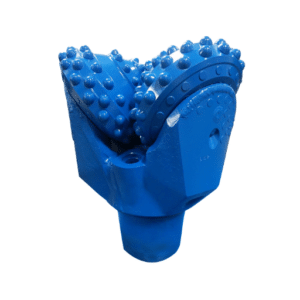
A contractor named Omar cored through 18 meters of weathered limestone on a bridge job, then hit three granite lenses in the next 8 meters. His crew ran bullet teeth through the limestone at a steady 2.5 meters per hour and chewed up four sets of B47K22H teeth on the lenses. They switched to a roller bit barrel, only to lose two days when a cone locked in the fractured limestone above the first hard lens.
The problem was never bullet versus roller. It was the roller bit vs bullet tooth decision in the 60 to 100 MPa core barrel transition zone, where neither pure answer is safe.
The 100 MPa switching rule is clean on paper. In the field, the boundary is a band. Rock strength changes across a few meters, layers are fractured, rigs differ in torque, and mobilizing two complete tool systems is not always practical.
This guide works through that gray zone with a project-driven framework. You will learn how to read the bore log, when bullet teeth still win above 80 MPa, when roller bits fail below 100 MPa, how to check rig torque as a hard filter, and when a hybrid cutting layout is the only safe bet. For a broader look at selection logic across types of rotary drilling bits, see our rotary drilling bit selection guide.
In short:
- Below about 60 MPa, bullet teeth are usually the economical choice.
- Above about 100 MPa, roller bits usually win on cost per meter.
- Between 60 and 100 MPa, the decision depends on layer thickness, fracture spacing, rig torque, and project length.
- A hybrid outer-ring bullet plus center roller layout can reduce the worst-case downtime in mixed strata.
If your bore log sits in that band, send the UCS profile and rig model. We can return a transition-zone tooling plan before you mobilize. Request a roller bit vs bullet tooth comparison for your formation, and we will return pure bullet, pure roller, and hybrid options.
Bullet Teeth vs Roller Bits: The 100 MPa Rule and Where It Breaks

The standard advice is simple. Bullet teeth, also called round shank chisels, concentrate force on a carbide point and work best in weathered rock, gravel, cobbles, and mixed ground up to roughly 80 to 100 MPa. Roller bits crush rock on rotating cones and take over in homogeneous hard rock above 100 MPa.
Our bullet teeth versus roller bit comparison lays out the full technical split, including penetration rates, service life, and cost per meter by rock strength.
That page is the right starting point for a clean ground profile. Real projects are rarely clean. The transition zone, roughly 60 to 100 MPa, is where tool life and rate of penetration trade non-linearly. In that band, a bullet tooth may still drill fast enough in thin hard layers, while a roller bit may spend too much time in soft, fractured rock above and below the hard band. The wrong choice does not just waste teeth. It burns rig hours on unnecessary changeouts or cone recoveries. That is why the roller bit vs bullet tooth debate cannot be settled by UCS alone.
When Bullet Teeth Still Make Sense Above 80 MPa
Bullet teeth are not automatically wrong once the rock exceeds 80 MPa. Four project conditions can keep them as the better choice.
Short rock sockets. If the hard interval is only a few meters thick, the mobilization and setup cost of a roller bit barrel may never pay back. Bullet teeth chew through the socket, accept the higher wear rate, and move on.
Mixed lenses with soft ground. Roller bits need a consistent load to keep their cones rolling and their bearings seated. In weathered limestone with clay seams or fractured shale, bullet teeth tolerate variation better because each tooth loads independently.
Rig torque limits. Roller bits demand roughly 80 to 120 percent of rated rig torque in hard rock, while bullet teeth typically need 60 to 100 percent. If the rig is on the smaller side, a roller bit may stall before it pays for itself.
Limited tooling budget on a small scope. On a short job with only a few piles, the lower unit cost of bullet teeth matters more than long-run tooling economics. The break-even math only works if there are enough meters to amortize the roller bit premium.
A project engineer named Priya kept her crew on B47K22H bullet teeth for a 12-pile urban job where the hard band averaged 85 MPa but was broken by clay partings every meter or two. The B47K22H vs roller bit choice was not obvious on paper. Roller bits would have stalled in the partings and lost time to cone checks. The bullet teeth wore faster, but the total meter cost stayed lower because the rig never stopped for a tool change in mixed ground.
When to Use a Roller Bit Instead of Bullet Teeth: The Below-100 MPa Exceptions
Roller bits are not automatically right just because the rock is hard. Three ground conditions can make a roller bit the expensive choice even below 100 MPa.
Fractured ground locks cones. Roller cones need a relatively solid surface to roll against. In heavily jointed or broken rock, a cone can stop rotating and skid, which overheats the bearing and wears inserts unevenly. The signal is a sudden vibration spike and metal in the cuttings.
Abrasive mud destroys seals before bearings wear. Fine quartz particles in the drilling fluid can pass worn seals and grind the bearing race. The bit may still look good from the outside while the internal clearance grows. By the time penetration drops, the damage is done.
Excessive weight on the bit in mixed layers. Operators sometimes add crowd force to push a roller bit through a soft layer. That overloads the bearings and can cause cone loss. Roller bits are designed for steady, controlled load, not punching through variable strata.
In those cases, a heavy-duty bullet tooth or a hybrid layout is usually the safer fallback.
Hard Rock Drilling Tool Selection: Reading the Bore Log Like a Tooling Plan

The roller bit vs bullet tooth decision should start with the geotechnical report, not the tool catalog. Pull four numbers for every layer.
UCS tells you which tool family the rock favors. RQD tells you whether the rock is intact enough for roller cones to roll cleanly. Abrasiveness, usually inferred from quartz content or known local geology, tells you how fast carbide and bearings will wear. Layer thickness and depth tell you whether a dedicated tool or a hybrid layout is worth the logistics. For more information, you can read our article on Rotary Drilling Bit for Hard Rock.
Use the profile to classify intervals:
| Interval | UCS | RQD | Tool Candidate |
|---|---|---|---|
| Soft cap | < 40 MPa | Low | Bullet teeth, standard duty |
| Transition zone | 60–100 MPa | Medium | Heavy bullet teeth or roller bit, decision by thickness |
| Hard band | > 100 MPa | High | Roller bit |
| Broken hard band | > 100 MPa | Low | Heavy bullet teeth or hybrid |
If the hard band is thin and the cap is fractured, a hybrid layout often beats switching barrels mid-hole. If the hard band is thick and intact, a roller bit barrel is the clear choice. For the full framework on matching cutting tools to rock, see our core barrel teeth selection guide. For barrel and rig basics, our core barrel selection guide for foundation drilling covers the 50/100 MPa ground-matching framework.
Roller Bit Torque Requirements: The Filter Most People Skip
Even when the rock favors a roller bit, the rig may not. Roller bits need enough torque to keep multiple cones turning under full load. Field-reported guidance puts the typical demand at 80 to 120 percent of rated rig torque for roller bits, against 60 to 100 percent for bullet teeth. Those ranges are rules of thumb, but they are useful gates.
Check the rig specification before you order. If the rig is marginal on torque, you have three options. Downsize the barrel diameter to reduce the total cutting resistance. Reduce the number of roller inserts on the ring. Or stay with heavy-duty bullet teeth and accept a lower penetration rate in exchange for fewer mechanical failures.
A maintenance lead named Viktor learned this on a rented rig in Southeast Asia. The bore log called for a roller bit barrel in 110 MPa granite, but the rig was rated at the low end of the torque range. The roller bit stalled repeatedly. Field-reported comparisons from projects in similar ground suggest roller bits can reach 5 to 7 meters per hour in hard granite when torque is sufficient, while heavy bullet teeth often deliver 2 to 3 meters per hour. Switching to B47K22H bullet teeth cut Viktor’s penetration from a planned 4 meters per hour to 2.5, but it eliminated the stalls and finished the scope without a downhole recovery.
If you need to understand the types of rotary drilling bits, please read our article about Types of Rotary Drilling Bits.
Hybrid Core Barrel Teeth: Bullet Outer Ring + Roller Center

When the profile is genuinely mixed, a hybrid cutting layout can capture the best of both families. Bullet teeth on the outer ring cut the perimeter through softer and fractured ground, while a center roller bit attacks the hardest core. The outer bullets are cheaper and faster to replace, and they keep the barrel cutting when the center roller is in a soft or broken interval.
Hybrids pay off most when the hard band is intermittent or when the top of the hole is fractured, and the bottom is intact. They are less attractive when the hard band is uniform and thick, because the bullet teeth on the ring still wear quickly, and you still carry the complexity of two tooling systems.
The logistics matter. A hybrid barrel needs spares for both tooth types, two inspection routines, and crew familiarity with both changeout methods. If the project is short or the crew is unfamiliar with roller bit maintenance, the savings can disappear into training and spare-parts overhead.
For a deeper look at the three core barrel cutting families, our bullet, roller, and cross cutter comparison covers when each belongs on the ring.
Building a Field Decision Log
The best way to manage the roller bit vs bullet tooth decision in the transition zone is to stop deciding from memory. Build a simple log and review it every few pulls.
Record for each interval:
- Depth and formation from the bore log.
- UCS and RQD for the layer.
- Rate of penetration at constant rotation and crowd force.
- Rig torque as a percentage of rated.
- Vibration level and any chatter.
- Teeth or insert condition after each pull.
- Changeout time and frequency.
The switch signals are the same ones that govern any hard-rock coring job, but they matter more in the transition zone because the margin for error is smaller. Pull the barrel and reconsider the tool when carbide chips under 50 meters, penetration drops below roughly 1 meter per hour at full parameters, you need more than one tooth change per day, or vibration suddenly increases.
Our existing bullet teeth versus roller bit comparison lists the full set of switch signals and break-even math.
Cost Check in the Transition Zone
Cost per meter is where the transition zone punishes guesses. The formula is the same for both tools:
Cost per meter = (tool cost + rig hourly rate x changeout hours) / meters drilled per set
A contractor named Elena priced three options for a 600-meter highway viaduct scope. The bore log showed 45 meters of weathered limestone, then 12 meters of 85 MPa sandstone with thin clay seams, then fresh granite below.
Her pure bullet option burned teeth in the sandstone and granite but avoided roller bit logistics. Her pure roller option excelled in the granite but lost time in the fractured limestone cap and the clay seams. Her hybrid option put bullet teeth on the outer ring and a center roller bit, matching each part of the profile to the tool that suffered least there.
At a rig and crew rate of $400 per hour, the hybrid option saved roughly 18 rig hours of avoidable changeouts and cone checks compared with the pure bullet option, and it avoided the 12-hour cone recovery that the pure roller option risked in the fractured cap. The exact numbers depend on your ground and rig rate, but the principle is constant: in the transition zone, the cheapest tool is the one that minimizes surprise downtime, not always the one with the lowest unit price.
If you want this same comparison on your project, send the bore log and rig model. We will return pure bullet, pure roller, and hybrid options with a cost-per-meter estimate.
Roller Bit vs Bullet Tooth Selection Checklist

Before you order a project in the 60 to 100 MPa band, run through this checklist:
- Confirm UCS and RQD for every layer. Do not average the whole hole.
- Map layer thickness and contact depths. Thin hard bands favor bullets or hybrids; thick homogeneous bands favor rollers.
- Check rig torque against the tool demand. Roller bits need headroom.
- Decide pure or hybrid. Use hybrid only when the profile is genuinely mixed, and the scope justifies the spare-parts complexity.
- Set switch signals before mobilization. Write penetration floors and changeout frequency limits into the method statement.
- Stock spares for the chosen system. One full changeout set per barrel on site.
- Start a field decision log. Record ROP, torque, vibration, and wear per pull.
- Review the log every few pulls. The transition zone can shift downhole faster than the bore log predicted.
The same discipline applies to bucket teeth. If your bucket fleet is hitting similar mixed ground, our drilling bucket teeth selection guide uses the same cost-per-meter logic. For more details on bullet tooth grades and holder options, see our guide to bullet teeth for foundation drilling.
Roller Bit vs Bullet Tooth FAQ
At what MPa should I switch from bullet teeth to roller bits?
The practical line is roughly 100 MPa for homogeneous hard rock. In the 60 to 100 MPa transition zone, the roller bit vs bullet tooth choice depends on layer thickness, fracture spacing, abrasiveness, and rig torque. Thin hard lenses often still favor heavy bullet teeth or a hybrid layout.
Can I use bullet teeth and roller bits on the same core barrel?
Yes. A bullet teeth roller bit combination, usually called a hybrid layout, places bullet teeth on the outer ring and a roller bit at the center. This works well in mixed strata where the outer bullets cut softer or fractured ground while the center roller attacks the hardest core. It adds spare parts and maintenance complexity, so it pays best on longer scopes.
What rig torque do I need for a roller bit core barrel?
Field-reported roller bit torque requirements are 80 to 120 percent of rated rig torque for roller bits, compared with 60 to 100 percent for bullet teeth. If your rig is marginal, downsize the barrel, reduce roller count, or stay with heavy-duty bullets.
Why do bullet teeth sometimes cost more per meter than roller bits?
In hard rock, bullet teeth wear fast and need frequent changeouts. The downtime and labor at a rig rate of several hundred dollars per hour can exceed the savings from cheaper individual teeth. Roller bits have a higher upfront cost but longer runs between changes.
When should I choose a hybrid core barrel?
Choose hybrid core barrel teeth when the profile is mixed, with alternating hard and soft or fractured layers, and when the hard layers are not thick enough to justify a full roller bit barrel. It reduces the worst-case downtime but requires spares and familiarity with both systems.
Conclusion
The roller bit vs bullet tooth question is not really about which tool is better. It is about which tool matches the whole system: the rock strength, the layer geometry, the fracture pattern, the rig torque, and the project length. Below 60 MPa, bullets usually win. Above 100 MPa, rollers usually win. In the 60 to 100 MPa transition zone, the answer is often a hybrid, a heavier bullet tooth, or a roller bit with a torque check.
Omar’s bridge job eventually settled on a hybrid barrel for the transition zone and a dedicated roller bit barrel only for the long granite section below. The changeouts did not disappear, but they became predictable. That is the goal in the transition zone: not to avoid wear, but to choose the wear you can plan for.
If your next project sits in the gray zone, send us the bore log, rig model, and scope. The engineering team at Changsha Mingyi Machinery Equipment Co., Ltd. will return a roller bit vs bullet tooth plan with pure and hybrid options and a cost-per-meter estimate for your formation.