Last March, a bored pile crew in coastal Vietnam burned two rig days and four sets of flat teeth before admitting the ground had changed. The bore log said clay to 18 meters, then weathered sandstone. Nobody told the cutting structure. The crew kept scraping long after the hole had entered rock, and every meter past the contact cost them teeth, torque, and time.
That kind of loss is avoidable. Most foundation holes cross more than one formation, and no single bit can handle soft clay, gravel, and competent rock in one pass. Drilling bit selection by ground condition is the discipline of matching the cutting structure to what is actually in front of the tool, depth by depth, instead of running whatever is already on the bucket.
Think of this article as a drill bit selection guide built around ground conditions rather than part numbers. You will get a compressive strength matrix that spans soft soil to very hard rock. You will also get tool-specific guidance for buckets, augers, and core barrels, plus a simple workflow for reading the ground before and during drilling. Foundation drilling bit selection is narrower than general drilling because the tool delivers the cut, not just the bit. By the end, you can decide what to run at 8 a.m. when the rig is waiting and the geology is uncertain.
Why Drilling Bit Selection by Ground Condition Starts with the Formation

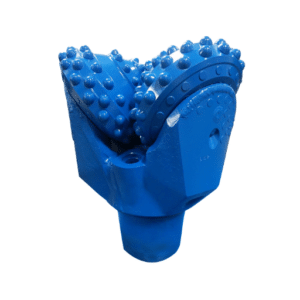
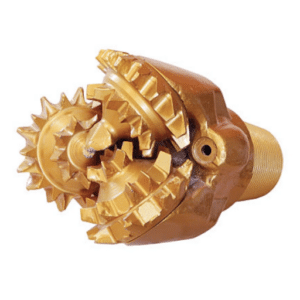
A rotary drilling bit removes material through one of three actions: scraping, chipping, or crushing. The formation decides which action works. Soft soil shears easily and requires a wide scraping edge. Weathered rock fractures under a pointed carbide tip. Hard granite only yields to the slow crushing of rolling cones.
Three parameters describe any formation well enough to guide drilling bit selection by ground condition:
- Uniaxial compressive strength (UCS): the load a rock cylinder takes before it fails, measured in MPa.
- Abrasiveness: how fast the ground wears carbide and steel, often tracked with a Cerchar or CAI index.
- Fracturing and moisture: joints, gravel, and water change how the bit bites and how the hole stays open.
Get these three wrong and the symptoms show up fast. Penetration rate collapses, torque spikes, cuttings turn to dust, and tooth life falls from dozens of meters to single digits. This is why the geotechnical report is the starting point for drilling bit selection by ground condition, not an afterthought. For the broader framework behind these choices, our rotary drilling bit selection guide covers how rig torque, crowd force, and project scope narrow the options.
Rotary drilling rigs for foundation work typically produce 32 to 320 kN·m of torque and rotate at 6 to 45 RPM. The bit has to survive that load without fracturing or glazing. A bit matched to the ground converts rig power into meters. A mismatched bit converts it into heat and wear.
For help making this decision based on your specific ground conditions, you can read our Drilling Bucket Teeth Selection Guide.
Ground Condition Classification for Foundation Drilling
A practical classification uses four UCS bands, plus a fifth category for mixed ground. The boundaries below come from field experience and supplier guidance, not a universal standard. Use the bands to match the drill bit to the ground condition at each contact, then refine for abrasiveness and fracturing. Treat them as a starting point and confirm with a pilot hole when the report is thin.
| Ground Condition | UCS Range | Recommended Bit | Typical Tool | Field Notes |
|---|---|---|---|---|
| Soft soil, clay, silt, sand | Under 20 MPa | Flat teeth, drag bits | Soil bucket, clay auger | Fast removal, low wear, watch bore stability |
| Medium soil, gravel, weathered rock | 20 to 70 MPa | Bullet teeth (B47K19H, C31HD) | Rock bucket, rock auger | Versatile, easy to replace, chipping action |
| Hard rock, limestone, sandstone | 70 to 150 MPa | Heavy bullet teeth (B47K22H), roller bits | Rock bucket, roller bit core barrel | Flushing and cooling become critical |
| Very hard rock, granite, basalt | Over 150 MPa | Roller bits, cross cutters | Roller bit core barrel | Highest wear, slowest penetration |
| Mixed and transition zones | Variable | Layered tool plan | Bucket plus core barrel | Plan changes at contact depths |
This drilling bit selection matrix is the core reference for the rest of the article. Each band maps to a cutting action and a tool, which keeps drilling bit selection by ground condition rooted in physics rather than habit. The types of rotary drilling bits guide explains how bullet teeth, roller bits, flat teeth, and core barrel cutters differ in cutting action if you want the full taxonomy. If you need to understand the types of rotary drilling bits, please read our article about Types of Rotary Drilling Bits.
Selecting Bits for Soft Soil and Unconsolidated Ground
Soft ground is where most foundation holes begin, and it is the most under-served topic in competitor guides on drilling bit selection by ground condition. In clay, silt, and loose sand, the goal is to remove material quickly and keep the hole open, not to break rock. Flat teeth and drag bits do that by scraping and shearing.
A flat teeth drilling bucket is the standard choice for cohesive clay, while wider blades help in loose sand so the material does not flow around the cutting edge. BFZ80 is a common flat tooth reference in soft ground tooling. The best drill bit for soft soil is rarely the most aggressive one. It is the one that clears the spoil and holds the bore wall.
For sticky clay, a flat tooth with a positive rake angle reduces balling and sticking. For saturated sand, pair the bucket with a casing program or polymer slurry so the hole does not collapse between passes. Our drilling bucket selection guide covers how bottom design and tooth layout affect spoil removal in these formations.
Tool choice matters as much as tooth shape here. A clay auger lifts material continuously on a spiral, which suits shallow, uniform soft ground. A bucket cuts and collects in discrete cycles, which gives more control as depth increases. If your soft layers are shallow and uniform, an auger is faster. If they sit over a rock contact, the bucket lets you swap to bullet teeth at the transition without changing the whole tooling concept. That flexibility is a real advantage when choosing drilling bits for soil and rock on the same hole.
Selecting Bits for Medium Soil, Gravel, and Weathered Rock

The 20 to 70 MPa band is the transition zone, and it is where contractors make or lose most of their margin. The ground is too strong for flat teeth but not hard enough to justify a roller bit. Bullet teeth are the answer.
Bullet teeth, also called conical or pick teeth, concentrate crowd force on a pointed tungsten carbide insert. That point load initiates cracks in weathered rock, cemented gravel, and hard clay. Standard models such as B47K19H and C31HD handle most of this band on a rock bucket or rock auger. They chip rather than scrape, so penetration rate holds up as the formation stiffens. For a deeper look at sizes and holders, see our guide to bullet teeth for foundation drilling.
On a bridge project in Southeast Asia, a crew started with flat teeth in clay and switched to B47K22H bullet teeth when the borehole passed into weathered sandstone. The change cut tooth replacement from every 15 meters to every 45 meters and saved two rig days over the job. The lesson was not that one model is magic. It was that the crew read the contract and changed the cutting structure at the right depth.
Two details decide how well bullet teeth work in this band. Tooth spacing controls cutting continuity, with closer spacing for harder or more abrasive layers. Attack angle trades speed against wear, since a steeper angle bites harder but dulls faster. Read the transition zone as you drill, and plan the swap before the bit tells you it is finished.
If your project sits mostly in this medium band, send us the bore log before you mobilize. We can map tooth models and spacing to each layer so you are not guessing on site. Request a matched bit recommendation and we will size the cutting structure to your rig torque and target depth.
Selecting Bits for Hard Rock (70 to 150 MPa)
Once compressive strength climbs past about 70 MPa, standard bullet teeth start to round off quickly and penetration rate falls. The practical choices become heavy duty bullet teeth with larger carbides, such as B47K22H, or a roller bit core barrel.
Heavy bullet teeth still chip the rock, but the bigger insert and reinforced holder survive the higher contact pressure. For consistently hard limestone or sandstone, a roller bit core barrel is usually more cost-effective over the full run. The rolling cones distribute wear across many inserts, so the tool keeps cutting as individual carbides wear. That is why contractors rank roller bits among the most productive options in this band.
The tool matters here. A core barrel drilling tool cuts an annular ring and retrieves a solid core, so it removes only the material needed to advance the hole. In hard rock, that is far faster than trying to break the full cross section with a bucket.
Flushing and cooling determine whether the carbide keeps its hardness. Without adequate flow, tips overheat, lose temper, and wear in a fraction of their normal life. Watch the weight on the bit as well. Too little and the cones skid and polish. Too much and the bearings and inserts fail early. In the 70 to 150 MPa band, drilling bit selection by ground condition is as much about operating parameters as it is about the bit itself. For more information, you can read our article on Rotary Drilling Bit for Hard Rock.
Selecting Bits for Very Hard Rock and Abrasive Formations
Above roughly 150 MPa, the best drill bit for hard rock stops being a tooth and becomes a system. Roller bits and cross cutters are the practical tools for granite, basalt, and highly abrasive quartzitic formations.
Roller bit core barrels can operate effectively up to about 350 MPa in favorable conditions because the crushing action does not depend on a sharp edge. Cross cutters use large cutting arms and are preferred when the rock is too fractured or abrasive for roller cones to track cleanly. Both approaches trade penetration rate for tool life, and both cost more per bit than bullet teeth.
Carbide grade selection becomes decisive in this range. YG11C tungsten carbide, with about 11% cobalt, typically measures 86.5 HRA or higher and carries a transverse rupture strength of at least 2,450 MPa. That combination resists fracture under the impact loads that very hard rock produces. Bit holders and bodies are usually built from 42CrMo alloy steel, heat-treated to 40 to 44 HRC, so the body is tough enough to hold the insert without cracking.
The most important decision above 150 MPa is sometimes not which bit to run but whether to change the method. If penetration rate collapses and cost per meter climbs past the value of the pile, it can be cheaper to switch to a different drilling technique, pre-drill with a down-the-hole hammer, or reconsider the socket depth. Drilling bit selection by ground condition has limits, and honest operators know when the formation has outgrown the tool.
Handling Mixed and Variable Ground

Real boreholes rarely stay in one UCS band. A typical profile starts in fill or clay, crosses a gravel lens, enters weathered rock, and ends in competent bedrock. Treating that profile as one formation is the most expensive mistake in foundation drilling.
Start with the bore log and mark every contact depth before you mobilize. Assign a tool and cutting structure to each interval, and stage the swaps on site so the crew is never waiting for a truck. A common sequence is a soil bucket with flat teeth for overburden, a rock bucket with bullet teeth for weathered layers, and a roller bit core barrel for the final socket. Rotary drilling augers can also carry bullet teeth in a spiral for mixed ground that is mostly soft with thin hard bands.
Gravel and cobble layers deserve special attention because they push the bit off line and bend the hole. When you hit cobbles, reduce RPM, lighten the weight on the bit, and consider a reinforced cutting structure or a short core barrel run to keep the hole straight. Anti-deviation starts with reading the cuttings. Angular gravel in the returns is your warning that the bit is about to walk.
Plan depth intervals conservatively. It is better to swap a tool two meters early than to run a soil bit into rock and destroy the holder pocket. The few minutes spent changing tools early cost far less than the hours lost fishing a damaged bit out of the hole.
Reading the Ground: The Core of Drilling Bit Selection by Ground Condition
Good drilling bit selection by ground condition is not a one-time decision at mobilization. It is a loop that runs from the geotechnical report through every meter of the hole.
Before you rig up, pull three things from the report: UCS values for each rock unit, any abrasiveness or quartz content data, and the depth of every major contact. If UCS numbers are missing, ask the geotechnical engineer for point load test results or a rock quality designation. When the data is thin, a pilot hole or a pull test on a sample tooth tells you more than a confident guess.
During drilling, four field indicators keep you honest:
- Cuttings: clean chips mean the bit is breaking rock; dust means it is polishing; angular gravel means deviation risk.
- Vibration and sound: a smooth, steady hum is healthy; chatter and bouncing signal a mismatch or a worn tooth.
- Torque: a steady climb at constant RPM means the ground is hardening or the bit is dulling.
- Penetration rate: a sudden drop at constant parameters is the clearest sign the formation has changed.
Log these indicators against depth. Over a single pile, you will learn more about the local ground than any regional report can tell you, and the next pile on the same site will be faster and cheaper.
Cost Per Meter Thinking in Bit Selection
The cheapest bit on the pallet is rarely the cheapest meter in the hole. The right metric is total drilling cost divided by meters drilled, which folds in bit cost, rig time, labor, fuel, and downtime.
Consider a contractor named Luis who ran inexpensive soil bits into 90 MPa limestone to save on tooling. The bits wore out every 8 to 10 meters, and each change cost 25 minutes of rig time plus the bit itself. Over a 30 meter socket, three extra changes cost most of a shift and doubled the rig cost per meter compared with a single heavy bullet tooth setup.
The math is simple once you track it. A premium bit that drills faster and lasts longer often produces a lower cost per meter even when its purchase price is three times higher. Lifecycle thinking also protects the tool body. Running worn teeth past their limit damages the holder pocket, and a ruined bucket or core barrel costs far more than a box of teeth.
Build a small stock that matches your project mix. Keep flat teeth, two bullet tooth models, and a roller bit option on site if the geology varies. Having the right bit available when the formation changes prevents emergency orders and idle rig hours. Changsha Mingyi supplies OEM and custom cutting structures for contractors worldwide, and our foundation drilling tools range lets you match the bit to the bucket, auger, or core barrel on one order.
Common Rotary Drilling Bit Selection Mistakes

Most selection errors are repeats of the same four habits. Avoiding them does more for cost per meter than any single upgrade.
- Running soil bits into rock. Flat teeth in competent rock wear, overheat, and damage the bucket edge before you realize the contact changed.
- Ignoring abrasiveness. A bit chosen only on UCS will fail early in quartz-rich sandstone or gravel because the carbide erodes faster than expected.
- Keeping worn bits too long. Once a bullet tooth tip wears past about 5 mm, the penetration rate falls and the holder starts taking load.
- Mismatching bit to tool. A hard rock tooth on a light bucket, or a roller cone on insufficient torque, wastes the cutting structure and stresses the rig.
Each of these mistakes traces back to the same root cause: deciding once and never rechecking. The cure is the read and react loop in the previous section, applied to every pile rather than every project. For more details, see our article on auger teeth types.
FAQ
How do you choose a drilling bit for different ground conditions?
Match the bit to compressive strength first, then refine for abrasiveness and fracturing. Use flat teeth under 20 MPa, bullet teeth from 20 to 70 MPa, heavy bullet teeth or roller bits from 70 to 150 MPa, and roller bits or cross cutters above 150 MPa. Confirm with a pilot hole when the report is uncertain.
What bit is best for soft soil?
Flat teeth and drag bits on a soil bucket or clay auger are the standard choice for clay, silt, and sand. They scrape material efficiently and keep wear low. Pair them with casing or slurry in loose sand to protect bore stability.
What bit is best for hard rock?
For rock between 70 and 150 MPa, use heavy-duty bullet teeth such as B47K22H or a roller bit core barrel. Above 150 MPa, roller bits and cross cutters are the practical options, with YG11C carbide for fracture resistance.
How do I handle mixed ground in one borehole?
Read the bore log, mark every contact depth, and assign a tool to each interval. Stage the swaps on site, read cuttings and torque as you drill, and change tools a meter or two early rather than run the wrong bit into a harder layer.
When should I switch from bullet teeth to roller bits?
Switch when compressive strength stays above roughly 70 MPa and bullet teeth begin to round off within a few meters, or when penetration rate falls even with fresh teeth. Roller bits spread wear across many inserts and hold penetration rate longer in hard, abrasive rock.
Does the drilling tool affect bit choice?
Yes. The same tooth behaves differently on a bucket, an auger, and a core barrel because tool geometry, rotation speed, and flushing path change how the bit loads and clears cuttings. Always match the cutting structure to both the ground and the tool that delivers it.
Conclusion
Drilling bit selection by ground condition comes down to three parameters and one habit. Read UCS, abrasiveness, and fracturing, then keep re-reading them as the hole deepens. The four-band matrix gives you a starting point: flat teeth below 20 MPa, bullet teeth from 20 to 70 MPa, heavy bullet teeth or roller bits from 70 to 150 MPa, and roller bits or cross cutters above 150 MPa.
Match the bit to the ground, then to the tool. A flat teeth drilling bucket, a bullet tooth rock bucket, a core barrel configured with the right teeth, and a roller bit option cover most foundation profiles when you plan the transitions. The crews that win on cost per meter are the ones that change cutting structures at the contact, not after the bit fails.
If you want a recommendation matched to your ground report and rig specs, send Changsha Mingyi Machinery Equipment Co., Ltd. your bore log and target depths. Our engineering team will size tooth models, carbide grades, and tool configurations to your formation, so your next pile starts with the right bit on the bucket.