Two passes through a gravel lens at 14 meters stripped a fresh set of flat teeth on a hotel foundation job in Johor. The bore log said clay with sand bands, so the crew fitted the same V20 soil teeth they had run since mobilization. By dawn, they had burned the set, bent two holders, and lost half a shift refitting the bucket. The cause was simple: drilling bucket teeth were treated as cheap consumables instead of a selection decision.
That kind of loss is common, and it is rarely about the tooth brand. Field experience across the industry, echoed in supplier guides, holds that over 70 percent of drilling inefficiency traces to wrong teeth selection, not the bucket itself. Most advice stops at “flat for clay, bullet for rock.” That rule carries you through uniform ground and fails everywhere else.
This guide goes one level deeper. You will learn the three drilling bucket teeth types and the cutting action behind each. You will learn to decode model numbers like B47K22H and V20, match each tooth to its holder, and lay out a pattern that fits your bucket diameter and rig. You will also get wear limits, inspection triggers, and a worked cost-per-meter teeth budget so you can choose, run, and order teeth as a system. For a broader look at selection logic across types of rotary drilling bits, see our rotary drilling bit selection guide.
In short:
- Match tooth type to ground: flat teeth for soft soil, bullet teeth for gravel and weathered rock, roller bits beyond that.
- Decode the model number and confirm the holder matches before you order.
- Lay out the pattern for your bucket diameter, and respect the 5 mm wear limit.
- Budget teeth by cost per meter, not unit price.
If your ground report is already in hand, send it over before you mobilize. We can map tooth models and holders to each layer. Request a matched teeth recommendation and skip the gravel-lens lesson.
What Drilling Bucket Teeth Do

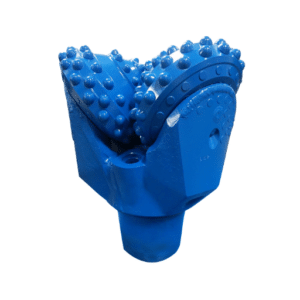
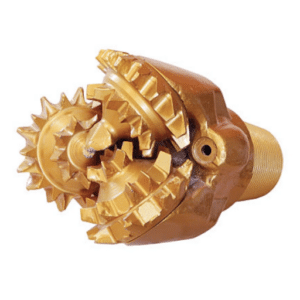
Drilling bucket teeth are replaceable cutting tools mounted on the bottom plate and cutting edge of a drilling bucket. Flat teeth shear soft soil with a wide edge. Bullet teeth chip rock with a tungsten carbide point. Roller bits, the escalation step beyond teeth, crush hard rock on rotating cones.
Every tooth removes ground through one of three actions, and the formation picks the action. Soft soil shears, so a wide scraping edge wins. Gravel and weathered rock fracture under a concentrated point load, so a carbide tip wins. Competent hard rock only yields to slow crushing, which is where rolling cones take over. The types of rotary drilling bits guide covers these cutting actions across the full tool range if you want the broader picture.
A single tooth is a small system, not a single part. The tungsten carbide tip does the cutting. The alloy steel body carries the impact load. The shank seats the tooth in the holder, the retaining clip locks it in place, and a wear sleeve protects the holder bore. When any link in that chain wears out, the rest fails fast, which is why tooth selection and holder maintenance belong in the same conversation.
Drilling Bucket Teeth Types: Flat, Bullet, and Roller
All drilling bucket teeth types fall into three families, plus the roller bit as a step beyond teeth entirely. Use this table as the quick reference.
| Tooth Type | Cutting Action | Ground | Typical Models | Field Notes |
|---|---|---|---|---|
| Flat teeth | Scraping, shearing | Clay, silt, sand, soft fill | V19, V20, BFZ70/72/80, 18TL, 25T | Wide edge, low unit cost, smooth bore walls |
| Bullet teeth | Point attack, chipping | Gravel, weathered rock, stiff clay, mixed ground | C31HD, B47K17.5, B47K19H, B47K22H | Self-rotating shank, longer life in rock |
| Roller bits | Crushing | Hard rock above roughly 100 MPa | TCI cones on a core barrel | Escalation step when teeth stop paying |
Flat teeth for drilling buckets are the soft-ground workhorse. The chisel-shaped edge shears clay and sand cleanly, clears spoil fast, and costs little to replace. They lose their edge quickly once gravel or weathered rock enters the profile.
Bullet teeth for drilling buckets concentrate the rig’s crowd force on one carbide point. That point load cracks gravel, cemented sand, and weathered rock, and the round shank lets the tooth rotate in its holder so wear spreads evenly around the tip. Our guide on how bullet teeth are used in foundation drilling covers mounting patterns and applications in more depth.
Rock bucket teeth is the field term for heavy bullet teeth fitted to a rock bucket, and the head-to-head between the two families has a clear break-even around 30 MPa. Our flat teeth versus bullet teeth comparison covers that trade-off in detail, so this guide focuses on running teeth as a system rather than re-deriving it.
Decoding Drilling Bucket Teeth Model Numbers
Tooth model numbers look arbitrary, but they encode three things: the body series, the size class, and the duty grade. In the common B47K family, the trailing number tracks the size class of the shank and carbide tip, so a B47K22H is a larger, heavier tooth than a B47K19H. The letter suffix marks duty grade, with H typically signaling a heavy duty build. Exact conventions vary by manufacturer, so always confirm shank diameter and holder fit before ordering.
| Model | Type | Duty | Typical Ground | Common Holder |
|---|---|---|---|---|
| C31HD | Bullet | Standard | Clay, soft soil, sand | C30 |
| B47K17.5 | Bullet | Medium | Mixed soil, compact sand, gravel | B85-2 |
| B47K19H | Bullet | Heavy | Gravel, weathered rock | B43 series |
| B47K22H | Bullet | Extra heavy | Hard rock, boulders, cobbles | B43 series |
| V19 / V20 | Flat | Soil | Clay, silt, sand | Weld-on or bolt-on pockets |
| BFZ70/72/80 | Flat | Soil | Soft to medium soil | Bauer-style holders |
| 18TL / 25T | Flat | Soil | Clay and sand | 833-18, 855-25 |
The drilling bucket teeth holder pairing matters as much as the tooth. A holder bored for one shank class will not hold another class securely, and a loose tooth wears the holder pocket oval within hours. For a deeper look at bullet tooth sizes and holder options, see our guide to bullet teeth for foundation drilling.
A procurement lead named Wei used to order B47K22H for every job that mentioned rock, because it was the strongest tooth on the shelf. On a mixed-ground housing project, the heavy teeth drilled slowly in the upper layers and still wore out in the gravel below. Once he decoded the model system, he split the order into B47K17.5 for the mixed cover and B47K19H for the weathered band. The teeth budget fell by roughly a third and penetration rate improved, with no sacrifice in the hard layers.
Matching Drilling Bucket Teeth to Ground Conditions

How to choose drilling bucket teeth starts with the ground report, not the catalog. Pull three things from it: compressive strength (UCS) for each unit, any abrasiveness or quartz content data, and the depth of every contact. Then map tooth to layer.
- Clay, silt, sand (under 20 MPa): flat teeth such as V20 or BFZ80. Use C31HD bullet teeth only where light gravel appears.
- Mixed soil and gravel (20 to 40 MPa): B47K17.5 bullet teeth balance penetration and wear.
- Gravel and weathered rock (40 to 100 MPa): B47K19H bullet teeth carry the load.
- Hard rock (above roughly 100 MPa): B47K22H as an edge case on rock buckets, or escalate to a roller bit core barrel.
- Cobbles and boulders: step up one duty grade and reduce RPM so teeth do not shatter on impact.
Strength alone is not enough. A quartz-rich sandstone at 60 MPa can wear teeth faster than a clean limestone at 90 MPa, because abrasiveness erodes carbide and steel alike. Supplier mapping guides reflect the same model-to-ground ladder, which is a good cross-check when your report is thin.
Running heavy rock teeth in soft soil backfires in both directions. The blunt point load increases drilling resistance, slows penetration, and burns fuel, while the soft formation never engages the self-rotation that spreads wear. Match the tooth to the softest layer it must survive and the hardest layer it must cut, then plan the swap at the contact. For formations beyond the tooth range, our drilling bit selection by ground condition matrix covers the full strength spectrum.
Drilling Bucket Teeth Layout: Count, Spacing, and Pattern
The right drilling bucket teeth in the wrong pattern still underperform. Three layout decisions shape how the bucket cuts: tooth spacing and count, position, and pattern.
Tooth count scales with diameter. Supplier specifications for rock buckets from DN600 to DN1200 typically run 6 to 16 bullet teeth, with count rising as diameter and ground strength rise. Too few teeth overload each tip. Too many teeth divide the available crowd force until none of them bite.
Position decides workload. Drilling bucket teeth on the outer ring travels fastest and cuts the perimeter, so they wear first and deserve the heavier duty grade. Inner teeth break the central mass at lower speed. A pilot bit or leading center tooth starts the cut and keeps the bucket tracking straight, which matters in gravel that tries to push the tool off line.
Pattern controls continuity. Staggered rows keep at least one tooth engaged at every rotation angle, which smooths torque and reduces chatter. Attack angle trades bite against wear: a steeper angle penetrates faster but dulls sooner. Finally, match the pattern to the rig. Foundation rigs commonly deliver 32 to 320 kN·m of torque, and an aggressive pattern on a light rig stalls instead of cutting. Bucket bottom design and tooth layout interact, so the drilling bucket selection guide is worth reading alongside this one.
Materials That Decide Tooth Life
Two drilling bucket teeth with the same model number can live very different lives depending on metallurgy. Three choices matter most.
The body is usually 42CrMo alloy steel heat treated to about 40 to 44 HRC. That range keeps the body hard enough to resist deformation but tough enough to absorb impact without cracking. Bodies pushed harder for wear resistance tend to chip at the tip seat, which loses the carbide.
The carbide tip does the cutting and takes the heat. Quality tips measure above 50 HRC, and the grade sets the balance between hardness and toughness. YG11C tungsten carbide, with about 11 percent cobalt, typically measures 86.5 HRA or higher and carries a transverse rupture strength of at least 2,450 MPa, which resists fracture under impact. YG8C runs harder and is more wear resistant but tolerates less shock. Abrasive, blocky ground favors the tougher grade; steady, medium ground can use the harder one.
Holders and cutting edges deserve the same attention. Hardfacing on the holder face and bucket edge slows the abrasion that opens up pockets, and a fresh wear sleeve keeps each new tooth tight.
Inspecting and Replacing Drilling Bucket Teeth

Drilling bucket teeth replacement is cheapest when it is scheduled and most expensive when it is discovered downhole. The discipline is simple: measure, rotate, and listen.
Replace a bullet tooth when the carbide tip wears back about 5 mm. Past that point, the steel body and holder pocket start taking load, and a worn holder turns every new tooth loose. Check retaining clips and wear sleeves at the same time, and replace any holder whose pocket has gone oval. Outer ring teeth wear fastest, so rotating teeth between positions spreads wear across the set.
Watch for these field triggers between inspections:
- Penetration rate drops at constant weight and RPM.
- Torque climbs or the tool starts to chatter.
- Cuttings turn to dust instead of chips, meaning teeth are polishing rather than breaking ground.
- Tips look rounded, chipped, or heat checked at pull-out.
A crew lead named Farid made the 5 mm check part of every pull on a metro station job. At one inspection, he found two holder pockets worn oval even though the teeth still had carbide left. He swapped the holders that night for a few dollars each. Two weeks later, a sister crew on the same project lost a tooth downhole and burned half a shift fishing it out. Same ground, same teeth, different inspection habit.
Budgeting Teeth: A Cost-Per-Meter Worked Example
In wear parts, the cheapest tooth on the shelf is rarely the cheapest meter in the hole. The right metric folds tooth cost, changeout downtime, and rig rate into one number:
Cost per meter = (teeth cost + rig hourly rate x changeout hours) / meters drilled per set
Consider a contractor named Ravi pricing a 20-pile project in gravel and weathered sandstone, with 25 meter piles for about 500 meters of drilling. His under-spec option was C31HD at a low unit price, lasting roughly 40 meters per set on that ground. His matched option was B47K19H at about three times the unit price, lasting roughly 150 meters per set.
Run the simple math with a rig and crew cost of $400 per hour and 30 minutes per changeout. The cheap set needs about 13 changeouts, roughly 6.5 rig hours of downtime, plus 13 sets of teeth. The matched set needs about 4 changeouts, roughly 2 rig hours, plus 4 sets. Even at triple the unit price, the matched tooth usually lands well below on cost per meter, because rig downtime dominates the arithmetic. The exact saving depends on your rig rate, ground, and tooth life, so treat these as field example numbers and run your own.
The same logic sets your spares stock. Keep at least one full changeout set per bucket on site, plus the holder clips and sleeves that complete each tooth. Ordering teeth, holders, and tools together through our foundation drilling tools range avoids emergency freight when a set wears out mid-pour.
If you want this worked on your own project, send the bore log, pile count, bucket diameter, and rig rate. Our team will return a teeth budget comparing under-spec, matched, and heavy duty options. Get a matched teeth budget before you commit to the order.
Common Teeth Selection Mistakes

Most tooth loss repeats the same five habits. Avoiding them does more for cost per meter than any single upgrade.
- Running soil teeth into gravel. Flat teeth chip and bend in gravel, and the holders follow soon after.
- Running heavy rock teeth in clay. Resistance rises, penetration falls, and the teeth never self-rotate to spread wear.
- Ignoring holder wear. A worn pocket turns every new tooth into a loose tooth within hours.
- Mixing worn and fresh teeth. Worn teeth stop cutting, so fresh teeth carry double the load and wear twice as fast.
- Buying on unit price. The meter, not the invoice, is the unit that matters.
Each mistake traces back to treating teeth as consumables instead of a cutting system. The fix is the loop in this guide: choose by ground, decode the model, match the holder, lay out the pattern, inspect on schedule, and budget by the meter.
FAQ
What are drilling bucket teeth?
Drilling bucket teeth are replaceable cutting tools mounted on the bottom plate and cutting edge of a drilling bucket. Flat teeth shear soft soil with a wide edge, bullet teeth chip gravel and weathered rock with a tungsten carbide point, and roller bits crush hard rock beyond the tooth range.
How do I choose drilling bucket teeth for my soil?
Start with the ground report. Use flat teeth such as V20 or BFZ80 in clay and sand under 20 MPa, B47K17.5 in mixed soil and gravel, B47K19H in gravel and weathered rock up to about 100 MPa, and B47K22H or a roller bit above that. Adjust one duty grade up for abrasive or cobbly ground.
What is the difference between B47K22H and B47K19H?
Both are heavy duty bullet teeth from the same body family, but B47K22H is a larger size class with a bigger carbide tip and shank, built for hard rock, boulders, and cobbles. B47K19H suits gravel and weathered rock. Using B47K22H in lighter ground adds resistance and slows penetration.
How often should drilling bucket teeth be replaced?
Replace a bullet tooth when the carbide tip wears back about 5 mm, or sooner if the tip chips, heat checks, or the retaining clip loosens. In soft soil, a set of flat teeth can last many piles, but abrasive gravel can consume a set in tens of meters. Inspect at every pull rather than by the calendar.
How many teeth does a drilling bucket need?
Tooth count scales with diameter and ground strength. Rock buckets from DN600 to DN1200 typically carry 6 to 16 bullet teeth, with heavier ground calling for more teeth so the crowd force divides sensibly. Too few teeth overload each tip, and too many leave none of them biting.
Can I mix flat teeth and bullet teeth in one bucket?
Yes, mixed configurations are common for variable ground. A typical layout puts bullet teeth on the outer ring, where speed and abrasion are highest, and flat teeth in the center, where the ground is easier to shear. Match the mix to the hardest layer the bucket must cut.
Conclusion
Drilling bucket teeth selection comes down to six habits:
- Pick the type by ground: flat teeth for soft soil, bullet teeth for gravel and weathered rock, roller bits beyond.
- Decode the model number so you buy the size class the ground actually needs.
- Match every tooth to its holder and replace worn pockets before they lose teeth.
- Lay out count, position, and pattern for your bucket diameter and rig torque.
- Inspect at every pull and respect the 5 mm wear limit.
- Budget by cost per meter, not unit price.
Get those six right and the bucket you already own drills faster, longer, and cheaper. The crews that win on cost per meter are not running exotic teeth. They are running the right tooth, in the right holder, in the right pattern, changed at the right time.
If you want a teeth and holder specification matched to your ground report and rig, send us your bore log, bucket diameter, and pile schedule. The engineering team at Changsha Mingyi Machinery Equipment Co., Ltd. will size the models, holders, and spares stock so your next project starts with the right drilling bucket teeth on the bottom plate.