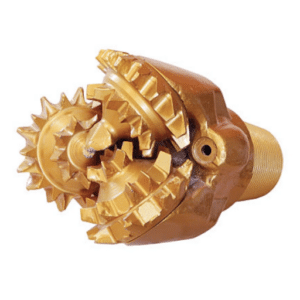
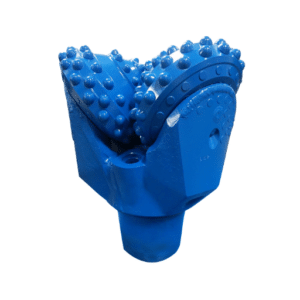
A regular soil excavation bucket broke off its tooth on the twelfth pile. The crew on site, in São Paulo, had ensured that the bore diameter matched the required pile dimensions. They had also checked that the Kelly box was proper for the job. Their error was in failing to perceive the concealed presence of very hard basaltic rock beneath the improbable scope of “weathered rock” as written in the soil investigation report.
The replacement to this was a rock excavation drilling bucket. It was full face with tungsten carbide bullet teeth and featured reinforced shell plates and Hardox cutting edges. 340 piles were bored after replacing the bucket without any serious repairs. The operator was the same. The rig stood the same. The bucket specification was the only thing that changed.
Most of the geotechnical engineers go by patience and coordination. This order is specified differently but the usual practice includes the diameter of the bucket versus the diameter of the pile and the pile tooth and call it a day. However, this does not work this way as all the above and some additional specifics come into play: the soil characteristics, motion techniques, the teeth arrangement and the quality of materials will all lead to the efficiency of the drilling bucket or the occurrence of the breakdowns regularly.
This guide goes on about what the drilling bucket is, how to use each of them and how to choose the best specification based on the type of soil, the capacity of the machine and the works to be carried out. You will find out how to read technical data in a spec sheet, when and where one should choose heavy-duty options, and how to extend the service life of a bucket.
Need help matching a drilling bucket to your ground conditions? Contact Changsha Mingyi for a free technical consultation and custom tooling recommendations.
What Is a Drilling Bucket

A drilling bucket (or a rotary drilling bucket) is a cylindrical container tool, connected to a rotary drilling tool using a kelly bar. It cuts the soil or rock at the bottom of a bore hole, fills the cutting inside its barrel, and transports the motive force in one of them, which empties it out of the bucket openings. The cylinder is repeated time and time again until the column attains the intended length.
Rotary torque and crowd force together bring about the cutting effort. Depending on the application there may be teeth or cutting edges on the bottom middle surface of the bucket. When the rig turns and the downward force is applied, the teeth break the ground. Cut material enters the bucket through the opening at the bottom. After several fillings, or at the set depth, the bucket goes up, the bottom opens, and the muck goes to the ground.
This excavation – lifting – extracting – discharge cycle is why the drilling bucket is built out for the bored pile construction. A traditional drilling bucket excavation substitutes in discrete intervals for spoil removal which would be served by CFA. Developments of this type are in the use of larger diameters and in the cutting of hard to very hard soils as well as rocks.
Drilling Bucket Types Explained
Different types of drilling buckets are created to cater for various ground conditions; therefore, understanding drilling bucket type is the first step of proper specification. In general, there are four categories in the industry recognizing specific design features for particular soil types and project requirements.
Soil Drilling Buckets
Soil drilling buckets handle soft to medium ground conditions. They come in two main configurations.
The first type is Single-bottom soil buckets, which operates a simple hinged base plate that discharges by opening. Single-Bottom Soil Buckets are cheaper, lighter and most effective in clay, loose sand and fine silt. Because of the simplicity in design, there aren’t many mechanical parts that have to be maintained. Unfortunately, the single bottom approach offers lesser structural strength in cohesive soils and in very abrasive soils.
Double-bottom soil buckets are equipped with a reinforcement layer between the cutting edge and the shell which particularly reinforces the drilling bucket. In a two bottom drilling buckets a two-bottom design is particularly effective and it also facilitates soil retention when the cuttings are lifted because of the extra reinforcement which also helps to prevent deformation that may occur due to large amounts of soil being cut. Double bottom designs should be used by contractors who work mainly in dense silt, firm clay or sand containing gravel.
Their handling of the opening is different. They are of two kinds: hinged bottoms meant for simplified opening and equipped with the gravitational latch, and ones of the spring-loaded type which kick in retention force when the bucket is hoisted for better sealing. When this actuation is mechanical, the closure may be effected in the most well-defined way, but greater engineering, as well as an increase in mass, is incurred as well.
Rock Drilling Buckets
Rock drilling buckets are able to pass type soil buckets can not. They are with the reinforced shells, the cutting edges that are even stronger than of the usual ones, and the specially designed teeth that are most often used in broken rock and other dense materials’ placements.
The cutting system distinguishes rock buckets from soil buckets. Soil buckets do not have flat cutting edges. The cutting edges of rock buckets are equipped with bullet teeth with Tungsten carbide inserts, roller bits, or conical picks designed in specific orders. The reason behind using these types of teeth in these buckets is to concentrate the force on small contact points which will break the rock rather than bring it down in pieces.
Steel shell thickness in soil excavation metallic buckets typically varies from 25 mm to 40 mm, covering the inner side of the bucket. The sand excavation buckets use 20mm to 25 mm shells. This reinforcement allows the bucket to address the energy of the impact loads, the shop slip mask and wear load that could penetrate a less rigid variant.
Cleaning Buckets
Cleaning tools in the becket do not remove – they bell. They bluster. A clean-out bucket in the context of a drilling machine operates in a way where a tool takes off accumulations of partial and fluidized sediment from the borehole bottom according to the pristine cutting system.
The so–called cleaning bucket has to have a flat bottom with little or no cutting elements. The bottom closed should also be completely shut so that no fine materials are lost. Under no circumstances should any material be resorted to the pile if the base is made out of any such soft material rather than with the necessary firm support.
Specialized Buckets
Several niche designs address specific construction challenges.
Core barrel buckets available in the market are a combination of well drilling principle and plain drilling techniques. They remove an annular ring while keeping the inner soiling into breaks for seeding and removal. This manages to many substantial impediments in full full-face drilling in rocks.
Belling buckets, which push out elements at the borehole bottom from the original borehole to increase the support. Such a tool similarly plays the role of a cutting and extending device whose mechanism involves the escape of the tools deep down below where the bore zone is, so as to remove it.
Through-tube buckets, which have a tube in the center for placement of tremie concrete or to enable circulation of slurry. These are used in some specific applications, such as slurry wall construction and diaphragm walls.
| Bucket Type | Best For | Shell Thickness | Tooth Type | Relative Cost |
|---|---|---|---|---|
| Single-bottom soil | Clay, sand, silt | 16–20 mm | Flat or chisel | Low |
| Double-bottom soil | Dense clay, sand/gravel mix | 20–25 mm | Flat or chisel | Medium |
| Rock bucket | Weathered rock, hard soil | 25–40 mm | Bullet teeth, roller bits | High |
| Cleaning bucket | Sediment removal | 16–20 mm | None or minimal | Low |
| Core barrel | Solid rock, boulders | 30–40 mm | Roller bits, picks | High |
How to Select a Drilling Bucket: The 5-Step Framework

It is important to select the most appropriate type of drilling bucket rather than trying to fit the pile to the bucket diameter, for instance. Use the following five-step guideline to assist in the definition of the most efficient bucket from the first pile to the last.
Step 1: Match Bucket Type to Soil Conditions
Soil type is the starting point for every specification decision.
When first introduced, clayey and sandy soft soils favor single bottom soil buckets with flat teeth, due to less cutting resistance to the soil. The reinforcing bars are unnecessary since the soil is easy to penetrate and they only make the bucket heavier and more expensive. The smaller the width of the teeth is, the more the soils that adhere to the teeth shall be collected especially in cohesive soils.
On the other hand, compact sand and silty sand may need double-bottom soil buckets for reasons of stability while drilling. Additional abutment is provided to reduce base plate slump when the crowd forces are increased. Also, wider tooth spacing causes less clogging in the sticky clays.
In case the ground is composed of sand and gravel with sand cobbles, then the most suitable bucket is a double-bottom bucket with the edges reinforced. Such a bucket should be able to withstand strikes from a variety of stone particles without any cracks appearing. Tooth systems that are replaceable become necessary since the cobbles grind teeth that are welded to the bucket too quickly.
Weathered stone and cracked stone would best be penetrated with a bucketless drilling method featuring conical bits or roll bits. Uneven terrains can cause the flat teeth to slip on the rock’s texture without causing any damage. Bullet teeth feature spikes or small cones in order to localize the transmitted energy and enhance the rate of brekage.
Solid rock and boulder fields exceed bucket capability. Specify a core barrel for coring operations, then break and remove the core with a rock bucket or grab.
Step 2: Size the Bucket to Pile Specifications
It is expected that the bucket diameter should be from ninety-seven to one hundred percent of the prepared pile diameter. Failure to make the size as requested endangers the borehole since undercuts develop around the pile. An overestimated bucket increases the amount of concrete used unnecessarily thus inflating the total costs of the work.
The bucket height specifies the volume extracted at each loading cycle. These geometries range from one thousand to three thousand millimeters in the standard form. Basically, longer buckets offer higher transport capacities per cycle; however, they also come with a higher cost of weight and require higher torque and crowd force to make them move.
The other dimension, which has to be considered in the bucket – the opening ratio, largely affects the speed of material discharge. This ratio evaluates the cross-sectional area open for material discharge in comparison with the cross-sectional area of the bucket. Larger values of these ratios are associated with a quicker act of emptying the bucket. Soil buckets will employ 35% to 55% and rock will have a lower percentage as the material is heavier and needs more bracing.
Step 3: Choose the Right Cutting Tools
Drilling bucket teeth are the boots that are attached to a so-called bucket and make close contact with the surface. The quality of penetration, usable capacity, and maintenance procedures all depend on whether or not the efficient tooth is chosen.
Flat teeth are mostly used for tamping in soft clays and sands. They go through the materials without friction, which does not result in destruction but in cutting. Therefore, their wear is so minimal that they are not expensive as other parts to be replaced. But in sandy soils, since they often form grooves in the ground, the sand under the bucket is quickly rubbed with the machine.
Chisel teeth deal with stiff cohesive soils or soft rock much better, since their tips create a relatively larger area of contact during penetration.
Bullet teeth with carbide inserts handle weathered rock, dense till, and gravel. The tungsten tips would require much more abrasive resistance than a steel body would. They may be pricier – up to three times costlier than ordinary flat teeth but may work a rock face up to eight to twelve times longer.
Roller bits fall under the category designed for dealing with such complications as the presence of solid rock or boulders. Most hard rock applications involve crushing rather than cutting. They are the most costly, but also the only practical option for materials stronger than unsealed crumbly rocks.
Tooth spacing and arrangement are also significant. Having little space in between teeth helps to pick up clay quite effectively; however, it gets easily choked by gravel. On the other hand, when there is too much space between teeth, the instrument sinks deeper into the coarse structure but large areas near the teeth are not collected. Beyond that, it is common for suppliers in the market to supply models specifically designed for certain soil classes.
Step 4: Verify Rig Compatibility
The most ideally designed drilling group equipment cannot bring the required effect in operation without adjustment to the machine under such conditions. Three things are very important: the Kelly box, the fair rated torque that it can handle and the crowd force that operates.
There are different-sized Kelly boxes for piling work, such as CH150, CH160, CH175, CH190 and CH200. The Kelly box size must correspond to the rotary head of the drilling equipment. If the fit is not good, then this will lead to problems such as loosening of the connecting head, excessive noise and premature fatigue. Using a CH150 box with a CH175 drive results in the distortion of the cavity.
The maximum force or capacity of the torque is determined by how much rotational motion the bucket can transfer. For solid to hard rock with large caliber rock bucket, 80 kNm to 150 kNm of torque is required. The Kelly box and jacket must bear this without breaking or twisting.
Step 5: Evaluate Material Quality and Manufacturing
There is a big difference in quality between a bucket that is thrown away after two hundred loads, and one that would last two thousand.
The thickness of the metal can help determine the use of the bucket. Most earth buckets use 16 mm to 20 mm. However, heavy and rock buckets contain thick plates of 25 mm to 40 mm. Thin-shelled buckets are not, however, effective especially when so loaded.
The steel’s grade makes it have different strength levels, which modify the weldability factor and the protection it provides from a striking blow innovation reduces. Most alloy high-strength steel can resist high-strength fasteners and stress of edge-stressing loads compared to a structural carbon steel. The very composition varies every parameter, starting from weight to the life span due to certain reasons.
The quality of the welds is directly proportional to the durability of the whole structural unit. Hence, it is recommended to make full-penetration welds on the sections where the shell, base plate and Kelly box need to be joined. Incomplete welds concentrate the stresses in the areas of premature fatigue failure. It is here where the price of $50 is inappropriate. A well-welded bucket clears straight without hitches. A poorly welded bucket on the other side vibrates while doing so and knocks the rig out of bearing.
Key Specifications Decoded

Materials and processes are used to define the performance of a given construction. This criterion helps in avoiding instances where materials are misused.
Shell Thickness and Material
Depending on the purpose of the tools, the buckets come with shells that are 16 mm thick for light soil and 40 mm for heavy rock buckets. Thick shells sag very much and are also erosive resistant but increase the weights in loads. In other words, any additional weight placed on the bucket reduces its ability to resist crowd forces in cutting operations.
Material grade is as important as the thickness. That is why standard structural steel cannot withstand heavy torque. Unlike structural steel, for instance, high-strength low-alloy steels retain their shape under load and withstand impact from obstacles. The use of high-quality manufactured steel for foundation drilling purposes prevents weakening that is characteristic of competitive steels.
Opening Ratio and Discharge Efficiency
One more piece of the productivity puzzle is dispatch for an order. A grapple with a 35% opening decrement will take longer to discharge the material in it as compared to its 55% opening ratio brother. In a scenario where there is fast drilling, cumulatively over four hundred cycles the gap will still be significant.
Cutting Edge Geometry
Cutting angle is another important parameter that influences the shearing capability of a cutting edge. Steeper angles are known to shear materials much more effectively, but such angles can quickly chisel away. Shallower angles have shown to be less effective in shearing the materials but they also need better rotation in order to achieve the depth.
The next factor that influences cutting angle is cutting edge thickness and the possibility of using wear pads. These pads may be placed in high-wear regions of bucket teeth (hardfacing) to prevent wear of the bucket teeth. Wear pads may also be easily separated, weld-free for use in areas that might require field maintenance.
Kelly Box and Connection
This happens when the torque moves from the rotary table of the rig to the bucket by the kelly box mechanism. These dimensions are usually in the CH150 to CH200 range. The stockpile division has even larger sizes of kellys available which can bear more rotation, these will however need rig modifications to fit in place.
The off-center connectors running from the collapsible section of the center part to the lower section can help prevent reactivation of cracked welds since the applied force does not act perpendicular to the cracked weld. This helps a lot in heavy duty applications, for example, connection life is improved up to two or three times compared to the normal boxes.
Weight and Handling
The weight of a bucket is significant as it impacts the rig’s rated load and rigging fuel consumption. As such, a heavier bucket necessitates greater lifting capacity and therefore there’s a propensity for a rig to face limitations in relation to deeper bores or wider cages.
The weight also has an implied effect on operational aspects. When you are dealing with buckets weighing more than 2 tonnes in weight, this warrants ordering and using special equipment for handling and storage. Rock buckets with large diameters should also be designed based on your site’s crane load specification.
Drilling Bucket vs. Auger: When to Choose Which
Many people are familiar with buckets and augers when drilling holes, though each is best suited to different conditions. Failing to use the correct tools at the right time is the main cause for the low production and increases the costs of the project.
Single bottom cleaning buckets are suitable for rock, wet or flowing soils, large diameters, and bases that are meant for preboring the retrieved soil. The closed structure of the buckets contain the soils that would have been accidentally poured off by the open helical auger. The flat base of a flat-bottom cleaning bucket performs the excavation that the helical auger is unable to.
One of the areas where the advantage of an auger is particularly noticeable is its use in dry cohesive soils. In continuous flight applications, augers are also effective, as well as in CFA pile foundation construction. They have a very distinctive long helix that facilitates steady feeding of the cuttings, meaning without the need for periodically lifting them above the ground. In fact, such augers are particularly useful for contractors employing a CFA continuous flight auger system, not a rotary drilling system with a bucket. In soft clay or dry silt, the auger is more effective when it comes to performance, compared to the bucket.
The price per pile is highly dependent upon the type of soil. In soft clay, an auger is typically faster and cheaper compared to a bucket. In the case of weathered rock, the use of a bucket is inevitable. In the case of mixed ground conditions, e.g., with various layers, contractors bring both kinds of tools and use them at changes of the ground conditions.
Material Quality and Manufacturing Standards of Drilling Buckets

It should be known that not all drilling buckets are the same and it has everything to do with the manufacturer. In the same vein, system practices, importantly, the manner in which it is fabricated and the machinery cannot be said to be academically average in capability.
Steel Grades and Selection
The type of steel used in making the carrier and Kelly box must be high strength alloy. This is in contrast to the general steel that cannot be used in heavy foundation work because of its low layering capacity. Look for materials with:
- High yield strength for torque and crowd resistance
- Good weldability for fabrication quality
- Impact resistance for unexpected obstructions and boulders
Some manufacturer do make use of stainless steel for the fabrication of drilling machines and their applications in comparison to any other type it is the best for the said purpose. This rendering is to suggest that the higher steel grade, the lesser is the bucket weight which will further affect the fatigue life due to cyclic loading.
Fabrication Quality Checks
Quality inspection is a must and comes with four elements. Visual run straight which is a welder’s inspection, confirms the edges looking for breaks, shrink bubbles or any missing places in the line. Measuring the exact size of the equipment and checking the diameter, length and peace alignment of the kelly box. Cross-checking the attachment position of the buckets and ensuring their rotation is smooth. Fit testing the connection joint checks if the Kelly box is assembled properly so that there won’t be any problems such as issues, when it is delivered.
Extremely heavy construction rotobucket tracks accurately. In contrast, a poorly constructed bucket infringes on the drilling process, produces helical movement on the rotary table and its wearing out is uneven.
Wear Protection Options
By virtue of these benefits, wear protection, which is a deteriorative apart or mechanical protective equipment, helps in prolongation of bucket lifespan in aggressive top material. Durable cutter types from Hardox wear plates in areas with high wear potential, welded on designs for teeth such as compact overlays for chuck bodies and adapters and teeth replacement by reorderable insert teeth at sites, even in the absence of welding construction.
The method of attaching the wear caveats is usually dependent on the type of soil that is being worked. In soft ground, cutting edges may work without wear for quite some time, say hundreds of piles. In sandy ground rich in quartz, and without the sides protected unguarded edges will collapse within about two weeks.
If your projects involve abrasive ground, explore our custom drilling tool solutions designed for specific wear challenges.
Conclusion
Recommendation of the final choice of the drilling bucket does not merely depend on the attachment to the size of the pile. The process is about the engagement of all parameters of the bucket type, including the size of material as well as the opening and drilling tools, sizes of kelly boxes and other aspects of your rig and the soil itself.
The plan is easy and can be followed directly without challenges. Specify the kind of bucket that will work efficiently. Adjust the size to be appropriate for the pile configurations. Use an instrument that goes into the ground instead of sliding. check the pile and ensure that the equipment works well with it. The cost of availability of material to produce any product should not be a consideration in production capacity or goods.
The key takeaways are clear:
- Start with the soil. Soil type determines whether you need a single-bottom soil bucket, double-bottom design, rock bucket, or core barrel.
- Size for efficiency. Diameter, length, and opening ratio all affect cycle time and cost per pile.
- Specify cutting tools for penetration. Flat teeth for clay, bullet teeth for rock, roller bits for hard stone.
- Verify rig compatibility. Kelly box size, torque capacity, and crowd force must align.
- Invest in material quality. The cheapest bucket is rarely the most economical over a full project.
The use of appropriate drill tooling in drilling buckets shall enhance the advancement of work, cut the machine downtime and lower the cost of the tool per pile in the end. An underspecified drilling bucket, on the other hand, will cause drilling to drag, frequent adjustments, and project extensions.
In case you want to discuss the selection of a drilling bucket suitable for your rig and ground conditions, Changsha Mingyi Machinery Equipment Co., Ltd will be pleased to assist. They provide a full scope of engineering services, which include the design and manufacture of custom drilling buckets for rotary rigs all over the world.
Contact us today for a free equipment assessment and custom drilling bucket recommendation.