Foundation contractors rarely have the luxury of drilling the same ground every day. One borehole starts in clay, passes through gravel, and ends in weathered shale. That is why knowing the types of rotary drilling bits and which tool each mounts on is the first step to controlling cost per meter.
Most supplier catalogs list bit types by part number. That is useful for reordering, but it does not help you decide what to run at 8 a.m. when the rig is waiting. The right way to classify types of rotary drilling bits is by cutting action and ground condition, and then match each type to the tool that delivers it.
This guide explains the main types of rotary drilling bits used in bored pile and deep foundation work. You will learn how each bit cuts, which ground conditions it is built for, and what to watch during maintenance. By the end, you will be able to match the bit to the formation without guessing.
What Is a Rotary Drilling Bit

A rotary drilling bit is the replaceable cutting structure at the bottom of a rotary drilling tool. It is the part that contacts the ground, breaks it, and allows the tool to advance. In foundation work, this is not a standalone drill bit like those used in oil and gas. It is a component mounted on a drilling bucket, rotary drilling auger, core barrel, or casing shoe. These foundation drilling bits are designed for the slow rotation and high torque of piling rigs.
The bit works through a combination of downward force, or weight on the bit, and rotation. Rotary drilling rigs for foundation work typically produce 32-320 kN·m of torque and rotate at 6-45 rpm. Those numbers matter because the bit must withstand the load without fracturing or wearing too fast.
The design of the bit determines how it attacks the ground. Some bits chip rock with a pointed carbide insert. Others crush it with rolling cones. Still others scrape soil with flat blades. The same rig can use several types of rotary drilling bits and many related rotary drilling bit types in a single borehole by swapping tools as the ground changes.
For a broader look at selection logic across types of rotary drilling bits, see our rotary drilling bit selection guide. It covers how to choose between bit families based on rig parameters and project scope.
The Main Types of Rotary Drilling Bits
The following seven types cover most foundation drilling applications. Each one fills a specific role, and many contractors keep several on site.
1. Bullet Teeth
Bullet teeth, also called conical teeth or pick teeth, use a pointed tungsten carbide insert to chip and fracture rock. They are the most common type of bullet teeth for foundation drilling and are used in rock drilling buckets, rock augers, and core barrels. Common bullet teeth foundation drilling models include B47K19H, B47K22H, and C31HD. The carbide tip concentrates force on a small area, which initiates cracks in medium to hard rock.
Bullet teeth work best in weathered rock, gravel, and mixed soil layers. They are also easy to replace when worn, which makes them popular on sites where tool wear is high.
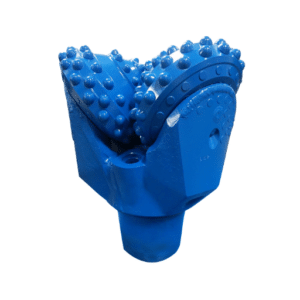
2. Roller Bits
Roller bits, or roller cone bits, use rotating cones with hardened inserts to crush and grind the formation. They are the go-to choice for very hard rock because the rolling action distributes wear across multiple cutting surfaces. In foundation work, roller bits often appear on roller bit core barrels designed for compressive strengths from 80 MPa up to 350 MPa.
They cost more than bullet teeth, but their penetration rate in hard formations often offsets the higher price through reduced rig hours. That is why contractors consider roller bits among the most productive types of rotary drilling bits in hard rock.
3. Flat Teeth
Flat teeth, sometimes called bucket teeth or welding bars, are wide blades that scrape and shear soil. A flat teeth drilling bucket is the standard choice for cohesive clay and loose sand. Flat teeth are also mounted on clay augers and some casing shoes. BFZ80 is a common flat tooth reference in soft-ground tooling.
These teeth excel in clay, silt, sand, and other cohesive or loose formations where the goal is to remove material quickly rather than break rock. They are not suitable for hard rock because the flat edge will wear rapidly and overheat.
4. Core Barrel Cutting Structures
Core barrels can carry several cutting configurations. A bullet-tooth core barrel uses conical picks arranged around the cutting ring. A roller bit core barrel uses roller cones for hard rock. A cross-cutter core barrel uses large cutting arms for fractured or abrasive formations. These three core barrel teeth types let the same barrel body cover very different rock conditions.
Understanding core barrel teeth matters because the same barrel body can be configured for very different rock conditions simply by changing the cutting structure.
5. Drag Bits and Claw Bits
Drag bits are simple, fixed-blade cutters used in soft soil, clay, and loose sand. They scrape rather than chip. Claw bits are a variation with multiple pointed teeth arranged in a claw pattern for breaking up softer rock or dense clay.
These bits are inexpensive and easy to maintain, but they wear quickly on abrasive ground. They are most common on small-diameter augers or specialty tools.
6. Bottom Expansion Bits
A bottom expansion bit, also known as an under-reamer, enlarges the base of a borehole after the main shaft has been drilled. It is used when the finished pile needs a larger bearing area at the toe than the shaft diameter allows.
The cutting arms expand outward under downward pressure or hydraulic actuation, then retract for removal. These bits are not used for full-depth drilling but are critical for certain pile designs.
Quick Comparison of Types of Rotary Drilling Bits
| Bit Type | Cutting Action | Best Ground | Typical Tool |
|---|---|---|---|
| Bullet teeth | Point attack / chipping | Weathered rock, gravel, mixed soils | Rock bucket, auger, core barrel |
| Roller bits | Crushing / grinding | Hard to very hard rock | Roller bit core barrel |
| Flat teeth | Scraping / shearing | Clay, silt, sand | Soil bucket, clay auger, casing shoe |
| Core barrel teeth | Annular cutting | Rock cores, hard formations | Core barrel |
| Drag / claw bits | Scraping / light breaking | Soft soil, dense clay | Auger, specialty tool |
| Bottom expansion bit | Mechanical enlargement | Base of borehole | Reaming tool |
This table is a useful field reference, but it is only a starting point. Different types of rotary drilling bits perform differently depending on ground condition, tool type, and tooth model.
How Each Rotary Drilling Bit Cuts

The cutting mechanism of a bit determines how efficiently it removes material. Understanding how different types of rotary drilling bits remove material helps you diagnose problems on site.
Point Attack and Chipping
Bullet teeth use point attack. The sharp carbide tip strikes the rock surface under high contact pressure. This creates micro-cracks that propagate and break off small fragments. Point attack works well in brittle materials like limestone, sandstone, and weathered shale.
The attack angle of the tooth affects performance. A steeper angle is more aggressive but wears faster. A shallower angle lasts longer but cuts slower. Experienced manufacturers adjust this angle based on the target formation.
Crushing and Grinding
Roller bits use a crushing action. As the cones rotate, their inserts press into the rock and crush it into fine particles. This is slower than chipping, but it is the only practical method in hard, abrasive formations where point attack would dull the carbide immediately.
The inserts on roller bits are usually tungsten carbide or, in some cases, diamond-enhanced for extreme hardness. Proper bearing lubrication is essential because the cones must spin freely to avoid flat spotting.
Scraping and Shearing
Flat teeth and drag bits remove material by scraping. The blade slides along the surface and shears off a layer of soil or soft rock. This is highly efficient in clay and loose soil but ineffective in competent rock because the blade cannot generate enough point load.
Shearing action also produces larger cuttings than crushing. In clay, that is fine. In rock, it means the bit is not actually breaking the formation.
Annular Cutting
Core barrels cut an annular ring, leaving a solid core in the center. The cutting teeth on the ring break rock at the perimeter while the core remains intact. Once the barrel is full or the target depth is reached, the core is broken and retrieved.
This method is efficient because it removes only the material needed to advance the hole, not the entire cross-section. For hard rock foundation drilling, types of rotary drilling bits, such as core barrel cutters, are the standard approach.
Mechanical Enlargement
Bottom expansion bits do not cut the full depth of the hole. Instead, they enlarge the base after the main drilling is complete. The arms swing out and remove a ring of material at the borehole toe, increasing bearing capacity without requiring a larger diameter along the full shaft length.
Matching Types of Rotary Drilling Bits to Ground Conditions
Ground condition is the first filter when choosing among types of rotary drilling bits. Use compressive strength as a practical guide, but also consider abrasiveness, fracturing, and moisture content. To make the best choice for you, please read our article on rotary drilling bit selection.
Soft Soil, Clay, and Sand: Less Than 20 MPa
In soft ground, types of rotary drilling bits such as flat teeth and drag bits are the standard choices. They scrape material efficiently and cost less per meter than rock tooling.
For cohesive clay, a flat tooth with a positive rake angle reduces sticking. For loose sand, wider blades prevent the material from flowing around the cutting edge.
Medium Soil, Gravel, and Weathered Rock: 20-70 MPa
This is the transition zone where bullet teeth become the better option. Standard bullet teeth like B47K19H or C31HD can handle weathered rock, gravel layers, and hard clay. They chip rather than scrape, which improves penetration in mixed formations.
On a recent bridge project in Southeast Asia, a crew started with flat teeth in clay and switched to B47K22H bullet teeth when the borehole passed into weathered sandstone. The change reduced tooth replacement from every 15 meters to every 45 meters, saving two rig days over the course of the job.
Hard Rock, Limestone, and Sandstone: 70-150 MPa
In hard rock, use heavy-duty bullet teeth or roller bits. B47K22H with larger carbide inserts is a common upgrade. For consistently hard formations, a roller bit core barrel is more cost-effective than other types of rotary drilling bits because the rolling cones maintain penetration rate even as carbide wears.
Pay attention to flushing and cooling in this range. Without adequate flow, carbide tips on these types of rotary drilling bits overheat and lose hardness quickly. For more information, you can read our article on Rotary Drilling Bit for Hard Rock.
Very Hard Rock, Granite, and Basalt: Above 150 MPa
For very hard rock, roller bits and cross cutters are the practical choices. Roller bit core barrels can operate effectively up to 350 MPa in favorable conditions. Cross cutters are used when the rock is too fractured or abrasive for roller cones.
In this range, bit cost per meter is high, but rig cost per meter is usually higher. Choosing the right types of rotary drilling bits for very hard rock reduces total project cost even if the individual tool is expensive.
MPa-Based Bit Selection Matrix
| Ground Condition | Compressive Strength | Recommended Bit | Notes |
|---|---|---|---|
| Soft soil / clay / sand | < 20 MPa | Flat teeth, drag bits | Fast removal, low wear |
| Medium soil / gravel / weathered rock | 20-70 MPa | Bullet teeth (B47K19H, C31HD) | Versatile, easy to replace |
| Hard rock / limestone / sandstone | 70-150 MPa | Heavy bullet teeth (B47K22H), roller bits | Use roller bits for abrasive rock |
| Very hard rock / granite / basalt | > 150 MPa | Roller bits, cross cutters | Highest wear, slowest penetration |
This matrix is based on field experience and supplier guidance, rather than a universal standard. Always confirm with a pull test or pilot hole when the geology is uncertain.
Types of Rotary Drilling Bits by Tool

The same type of rotary drilling bit can behave differently depending on the tool it mounts on. Tool geometry, rotation speed, and flushing path all influence performance.
Drilling Buckets
Soil buckets use flat teeth for clay and sand. Rock buckets use bullet teeth for weathered or soft rock. Some buckets combine both drilling bucket teeth types, with bullet teeth on the outer ring and flat teeth in the center. For help making this decision based on your specific ground conditions, you can read our Drilling Bucket Teeth Selection Guide.
For a detailed guide, see our article on drilling bucket selection. It explains how bucket bottom design affects cutting efficiency.
Augers
Rock augers on rotary drilling augers typically use bullet teeth arranged in a spiral pattern. Rock auger teeth are usually spaced closer than soil auger teeth to maintain cutting continuity in hard ground. Soil augers use flat teeth or drag bits. Wider spacing is acceptable in soft soil.
Our guide to auger teeth types covers spacing and model selection in more detail.
Core Barrels
Core barrels are the primary tool for hard rock. Among types of rotary drilling bits, the cutting structure can be configured with bullet teeth for medium rock, roller bits for hard rock, or cross cutters for fractured or abrasive conditions. Matching the cutting structure to the barrel diameter and rig torque is critical.
For a deeper look, read our article on core barrel drilling tools.
Casing Shoes
Casing shoes sometimes use bullet teeth or flat teeth to cut through overburden as the casing is advanced. The choice of types of rotary drilling bits for casing shoes depends on whether the casing is driven through soil, gravel, or soft rock.
Material and Quality Considerations
The best bit of design will fail if the materials are wrong. All types of rotary drilling bits are subjected to impact, abrasion, and bending loads, so both the steel body and the carbide insert matter.
Steel Grades
High-quality bit holders and bodies are usually made from 42CrMo alloy steel or equivalent grades. After heat treatment, the steel should reach 40-44 HRC. This hardness provides a balance between strength and toughness. If the steel is too soft, it deforms. If it is too hard, it cracks under impact.
Carbide Grades
Tungsten carbide inserts are graded by cobalt content and grain size. YG11C, with about 11% cobalt, is a common choice for hard rock because it resists fracture under impact. YG8C is harder and more wear-resistant, making it suitable for softer, more abrasive ground.
YG11C typically measures 86.5 HRA or higher, with a transverse rupture strength of at least 2,450 MPa. These numbers tell you whether the carbide can handle the loads you plan to apply.
Tooth Geometry
Carbide size, attack angle, and holder position all affect cutting efficiency. Larger carbides last longer but require more torque. Steeper attack angles cut faster but wear faster. A good supplier optimizes these parameters based on your ground conditions and rig capacity.
Changsha Mingyi manufactures cutting structures with 42CrMo steel bodies and application-matched carbide grades. If your project involves mixed or abrasive ground, request a custom bit recommendation, and we can match the tooth geometry to your formation.
Maintenance and Replacement by Bit Type

Replacing worn bits before they fail saves time and protects the tool body. Each of the types of rotary drilling bits has its own wear signals.
Bullet Teeth
Check the carbide tip for rounding or fracture. A wear threshold of more than 5 mm is a common replacement cue. Also inspect the retaining clip and the weld between the holder and the tool body. Loose teeth can damage the holder pocket and make replacement difficult.
Roller Bits
Roller bits require inspection of cone rotation, bearing cleanliness, and seal condition. A cone that does not spin freely will flat-spot and stop cutting. Clean the bearings and replace worn seals during routine maintenance.
Flat Teeth
Flat teeth wear at the cutting edge. When the edge becomes rounded or the tooth height drops significantly, the penetration rate falls, and the bucket edge may start taking the load. Replace flat teeth before the bucket body is damaged.
Core Barrel Teeth
Uneven wear around the cutting ring indicates poor alignment or uneven weight distribution. Core barrel teeth also need inspection after each run because a single worn tooth can cause the barrel to deviate or vibrate.
Cost and Procurement Tips
Buying types of rotary drilling bits by price alone is a common mistake. In hard rock, a cheap bit that wears twice as fast can double your rig cost per meter.
Think Cost Per Meter
The right metric is total drilling cost divided by meters drilled. Include bit cost, rig time, labor, and downtime. A more expensive bit that drills faster and lasts longer often produces a lower cost per meter.
Ask the Right Questions
When evaluating a supplier for types of rotary drilling bits, ask for material certificates, heat treatment reports, and carbide grade specifications. A reliable supplier should also be able to customize tooth spacing, carbide size, and holder angles for your specific ground conditions.
Match Stock to Project Mix
Keep a mix of flat teeth, bullet teeth, and roller bits on site if your geology varies. Having the right bit available when the formation changes prevents rig downtime and reduces emergency orders.
Changsha Mingyi supplies OEM and custom-cutting structures for contractors worldwide. Whether you need standard foundation drilling tools or a specialized configuration, we can help you match the bit to the job.
FAQ
What are the main types of rotary drilling bits?
The main types of rotary drilling bits are bullet teeth, roller bits, flat teeth, core barrel cutting structures, drag bits, and bottom expansion bits. Each type is designed for a specific cutting action and ground condition.
What is the difference between a bullet tooth and a roller bit?
A bullet tooth chips rock with a pointed carbide tip. A roller bit crushes rock with rotating cones. Bullet teeth work well in medium rock, while roller bits are better for hard to very hard rock.
When should I use flat teeth instead of bullet teeth?
Use flat teeth in soft soil, clay, and sand where the material can be scraped or sheared. Use bullet teeth when you encounter gravel, weathered rock, or hard clay.
What type of bit is best for hard rock?
For hard rock, use heavy-duty bullet teeth or roller bits. In very hard rock above 150 MPa, roller bit core barrels and cross cutters are the most effective options.
Can the same bit type work on a bucket and an auger?
Yes. Bullet teeth and flat teeth are commonly used on both buckets and augers. The tooth model and spacing may change depending on the tool diameter and target formation.
What is a bottom expansion bit used for?
A bottom expansion bit enlarges the base of a borehole after the main shaft is drilled. It is used to increase the bearing area of a pile without changing the shaft diameter.
Conclusion
Understanding the types of rotary drilling bits is essential for any contractor working in variable ground. The right bit reduces wear, improves penetration, and keeps the rig productive. The wrong bit wastes hours and budget.
The key is to match the cutting action to the ground condition. Use flat teeth and drag bits for soft soil. Switch to bullet teeth in weathered rock and gravel. Move to roller bits and cross cutters when the compressive strength climbs above 70-150 MPa. And always match the foundation drilling bits to the tool, whether that is a bucket, auger, core barrel, or casing shoe.
If you need help selecting the right cutting structure for your next project, contact Changsha Mingyi Machinery Equipment Co., Ltd. Our engineering team can recommend tooth models, carbide grades, and tool configurations based on your ground report and rig specifications.