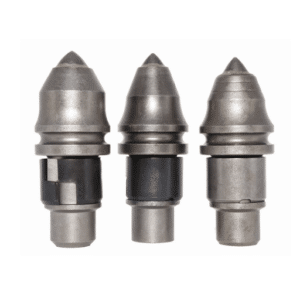
A contractor in Zhejiang province installed 32 new B47K22H teeth on a rock auger before a bridge pile job. By the third bore, four teeth had ejected, and two holders were cracked. The problem was not the teeth. His crew had installed new teeth into holders with elongated pockets that were already 2 millimeters oversize. The teeth wobbled under rotation, the retainers failed, and the loose teeth hammered the holder bodies until the welds cracked. The repair cost three days and $3,200.
Most crews treat bullet teeth holders as simple hardware. They weld them on, swap teeth when they wear, and blame the tooth when something fails. In reality, the holder is the foundation of every tooth’s performance. A perfect tooth in a worn holder will fail faster than a budget tooth in a precision holder.
This guide gives you a complete installation workflow. You will learn how to select the right holder for your tooth model, weld it with the correct parameters, install teeth properly, and spot holder problems before they destroy your tooling. If you need background on bullet teeth themselves, start with our complete bullet teeth guide.
Need holder compatibility verification before your next order? Contact our technical team with your tooth model numbers, and we will confirm the exact holder specification.
What Are Bullet Teeth Holders?

Bullet teeth holders are the welded or bolted pockets that anchor bullet teeth to drilling tools. They serve as the critical interface between the replaceable tooth and the permanent auger, bucket, or core barrel body.
A holder does three things. It positions the tooth at the correct cutting angle. It absorbs and transfers impact loads into the tool body. And it allows rapid tooth replacement in the field. When any of these three functions degrades, tooth life collapses.
Holder Construction Basics
Quality holders are machined from alloy steel, typically 42CrMo or an equivalent grade. This material offers the strength to withstand repeated impact without becoming brittle. After machining, the body undergoes heat treatment to approximately 45 to 50 HRC. This hardness resists wear while maintaining enough toughness to avoid cracking under shock loads.
The pocket bore is the most critical feature. It is precision-machined to match a specific tooth shank diameter, typically 25 millimeters for the C31HD series or 30 millimeters for the B47K series. A bore that is even 0.5 millimeters oversize allows tooth wobble, uneven wear, and retainer failure.
Bullet Teeth Holder Types and Compatibility
Choosing the wrong holder model is the most common ordering mistake. A 30-millimeter tooth will not fit a 25-millimeter pocket. A 25-millimeter tooth in a 30-millimeter pocket will rattle, destroy the retainer groove, and eject under vibration.
Holder Model Overview
| Holder Model | Shape | Tooth Series | Shank Diameter | Mounting Method | Unit Weight | Best Application |
|---|---|---|---|---|---|---|
| B43H | Square | B47K series | 30 mm | Weld-on | 1.75 – 2.2 kg | Hard rock, heavy-duty rigs |
| B85/2 | Round | B47K series | 30 mm / 38 mm | Weld-on (reinforced) | 2.2 – 2.45 kg | Very hard rock, high impact |
| B85 | Round | B47K series | 30 mm | Bolt-on | ~2.0 kg | General foundation, mid-size rigs |
| C30 (square) | Square | C31HD series | 25 mm (1 inch) | Weld-on | ~1.25 kg | Hard rock, mining applications |
| C30 (round) | Round | C31HD series | 25 mm (1 inch) | Weld-on or bolt-on | ~0.8 kg | General purpose, softer ground |
Weld-On vs Bolt-On Holders
Weld-on holders provide maximum strength. The permanent weld joint distributes impact forces evenly into the base plate and will not loosen under vibration. Use weld-on holders for hard rock applications where shock loading is severe.
Bolt-on holders attach through pre-drilled holes. They allow faster field replacement if the holder itself wears out. The trade-off is the risk of bolt loosening under vibration. A bolt-on holder in 60 MPa rock can loosen within 50 meters if not checked daily. For guidance on matching holders to ground conditions, see our article on how to choose bullet teeth.
Pre-Installation Preparation
Good installation starts before you strike an arc. A dirty base plate, a wrong holder model, or a missing tool will create defects that show up as failures under load.
Tools and Materials Checklist
- Welding machine with DC output
- E7018 low-hydrogen electrodes, 3.2 mm or 4.0 mm diameter
- Angle grinder with flap disc and grinding wheel
- Caliper or bore gauge for pocket measurement
- Temperature crayons or infrared thermometer
- Circlip pliers (for B47K series)
- Hammer and punch for tooth removal
- Clean rags and wire brush
Inspect the Base Plate
Remove all paint, rust, and mill scale from the mating surface using a grinder. Check the plate thickness. Welding a heavy holder onto a thin plate creates stress concentrations. Verify there are no cracks in the surrounding material. A cracked base plate will transmit failure into the new weld regardless of how well you weld.
Match Holder to Tooth
Remove one existing tooth and measure the shank with a caliper. Match this measurement exactly to the holder pocket. For B47K series teeth, you need a 30-millimeter pocket. For the C31HD series, you need a 25-millimeter pocket. For exact tooth dimensions and series identification, refer to our B47K and C31HD model specifications.
How to Weld a Bullet Tooth Holder

Poor welding is the leading cause of holder failure. A cracked weld transmits shock loads directly into the tooth shank, causing premature breakage. The following procedure applies to all weld-on holder models, including B43H, B85/2, and C30 square.
Step 1: Position the Holder at the Correct Angle
Place the holder on the base plate so the tooth will sit at 35 to 45 degrees from the cutting plane. This angle ensures proper ground penetration and even wear across the carbide tip. An angle below 35 degrees causes the tooth to skate across the surface. An angle above 45 degrees concentrates the load on one side and accelerates uneven wear.
Use an angle gauge or welding template to verify position before tacking. Tack weld at two points, then recheck the angle. It is easier to adjust a tack than to cut out a fully welded holder.
Step 2: Preheat the Base Metal
Preheating prevents hydrogen-induced cracking in high-strength steels. The required temperature depends on your base material.
| Base Material | Preheat Temperature | Notes |
|---|---|---|
| High-carbon tool steels | 100 – 150 degrees C | Standard for most drilling tools |
| General bucket/cutting edge plate | 300 – 400 degrees C | Measure 150 mm from weld zone |
| Hardox or similar wear plate | Maximum 200 – 250 degrees C | Higher temps reduce hardness |
Use temperature crayons or an infrared thermometer. Do not guess. A cold weld in high-carbon steel will crack within the first ten hours of drilling.
Step 3: Set Welding Parameters
The following parameters are your baseline for holder welding.
| Parameter | Specification |
|---|---|
| Electrode | E7018 low-hydrogen |
| Amperage | 140 – 180 A DC |
| Consumable yield strength | 500 MPa maximum (soft consumables) |
| Maximum pass width | 2.5 times electrode diameter |
| Interpass temperature | Maintain preheat minimum |
| Cooling | Slow air cool only; never quench |
Use E7018 electrodes only. Cellulose rods such as E6010 introduce hydrogen into the weld metal and cause cold cracking. Keep electrodes in a sealed container or rod oven to prevent moisture absorption.
Step 4: Weld in Multiple Passes
Weld around the entire holder base. Do not weld only the front and back. A complete wrap distributes the load evenly.
- Root pass: Establish full penetration into the joint root. Move slowly enough to ensure fusion.
- Fill passes: Build up the joint in layers. Do not exceed the maximum pass width.
- Cap pass: Add final reinforcement, keeping the cap height under 2 millimeters. Grind flush if the profile creates a stress riser.
Clean slag between every pass. Slag inclusions are weak points that propagate cracks under cyclic loading.
Step 5: Post-Weld Inspection
Allow the weld to cool in still air. Never accelerate cooling with water or compressed air. Rapid cooling hardens the heat-affected zone and invites cracking.
After cooling, inspect visually for cracks, undercuts, and porosity. If dye-penetrant testing is available, use it. Allow a 24-hour cure period before subjecting the tool to drilling loads. This gives hydrogen time to diffuse out of the weld metal.
How to Install Bullet Teeth

Once the holder is welded and cured, installing the tooth is straightforward. Doing it correctly takes five minutes. Doing it poorly can destroy a holder in one shift.
Step 1: Clean the Holder Pocket
Remove all dirt, slag, and fragments of old retainers. A wire brush and a clean rag are usually sufficient. If the pocket has rust or buildup, use a flap disc gently. Do not enlarge the bore.
Step 2: Inspect the Retainer
Check the circlip or spring clip for deformation. Replace it if bent, cracked, or worn. A retainer that has been compressed multiple times loses spring tension. Installing a worn retainer is the fastest way to lose a tooth underground.
Step 3: Insert the Tooth
Align the retainer groove on the tooth shank with the slot in the holder pocket. Push the tooth in firmly until the groove is fully exposed. The tooth should slide in with moderate resistance. If it falls in loosely, the pocket is worn.
Step 4: Verify Free Rotation
Before installing the retainer, spin the tooth by hand. It should rotate freely with light, even friction. Free rotation is essential for self-sharpening. If the tooth binds, remove it and inspect for burrs or pocket deformation.
Step 5: Install the Retainer
For circlip retainers, place the ring in the groove using circlip pliers. Press evenly until it snaps securely into the groove. For spring clips, ensure the coil is fully seated and the shoulder is engaged.
Step 6: Verify Cutting Direction
Confirm the carbide tip faces the correct direction for the tool’s rotation. A tooth installed backwards will not cut and will destroy itself within minutes. Double-check before lowering the tool into the borehole.
Retention Systems Explained
Not all bullet teeth use the same retention method. Mixing systems on the same tool causes inconsistent seating depths and uneven wear.
Circlip Retention (B47K Series)
The circlip is a spring steel ring that snaps into a groove on the tooth shank. It is the most common system for B47K series holders. Installation requires circlip pliers. The main failure mode is groove wear on the holder pocket. Once the groove wall thins, the circlip cannot seat fully and the tooth ejects.
Spring Clip Retention (BK Series)
The spring clip uses a coil spring that pushes the tooth shank against an internal shoulder in the pocket. This system allows faster field replacement because you can remove the tooth by compressing the spring. Check spring tension regularly. A fatigued spring loses preload and the tooth develops play.
Friction Fit (Some C31HD Holders)
Some C30 holders rely on a tight tolerance between the shank and the bore, with no separate retainer. This design is simple but unforgiving. Any wear in the bore, any nick on the shank, or any temperature expansion breaks the fit. Inspect friction-fit pockets more frequently than retained systems.
Holder Maintenance and Replacement
A holder does not last forever. Knowing when to replace it prevents the catastrophic tooth loss that damages flights, buckets, and borehole walls.
When to Replace a Holder
Replace the holder immediately if any of the following are present:
- Pocket diameter has increased more than 0.5 mm from original specification
- Cracks are visible in the holder body or weld zone
- Wall thickness around the pocket has worn below 3 mm
- The retainer groove is deformed or partially sheared away
A contractor in Guangdong learned this the hard way. His crew installed B47K22H teeth into B43H holders with pockets that had opened from 30 mm to 32 mm through two years of use. The teeth wobbled under rotation. Within one shift, three teeth were ejected and one was lodged in the auger flight, tearing a 150 mm gash. The repair cost $2,400 in labor and materials plus two days of downtime.
Inspecting Holder Wear
Measure pocket diameter with a caliper every time you replace teeth. Compare to the original specification. A gradual increase of 0.2 to 0.3 mm is normal wear. Anything beyond 0.5 mm indicates the holder is nearing the end of its life.
Visually inspect the weld zone for hairline cracks. Tap the holder with a hammer. A dull thud instead of a ring can indicate internal cracking.
Field Replacement Decision Tree
| Condition | Action |
|---|---|
| Minor wear, tooth still seats firmly | Continue using; monitor closely |
| Moderate wear, slight wobble detected | Plan replacement at next scheduled maintenance |
| Severe wear, tooth loose, or visible cracks | Stop drilling; replace holder immediately |
Common Installation Mistakes

Most holder failures are preventable. These are the seven mistakes we see most often in the field.
1. Wrong holder-tooth match. A 30 mm tooth in a 25 mm holder will not seat. A 25 mm tooth in a 30 mm holder will wobble and destroy the pocket. Always verify the shank diameter with a caliper before ordering.
2. Incorrect welding angle. An angle outside the 35 to 45 degree range reduces penetration and causes one-sided wear. Use an angle gauge. Do not eyeball it.
3. Skipping preheat. A crew in Jiangsu welded twelve holders onto a rock auger using cellulose rods with no preheat. Six welds cracked within 50 meters of drilling in 45 MPa sandstone. Re-welding cost a full day and required cutting out the failed holders.
4. Using the wrong electrode. E7018 is the standard for holder welding. Cellulose rods introduce hydrogen and cause cold cracks. Low-hydrogen electrodes cost more per kilogram, but they prevent the rework that costs ten times as much.
5. Quenching after welding. Never cool a holder weld with water or compressed air. Rapid cooling hardens the heat-affected zone and creates brittle microstructures that crack under the first impact.
6. Installing worn retainers. Always use a new circlip or spring clip when installing a tooth. A retainer that has been compressed and released multiple times has lost tension.
7. Ignoring pocket wear. A new tooth in a worn holder fails within hours. The wobble hammers the retainer, cracks the carbide, and can eject the tooth into the borehole. Measure pocket diameter at every tooth change.
Quick Installation Checklist
Use this checklist every time you weld or replace holders.
- Holder model matches the tooth shank diameter exactly
- Base plate cleaned and inspected for cracks
- Holder positioned at 35 to 45 degree cutting angle
- Preheat applied according to base material specification
- E7018 low-hydrogen electrode in use
- Multi-pass weld with slag removal between passes
- Slow air cooling; no quenching
- Pocket cleaned before tooth insertion
- Retainer is new and undamaged
- Tooth rotates freely with light friction after installation
- Cutting direction verified before drilling begins
FAQ
How do I know which holder fits my bullet teeth?
Measure the shank diameter with a caliper. A 30 mm shank requires a B43H, B85/2, or B85 holder. A 25 mm shank requires a C30 holder. Match the tooth series as well. B47K teeth use B-series holders. C31HD teeth use C-series holders.
What happens if I use the wrong welding rod?
Cellulose electrodes, such as E6010, deposit hydrogen into the weld metal. In high-strength steels, this causes cold cracking hours or days after welding. The crack may not be visible immediately, but it will propagate under the first drilling impacts. Always use E7018 for holder welding.
How tight should the circlip be?
The circlip should snap firmly into the groove with an audible click. The tooth should not pull out by hand. However, the tooth must still rotate freely. If the circlip is so tight that it binds rotation, it is either oversized or the groove is damaged.
Can I reuse a bullet tooth holder?
Yes, if the pocket is within specification and the weld is intact. Measure the pocket with a caliper. If the diameter has increased more than 0.5 mm from the original, replace the holder. Reusing worn holders destroys new teeth.
Why did my holder weld crack?
The most common causes are lack of preheat, use of hydrogen-containing electrodes, rapid cooling, incomplete penetration, or undercut at the weld toe. Review each parameter in the welding section above. Most cracked welds are caused by skipping preheat or using damp electrodes.
Conclusion
Bullet teeth holders are not consumable hardware. They are precision components that determine whether your teeth perform to specification or fail prematurely. Most contractors blame the tooth when it breaks. In reality, poor holder selection, incorrect welding, and worn pockets cause the majority of field failures.
The key disciplines are simple. Match the holder model exactly to the tooth shank. Weld with E7018 at the correct angle after proper preheat. Allow slow cooling. Inspect the pocket every time you change a tooth. Replace retainers at every installation. And retire holders before pocket wear allows tooth wobble.
Getting these details right adds perhaps ten minutes to each installation. Getting them wrong can cost thousands in repairs, replacements, and lost production.
If you need help identifying the correct holder for your tooth model, or if you want welding procedure guidance for a specific base material, contact Changsha Mingyi Machinery Equipment Co., Ltd. Our engineering team can verify compatibility, recommend welding parameters, and supply holders matched to your application.