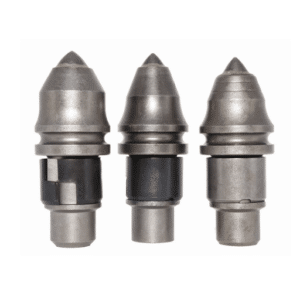
A foundation drilling contractor in Malaysia thought he had found a factory-direct bullet teeth supplier in China. The price was 25% below other quotes. The website looked professional. The sales team spoke excellent English. He placed a $12,000 order for B47K22H teeth and waited.
When the shipment arrived, the shank diameters varied by 0.3 millimeters. Some teeth seized in the holders. Others wobbled. The carbide tips began chipping after 15 meters in 55 MPa limestone. By the end of the 2,000-meter project, he had spent an additional $28,000 on emergency replacements, holder repairs, and rig downtime.
The supplier was not a factory. It was a trading company using three different subcontract workshops with no quality control.
Most buyers choose bullet teeth manufacturers based on price, catalog photos, and how fast the sales team replies. Those are poor selection criteria. The right manufacturer is verified through technical documentation, production capability, and transparent audit evidence, not assumed from a low quote.
This guide gives you a complete framework for evaluating bullet teeth manufacturers. You will learn what separates reliable suppliers from risky ones. You will learn how to verify a real factory in China, what to inspect during a factory audit, and which red flags should disqualify a supplier immediately. If you need background on bullet teeth models and applications first, see our complete bullet teeth guide.
Need a verified bullet teeth manufacturer for your project? Contact our engineering team to discuss material specifications, samples, and OEM capability.
What Makes a Reliable Bullet Teeth Manufacturer

Not every company that sells bullet teeth should be called a manufacturer. A reliable bullet teeth manufacturer controls the processes that determine quality. These include material selection, machining, heat treatment, carbide brazing, and final inspection. Without control over these steps, consistency is impossible.
If you are still deciding which tooth model fits your ground conditions, our guide on how to choose bullet teeth covers sizing, carbide selection, and application matching.
Core Capabilities to Verify
Before placing an order, confirm the supplier has these capabilities in-house or under direct, documented control:
- Forging or CNC machining for steel shanks, to ensure dimensional accuracy and proper surface finish
- Heat treatment to achieve the correct body hardness without brittleness
- Automatic brazing or welding for carbide tip attachment, to create strong, consistent bonds
- Quality control laboratory with hardness testers, dimensional gauges, and material verification equipment
- Engineering and R&D capability for custom designs, drawing reviews, and application recommendations
A manufacturer that outsources heat treatment or brazing to unnamed subcontractors is not necessarily bad, but it adds risk. You need documented control over those subcontractors, not verbal assurances.
Material Standards That Matter
Bullet teeth fail at the material interface. The steel body and carbide tip must both meet specifications. Ask every bullet teeth manufacturer to confirm:
| Component | Standard Specification | Why It Matters |
|---|---|---|
| Steel body | 42CrMo alloy steel | High strength, fatigue resistance, and good heat-treat response |
| Carbide grade | YG11C for general hard rock, YG8C for softer ground, YG15C for high impact | Cobalt content and grain size control wear resistance and toughness |
| Body hardness | 38 to 45 HRC after heat treatment | Hard enough to resist wear, tough enough to resist fracture |
| Carbide hardness | HRA 87 to 89 | Measures tungsten carbide resistance to abrasive wear |
For model-specific dimensions and applications, see our B47K, C31HD, and BK series bullet teeth model guide.
Factory vs Trading Company: Know Who You Are Paying
The biggest risk in sourcing bullet teeth from China is not finding a bad bullet teeth manufacturer. It is thinking you are dealing with a factory when you are actually dealing with a trading company. That misalignment creates hidden markups and inconsistent quality. It also weakens accountability and slows problem resolution.
How They Differ
| Factor | Real Factory | Trading Company |
|---|---|---|
| Price | Lower, factory-direct | 10% to 30% markup is typical |
| Customization | Direct engineering discussion | Relayed through a third party |
| Quality control | In-house and auditable | Indirect and variable |
| Accountability | Clear: the producer is responsible | Blurred: disputes bounce between parties |
| MOQ (Minimum Order Quantity) | Usually higher | Often lower |
| Product range | Focused on drilling tools and wear parts | Broad, sometimes unrelated categories |
A trading company is not always the wrong choice. If you need small mixed orders, flexible logistics, or a single English-speaking contact, a trader can add value. But you should know what you are paying for. The problem is undisclosed traders posing as manufacturers.
Verification Methods
Use these steps to confirm whether a bullet teeth supplier is a real manufacturer:
- Check the business license. The scope should include manufacturing, production, or processing terms. Trading companies list sales, wholesale, or import-export terms.
- Map the address. Factories are usually in industrial zones. Offices in downtown commercial buildings are a warning sign.
- Request a live video tour. Ask to see forging, machining, heat treatment, brazing, and QC areas. A real factory will show production.
- Ask technical questions. A factory can explain carbide grade selection, brazing alloy specification, and heat treatment process from direct experience.
- Review the product range. A focused catalog of drilling tools and wear parts suggests manufacturing expertise. A catalog spanning unrelated industries suggests trading.
Bullet Teeth Manufacturer Evaluation Criteria

A good bullet teeth manufacturer should score well across three areas. These are technical capability, quality management, and commercial reliability. Use this framework to compare suppliers objectively.
Technical Capability
Request evidence for each of these points before placing a trial order:
- Material certificates showing 42CrMo or equivalent alloy steel for the shank
- Carbide grade specification and ideally the carbide supplier name
- Heat treatment records showing furnace temperature, duration, and hardness results per batch
- CNC machining precision for shank diameters and retainer grooves
- Brazing or bond strength testing methods and acceptance criteria
If a supplier cannot provide these documents, they are not controlling production closely enough.
Quality Management
Look for these systems and records:
- ISO 9001:2015 certification with scope covering drilling tool or wear part manufacturing
- Incoming material inspection for steel, carbide, brazing alloy, and retainers
- In-process quality control checkpoints at machining, heat treatment, and brazing
- Final inspection reports with dimensional checks, hardness tests, and visual acceptance
- Calibration records for hardness testers, micrometers, and other measuring equipment
Commercial Factors
Technical quality means little if the supplier cannot deliver reliably. Evaluate:
- Production capacity and current utilization
- Lead times for samples and production orders
- OEM and ODM experience, including drawing review and tooling development
- Export documentation capability for bills of lading, certificates of origin, and customs clearance
- Warranty and after-sales support for quality failures
- Financial stability and years in operation
Bullet Teeth Factory Audit Checklist for Suppliers
A factory audit is the most reliable way to evaluate a bullet teeth manufacturer. If you cannot visit in person, use a detailed video audit with a checklist. This checklist focuses on the processes that determine bullet tooth performance.
Pre-Audit Document Request
Ask for these documents before the audit:
- Business license and unified social credit code
- ISO 9001:2015 certificate and scope
- Material certificates for steel and carbide
- Heat treatment logs from recent batches
- Final inspection reports and sampling plans
- Calibration logs for testing equipment
- Export license and customer references
On-Site Audit Points
During the audit, verify these areas:
- Raw material storage. Steel and carbide should be organized, labeled, and protected from moisture. Ask how material lots are traced to finished products.
- Machining area. CNC lathes and grinding equipment should be in good condition. Look for work instructions and dimensional check records at each station.
- Heat treatment. Furnaces should have temperature recording systems. Request recent heat treatment curves or logs.
- Brazing or welding station. Automatic brazing equipment is preferable to manual torch work. Carbide tips should be positioned consistently.
- QC laboratory. Hardness testers, micrometers, and visual inspection stations should be present and calibrated.
- Finished goods warehouse. Products should be cleaned, oiled, and packaged to prevent rust. Labels should match inspection records.
Red Flags During the Audit
End the audit and remove the supplier from your shortlist if you see any of these:
- No production equipment visible, only offices or stock photos
- Inability to explain carbide source or grade
- Missing heat treatment records
- Refusal to allow live video or third-party inspection
- Prices 30% or more below market without clear justification
- Workers performing brazing without protective equipment or documented procedures
OEM vs Aftermarket Manufacturing: What to Expect

Not every bullet teeth manufacturer is set up for the same type of order. Understanding the difference between OEM and aftermarket production helps you choose the right partner.
OEM Manufacturing
OEM bullet teeth manufacturers produce parts to your exact drawings or samples. They often work on proprietary designs or exclusive supply agreements. Expect higher minimum order quantities, typically 500 to 2,000 pieces.
- Strict dimensional and material specifications
- Full traceability from raw material to finished product
- Tooling investment and longer initial lead times
- Higher unit prices but greater control over design
Aftermarket and Replacement Manufacturing
Aftermarket bullet teeth manufacturers produce replacements compatible with common styles such as Betek, Kennametal, and Sandvik. Expect:
- Lower minimum order quantities, often 50 to 100 pieces
- Flexible specifications based on samples or cross-reference part numbers
- Faster sample development
- Lower unit prices for standard models
- Compatibility focus rather than proprietary design
How to Evaluate OEM Capability
If you need custom teeth, assess the manufacturer’s:
- Drawing review process and engineering feedback quality
- Sample lead time and number of iterations allowed
- Tooling ownership terms
- Willingness to sign confidentiality and non-disclosure agreements
- Track record with similar custom projects
Regional Guide: Chinese Bullet Teeth Manufacturing Clusters
China dominates global bullet teeth production. However, not all regions specialize in the same capabilities. Knowing the clusters helps you match your needs to the right Chinese bullet teeth manufacturer base.
Changsha, Hunan
Changsha is a major hub for foundation drilling tools and wear parts. The concentration of manufacturers here means strong supply chains for drilling buckets, augers, core barrels, and bullet teeth. Many suppliers in Changsha offer both standard and custom foundation drilling products.
Xiamen, Fujian
Xiamen’s strength is tungsten carbide materials. With companies like Xiamen Tungsten operating integrated supply chains from ore to finished carbide, manufacturers in this region often have excellent access to high-quality carbide grades and advanced coating technology.
Zhengzhou, Henan
Zhengzhou offers cost-effective production for standard bullet teeth and related wear parts. Manufacturers here compete on price while maintaining reasonable quality, making the region suitable for large-volume orders of common models.
Jiangxi, Shandong, and Sichuan
These provinces have integrated tungsten supply chains and large-scale production bases. Suppliers here often emphasize economies of scale and full industrial chain control from raw material to finished product.
Red Flags That Should Disqualify a Supplier
Some warning signs are subtle. Others are immediate disqualifiers for bullet teeth manufacturers. Do not ignore them because of a low price or smooth sales process.
Critical Commercial Red Flags
- Refuses a factory visit or live video call
- Cannot provide material certificates or test reports
- Has no ISO 9001 certification or shows a fake or expired certificate
- Demands payment to a personal account or offshore entity different from the contract
- Claims a 0% rejection rate, which usually means no inspection
- Is vague about who actually manufactures the product
Quality-Specific Red Flags
- Shank dimensions vary by more than 0.1 millimeters across samples
- Carbide tips chip, spall, or separate from the body under normal drilling
- No hardness test reports for body or carbide
- Visible gaps, cracks, or inconsistent brazing around carbide tips
- Poor surface finish or rust on new teeth
The cheapest quote is often the most expensive choice. A price 30% below market typically signals a trading company markup combined with the cheapest subcontractor, inferior carbide substitution, or hidden outsourcing. To understand current price ranges before you negotiate, see our bullet teeth price guide.
Real-World Selection Scenarios

Scenario 1: The $28,000 Trading Company Mistake
The Malaysian contractor from the introduction learned this lesson the hard way. His supplier used three different workshops. One batch had shanks machined 0.2 millimeters oversize. Another batch used a lower carbide grade that chipped in limestone. A third batch had inconsistent brazing that caused tip loss after 30 meters.
The direct tooth replacement cost was 12,000. The hidden costs were worse: 8,000 in holder replacements, 5,000 in rig downtime, and 5,000 in rig downtime, and 3,000 in express shipping for emergency teeth. A proper factory audit would have revealed the trading company structure and prevented most of the loss.
Scenario 2: The Audit That Found the Right Factory
A contractor in Vietnam needed a reliable bullet teeth supplier for a 1,500-meter granite project. Instead of choosing the lowest quote, he shortlisted three manufacturers and conducted video audits. One supplier in Changsha answered every technical question, showed heat treatment logs, and sent a 100-piece trial batch within two weeks.
The trial teeth averaged 85 meters of life in 60 MPa granite, compared to 45 meters from his previous supplier. Over six months, his tooth failure rate dropped by 60% and his cost per meter fell by 28%. The audit took four hours. The savings exceeded $15,000.
Scenario 3: The OEM Partnership That Cut Costs
A fleet operator in Indonesia with eight rigs drilled mostly in abrasive gravel. Standard B47K19H teeth wore quickly because the carbide shape was not optimized for his ground. He partnered with an OEM bullet teeth manufacturer to modify the carbide geometry and add a wear-resistant cladding band to the shank head.
The custom design added $2 per tooth but increased average life from 90 meters to 160 meters. Over 12 months, the fleet reduced tooth orders by 44% and eliminated holder compatibility issues caused by inconsistent aftermarket shanks. Total tooling cost per meter dropped by 35%.
FAQ
How do I choose a bullet teeth manufacturer?
Start by verifying that the supplier is a real factory, not a trading company. Then evaluate technical capability, quality management systems, material certificates, and audit transparency. Run a trial batch before committing to volume.
What certifications should a bullet teeth manufacturer have?
ISO 9001:2015 is the minimum standard. Depending on your market, you may also need CE marking, SGS verification, or material test reports. For mining applications, MSHA or equivalent safety approvals may apply.
How do I know if a Chinese bullet teeth supplier is a real factory?
Check the business license scope, map the factory address, request a live video tour, ask technical questions about carbide grades and heat treatment, and review the product range. A real factory will have focused products and direct production knowledge.
What is the difference between OEM and aftermarket bullet teeth manufacturers?
OEM manufacturers produce custom parts to your drawings with higher MOQs and full traceability. Aftermarket manufacturers produce replacement teeth compatible with common styles like Betek or Kennametal, with lower MOQs and faster turnaround.
What should I look for in a bullet teeth factory audit?
Verify raw material traceability, machining capability, heat treatment records, brazing quality, QC laboratory equipment, and finished goods inspection. Request ISO certificates, material certificates, and recent batch test reports before the audit.
Why do bullet teeth prices vary so much between manufacturers?
Prices vary because of carbide grade, steel quality, manufacturing precision, order volume, and whether you are buying from a factory or a trading company. A price far below market usually indicates hidden risks.
How do I verify carbide quality in bullet teeth?
Request the carbide grade specification, supplier name, and hardness test report. YG11C carbide should measure HRA 87 to 89. Run a trial batch in your actual ground conditions and measure wear rate and chipping resistance.
What MOQ should I expect from a bullet teeth manufacturer?
Sample orders are often 1 to 10 pieces. Standard production orders may require 100 to 500 pieces. Custom OEM orders typically start at 500 pieces and can reach 2,000 pieces depending on tooling and design complexity.
Conclusion
Choosing bullet teeth manufacturers is not a price decision. It is a risk management decision. The lowest quote can hide trading company markups. It can hide inferior materials and uncontrolled subcontracting. The right bullet tooth manufacturers prove themselves through transparent documentation, verifiable production capability, and consistent quality.
The key criteria are straightforward. Verify the supplier is a real factory. Confirm material specifications for 42CrMo steel and YG11C or equivalent carbide. Review ISO 9001 certification and quality records. Conduct a factory audit focused on heat treatment, brazing, and inspection. Watch for red flags like missing certificates, refused audits, or prices far below market. Then run a trial batch before committing to volume. After purchase, proper care extends service life; our bullet teeth maintenance guide covers inspection and replacement timing.
The Malaysian contractor who lost $28,000 did not fail because he bought from China. He failed because he assumed a professional website and a low price meant a reliable manufacturer. The suppliers who succeed are the ones you can verify. They are not the ones who promise the most.
If you need help evaluating bullet teeth manufacturers, sourcing factory-direct teeth, or developing a custom OEM tooth design, contact Changsha Mingyi Machinery Equipment Co., Ltd. Our engineering team can review your specifications, provide material certificates, and arrange samples or a factory audit for your procurement team.