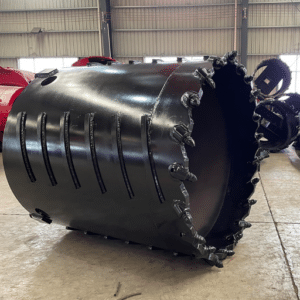
A bridge project in southern China came to a standstill because the drilling bucket could not break through a layer of weathered granite. The contractor switched to a heavy-duty rock core barrel, adjusted the rotation speed, and resumed drilling within hours. The delay cost money, but the right tool turned a stalled foundation into a productive borehole.
Foundation drilling rarely moves through uniform ground. One moment you cut through clay, the next you hit compacted rock or fractured stone. When a standard bucket or auger loses efficiency, a core barrel becomes the practical answer. Understanding the different types of core barrels helps you match the tool to the formation instead of forcing the wrong equipment into the ground.
This guide explains the main types of core barrels used in foundation construction, how each one works, and how to choose the right design for your soil conditions and project requirements.
What Is a Core Barrel in Foundation Drilling?

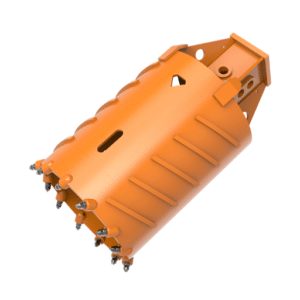
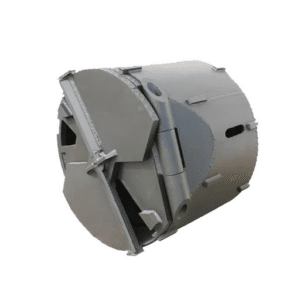
A core barrel is a rotary drilling tool designed to cut, capture, and remove a solid cylinder of rock or soil from a borehole. Unlike a drilling bucket, which scoops and lifts loose material, a core barrel uses a circular cutting head to isolate a core sample or break a hard plug so the borehole can advance.
In foundation construction, contractors use core barrels when standard excavation tools stop making progress. The tool attaches to a rotary drilling rig through a kelly bar or drill rod connection and relies on torque, down pressure, and sometimes flushing fluid to cut through resistant formations.
A typical core barrel includes:
- A cylindrical barrel body that holds the cut material
- A cutting head or core bit with teeth or diamond inserts
- A core lifter or retaining mechanism to hold the sample
- Reinforced welds and wear plates for abrasive conditions
- A top connection compatible with the drilling rig
The design changes based on the expected ground conditions, sample requirements, and drilling method. That is why selecting the correct type matters as much as selecting the right diameter.
Need more information about the core barrel? Please check out our article about Core Barrel for Foundation Drilling.
How Core Barrels Work
The operating cycle of a core barrel follows a simple pattern: cut, collect, lift, and discharge.
First, the rig lowers the core barrel into the borehole until the cutting head contacts the formation. Rotation begins, and the teeth or cutting elements score a circular groove around the material to be removed. The central core breaks free from the surrounding rock and enters the barrel.
Once the barrel fills or reaches the desired depth, the rig lifts the tool to the surface. Depending on the design, the operator removes the core mechanically, with a wireline retrieval system, or by splitting the barrel open. The borehole is now deeper, and the cycle repeats.
For hard rock, contractors often reduce rotation speed and increase downward pressure to improve penetration. For fractured or mixed ground, controlled rotation and adequate flushing prevent jamming and reduce wear on the cutting head.
Main Types of Core Barrels

Foundation drilling uses several core barrel designs. Each one solves a different problem, from basic rock penetration to continuous core recovery in deep boreholes.
Single-Tube Core Barrel
The single-tube core barrel is the simplest design. It consists of one continuous barrel with a cutting head at the bottom. The core enters the barrel as drilling progresses and is recovered when the tool is pulled.
This design works best in stable, medium-to-hard rock where core recovery is not the main priority. It is commonly used for boring through rock layers to advance a pile shaft, rather than for collecting intact geological samples.
Best applications:
- Weathered rock
- Medium-hard formations
- Projects where speed matters more than sample quality
Advantages:
- Simple construction
- Lower initial cost
- Easy to maintain
Limitations:
- Lower core recovery in fractured ground
- More vibration during rotation
- Less protection for delicate samples
Double-Tube Core Barrel
A double-tube core barrel uses two concentric tubes. The outer tube rotates with the cutting head, while the inner tube remains stationary and holds the core. This separation reduces vibration and improves sample recovery.
The design is well suited for hard or fractured rock where preserving core integrity matters. The inner tube protects the sample from the drilling fluid and the rotating outer barrel.
Best applications:
- Hard rock formations
- Fractured or variable ground
- Geotechnical investigation with sample recovery
Advantages:
- Better core recovery
- Less disturbance to the sample
- Reduced vibration
Limitations:
- Higher cost than single-tube designs
- More complex maintenance
- Slightly heavier tool
Wireline Core Barrel
Wireline core barrels are designed for efficient retrieval without pulling the entire drill string. When the barrel is full, a wireline winch lowers a retrieval tool through the drill rods, latches onto the inner tube, and pulls it to the surface.
This design is common in deep drilling operations where pulling rods after every run would waste hours. While more typical in mineral exploration, wireline systems are also useful in deep foundation projects that require continuous rock sampling.
Best applications:
- Deep boreholes
- Continuous core sampling
- Projects where rig time is expensive
Advantages:
- Faster retrieval cycles
- Less downtime
- Better productivity in deep holes
Limitations:
- Requires compatible drill rods and winch
- Higher equipment cost
- More specialized operation
Split-Tube Core Barrel
A split-tube core barrel is built with a longitudinal split along the barrel wall. After retrieval, the operator opens the barrel to access the core without disturbing it. This design is often used in soil sampling and soft rock investigations.
In foundation work, split-tube barrels are useful when engineers need to inspect layered soils or weak rock without breaking the sample during extraction.
Best applications:
- Soft rock and stiff soils
- Geotechnical sampling
- Layered formations
Advantages:
- Easy sample access
- Minimal sample disturbance
- Useful for detailed inspection
Limitations:
- Not suitable for very hard rock
- More fragile construction
- Lower drilling speed in dense formations
Rock Core Barrel
A rock core barrel is engineered specifically for cutting through hard rock. It uses reinforced construction, wear-resistant materials, and aggressive cutting teeth or inserts to break tough formations.
This is the type of tool the contractor in our opening example needed. When a drilling bucket or auger stalls in rock, a rock core barrel cuts a clean plug and allows the borehole to continue downward.
Best applications:
- Hard rock and boulders
- Mixed soil-rock layers
- Foundation piling in rocky terrain
Advantages:
- High cutting force
- Durable construction
- Reliable performance in abrasive conditions
Limitations:
- Heavier than standard barrels
- Higher wear on teeth
- Requires adequate rig torque
Heavy-Duty Core Barrel
Heavy-duty core barrels are reinforced versions of standard designs. They include thicker walls, additional wear plates, and high-strength connections for demanding environments.
These barrels are often specified for large-diameter bored piles, urban infrastructure projects, and formations with high abrasion or impact loads.
Best applications:
- Large-diameter boreholes
- Abrasive formations
- Long-duration projects
Advantages:
- Extended service life
- Resistance to impact and abrasion
- Lower replacement frequency
Limitations:
- Higher weight
- Higher initial cost
- Requires stronger rig capacity
Core Barrel Type Comparison

| Core Barrel Type | Best Ground Condition | Core Recovery | Retrieval Method | Cost Level |
|---|---|---|---|---|
| Single-tube | Medium-hard rock | Moderate | Pull entire string | Lower |
| Double-tube | Hard/fractured rock | High | Pull entire string | Medium |
| Wireline | Deep boreholes | High | Wireline retrieval | Higher |
| Split-tube | Soft rock and soils | High | Open barrel manually | Medium |
| Rock core barrel | Hard rock and boulders | Low to moderate | Pull entire string | Medium |
| Heavy-duty | Abrasive, large-diameter | Moderate | Pull entire string | Higher |
This comparison gives a starting point, but the final decision should always consider the specific project conditions.
Choosing the Right Core Barrel for Your Project
Selecting the right core barrel starts with understanding the ground, not the catalog. A contractor who evaluates soil conditions, project depth, and rig capacity before ordering a tool avoids the two most common mistakes: buying a barrel that is too light for the rock or over-specifying an expensive design for soft ground.
Evaluate Soil and Rock Conditions
Start with the geotechnical report. Identify the rock type, hardness, fractures, and groundwater conditions. Hard, intact granite requires a different cutting structure than weathered shale or fractured limestone.
Match the Barrel Type to the Formation
Use the comparison table above as a guide. For hard rock foundation piles, a rock core barrel or heavy-duty core barrel is usually the right choice. For sampling projects, a double-tube or split-tube design makes more sense.
Consider Drilling Depth and Diameter
Deep boreholes benefit from wireline systems. Large-diameter piles require heavy-duty construction and high rig torque. Match the barrel diameter to the borehole specification with enough clearance for cuttings and flushing.
Check Rig Compatibility and Torque
A powerful core barrel on a low-torque rig will not perform. Confirm that the rig can deliver the rotation speed, torque, and pullback force the barrel needs.
Balance Initial Cost Against Service Life
A cheaper barrel that wears out twice as fast is not a bargain. Factor in tooth replacement, wear-part costs, and downtime when comparing options. Heavy-duty designs often pay back their higher price through longer service life.
Core Barrel vs Drilling Bucket vs Auger
Each of these three tools has a distinct role in foundation drilling. Knowing when to switch between them is a practical skill that directly affects productivity.
A drilling bucket works best in soil, clay, sand, and soft rock. It cuts and collects material in one lift, making it efficient for loose to medium ground.
An auger is ideal for soft soils and shallow drilling. Its continuous flight lifts material to the surface as it rotates, which is fast in the right conditions but ineffective in rock.
A core barrel takes over when the bucket or auger stops cutting. It is the right tool for hard rock, boulders, and dense formations where other tools lose efficiency.
Many projects use all three tools on the same borehole. The auger or bucket removes the overburden, and the core barrel handles the rock section below.
Core Barrel Maintenance and Wear Parts

Even the best core barrel loses efficiency if it is not maintained. Regular inspection and timely replacement of wear parts protect both the tool and the project timeline.
Common Wear Parts
- Cutting teeth or inserts
- Core bit or cutting head
- Core lifter
- Wear plates and reinforcing strips
- Top connection and bearings
Inspection Checklist
- Check cutting teeth for wear or breakage before each shift
- Inspect welds and wear plates for cracks
- Verify that the core lifter moves freely
- Confirm rig connection threads are clean and undamaged
- Look for barrel deformation or ovality
When to Replace Components
Replace cutting teeth when they show rounding, chipping, or reduced penetration rates. Change wear plates before they expose the barrel body to abrasion. Address connection damage immediately to avoid rig downtime.
Proper maintenance extends service life and keeps penetration rates consistent. A barrel with worn teeth requires more torque and time to cut the same depth, which increases fuel consumption and wear on the rig.
Conclusion
Understanding the types of core barrels available gives you a clear advantage on foundation projects that pass through rock or dense formations. The right barrel improves penetration rates, protects sample quality when needed, and reduces downtime caused by tool failure.
Remember these key points:
- Single-tube core barrels are simple and cost-effective for medium-hard rock.
- Double-tube core barrels offer better core recovery in hard or fractured ground.
- Wireline core barrels save time in deep drilling operations.
- Split-tube core barrels protect soft rock and soil samples.
- Rock core barrels and heavy-duty core barrels handle the toughest formations.
If your project involves rock or mixed ground, selecting the right core barrel is not optional; it is essential. Evaluate your ground conditions, match the barrel type to the formation, and plan for maintenance to protect your investment.
Contact Changsha Mingyi Machinery Equipment Co., Ltd. for expert recommendations on core barrels and other foundation drilling tools tailored to your project.