Introduction to Tremie Concrete

Tremie concrete is a specialized method used to place concrete underwater or in difficult situations without compromising quality. A tremie is a vertical pipe system that delivers concrete to specific locations with minimal segregation and optimal flowing conditions. This technique is crucial for construction operations including bridge piers, marine foundations, tunnels, and other applications where structural stability must be maintained and uniform concrete placement achieved.
90%
Definition of Tremie
The term “tremie” refers to both an underwater construction method and a specialized pipe system designed to pour concrete underwater while preventing contamination by water and material segregation. The system typically consists of a rigid pipe fitted with a funnel or hopper at the top, with the bottom end submerged in the placement area.
Key Operating Principles:
- Gravity Flow: Ensures continuous fresh concrete delivery
- Water Displacement: Fresh concrete displaces water and previously placed concrete
- Quality Maintenance: Preserves concrete density and integrity
- Contamination Prevention: Prevents water intrusion and material mixing
Modern tremie systems incorporate advanced features such as seals to prevent water intrusion at the pipe base and specialized concrete mixes including self-compacting and anti-washout concrete formulations. Industry standards like ACI 304R and EC2 (Eurocodes) demonstrate that proper tremie placement significantly reduces void formation and guarantees structural integrity in high-risk environments.
Overview of Underwater Concreting

Underwater concreting is a specialized process designed to place concrete in submerged conditions while maintaining structural integrity and preventing segregation. This technique is essential for constructing critical infrastructure such as bridges, piers, dams, and submarine tunnels where conventional concrete pouring methods cannot be applied.
Common Underwater Concreting Techniques
- Tremie Pipe Method: Most widely used for controlled placement
- Pump System: High-pressure concrete delivery
- Preplaced Aggregate Method: Aggregate placement followed by grout injection
- Bucket Placement: Direct concrete delivery via containers
6,000+ PSI
Recent Technological Advances
Modern Innovations Include:
- Anti-Washout Admixtures: Viscosity modifiers and stabilizers reduce cement particle dispersion
- Enhanced Durability: Marine-grade concrete mixtures show 40% improved chloride resistance
- Robotic Placement: Automated systems reduce material waste by 25%
- Real-Time Monitoring: Sensors provide instant feedback on temperature, pressure, and segregation
- Sustainable Solutions: Green concrete alternatives with lower carbon footprint
Importance in Deep Foundations

Underwater concreting is vital for deep foundations supporting large structural facilities such as bridges, offshore platforms, and tall skyscrapers. These foundations must maintain structural stability under challenging conditions with high loads while preserving integrity and performance underwater.
Deep Foundation Statistics:
- Typical Depth: Often exceeding 60 feet in soft soils
- Maximum Depth: Can reach over 200 feet depending on geological conditions
- Load Capacity: Projects like Hong Kong-Zhuhai-Macau Bridge support over 400,000 tons
- Environmental Resistance: Designed to withstand harsh marine environments
The Tremie Method of Underwater Concreting

The Tremie method serves as the most popular technique for placing concrete underwater while maintaining quality and structural integrity. This method employs a tremie pipe—a long, watertight tube with a funnel-like top—through which concrete is poured with the outlet end remaining submerged in fresh concrete.
How the Tremie Method Works
The tremie method operates on the principle of gravity and controlled concrete flow. Fresh concrete is transported from the surface through the tremie pipe to underwater placement locations. The process begins by positioning the tremie pipe at the placement site with its lower end sealed by a plug or closure device.
Operating Sequence:
Initial Setup: Tremie pipe positioned with sealed bottom end
Concrete Loading: Fresh concrete poured into upper pipe section
Plug Release: Bottom seal removed to initiate concrete flow
Continuous Flow: Steady concrete head maintained to prevent water entry
Controlled Placement: Pipe gradually raised while maintaining concrete immersion
Components of a Tremie Pipe
| Component | Function | Details |
|---|---|---|
| Hopper | Concrete Input | Funnel-shaped top section for concrete loading |
| Pipe Sections | Vertical Flow Channel | Modular sections for depth adjustment |
| Connectors | Section Joining | Threaded or wire-type joints |
| Discharge End | Concrete Placement | Submerged outlet in concrete placement area |
| Sealing System | Water Prevention | Plugs or closures to prevent water intrusion |
Concrete Mix Used in Tremie Applications

The success of the tremie method depends heavily on precise concrete mix design specifically formulated for underwater conditions. Tremie concrete requires high workability to flow smoothly through the pipe under water-pressure conditions.
Tremie Concrete Mix Specifications:
- Water-Cement Ratio: 0.40 to 0.50 for optimal consistency
- Slump Range: 6-8 inches (150-200 mm) for adequate flowability
- Compressive Strength: Typically exceeds 4,000 psi
- Superplasticizers: Added to enhance flow without compromising stability
- Anti-Washout Admixtures: Prevent cement particle dispersion
- Aggregate Selection: Well-graded materials with minimal fines
Advanced Mix Options
Self-Consolidating Concrete (SCC) for Tremie Operations:
- Enhanced cohesiveness reduces void formation
- Superior flow characteristics in confined spaces
- Reduced segregation risk in underwater conditions
- Improved placement efficiency and quality control
Step-by-Step Guide to Tremie Concrete Pour

Preparation of Materials and Equipment
Material Quality Check: Ensure all materials including fresh concrete, tremie pipe sections, and sealing agents meet specifications
Equipment Verification: Test functionality of hopper, tremie pipe, and concrete pump systems
Safety Preparation: Verify all safety protocols and emergency procedures are in place
Site Inspection and Setup
Environmental Assessment: Evaluate underwater conditions including depth, flow velocity, and sediment levels
Pipe Positioning: Secure tremie pipe placement ensuring adequate length for placement depth
System Calibration: Test and calibrate all monitoring and control systems
Execution Process
Initial Pipe Placement: Lower tremie pipe to placement surface with bottom sealed
Concrete Loading: Fill pipe with specially designed underwater concrete mix
Controlled Release: Remove bottom seal and maintain continuous concrete flow
Progressive Lifting: Gradually raise pipe while keeping outlet submerged in concrete
Quality Monitoring: Continuously monitor flow rate, consistency, and placement quality
Completion and Cleanup: Complete pour, clean equipment, and conduct final quality assessment
Advantages and Limitations of the Tremie Method

✅ Advantages
- Precise Control: Accurate concrete placement underwater
- Segregation Prevention: Maintains mix integrity during placement
- Void Minimization: Reduces air pocket formation
- Quality Assurance: Ensures consistent concrete properties
- Durability: Produces long-lasting underwater structures
- Cost Efficiency: Reduces dewatering requirements
- Environmental Benefits: Minimizes environmental disruption
⚠️ Limitations
- Slow Placement: Requires time for proper execution
- Clogging Risk: Potential for pipe blockages
- Skill Requirements: Needs experienced operators
- Maintenance Intensive: Regular equipment cleaning required
- Slump Control: Difficult to maintain consistency
- Equipment Costs: Higher initial investment
- Weather Dependency: Affected by adverse conditions
Comparing with Other Underwater Concreting Methods

| Method | Advantages | Limitations | Best Applications |
|---|---|---|---|
| Tremie | Precise placement, no segregation | Slow process, requires expertise | Deep foundations, marine structures |
| Pumping | Fast placement, avoids clogging | Expensive equipment, high pressure | Large volume pours, time-critical projects |
| Bucket Placing | Simple setup, cost-effective | Limited precision, segregation risk | Small projects, shallow waters |
| Hydro Valve | Low cost, simple operation | Limited depth use, basic control | Moderate depth applications |
| Preplaced Aggregate | High strength, minimal washout | Complex setup, specialized skills | High-strength requirements, mass concrete |
Common Applications of Tremie Concrete in the Industry

Tremie concrete is extensively used in underwater construction due to its ability to maintain structural integrity in submerged environments. Its applications span across various sectors of the construction industry, from marine infrastructure to deep foundation systems.
Use of Tremie in Marine Structures
Tremie concrete has proven essential in marine construction due to its unmatched advantages in underwater concrete placement while preserving quality and strength. The technique employs a specialized pipe system that prevents water ingress, maintaining controlled concrete flow even when water currents could otherwise dilute the concrete or cause segregation.
30+ MPa
Marine Structure Applications:
- Caissons: Large watertight chambers for underwater construction
- Marine Tunnels: Underwater transportation passages
- Breakwaters: Coastal protection structures
- Offshore Platforms: Deep-sea drilling and production facilities
- Port Facilities: Docks, piers, and harbor infrastructure
- Underwater Foundations: Support structures for marine installations
Applications in Bridge Construction
Tremie concrete has become essential in bridge construction, particularly for structures with underwater components. The method enables concrete placement in deep foundations such as caissons and pile caps, ensuring strength and durability under adverse underwater conditions.
Bridge Construction Requirements:
- Depth Threshold: Required for placements beyond 30 meters depth
- Load Bearing: Must support enormous vertical and lateral forces
- Environmental Resistance: Withstand tidal flows and seismic activity
- Durability: Design life span of 100+ years
Major projects like the Hong Kong-Zhuhai-Macao Bridge utilized tremie concrete as a primary component for marine foundations spanning several kilometers, ensuring robust support structures for the superstructure while providing superior resistance to environmental factors.
Utilization in Foundation Systems
Tremie concrete plays a crucial role in foundation construction, especially in challenging environments such as deep water or unconsolidated soil conditions. The technique achieves structural integrity and durability through underwater placement without segregation or contamination.
5,000+ PSI
Foundation System Benefits:
- High Compressive Strength: Exceeds 5,000 psi for dynamic and static loads
- Low Permeability: Provides barrier against chemical attacks
- Corrosion Resistance: Essential for saltwater and industrial environments
- Extended Lifespan: Reduces maintenance intervals and lifecycle costs
- Economic Viability: Cost-effective for large infrastructure projects
Specialized Foundation Applications:
- Offshore Wind Turbines: Deep-sea renewable energy installations
- Submerged Tunnels: Underwater transportation passages
- Deep Pile Foundations: High-capacity load-bearing systems
- Marine Terminals: Port and harbor foundation systems
- Underwater Storage: Submerged facility foundations
Quality Control and Testing

Maintaining quality standards in tremie concrete operations requires comprehensive testing and monitoring protocols throughout the placement process.
Testing Parameters
| Test Parameter | Standard Range | Testing Frequency | Acceptance Criteria |
|---|---|---|---|
| Slump Test | 6-8 inches | Every batch | ±1 inch variance |
| Temperature | 50-85°F | Continuous | Within specification |
| Water-Cement Ratio | 0.40-0.50 | Per mix design | ±0.02 tolerance |
| Compressive Strength | 4,000+ psi | Per ASTM C39 | 28-day strength |
| Flow Rate | Continuous | Real-time | No interruptions |
Modern Monitoring Systems
Advanced Quality Control Features:
- Real-Time Sensors: Monitor temperature, pressure, and segregation parameters
- Flow Monitoring: Continuous tracking of concrete placement rate
- Vibration Analysis: 8,000-12,000 vibrations per minute for optimal compaction
- Digital Documentation: Automated recording of all placement parameters
- Instant Adjustments: Immediate response to quality variations
Environmental Considerations and Sustainability
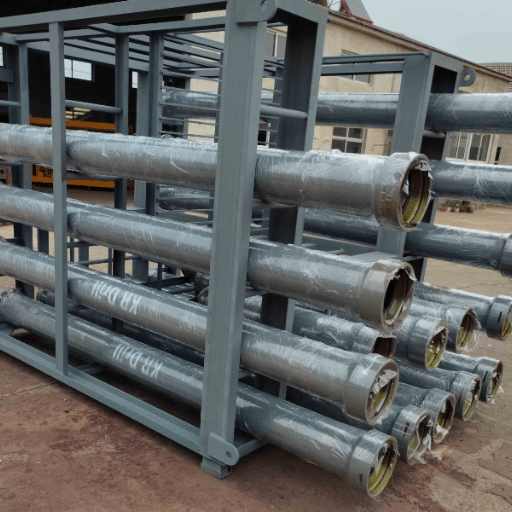
Modern tremie concrete operations increasingly focus on environmental protection and sustainable construction practices.
Environmental Benefits:
- Reduced Dewatering: Minimizes impact on aquatic ecosystems
- Lower Carbon Footprint: Green concrete alternatives with supplementary materials
- Waste Reduction: 25% less material waste compared to traditional methods
- Marine Protection: Controlled placement prevents habitat disruption
- Sustainable Materials: Use of recycled aggregates and eco-friendly admixtures
40%
Future Trends and Innovations

The tremie concrete industry continues to evolve with technological advances and innovative materials development.
Emerging Technologies
Robotic Placement: Automated tremie systems with precision control
Smart Concrete: Self-healing and self-monitoring concrete mixtures
IoT Integration: Internet of Things sensors for comprehensive monitoring
AI Optimization: Machine learning for mix design and placement optimization
3D Modeling: Digital twin technology for real-time placement visualization
Material Innovations
Advanced Material Developments:
- Ultra-High Performance Concrete: Enhanced strength and durability properties
- Bio-Based Admixtures: Environmentally friendly chemical additives
- Nanotechnology: Nano-materials for improved concrete performance
- Composite Materials: Fiber-reinforced concrete for enhanced properties
- Self-Compacting Formulations: Improved flowability without vibration
Frequently Asked Questions (FAQs)
A tremie pipe is a specialized tool used for underwater concreting that allows continuous flow of concrete to underwater sites without contamination or water contact. The pipe’s lower end remains submerged in water, ensuring concrete is placed directly where needed while maintaining structural integrity.
The primary purpose is to facilitate controlled concrete placement underwater, preventing segregation and ensuring fresh concrete reaches its intended location. This method achieves superior results in challenging underwater environments compared to conventional placement techniques.
The tremie method uses a vertical pipe lowered to the placement bottom, filled with concrete, and poured continuously to prevent water infiltration. As fresh concrete is added, the pipe is gradually lifted while maintaining concrete flow, allowing air bubbles to escape and ensuring solid placement.
During flow, it’s essential that concrete maintains no water contact to avoid contamination. The concrete is delivered through the pipe’s lower end, remaining embedded in previously placed concrete. This ensures high-quality surface finish without interference from hardened concrete or debris.
Tremie pipe length varies based on pour depth and construction requirements. Longer pipes are necessary for deeper foundations or underwater structures. Proper length ensures concrete reaches desired depth without quality compromise during placement.
Tremie equipment includes the main pipe (steel or PVC), pumps for continuous concrete flow, and control mechanisms for pipe positioning. These components work together to ensure efficient underwater concreting operations.
The first batch is critical as it establishes the foundation for the entire operation. Proper mixing and uninterrupted delivery ensure the concrete remains full and flows smoothly, establishing quality standards for subsequent layers and overall structural integrity.
Advantages include controlled and efficient placement, reduced segregation risk, ability to work in challenging underwater conditions, minimized water impact on concrete mix, and precise application resulting in stronger, more durable structures.
Key Takeaways
- Essential Technology: Tremie concrete is indispensable for underwater construction projects
- Quality Assurance: Proper technique achieves 90%+ success rate in meeting design criteria
- Versatile Applications: Suitable for bridges, marine structures, and deep foundations
- Environmental Benefits: Reduces dewatering needs and minimizes ecological impact
- Future Innovation: Continuous technological advancement enhances efficiency and sustainability
- Critical Success Factors: Requires skilled operators, proper mix design, and quality control
- Performance Standards: Modern tremie concrete achieves compressive strengths exceeding 6,000 psi
- Cost Effectiveness: Long-term durability and reduced maintenance provide excellent ROI
Reference Sources
-
Minimizing Water Quality Impacts When Repairing Bridge and Culvert Scour Damage with Grout
Virginia Tech VTechWorks
Discusses the use of tremie concrete in repairing bridge substructures and its environmental impacts. -
Tremie Concrete for Bridge Piers and Other Massive Underwater Placements
NOAA Repository
Explores the mixture design, placement techniques, and challenges of tremie concrete in underwater applications. -
Tremie Concrete for Special Geotechnical Works – A Story About Performance and Sustainability
Taylor & Francis Online
Highlights the performance, sustainability, and guidelines for tremie concrete in geotechnical applications.
Ready to Implement Tremie Concrete Solutions?
Contact qualified professionals for your underwater construction projects and ensure optimal results with proven tremie technology.