A single cracked cutting tooth can shut down a piling rig for half a day. When Rafael’s crew pulled a core barrel after a hard-rock run outside Austin, three teeth were missing and the lower edge was bell-mouthed. They had skipped the morning inspection to save ten minutes. The result was a six-hour delay while a replacement barrel was trucked to the site, plus a repair bill that could have been avoided with a quick check.
Core barrel maintenance is not a separate task from production. It is the work that keeps production moving. Contractors who treat inspection, cleaning, and wear-part replacement as part of every shift get more hours from each barrel and fewer surprises in the borehole.
This guide provides a practical core barrel maintenance schedule, a jobsite-ready inspection checklist, and a troubleshooting matrix for the most common core barrel problems. Whether you operate bullet-tooth barrels in clay and sand or roller-bit core barrels in hard rock, the same principles apply: inspect early, clean thoroughly, replace wear parts before they fail, and keep records that predict the next service.
If you need replacement wear parts or a core barrel engineered for your specific ground conditions, contact Changsha Mingyi Machinery Equipment Co., Ltd. for technical recommendations.
What Is a Core Barrel and Why Maintenance Matters

Core barrel maintenance is the routine inspection, cleaning, lubrication, and wear-part replacement performed on rotary drilling core barrels to preserve cutting efficiency, prevent borehole failures, and extend tool life. A disciplined maintenance program turns reactive repairs into predictable, low-cost upkeep. Need more information about core barrel? Please check out our article about Core Barrel for Foundation Drilling.
How Core Barrels Work in Foundation Drilling
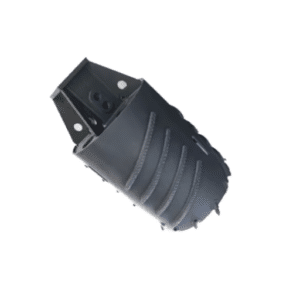
A core barrel is a rotary drilling tool designed to cut an annulus of rock or concrete and remove a solid core from the center. In foundation work, it is used for hard rock, boulders, and reinforced concrete where a standard drilling bucket or auger cannot make progress. The tool follows a simple cycle: cut, collect, lift, and discharge.
The barrel connects to the kelly bar through a kelly box or adapter. Rotation transfers torque to the cutting structure, which may be bullet teeth, roller bits, or cross cutters, depending on the formation. As the barrel advances, cuttings are flushed by drilling fluid, and the central core is broken or retrieved on each trip.
Because the cutting structure is in direct contact with abrasive material, wear is constant. Threads, bearings, stabilizers, and the barrel body all absorb stress. Without regular rotary drilling core barrel maintenance, small defects grow into expensive failures. A broader foundation drilling tools maintenance strategy helps you coordinate inspections across buckets, augers, and kelly bars so no critical component is overlooked.
The Cost of Poor Maintenance
Neglected core barrels create costs that go far beyond the price of a replacement tooth. Slow penetration adds minutes to every meter. Jammed barrels require fishing operations or lost time. Overheating hardens cutting edges and shortens bit life. A bent or cracked barrel can damage the kelly bar, rig spindle, or borehole alignment.
The global core barrel market is projected to grow from approximately 1.8 billion in 2025 to 2.6 billion by 2034. That growth reflects rising demand for foundation work, but it also underscores the value of extending the life of the tools you already own. A disciplined maintenance routine turns capital expenditure into a longer operational life.
Core Barrel Maintenance Schedule
A clear schedule turns maintenance from a reaction into a habit. The following core barrel maintenance checklist divides tasks by frequency. Adjust intervals based on daily operating hours, formation abrasiveness, and manufacturer recommendations.
Core Barrel Maintenance Checklist at a Glance
- Inspect cutting teeth and roller bits before every shift.
- Check the barrel body, kelly box, and threads for cracks or wear.
- Clear flush ports and verify coolant flow.
- Clean the barrel thoroughly after each use.
- Lubricate threads and bearings every 50 operating hours.
- Measure stabilizer clearance and replace wear bands as needed.
- Check barrel run-out and straightness monthly.
- Update the maintenance log with hours, repairs, and replacements.
Daily / Pre-Shift Inspection
Inspect the barrel before it goes in the hole. Catching wear early prevents the damage from spreading to the barrel body or rig components.
| Inspect | What to look for | Action if defective |
|---|---|---|
| Cutting teeth / roller bits | Wear, cracks, missing inserts, loose holders | Replace or tighten before use |
| Barrel body | Cracks, dents, bell-mouth wear, out-of-round condition | Repair or replace the barrel |
| Kelly box / adapter | Deformation, cracks, galling, poor fit | Repair or replace |
| Threads and connections | Galling, damage, corrosion | Clean and reapply thread compound |
| Stabilizers and wear bands | Excessive clearance loss, uneven wear | Adjust, replace, or add stabilizers |
| Flush / coolant ports | Blockage by mud or debris | Clear obstructions |
| Inner tube assembly | Straightness, dents, latch wear, bearing condition | Correct or replace bent or worn parts |
Replaceable teeth core barrel systems make daily inspection especially valuable. When teeth are mounted in holders rather than welded, you can swap worn cutters in minutes instead of sending the barrel to a shop. Print or save this core barrel maintenance checklist section for your pre-shift meetings.
After-Each-Use Cleaning
Cleaning is the most overlooked step in core barrel maintenance. Dried slurry hides cracks, corrodes threads, and throws the barrel out of balance.
Flush internal and external surfaces with high-pressure water immediately after each use. Use stiff brushes to remove deposits from threads and cutting faces. In saltwater, marine, or acidic environments, rinse with fresh water to neutralize corrosive residues. Dry all components thoroughly with compressed air or in a ventilated area before storage.
For diamond or TCI core barrels, pay special attention to the flush ports. Partial blockage reduces coolant flow and leads directly to overheating. A few minutes with a brush and water can prevent segment damage that costs hundreds of dollars to repair.
Weekly / Periodic Maintenance
Every week, or after approximately 50 operating hours, perform deeper core barrel maintenance tasks:
- Apply manufacturer-recommended thread compound or anti-seize to inner and outer barrel threads.
- Grease swivel joints, wireline overshot mechanisms, and bearing points on triple-tube systems.
- Inspect roller bit bearings for play or seizure. Replace the entire bit assembly if rough rotation or lateral movement appears.
- Check fasteners, locking dogs, and latches for looseness caused by vibration.
- Inspect hydraulic hoses, filters, and fluid levels on the drill rig.
- Clean mud pumps, filters, and cooling systems.
Regular lubrication prevents thread galling and bearing failure. It also makes disassembly faster when you do need to service the barrel in the field.
Monthly / Seasonal Maintenance
Once a month, or at the end of a major project phase, step back and assess overall core barrel maintenance needs:
- Check barrel run-out and straightness. A bent barrel drills a crooked hole and accelerates wear on cutters.
- Use thread gauges to inspect thread condition on adapters and inner tubes.
- Review wear trends across your fleet. Rotate barrels to distribute wear evenly.
- Inspect storage conditions. Move barrels off damp ground and confirm thread protectors are in place.
- Update your maintenance log with hours, repairs, and replacement history.
This monthly review is where predictive maintenance begins. Patterns in wear data tell you which formations consume teeth fastest and which operators need additional training.
Key Wear Parts to Inspect and Replace

Understanding core barrel wear parts helps you decide what to repair on site and what to send back to the shop. Inspect these wear parts regularly as part of your core barrel maintenance routine. Replacing them on time protects the barrel body and keeps production steady.
Cutting Teeth and Roller Bits
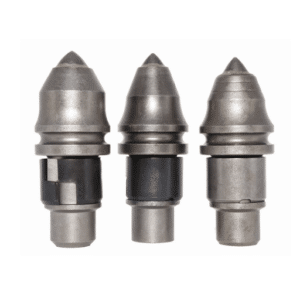
Bullet teeth, roller bits, and cross cutters do the actual cutting. They wear predictably, so they should be monitored constantly.
Replace cutting teeth when wear reaches 30–40% of the original height. Beyond that threshold, the tooth loses cutting efficiency and transfers extra load to the barrel body. Roller bits are usually replaced as complete assemblies when bearings show play or seizure.
Match the bit to the formation. Bullet teeth work well in soft to medium rock, concrete, and fractured ground. Roller bits are the right choice for hard, intact rock above 100 MPa. Cross cutters help break long cores in jointed formations. Using the wrong cutter for the material accelerates wear and increases the risk of jamming. If you are considering upgrading to a replaceable teeth core barrel, our core barrel guide outlines the cutting structures, sizes, and compatibility options available for major rotary drilling rigs.
In a Vietnam bridge project, operators noticed penetration rates dropping roughly 30% over two weeks in abrasive sandstone. A technician measured the teeth and found 40% wear. After switching to higher-grade carbide inserts and adding hardfacing to the wear bands, the crew returned to original production rates and finished the pier shafts on schedule.
Inner and Outer Barrel Tubes
The barrel body must remain straight and concentric. Inspect inner and outer tubes for dents, bends, grooves, and cracks near welds or threaded ends. Even a small bend causes vibration, deviation, and uneven cutter loading.
If the barrel is out of round or has cracks near the segment welds, replace it. Do not attempt to straighten a bent core barrel in the field. A repaired barrel that fails under torque creates a safety hazard.
Stabilizers and Wear Bands
Stabilizers keep the barrel centered in the borehole. Wear bands protect the barrel body from abrasive contact with the hole wall. When clearance is lost through wear, the barrel can rub against the borehole, causing vibration and deviation.
Check stabilizer clearance with a simple gauge or by visual comparison to a new assembly. Replace or rebuild wear bands before the barrel body itself begins to wear.
Kelly Box and Adapters
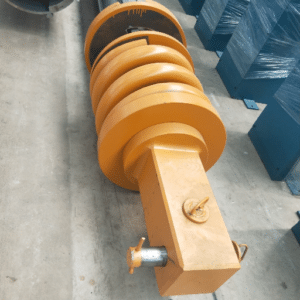
The kelly box transfers torque and lifting force from the rig to the barrel. Inspect it for deformation, cracks, and proper fit with the kelly bar. A loose or worn adapter creates shock loads that damage threads and bearings.
Make sure the kelly box size matches the kelly bar. Common sizes include 130×130 mm and 150×150 mm, but always confirm against your rig manual. A mismatched connection is a common source of early failure.
Bearings, Seals, and Inner Tube Components
In double- and triple-tube core barrels, bearings allow the inner tube to remain stationary while the outer tube rotates. Seals keep drilling fluid out of the core sample path.
Check that inner tubes spin freely. Seized bearings cause rapid wear on core lifters and can lead to poor core recovery. Replace worn seals, springs, latches, and landing rings according to the manufacturer’s schedule.
Common Core Barrel Problems and How to Fix Them
Effective core barrel troubleshooting starts with observing changes in penetration rate, vibration, coolant flow, and torque. This core barrel troubleshooting framework maps the most common symptoms to likely causes and corrective actions.
| Problem | Likely cause | Corrective action |
|---|---|---|
| Slow penetration | Dull or worn cutters; wrong bit type; insufficient weight on bit | Replace or redress cutters; match bit to formation; adjust crowd pressure and RPM |
| Core jamming / stuck barrel | Long intact core; fractured ground; poor flushing; out-of-round barrel | Use cross cutters; reduce penetration rate; increase flushing; pull and clean more often |
| Overheating / segment damage | Low coolant flow; excessive RPM or pressure; blocked flush ports | Increase water flow to 3–5 GPM; reduce speed and pressure; clear flush ports |
| Excessive vibration | Worn roller bearings; loose teeth; out-of-round barrel; loose rig anchors | Stop drilling; inspect bearings, teeth, and barrel; tighten anchors |
| Borehole deviation | Uneven cutter wear; loose stabilization; dipping beds | Add stabilizers or reaming shells; check barrel straightness; reduce RPM |
| Poor core recovery | Fractured or weathered formation; single-tube design; vibration | Switch to double or triple tube; reduce vibration; use lighter feed in loose ground |
Slow Penetration
Slow drilling is often the first sign of wear. Dull cutters require more torque and crowd pressure to advance, which strains the rig and the barrel. Start by inspecting the teeth or roller bits. If wear is below 30%, adjust the weight on the bit and rotational speed. If wear is advanced, replace the cutters before they damage the barrel edge.
The wrong bit type also causes slow progress. A bullet tooth barrel will struggle in hard granite, while a roller bit barrel may be overkill in soft clay.
Core Jamming and Stuck Barrels
Jamming happens when a long, intact core remains inside the barrel or when fractured rock packs around the cutting head. The early warning signs include a sudden drop in torque, a decreasing penetration rate, or changes in standpipe pressure.
To prevent jamming, use cross cutters in jointed or intact rock, reduce the rate of penetration, and increase flushing. Pull the barrel at shorter intervals to clear debris. If the barrel does stick, stop rotation immediately. Recovery methods include rocking the carriage, increasing water pressure, over-coring, or using a slide hammer. Never twist the kelly bar aggressively; that can warp the barrel or shear the adapter.
Overheating and Segment Damage
Overheating is usually a coolant problem. In diamond core drilling, a flow rate of 3–5 gallons per minute is commonly recommended to carry heat and cuttings away from the bit. If the flow is restricted or the operator runs too fast, segments can glaze, crack, or detach from the barrel.
At the first sign of overheating, reduce RPM and crowd pressure. Increase water flow and check flush ports for blockage. If the bit has glazed, it can sometimes be re-dressed by drilling briefly in abrasive material. Segments that are cracked or missing must be replaced professionally.
Excessive Vibration
Vibration is a warning to stop. Common causes include worn roller bit bearings, loose teeth, an out-of-round barrel, or a loosely anchored rig. Continuing to drill with vibration damages threads, bearings, and the borehole wall.
Inspect the cutting structure, bearings, and barrel straightness. Tighten rig anchors and check that the mast is plumb. Replace any worn or damaged components before resuming.
Borehole Deviation
Deviation occurs when the barrel drifts from the intended alignment. Uneven cutter wear, inadequate stabilization, dipping rock layers, or a bent barrel can all contribute. The result is a borehole that does not meet specification, which may require re-drilling.
Add stabilizers or reaming shells to maintain alignment. Check the barrel for straightness and replace it if run-out exceeds manufacturer limits. Reduce RPM in dipping beds and use reaming shells with diamond pads for deep or critical holes.
Poor Core Recovery
Poor recovery is common in fractured, weathered, or soft formations where the core breaks apart before retrieval. Single-tube barrels offer the least protection for the core. Switching to a double- or triple-tube barrel with a split inner tube often solves the problem.
Reduce vibration and use a lighter feed in loose ground. If the formation is highly fractured, consider a shorter barrel run to minimize core disturbance before retrieval.
When to Repair vs. Replace a Core Barrel

Not every worn barrel needs replacement. Knowing the difference between repair and replacement is a key part of core barrel maintenance that saves money and reduces waste.
Repairable issues include:
- Worn or missing replaceable teeth and holders.
- Localized hardfacing wear on the barrel body.
- Minor wear band damage that can be rebuilt.
- Worn seals, bearings, and inner tube components.
Replace the barrel when you see:
- Cracks in the barrel body, kelly box, or threaded connections.
- A bent or out-of-round barrel.
- Severe thread damage that affects the make-up torque.
- Structural deformation from overload or impact.
A good rule of thumb: if the repair costs more than half the price of a new barrel and the repaired tool will not match original strength, replacement is the safer choice. For core barrel maintenance and foundation drilling tools maintenance questions, our team can help you evaluate repair options based on photos and operating hours.
Operational Best Practices That Reduce Core Barrel Maintenance Needs
Good operation and good core barrel maintenance are two sides of the same coin. The way the barrel is run determines how often it needs service and how much core barrel troubleshooting you will face on the jobsite.
Match the bit to the formation. Running a bullet-tooth barrel in hard rock wastes teeth and slows progress. Running a roller-bit barrel in soft clay is unnecessarily aggressive and costly. For a broader view of when to use each tool, read our comparison of core barrel vs drilling bucket vs auger.
Optimize drilling parameters. Start at low RPM until the cutters engage, then increase speed and crowd pressure gradually. Maintain a steady weight on the bit instead of pulsing. Keep coolant flowing whenever the barrel is rotating.
Lift and clean at regular intervals. Do not wait for the barrel to jam before pulling it. In fractured or abrasive formations, shorter runs keep cuttings from packing and reduce wear.
Ensure rig capacity matches the barrel. A barrel that is too large for the rig’s torque or lifting capacity will stall, overheat, and wear prematurely. Check rig specifications before selecting a barrel diameter.
For a replaceable teeth core barrel engineered with wear-resistant materials and compatibility with major rotary drilling rigs, explore our core barrel guide.
Maintenance Record Keeping and Predictive Care

Paper checklists get lost. Spreadsheets get outdated. A simple digital core barrel maintenance log tied to each serial number gives you a history that prevents surprises and supports long-term care.
Record the following for every core barrel:
- Operating hours per shift and per project.
- Inspection findings with dates.
- Teeth, bit, and wear-part replacements.
- Repairs and reconditioning work.
- Formation types drilled and observed wear rates.
Maria, a maintenance supervisor in São Paulo, started logging hours and wear measurements for each core barrel in her fleet. Within three months, she could predict when teeth would reach the 35% replacement threshold based on formation type. Unplanned downtime on her rotary drilling rigs fell by nearly 20%.
Predictive care does not require complex software. It requires consistent data. When you know that a particular abrasive sandstone consumes teeth every 80 hours, you can schedule replacement at 70 hours and avoid the mid-shift failure.
Conclusion
Core barrel maintenance is the discipline that protects your investment and keeps your piling schedule on track. A practical core barrel maintenance routine covers daily inspections, immediate cleaning after each use, scheduled lubrication, and monthly condition reviews. It also includes clear replacement thresholds for teeth, bearings, and barrel bodies.
Use the troubleshooting matrix to respond quickly to slow penetration, jamming, overheating, vibration, deviation, and poor recovery. Keep records that turn maintenance from reactive repairs into predictive planning.
The most reliable foundation projects are not built by tools that never wear out. They are built by crews who notice wear before it becomes failure. Apply the checklist, train your operators to read the early signs, and treat every core barrel as a precision instrument that deserves consistent care.
Need replacement wear parts, a custom core barrel, or technical guidance for your next foundation project? Contact Changsha Mingyi Machinery Equipment Co., Ltd. today. Our engineering team can recommend the right cutting structure, maintenance schedule, and wear-part package for your ground conditions.