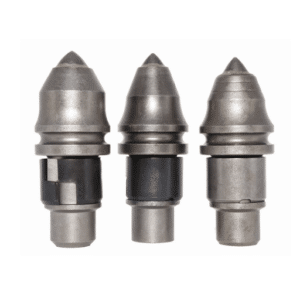
A foundation drilling crew in Guangxi province started measuring bullet tooth carbide wear with a simple caliper at every shift change. They replaced teeth when wear hit 45%, never letting them reach the critical 50% threshold. Over six months, they cut holder replacements by 60%, reduced unexpected tool changes by 40%, and saved approximately $4,200 in tooling costs. Their secret was not buying better teeth. It was consistent bullet teeth maintenance.
Most crews treat teeth as simple consumables they swap when something breaks. They drill until a tooth cracks or falls out, then blame the manufacturer. In reality, proactive maintenance based on measurable wear data extends effective life by 30% or more and prevents holder damage that costs 10 to 20 times the price of a single tooth.
This guide gives you a complete bullet tooth maintenance protocol. You will learn how long different models last, what visual wear indicators tell you when to replace bullet teeth, how to inspect teeth daily in five minutes, and how to store spare inventory so it does not rust. If you need background on bullet teeth selection and applications, start with our complete bullet teeth guide.
Need replacement teeth or holder compatibility verification? Contact our technical team with your tooth model numbers and drilling conditions for a precise recommendation.
How Long Do Bullet Teeth Last?

The question every contractor asks is simple. The answer depends on ground hardness, drilling parameters, and tooth model. A C31HD in soft clay can last 400 meters. A B47K22H in 80 MPa granite might last 40. Understanding expected lifespan by condition is the foundation of effective bullet tooth maintenance.
Lifespan by Model and Ground Condition
| Model | Ground Condition | Compressive Strength | Expected Life (meters) |
|---|---|---|---|
| C31HD | Clay, soft soil | 0 to 10 MPa | 200 to 400 m |
| B47K19H | Sand, gravel | 10 to 30 MPa | 150 to 250 m |
| B47K19H | Weathered rock | 30 to 60 MPa | 80 to 150 m |
| B47K22H | Weathered rock | 30 to 60 MPa | 80 to 150 m |
| B47K22H | Hard rock | 60 to 100 MPa | 40 to 80 m |
Why Lifespan Varies
Three factors control how long your teeth last. Ground abrasiveness is the biggest. Sand and gravel wear carbide faster than cohesive clay because loose abrasive particles act like a grinding compound against the tungsten carbide tip. Drilling parameters matter too. High RPM with aggressive down pressure overheats the carbide and accelerates wear. Operator technique can extend or shorten life by 30%. A crew that adjusts rotation speed and feed pressure based on ground feedback gets significantly more meters per tooth than one that runs fixed settings regardless of conditions.
Free rotation in the holder is non-negotiable for maximizing life. A tooth that spins freely distributes wear evenly around the carbide tip. A seized tooth develops a flat spot, concentrates load on one area, and fails prematurely.
Visual Wear Indicators: When to Replace Bullet Teeth
Knowing when to replace bullet teeth is the most critical skill in maintenance. Replace too early and you waste money. Replace too late and you destroy holders, reduce penetration rates by 30 to 60%, and risk catastrophic tooth ejection.
Normal Wear (Continue Using)
A new tooth has a sharp, pointed carbide tip. After initial use, the tip rounds slightly. This is normal. At approximately 25% height loss, the tooth still penetrates effectively and poses no risk to the holder or tool body. Plan replacement at the next scheduled maintenance interval.
Moderate Wear (Plan Replacement Soon)
The carbide tip flattens noticeably. Penetration rates drop. The rig operator feels increased resistance and may compensate by adding down pressure, which accelerates wear further. At this stage, the tooth is still functional but approaching the end of its effective life. Schedule replacement within the next one to two shifts.
Critical Wear (Replace Immediately)
Replace the tooth without delay if any of the following are visible:
- 50% carbide height loss. The industry standard threshold. Beyond this point, the steel body beneath the carbide carries load, risks cracking, and transfers impact directly into the holder pocket.
- Cracked, chipped, or missing carbide. Spalled carbide cannot cut. The remaining fragment hammers the holder and accelerates pocket wear.
- Uneven wear spots deeper than 2 millimeters. Performance drops roughly 60% once wear exceeds this depth.
- The tooth no longer rotates freely. Seized rotation eliminates self-sharpening and creates flat spots that fail within hours.
A crew in Fujian learned this the hard way. They delayed replacing B47K22H teeth to finish a 60 MPa sandstone bore. The teeth were worn past 50%. Two carbide tips cracked during the final two meters. Fragments lodged in the auger flights and tore a 200 millimeter gash through the flight wall. The repair cost 3,800 in labor and materials, plus three days of downtime. The 30-tooth tooth they skipped replacing caused $3,800 in damage.
The 50% Rule Explained
Replace teeth when the carbide tip has worn to half its original height. This rule protects the holder, maintains penetration rates, and prevents secondary damage. A new B47K22H carbide tip stands approximately 15 millimeters tall. When it wears to 7 or 8 millimeters, it is time to swap. Measure with a caliper if visual estimation is uncertain.
Daily Inspection Checklist for Bullet Teeth

A thorough bullet tooth maintenance program takes five minutes per shift. Most crews skip inspection because they do not know what to look for. This checklist gives your operators a repeatable routine.
Pre-Shift Inspection (3 minutes)
Walk the tool before lowering it into the borehole. Check each of the following:
- Carbide condition. Look for cracks, chips, or missing material on every tip.
- Free rotation. Spin each tooth by hand. It should turn with light, even friction.
- Retainer integrity. Verify circlips or spring clips are seated properly and not stretched.
- Holder weld condition. Scan for hairline cracks around the holder base.
- Tooth security. Confirm no tooth wobbles or feels loose in its pocket.
Post-Shift Inspection (2 minutes)
After pulling the tool from the borehole:
- Clean pockets. Remove mud and debris with a wire brush before it hardens.
- Measure wear. Use a caliper on the most worn tooth to log carbide height.
- Log readings. Record wear data in a maintenance log for pattern tracking.
- Flag anomalies. Note any tooth that wore faster than others for cause investigation.
Weekly Deep Inspection
Once per week, perform a detailed examination:
- Measure pocket diameter on every holder with a caliper. Compare to the original specification.
- Replace all retainers as preventive maintenance.
- Inspect the tool body for cracks, bent flights, or structural damage.
- Review the week’s wear log for patterns. Uneven wear across the tool usually indicates a holder angle or rotation problem.
Want a printable version of this checklist for your field crews? Contact us, and we will send a laminated field reference card.
How to Extend Bullet Teeth Life
Good bullet teeth maintenance is not just about replacement timing. It is about operational habits that get more meters from every tooth.
Operational Best Practices
Match the tooth model to the ground condition. Running C31HD teeth in 50 MPa rock destroys them in a single shift. Use B47K22H for hard rock applications.
Avoid excessive down pressure. Let the tooth cut, not grind. Grinding overheats the carbide and causes micro-cracking. Maintain proper RPM. Too fast skids the tooth across the surface without penetrating. Too slow bogs the rig and overloads individual teeth.
Ensure every tooth rotates freely before each shift. A seized tooth is a failed tooth waiting to happen. If a tooth does not spin, remove it, inspect the shank and pocket for burrs or debris, and reinstall or replace as needed.
Storage Best Practices
How you store spare teeth affects their condition when you need them.
A project manager in Jiangsu left two boxes of C31HD teeth in an open storage container on a damp site. Six months later, 40% of the shanks showed rust. When his crew installed them, several seized in the holders within the first hour of drilling. The rust expanded the shank diameter just enough to eliminate free rotation. He lost $600 in inventory and had to cut out and replace three holders.
Follow these storage rules:
- Clean teeth thoroughly after removal. Use a stiff brush and degreaser. Avoid pressure washers, which force debris into retainer grooves.
- Apply a light coating of anti-corrosion oil to steel shanks before storage.
- Store in a dry environment. Humidity causes rust that seizes shanks in holders.
- Keep new and used inventory separate. Mixed bins lead to installing worn teeth by mistake.
- Store retainers in sealed bags. Corroded circlips lose spring tension and fail to hold.
- Store upright in racks with protective caps over threads when possible.
Sharpening vs Replacement: What Contractors Should Know

Some contractors ask whether they can sharpen bullet teeth instead of replacing them. The short answer is technically yes, but practically no.
Tungsten carbide is one of the hardest industrial materials. Sharpening it requires diamond grinding wheels, precise coolant control, and skilled technique. Even then, grinding removes the carefully engineered geometry that ensures proper cutting action and even wear distribution.
Bullet teeth are designed as consumable wear items, not resharpenable tools. Their self-rotation feature naturally distributes wear around the carbide tip, providing a form of continuous self-sharpening as they work. Once the carbide is worn, the steel body beneath it is not designed to be re-tipped in the field.
The economics do not work. A professional carbide sharpening service might charge 3 to 5 per tooth. A new B47K22H tooth costs 15 to 25. For a difference of 10to10to20, replacement restores full cutting geometry, fresh retention features, and guaranteed alloy steel body integrity. Sharpening saves pennies and risks inconsistent performance.
For bullet teeth, replacement is the correct maintenance strategy. Stock spare teeth in your site container and swap them on schedule.
Premature Failure: Why Bullet Teeth Break Early
Sometimes a tooth fails after 20 meters when it should have lasted 80. Understanding why helps you fix the root cause instead of blaming the tooth.
Common Causes of Early Failure
The wrong tooth for the ground condition. A C31HD in hard rock fractures within minutes. The carbide grade and steel body are not designed for impact loads above 30 MPa. For model selection guidance, see our B47K and C31HD model guide.
Worn holder causing wobble. A pocket that has opened 0.5 millimeters or more allows the tooth to rock under rotation. The resulting impact loads the carbide and fatigues the shank. For holder inspection protocols, see our bullet teeth holder guide.
Seized rotation. When a tooth cannot spin, one side of the carbide carries all the wear. A flat spot develops, concentrates stress, and leads to spalling or fracture.
Excessive feed pressure. Forcing the tool into the ground overloads the teeth. Carbide is hard but brittle. Impact loads beyond design limits cause chipping and cracking.
Impact with obstructions. Hitting rebar, boulders, or old foundations hidden in the soil column subjects teeth to shock loads they were not designed to absorb.
Diagnosing Failure Patterns
| Failure Pattern | Likely Cause | Corrective Action |
|---|---|---|
| Carbide spalling (flaking) | Impact loading or wrong carbide grade | Match tooth to ground hardness; check for obstructions |
| Shank fracture near pocket | Holder misalignment or hard shock | Inspect holder angle and pocket wear; reduce feed pressure |
| Uneven wear on one side | Seized rotation or wrong holder angle | Verify free rotation; check holder positioning |
| Rapid wear across all teeth | Ground harder than expected | Switch to a heavier-duty model; verify the soil report |
Replacement Timing and Cost Impact
The math of delayed replacement is simple and expensive.
The True Cost of Waiting Too Long
A standard B47K22H tooth costs 15 to 25. A B43H holder costs 200 to 400 to install. When you run a tooth past 50% wear, the risk is not just slower drilling. It is holder damage, tooth ejection into the borehole, and potential tool body repair.
A worn tooth also costs fuel and time. Penetration rates drop 30 to 60% once carbide is critically worn. The rig works harder, burns more fuel, and completes fewer meters per hour. Over a hundred-meter bore in hard rock, the cumulative delay from worn teeth can add a full shift.
The Proactive Approach
Measure carbide height at every tooth change. Log the data. When a tooth type consistently reaches 45% wear after 60 meters in your typical ground, set 55 meters as your replacement trigger. This gives you a predictable maintenance schedule, protects holders, and keeps penetration rates consistent.
For help calculating replacement schedules based on your ground conditions and tooth models, see our guide on how to choose bullet teeth.
Field Maintenance Log Template

Consistent documentation transforms bullet teeth maintenance from guesswork into data-driven management. Use this simple format:
| Date | Tool ID | Hours/Meters | Model | Carbide Height (mm) | Wear % | Action | Notes |
|---|---|---|---|---|---|---|---|
| 2026-06-01 | Auger-A3 | 45m | B47K22H | 12.5 | 17% | Continue | Normal wear |
| 2026-06-03 | Auger-A3 | 92m | B47K22H | 10.2 | 32% | Plan replace | Slight slowdown noted |
| 2026-06-05 | Auger-A3 | 128m | B47K22H | 7.8 | 48% | Replaced | All 6 teeth swapped |
Track every tool. Over time, you will see exactly which models last how long in your specific ground. This data lets you order replacement teeth with precision instead of overstocking or running short.
FAQ
How long do bullet teeth last?
Lifespan depends on the model and ground hardness. C31HD teeth last 200 to 400 meters in soft soil. B47K22H teeth last 40 to 80 meters in hard rock above 60 MPa. Proper maintenance and correct model selection can extend these figures by 20 to 30%.
When should I replace bullet teeth?
Replace immediately when carbide wear reaches 50% of original height, when the tip is cracked or chipped, or when the tooth no longer rotates freely. Plan replacement when wear reaches 25% and penetration rates begin to drop.
Can you sharpen bullet teeth?
Technically, yes, with diamond grinding wheels, but practically no. Bullet teeth are designed as consumable wear items with self-rotating geometry. Replacement at 15 to 25 per tooth is more reliable and cost-effective than sharpening.
How do I know if my holder is worn out?
Measure the pocket diameter with a caliper. If it has increased more than 0.5 millimeters from the original specification, replace the holder. Other signs include visible cracks, a dull thud instead of a ring when tapped, or teeth that wobble or fall in loosely.
Why are my bullet teeth wearing unevenly?
Uneven wear usually means seized rotation, a misaligned holder angle, or inconsistent ground conditions across the tool face. Verify free rotation on every tooth. Check holder positioning matches the 35 to 45 degree cutting angle specification.
How should I store spare bullet teeth?
Clean thoroughly, apply light anti-corrosion oil to shanks, and store in a dry environment. Keep retainers in sealed bags. Separate new and used inventory. Avoid damp storage containers or areas with temperature swings.
What causes bullet teeth to break prematurely?
Premature failure typically comes from using the wrong tooth model for the ground condition, worn holders that allow wobble, seized rotation causing flat spots, excessive feed pressure, or impact with hidden obstructions like rebar or boulders.
How often should I inspect bullet teeth?
Inspect visually before every shift. Measure wear with a caliper every 50 to 100 meters or at every tooth change. Perform a deep inspection weekly, including pocket measurement and retainer replacement.
Conclusion
Bullet teeth maintenance is not complicated, but it requires discipline. The crews that treat teeth as precision components rather than disposable hardware get significantly more value from every dollar spent on tooling.
The core practices are straightforward. Know how long your tooth model should last in your ground conditions. Inspect visually before every shift. Measure carbide wear with a caliper and replace at the 50% threshold. Keep teeth clean, stored dry, and rotating freely. Document wear data so you can predict replacement needs instead of reacting to failures.
A contractor who implements these habits will typically see holder life increase by 50% or more, unexpected tool changes drop by roughly 40%, and total tooling costs fall by 20 to 30% within the first year. Those savings come not from buying cheaper teeth, but from maintaining the ones you have correctly.
If you need help identifying wear patterns, selecting replacement teeth for your ground conditions, or setting up a maintenance schedule for your fleet, contact Changsha Mingyi Machinery Equipment Co., Ltd. Our engineering team can review your drilling parameters and recommend the right tooth models, replacement intervals, and holder inspection protocols for your operation.