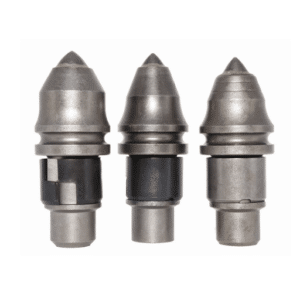
You are staring at a supplier’s parts list. B47K19H, B47K22H, C31HD, BK47, 3050, 3055. The model numbers blur together, and everyone claims to be “heavy-duty.” You need teeth that fit your auger, cut your formation, and do not drain your budget. Pick the wrong model, and you are looking at premature wear, damaged holders, and a drilling slowdown that costs more than the teeth themselves.
This guide translates model numbers into plain decisions. By the end, you will know exactly which tooth series fits your rig, which carbide size matches your rock hardness, and which holder system you already have. No more guessing. No more mismatched orders.
If you are new to bullet teeth terminology, our complete bullet teeth selection guide covers the fundamentals before you dive into model specifics.
How Bullet Teeth Model Numbers Work
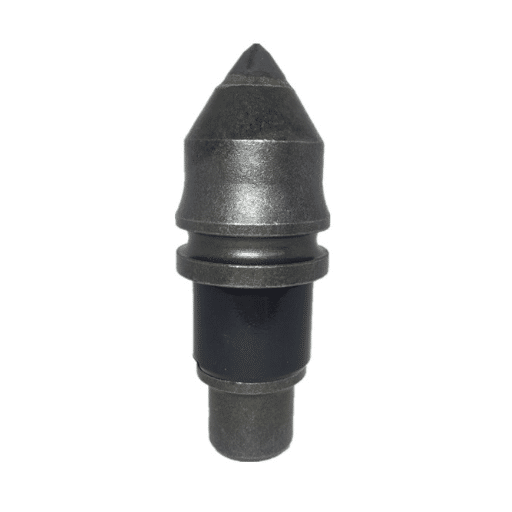
Before comparing models, it helps to understand what the numbers actually mean. Manufacturers do not assign model numbers randomly. Each digit or suffix carries specific information about the tooth’s dimensions, construction, and intended use.
The B47K Naming Convention
The B47K designation is the most common system for foundation drilling bullet teeth. The “B” indicates a round shank design. The “47” refers to the original Betek part family. The “K” denotes the foundation drilling category. The number that follows, such as 19 or 22, represents the tungsten carbide tip diameter in millimeters. The “H” suffix stands for heavy-duty construction, meaning a reinforced steel body and often hardfacing on the shank.
For example, B47K22H means: round shank (B), Betek 47 family (47), foundation drilling (K), 22-millimeter carbide tip (22), heavy-duty body (H).
What 3050, 3055, and 3060 Mean
The 3050, 3055, and 3060 designations refer to body diameter in millimeters. A 3050 tooth has a 50-millimeter body. A 3055 has a 55-millimeter body. A 3060 has a 60-millimeter body. All three share the same 30-millimeter shank diameter, so they fit the same holders. The larger body provides more mass and strength for harder rock. Many suppliers list 3050 and 3055 teeth as B47K or BK equivalents because the dimensions overlap.
The “H” Suffix and Other Designations
The “H” suffix appears on most heavy-duty models. It signals a reinforced body, harder steel treatment, and sometimes additional wear protection such as carbide beads on the shank. Without the “H,” the tooth may be a standard-duty version suited for softer ground. Other suffixes you might see include “/60,” which indicates a 60-millimeter body diameter, or “HD,” which is an alternative heavy-duty marking used by some manufacturers.
If you want to understand the applications of Bullet Teeth, please check out our article about How Bullet Teeth Are Used.
B47K Series: The Industry Standard
B47K bullet teeth are the default choice for medium to heavy-duty rotary drilling. The 30-millimeter round shank fits approximately 85 percent of foundation drilling rigs worldwide, including Bauer, Soilmec, Liebherr, Sany, and XCMG models. If you are unsure what system your rig uses, start with the B47K series.
B47K17.5H and B47K19H: General Purpose Models
The B47K17.5H and B47K19H are the entry points into the B47K family. Both use a 30-millimeter shank and fit standard B43H or B85/2 holders. The B47K19H carries a 19-millimeter carbide tip, while the B47K17.5H uses a slightly smaller 17.5-millimeter tip. These models handle weathered rock, mixed soil, gravel, and formations up to approximately 60 MPa.
Contractors working in transitional ground, where soft soil gives way to medium rock, often start with the B47K19H. It drills efficiently without the excess weight and cost of larger carbide tips. Standard service life ranges from 25 to 40 linear meters in mixed conditions, depending on rotation speed and feed pressure.
B47K22H: The Hard Rock Workhorse
The B47K22H is the most popular model for hard rock applications. Its 22-millimeter carbide tip provides 16 percent more cutting surface than the B47K19H, which translates directly into longer service life and better heat dissipation. The body is reinforced for high-impact conditions, and the overall length of approximately 99 millimeters provides adequate penetration depth.
This model performs reliably in formations from 60 to 100 MPa, including conglomerate, limestone, tuff, and harder sandstone. In field conditions, contractors report that switching from B47K19H to B47K22H in hard rock extends tooth life by approximately 30 percent and improves overall productivity by around 20 percent. For a deeper look at hard rock applications, see our guide to bullet teeth for hard rock.
B47K25H and B47K30H: Extreme Duty
When rock hardness pushes past 100 MPa, standard models wear too quickly. The B47K25H and B47K30H step up with 25-millimeter and 30-millimeter carbide tips, respectively. Both use a 60-millimeter body diameter for added strength. The B47K30H, in particular, is built for extremely abrasive formations such as quartzite and basalt, with a practical ceiling around 150 MPa.
These extreme-duty models are not necessary for most projects. They cost more upfront and require higher torque to operate effectively. Reserve them for formations where standard heavy-duty teeth fail within the first 10 meters.
B47K Series Specifications
| Model | Shank Dia. | Body Dia. | Carbide Tip | Overall Length | Weight | MPa Range | Holder |
|---|---|---|---|---|---|---|---|
| B47K17.5H | 30 mm | 50 mm | 17.5 x 24 mm | ~95 mm | 0.75-1.20 kg | < 50 MPa | B43H / B85/2 |
| B47K19H | 30 mm | 50 mm | 19 x 25 mm | ~95 mm | 0.75-1.20 kg | 10-60 MPa | B43H / B85/2 |
| B47K22H | 30 mm | 50-60 mm | 22 x 27-30 mm | ~99 mm | 0.82-1.25 kg | 60-100 MPa | B43H / B85/2 |
| B47K22/60 | 30 mm | 60 mm | 22 mm | ~105 mm | ~1.05 kg | 60-90 MPa | B43H / B85/2 |
| B47K25H | 30 mm | 60 mm | 25 mm | ~110 mm | ~1.10 kg | 80-120 MPa | B43H / B85/2 |
| B47K30H | 30 mm | 60 mm | 30 x 30 mm | ~115 mm | ~1.25 kg | 100-150 MPa | B43H / B85/2 |
Note: Weights and exact dimensions vary by manufacturer. Always verify specifications with your supplier before ordering.
C31HD Series: Compact and Cost-Effective

The C31HD series occupies a different niche. These teeth use a 25-millimeter shank instead of the 30-millimeter standard, which makes them lighter and less expensive. They are ideal for smaller rigs, tractor-mounted augers, soil buckets, and any application where extreme rock penetration is not required.
C31HD Specifications and Applications
The C31HD weighs approximately 0.45 to 0.50 kilograms, roughly 40 percent lighter than a B47K22H. Its 17-millimeter carbide tip is suited for soft to medium ground, including clay, sand, gravel, and weathered formations below 30 MPa. The C31HD typically uses a C30 holder, which has a smaller pocket than the B43H or B85 systems.
Do not dismiss the C31HD as inferior. In the right conditions, it drills faster and costs less per meter than oversized alternatives. A contractor working primarily in clay and loose gravel would waste money running B47K22H teeth when the C31HD performs the same job at a lower cost.
C21HD: The Ultra-Compact Option
The C21HD is even smaller, with a 19-millimeter shank and approximately 0.23-kilogram weight. It targets hard rock and concrete drilling on compact rigs. While not common in large foundation projects, it appears on specialized trenching equipment and smaller piling rigs where space and weight are constrained.
When to Choose C31HD Over B47K
Choose the C31HD when your ground conditions are consistently soft, your rig is lighter-duty, or your budget favors lower per-tooth cost. Choose B47K when you encounter rock, need longer service life, or run a full-size rotary drilling rig. Mixing the two on the same tool is generally not recommended because the different shank sizes require different holders.
BK Series: The Spring-Clip Alternative
The BK series, particularly BK47 and BKH47, offers functionally similar performance to the B47K series with one key difference: the retention system. While B47K teeth use a circlip (snap ring) to secure the tooth in the holder, BK series teeth use a spring clip.
BK47 and BKH47 Specifications
The BK47 is dimensionally close to the B47K19H. It uses a 30-millimeter shank, 50-millimeter body, and 19-millimeter carbide tip. Weight is approximately 0.72 kilograms. The BKH47 is the heavy-duty equivalent, with a 22-millimeter carbide tip and reinforced body at roughly 0.90 kilograms.
Both models fit the same B43H and B85/2 holders as the B47K series. The primary difference is how the tooth locks into place.
Spring-Clip vs Circlip Retention
A circlip is a spring steel ring that snaps into a groove on the shank and holder pocket. It is secure and widely used. A spring clip is a coil spring that pushes the tooth against a shoulder inside the holder. It allows faster field replacement because you can remove and install teeth without specialized tools.
Some operators prefer the spring-clip system for maintenance efficiency. Others trust the circlip for its proven track record in high-vibration conditions. Neither is objectively better. The choice depends on your maintenance routine and operator preference.
BK Series Compatibility
Because BK47 and BKH47 use the same 30-millimeter shank as B47K series teeth, they are physically interchangeable in the same holders. However, mixing circlip and spring-clip teeth on the same auger or bucket is not advisable. The different retention mechanisms can create inconsistent seating depths, leading to uneven wear patterns and potential holder damage.
Complete Model Comparison Table
The following table summarizes all three series side by side for quick reference.
| Model | Series | Shank | Body | Carbide | Weight | MPa Range | Holder | Retention |
|---|---|---|---|---|---|---|---|---|
| C21HD | C31 | 19 mm | ~35 mm | ~12 mm | ~0.23 kg | Hard rock/concrete | C21 | Friction |
| C31HD | C31 | 25 mm | ~40 mm | 17 x 19-22 mm | 0.45-0.50 kg | < 30 MPa | C30 | Friction/Circlip |
| BK47 | BK | 30 mm | 50 mm | 19 mm | ~0.72 kg | 30-60 MPa | B43H/B85 | Spring clip |
| B47K19H | B47K | 30 mm | 50 mm | 19 x 25 mm | 0.75-1.20 kg | 10-60 MPa | B43H/B85 | Circlip |
| BKH47 | BK | 30 mm | 50-60 mm | 22 mm | ~0.90 kg | 60-90 MPa | B43H/B85 | Spring clip |
| B47K22H | B47K | 30 mm | 50-60 mm | 22 x 27-30 mm | 0.82-1.25 kg | 60-100 MPa | B43H/B85 | Circlip |
| B47K25H | B47K | 30 mm | 60 mm | 25 mm | ~1.10 kg | 80-120 MPa | B43H/B85 | Circlip |
| B47K30H | B47K | 30 mm | 60 mm | 30 x 30 mm | ~1.25 kg | 100-150 MPa | B43H/B85 | Circlip |
B47K22H vs B47K19H: Which Should You Choose?

This is the most common decision contractors face when ordering B47K bullet teeth. Both models share the same 30-millimeter shank and fit the same holders. The difference comes down to carbide size and intended ground conditions.
Side-by-Side Comparison
The B47K19H carries a 19-millimeter carbide tip and weighs approximately 0.75 to 1.20 kilograms. It handles weathered rock, mixed soil, and formations up to about 60 MPa. The B47K22H upgrades to a 22-millimeter carbide tip with a slightly heavier body at 0.82 to 1.25 kilograms. It targets hard rock from 60 to 100 MPa.
The larger carbide on the B47K22H provides two advantages. First, it has more cutting material, so it wears longer in abrasive conditions. Second, the increased mass dissipates heat more effectively during high-friction drilling, reducing the risk of thermal cracking.
When to Upgrade from 19H to 22H
If you are running B47K19H teeth and the carbide tips flatten or chip within the first 15 meters, your ground is harder than the tooth is designed for. That is your signal to step up to the B47K22H. Similarly, if you notice frequent holder pocket damage or excessive vibration, the smaller tooth may be absorbing more impact force than it can handle.
The good news is that both models are interchangeable on the same tool. You can start a project with B47K19H in the upper soil layers and swap to B47K22H when you hit a harder rock layer. No holder changes required.
Cost vs Performance Analysis
The B47K22H costs more per tooth than the B47K19H. However, in hard rock, the longer service life and reduced downtime typically produce a lower cost per meter drilled. Using a B47K19H in 80 MPa rock is a false economy. You will replace teeth twice as often, slow your drilling rate, and risk damaging the holders, which are far more expensive than the teeth themselves.
Holder Compatibility Guide
The holder is the welded pocket on your auger or bucket that houses the bullet tooth. Choosing the right tooth starts with knowing which holder system you have.
B43H, B85, and B85/2 Holders
The B43H is a square weld-on holder with a round pocket for 30-millimeter shank teeth. It is the most common holder for B47K and BK series teeth on foundation drilling tools. The B85 is a round weld-on holder with the same 30-millimeter pocket. The B85/2 adds tungsten carbide reinforcement to the holder body for extra wear resistance in abrasive conditions.
All three holders accept the same teeth. The choice between them depends on your tool design and whether you need the extra wear protection of the B85/2.
C30 and C21 Holders
The C30 holder is designed for 25-millimeter shank teeth such as the C31HD. It is smaller and lighter than the B43H family. Some versions are bolt-on rather than weld-on, which allows faster replacement if the holder itself wears out. The C21 holder is even smaller, accepting 19-millimeter shank teeth like the C21HD.
How to Verify Holder Compatibility on Your Rig
If you are unsure which holders are on your tool, remove one tooth and measure the shank pocket diameter with a caliper. A 30-millimeter pocket means B47K or BK series. A 25-millimeter pocket means C31HD. A 19-millimeter pocket means C21HD. Also, check the retention groove style. A circlip groove is a narrow ring around the pocket interior. A spring-clip system has a visible coil spring or flat spring inside the pocket mouth.
For detailed installation and welding guidance, refer to our bullet teeth holders guide.
Holder Compatibility Matrix
| Holder | Compatible Teeth | Shank Size | Weld Type |
|---|---|---|---|
| B43H | B47K series, BK series | 30 mm round | Weld-on square pocket |
| B85/2 | B47K series, BK series | 30 mm round | Weld-on round pocket with carbide |
| B85 | B47K series, BK series | 30 mm round | Weld-on round pocket |
| C30 | C31HD, C31 | 25 mm round | Weld-on or bolt-on |
| C21 holder | C21HD | 19 mm round | Weld-on |
OEM Cross-Reference: Betek, Kennametal, and Aftermarket
Bullet teeth model numbers vary between manufacturers, which creates confusion when ordering replacements. Understanding the relationship between OEM brands and aftermarket equivalents can save you from ordering the wrong parts.
Understanding OEM Part Number Systems
Betek uses the B47K naming system for foundation drilling teeth. Kennametal uses a different system with designations such as C21, C31, U40HD, and DS01. These part numbers are not interchangeable on a one-to-one basis. A B47K22H and a Kennametal U40HD may serve similar applications, but they often have different shank diameters, overall lengths, and carbide dimensions.
Aftermarket Compatibility Notes
Many aftermarket manufacturers, particularly in China, produce bullet teeth compatible with both Betek and Kennametal systems. It is common to see a single product page listing B47K22H, C31HD, and U40HD as available options. However, this does not mean these models are dimensionally identical. It means the manufacturer produces teeth for all three systems.
When ordering aftermarket teeth, always provide your supplier with the exact measurements you need: shank diameter, overall length, carbide tip diameter, and holder type. Do not rely solely on model number cross-references.
What to Verify Before Ordering
Before placing an order, confirm four things with your supplier. First, the shank diameter must match your holder pocket exactly. Second, the overall length must be consistent with your existing teeth to maintain proper cutting geometry. Third, the carbide tip size should match your application requirements. Fourth, the retention system must match your holders, whether circlip, spring clip, or friction fit.
Aftermarket Cross-Reference Table
| Betek Equivalent | Kennametal Equivalent | Shank | Notes |
|---|---|---|---|
| B47K19H | C21 / C21HD (partial) | 30mm vs 19mm | Not a direct dimensional match |
| B47K22H | U40HD (partial) | 30mm vs 25mm | Aftermarket produces dual-compatible |
| C31HD | C31 / C31HD | 25mm | Direct aftermarket equivalent |
| BK47 | C21HD / DS01 | 30mm vs 19mm | Aftermarket cross-compatible |
Important: No official OEM cross-reference exists. Always verify dimensions before ordering.
How to Order the Right Bullet Teeth
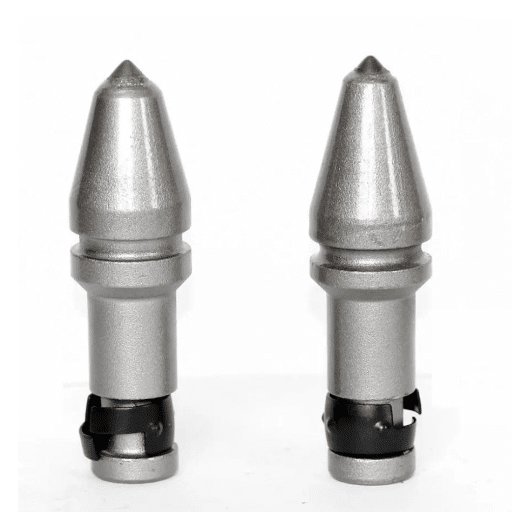
Ordering bullet teeth is straightforward once you know what information your supplier needs. Providing complete details upfront reduces back-and-forth and ensures you receive the correct parts on the first shipment.
Information Your Supplier Needs
Start with your rig manufacturer and model. Then specify the holder type if you know it: B43H, B85/2, B85, C30, or C21. Next, state the tooth model or the specifications you require: shank diameter, carbide tip size, and whether you need standard or heavy-duty construction. Finally, describe your ground conditions or target MPa range so your supplier can confirm the selection.
Quantity Calculation Basics
Calculate your total tooth count by multiplying the number of teeth per tool by the number of tools you need to outfit. Then add a 15 to 20 percent spare factor for wear replacement during the project. For example, if your rock auger uses 24 teeth and you have two augers, you need 48 teeth for initial setup. Adding 20 percent spares gives you approximately 58 teeth total.
Sample Ordering Checklist
- Rig manufacturer and model
- Holder type (B43H, B85/2, B85, C30, C21)
- Tooth model or required specs (shank, carbide, body)
- Ground conditions or MPa range
- Number of teeth per tool
- Number of tools
- Spare factor (recommend 15-20%)
- Delivery timeline
If you need help confirming which model fits your rig, contact us with your rig details and ground report. We can verify compatibility and recommend the most cost-effective configuration for your project.
For help making this decision based on your specific ground conditions, our guide on how to choose bullet teeth walks through a step-by-step selection process.
FAQ
What does B47K mean?
B47K is a model designation for round-shank bullet teeth used in foundation drilling. The “B” indicates round shank, “47” refers to the Betek part family, “K” denotes foundation drilling, and the following number indicates carbide tip diameter in millimeters.
What is the difference between B47K19H and B47K22H?
The B47K19H has a 19-millimeter carbide tip and handles formations up to approximately 60 MPa. The B47K22H has a 22-millimeter carbide tip with a reinforced body and handles hard rock from 60 to 100 MPa. Both share the same 30-millimeter shank and fit the same holders.
Will C31HD fit in a B47K holder?
No. The C31HD uses a 25-millimeter shank, while B47K holders accept 30-millimeter shanks. The C31HD requires a C30 holder. Mixing incompatible shank and holder sizes will result in loose seating and rapid wear.
What is a 3050 bullet tooth?
The 3050 designation refers to a bullet tooth with a 50-millimeter body diameter. It typically uses a 30-millimeter shank and is often listed as a B47K or BK equivalent. The 3055 and 3060 designations follow the same logic with 55-millimeter and 60-millimeter bodies, respectively.
How do I know which holder is on my auger?
Remove a tooth and measure the holder pocket with a caliper. A 30-millimeter pocket accepts B47K and BK series. A 25-millimeter pocket accepts C31HD. A 19-millimeter pocket accepts C21HD. Also, check whether the retention system uses a circlip, spring clip, or friction fit.
Conclusion
Choosing the right bullet teeth model does not have to be guesswork. The B47K series covers the vast majority of foundation drilling rigs with a range of carbide sizes from 17.5 to 30 millimeters. The C31HD series offers a lighter, more economical option for soft ground and smaller rigs. The BK series provides the same 30-millimeter shank compatibility with a spring-clip retention system for faster maintenance.
Start by identifying your holder type. Match the shank diameter to the holder pocket. Then select the carbide size based on your ground conditions: smaller tips for soft soil, larger tips for hard rock. When in doubt, provide your supplier with your rig model, holder measurements, and ground report. The right B47K bullet teeth selection will reduce wear costs, minimize downtime, and keep your project on schedule.
For a broader view of when bullet teeth outperform other cutting systems, read our comparison of bullet teeth vs flat teeth. If you need custom tooth configurations or help matching models to your specific rig, contact our team for technical support.