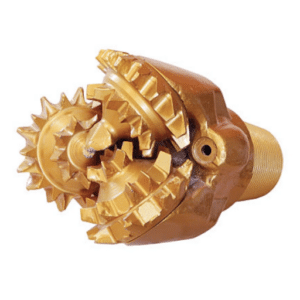
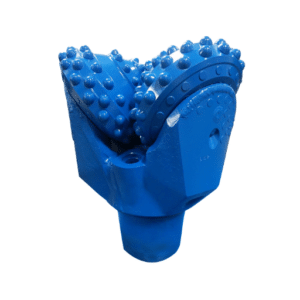
A contractor in Guangdong drilled 35 meters into fresh granite with bullet teeth. After 12 tooth changes, 4 days of lost rig time, and a cost-per-meter that was 30 percent higher than the crew next door using roller bits from the start, he learned an expensive lesson. The right tool for the right rock is not about price. It is about the total cost.
Bullet teeth and roller bits serve different hard-rock niches. Using the wrong tool at the wrong depth burns budget and wastes rig hours. This guide provides the MPa-based thresholds, cost data, and real-world scenarios you need to choose the right tool before you start drilling.
For a broader overview of bullet teeth and their applications, see our complete bullet teeth selection guide.
Overview of Bullet Teeth
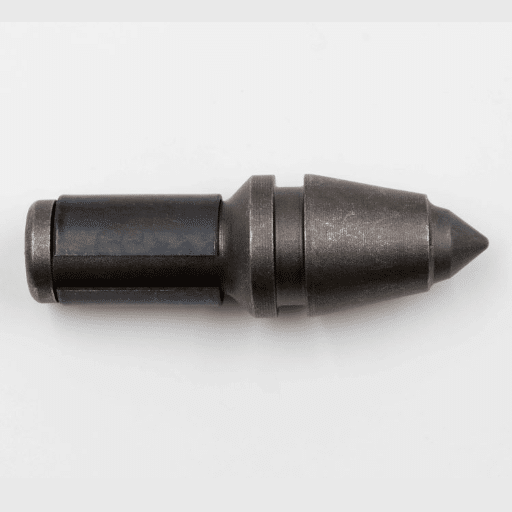
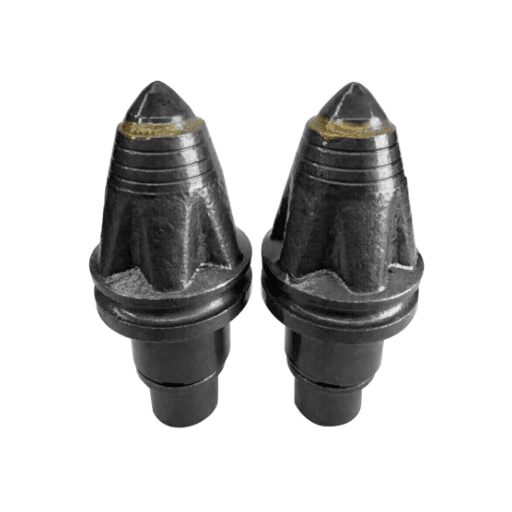
Bullet teeth, also called conical teeth or round shank chisels, are carbide-tipped point-attack cutters designed for rotary drilling through rock and dense ground. They have three main components: a tungsten carbide tip, an alloy steel body (typically 42CrMo), and a retaining system that locks the tooth into a holder.
The conical geometry concentrates force onto a small contact area, allowing the tooth to fracture rock efficiently. Most bullet teeth self-rotate in their holders during drilling, distributing wear evenly and creating a self-sharpening effect. The carbide tip rates between HRC 88 and HRC 92, while the steel body sits at HRC 40 to 45 after heat treatment.
Bullet teeth are the standard choice for weathered rock, hard rock up to about 80 to 100 MPa, gravel, cobbles, and mixed formations. Common models include the B47K series (B47K19, B47K22, B47K22H) and the C31HD.
Overview of Roller Bits
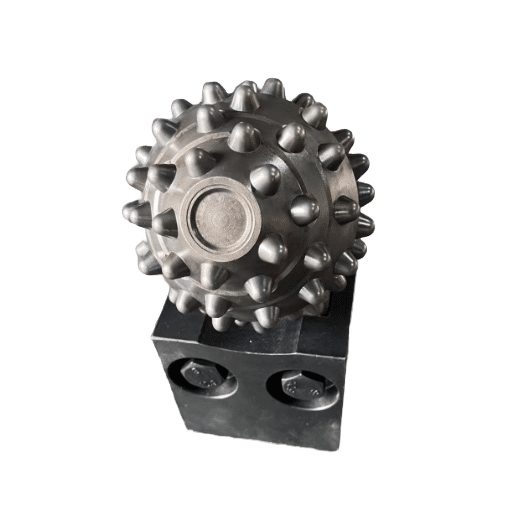
Roller bits are rotating conical or cylindrical cutters with sealed bearings that crush and grind rock through a rolling action. Unlike bullet teeth, which use a single pointed tip, roller bits mount multiple carbide inserts on rotating cones that turn on heavy-duty bearings as the core barrel rotates.
A typical roller bit assembly consists of several carbide-tipped cones, each mounted on a sealed bearing system with high-temperature grease rated up to 250 degrees Celsius. The cones rotate independently as the barrel turns, distributing crushing force across multiple insert points. Common carbide grades for roller bit inserts include YG8C and YG11C tungsten carbide.
Roller bits are the standard choice for very hard rock above 100 MPa, including granite, basalt, gneiss, and quartzite. They are almost exclusively used on core barrels and specialized rock drilling buckets where sustained penetration into homogeneous hard rock is required.
Bullet Teeth vs Roller Bit: Side-by-Side Comparison
The table below covers the technical differences that matter on the job site.
| Feature | Bullet Teeth | Roller Bits |
|---|---|---|
| Cutting action | Point-attack / chipping | Rolling / crushing |
| Carbide grade | YG11C / YG13C tungsten carbide | YG8C / YG11C tungsten carbide inserts |
| Carbide hardness | HRC 88–92 | HRC 86–90 |
| Body material | 42CrMo alloy steel | Alloy steel with bearing housings |
| Bearing type | None (self-rotating shank) | Sealed cylindrical roller + sliding bushing |
| Best ground conditions | Weathered rock, mixed, gravel, cobbles | Granite, basalt, gneiss, very hard rock |
| Effective MPa range | 15–100 MPa | 60–350 MPa |
| Penetration rate in hard rock (60–100 MPa) | 2–3 m/hour | 5–7 m/hour |
| Penetration rate in very hard rock (100+ MPa) | 0.3–1.0 m/hour | 0.4–0.7 m/hour |
| Service life in medium rock (60 MPa) | 80–150 meters | 800–1,500 meters |
| Service life in very hard rock (150+ MPa) | 20–40 meters | 200–400 meters |
| Unit cost | $25–80 per tooth | 200+ per insert; 1,600+ per bit assembly |
| Replacement frequency | High in hard rock | Low |
| Replacement time | 10–20 minutes per tooth | 1–2 hours per bit assembly |
| Rig torque requirement | 60–100% rated torque | 80–120% rated torque |
| Borehole stability | Good in mixed ground; chatter in very hard rock | Reduced chatter; smoother in homogeneous hard rock |
| Maintenance complexity | Low | Higher (bearing inspection, grease, seal check) |
The fundamental difference is force distribution. Bullet teeth concentrate all cutting force onto a single carbide point, which is highly effective for fracturing rock up to about 100 MPa. Roller bits distribute crushing force across multiple inserts on rotating cones, which is necessary for grinding through very hard, brittle rock above 100 MPa. Below that threshold, the roller bit’s distributed force is overkill. Above it, the bullet tooth’s concentrated force is insufficient.
When to Use Bullet Teeth
Choose bullet teeth when your project involves any of the following conditions:
Ground conditions:
- Weathered rock up to 80 MPa
- Gravel and cobbles
- Mixed formations with intermittent rock lenses
- Dense or cemented soil above 30 MPa
Tool types:
- Rock augers
- Rock drilling buckets
- Bullet-tooth core barrels
- Casing shoes for rock penetration
Project characteristics:
- Mixed geology where rock is not continuous
- Shallow rock sockets (under 20 meters)
- Variable strata with clay or sand between rock layers
Decision checklist:
- Ground investigation shows MPa values below 80
- The formation contains clay, sand, or weathered layers mixed with rock
- Roller bits would be overkill and slower in mixed ground
- Budget constraints favor lower upfront tooling costs
- Rig torque is limited to below 80 percent of the rated capacity
For rock auger drilling applications, bullet teeth are typically the best choice.
When to Use Roller Bits

Choose roller bits when your project involves any of the following conditions:
Ground conditions:
- Granite, basalt, gneiss, quartzite above 100 MPa
- Fresh hard rock with low fracture density
- Homogeneous rock formations without soft layers
Tool types:
- Roller bit core barrels
- Roller bit drilling buckets
Project characteristics:
- Deep rock sockets (over 20 meters) in hard bedrock
- Bridge foundations in bedrock
- Projects where minimizing tool changeouts is critical
Decision checklist:
- Ground investigation shows MPa values above 100
- Bullet teeth are wearing out in under 40 meters
- Penetration rate with bullet teeth has dropped below 1 m/hour
- The rig can sustain 80 to 120 percent of rated torque
- The project timeline justifies the higher upfront tooling investment
- Total drilled length in hard rock exceeds the break-even point for roller bit cost
When to Switch from Bullet Teeth to Roller Bits
The 60 to 100 MPa range is the transition zone where either tool can work, but one is usually better. Knowing when to switch mid-project can save thousands of dollars.
Field signals that bullet teeth are failing and it is time to switch:
- Carbide chipping occurs after less than 50 meters
- Excessive rig vibration and chatter during drilling
- Penetration rate drops below 1 m/hour despite optimal rig parameters
- Shank bending or holder weld cracking appears
- Tooth replacement frequency exceeds one change per day
Cost break-even calculation:
When the cumulative downtime from bullet teeth changeouts exceeds the premium cost of switching to roller bits, the switch pays for itself. For example, if bullet teeth require a changeout every 30 meters in 120 MPa granite, and each changeout costs 2 hours of rig time at $200 per hour, the downtime cost is $400 per 30 meters. Over 300 meters, that is $4,000 in downtime alone, plus the cost of 10 sets of bullet teeth. A roller bit assembly at $1,600 that lasts 200 meters may be cheaper in total cost by the second changeout.
Switching workflow:
- Assess the remaining depth in hard rock
- Calculate the total bullet teeth cost, including downtime
- Compare the roller bit cost for the same depth
- Decide before drilling resumes
- Execute the switch with proper tooling preparation
Penetration Rate and Drilling Speed Comparison
Penetration rate is where the difference between bullet teeth and roller bits becomes most visible on the job site.
Bullet teeth penetration rates by formation:
- Weathered rock (40 MPa): 4–6 m/hour
- Medium rock (60 MPa): 2–3 m/hour
- Hard rock (80 MPa): 1–2 m/hour
- Very hard rock (120+ MPa): 0.3–1.0 m/hour
Roller bit penetration rates by formation:
- Medium rock (60 MPa): 4–6 m/hour
- Hard rock (80 MPa): 3–5 m/hour
- Very hard rock (120+ MPa): 0.4–0.7 m/hour
The data reveals a clear pattern. In medium rock, both tools perform similarly. In hard rock, roller bits maintain roughly double the penetration rate of bullet teeth. In very hard rock, the gap narrows because both tools are working at their limits, but roller bits still maintain more consistent speed with less chatter and vibration.
Roller bits maintain speed in very hard rock because their crushing mechanism is less dependent on sharp cutting edges. As bullet teeth wear down, their penetration rate drops sharply. Roller bits continue crushing effectively even as inserts wear, because the rolling action compensates for insert degradation.
These torque differences matter for rig selection. Projects using roller bits in hard rock need rigs with strong torque output. For kelly bar specifications, see our kelly bar torque ratings guide.
Cost Analysis: Total Cost of Ownership
Upfront cost is the wrong way to compare these tools. Total cost of ownership, including downtime, is what matters.
Upfront cost comparison:
| Cost Component | Bullet Teeth | Roller Bits |
|---|---|---|
| Unit cost | $25–80 per tooth | $200+ per insert |
| Full assembly (per tool) | $200–640 (8 teeth) | $1,600+ per bit |
| Holder/spare parts | $15–40 per holder | $300+ per cone assembly |
Cost-per-meter by formation:
| Formation | MPa Range | Bullet Teeth | Roller Bits |
|---|---|---|---|
| Medium rock | 60 | $0.20–0.35/m | $0.15–0.25/m |
| Hard rock | 80 | $0.40–0.80/m | $0.20–0.35/m |
| Very hard rock | 150+ | $1.50–2.50/m | $0.50–1.00/m |
The break-even point depends on formation hardness and project scale. In very hard rock above 150 MPa, roller bits typically pay for themselves within the first 150 to 200 meters. In hard rock at 80 MPa, the break-even may stretch to 300 to 400 meters. In medium rock at 60 MPa, bullet teeth are usually cheaper unless the project involves very deep sockets.
Downtime is the hidden cost:
- Bullet teeth in hard rock: 6 to 10 hours of changeout time per week
- Roller bits in hard rock: 2 to 3 hours of inspection time per week
At 150 to 250 per hour for rig and crew, that downtime difference adds 600 to 1,750 per week. Over a month-long project, the downtime savings from roller bits can exceed the upfront tooling premium.
Want to learn more about the bullet teeth series? Please check out our article on B47K, C31HD, and BK Series Bullet Teeth.
Hybrid Configurations: Bullet Teeth + Roller Bits
Some projects involve variable strata where neither pure bullet teeth nor pure roller bits are ideal for the entire bore. Hybrid configurations address this by combining both tool types on the same core barrel.
Common hybrid arrangements:
- Outer ring bullet teeth + center roller bit. The bullet teeth on the outer ring cut the perimeter in mixed or weathered ground, while the roller bit in the center handles the harder core. This works well in formations that transition from weathered to fresh rock mid-bore.
- Bullet teeth on pilot + roller bits on main cutting face. The pilot bullet tooth breaks through the initial surface layer, while the roller bits engage once the barrel reaches consistent hard rock.
When hybrid makes sense:
- Variable strata with unknown geology
- Projects where the upper section is mixed ground and the lower section is bedrock
- Test bores where the exact formation is uncertain
Limitations:
Hybrid barrels cost more than single-type configurations and require more complex maintenance. They also perform worse than dedicated tools in homogeneous conditions. If your geotechnical report clearly identifies the formation, a dedicated tool is almost always better.
For custom drilling configurations that match your specific ground conditions, contact our engineering team.
Maintenance and Reliability
Bullet teeth and roller bits have very different maintenance requirements.
Bullet teeth maintenance:
- Inspect every 4 to 8 hours in hard rock drilling
- Check carbide tips for chipping, cracking, or abnormal wear
- Verify that teeth are self-rotating freely in their holders
- Monitor holder welds for cracks
- Replace individual teeth as needed; no bearing or seal maintenance
Roller bit maintenance:
- Inspect bearings every 20 to 40 hours of operation
- Check seal integrity for grease leakage
- Monitor grease condition; replace if contaminated
- Check for cone lockup or restricted rotation
- Replace entire cone assemblies when bearings fail
- Store spare roller bits in dry conditions to prevent bearing corrosion
Common failure modes:
- Bullet teeth: Carbide tip chipping, shank bending, holder weld cracking, seized rotation
- Roller bits: Bearing seal failure, cone lockup, insert loss, grease degradation
Roller bits require a higher level of technical attention, but their inspection intervals are longer because they do not wear out as quickly as bullet teeth in hard rock.
For a full breakdown of how bullet teeth perform in hard rock specifically, see our bullet teeth for hard rock drilling guide.
Three Real-World Decision Scenarios
Scenario 1: Granite Bedrock (Guangdong)
A foundation crew faced fresh granite at 150 MPa with a 35-meter rock socket. They used roller bits from the start. Penetration averaged 0.5 m/hour. Each roller bit assembly lasted approximately 200 meters before requiring replacement. The tooling cost was $0.60 per meter. If they had used bullet teeth, industry data suggests they would have required 15 or more changeouts, with a total tooling and downtime cost exceeding $2.20 per meter.
Scenario 2: Weathered Limestone (Turkey)
A bridge project required drilling through weathered limestone at 55 MPa with occasional clay lenses. The crew used B47K22H bullet teeth. Penetration averaged 2.5 m/hour. Each set lasted 120 meters. The tooling cost was $0.22 per meter. Roller bits would have been unnecessary overkill in this mixed ground, and their penetration rate would likely have been slower due to the clay layers.
Scenario 3: Mixed Strata (Malaysia)
A piling project involved 8 meters of clay, 20 meters of weathered granite at 80 MPa, and 15 meters of fresh granite at 140 MPa. The crew used bullet teeth for the clay and weathered sections, then switched to roller bits at the fresh granite interface. This sequential approach optimized cost across all layers. A hybrid barrel with bullet teeth on the outer ring and a roller bit in the center would have been an alternative, but the sequential approach was simpler and more cost-effective given the clear layer boundaries.
If you want to know a detailed comparison of bullet teeth and flat teeth, please check out our article on Bullet Teeth vs Flat Teeth.
FAQ: Bullet Teeth vs Roller Bit
Can bullet teeth drill granite?
Yes, but it is not cost-effective. Bullet teeth can penetrate fresh granite up to about 100 MPa, but they wear out extremely quickly. In granite above 120 MPa, a bullet tooth may last only 20 to 40 meters. The frequent changeouts and downtime make roller bits the better economic choice.
How much faster are roller bits than bullet teeth?
In hard rock at 80 MPa, roller bits typically penetrate at 3 to 5 m/hour compared to 1 to 2 m/hour for bullet teeth. In very hard rock above 120 MPa, the gap narrows, but roller bits still maintain a more consistent speed with less vibration.
Why are roller bits so much more expensive?
Roller bits contain precision bearings, multiple carbide inserts, and complex sealed assemblies. A single roller bit cone costs more than an entire set of bullet teeth. However, in very hard rock, the longer service life and reduced downtime offset the higher upfront cost.
Can I use roller bits in mixed ground?
You can, but it is not ideal. Roller bits perform best in homogeneous hard rock. In mixed ground with clay or sand layers, bullet teeth are usually faster and more cost-effective. Roller bits in soft material can become clogged and lose efficiency.
How do I know when to switch from bullet teeth to roller bits?
Use 100 MPa as your primary threshold. If your geotechnical report shows consistent rock above 100 MPa, plan for roller bits. In the field, if bullet teeth start wearing out in under 50 meters, or if penetration drops below 1 m/hour with normal rig parameters, that is a signal to switch.
Conclusion
The bullet teeth vs roller bit decision comes down to one number: MPa.
Use bullet teeth for weathered rock, mixed formations, and hard rock up to about 80 MPa. They are faster in mixed ground, cheaper per unit, and simpler to maintain. Use roller bits for very hard rock above 100 MPa, especially granite, basalt, and gneiss. Their crushing mechanism, longer service life, and consistent penetration rate in homogeneous hard rock make them the better total-cost choice despite the higher upfront investment.
The 60 to 100 MPa transition zone requires careful analysis. If your project spans this range, calculate the total cost of ownership, including downtime, before making the final decision. In variable strata, sequential tool switching or hybrid configurations may deliver the best results.
If you need help selecting the right tool for your hard rock project, our engineering team can review your geotechnical report and recommend the optimal configuration. Contact Changsha Mingyi for a free tool selection consultation.