Hasan stood next to his rig on a limestone quarry outside Ankara, watching his crew swap out the third set of teeth that morning. The flat-profile chisels they had been using were grinding down to stubs every thirty meters. At that rate, the 800-meter foundation project would consume more teeth than the job’s entire tooling budget. Two bays over, a competitor’s crew was running the same rock with conical bullet teeth. They had not stopped to change a single tooth all shift.
If you have ever tracked tooling costs and realized that tooth replacement is eating your margin, you understand the real problem. Auger teeth types are not interchangeable accessories. They are precision cutting tools whose geometry, material, and mounting system determine whether your rig penetrates efficiently or burns fuel and steel while going nowhere.
In this guide, you will learn the four main auger teeth types, how to match specific models to your ground conditions, what holder systems fit which teeth, and the exact visual and performance indicators that tell you when to replace before damage spreads to the auger head itself. We will use the quantitative tables and model specifications that separate educated selection from guesswork.
For the full hard-ground breakdown, read our guide to rock auger drilling techniques.
What Are Auger Teeth?

Auger teeth are replaceable cutting tools mounted on the drilling head of foundation augers, buckets, and core barrels. Their primary function is to fracture, cut, and penetrate soil or rock as the tool rotates under torque and crowd force. The tooth geometry concentrates drilling energy at the cutting edge while the body transfers reaction forces back into the auger head.
Unlike fixed cutting edges on early drilling tools, modern auger teeth are designed for rapid field replacement. This allows operators to adapt the tooth type to changing ground conditions without replacing the entire auger. For a broader overview of how augers function as complete systems, see our complete guide to drilling augers.
The Four Main Auger Teeth Types
Foundation drilling relies on four distinct tooth families, each engineered for a specific range of ground conditions and operational demands.
Flat Teeth (Chisel Teeth)
Flat teeth feature a broad, straight, or slightly scooped cutting edge that disperses load across a wide contact area. The cutting action is a shearing motion, slicing through material rather than fracturing it.
- Best for: Soft clay, silt, sand, and loose soil formations
- Common models: BFZ80, BTK flat series, standard chisel profiles
- Advantages: Low cost, fast penetration in soft ground, simple geometry
- Limitations: Poor performance in rock or gravel; rapid wear in abrasive conditions
Flat teeth remain the economical choice for purely soil-based projects. However, they fail quickly when they encounter cobbles or cemented layers.
Bullet Teeth (Conical Teeth)
Bullet teeth use a conical or pointed geometry with a tungsten carbide insert at the tip. The design concentrates force on a small contact area, enabling penetration into competent rock and dense material.
- Best for: Hard rock, gravel, cobbles, dense soil, and asphalt
- Common models: B47K22, B47K19, C31HD, BKH series
- Advantages: High penetration in rock, self-sharpening on rotating designs, long life in abrasive conditions
- Limitations: Higher unit cost; can bog down in soft clay if tooth spacing is too wide
Bullet teeth are the standard for rock augers and mixed-ground conditions. The tungsten carbide tip is typically 10 times more wear-resistant than hardened steel in abrasive environments.
Chisel and Step Teeth
Chisel teeth occupy the middle ground between flat and bullet profiles. They feature a stepped or chisel-shaped edge that can both slice soil and chip small rock fragments.
- Best for: Mixed soils with small rock inclusions, packed earth, transition zones
- Advantages: Versatile across changing strata; lower cost than bullet teeth
- Limitations: Jack of all trades, master of none; not optimal for dedicated rock or pure soil
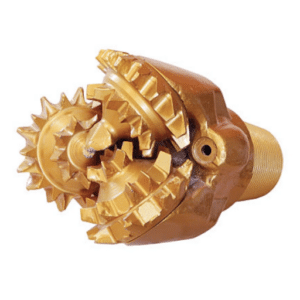
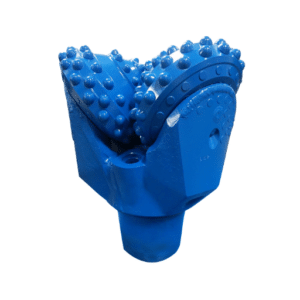
Roller Cutters
Roller cutters are rotating disc assemblies with multiple carbide inserts arranged around the circumference. They roll against the rock face rather than cutting into it.
- Best for: Very hard rock (60+ MPa), continuous abrasive conditions, core barrel applications
- Advantages: Exceptional life in hard rock; distributes wear across multiple inserts
- Limitations: High initial cost; heavy; primarily used on core barrels and heavy rock augers rather than standard soil augers
Bullet Teeth Deep Dive: Models and Specifications

Bullet teeth are the most technically complex category and the one that generates the most selection questions. Understanding the model numbering and dimensional differences is essential.
B47K Series (Betek-Style)
The B47K series is the most widely used bullet tooth family in foundation drilling. The model suffix indicates the carbide head diameter.
| Model | Shank Diameter | Body Diameter | Carbide Head | Weight (approx.) | Best Ground Type |
|---|---|---|---|---|---|
| B47K19 | 22 mm | 50 mm | 19 mm | 0.75 kg | Medium rock, gravel, dense sand |
| B47K22 | 22 mm / 30 mm | 50 mm | 22 mm | 0.82 kg | Hard rock, cobbles, weathered formations |
| B47K22H | 30 mm | 60 mm | 25 mm | 1.10 kg | Very hard rock, high-impact conditions |
| B47K22/60 | 30 mm | 60 mm | 22 mm | 1.05 kg | Heavy-duty rock augers |
The 22 mm shank is standard for most foundation applications. The 30 mm heavy shank is used on large-diameter rock augers where higher torque and impact loads are expected.
BTK Series (Betek-Style)
The BTK series is optimized for softer ground conditions, where smaller carbide heads and denser tooth patterns improve continuity of cut.
| Model | Shank Diameter | Body Diameter | Carbide Head | Best Ground Type |
|---|---|---|---|---|
| BTK01 | 25 mm | 33 mm | 9 mm | Soft soil, mud, organics |
| BTK03 | 25 mm | 33 mm | 12 mm | Medium soil, weathered layers |
| BTK10 | 25 mm | 33 mm | 16 mm | Mixed soil with small rock |
The BTK series body diameter of 33 mm is significantly smaller than the B47K series. This allows more teeth to fit on the same auger head diameter, creating a finer cutting pattern that performs better in soft or loose material.
C31HD (Kennametal-Style)
The C31HD is Kennametal’s heavy-duty equivalent to the B47K22. It features a 25 mm shank and a robust carbide insert designed for high-impact conditions.
- Shank: 25 mm
- Overall length: ~150 mm
- Best for: Hard rock, high-impact drilling, mining applications
- Holder compatibility: C30, C31 series holders
Model Selection by Ground Condition
| Ground Condition | MPa Range | Recommended Model | Alternative |
|---|---|---|---|
| Soft clay, silt | < 5 | BTK01, BFZ80 flat | Standard chisel |
| Sand, loose gravel | 5–15 | BTK03, BTK10 | Flat teeth |
| Weathered rock, dense soil | 15–40 | B47K19 | BTK10 |
| Hard rock, gravel, cobbles | 30–60 | B47K22 | C31HD |
| Very hard rock, granite | 50–100 | B47K22H | Roller cutters |
| Asphalt, concrete | 30–60 | B47K22 with reinforced carbide | Specialized flat-carbide |
Hasan, the contractor from the Ankara quarry, applied this table retroactively and saw his mistake immediately. The limestone he was drilling tested at 45 to 55 MPa. His flat chisel teeth were rated for soil under 5 MPa. He switched to B47K22 bullet teeth with proper holders. His replacement interval stretched from 30 meters to 180 meters. The tooth cost per meter dropped by 60 percent, and his crew stopped losing time to constant change-outs.
Need equipment that matches your rig? Check our auger drilling machine tools for compatible configurations.
Tooth Holder Types and Compatibility

The holder is just as important as the tooth itself. A worn or mismatched holder destroys new teeth prematurely and can damage the auger head welding.
Weld-On Holders
Weld-on holders are permanently attached to the auger head by welding. They offer the highest strength and are the standard for heavy rock applications.
- Common models: B43H (for B47K series), C30 (for C31HD)
- Advantages: Maximum strength; no bolt loosening risk
- Disadvantages: Requires cutting and re-welding to replace
Bolt-On Holders
Bolt-on holders attach through pre-drilled holes in the auger head. They are easier to field-replace than weld-on holders.
- Common models: B85/2 series
- Advantages: Faster replacement; good for mid-size rigs
- Disadvantages: Bolts can loosen under vibration; requires inspection
Quick-Change Holders
Quick-change systems use a snap ring or retaining clip to hold the tooth in the holder. Tooth replacement takes seconds rather than minutes.
- Advantages: Minimal downtime; ideal for high-volume operations
- Disadvantages: Slightly higher cost; retaining clips require spare inventory
Holder Compatibility Table
| Holder Model | Fits Tooth | Attachment | Typical Machine | Best Application |
|---|---|---|---|---|
| B43H | B47K19, B47K22 | Weld-on | Large rigs | Rock augers, heavy duty |
| B43H/60 | B47K22H, B47K22/60 | Weld-on | Large rigs | Very hard rock |
| B85/2 | B47K series | Bolt-on | Mid-size rigs | General foundation |
| C30 | C31HD | Weld-on | Large rigs | Hard rock, mining |
| BTK holders | BTK01–BTK10 | Various | All sizes | Soil augers, soft ground |
Matching Teeth to Ground Conditions
The selection process follows a simple logic: harder ground demands more concentrated force and more wear-resistant materials.
| Ground Type | MPa Range | Tooth Family | Specific Model | Holder | Expected Life |
|---|---|---|---|---|---|
| Soft clay | < 5 | Flat | BFZ80, chisel | Standard | 300–500 m |
| Sand, silt | 5–15 | Flat / BTK | BTK01, BTK03 | BTK holder | 200–350 m |
| Dense sand, gravel | 15–30 | BTK / Bullet | BTK10, B47K19 | B43H | 100–200 m |
| Weathered rock | 20–40 | Bullet | B47K19, B47K22 | B43H | 80–150 m |
| Hard rock | 40–70 | Bullet | B47K22, C31HD | B43H / C30 | 50–100 m |
| Very hard rock | 70–100 | Heavy bullet | B47K22H | B43H/60 | 30–60 m |
| Cobbles, boulders | Variable | Bullet / Roller | B47K22H, roller cutter | Heavy-duty | 20–50 m |
Tooth Layout and Placement on Auger Heads

The number of teeth and their arrangement on the auger head directly influence cutting efficiency and load distribution.
Tooth Count by Diameter
| Auger Diameter | Flat Teeth (Soil) | Bullet Teeth (Rock) | Tooth Spacing |
|---|---|---|---|
| 300–400 mm | 4–6 | 6–8 | 120–150 mm |
| 500–800 mm | 6–10 | 8–12 | 130–160 mm |
| 1,000–1,500 mm | 10–16 | 12–20 | 140–180 mm |
| 1,800–2,500 mm | 16–24 | 20–32 | 150–200 mm |
Leading vs Trailing Teeth
Leading teeth take the primary cutting load and experience the most wear. Trailing teeth clean the hole wall and stabilize the cut. In hard rock applications, leading teeth should be one size heavier than trailing teeth. For example, use B47K22 on the leading edge and B47K19 on the trailing edge.
Pilot Bit Coordination
The pilot bit at the center of the auger head must match the tooth family. A bullet-tooth auger should use a conical pilot bit with carbide reinforcement. A flat-tooth auger should use a scoop or bullet pilot depending on ground hardness.
When to Replace Auger Teeth
Waiting too long to replace teeth damages holders, auger heads, and poor hole quality. These are the condition-based triggers.
Visual Wear Indicators
- Carbide erosion exceeds 30 percent: The cutting edge is rounded and ineffective.
- Steel body wear exposes the shank: The tooth is structurally compromised.
- Cracked or chipped carbide: Impact damage reduces cutting efficiency.
- Tooth rotation seized in holder: The shank or bore is galled.
Performance Indicators
- Torque increase greater than 25 percent: The rig works harder to achieve the same penetration.
- Penetration rate drops more than 40 percent: The cutting edge is no longer effective.
- Excessive vibration: Uneven wear creates an unbalanced cutting head.
- Hole wall quality degradation: Worn teeth tear rather than cut the wall.
Replacement Interval Guidelines
| Ground Type | Tooth Type | Approximate Meters per Change | Inspection Frequency |
|---|---|---|---|
| Soft clay | Flat / BTK | 300–500 m | Daily |
| Sand / silt | Flat / BTK | 200–350 m | Daily |
| Gravel | B47K19 | 80–150 m | Per shift |
| Weathered rock | B47K22 | 50–100 m | Per shift |
| Hard rock | B47K22 / C31HD | 30–60 m | Every 4 hours |
| Very hard rock | B47K22H | 20–40 m | Every 2–4 hours |
Lina, a maintenance supervisor at a drilling contractor in Brazil, noticed uneven wear across her CFA auger heads. Three teeth were down to stubs while the rest looked nearly new. Investigation revealed that two holders had been misaligned during a previous repair. The angle was off by only three degrees, but that was enough to overload the adjacent teeth. After re-welding the holders to specification and implementing a per-shift rotation routine for the bullet teeth, wear evened out across the head. The fix extended average tooth life by 35 percent.
Cost and Efficiency by Tooth Type
Tooth selection affects more than replacement cost. It influences fuel consumption, penetration rate, and auger head longevity.
| Tooth Type | Unit Cost Index | Life in Rock (m) | Cost per Meter Index | Relative Efficiency |
|---|---|---|---|---|
| Flat teeth | 1.0 | 30–50 (in rock) | 3.0 (high) | Low in rock |
| BTK series | 1.2 | 50–80 (in mixed) | 2.0 | Moderate |
| B47K19 | 2.5 | 80–150 | 1.5 | Good |
| B47K22 | 3.0 | 50–100 | 2.0 | High |
| B47K22H | 4.0 | 30–60 | 3.5 | Very high |
| Roller cutter | 15.0 | 200–400 | 1.0 | Very high (rock only) |
Self-Rotating vs Fixed Bullet Teeth
Self-rotating bullet teeth are designed to spin in the holder as the auger rotates. This distributes wear evenly around the conical tip, maintaining a sharp point for longer.
Sven, a project manager on a wind farm project in Sweden, ran a side-by-side test in granite bedrock. One auger head used fixed B47K22 teeth. The other used self-rotating equivalents. After 60 meters, the fixed teeth had worn flat on one side and required replacement. The rotating teeth had maintained their conical profile and drilled an additional 25 meters before reaching the same wear threshold. The rotating teeth cost 15 percent more per unit but delivered a 40 percent increase in drilled meters.
Troubleshooting Common Tooth Problems

Premature Carbide Chipping
Symptoms: Carbide tips break off in large fragments after only a few meters.
Causes:
- Ground harder than the tooth rating
- Excessive impact from boulders or rebar
- Holder play allowing tooth movement
- Wrong tooth for the application
Fixes: Step up to a heavier tooth model (B47K22 instead of B47K19). Inspect holders for wear. Reduce RPM and increase crowd force to avoid hammering.
Holder Galling and Seizure
Symptoms: Teeth cannot be rotated or removed from the holder.
Causes:
- Corrosion from groundwater exposure
- Contamination with drilling mud or clay
- Over-torqued installation
- Dissimilar metal contact
Fixes: Use an extraction tool or puller. Clean the holder bore with a wire brush. Apply anti-seize compound to new teeth. Replace holders if the bore is damaged.
Uneven Wear Patterns
Symptoms: Some teeth wear rapidly while others remain nearly new.
Causes:
- Misaligned holders
- Uneven ground conditions
- Wrong tooth layout for the diameter
- Worn pilot bit directing load to one side
Fixes: Check holder alignment with a template. Rotate teeth between shifts to balance wear. Replace the pilot bit if it is worn asymmetrically.
FAQ: Auger Teeth Types
What are the main auger teeth types?
Foundation drilling uses four main categories: flat teeth for soft soil, bullet (conical) teeth for rock and gravel, chisel teeth for mixed conditions, and roller cutters for very hard rock.
What is the difference between B47K22 and C31HD?
Both are heavy-duty bullet teeth for hard rock. The B47K22 is a Betek-style tooth with a 22 mm or 30 mm shank. The C31HD is a Kennametal-style tooth with a 25 mm shank. They are dimensionally similar and often interchangeable in application.
How do I know when to replace auger teeth?
Replace when carbide erosion exceeds 30 percent, the steel body shows significant wear, the torque rises more than 25 percent, or the penetration rate drops more than 40 percent.
Can I use bullet teeth in soft clay?
You can, but it is not optimal. Bullet teeth have wide spacing and pointed tips that do not cut clay efficiently. Flat teeth or BTK series teeth perform better in soft cohesive soils.
What holder do I need for B47K22 teeth?
The standard holder is the B43H weld-on holder. For heavy-duty applications, use the B43H/60 holder. The B85/2 is a bolt-on alternative for mid-size rigs.
Conclusion
Auger teeth types are not a commodity purchase. They are a precision-matching decision that links ground mechanics to cutting geometry, material science, and operational economics. Flat teeth slice clay efficiently. Bullet teeth fracture rock. Chisel teeth bridge mixed conditions. Roller cutters dominate the hardest formations.
The contractors who protect their margins are the ones who read the geotechnical report, select the tooth model to match the MPa range, inspect holders for alignment, and replace teeth before worn steel destroys the auger head. Tooth selection is not about buying the strongest option available. It is about buying the right option for the ground in front of you.
If you are planning a project and need help matching auger teeth types to your ground conditions, Changsha Mingyi Machinery Equipment Co., Ltd. manufactures and supplies flat teeth, bullet teeth, B47K series, BTK series, and compatible holders for foundation rigs worldwide. Contact our engineering team for a specification review.