The global auger drilling machine market is projected to reach $3.2 billion by 2030, growing at 6.8% CAGR. Contractors are buying more hydraulic auger drills and auger boring machines than ever. Yet tooling selection remains the single most common cause of unplanned site downtime.
In 2023, a contractor in Vietnam deployed a full fleet of new Bauer BG 25 rigs on a bridge foundation project. The machines were flawless. But the procurement team had fitted them with standard soil auger tools — T25 flat teeth and single-flight designs — for ground that turned out to be weathered sandstone.
The expected tooth life was 200 hours. In reality, the teeth wore to stubs in 40 hours. Replacement costs hit $8,000 before the second month, and production fell 30% behind schedule.
The rigs were not the problem. The auger drilling machine tools were.
If you’ve ever assumed that a quality rig guarantees quality output, you’re not alone. But the truth is simpler: the machine provides torque and rotation. The tool does the actual cutting, conveying, and wearing.
Match the wrong tool to the ground, and even a million-dollar rig underperforms. Match the right tool, and a mid-range rig can exceed its specification.
This guide explains what auger drilling machine tools are, how the five main types differ, and how to select, maintain, and budget for them. You’ll find manufacturer-specific compatibility tables for Bauer, Soilmec, Sany, and Casagrande rigs, plus wear-rate data and cost-per-meter economics that no market report currently publishes. For a broader look at how augers integrate with rig platforms, see our guide to augers for piling rigs.
What Are Auger Drilling Machine Tools?

Auger drilling machine tools are the consumable, replaceable components that attach to a drilling rig. They perform the actual work of cutting soil or rock and conveying it to the surface.
They are not the rig itself. They are the helical flights, cutting teeth, drive connections, and pilot bits that wear out, get replaced, and directly determine daily productivity.
Think of it this way: the rig is the engine and chassis. The tool is the blade. A Formula 1 car with worn tires loses to a stock car with fresh rubber. The same principle applies on a piling site.
The core components of any auger drilling tool include:
- Central stem — solid or hollow, transfers torque from the rig to the cutting head
- Auger flights — helical blades that cut and lift material upward
- Cutting head — the business end, fitted with replaceable teeth
- Kelly box or drive adapter — the physical connection to the rig
- Pilot bit — centers the tool and maintains alignment
For a broader overview of how augers work as complete systems, see our complete drilling auger guide.
Types of Auger Drilling Machine Tools
Not every auger drilling machine tool suits every ground condition. Here are the five types — from earth auger machine attachments to heavy-duty foundation tools — you’ll encounter on modern drilling sites, ranked by application frequency.
Continuous Flight Auger (CFA) Tools
Continuous flight auger tools use a continuous spiral flight along either a hollow or solid stem. The hollow-stem variant allows concrete or grout to pump through the center during withdrawal, making it the standard for CFA piling.
These tools run diameters from 350mm to 1,200mm and reach depths of 30 to 50 meters. Standard CFA piles carry working loads up to 3,500 kN. The continuous flight design minimizes the need to raise and lower the tool to remove spoil, which increases production rate in stable soils.
CFA tools are ideal for clay, sand, and gravel, where the ground is self-supporting. They are not suitable for hard rock or boulder formations. Learn more about CFA methods in our CFA continuous flight auger guide.
Rock Auger Tools
Rock auger tools feature reinforced cutting heads with bullet teeth, typically B47K22H carbide-tipped picks. Hard-facing strips welded to the flights resist abrasive wear. These tools are built for weathered rock, fractured formations, and rock socketing.
The defining constraint is torque demand. Rock auger tools need roughly 20 to 40 kN·m of torque per meter of diameter. A 1,000mm rock tool can demand 200 to 400 kN·m. If your rig cannot deliver that, the tool will stall, overheat, and fail prematurely.
For deeper coverage of rock drilling, read our rock auger drilling guide.
Soil Auger Tools
Soil auger tools are the standard configuration for clay, silt, sand, and loose gravel. They use T25 flat teeth or similar cutting tools. Single-flight heads work for soft ground. Double-flight heads add aggression for denser cohesive soils.
Torque demand is lower than rock: about 10 to 15 kN·m per meter of diameter. That means a 1,000mm soil auger tool needs roughly 100 to 150 kN·m. See our soil auger drilling guide for more on soft-ground techniques.
Hollow Stem Auger Tools
Hollow stem auger tools have a center tube that allows sampling tools, casing, or monitoring equipment to pass through without removing the auger. This design is critical for geotechnical investigation and environmental drilling.
The trade-off is structural strength. The hollow tube reduces the tool’s torque capacity compared to a solid-stem equivalent. These tools are not designed for hard rock or deep foundation piling. Their primary use is soil sampling, groundwater monitoring, and SPT testing.
Bucket Auger Tools
Bucket auger tools collect debris in a cylindrical bucket rather than conveying it continuously. The bucket is lifted to the surface, emptied, and returned. This cyclic method is slower than continuous flight, but it handles large diameters, below-water-table conditions, and hard formations that would destroy standard flights.
Bucket auger tools typically run 600mm to 2,500mm in diameter and are common in bridge pier and deep caisson work.
| Tool Type | Best Ground | Diameter Range | Typical Depth | Torque per Meter (kN·m) |
|---|---|---|---|---|
| CFA Tool | Clay, sand, gravel | 350–1,200 mm | 30–50 m | 10–15 |
| Rock Auger Tool | Weathered/fractured rock | 600–2,000 mm | Up to 50 m | 20–40 |
| Soil Auger Tool | Clay, silt, sand, loose gravel | 400–2,000 mm | Up to 50 m | 10–15 |
| Hollow Stem Tool | Soft soils for sampling | 100–200 mm | Up to 30 m | 5–10 |
| Bucket Auger Tool | Mixed soil/rock, large diameter | 600–2,500 mm | Up to 50 m | 15–30 |
Key Components and Specifications

Understanding the individual components helps you specify replacements, diagnose failures, and negotiate with suppliers.
Cutting Teeth and Auger Drill Bit Types
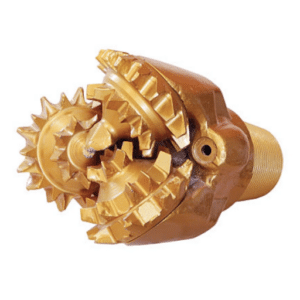
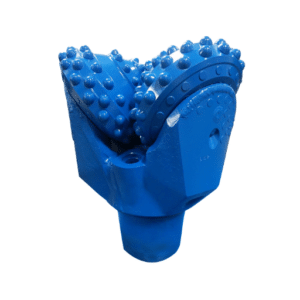
The cutting teeth are the fastest-wearing components on any auger drilling machine tool. Selecting the right auger drill bit type for your ground condition directly impacts penetration rate and operating cost. Their geometry and material must match the ground hardness.
- Bullet teeth (B47K22H) — conical, carbide-tipped inserts for rock and hard formations
- Flat teeth (T25, BFZ72, BFZ80) — chisel-style edges for clay, silt, and sand
- Carbide-tipped variants — hardened tips for abrasive sands and gravels
A contractor in Poland learned the cost of mismatching the tooth type to the ground. His crew ran T25 flat teeth in dense glacial till with embedded cobbles. The teeth chipped within 12 hours. Switching to BF80 flat teeth with reinforced carbide edges extended life to 90 hours and restored penetration rate.
For a deeper look at tooth geometry, see our auger teeth types guide.
Auger Flights: Design Matters
Flights are the helical blades that do the mechanical conveying. Their design determines efficiency and wear life.
- Single-flight — lower rotary resistance, faster in soft soils
- Double-flight — better guidance, more efficient spoil removal at larger diameters
- Continuous-flight — extends along most of the tool length, ideal for deep drilling
Flight pitch matters too. A steep pitch (tight spiral) removes wet, sticky clay faster. A flatter pitch prevents loose sand from sliding back down the bore.
Flight thickness and hard-facing are the primary durability factors. In abrasive sand, unprotected flights lose 2 to 4 mm per 1,000 operating hours. Hard-facing strips can double that life.
Kelly Box and Drive Connections
The kelly box is the square-profile adapter at the top of the tool that mates with the rig’s kelly bar. Standard sizes are 130mm, 150mm, and 200mm. A mismatch of even 2mm can shear drive pins and damage the rotary head.
A contractor in Germany discovered this after installing a metric-machined 150mm adapter on a Bauer BG 25 with an Imperial kelly box. After 40 hours, the drive pins sheared and the rotary head spline needed a $6,400 rebuild. The mismatch was invisible to inspection but catastrophic under load.
For measurement guidance, see our kelly box sizes guide.
Pilot Bits and Center Cutters
The pilot bit sits at the center of the cutting head and maintains bore alignment. If the pilot wears faster than the outer teeth, the tool will drift off vertical. Check pilot length daily and replace when it sits more than 5mm below the outer tooth line.
How to Match Auger Drilling Machine Tools to Your Machine and Ground: A 5-Step Framework

When Minh, a project engineer in Ho Chi Minh City, needed to specify auger drilling machine tools for a new Bauer BG 25 C, he started with the geotechnical report. That was useful, but incomplete. Here is the full sequence that prevents mismatches.
Step 1: Define Ground Conditions
Start with the soil report. Classify the ground into one of these categories:
- Soft clay, silt, loose sand
- Dense clay, cohesive soils with cobbles
- Abrasive sand, gravel
- Weathered rock, fractured stone
- Hard rock, boulder formations
If the report shows mixed layers, plan for tool changes. A German crew working near Cologne started in soft alluvial clay with CFA tools. At 22 meters they hit weathered limestone. Rather than abandoning the pile, they switched to Kelly rock auger tools, drilled the socket, and finished on schedule.
Step 2: Match Tool Type to Ground
Use this decision matrix:
| Ground Condition | Tool Type | Tooth Type |
|---|---|---|
| Soft clay, silt | Soil auger tool | T25 flat teeth |
| Dense clay, cobbles | Soil auger tool (double-flight) | BFZ72 / BFZ80 |
| Abrasive sand, gravel | Soil auger tool with hard-facing | Carbide-tipped flat teeth |
| Weathered rock | Rock auger tool | B47K22H bullet teeth |
| Hard rock, boulders | Rock auger tool or bucket auger | Heavy-duty bullet teeth |
| Urban, vibration-sensitive | CFA tool | Standard flat or bullet teeth |
Step 3: Verify Machine Torque and RPM Compatibility
Torque determines whether the tool will turn. RPM determines how fast it penetrates.
The industry rules are reliable:
- Soil auger tools: 10–15 kN·m per meter of diameter
- Rock auger tools: 20–40 kN·m per meter of diameter
RPM ranges:
- Soil: 10 to 30 RPM
- Rock: 5 to 15 RPM
Higher RPM increases speed in soft ground but generates heat and accelerates wear in dense formations. Match RPM to ground type, not just production targets. For guidance on selecting the right kelly bar for your rig, see how to choose a kelly bar.
Step 4: Confirm Physical Connection
Verify kelly box size or rotary drive adapter type before ordering. Standard kelly box sizes:
- 130 × 130 mm — smaller rigs, mini-piling
- 150 × 150 mm — mid-size rigs (Bauer BG 25, Soilmec SR-80)
- 200 × 200 mm — heavy-duty rigs (Bauer BG 40, Sany SR360R)
If your rig uses a non-standard connection, custom adapter plates are available. Our team can machine adapters to specification.
Step 5: Calculate Operating Economics
The cheapest tool is rarely the most economical. Factor in:
- Acquisition cost
- Tooth replacement frequency
- Flight hardfacing intervals
- Downtime for tool changes
A rock auger tool that costs 8,000 but lasts 800 hours in abrasive ground is cheaper per meter than a 4,000 tool that fails in 200 hours.
Manufacturer-Specific Tool Compatibility Reference

The tables below link common rig models to practical auger drilling machine tool diameters. These reference tables cover both rock auger drilling tools and standard soil configurations for rotary drilling rig tools. These are real-world working limits.
Bauer BG Series
| Model | Max Torque | Soil Tool Diameter | Rock Tool Diameter | Notes |
|---|---|---|---|---|
| BG 20 H | 200 kN·m | Up to 1,800 mm | Up to 1,000 mm | Compact urban rig |
| BG 25 C | 245 kN·m | Up to 2,000 mm | Up to 1,200 mm | CFA and Kelly are compatible |
| BG 36 / BG 40 | ~360 kN·m | Up to 2,500 mm | Up to 1,600 mm | High-torque applications |
Soilmec SR Series
| Model | Max Torque | Soil Tool Diameter | Rock Tool Diameter | Notes |
|---|---|---|---|---|
| SR-65 | 70 kN·m | Up to 1,100 mm | Up to 600 mm | Entry-level rig |
| SR-80 | 292 kN·m | Up to 2,000 mm | Up to 1,200 mm | Popular mid-size |
| SR-125 | ~330 kN·m | Up to 2,500 mm | Up to 1,500 mm | Heavy-duty |
Sany SR Series
| Model | Max Torque | Soil Tool Diameter | Rock Tool Diameter | Notes |
|---|---|---|---|---|
| SR155 | 155 kN·m | Up to 1,500 mm | Up to 800 mm | Versatile mid-range |
| SR285R | 285 kN·m | Up to 2,300 mm | Up to 1,400 mm | Rock focus |
| SR360R | 360 kN·m | Up to 2,500 mm | Up to 1,600 mm | Large-diameter specialist |
Casagrande C Series
| Model | Max Torque | Soil Tool Diameter | Rock Tool Diameter | Notes |
|---|---|---|---|---|
| C30 | 125 kN·m | Up to 1,200 mm | Up to 700 mm | Bored and CFA piles |
| B250 XP-2 | ~250 kN·m | Up to 2,000 mm | Up to 1,200 mm | High-performance |
For detailed rig torque specifications by model, see our kelly bar torque ratings.
Maintenance and Service Life of Auger Drilling Machine Tools
Even the best tool wears out. Inspection prevents catastrophic failure mid-bore.
Daily Inspection Checklist
- Measure tooth wear. Replace when the cutting edge is worn to 50% of its original height
- Check flight thickness at the outer edge
- Inspect kelly box pins and splines for play or galling
- Verify pilot bit projection relative to outer teeth
Scheduled Maintenance Intervals
- Every 100 hours: Detailed flight inspection, measure thickness at 3 points
- Every 500 hours: Kelly box tolerance check, pin replacement if worn
- As needed: Hard-facing reapplication when the original deposit wears through
Wear Rate Reference Table
| Ground Type | Flight Wear (mm/1,000h) | Tooth Life (hours) | Hardfacing Interval |
|---|---|---|---|
| Soft clay | <1 | 800–1,200 | 2,000+ hours |
| Dense cohesive soil | 1–2 | 400–800 | 1,000–1,500 hours |
| Abrasive sand/gravel | 2–4 | 200–400 | 500–800 hours |
| Weathered rock | 3–5 | 100–200 | 300–500 hours |
| Hard rock | 5–8 | 50–100 | 200–300 hours |
For heavy-duty designs that resist abrasion longer, see our heavy-duty auger guide.
Cost Considerations and Operating Economics

Tool cost is a small fraction of the auger drilling machine investment, but it drives daily productivity and total project cost.
Tool Acquisition Costs
| Tool Type | Typical Cost Range |
|---|---|
| Soil auger tools (mid-size) | 1,500–5,000 |
| Rock auger tools with carbide teeth | 4,000–12,000 |
| CFA tool strings (complete) | 15,000–35,000 |
| Bucket auger tools | 8,000–20,000 |
Operating Cost per Meter
| Ground Condition | Tool Type | Cost per Meter |
|---|---|---|
| Soft clay | Soil auger tool | 2–5 |
| Dense soil/cobbles | Rock auger tool | 8–15 |
| Weathered rock | Rock auger tool with hard-facing | 15–25 |
| Hard rock | Heavy-duty rock or bucket tool | 20–40 |
Total Cost of Ownership
The real cost includes tool price, maintenance labor, tooth replacements, and downtime. A custom tool with optimized tooth angles and premium hard-facing often pays for itself within the first 500 hours by reducing replacement frequency and improving penetration rate.
Frequently Asked Questions
How do I know which auger tool type I need?
Start with the geotechnical report. Soft clay and silt need soil auger tools with flat teeth. Weathered rock needs rock auger tools with bullet teeth.
Urban sites with vibration restrictions often need CFA tools. Use the decision matrix in Step 2 of this guide.
How often should I replace auger cutting teeth?
In soft clay, flat teeth last 800 to 1,200 hours. In abrasive sand, life drops to 200 to 400 hours. In hard rock, bullet teeth may need replacement every 50 to 100 hours. Inspect daily and replace when the cutting edge wears to 50% of its original height.
Can I use the same auger tool on different rig brands?
Yes, if the kelly box or drive adapter matches. A 150mm kelly box is standard across Bauer, Soilmec, and many other brands. Always verify the exact dimensions before ordering. Custom adapters are available for non-standard connections.
What is the most durable auger tooth material?
Tungsten carbide-tipped bullet teeth (B47K22H and similar) offer the best wear resistance for rock and abrasive ground. For soil, hardened alloy steel flat teeth with surface hardening provide the best balance of durability and cost.
Conclusion
Selecting auger drilling machine tools starts with the ground, not the catalog. Soil type determines tool type. Tool type determines tooth type. Machine torque and kelly box size determine whether the combination will work.
Use the five-step framework in this guide: define ground conditions, match tool type, verify torque and RPM, confirm physical connection, and calculate operating economics.
Check your rig’s torque against the diameter you need. Verify the kelly box size. Match the tooth type to the soil. Then order with confidence.
If you need help matching auger drilling machine tools to your specific rig model, Changsha Mingyi Machinery Equipment Co., Ltd. provides compatibility verification and custom specifications. We manufacture tools for Bauer, Soilmec, Sany, Casagrande, and other leading rig brands. Contact us today for a technical consultation or quote.