Most jobs require standard tools. Your ground conditions, however, are rarely quite the norm.
While in charge of a foundation under a bridge in Lyon, this problem occurred one time when the geotechnical report revealed the presence of limestone. All the rock buckets Henri Dubois had ordered from the manufacturer by mail performed their task successfully in rock but as they met clay layers, they tended to clog up and cease functioning immediately. And the most regrettable thing was that these buckets had hydraulically adjusted opening size which were rather fine for discharging the stones and could not allow properly formed soil to be scooped out.
His boys, dealing with drilling rigs mostly cleaned the buckets all day long. Unable to withstand it anymore, after about three weeks of such thraldom, he made a call to the manufacturer. It took the manufacturer about two weeks to manufacture the rock buckets with adjustable bottom openings and composite cutting edges. The construction regained timing.
Most contractors have been at a similar impasse. They rely on standard tools that were built to meet average conditions. However, in the real world, there is nothing quite average about job sites. The existing manual, therefore, explains while custom mechanical drilling should be advocated for, what components can be modified, and what happens from the inception until the actual delivery.
Need help deciding if custom tools are right for your project? Contact Changsha Mingyi for a free technical consultation and design assessment.
When Standard Tools Fall Short

Normally, tools used in drilling have been adapted for the common soil conditions and average piping methods. This means they work well in cases where the ground is easy to guess. And here lies the rub as ground conditions do not always fall this way.
The search for innovations in drilling technology happens mostly because of the unusual soil profiles. You cannot use the standard cutting edge of a bucket or a backhoe in the case of lateritic soils; there are two possible alternatives for each. Mixed soil, containing nothing but alternating layers of rock and clay, need such geometries as would be unavailable in standard tools. This is what is referred to as glacial till of soils.
Custom-built rigs create a second problem. The Kelly box sizes are different for each manufacturer. Bauer uses 130 by 130 mm to 200 by 200 mm and Soilmec uses 150 mm x 150 mm. The sizes and configurations of Kelly boxes in Sany and XCMG vary in every model. If you have an atypical Kelly box or drive adapter, ordinary tools may not be compatible and may need perilous adjustments.
These unique project requirements also necessitate the usage of niche equipment. Small diameter piles are required for the elimination of restricted access. Piles to be installed at very deep locations means the necessity in building thicker wall piles with a steeper flight. The construction of some kinds of piles, for example of barrettes or secant piles will require equipment that is not easily available in the tool catalogs.
When Yuki Tanaka’s team decided to tender for a foundation project in Okinawa, the members were aware that the standard auger could not work in the soft coral rock. The ground was too hard for the soil augers and too much fissured rock for the conventional rock tools. Operation with the standard machines would have equaled frequent replacing of equipment and wasting a lot of time.
On the other hand, novel drilling tool designs with additional reinforcement in flights, optimized bullet teeth spacing and cores in 42CrMo alloys replaced traditional tools that worked for a couple of days with tools that could work for days and weeks. The additional custom costs incurred were in balance with the standard cost and return within the first month.
Want to understand how material selection affects tool durability? Read our guide on high-grade steel in piling and drilling tools for material selection insights.
What Can Be Customized
Drilling Buckets
Customization of a bucket. Requires the measurement of the actual borehole that was made. It also considers the diameter, shell height and overall length of a bucket. A different cutting edge shape will change the effect of such a tool when it moves in different types of sand depending on the soil type. They are used for cohesive soil cuttings. For firm soils, double cutters work much better.
The bottom crown element is another equipment part that might be modified. The Single-piece bottom datatype is the easiest to make and is also much lighter in weight. The Double-bottom design also offers additional features such as better soil retention and bigger discharge dimensions. On the other hand, it is possible to make this element open manually, semi-automatically, or fully automatically to satisfy the needs of the operation.
It is also imperative to verify that the Kelly box dimensions and interlocking system are compatible with the drilling rig. It is necessary to arrange these interfaces efficiently so that they can easily be incorporated in your project. Sometimes, the projects also require specific materialized discharges, wear bands with reinforcements, and hard surfacing patterns in certain regions where abrasion is high.
Augers
Customization of a flight, stem, and a cutterhead is the bulk of the innovation. Equal to pitch angle is one of the factor that affects the effectiveness of the auger during conveying the materials. Typically, a one-time pitch is used, but if necessary, tailor it one and a half times to the diameter of the screw. However sometimes when there is need to excavate on certain types of soils, custom pitch of the screw flight can be used. The soil works well in narrow pitches, hence auger design with wide pitch improves work rate in sandy soil.
The wall thickness and rotational torque depend on the construction material selected and its grade. Which are further on classified within standard machines as a 45# carbon steel use stems. The customized alternatives are used in high-torsional resistant rock drilling and are advanced from a (42CrMo) steel material. Butt depths include twenty millimetres for the lightest duty tasks and above forty millimetres for depths found in the heaviest duty projects.
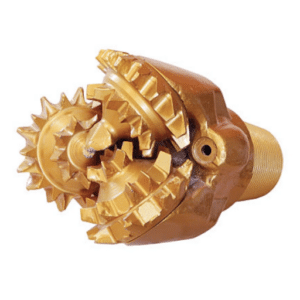
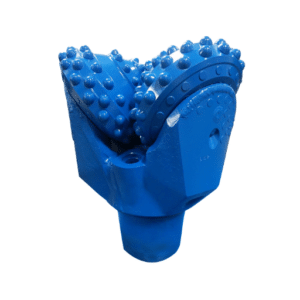
The drilling bits allow drilling formations with different strictures, using milled teeth, emery bits, and three-cone bits that curve while drilling. This depends on the arc teeth spacing, teeth angle and teeth holder that how fast the bit wears out and how much penetration rate it applies.
Looking for detailed auger specifications? Explore our auger drill bit guide for types, materials, and selection criteria.
Kelly Bars
Kelly bar customization overall and the most important factors for production are the specifications such as torque, length and number of sections in the bar. High-torque drilling by the interlocking Kelly bar bars with thick-walled sleeves requires supreme drive keys. The highest reachable depth depends on the number of the sections within the bar. Four-section bars extend farther than three-section ones, but even more precise processes are needed during their fabrication.
Another important factor in the selection of a steel for a particular component is the weight, besides the strength. Such types of steels as 35CrMo and 30CrMo boast of yield strength exceeding 550 MPa. Friction on the telescopic surface can be minimized by applying chromium to it for up to 60%. In addition, the rotating visualization unit can be equipped with a limited-panel control of drilling machines and the forward and reverse functions.
Core Barrels
Core barrel customization encompasses cutting element design and body strengthening. The cutter layout can be adjusted to the required rock hardness and crack orientations. Body diameter and wall thickness are taken into consideration with the anticipated torque and wear. Where there are irregular derrick and platform orientations, adjustment can be made to the connection point to match the rig weights.
For very hard rock formations, roller cone bits are used within the drill core head instead of the regular hollow rods. While such methods require individual designs, the penetration rates achieved by these tools are much higher than those achievable with standard designs.
Wear Parts and Accessories
The Customization Process

Placing an order for tailor-made drill tool solutions is not complicated as such, but what is important is to have precise specifications. Here is a general description of what one may expect while placing an order in most circumstances.
Step 1: Define the Problem
The first thing that you ought to perform is to describe what the standard tools are set to do in terms of their functions. Ascertain the possible locations of soils in their proper description, that is, space and time. You should take every possible measure about hardness, abrasion, clay, and level of moisture of the rocks. You can take dimensions of your rig with regard to the Kelly box, rated torque, and maximum crowd pressure. It is important that the ray diameter, length of stack, and total number of piles be stipulated as well.
Try identifying any particular failure mechanisms. Are any of the commonplace tools becoming worn out quickly? Are they getting stuck in certain phases thus taking more time than is needed for the operation? Are there any transfer or receiving problems that prevent high-speed working? The more detailed the problem description is, the higher the chances of finding a customized approach.
Step 2: Design Collaboration
Give your specifications to the manufacturer. The developer of a specific drilling tool or customized services will critically analyse the information provided, prepare their own version and present it to you. Sometimes there will be a need to work with images, provide information on the material used as well as the ways of its application.
When there is a need to destroy or when there are too tight or specific requirements, some manufacturers can produce a prototype which is tested in the field. No need to have the device sea qualified since no surviving proto-testing is required and based on the results, the design is fine-tuned. Prototyping costs additional time but ensures that expensive errors do not occur at a later stage.
Step 3: Manufacturing and Quality Control
When producing your custom tools, some additional features have been customized to ensure your requirements are met, and high levels of accuracy are achieved using electronic equipment. One of the most important requirements of control is defect reduction. Welding is always done using approved techniques for welding of high-strength steels. Testing is carried out to confirm that steel consignments meet the standard.
Quality control for customized damper drilling solutions, on the other hand, includes inspections by comparing dimensions above part drawings, penetration of welds, the wear surfaces hardness test, and mechanical test including rotating shaft or pistons. A certificate of conformity earned by reputable manufacturers always comes with a shipment of the goods.
Step 4: Delivery and Support
Lead times for the delivery of custom-designed boring tools are two to six weeks depending on the level of engagement and how much they are needed. Kelly box subs that require no more than external threading can be made very fast. Such complex actions as modeling cutters can be more complicated and time-consuming.
Manufacturers should offer assistance with assembly and operational instructions after the product has been handed over to the customer. Moreover, the stronger suppliers, according to best practices, can assist in refreshing the completed development. Instead of a mediocre design, which could easily be improved, these suppliers take on improving the design of the product after the first orders have been taken. This continued interaction is the manufacturer’s point of dignity.
Want to see how custom tools fit into your overall equipment strategy? Explore our foundation drilling tools guide for a complete framework.
Cost vs. Value: Is Custom Worth It
An outlay for the provision of custom designed boring accessories tends to be higher than that of ordinary goods. The whole issue is if these expenditures would be any lower in the future.
Take the case of a drilling bucket, which, when it is in the standard configuration, costs 2,500 dollars and lasts 400 meters in the sand with an abrasive soil layer. The same bucket in the custom configuration with Hadrox cutting tools, the right twist tooth placement for soil penetration, plus bond strength in the welding might drag to a cost of 4,000 dollars. Although the lifecycle for the bucket improves by a factor of four to 1,500 meters. The per-meter cost will drop from $6.25 to $2.67. The custom tool pays for itself before the first replacement would have been needed.
Let us evaluate the indirect savings. Repetitive tool changes mean less production downtime. Improved cutting edge geometry promotes the penetrating ability of the tools. Less gridlock and vibration, enhance fuel efficiency and reduce the wear and maintenance of the equipment. These are the factors regarding advantages in prices.
When Ana Ferreira’s Portuguese contracting team undertook a 200-pile project in highly abrasive basalt gravel, they initially got standard buckets in a bid to manage costs but that quickly became a nightmare. They were getting their buckets worn out each time, and this became every evening repairs. It became such that, a technician hired for the purpose of welding full-time, doing welding repairs almost every evening. After they resorted to custom buckets with Hardox 500 cutting edges and 42CrMo reinforcement, no more welding was ever needed every day. The cost of manufacturing the customized buckets was reclaimed in three weeks of use.
Every project has its own break-even point. Projects of appropriate length and moderate intensity can often do with standard tools. Whereas for much lengthier, terribly hostile or special specification projects, one will require specialized boring tools so as to reduce the overall cost of the project.
How to Choose a Custom Drilling Tool Manufacturer

Not every manufacturer that claims custom capability delivers real engineering value. Here is what to evaluate.
Engineering Capability and Design Experience
Are there engineers and other experts such as architects, who specialize in the processes of foundation drilling within the manufacturer? Can they even evaluate your plans and provide proposals, or are they restricted to copying drawings that are handed to them? In fact, this trend is not a productive way to achieve an all-out drilling tool solutions partnership.
Provide information about designs for similar projects made in the past. Activities delivered by manufacturers with real experience give practical insight into the difficulties they have faced so far and the rationales behind their decisions.
Material Quality and Certification
Custom products cannot be effective if their manufacturing process implies poor quality materials. It is stressed and approved that manufacturers find out how the steel was produced and are provided with actual parts. It is important to inquire these manufacturers about high-strength components and what alloy grades are within the scope of supply. Importance is also given to the need for the tests that are usually done by the suppliers confirming that the met
Production Flexibility and Lead Times
Manufacturing either changes in a certain way, or the production output it makes. Limitations of minimum production orders should be highlighted. Some companies would want custom works delivered in bulk. Others will extend customization services for more than one item. To know the timeline or how speedily the maker can deliver, in case of order alteration, for the completion of some work is missed, this is also part of their schedule
Quality Control Processes
In the same way that custom made components are presumed to be of top notch quality, the detailed and stringent component checks should also be carried out on them against the specifications. Determine the methods used in linear measurement inspection, weld examination and hardness tests. Enquire whether or not the company provides indicative inspection data.
After-Sales Support and Design Iteration
Beyond fulfilling the primary installments, the best custom drill bit manufacturer offers assistance for years. Inquire about the provider’s cancellation and return policies as well. If the on-shore manufactured bore bits fail, the complaint is also regarded and the work is rectified. For that matter, a partner becomes more profitable than simply inputting the transaction in a formulated template where only production and delivery remain.
Common Customization Mistakes

Even the most competent technicians can end up picking the wrong valve for a specific application. Here is where the pitfalls occur and how to steer clear of them.
Specifying Dimensions Without Considering Rig Torque Limits
Choosing the biggest custom made bucket solution is tempting but it might as well overpower the skin or raise the capacity of your machine. It is always critical to check that custom dimensioning remains within the boundaries of your equipment specifications. A tool that fits properly but is difficult to operate is useless.
Ignoring Material Quality in Favor of Lowest Price
The pricing is set by the proportion of demand and supply. Moreover, some people underestimate how much the overall construction design takes place during installation. That’s why most of the tools that were not developed by a proper tool designer are practically unusable since design goals lose coordination. Total life cycle cost evaluation is what buyers should focus on assessing when making decisions to purchase custom services and products.
Failing to Provide Accurate Soil Condition Data
The realization of original design solutions depends upon qualitative knowledge and correct criticism of the ground. If you represented the design as consolidated, medium clayey soil, for example, and upon excavation, a hard, gravelly soil with stones in it was encountered, then it is very likely that the custom designed tool will not work as effectively as the industry’s usual ones. Therefore, geotechnical investigations should be undertaken before ordering custom equipment.
Not Allowing Enough Lead Time for Custom Production
The custom creation manufacturing activities spent more time than the other activities in the order fulfillment where the available designs are designed and fitted to the tasks. Urgent requests work out the principles of design and the formation of quality control requirements. Put custom drilling tool programs in your project plan correctly allowing for time for developers and engineers to create and produce said tools.
Skipping Prototype Validation for Large Orders
When it comes to high volume projects however, always make the effort to test the custom design’s operability through a prototype before going into full production. It is easy to make a few changes and then order just one piece or a few pieces for another additional round of testing to improve performance. It’s very risky to order fifty pieces of a design that has no record.
Conclusion
There doesn’t seem to be any need for the special kinds of custom drilling tool solutions. Regardless of whether the drill wells are in mountainous regions or in urban areas, or if the oil exploration is coming to an end does not need custom drilling.
Here are the key takeaways:
- Standard tools fail in non-standard conditions. Unusual soils, non-standard rigs, and unique projects require tailored equipment.
- Almost every component can be customized. Buckets, augers, kelly bars, core barrels, and wear parts can all be engineered to your specifications.
- The process is collaborative. Good custom manufacturing requires clear problem definition, design collaboration, and quality verification.
- Lifecycle cost beats purchase price. Custom tools cost more upfront but reduce replacement frequency, downtime, and operational inefficiency.
- Choose manufacturers with engineering depth. The best custom drilling tool solutions partners combine manufacturing capability with design expertise and ongoing support.
Changsha Mingyi Machinery Equipment Co., Ltd. offers signature drilling tool solutions aimed at foundation contractors all around the world. Our team of engineers walks the client through a very detailed design of the device leaving the substrate, depth, and angles in the drill bits in the client’s specifications. Imagine how it is possible to demand for such sophisticated things as cutting tools from a supplier that only mails you all the catalogues. From adjusted Kelly boxes to complete engineered rock and straight sections, we cease the manufacture of the tools other than those described.
Contact us today for a free custom tool consultation, design assessment, and quotation based on your project specifications.