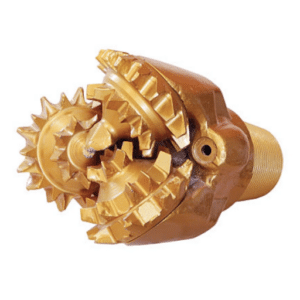
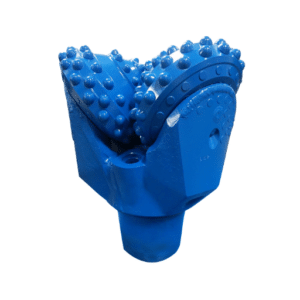
The steel grade in your drilling tool matters as much as the steel grade in your pile.
When James Hartwell sent his team to do a high-rise project in Shenzhen, they relied entirely on Q460 structural piles as instructed by the engineer. Nobody doubted the strength of the steel in the engineer’s drilling equipment or the construction machinery that had been equipped with such tools. At a depth of 25, the kelly bar developed a high torque and twisted. In a packed gravel place, the teeth of the drilling bucket were broken.
Both the complexity and simplicity of the problems discovered on site can be attributed to: general-purpose tools trying to install critical elements. The solution came through the replacement of the 35CrMo hard kelly bars and insertion of Hardox-lined buckets. However, the solution also caused further problems by delaying the project. A hindrance that set back the proposed time by two weeks.
This is the blind spot contractors often miss. High-grade steel in piling is not only for the structural piles. It is everything that is put in the ground at the time of construction. This guide was designed to help readers realize how the choices of steel have an impact on their piles as well as on the tools used to erect the piles.
Need help selecting the right steel grade for your drilling equipment? Contact Changsha Mingyi for a free material consultation.
Understanding Steel Grades in Foundation Construction

Steel classification represents the mechanical traits of steel. The strengths, such as the tensile strength and the yield strength, are the two most important properties for a builder. The yield strength gives insight into how much the steel will take before it becomes permanently distorted. From this criterion, one could discern the breaking point of the product, which is known as the tensile strength.
Different areas have their own distinct steel standards. GB/T is the most common in China. The letter Q, for instance, refers to the strength of steel and the number is the minimum specified yield strength in megapascals. The European system speaks of EN and the materials are labeled S235, S355, S460, etc. While A252 and A572 are ASTM labels in the U.S., it is important to know these alternative representations when purchasing equipment from foreign suppliers.
The type of steel selected has a big impact on the load-bearing capabilities of the foundation as well as the life span against fatigue. The higher the grade of steel, the more expensive it is per kg. Incidentally, the higher the steel grade, the smaller the thickness of the walls and the less the material weight utilized during design. Needless to say, high-grade steels also influence the time to maintenance.
High-Grade Steel for Structural Piles
Q355: The Workhorse Grade
In locations such as China and a number of other countries, they use Q355 steel for ground monitoring purposes. It eliminates the use of Q345 labelling that is already old as time and provides a minimal yield strength of 355 MPa and ultimate tensile strength in the range of 470 to 630 MPa. What’s more, Q355 is referred to only two steel classes in Europe: S355 and American ASTM A572 Grade 50.
Professional builders tend to use Q355 for sheet piles, H-piles, and various other phase of general foundation work where standard design loads such as static force are sufficient. It fits well, looks beautiful, lends itself to cutting and is learning slit of standard material while putting the good performance in most soil types. The Q355 quality has superior material properties and is priced within normal parameters. For example, typical bored pile and driven pile works, in which Q355 can be used without a premium charge.
Q460: Heavy-Duty Applications
Q460 is the best fit for projects where the strength provisions are higher than the demand of Q345. With a minimum yield strength of 460 MPa and tensile strength of 550 to 720 MPa, Q460 can use a smaller structural steel while it is supporting on a higher load. This will reduce pile count, reduces the time spent on installation of piles and lowers the material cost for piling on large projects.
Q460 is similar to European S460 and ASTM A572 Grade 60 to 65. It is used in the construction of large-section compression devices, including bearing piles, offshore platforms, and high-rise building foundations, where every inch of pile subsection must bear maximum loading. The disadvantage is in reduced weldability if compared with the Grade Q355 which requires qualified welding procedures in the field.
API 5L Grades for Pipe Piles
In the oil and gas industry and marine constituents of equipment is with high pressure or in offshore conditions, the dominant pipe grades according to the API 5L standard. In such applications, the X70 grade has a yield strength of 483 MPa and a tensile strength of 570 MPa. These numbers are even higher for the higher grades such as the X80 grade. These steels, having resistance in cyclic loading and seawater, undergo carat corrosion much less than standard structural grades and are widely utilized for wind turbine bases and dock facilities.
High-Grade Steel for Drilling Tools
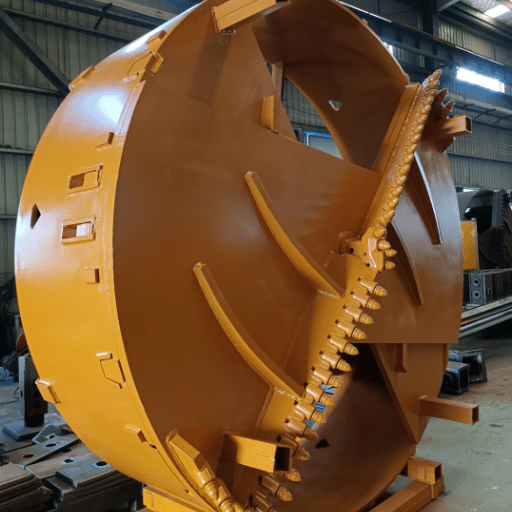
Here is where most contractors stop thinking about steel grades. Structural pile specifications are in the contract. Drilling tool specifications are rarely discussed. Yet the torque, crowd force, and abrasion, which are imposed on the tools, almost always very much exceed the stresses on the finished pile.
Kelly Bar Alloys
The structure of a Kelly bar is based on what is known as a telescopic tube. While working, the tube can extend and contract under load. It should resist twisting, criteria of torsion, bending and that of obligatory standard crowd compression. Standard steel even bends and warps at the same time under such conditions – zero tolerance situations without breaking.
Manufacturers of premium-quality kelly bars make use of alloy steels such as 35CrMo, 27SiMn, and 30CrMo, which have commendable yield strengths of 550 MPa or higher. Moreover, they have unrivaled fatigue resistance. For rock drilling, the wall thickness is increased to 28-32mm, and a 360° continuous welding is applied. The drive keys and torque lugs are made of high-strength steel and are heat-treated to make them hard. The frictional resistance in the telescopic phase, e.g., slides or cylinder items, can be reduced by as much as 60% by applying hard chromium plating.
Drilling Bucket Materials
The drilling bucket body from ordinary mild steel will dent, warp, and wear off quickly in harsher ground. Most good quality buckets are made of high strength structuring steel for the tube body and most cutters, and critical contacting plates are formed by a wear plate of Hardox HB 500 spec.
Hardox HB 500 is a through-hardened abrasion-resistant steel with a Brinell hardness of 500. It can take a pounding and survive where regular steel would be ripped apart in no time under heavy conditions such as hard rocks, solid mass, and a combination of soils. Power drilling parts, specifically: cutter teeth and associated cutting teeth holders, are of 42CrMo alloy steel as it exhibits high strength with good resistance to shock loads and fatigue.
Auger Construction
Mud penetration augers continuously come in with abrasive materials. These steels have a few hundred meters of drilling time although the standard steels remain relatively a lot. Other mud augers which are heavy duty incorporate sub-graded steels for the flight body and weld tungsten carbide wear strips on their leading edges. There are also rock augers which include Tung Studs with a huge hardness range of around HB 900 for ‘maximum wear capability’ based on the application.
In the case of continuous flight drilling, the inner stem is made of hollow pipes made of ASTM 516/70 steel with a design wall thickness, which is calculated based on applied load and drilling depth.
Want to see how steel grade affects your specific drilling application? Explore our foundation drilling tools guide for equipment matched to your ground conditions.
How to Select the Right Steel Grade

Quality control in the production of piling equipment is never about purchasing the most expensive structures. This is merely about determining device properties most appropriate for the situation.
Match Steel to Soil Conditions
Nevertheless, standard-grade steel tooling serves well in soils containing soft clays, loose sands, and less abrasive granular deposits. In these environments, the loading conditions are moderate and aggressive wear rates are not encountered. Such bucket bodies like Q355 grade and design Kelly bars, have also been found to effectively withstand these conditions.
Quaternary steel products, namely Q460 equivalent, are mostly using in corner posts and spacer bars. Floppy standard steel is quite susceptible to wear and tear and is not able to support loads, especially those imposed by crowds of people which results in its quick bending or sagging. It will take strong cutting tools to machine workpieces, which are made using hard-to-machine materials such as Inconel and Titanium.
With hard rock of unconfined compressive strength greater than 50 MPa, acceptable life of tools can only be achieved when high-alloy steels or carbide-reinforced tips are used. Using regular steel, especially in these challenging conditions is a false economy.
Match Steel to Equipment Type
The normal rotary drill operating in easy to moderate soil conditions works very well with equal to Q355 grade tools. The torque and crowd forces applied fall within the acceptable range for conventional material.
High torque rigs, which are built for rock drills, experience forces that the mild steel can no longer withstand. For such rigs, kelly bars with yield greater than or equal to 550 MPa, special drive keys and wear coatings on the tools are essential. There are disasters waiting to happen when conventional steel is used for a high-torque rig.
Cost vs. Performance Considerations
The upfront cost of drill bits does increase when using better material than low-grade steel/rubber. For example, a Kelly Bar that is the same specification as Q460 costs approximately 20-30% as compared to the one having standard steel values. Clearly, compared to a normal mild steel bucket, a Hardox-affected bucket will be more costly in production. The total cost of ownership is often in favor of the premium quality product.
For example, considering the case of a drilling bucket priced at 2000 for standard steel and capable of drilling 300 meters of abrasive soil, the bucket may also be available in high-grade steel with Hardox edges at 2800 for good reasons, which will then drill as much as up to 1200 meters, effectively reducing its use per meter of drilling although it costs 6.67 becoming 2.33 only. Such improvements are however confined to per meter cost but go further into saving spares, shutdown, and control changeover times and here the investment in the better steel makes more sense.
Looking for high-grade steel drilling tools for your next project? Check our slurry wall construction equipment built with premium alloy steels.
Quality Standards and Certification
The quality of a material is not limited to the grading done on the material’s certificate. It is also the state-of-the-art manufacturing methodologies that make sure that the steel does the intended purpose.
The point of reference is the certification of conformance by ISO 9001 to the output of the vendor, in which every aspect of quality is controlled and managed clearly, and quality assurance begins from the procurement of materials to the final inspection. Certificates of origin concerning the material are of significance and are used to go a step further by linking every one of their components to a specific mill which measured an analytical content and performed a mandatory mechanical test to the foundation beam of steel.
For proprietary alloy steels such as 35CrMo and Q460, welding procedure qualification assumes importance. These two levels of alloy steels require strict temperature control such as preheating, controlled interpass temperature, and post-weld heat treatment, to retain as well as improve the strength of the weld itself. A bucket produced by an unapproved shop protected the evaporative cooling structure, but it has a heat-affected zone whose strength is 30% lower than that of the base material.

Piling equipment contractors often err when selecting steel. These common errors can be easily avoided.
Choosing Low-Grade Steel to Save Initial Cost
One key pitfall is the urge to opt for affordable tools when finances are limited. However, lower-end steels, when exposed to wear and tear in harsh conditions wear off quickly. They also sag under weight at times and useful lifetime is shortened. In most instances, the life cycle cost of a higher grade material will be realized on the first major project.
Ignoring the Weldability of High-Strength Grades
Most high-thickness steel grades, such as Q460, require prequalified procedures for welding. When welding is carried out without preheating and in the absence of post-weld improvement operations, the welded joints become brittle and rupture. If your maintenance department does not possess the necessary skills to weld critical components made from high strength steels, you will need to take advantage of external repair services at an additional cost.
Neglecting Corrosion Protection
Though there are instances where use of high-quality steel grades is applied in marine environments, salty soils, or chemically hostile land such as high-alkaline soils, the risks of getting corroded are relatively high. These materials, depending on the application, are reinforced by galvanized coatings, protective paints, or cathodic protection systems that may be attached to the structure. Therefore, specifying high-strength steel without solving the corrosion problem is not an existential problem.
Failing to Match Tool Steel Grade to Rig Torque Output
Consecutive operation of a 60,000 Nm rotary unit with a kelly bar which is designed for a standard operating capacity of 40,000 Nm, will result in irreversible deformation or fatigue of the bar. Every operation must also be verified as per the torque and crowd of the system that is being used. The steel quality must be compatible with the machine’s energy capacity.
Conclusion
The determination of steel quality for piles is not a one-time occurrence but entails several decisions that define structural piles, kelly bars, drilling buckets, spirals, and casings. The mechanical properties of the steel used in the pile restrict the failure load for the materials used in the pile. The metallic tool’s steel grade restrains working effectiveness of such a pile and outlines how many times you will have to change the tool till you complete the project.
Here are the key takeaways:
- Q355 handles standard foundation work. It is the workhorse grade for sheet piles, H-piles, and general drilling in soft to medium soils.
- Q460 is for heavy-duty applications. Use it when load capacity, section efficiency, or extreme ground conditions demand higher strength.
- Alloy steels power drilling tools. 35CrMo, 42CrMo, and Hardox grades transform tool durability in rock and abrasive soils.
- Match the steel to the job. Standard grades in extreme conditions fail quickly. Premium grades in easy ground waste money.
- Lifecycle cost beats purchase price. Higher-grade steel tools cost more upfront but reduce replacement frequency and downtime.
Changsha Mingyi Machinery Equipment Co., Ltd. produces Drilling Buckets, Kelly Bars, Augers, and Foundation Drilling Tools at Q355, Q460, 35CrMo and Hardox abrasion-resistant grades. Our technical team evaluates your project requirements and selects the appropriate material specifications to be used in your equipment construction, whether it is soft soil or hard rock.
Contact us today for a free steel grade assessment and custom tooling recommendation based on your project requirements.