When it comes to geotechnical tasks, they require more precision at work as well. One of the tools for the completion of such works is the twin head drilling core barrel with the use of a roller bit. This is a technology that could replace an conventional core barrel because Subsurface science drilling roller bits can drill deeper and capture more quality cores in the process. The aim of the paper is to look at how advantageous it is including core barrels with roller bits in any procedures that any organization undertakes comprising how they shorten tough schedules, protect the quality of the samples and maintain the cost operational levels. It is important to grasp these advantages especially in the geotechnical department, for anybody may be a geotechnical engineer, geotechnical project manager, geotechnical dispatcher, geotechnical technician, or any other role that involves any geotechnical work. The more you read, the more you will be even amazed how such approach will eventually affect the geotechnical investigation methods.
Understanding Core Barrels and Roller Bits
What is a Core Barrel?
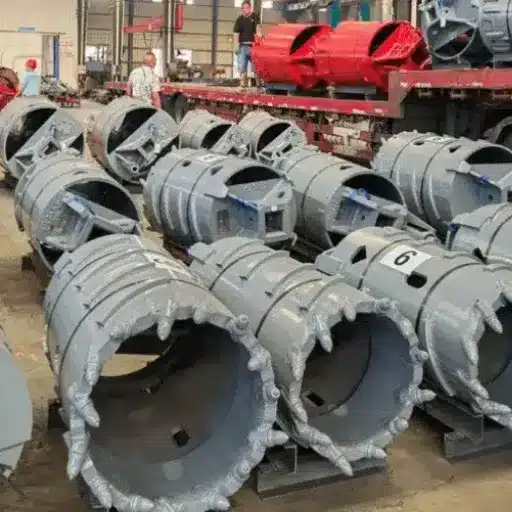
A core barrel is a contained cylindrical chamber with a bottom end stop, designed specifically for the recovery of freshly loosened or solid detached samples of soil or rock during drilling. The apparatus is a really necessary in such fields as geotechnical-and hydrogeological research, in exploitation of minerals, and in erection works that include basements, for example. It is usually made of durable material such as steel and comprises of a central barrel with boreable stabilised bottom, and matched beak type for installation of different drilling tools. This type is suitable for working on different ground conditions including loose hard rock types with low cohesive particles. The core herein is carefully preserved into the core barrel in a hope of extracting it without damage so that it maintains its structural integrity for analysis.
The common core barrels available are of various cores, which can all be classified into single, double, and triple tubes- each of these can be used for specific setting when running a geotechnical exploration borehole. In soft formations single tube kalvarura can be provided, for non-core driven samples double-tube or triple-tube core barrels will be provided. Due to this complexity, core barrel designs are needed that will shield the core by enclosing it in an inner tube that will potect it from contaminants to provide good information on nature of the rock or material.
The experts who perform geotechnical surveying are not only interested in their use for taking the samples out properly but also use the casing in a way that improves the accuracy of subsurface exploration. The emphasis on the type or obteinment of the suitable core barrel is of significant importance for the success of the drilling programme, and this useful step can be gladly, is often fraught with, baseless arguments.
Types of Roller Bits Used in Drilling
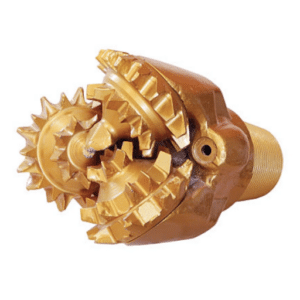
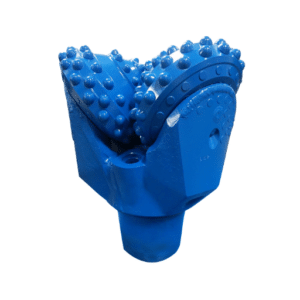
There is respect for whole, their characterizing quality, convenience extreme to so sound it is possible. Such machinery has been crafted to wear almost as fast as necessary in order to excavate an articulately designed hole within the tightest bonds of softest as well as the least stable rocks to the hardest and the densest ones. Such instruments are comprised of rotating cutting elements that help crush and grind the rock as it is drilled. The types of roller bits that are often used include the milled tooth bits, tungsten carbide insert bits and the hybrid bits.
Milled-Tooth Bits:Milled-tooth roller bits are largely used when drilling into soft to medium formations. The cutting structure is in the form of steel cutters or “teeth” that are either machined or cast directly into the cones of the bit. Such teeth are normally are either covered or hardened on the surface to make them more wear and tear resistant. Milled-tooth bits are great in soft formations and are often found with high flow rates to combat clogging upon running.
Inserts composed of Tungsten Carbide (TCI) Bits: TCI Bits as they are more known, are commonly referred as round drill bits that. In these bits, the cones are not filled with teeth but with full round tungsten carbide inserts. These bits are designed for compressive and hard materials, hence they have better life in abrasion. In particular, TCI bits are useful in such conditions that require specific performance at high rotary speeds, which are associated with complex geological features.
Hybrid Roller Bits: These types of drill bits integrate the best characteristics of TCI and milled-tooth technology, thereby extending the range of applications. These types of bits are application specific and can drill effectively over multiple formations being able to drill soft to hard formations smoothly. To have them this way, hybrid bits are designed with standard and advanced features of effective operation that may include its specific hydraulics and improved cutting activities such as hydrocutting.
The proper roller bit to be utilized in drilling is mainly influenced by the condition of the rock, the level of its abrasiveness, the particular drilling objectives of the task at hand. New materials and designs for roller bits have improved these equipments considerably and made them an invaluable component of the entire model of operations in drilling for oil and structural purposes.
Functionality of Roller Bit Core Barrels
Providing exquisite precision, roller bit core barrels are purposefully built with the discerning eye of achieving proficiency in recovering core under difficult geological conditions. Their primary use is to cut through even the most aggressive sedimentary rock deposits without compromising the performance of the machine and retaining its durability.
Their composition, on the other hand, is less dubious from materials like tough metals as tungsten carbide and on assistance with long-term or -service applicatory surgeries, they even permitting cutting at distinctly high speeds without breakages… CNC machine tools are in most cases used in manufacture of these rock cutting tools to provide high accuracy, finishing and surface quality. These devices were later introduced also for the cutting of metallic coatings removal.
These barrels operate based on a rotative motion which brings together the two important forces that allow the rock to be broken down which include compression and shear further which will allow the extraction of a complete core sample. It is very important to enhance bearing systems and seals to its maximum mechanical advantages in order to minimize losses caused by system wear. On the other hand, modern models are also equipped with so-called flushing system for used for the maintenance of appropriate operating conditions of the cutting edges on the working part of the drilling tool.
By adopting pioneering advancements like micro-geometrical cutting structures and precision balance of bit loads, core barrels for roller bits play up the advantage exaggeratedly in this regard: by helping with higher drilling speed and less overall expenditure. These modifications ensure all-round reliability that is applicable to various environments for sample infiltration, geotechnical investing, search for metallic minerals etc.
Benefits of Using Core Barrels with Roller Bits
Increased Efficiency in Hard Rock Drilling
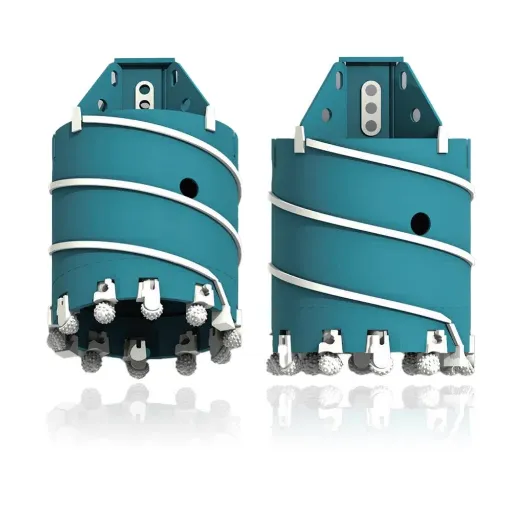
The roller bits installed in hard rock drilling core barrels have been weighted against their capability to work the hard rocks which they are drilling and having been found to pack more than enough power that is why are very popular for such applications. It is simply one of the latest in material handling technology that effortlessly translates the energy to the rock and the rate and ease in which it passes through its high-strength matrix is very astounding. These Austrian core barrels have been designed in ways that they are made up of components which are the know-how or the technicality to use them as they have been defined in simple terms. It is not advisable to have them as they are extremely thick and if we are suddenly required to replace such a core barrel it will take a month to have a new one. With a stubby drill bit, a standard straight bit, and a supreme dual acicular drill bit to the right.
Enhanced Core Recovery Rates
Modern roller but core barrels, did you know, offer advanced core recovery rate upgrades owing to the application of the cutting – edge achievements in engineering and material science. In particular, the use of modern precise rotary machinery and specialized cutting tool systems ensure that the core is not destroyed during its collection, and most importantly, they provide highly detailed information for understanding the geology of the soil samples. Furthermore, the latest models boast wear resistant high grade materials that help prolong the life span of the equipment and also minimize breakdown time in order to increase efficiency. These have taken place so that today even the difficult structures with comparative ease one is however able to obtain the core samples. It is not limited to this, as most of surfaces have their own specificities and, of course, ways to work with them have to be changed. These are changes which embrace a wide array of modifications in course of fulfilling the tasks assigned due to any geological retention, with the field having seen various drilling techniques, which continue to evolve in their response to a horizon of subsurface challenges.
Cost-Effectiveness in Deep Foundation Projects
In a sophisticated interplay of variables to measure the cost efficiency of interventions, very little stands out as determination of the cost effectiveness of deep foundation works besides the dopey integration of creative concept and objectives of industry, new construction materials and innovations and the liberalization of project management approach. Utilization of advanced analysis techniques such as load and elongation control modeling and pile bearing extrapolations can decrease significantly mechanical and human resources utilization in an exact manner to the need of the moment. In addition, use of fabricated components and the automation of their deployments aids in reducing the time taken for outdoor construction but as well as the integrity of the structure. High-strength composite piles and dynamic pile testing are two scenarios where initial capital expenses as well as future maintenance and repair costs could be optimized effectively. These ways underscore the prospect of technical penetration, just to mention integration in this case, which is cumulative in financial investment in deep and technical foundation systems.
Applications in Geotechnical Engineering
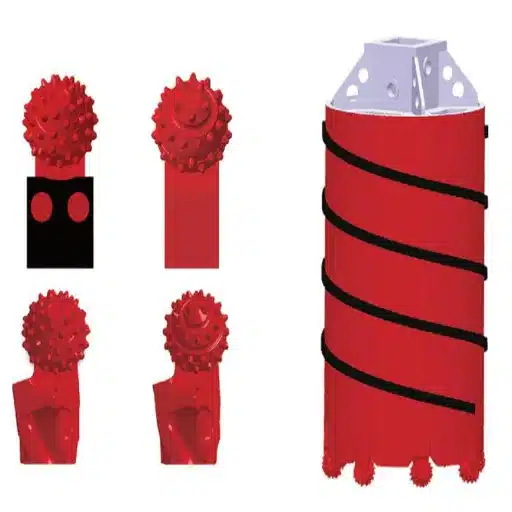
Core Barrels for Deep Foundation Projects
Why is a core barrel necessary in deep foundation engineering, and specifically in difficult soil In drilling boreholes, please refer to the use of coring. What does it achieve? Each of these sophisticated devices is intended for obtaining representative samples of soil, rock or any similar geological materials for proper studying by engineers involved in ground survey. With the use of core barrels drillers manage to extract very accurate, unconsolidated core samples of soils as they collect them from the depth using core barrels in a natural undisturbed state which is an effective substrate for determination of such properties of the soil as its strength behavior, the composition of soil strata, or for detecting anomalies in the materials and the soil.
When they are referred to as ‘state-of-the-art core barrels’ it means that they are made with noticeably advanced materials and pioneering innovations. For example, the most superior drill bit for the wellbore construction may be those with tungsten carbide inserts and steel body designs. It will enhance managing of the practical issues within such frameworks like those integrating heavy rocks geological formations or aspects of the wells with varying extensive structures. This provides a new focus on the importance of the use of core barrels in order to increase the reliability and security of deep foundation works.
Utilizing Roller Bits in Rock Drilling
Steel teeth bits act as crucial instruments when it comes to drilling through rocks, mainly due to its efficiency in dismantling the rock formations pushed by the rotating action. They are facilitated with cones that rotate, and have cutters or teeth, which are required for crushing and disintegrating the rock in a proper and effective manner. These days, where drilling has become more sophisticated, rollers increasingly are made of innovative materials like tungsten carbide and include specially developed mud lubricated roller bearing systems that can withstand high speed and high load operations. Improvements in other aspects of bit design, e.g. cutter location and cone profile enable faster rates of penetration (ROP) during drilling which reduces the amount of wear over an extended cycle of bit operation. These progressions in the field of modern science render roller bits the most suited for a particular type of rock, hard and abrasive or those where precision and long service are a critical component and the costs are to be managed.
Technical Features of Roller Bit Core Barrels
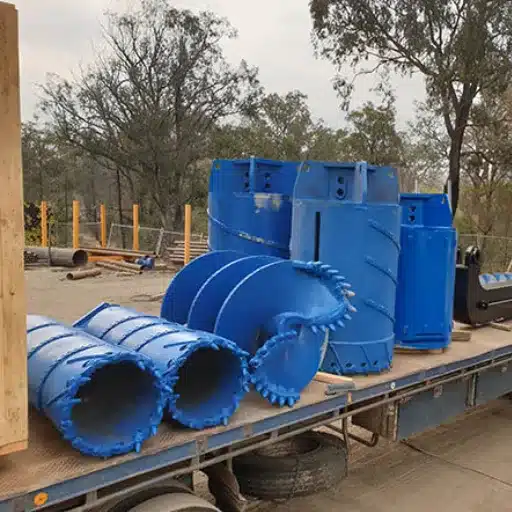
Key Parameters for Selecting the Right Core Barrel
Picking out the right core barrel necessitates sorting in several crucial parameters in order to achieve good performance at different geological and operating conditions. This includes, but not limited to, the diameter of the drill bit. The barrel size should match the current design of the well to facilitate easy and smooth cutting and recovery. Other essentials to consider are the barrel construction, its components and material specifications. Please also consider the harder and more fractured rock, which possibly will increase the pressure to protect the drilling equipment and reduce its life cycle.
Equally important is the core barrel length because it covers the need to maximize core recovery as well as the need to perform operations in restricted or quite unstable conditions. It also plays a critical role in core handling concerns by keeping drilling threads together and thus avoiding operational delays. And, in addition, the design of the inner tube of the sampling barrel must be such that the suitability of core samples can effectively be enhanced, allowing more preservation to be achieved due to the increased usage of sophisticated technologies including but not limited to split inner tubes.
Caution should, nonetheless, be taken in respect to the hydraulic and rotational requirements of machines when pertinent numbers, such as fluidic actions and torques, are discussed to ensure informed decisions that protect machines from breakdowns, or too much time loss in drilling. Indeed, the operating conditions such as temperature level, pressure amount and impact of corrosion determine whether protective paint or particular metals will be utilized in the operation. In fact, by paying attention to the groundwork considerations listed above, better drilling results could be obtained as well as improved core sample integrity.
Innovations in Roller Bit Technology
On the more recent times, improvements in the quality of roller-bit improvements have undergone change in the direction of increasing durability, performance and multifunctionality in drilling under increasingly complicated conditions. Nowadays the price of roller-Rock bits technology is made of new hybrid bits – hybrids, when conventional roller bits impact the rock by crushing, as well as modern PDC (Polycrystalline Diamond Compacts) elements. Such combination of features provides better ROP in complex drilling environments and also reduces the wear on the bit.
Apart from notably useful benefits which roller bits have every, many of them are made through use of Material science. The advent of super alloys by which steel is treated to stand the high temperatures and corrosion and abrasion effects has remarkably improved the durability of drilling tools. Finally, more rigid bearing systems have designed by considering high load and rotational speeds along with new feasible grease systems to mitigate the chances of premature failure within the systems.
The functionality that is offered by cutting structure designs has been shown to significantly change over the years. For example, design engineers have began using simulation software in order to closely mold cutter profiles and lay-out according to the requirements of a specific formation. The more effective hard facing materials treatments and different wear resistant techniques are employed to withstand abrasion and at the same time sustain the geometry of structures subjected to wear in harsh or high-impact conditions. Within contemporary roller bits, supports mounting sensors have been actively integrated to collect the real condition data during the progress, the obtained data gives more confidence for the drill operators as it allows making necessary decisions and adjustments to the drilling within diversion valves. The technological advancements address the need for the last damaging wear and tear by the roller bit products and investigate the shock wave due to the inter-costal pressure that is usually done for the hole angled drilling activity by the companies in particular.
The design of roller bit technology and the increasing application of modern and improved technologies in design in other industrial areas is such that there is no more theoretical or practical distinction between mechanical engineering and design optimization: the engineers work on both at the same time.
Comparison of Core Barrel Types for Different Applications
Core barrels are important tools in drilling activities as they are used to take out sample materials. The samples require drilling the sub-surface materials. The choice of the core barrel is a critical part for its operation, which may vary depending on the geological conditions, the purpose of the sampling and the constraints of the activity. The following content provides the comprehensive analysis of the core barrels that are used across different applications:
Single Tube Core Barrels: Mostly used in the formations that are relatively stable, single tube core barrels are easy to operate and are usually cheaper in cost. These core barrels come with only one tube within which the sample is collected hence they are appropriate for shallow drillings and rock formations that have less fracturing. Nevertheless, the absence of an inner tube implies that the core samples must be pulled out without being cored. Indicates that the loss of cavity results in disturbance in samples hence the loss of integrity when retrieving them back up.
Double Tube Core Barrels: This design is employed in highly fractured or weak formations where preservation of the sample is necessary. This design consists of an inner tube preventing the external rotation of the suspended core during drilling which leads to an increase in core quality. This type is suitable for geotechnical investigations or any application demanding accurate information. In any case, these types require a more extensive arrangement and a higher budget compared to double tube core barrels.
Triple Tube Core Barrels that have been tailored to preserve maximum sample while drilling, consist of an additional protective sleeve put in the inner tube. This setting is A suitable for very delicate or decomposable rocks and sediment types such as a mud or relatively soft structureless rocks where deposits are seldom available intact. However, these chambers are “the queen of all” when it comes to such research as correspondence with soils and rocks P. In general, the cost effectiveness of these barrels is not very high or they are hard to use, yet their ability to preserve unbroken core samples is crucial for the conduct of high level research such as laboratory studies or resource estimation.
Each core barrel has benefits which suit certain tasks more accordingly. Making the right choice is hard enough since it requires information about both the geological realm and the drilling. Developments in today’s material science combined with those in fabrication materials enable greater advances in core barrel systems that improve energy use efficiency and overall performance in all stages of the drilling process.
Challenges and Considerations in Rock Drilling
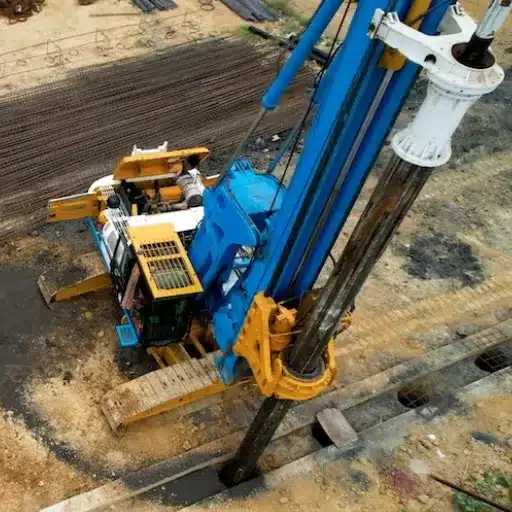
Overcoming Difficult Geological Conditions
In my point of view, conquering tough ground conditions in drilling entails a whole spectrum of measures: new, more effective technologies, elaborate drilling schedules and flexibility. The main seismic obstacle includes various types and conditions of rock formations in particular which can be soft and weathered or very hard. To overcome this challenge I use state-of-the-art drilling tools – drill bits and core barrels, with the composites PDC or tungsten carbide. Moreover, those tools utilize latest technologies and provide very high cutting ratio and outright abrasion challenges at no point preclude sufficient speed of penetration of even the hardest rocks.
Furthermore, active real-time monitoring and prevention of occurrences such as excessive vibration, loss of fluids and fatigue of the bottom line are imperative especially when operating in unstable geological environments. My daily routine requires the usage of advanced monitoring systems that are equipped with several sensors for monitoring of different drilling parameters such as torque, WOB and pressure. In the event that the latter analysis can be done in real time, I am therefore able to manage the drilling methodology in order to enhance performance and reduce cases of equipment breakdowns and even operational delays.
Drilling effectively in complex geologies however also highly factors in pre-drill appraisal. Since pre-drill, however, an investigation including adequate geotechnical tests conducted such as extensively using seismic reflection and then resistivity studies assists me to anticipate program avoidance and thus adjust drilling methods suitably. Any difficult drilling condition can rapidly find a sufficient solution so long as anticipations based on projection will be deployed in drilling technology’s innovations. And available drilling technologies will solve the problems.
Maintenance and Longevity of Core Barrels
Sustaining the service life and functionality of core barrels demands a controlled and cautious regime of corrective and preventive maintenance practices driven by the latest technologies in the industry. I adopt a routine policy to survey the crucial parts of the barrel such as the inner and outer tubes, the shell bit, and the peaked end collar almost instantaneously after bringing the barrel up to the surface. Affecting the cleaning and the lubrication of these parts subsequently to each and every run should however also be of importance for trouble-free work continuity of the apparatus. In addition, the typical abrasion of the core lifter casing should be considered and in case of necessity, the part should be replaced because this increases the lifescope of the appliance and prevents failures during a drilling time.
In addition, scientific discoveries in the field of materials also greatly influence the length of life of core barrels. Due to the possibility of the use of high-quality metals and such coats as hardening materials, the process of degradation resulting from exposure to abrasives or high pressure conditions can now be so limited. When boring in similar environments, I make sure all these advantages are reversing their effect on wear and strain in my equipment operating in the field over long periods. Even for proper maintenance, adjustment or replace of worn parts timely is still expensive repair rates from experienced suppliers and manufacturers are not yet favorable. It can be confirmed that even though the advance techniques who eliminate the same problem are being used as service improves – it proves difficult to an agreeable pricing structure and still more dominant on maintenance.
Inevitably, optimization of core barrels’ operational durability consists in maintaining the balance between preventive actions and repair techniques, that give the quick results. One important aspect that a user should do is to ensure proper storage of the equipment especially during offseasons so as to mitigate its degradation. Equally important, implementing these measures in the way I work, rather than the usual replacement of damaged equipment, helps me to reduce the time wastage and money spent on management activities.
Safety Protocols in Deep Rock Drilling
Safety is key during mining processes that are deep and involve rock drilling. This is mainly due to the fact that high pressures, explosive materials and the dangers of mining equipment all cannot be overlooked. When it comes to occupational health and safety, it is fair to say that I stick to the industry standards and drive a very high level of safety consciousness within my work. For the outset I make sure that those present wear prescribed protective equipment, and these are; helmets, safety gloves, safety glasses, and high visibility clothing. I am also concerned about safety at work beyond the individual’s capacity, and thus I arrange for workers to be properly trained in safety so that they can apply hazard identification, emergency response, as well as proper use of equipment during construction.
These protocols also include conducting regular inspections and maintaining the equipment in service. Regular screening for drilling cases and auxiliary machinery components may prevent cases of wear, corrosion or misalignment from becoming operational issues. Moreover, a number of advanced surveillance techniques, like the use of temperature and pressure transducers and other systems, are used to draw preventive actions in case of the need for waiting for critical events. It is a good practice and arrangements should be made for Emergency procedures like blow out prevention, which is an active system for which every effort and resources are put in to ensure well functionality under extreme downhole pressures for Instance during drilling.
Under environmental and toxicological assessment, another important issue to be considered involves the monitoring of environment and hazardous waste management processes. This is because mining activities often are accompanied by the need to work in conditions that can be injurious to health. This is due to the fact that mining activities expect the presence of gas, such as hydrogen sulphide (H₂S) and methane which is a majority of the times explosive or poisonous. In case of availability of those gases, I insist that air quality levels should not be compromised by exposing workers under such conditions by putting compulsory ventilation systems for safety reasons. Moreover, in practice, particular safeguards address the need to provide mechanisms that help to minimize the risk of a spill occurring, which is in turn a measure helping the environment with reference to the protection of water resources, fauna and flora without forgetting the impact on inefficient and effective environmental practices when the environmental guidelines are reviewed. Understanding the need for these wide range of safety measures is not only for the safety of the people under my care. It is also the necessity of the organizational and policy concerns as far as functions are concerned.
Reference Sources
Geotechnical Investigations – University of Memphis.
Drilled Shaft Inspection Workbook 2019-2020 – Kansas State University.
Manual on Subsurface Investigations – University of California, Davis.
Standard Practice for Rock Core Drilling and Sampling of Rock for Site Investigation – Academia.edu.
Frequently Asked Questions (FAQs)
What tool options are there for a core barrel with roller bit?
Core barrel with roller bit is a type of rotary drilling tool used for solid rock and hard ground core recovery. The hollow outer barrel is either external or massively bonded to the reaming shell by dressing the latch mechanism to the inner reaming barrel core. There are designs with tungsten or carbide tipped roller cones and those that include a core barrel for hard rock drilling or a barrel for hard rock drilling with bullet teeth for aggressive cutting. When fixing a core barrel, manufacturers and suppliers considerably expand the option of the half‐cores with different diameters and ring configuration so that it matches borehole size and also the annular ring in the rock. Choosing a rock bit is based upon the formation being drilled, the compressive strength of the rock being drilled (often measured against 100 MPa values) and whether or not the drilling is foundation drilling, bored pile or deep foundation drilling. The red flags are usually the physical capacity of the equipments in the rig, kelly box, rotary table and the required capacity of the drilling. Milling capabillities and height restrictions present or absent also affect the choice of tools to be used.
How does wear on the tool affect the lifespan of the roller bit core barrels?
Extensive wear on the rolling tooth cones and cutters is a common cause of core barrel wear with roller bits, especially under the conditions of cutting very abrasives like reinforced concrete, boulders, and rock formations which are highly fractured. Tungsten carbide or carbide inserts offer high resistance and hardenability, although the fact that at high-speed and in case of hitting hard bearing strata ensures their dispensation. Regular monitoring of the grooves, sealing lips and teeth state contributes to timely maintenance and repair planning. The service life of the tool can be increased thanks to the inclusion of the resource life determined by the manufacturer as well as the procurement of high quality components manufactured by the licensed producer. The selection of optimal speed and head for particular soil conditions helps prevent premature breaking or excessive wearing.
What characteristics of a tool will assist in drilling in tough rocks?
When working in tough geological conditions, specific tool features such as ballistic inserts, larger cone offset angles and wear-resistant carbides promote cuttings and the borehole making process. Proper matching of a concentric coring system with roller cones layer and efficient core recovery. Steel barrels are recommended for this type of drilling as they offer vertical control stability and do not bend. Such tool geometry controlling ideally will avoid stuck pipe and breakage in the course of deep soil excavation works. The selection of the tool comprises of the size of the hole engineer, the hardness of the formation and whether or not is rock mass there has any boulders or stratified formation. To help optimize bit performance and extend bit life, proper cutter orientation and stress rate relative to the rock being bored must be configured.
Can this tool help in foundation drillings and bored piling related works?
Certainly. A core barrel assembly having roller drums is commonly used as a foundation drilling tool that can also be useful to establish bored pile and any other of the deep foundation drilling operations where core drilling or penetration of hard formations is needed. Development Graph Creation This tool is to be fabricated on to construction rig equipment such as buttress box configuration within the rig’s functional capability. In case of concrete or mixed soils conditions, specialized welding metal and carbide cuttings can effectively enter and handle the changeable layers, and keep the integrity of the borehole. The durability and performance are achieved by optimizing tool characteristics in relation to formation strength; for example, materials with a poor quality of around 100 MPa will need severe abrasion-resistant tools. In order to obtain the high-quality and correctly sized products, construction companies should buy procurement services of a reputable supplier or a manufacturer.
How to preserve the tool and prolong its resource?
Servicing starts by regularly inspecting the condition of teeth, cutters, and grooves, and also annular ridge of the barrel to locate any damages or signs of tear, and clean out any sludge that may be inside the hole. If the carbide inserts or roller cones turn to be worn out far early than expected, they should be replaced and not the whole steel barrel. As well precautions such as safe keeping of the tool, temperate and provocative drilling speed, and wobbling cutting spear can reduce wear and limit temperatures. Furthermore to help maintain the tool, its resources, and prevent unauthorized use it is important to agree with the factory in the procurement of the original spare parts and conditions of their after sales. Another important maintenance procedure is to ensure that the circumferential or cushion cutters are properly positioned and not out of alignment with the main body, nor the material is broken or is overly pliable to cause a safety risk.
What examples should be included in the specifications for the tool I want to buy?
When considering the drill bits with wedge revolution design, it is recommended to look for good quality steel or steels with carbide or poly-crystalline diamond inserts. Care should be taken to make sure that the use of the overburden is adequately defined and the contextual implications are clearly understood. They should consider if the drill is specifically meant for coring hard rocks or if they are using the drill for the hard rocks with cylindrical core barrels with ear ting teeth. Further, evaluate whether the drill bit is recommended for the reservoir strength in question, with additional information if the strengths are of the order of 100MPa and higher. Check for availability of any special or extra equipment necessary for performance enhancement, such as a discovery bucket or an auger drill even in circumstances where more than one method is being employed. Choose the most reliable and the best supplier or manufacture which gives the appropriate tool’s specification, finish work, and spare parts in such a manner that maximum system life and drilling output can be achieved.