Heavy-duty construction and geotechnical projects always use drill rig augers, which are indispensable tools. The right auger can be the factor that separates and improves efficiency and performance, whether dealing with rugged rock formations or large-scale drilling operations. This detailed reference will cover the different types of auger drills, their uses, and the main factors to consider when choosing the right tool for your project. Not only will this guide help you understand the distinct challenges of drilling through different terrains, but it will also introduce you to the latest trends in auger technology. Be prepared to discover the knowledge that will enable you to conduct your projects more accurately and with greater success.
Introduction to Auger Drills

Auger drills are the primary tools for drilling holes in the ground, and they are used in construction, agriculture, and mining. They work with a helical screw blade (called a flighting) that efficiently removes and transports soil or other materials. These drills are recognized for their ability to work in different environments, from soft dirt to hard rock. The most important benefits they offer are accuracy, fast operation, and multiple applications; hence, they are a trusted option for many projects. Auger drills are always there to provide an accurate solution, whether for post hole digging or core sampling.
What is an Auger Drill?
An auger drill is a specialized tool that cuts holes in solid materials, especially ground, using a rotating helical screw blade, commonly known as ‘flighting’. This part of the drill allows it to cut through and remove earth, stone, or other waste as it drills the hole. Auger drills are widely used across industries such as construction, farming, and earth sciences. Equipped with advanced technologies and powerful motors, modern auger drills strive for precision and can easily adapt to the material being worked on, whether soft soil or hard rock. Clean, uniform holes are their hallmark, and they are quick and efficient, making them indispensable for tasks such as installing fence posts, soil sampling, and even environmental exploration.
Importance of Drill Rigs in Construction
Drill rigs are the backbone of construction, providing the means for practical, accurate foundation digging. They are essential for borehole drilling, as they ensure the structural integrity of buildings, bridges, and tunnels. The latest drill rigs feature remote control and multi-functional drilling systems, making them well-suited to changing geological conditions. Reduced labor costs and shorter project durations are among the advantages of their high efficiency, while their accuracy makes structures safer and more durable. Furthermore, they are used in geotechnical investigations to provide crucial information on soil and rock properties before construction begins. All these factors together make drill rigs a must for any construction project worldwide, thanks to their high versatility and reliability.
Overview of Auger Applications in Various Industries
The use of augers has spread across a wide range of industries, thanks to their flexibility and efficiency. In construction, augers are mainly used for drilling foundations, creating pile holes, and soil sampling for geotechnical purposes. The agricultural sector relies heavily on augers for activities such as planting, post-hole digging, and grain handling. On the other hand, in the mining and energy industries, augers are necessary for core sampling, drilling boreholes, and extracting resources. Their versatility in handling different materials and operating in various environmental conditions makes them indispensable tools in all kinds of operations.
Types of Augers

Augers can be categorized into earth augers, grain augers, ice augers, handheld augers, helical augers, and screw conveyors. Understanding the different types helps in selecting the right tool for your specific application.
| Type | Purpose | Material | Power | Usage | Feature |
|---|---|---|---|---|---|
| Earth Auger | Drilling soil | Steel | Manual/Motor | Foundations | Durable |
| Grain Auger | Moving grains | Metal Alloy | Motorized | Agriculture | Efficient |
| Ice Auger | Drilling ice | Steel | Manual/Motor | Fishing | Sharp blade |
| Handheld Auger | Small tasks | Various | Manual | Gardening | Portable |
| Helical Auger | Heavy drilling | Steel | Motorized | Construction | Power drill |
| Screw Conveyor | Material moving | Metal Alloy | Motorized | Industry | Continuous |
Standard Augers vs. Heavy-Duty Augers
Standard augers are commonly used for lighter, general-purpose tasks, while heavy-duty augers are designed to handle more demanding, industrial-grade jobs. Understanding the differences between these two categories is essential for making the right choice for your project.
| Parameter | Standard Augers | Heavy-Duty Augers |
|---|---|---|
| Purpose | General tasks | Industrial tasks |
| Material | Mixed metals | High-strength |
| Power Source | Manual/Motor | Motorized only |
| Application | Light-duty | Heavy-duty |
| Durability | Moderate | High |
| Blade Size | Smaller | Larger |
| Cost | Affordable | Expensive |
| Weight | Lightweight | Heavy |
Specialized Augers for Rock Drilling
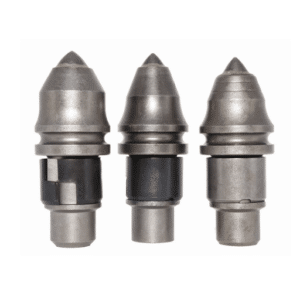
Complex tasks like drilling through hard rock layers or dense soils are the specialized rock-drilling augers’ purpose. They are strong and extremely wear-resistant, made of high-quality alloy steel. Moreover, such augers, with carbide teeth and a spiraling design, which are best for cutting, are designed to last longer and use less fuel. Rock augers, unlike standard or heavy-duty augers, often incorporate top-notch features such as replaceable drilling heads and vibration-dampening systems to handle the roughest rock-drilling applications.
Selecting a rock auger depends on the type of rock and the required drilling depth. Augers with cone-shaped bullet teeth, for example, are perfect for breaking up tough rock, while those with flat heads can be used for soft ones. These powerful tools are universally beneficial across the construction, mining, and geothermal energy exploration industries, thereby creating new opportunities for earthworks and infrastructure projects.
Flighted vs. Solid Augers
Flighted augers feature helical flights for material removal, while solid augers are compact and lack flights, suited for rocky or challenging drilling conditions. Each type offers distinct advantages depending on the project requirements.
| Key Point | Flighted | Solid |
|---|---|---|
| Design | Helical | Compact |
| Material Removal | Effective | Limited |
| Applications | Looser soils | Hard rock |
| Durability | Moderate | High |
| Flexibility | Versatile | Specialized |
| Cost | Moderate | High |
Specifications and Features of Drill Rig Augers

Drill rig augers are carefully made to meet the specific needs of drilling, depending on the soil and the project. The flighted augers are very efficient at removing material; they are used in looser soils and are versatile and cost-effective. In contrast, solid augers are small and very strong, making them the best choice for hard rock or difficult drilling conditions. Flighted augers focus on efficiency in softer terrain, while solid augers are the champions in rough environments, where durability and specialized performance are most important.
Material and Construction of Augers
Augers are made from a variety of materials, each with unique properties such as high strength, durability, and the ability to withstand various drilling operations. Among the commonly used materials are carbon steel, alloy steel, and manganese steel, chosen primarily for their resistance to wear and corrosion. It is not uncommon for material selection to be influenced by site-specific operating conditions, such as soil type, temperature, and humidity. Furthermore, several augers are coated with carbide or tungsten, which increases resistance to wear and extends their life. In addition, manufacturing methods such as heat treatment and precision welding are carried out with augers that feature a robust structure and strong performance, making them suitable for handling both light- and heavy-duty projects effortlessly. The main thing is to combine the right materials and construction features with the project’s needs to make it both cost-effective and reliable in operation.
Size and Diameter Considerations
The dimensions and diameter of drill rig augers are of primary importance in determining their fitness for given applications. Usually, larger-diameter augers are used for heavy-duty soil displacement, e.g., wide foundation holes, whereas smaller ones are good for delicate operations like sampling or inserting skinny posts. The selection of the right size is based on the project requirements, such as the soil type, penetration depth, and load-bearing capacity. It is also essential that the auger comply with the drilling equipment specifications and its operational capacity to guarantee both efficiency and safety.
Compatibility with Different Drill Rigs
Though augers are versatile and can work with different drill rigs, their compatibility is determined by the main factors. The drill rig’s mounting system, allowable torque, and rotation speed range must be harmonized with the auger. It is essential to match the auger’s dimensions to the rig’s power output to avoid overstressing or inefficient operation. Furthermore, adapters can bridge the gap between systems that do not quite match in terms of compatibility; however, their use must be prudent and in strict compliance with the manufacturer’s instructions to ensure safety and performance. Always check the specifications of both the drill rig and the auger to ensure compatibility before starting the operation.
Applications of Augers in Various Projects

Key Application Areas:
- Geotechnical Investigations: The most common usage of augers is soil sampling, which is essential for the analysis of soil composition and ground stability and therefore, for foundation design and construction planning.
- Environmental Sampling: Extracting soil or sediment samples from contaminated or monitored sites is another application of augers in environmental testing.
- Foundation Drilling: The same in-depth holes that are made for piling and similar structures in construction, with the help of augers.
- Agricultural Practices: These tools are used to make planting, fencing, and irrigation more efficient by digging the respective post holes.
- Mining and Quarrying: Exploratory drilling with augers is the first step in determining and assessing mineral deposits and extraction sites.
Geotechnical Investigations
One of the most critical aspects of geotechnical investigations is the use of augers, which allow operators to obtain soil and sediment samples at different depths. The analysis of these samples provides information on soil composition, density, and stability, all of which are necessary for assessing the site before construction. The use of augers is very convenient for quickly reaching underground layers, enabling engineers to determine the risk of soil liquefaction or subsidence. Their adaptability and reliability rank them among the top tools for preventing and assessing construction project risks.
Foundation and Earthworks
Augers are essential tools for the construction process and they can be applied in several ways. They can efficiently perform deep drilling for foundations that require piles, and in this case, they will make holes for bridges or skyscraper foundations. Furthermore, using augers for soil stabilization and improvement is also a common practice.
In addition, they are mainly used for soil excavation in the construction of retaining walls and for soil digging. They check the depth and position to ensure they are correct, which is crucial to the strength of these walls. The benefits of auger technology include the incorporation of GPS and data-driven controls, which have made modern augers very efficient and accurate. These advancements are helping reduce environmental impact and improve resource use, thereby solidifying augers as indispensable equipment in the construction and engineering sectors.
Environmental Remediation Projects
Environmental remediation projects heavily rely on augers for multiple activities, with soil sampling and contaminated material removal being the main ones. They drill the ground and take soil samples so soil conditions and contamination levels can be analyzed accurately. Moreover, augers are used to excavate and transport polluted soil for safe disposal or treatment. Their precision and efficiency have made them a crucial tool for the successful cleanup of contaminated areas with minimal environmental impact.
Best Practices for Maintenance and Care
Essential Maintenance Checklist:
- ✓ Regular Cleaning: Each time after usage, wash the auger meticulously so that no debris, soil, or any other contaminants that can contribute to wear or corrosion are left on it.
- ✓ Inspect for Damage: Make it a point to perform regular inspections to check if there are any cracks, bends, or worn-off edges that might not only affect the efficiency but also the safety of the operation.
- ✓ Lubrication: Use the right lubricants on the moving parts and joints to make sure the operation is smooth and to avoid rust or seizing.
- ✓ Tighten Fasteners: It is advisable to check and tighten the day bolts, screws, and other fasteners regularly to keep the structural integrity during operations.
- ✓ Rust Prevention: Keep augers in a dry place and apply protective coating or anti-corrosion spray when needed.
- ✓ Sharpen Blades: Always maintain the sharpness of the cutting edges to ensure the best performance and also to minimize the equipment’s strain.
- ✓ Follow Manufacturer Guidelines: Make sure to follow the maintenance schedule and recommendations outlined in the user’s manual to the letter as this is the only way to prolong the life of the auger.
Note: Incorporating these practices will result in optimal performance of your drill rig augers and, consequently, less downtime and a more extended availability period.
Routine Inspections and Maintenance Procedures
Regular inspection and maintenance of drill rig augers are essential not only for efficiency but also for longevity. Here are some key procedures that you should consider adopting in your maintenance routine:
- Inspect for Wear and Damage: The first thing that should be done is to check the auger components, like teeth, cutting edges, and flights, for any visible signs of wear, cracks, or deformation. Damage to parts should be repaired promptly to avoid affecting the auger’s performance.
- Lubricate Moving Components: Ensure all moving parts, including bearings and joints, are well lubricated. This will help reduce friction, thereby prolonging the life of the components. Always use lubrication products recommended by the manufacturer for the best results.
- Clean After Each Use: The auger should be cleaned after each operation. This means that dirt, debris, and moisture buildup on the auger need to be removed. Cleaning helps prevent the material from hardening over time and reduces the risk of corrosion.
- Check Alignment: Ensure the auger is perfectly aligned with the drill rig to minimize vibration and uneven wear. If they are not aligned, the auger and the rig will be unnecessarily stressed.
- Test Hydraulic and Connection Systems: It is essential to check hydraulic hoses and connection points to ensure there are no leaks, fractures, or signs of degradation. A properly working hydraulic system is crucial to both operational safety and efficiency.
- Assess Teeth and Cutting Surfaces: Cutting edges must be sharp, and teeth must be adequately aligned for effective drilling and soil penetration. Dull or broken teeth not only reduce productivity but also place additional strain on the system.
Implementing these maintenance procedures based on the latest data will not only ensure optimal performance of the drill rig augers but also significantly reduce the risk of unexpected downtime. In case you need further support, refer to the latest recommendations from industry standards and reliable manufacturers.
Storage and Handling of Augers
For the storage and maintenance of the drill rig augers, I consistently follow a few essential practices to ensure they remain efficient and last longer. To start with, I make it a point to clean the augers thoroughly after drilling is complete, so that rust or corrosion is not caused by soil, moisture, or debris. After they are clean, I keep them in dry places out of the sun and there are no extreme temperatures or stormy weather present. I always make it a point to keep them on the designated racks or stands so there is no unnecessary stress or bending. When moving, I always use the right lifting equipment so that no damage will be caused to the augers or accidents occur. By adhering to these procedures, I maintain my drill rig augers in perfect condition and they will be available for use whenever needed.
Common Issues and Troubleshooting Tips
Worn or Dull Teeth
Issue: The teeth on the auger are gradually wearing out and this reduces the efficiency of the digging.
Solution: Continual inspection of the teeth for wear and their replacement when necessary will maintain high performance.
Auger Not Penetrating the Ground
Issue: The auger may struggle to penetrate the ground due to tough soil or a drilling speed that is too low.
Solution: Lower the drill’s speed and check that adequate downward pressure is being applied. Also, look for any soil blockage.
Excessive Vibration
Issue: The auger may be slightly out of alignment or have an uneven weight distribution, causing vibration during operation.
Solution: Check the auger for straightness and proper installation. If not, realign or fix it.
Clogging with Soil or Debris
Issue: The auger flights get filled with very sticky soil or debris.
Solution: Stopping the drilling process to keep the auger clean might help and using a lubrication system suitable for sticky soil might also be worth considering.
Structural Damage (Cracks or Bends)
Issue: An auger that is overworked or not properly handled may cause the structure to develop cracks or bends.
Solution: Schedule regular damage inspection and if found, repair or replace the parts to prevent the problem from getting worse.
Important: By detecting and solving these universal problems in time, you can ensure that your drill rig augers will keep on performing and last longer.
Reference Sources
- Comprehensive Guide to Drill Rig Augers
Explains the main features, applications, and working principles of drill rig augers. - Complete Guide to Foundation Drilling Augers
Covers various types of augers, their applications, and factors influencing their selection. - A Detailed Guide to Drilling Auger Performance
Focuses on key parameters like diameter and performance factors for auger drills. - Rock Augers
Highlights the use of rock augers for drilling in hard soils and breaking rocks. - Introducing the Game-Changing WORD DTH Auger Drive Kit
Discusses innovative auger drive kits for challenging rock drilling projects.
Frequently Asked Questions (FAQs)
Are there any optional add-ons for the rotary drill rig augers, and how do they assist?
Indeed, numerous drill rig augers come with optional add-ons, such as extension tubes, auger flights of different diameters, hollow-stem augers, vibration reducers, and mast-mounted clamps, among others. The introduction of these accessories to a drilling apparatus enhances the equipment’s versatility, enabling a single unit to be used across the entire range of ground conditions while still improving productivity, whether for shallow geotechnical sampling or deeper mineral exploration.
When should drill rig augers, unit service, and maintenance be carried out?
Service is essential: daily inspections (oil, fuel tank, hydraulic levels, and hoses—check them all), lubrication of the mast and rotary components at the end of each week, and thorough maintenance after every 250–500 operating hours, depending on the manufacturer’s recommendations. For a trustworthy, long-term operation, an upkeep schedule must be followed, a record of all services must be kept, and wear parts such as auger tubes and teeth must be replaced before they fail.
What engine and hp specifications are usually found for drill rig augers used in mineral exploration?
Engine size and hp vary by application: light-mounted drills might be equipped with 30–75 hp engines, while mineral exploration often requires heavy rotary rigs with 150+ hp. Ones hp should be chosen according to the desired penetration rate, subsurface conditions, and auger diameter. Consider the engine having sufficient torque for hollow-stem augers or large-diameter pipes, and ensure that the cooling and fuel tank capacities are suitable for extended jobs.
What features should I look for in a reliable drilling equipment rotary system and mast configuration?
A rotary system providing the required torque and rpm for your soil types and auger sizes should be chosen, and a mast with sufficient travel and rigidity for the planned depths should be combined with it. Also, consider a mast with quick-coupling features, strong guide rails, and the ability to accept extensions. A trustworthy system will reduce maintenance and downtime costs, especially in mineral exploration, where reliability is paramount.
Which safety precautions and operating instructions should staff follow when drilling with a unit equipped with hinged stem augers?
The employees should wear proper PPE, conduct pre-start checks on the mast, tube couplings, and the rotary unit, and also verify that the oil and hydraulic systems are correctly filled. Establish a safe work zone, use the appropriate HP and torque settings for the auger’s diameter, and abide by the manufacturer’s recommendations on drilling depth and the use of extensions. For hollow stem augers, be particularly cautious when taking samples not to introduce contaminants and also ensure the engine and rotary are isolated before carrying out maintenance or tube replacements.