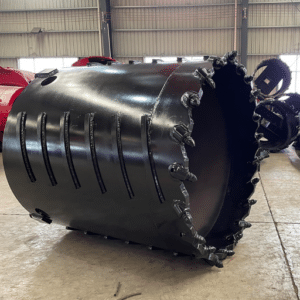
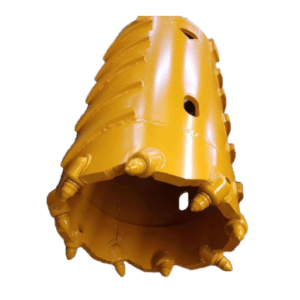
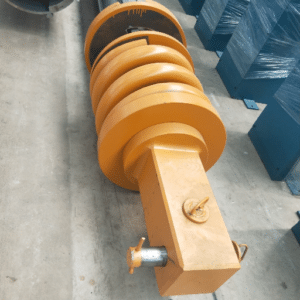
Core barrels are essential components in the investigation and analysis of a geological formation based on hard rock. This method allows geologists, engineers, and researchers to obtain almost undisturbed core samples that are important in evaluating the structure and nature of subsurface formations. So, what is core barrel drilling, and why is it so crucial for developments such as mineral exploration and civil engineering? This article will go into the basics of core barrel drilling, explaining the science and mechanics of its operation and summarizing its value in various industries. This guide will offer you an insightful understanding of this technology’s purpose, functioning, and impact, whether you are an old turtle or just inquisitive.
Introduction to Core Barrel Drilling

Core barrel drilling methodology extracts cylindrical-shaped samples or “cores” from the earth for analysis in terms of subsurface material composition, structure, and properties. The technique uses a special tool called a core barrel for cutting into the ground while maintaining the integrity of the sample inside. The disrupted site might often be reoriented for further operations. Such operations, encompassing mining, oil and gas explorations, and constructions, need to gather data that will guide decision-making for the welfare and final thrust of their various projects.
What is Core Barrel Drilling?
The core barrel drilling technique is precise and efficient in retrieving cylindrical samples, called “cores,” from beneath the crust. This method helps in the detailed analysis of subsurface materials, bestowing lucrative information about their composition, structure, and mechanical properties. A core barrel is usually a cylindrical metal vessel with a cutting edge designed to slice through geological materials, whether soft soils or hard rocks.
Present-day core barrel drilling methods utilize either single-tube or double-tube types. Single-tube core barrels are simpler, hence often preferred in soft formations, whereas double-tube types are better for hard rock as they reduce damage to the sample during extraction. Using diamond-tipped bits can readily cut through even the toughest materials while ensuring the quality of coring even under adverse conditions.
In mining, construction, and oil and gas exploration, core barrel drilling forms an essential part of many operations. By way of illustration, in the mining world, it aids in defining mineral deposits and gauging their economic feasibility. The deposits are, of course, a great consideration for drilling the reservoirs efficiently. Advancements in high-speed drilling technologies have brought along much innovation in core-barrel drilling tools, granting multiple access to underground resources never considered feasible before, which exceed 10,000 feet.
Moreover, core analysis provides vital data on porosity, permeability, and fluid content for aiding engineers and geoscientists in decision-making. In a true sense, it is initiative towards safe and stable construction projects by analyzing soil and rock before laying concrete foundations. Consequently, core barrel drilling combines various disciplines like precision engineering and the latest technology to develop state-of-the-art solutions for modern industrial problems.
Purpose and Importance of Core Barrel Drilling
Core barrel drilling has witnessed modern technological innovations increasing the operational efficiency and accuracy of data acquisition. Special features granted to modern diamond-impregnated drill bits and rotary systems may improve the recovery of core samples from intact conditions, regardless of the level of geological challenge. Automated systems for pressure control or real-time monitoring were installed in many modern rigs, meaning fewer human errors and maximizing performance.
With these core samples, data continues to be relevant in mining, oil and gas exploration, and environmental studies. In the mining domain, a core analysis determines ore grade and size of deposit for economic feasibility studies. Experts in the present-day industry believe that such methods have a recovery rate of 95% for competent rocks, with the loss of material being kept to a minimum during sampling. Similarly, core barrel drilling is invaluable in water studies, providing precise data on properties of aquifers in areas like permeability and hydraulic conductivity.
Now, sustainability methods are in focus for core barrel drilling operations. Many companies try to stick to green methods, like using biodegradable drilling fluids and equipment designed to reduce surface disturbance. Putting these improvements together, core barrel drilling has not only caught up with the present industrial demands but also complements the enhancing environmental stewardship initiatives, supporting its role in sustainable resource management.
Overview of Core Sampling Techniques
Core sampling techniques are an essential component of geological and environmental studies, enabling the extraction of subsurface cores for analysis of mineral composition, stratigraphy, and resource potential. Modern methods have significantly increased efficiency and accuracy in obtaining undisturbed samples while minimizing environmental impact.
- Rotary Core Drilling: One of the most widely used techniques, rotary core drilling involves a rotating drill bit to penetrate rock layers and recover cylindrical core samples. This method is well-regarded for its ability to collect continuous cores at depth, offering detailed insights into geological formations. Advances in diamond-tipped drill heads have enhanced performance, allowing smoother penetration even through highly compacted or crystalline rock.
- Wireline Core Sampling: Popular in mineral exploration, this method utilizes a wireline cable system to retrieve the inner core barrel without pulling the entire drill string out of the borehole. This reduces downtime significantly and allows for faster sampling. Data suggests wireline systems can accelerate operations by up to 40%, improving overall project efficiency for remote or time-sensitive studies.
- Sonic Drilling: A high-frequency vibratory technique, sonic drilling is particularly effective in soft sediments or unconsolidated formations. It reduces the risk of sample disturbance by using a combination of vibration and downward pressure. Recent studies indicate that sonic drilling can achieve sample recovery rates of over 90%, making it ideal for environmental site assessments or hydrogeological investigations.
- Push and Piston Core Sampling: Common in marine and sedimentary environments, these techniques rely on hydraulics to push a core barrel into softer substrates, like sand or clay. These methods are non-invasive and cost-effective for studying shallow layers, providing valuable insights into sediment deposition and aquatic ecosystems.
- Auger Drilling: Ideal for shallow sampling, auger drilling uses a helical screw bit to lift cuttings to the surface while collecting core material. Suitable for soil analysis in agriculture, construction, and environmental engineering, this technique is particularly beneficial in unconsolidated deposits.
Core Barrel Components and Tools

Core barrel components include inner and outer tubes, locking and adapter couplings, landing rings, stabilizers, core lifters, and reaming shells.
| Key Point | Description |
|---|---|
|
Inner Tube |
Holds and stabilizes core |
|
Outer Tube |
Rotates and withstands stress |
|
Locking Coupling |
Connects tube to drill rod |
|
Adapter Coupling |
Aligns and locks components |
|
Landing Ring |
Supports inner tube |
|
Stabilizer |
Centers inner tube |
|
Core Lifter |
Secures and retrieves core |
|
Reaming Shell |
Enlarges borehole diameter |
Core Barrel Structure: The Outer Casing and Inner Tube
In drilling systems, the core barrel is a crucial instrument designed to carefully extract samples intact for analysis. There are two major components to a core barrel: the outer casing and the inner tube. Each component performs different but related functions that ensure accuracy and efficiency during drilling.
The outer casing is, thus, the core barrel’s protective sheath, providing stability to the core barrel and ensuring that the core is not being contaminated by foreign matter during drilling. Usually constructed from steel or allied materials, the outer casing is built to stand against high pressures, abrasive conditions, and high temperatures encountered in deep drilling operations. It also has to provide an uninterrupted passage for the insertion of the inner tube so that the core can be smoothly withdrawn. Outer casings are made in various diameters depending on the drilling specifications to allow the passage of wanted sample size and subsurface conditions.
The inner tube, contained within the outer casing, takes indeed the core samples. It is meant to maintain the integrity of the sample during removal with minimal disturbance. Many modern designs for inner tubes include liners or core lifters to secure and protect the material once collected; for instance, core lifters can hold the bottom end of the collected core to prevent it from slipping during its retrieval.
Improvements in core barrel technology also allow double-tube and triple-tube systems to be used to good effect for sample recovery in difficult scenarios. More specifically, a triple-tube has an added liner tube between the inner casing and the outer casing, providing the best protection for delicate or fractured cores with the least disturbance to their structure. These types of improvements increase greatly the rate of recovery of samples, achieving recovery rates of as much as 95% in the best cases alongside modern methodologies.
Strong materials, perfect engineering, and constantly advancing technology come together in the assembly of a core barrel system, making it a trusty answer to the myriad challenges of subsurface exploration, be it geological, environmental, or industrial.
Types of Bits Used in Core Drilling
The main types of bits used in core drilling are Diamond, PDC, Alloy, Roller Cone, and Hammer bits.
| Key Point | Diamond | PDC | Alloy | Roller Cone | Hammer |
|---|---|---|---|---|---|
|
Material |
Natural/Artificial Diamond |
Polycrystalline Diamond |
Tungsten Carbide |
Steel with Teeth |
Steel |
|
Use |
Hard Rock |
Soft-Medium Rock |
Hard Materials |
Soft-Hard Rock |
Hard Rock |
|
Mechanism |
Abrasion |
Scraping |
Cutting |
Scraping/Crushing |
Percussion |
|
Durability |
High |
Moderate |
High |
Moderate |
High |
|
Cost |
High |
Moderate |
Low |
Moderate |
Moderate |
Drill Rods and Their Specifications
Drill rods are essential components in core drilling operations, serving as the lifeline between the surface equipment and the drilling bit. They are designed to transmit rotational power, torque, and hydraulic pressure during drilling while maintaining structural integrity under extreme conditions. The selection of drill rods can significantly affect the performance, efficiency, and outcomes of drilling projects.
Material Composition
High-quality drill rods are typically manufactured from alloy steel or carbon steel, prized for their durability and resistance to wear. These materials are often heat-treated to optimize their strength-to-weight ratio, ensuring they can withstand high stress levels without compromising flexibility.
Sizes and Lengths
Drill rods are available in a variety of sizes, most commonly measured in outer diameter (OD) and wall thickness. For example:
- Core sizes range from NQ (2.75 inches OD) to HQ (3.5 inches OD) and PQ (4.75 inches OD), catering to different core sampling requirements.
- Standard lengths vary between 3 to 6 meters (approximately 10 to 20 feet), with threaded ends enabling seamless connection into longer assemblies as needed.
Connection Threads
The threaded ends of drill rods are crucial for ensuring secure connections while minimizing energy loss during operation. Common thread types include the V-thread (used in standard applications) and API thread connections, which are designed for high-torque applications. Precision-engineered threads reduce the likelihood of breaks and increase operational safety.
Performance Enhancements
Modern drill rods often incorporate features like internal surface treatments or lubrication grooves to reduce friction during drilling. Some designs prioritize weight reduction without compromising rigidity, enabling deeper and faster drilling capabilities. Advances in engineering have allowed rods to handle pressures exceeding 25,000 psi (approximately 1,700 bar) and rotational speeds surpassing 2,000 RPM, which are vital for complex subsurface explorations.
Practical Applications
Drill rods are used across various industries, including mining, geotechnical studies, and environmental assessments. Their adaptability shines in scenarios requiring deep drilling, angled boreholes, or highly abrasive conditions, which demand superior quality and robust performance.
Selecting the appropriate drill rod specifications is essential in achieving operational efficiency, cost-effectiveness, and project success in core drilling operations. Engineers evaluate factors such as depth requirements, material composition, project budget, and site conditions to determine the ideal rod configuration.
Applications of Core Barrel Drilling

Core barrel drilling enjoys widespread application across several industries due to the precision and efficiency it offers in sample collection or borehole creation. It works well for mineral exploration, where one is drilling to identify or study an underground resource such as ores and minerals. In addition, it finds uses in geotechnical engineering to collect soil and rock samples for construction purposes, in consideration of site stabilization and safety. Meanwhile, environment-related studies rely on core barrel drilling to take subsurface samples to check contamination levels or groundwater status.
Mining and Geological Exploration
Mining and geological exploration employ advanced technologies like core barrel drilling while searching for valuable minerals and investigating subsurface conditions. The global mining market is characterized by steady demand for materials such as copper, gold, and rare earth because these raw materials are directly used in electronics, renewable energy technologies, and construction industries.
Geological explorations are critical to locating new mineral deposits and assessing their commercial viability. Improvements to drilling methodologies have increased efficiency and accuracy, enabling geologists to penetrate deposits that were previously inaccessible while reducing their impact on the environment. Other techniques, such as geophysical surveys and 3D mapping, complement core barrel drilling, giving a more comprehensive picture of the layerings that exist across the Earth’s subsurface. This correlation of methods therefore further aids in efficient resource extraction and in the sustainable development of mineral reserves across the globe.
Foundation and Construction Applications
Core barrel drilling forms a crucial aspect of the foundation and construction sectors, offering, to a certain extent, critical geological data concerning subsurface conditions for structural integrity. Having allowed engineers to sample materials in cylinders of soil, rock, or other types of geological matter, such matters can be tested for load-bearing capacity, porosity, or water content as requisite in the design of stable foundations. Whereas at present, drilling methods permit samples to be extracted from depths of over 300 meters to get precise data for projects on such a grand scale as skyscrapers, bridges, and tunnels.
Core drilling technology has been advancing in recent years and now affords the utmost degree of precision and efficiency in the process of core sampling. Methods of diamond core drilling are now common practice because cores of very high quality can be obtained, and material loss is minimized. Besides this, sophisticated monitors installed in these drilling systems provide an almost instantaneous analysis of the bypassed materials, allowing construction companies to make decisions on selected materials very quickly.
Core-barrel drilling is still active for testing sources posing challenges, be they highly fractured rock formations or subsiding lands. Presenting reliable geological data to engineers ensures building practices that are safe and sustainable while trying to meet the demand for resilient infrastructure in urban stretches and remote areas alike.
Environmental Studies and Soil Sampling
Environmental investigations go hand in hand with soil sampling, vital to evaluating land suitability for construction, agriculture, and ecological restoration. Upon determination of soil composition, analysis of texture, and contamination considerations, key environmental factors and site conditions come into view. As an example, soil pH value normally decides on fertility and nutrient availability, and hence pH measurements become highly important in the planning of agriculture. Heavy metal analysis, in particular, is critical to detecting the sources of contamination in industrial areas where lead, mercury, or arsenic could endanger human health and ecosystems severely.
Soil sampling has matured with modern advancements through technologies that allow for in situ analysis with rapid speed and great accuracy-introducing a pXRF analyzer or a high-resolution spectrometer in the on-site environment. This technology is essential in many application areas, including evaluating soil quality in zones subject to erosion or in assessing land rehabilitation efforts on degraded lands. Additionally, GIS combines soil data with advanced mapping techniques, allowing for dynamic visualization of environmental patterns and the techniques of environmental forecasting.
From an agronomic research perspective, there are valuable examples that testify to the importance of soil sampling. Areas that practice precision agriculture and base their decisions on detailed soil assessments have recorded yield increases of up to 20%, while applications of fertilizer have been reduced by almost 15%. Data from soil sampling are equally important in urban development projects to avoid issues of structural instability arising from a geotechnical threat, a threat such as sinkholes or soils prone to subsidence. These developments highlight the important position of comprehensive soil analysis as a sound basis of sustainable environmental management and economic efficiency.
Core Barrel Drilling Techniques

Core barrel drilling techniques are employed for the retrieval of intact, cylindrical samples of soil, rock, or sediment for analysis. In the drilling operation, the core barrel is lowered inside the drill hole, wherein it cuts and collects material during the progression of drilling. These comprise three basic barrel types: single-tube, double-tube, and triple-tube, all selected depending upon the nature of the sample to be recovered and the quality of preservation required. Having said that, the double-tube and triple-tube systems work best for samples that are fragile or easily weathered to prevent deterioration to the greatest extent possible. This method is most widely applied from geotechnical investigations through to mineral exploration and finishing in environmental studies, wherein providing the very best samples in an undisturbed state is required for analysis.
Hard Rock Drilling Methods
The methods in hard rock excavation require special attention to achieving efficiency and precision. For hard rock formations, rotary drilling, diamond core drilling, and percussive drilling techniques are used. From a personal viewpoint, I would have given preference to diamond core drilling since it presents wonderful opportunities for extracting good core samples with as little damage as possible, which in turn means greater chances for precise analysis. However, the ultimate choice of method depends on the depth consideration, the nature of the rock, and the study purposes.
In-Hole Stabilization Techniques
In-hole stabilization is a key factor of drilling operations in geological formations considered unstable or loose. It stabilizes the borehole, minimizing the chances of collapse and ensuring accurate sample recovery. One common way of stabilizing involves drilling fluids such as bentonite mud or polymer additives that keep the borehole supported by deposition of a protective layer on the wall, absorbing frictional heat created in situ by the drill bit during operation. Advanced drilling fluids have been formulated with properties of viscosity and environmentally safe so that they can work better in complicated conditions.
Alongside that, casing systems serve as a method of stabilization for unconsolidated formations like gravel or sand. Steel or composite casings are set inside the borehole during drilling to prevent cave-ins and provide support after the borehole has been drilled. Recently, expandable casing technology has appeared on the scene, offering solutions that help address very challenging ground conditions.
For situations in hard-rock terrains, more innovative stabilizing techniques such as resin injection and grouting have proved to be highly beneficial; a few of these newer methods entail injecting epoxy resins or cement into the fractures and voids to strengthen the weak zones against structural failure. Industry data indicate that grouting sustains the enhancement of rock mass stability to a degree as high as 70%, with further implications on extending the duration for mining or construction interventions.
In-hole stabilization also received a big boost with new developments in real-time monitoring technologies; automated borehole scanners and pressure sensors allow the operators to continuously evaluate ground conditions, fine-tune drilling parameters, and identify potential instabilities at an early stage. Therefore, coupled with the wide array of proactive techniques, stabilization systems now operate much safer and more efficiently even under demanding geological conditions.
Customizable Drilling Solutions
Drilling solutions are custom-modified to adapt to the geological variability of conditions and the project’s singular demands. The systems incorporate advanced technology that enables modular drilling rig operations through variable speed drive systems and interchangeable drill bits, allowing operators to customize their equipment setup in relation to performing the task at hand. Modern rigs now feature the latest software that manages pressure controls, controls energy consumption, reduces wear on the machinery, and brings about better operational efficiency than in the past.
For example, and certainly well grounded in the innovation practiced within the global drill bit market, PDC bits are getting the limelight for penetration into hard rock formations, in view of their durability and efficient performance. According to recent insights, PDC bits are projected to maintain a growth rate of above 7% CAGR in the coming five years. Moreover, remote monitoring tools and predictive maintenance systems ensure downtime is kept to the minimum as they provide real-time information to circumvent equipment problems before they culminate into failure.
Several such custom-designed solutions are of vital importance to mining, geothermal, and oil and gas exploration activities, where adjusting drilling parameters to site-specific data is of paramount importance. By pursuing such advanced approaches customized to their specific needs, companies have seen a system upgrade in environmental and safety standards as an immediate effect with consequent enormous savings toward the end cost during the project life cycle.
Benefits of Core Barrel Drilling

There are many advantages that core barrel drilling has to offer, which is why it is a preferred method in differing industries:
- Efficient Sample Collection: This technique yields excellent core samples that can be analyzed by a geologist.
- Better Planning: Better decision-making comes through the availability of accurate data from below ground.
- Cost-Effective: While minimizing operational downtime and wastage of resources, it also acquires reliable data.
- Application: This technique can be adapted to various ground conditions, hence useful in many environments.
- Environmentally Responsible: Lesser disturbance to the environment is an environmentally sound consideration in core barrel drilling.
Thus, the aforementioned benefits justify the wide usage of core barrel drilling for projects that require reliable and efficient solutions.
Efficiency in Core Sample Recovery
Well over 95% core sample recovery is typically achieved under favorable conditions, thereby facilitating recognition, mineralogical studies, and the structural analysis of both soil and rock. It is believed that core barrel drilling method remains highly efficacious mostly in geological and construction sectors. The method is favored to extract samples of the highest quality without damaging the material. Loss of sample by fragmenting or chipping during collection would otherwise pose a dilemma for the analyst.
The technology has made the technique more productive. A more modern core barrel, diamond-tipped drill bit of cutting tool and strength, can cut through hard rock formations smoothly.
In addition, real-time monitoring and analysis systems can be employed during drilling to identify deviations or inefficiencies in the process so they can be immediately rectified, thereby minimizing downtime and maximizing sample recovery with consistency. Hence, with precision, adaptability, and technological sophistication, core barrel drilling is one of the cost-efficient and timely methods to obtain core samples.
Accuracy and Precision of Core Samples
The accuracy and precision of core samples in geology are vital factors in interpreting subsurface conditions and evaluating resources. Accuracy refers to how much the recovered properties of a core reflect the true in-situ conditions, while precision is concerned with the repeatability and consistency of measurements over samples.
With the innovations in core sampling, both aspects received great improvements. For instance, better core barrel designs and improved stabilization techniques reduce disturbance to the samples so that they maintain structural integrity and thereby accurately reflect the subsurface. With the wireline coring system, studies have demonstrated increase in recovery rates to 95% in formations that traditionally posed challenges, along with the reduction of contamination risks associated with conventional coring methods.
In addition to that, cutting-edge tools like portable X-ray fluorescence (pXRF) analyzers for on-site analyses can provide elemental composition results with astonishing precision within a few minutes, thereby assuring negligible chemical analysis discrepancy and allowing direct comparison with geological models on the spot. Digital imaging and computer tomography (CT) scanning of preservice samples further help identify microfractures, porosity, and other subtle structural features. This information is translated into a much more detailed view of reservoir behavior from which predictions gain accuracy.
Field data also suggest that errors can be substantially reduced with real-time monitoring systems throughout the drilling process. Torque, rate of penetration, and pressure are parameters that are strictly monitored so that retrieval of samples is carried out within the best conditions. Advanced methods of drilling, together with advanced analytical tools, have led the core sampling to be at the top of the degree of acceptability by oil and gas, mining, and environmental sciences, among others.
Cost-Effectiveness Compared to Other Drilling Methods
Modern core drilling stands as an economically feasible alternative in different industries. One of the reasons for this is the accuracy of the process and minimal wastage due to core drilling. Cylindrical cores are extracted as opposed to some one-off breaking through of material, thus allowing companies to save costs on material handling and post-drilling clean-up in setup time and operational costs, respectively.
Moreover, these advanced machines are equipped with real-time monitoring, which has brought about a major reduction in downtime. For example, automated drilling operations may be made to run with very limited human involvement, thus cutting down labor costs and incidents caused by human error. According to some statistics, there could be as much as a 30% reduction in operational costs in any project, if one optimizes core drilling machines.
Another point is that of being energy efficient. Core drilling machines require less electricity than others, as they require extracting smaller, precise samples, whereas other means cause bigger disturbances. Such an energy-saving measure means more cash saved and meets your contribution to sustainability.
Time-wise, core drilling is mostly able to shorten the project schedule in the industry and hence achieve its milestones sooner. This factor and the reduced maintenance cost on equipment and good accuracy are the reasons why it gains more and more popularity in construction, mining, and geotechnical studies.
Recent Advancements and Innovations

Recent advances in core drilling technology have significantly improved precision and efficiency. Innovations such as diamond-tipped drill bits and automated core drilling machinery allow relatively clean, fast, and precise extraction of samples. Such technology also eliminates the wastage of materials that would otherwise occur and any tedious processes associated with core drilling, thus making operations for different industries such as construction and mining much easier. One other newest feature is real-time data monitoring and analysis system, where input data from sensors attached to the drilling machine is analyzed for extraction parameters, drilling performance, and efficiency. Such technological evolution only brings about even more reliability and efficiency to core drilling for any modern-day application.
Technological Innovations in Core Barrel Design
Technological innovations in core barrel design include multi-functional systems, smart water efficiency valves, low-clearance cluster drills, and advanced material integration for durability and efficiency.
| Key Point | Description |
|---|---|
|
Multi-Function |
Interchangeable components for flexibility |
|
Smart Valve |
Ensures water efficiency and safety |
|
Low Clearance |
Compact designs for tight spaces |
|
Durable Material |
Enhanced lifespan and performance |
|
Cluster Design |
Reduces compressors and costs |
Trends Impacting Core Barrel Drilling
Core barrel drilling is being significantly redefined by emerging trends to harness efficiency, lower environmental impacts, and optimize costs. The first trend is centered on automation and robotic developments. Automated drills could safely offer high precision as they eliminate human interference in an otherwise high-risk environment. Industry reports, however, have cited a 30 percent efficiency increase through using such an automated system in drilling, cutting far down on project time.
Another key trend has been the fabrication of core barrels using advanced materials. Lightweight composite materials and alloys are gradually replacing steel components in core barrel fabrication, extending the lifespan of the equipment and reducing maintenance costs. Further developments concerning smart sensors are also being integrated into core barrels, which enable the operators to collect real-time drilling data, which includes temperature, pressure, and rock density. This information, when combined with predictive analytics, allows for better-informed decisions that ultimately enhance drilling performance.
Sustainability leads technological advancements in drilling methods. There has been an increased demand for reducing the ecological footprint of drilling operations. These days, in fact, many companies choose eco-friendly lubricants and drilling fluids to minimize environmental contamination without compromising their functions.
Lastly, project management in core barrel drilling is being revolutionized via digital integration and cloud-based platforms. Sharing of data as it is generated among teams catalyzes swift communication and brainstorming during drilling operations, thus improving collaboration in all phases of a project. In essence, these technological and methodological innovative pushes define an industry that is currently much more creative, sustainable, and cost-effective.
The Future of Core Drilling Technologies
With the innovative technological developments trying to maximize efficiency, precision, and sustainability, the future of drilling is shaping up. One promising trend in the industry is the use of AI-powered systems to monitor and analyze drilling conditions in real time. Such systems actively adjust parameters such as drill speed, torque, and pressure in response to geological feedback, thus reducing equipment wear and tear and improving accuracy.
There is also an increasing demand for environmentally friendly drilling techniques. For example, pneumatic drilling is practiced, and water-efficient systems are employed to conserve energy and reduce the environmental footprint of the process. A recent industry report said that companies implementing these technologies have reduced their energy costs by 25% at the maximum, giving a concrete definition to eco-friendly operations.
The other transformative way of conducting site assessments is through integrating high-resolution 3D imaging with advanced sensors. This technology accurately maps underground formations so that operators can not only identify the best drilling spots but also lessen delays and surprises that otherwise arise midway through the project. Industry experts believe that companies using these systems have greater success in resource extraction operations and can even boost their productivity by as much as 30%.
Finally, with regards to the selection of materials, researchers and engineers are currently considering advanced materials for drill bits, such as nano-crystalline diamond composites. These materials, besides being very durable and resilient, will greatly lengthen the service life of drilling tools, hence cutting down operational costs. Armed with such developments, the core drilling industry is consequently ready for an upheaval toward smarter, green, and economically viable practices.
Reference Sources
-
Rotary Core Barrel – Ocean Drilling Program (ODP): A detailed document on the Rotary Core Barrel system, its design, and its application in recovering core samples.
-
Coring Is Not Boring! – Carleton College: An educational resource explaining the components and process of core drilling, including the role of the core barrel.
-
How is Core Obtained? – University of Kentucky: A guide on core drilling methods and the use of core barrels in coal exploration.
-
Core Bits Tool Sheet – Ocean Drilling Program (ODP): A technical sheet detailing the use of core bits and their integration with core barrels.
Frequently Asked Questions (FAQs)
What is a core barrel in drilling?
A core barrel is a vital tool used in the drilling process, primarily designed to extract cylindrical samples of rock or soil from the ground. It typically consists of an outer barrel and an inner barrel, which work together to ensure that the core is retrieved without damage. The core barrel’s design allows it to resist drag and efficiently penetrate various formations, making it essential for geological exploration and analysis.
How does the wireline core barrel work?
The wireline core barrel operates using a wireline system that allows for the quick retrieval and deployment of the core samples. This system provides the versatility needed to recover cores from great depths without having to pull the entire drill string. The wireline core barrel is equipped with a mechanism that enables it to grip the core securely, ensuring that the sample remains intact during retrieval.
What are the components of a core barrel?
A typical core barrel consists of several components, including an outer barrel, an inner barrel, and a cutting bit. The outer barrel is designed to provide structural integrity and can be made from steel tubing for enhanced strength. The inner barrel is responsible for holding the core sample and is often tapered to facilitate easier extraction. Together, these components work to break the core efficiently while minimizing damage.
What is the role of the cutter in core drilling?
The cutter is a crucial component of the core barrel that aids in penetrating the formation and breaking the core. Made from durable materials like diamond, the cutter is designed to withstand high pressure and resist wear. Its effectiveness ensures that the core is cleanly extracted, which is vital for accurate geological assessments.
How do core barrels reinforce sample integrity?
Core barrels are engineered to reinforce the integrity of the sample during the drilling process. The double tube design of some core barrels helps to protect the core from external pressures and potential damage while being extracted. Additionally, the annular space between the inner and outer barrels can be used to circulate drilling fluids that further minimize the risk of breaking the core.
What is the significance of the outer barrel specification?
The specification of the outer barrel is significant as it determines its ability to withstand the conditions encountered during drilling. A standard outer barrel is typically designed to handle high pressures and resist deformation. This specification is critical for ensuring that the core barrel performs effectively in various geological formations and environments.
How does core drilling differ from other drilling methods?
Core drilling is distinct from other drilling methods due to its focus on obtaining intact rock samples for analysis. Unlike conventional drilling, which may only create a borehole, core drilling employs specialized tools like the core barrel to break the core and retrieve cylindrical samples. This method is particularly valued in exploration drilling for minerals and oil, where understanding the formation is essential.
What advantages do diamond drillers have with core barrels?
Diamond drillers benefit from using core barrels equipped with diamond bits, which provide superior cutting capabilities and durability. These bits can easily penetrate hard formations and are less likely to wear out compared to traditional bits. The ability to efficiently break the core and retrieve samples quickly is a significant advantage for diamond drillers, enhancing productivity and reducing operational costs.
How can core barrels be used to impregnate drilling fluids?
Core barrels can be designed to allow for the impregnation of drilling fluids into the formation. This capability enables the drilling fluid to circulate through the annular space, cooling the bit and stabilizing the formation while also aiding in the recovery of the core sample. The strategic use of drilling fluids ensures that the core remains intact and is less likely to break during the extraction process.