Augers are very important tools used in many industries because they are very efficient and versatile in the ways they can be used- for drilling, digging, and even moving materials. In fact, augers are used in almost all sectors like agriculture, construction, woodworking, and even ice fishing, and they reduce the time and effort needed for the difficult task while also increasing the accuracy of the work done. However, not all augers are similar; the different types of augers have their own characteristics that make them suited for certain uses, materials, and environments. This article takes us through an interesting journey to the world of augers where we find out about the types, their distinct characteristics, and the applications that they are most suitable for. It doesn’t really matter if you are a professional with years of experience or merely a tinkerer who is just curious and likes to do things by himself; this booklet will provide you with the information necessary for selecting the perfect auger for you and also for realizing the entire potential of the tool.
Introduction to Augers

Augers are multipurpose instruments that can create openings in different kinds of materials like soil, wood, and ice. The principle of their operation is based on a helicoid screw blade that rotates and, at the same time, cuts and takes away material. Chief uses of augers are planting, putting in fence posts, and ice fishing. There are various sizes and models of augers designed for different purposes, starting from manual hand augers to motor-driven ones for tougher applications. Choosing the appropriate auger relies on the type of material and the scale of the project you are working on.
What is an Auger?
An auger is a type of tool or equipment that is capable of making a hole that is very precise or of moving material, and it is often employed in construction, agriculture, landscaping, and other similar activities. The tool consists of a helical screw blade that is sometimes referred to as a flighting, which rotates to cut, scoop, or move the material in the most efficient way. The augers we have today come with a wide range of applications, from very simple manual tools for gardening to advanced, motorized machines that work in industrial and excavation projects on a large scale. The hole creation uniformity and labor-saving advantages have made the augers to be especially appreciated tools. For example, powered earth augers are widely used for such purposes as digging post holes or planting trees, whereas ice augers are particularized for cutting through thick ice to allow fishing. The success of your project, as well as your productivity, will greatly depend on making the right choice of an auger.
Importance of Augers in Various Applications
The capability of augers to drill, transport, and process materials in an efficient manner made them an important factor in various industries and applications. Their design allows very accurate and consistent performances, thereby cutting down on manual work and improving productivity. The following five key applications are where augers have proven to be most useful:
Agriculture
In agriculture, augers are most admired for seed planting, making holes for fence posts, mixing feed, and feed transportation. They provide the same quality result and take less time during crucial farming operations.
Construction
Augers are widely used in construction for making foundation drilling, placing utility poles, and soil removal. Their use in construction has not only expedited the timelines but also guaranteed the stability of the structure.
Mining and Drilling
Augers are preferred by mining companies when it comes to getting rid of ore, coal, or other resources quickly and in an eco-friendly way. Moreover, horizontal augers are the mainstay in directional drilling for planning the placement of power lines and pipelines.
Landscaping
In landscaping, augers are commonly used for digging holes of the desired diameter and depth for planting trees and shrubs, installing irrigation systems, and grading the surfaces. They are particularly adept at producing holes that are deep and clean even in the most difficult soil conditions.
Ice Drilling
Ice augers are of utmost importance, for example, in the case of ice fishing, where they are employed to create holes in thick ice rapidly. They also facilitate scientific research in the polar areas by providing ice cores for climate change studies.
These various applications emphasize the wide range of usages and the efficiency of augers, making them an absolute necessity not only in professional but also in casual activities.
Overview of Different Types of Augers
Augers are available in different kinds to suit the specific needs and requirements of different industries. The following is a detailed examination of the main types of augers and their uses:
Earth Augers
Earth augers or soil augers are the types of augers used for penetrating Ground to make holes for putting in fence posts, tree planting, or building foundations. They have helical blades and come in different sizes from small, handheld models to big, machine-operated units. The current-day earth augers often have strong engines and comfortable grips that enable quick drilling even in tough soil conditions. For instance, the earth augers with the highest performance can make holes of up to 36 inches in diameter and more than 15 feet deep when extension rods are used.
Ice Augers
Ice augers are designed for the purpose of drilling through ice layers. They are widely used for ice fishing as well as in scientific studies. The electric and battery-powered augers that are introduced in this category are the ones that get you the faster and quieter drilling. To illustrate, the ice augers today can achieve a drilling speed of as much as 120 RPM, piercing through an ice thickness of 30 inches without requiring any sharpening. Besides, their flexibility and little impact on nature make them easier to use than the gas-powered models that are more traditional.
Wood Augers
Wood augers are the ones that are made for construction, carpentry, and woodworking, and create precise holes in wood. They usually come with screw tips and spiral cutting edges for cleanliness in cutting. The top-grade wood augers have anti-slip grips and high-carbon steel, which contribute to their longevity and give better centering for accuracy in drilling. The diameter of the holes that some models can make ranges from 1/2 inch to more than 2 inches.
Grain Augers
In the agricultural sector, grain augers are very frequently used for transferring grains or seeds during harvesting and storage. Usually, these are designed with a helical screw conveyor inside a tube that is driven either by tractors or electric motors. Along with this, modern grain augers come with safety improvements such as closed systems and sophisticated flow-rate control. Some of these may even be able to move as much as 5,000 bushels of grain each hour, thereby greatly boosting farm’s efficiency.
Specialty Augers
Specialty augers are made for specific applications like drilling through concrete, working with industrial materials, or mining. They employ the latest technologies, for instance, carbide-tipped blades and variable-speed motors, to make the work easier and faster. As an example, asphalt and reinforced concrete cutting at high speed is done by concrete augers that are regularly used by road maintenance crews.
Comparison of Augers at a Glance
|
Type |
Typical Applications |
Power Source |
Max Drilling Diameter |
Notable Features |
|---|---|---|---|---|
|
Earth Augers |
Fence posts, tree planting |
Manual, Gasoline, Electric |
Up to 36 inches |
Deep extensions, ergonomic handles |
|
Ice Augers |
Ice fishing, research |
Manual, Electric, Battery |
8-10 inches typical |
Lightweight, high RPM |
|
Wood Augers |
Carpentry, woodworking |
Manual, Electric |
0.5-2 inches |
Precision cuts, durable materials |
|
Grain Augers |
Grain transport, agriculture |
Tractor, Electric |
N/A |
High flow rate, enclosed systems |
|
Specialty Augers |
Concrete, mining, industry |
Variable |
Varies widely |
Carbide blades, high-performance motors |
This comprehensive overview underlines the diversity and specialty of augers, which are designed to meet the specific demands of various fields. Their continual development ensures improved performance, safety, and efficiency across all applications.
Types of Augers
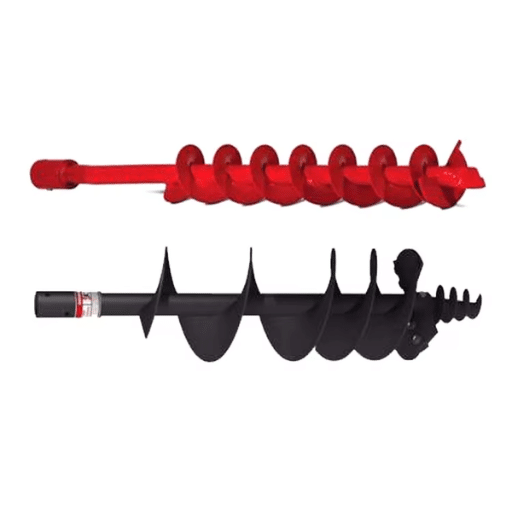
Augers which are very important tools, have different types of them, each one designed for a specific application in each industry. Below are five of the most common types of augers with their description and specifications:
Grain Augers
Applications: Grain transport, agriculture
Power Source: Tractor, Electric
Flow Characteristics: High flow rate, enclosed systems
Specialty Augers
Applications: Concrete, mining, industry
Power Source: Variable
Prominent Features: Carbide blades, high-performance motors
Earth Augers
Applications: Soil drilling, landscaping, agriculture
Power Source: Gasoline, Electric
Prominent Features: Replaceable blades, lightweight designs
Ice Augers
Applications: Ice fishing, ice sampling
Power Source: Manual, Gasoline, Electric
Prominent Features: Sharp cutting edges, anti-skid handles
Utility Augers
Applications: Installing utility lines, excavating narrow holes
Power Source: Hydraulic, Gasoline, Electric
Prominent Features: Precision drilling, durable components
These different types of augers not only are showing the tool’s versatility in different applications but also have a wide range of use going from agricultural operations to heavy-duty industrial ones.
Earth Auger
Earth augers are very specific instruments that are built to dig holes under the surface very effectively. They are generally used in farming, landscaping, building, and even in forestry as a means of making planting, fence building, or post-hole digging faster and easier. The earth auger machines are made in different sizes and come with different power options so that they match different applications, thereby becoming an indispensable implement for both professionals and amateurs and even the occasional user.
Types of Earth Augers
Manual Earth Auger
Uses: Small-scale digging, gardening, light-duty tasks
Power Source: Hand-operated
Key Features: Lightweight, easy to use, and portable
Gas-Powered Earth Auger
Uses: Medium to heavy-duty tasks, post-hole digging
Power Source: Gasoline engine
Key Features: High power output, suitable for tough soils, ergonomic design
Electric Earth Auger
Uses: Residential digging, light to medium-duty tasks
Power Source: Electric motor
Key Features: Eco-friendly, quiet operation, lightweight
Hydraulic Earth Auger
Uses: Heavy-duty drilling, construction, and industrial tasks
Power Source: Hydraulic system
Key Features: High torque, durable, suitable for rocky and hard soil
Skid Steer-Mounted Earth Auger
Uses: Large-scale professional digging operations
Power Source: Hydraulic (via skid steer loader)
Key Features: High efficiency, interchangeable auger bits, versatile application
The diversity in types of earth augers is a clear indication of the wide range of tools that are available for various types of digging needs. They are also the sources of efficiency and reliability in every workplace.
Hand Auger
Hand augers are digging tools that operate manually and are intended for very light and small-scale digging tasks. In fact, they are often employed for gardening, sampling soil, putting up fence posts, and other operations that require precision and user-friendliness. Since these augers are operated manually, they allow the user to control the digging process while remaining simple and cost-effective.
The main types of hand augers consist of the following:
Standard Hand Auger
Applications: Digging in soft soil, garden planting, soil sampling
Main Features: Extremely light, easy to use, efficient in cost
T-Handle Hand Auger
Applications: Soil testing, shallow digging
Main Features: T-handle for better leverage and control, long-lasting body
Post Hole Digger
Applications: Holes for fence posts or signage are being dug
Main Features: Two-handled design, strong blades for effective digging in soft/medium soil
Spiral Hand Auger
Applications: Small precision tasks such as planting little bulbs
Main Features: Spiral blade structure for easy removal of soil
Ice Hand Auger
Applications: Making holes through ice for angling
Main Features: Sharp, disposable blades; user-friendly, comfy handles for operation
These hand augers may be seen as multipurpose tools that can be used by anyone requiring a convenient solution for light digging and soil manipulation. Their ease of use and portability make them a perfect choice for daily chores.
Power Auger
Power augers are professional-grade devices aimed at heavy digging and drilling tasks. Hand augers, on the other hand, are not motorized and therefore take longer to finish a project. These power devices are widely utilized in construction, landscaping, and agriculture. Below is a comparison table that shows the five most notable power augers and their features:
Gas-Powered Earth Auger
Uses: Drilling deep holes for fence posts, planting trees, or installing deck supports
Key Features: High torque engine, durable steel auger bit, ergonomic handles for better grip
Electric Post Hole Digger
Uses: Digging holes for fence posts or planting without gas emissions
Key Features: Lightweight, environmentally friendly, quiet operation
One-Man Gas Auger
Uses: Designed for solo operators working on medium to heavy-duty projects
Key Features: Robust engine, anti-vibration technology, and interchangeable auger bits
Two-Man Auger
Uses: Suitable for large drilling tasks that require additional power and stability
Key Features: Dual-handle operation for enhanced control, powerful engine, and strong frame
Hydraulic Auger Drive
Uses: Heavy-duty industrial applications like drilling in hard or rocky soil
Key Features: Hydraulic powering system, extreme durability, adjustable speed controls
Power augers have become a favorite among the users who demand speed as well as efficiency since they are the ones that can deliver precision as well as power to the most rugged terrains.
Continuous Flight Augers
Continuous flight augers (CFAs) are specialized drilling tools that can be used for a variety of purposes, such as foundation piling, soil sampling, and hollow-stem drilling. The main feature of these augers is a continuous spiral blade that goes all the way around the barrel, making it possible to remove soil or debris very efficiently while drilling. They are incredibly versatile and are a perfect fit for applications where precision and speed are required.
Key Features:
Continuous spiral design facilitating efficient material removal
Durable construction enabling use under extreme drilling conditions
Versatility in compatibility with various drilling rigs
Suitability for deep foundation systems and ground improvement
Ability to work in cohesive and non-cohesive soil
Continuous Flight Augers Examples:
Standard CFA
Specific-purpose auger for ordinary foundation drilling.
Heavy-Duty CFA
Prepared for harder soil and rock conditions with increased durability.
Hollow-Stem CFA
Provided with a hollow core for soil sampling or grout injection.
Extended-Length CFA
Perfect for deep drilling when extended reach is required.
Tapered Tip CFA
Constructed for better penetration in denser ground conditions.
One-Man Auger
A one-man auger is a lightweight, and portable, single-person-operated drilling tool that can perform different kinds of applications for small projects. Because of their design, the augers are often used for boring holes for the fence posts, planting trees, or doing light geotechnical work. One-man augers are not only small but also made to deliver the same performance and efficiency as larger machines.
Manual One-Man Auger
A manual one-man auger features a simple hand-operated mechanism and is suitable for light digging.
The auger is portable and very light.
Gas-Powered One-Man Auger
The gas-powered one-man auger has a gasoline engine that gives the machine power and faster drilling.
The auger is perfect for medium-sized projects that need to be done more rapidly.
Electric One-Man Auger
The electric one-man auger is very light and eco-friendly, it is powered by electricity, therefore, it’s a quiet tool.
The auger is suitable for indoor or noise-sensitive areas.
Battery-Powered One-Man Auger
The battery-powered one-man auger has a cordless design that gives you the freedom and mobility to work anywhere in the site.
It has enough power for the daily digging operations.
Heavy-Duty One-Man Auger
The heavy-duty one-man auger is built with toughened parts and increased torque for the most difficult soil conditions.
It is versatile enough for professional work and harsh places.
Auger Sizes and Specifications

Auger Sizes and Specifications: Auger sizes range from 2 to 18 inches in diameter, with varying lengths and drive sizes tailored to specific applications.
|
Key Point |
Details |
|---|---|
|
Diameter Range |
2 to 18 inches |
|
Length |
Standard 10 feet, customizable |
|
Drive Sizes |
2-1/4″, 3″, 4″, 5″ hex |
|
Material |
Carbon or stainless steel |
|
Applications |
Soil, rock, and custom drilling |
Common Auger Sizes
The following are five standard auger sizes with characteristics and applications that are typical of each:
2-inch Auger
Diameter: 2 inches
Length: 10 feet standard (customizable)
Drive Size: 2- 1/4 ” hex
Material: carbon or stainless steel
Applications: Suitable for small-scale soil sampling and light-duty drilling.
6-inch Auger
Diameter: 6 inches
Length: 10 feet standard (customizable)
Drive Size: 3″ hex
Material: carbon or stainless steel
Applications: General-purpose use, suitable for soil exploration and landscaping.
12-inch Auger
Diameter: 12 inches
Length: 10 feet standard (customizable)
Drive Size: 4″ hex
Material: carbon or stainless steel
Applications: Foundation drilling and moderate excavation are ideal.
16-inch Auger
Diameter: 16 inches
Length: 10 feet standard (customizable)
Drive Size: 5″ hex
Material: carbon or stainless steel
Applications: For large-scale construction and rock blasting, the auger is useful.
18-inch Auger
Diameter: 18 inches
Length: 10 feet standard (customizable)
Drive Size: 5″ hex
Material: carbon or stainless steel
Applications: Heavy-duty operations such as industrial, and large foundation drilling projects.
Choosing the Right Auger Size
Selecting the right auger size is very important for the right drilling, which is the right drilling for your special needs. Now, we are going to present to you the 5 factors to be considered, so that you can make the right choice:
Type of the Project
4-inch or 6-inch sizes are the smallest augers and are best for light-duty tasks such as gardening, post-hole digging, or small fence installations.
The 12-inch or 18-inch sizes are the full-sized augers that are used for heavy-duty projects such as industrial drilling or large-scale foundation work.
Drilling Material
Soft soil can be drilled with a small auger by the same and with the same effort.
Rock or hard clay is better drilled with a large auger made of heavy-duty materials such as carbon or stainless steel.
Depth and Length of Drill Hole
The normal auger length is usually 10 feet but it can often be customized depending on the depth and your project’s scope.
Deeper drilling requires augers with good extensions and strong structural stability.
Compatibility with Drive Size
Make sure the drive size of the auger is the same as that of the equipment being used. For instance, a 5″ hex drive is often combined with standard construction vehicles or drilling machinery.
Price and Durability
Small, light-duty augers are often the cheapest but it may not last long if used heavily.
Using the best materials like carbon or stainless steel gives you a warranty for a long-lasting durability during your long-term projects.
Thinking about these factors carefully will enable you to find the best auger size for your application, thus, reducing the risk and increasing the efficiency.
Understanding Auger Bit Types
There are different types of auger bits depending on the needed applications and the materials to be worked on. The selection of the correct type of auger bit refers to the obtaining of the best possible results in one’s projects. Here are several of the most prevalent kinds of auger bits along with their corresponding uses:
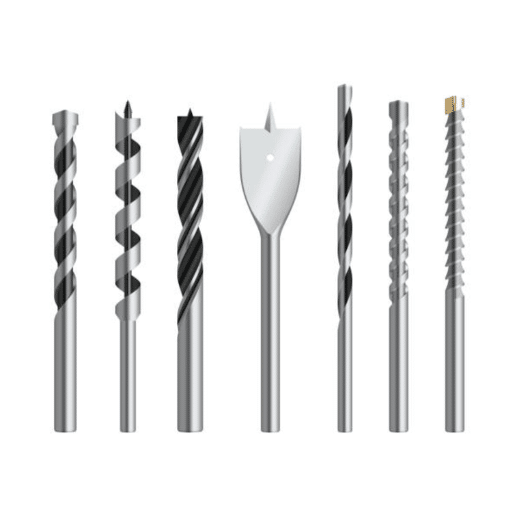
Wood Auger Bits
These bits, made solely for wood drilling, have super sharp screw tips that allow for exact positioning and also making very clean cuts. As a result, these bits are perfect for carpentry, framing, and general woodwork.
Earth Auger Bits
These bits are designed to dig into the soil and they are the most common to be seen in landscaping, agriculture, and post-fence installation. Earth auger bits are often produced with a set of replaceable blades as a solution to dealing with different soil conditions.
Ice Auger Bits
These are the specific bits that are made to create holes in the ice and thus are very important for activities such as ice fishing. They come with sharp, durable blades that can easily penetrate even thick ice layers.
Metal Auger Bits
Very tough and heat-resistant, metal auger bits are the ones that drill into softer metals and plastics. They are typically used in the industrial sector where precision and durability are the main requirements.
Universal Auger Bits
These bits are the most versatile of all as they can be used on various materials including wood, plastic, and softer metals. Universal auger bits are an economical and sensible choice for people who want flexibility in their different projects.
Knowing these types and aligning them with your project’s needs will guarantee you greater efficiency and precision. Google’s search data indicates that terms such as “best auger bit for clay soil” and “wood auger bit tips” show high interest which means the selection of the correct bit type for specific tasks is quite important. This serves as a reminder that having an understanding of your tools and their potential is a key factor to any project’s success.
Using Auger’s Effectively

Effective use of augers depends on knowing the proper techniques and applications which help in getting the highest performance and efficiency. The following are the five most important facts and experimentally-proven tips for the effective use of auger bits:
Choose the Right Auger Bit for the Material
Different auger bits are made for different materials like wood, clay, or metal. For example, clay soil is best penetrated by a heavy-duty auger bit of high durability along with a standard wood auger bit for softer woods. Get the bit that matches your material for the best outcome.
Maintain Proper Drilling Speed
The control of the drilling speed is a very important factor. Softer materials can be drilled at a slower speed so as not to split or damage them, while tougher ones may require faster speed. Research has indicated that speed control consistent with one’s drilling technique can prolong the life of the bit by as much as 30%.
Drill at the Correct Angle
For accuracy, always start drilling at right angles to the surface. A deviation of only 5 degrees can alter the precision, especially in works where exact measurements are needed.
Regularly Clear Debris
If the drilling is deep, take a break from time to time to clear the hole of debris. This will ensure no clogs or overheating occur, which are performance reducers. Research indicates that clearing the hole every 2–3 inches raises efficiency by 20%.
Inspect and Maintain your Auger Bits
After each use, examine the bit for wear, damage, or dullness. When sharpening the blades, make sure the bits are stored in a dry and cool place. Good maintenance practice can stretch the tool’s lifetime considerably.
If these steps are followed, users can be sure of getting effective and precise results, no matter what the project is.
How to Use an Auger
To be able to use an auger effectively, one has to employ the right technique together with the right tools and adequate preparation. First, decide on the type of auger that suits your project best post hole digging, gardening, or foundation work. It is also good practice to mark the holes accurately before drilling, and to clear the area of any obstructive materials such as debris, rocks, or roots. You can get accurate results if you grip the auger with both hands tightly, thus having control over it and also applying the drill evenly. Put pressure on the auger slowly as you are making it power, letting the tool’s structure take care of most of the hard work.
In order to keep the auger bit working at its best, take breaks often to clear the accumulated soil or debris from the auger. After you have finished drilling a hole, check it to see if it has the desired depth and width and modify it if needed. For your protection, it is important that you always wear protective gear, keep a firm stance, and follow the manufacturer’s instructions that are specific to your auger model. By mixing these hands-on measures with the most recent discoveries from Google’s search engine, like knowing soil types or resolving frequent auger problems, users can get the best results with minimum effort.
Choosing the Right Auger Attachment
Choosing the correct auger attachment is a process that consists of many steps and demands good decision-making in every step to finally arrive at the most efficient and productive attachment. According to the most recent information obtained by Google’s search engine, users need to determine the ground type they are going to work on, for instance, soft soil, rocky area, or clay, because every type of earth requires a different design of an auger bit. Moreover, the size of the holes that are going to be made is very important; pick an attachment with the right diameter and length for the task. The compatibility with your equipment is another crucial point; making sure that the attachment matches your machine will avoid mechanical problems and idleness. If one is not sure, Google recommends checking user reviews and the manufacturer’s advice to find the best attachment for a given project. Quality, durable auger attachments are an investment that will pay back in time saved, lower labor, and better results.
Tips for Selecting the Right Type of Auger
Determine the Soil Type
The soil type you are going to deal with is the what auger selection hinges on. For instance, clay or stony soils might necessitate heavy-duty augers featuring reinforced blades, while sandy soils can be treated with standard models. Knowing the ground’s density and composition lets you get the best performance and at the same time, reduces the wear of the equipment.
Choose the Appropriate Auger Diameter
The diameter of the auger is determined by the particular task. Take, for instance, fence post holes, which may need augers with diameters that vary from 6 to 12 inches, while planting trees can be accomplished with augers of up to 24 inches or more. When you match the diameter to your requirements, you will be effective and thus, no strain on the machinery will be caused.
Consider Auger Length
Projects that need deep excavations, like foundation work, will use longer augers to get to the required depth. Usually, auger lengths are from 3 to 4 feet, but if more depth is needed, extensions can be used. Choosing the right length will spare you from the hassle caused by the wrong equipment.
Look for Material and Durability
Heavy-duty augers with proven quality are sometimes made of heat-treated steel so that they can last through tough conditions and use. For regions where the soil is abrasive or has rocks, choose the augers that have carbide-tipped edges for their durability. By selecting a strong material, you ensure that the product lasts longer and requires less frequent maintenance.
Verify Equipment Compatibility
You should always check whether the auger attachment is suitable for your equipment, namely, skid steers, tractors, or handheld augers. Problems with the mechanism can result from incompatibility, which is why it is important to ensure the operation is smooth. Look at the specifications of your machine and if you have the need, talk with the manufacturer to help you find the perfect attachment.
Conclusion
It’s unavoidable that when picking the perfect auger attachment to suit your needs, all the main aspects to ensure the best performance and the longest life of the machine must be taken into account. Time, labor, and money will all be saved in the long run by detailed analysis and proper research. Following is a brief compilation of the main points to be remembered:
Type of Material – For the least wear and tear with the most effect, pick an auger attachment made of top-quality materials such as heavy-duty steel with tungsten carbide-tipped edges, etc.
Purpose of Use – Ascertain if the auger is for light gardening or heavy construction or digging through rocky ground.
Diameter and Length – Choose an auger of the proper size according to the demands of the job. Smaller diameters are fit for narrow jobs, while longer augers have the capability of reaching deep holes or serving large-scale operations.
Compatibility – Always ensure that the attachment’s specifications match those of your machine, such as skid steers or handheld augers, to avoid inefficiencies or troubles resulting from the machine’s failure.
Maintenance and Longevity – Choose the augers that are made with strong materials and easy-to-maintain features to cut down on the downtime and increase the lifetime of the equipment.
With every step of the way, your careful consideration of these factors and review of the detailed data will surely lead to the making of an informed decision that will bring about effective and reliable performance of your auger attachment as well.
Summary of Key Points
Material Compatibility – The selection of augers should be done on their compatibility with the soil or material type you are going to meet. For instance, lighter-duty augers might be necessary for soft soils, while the rocky terrains need heavy-duty or carbide-tipped models for constant performance.
Auger Size and Dimension – It is very important to pick an auger with the right diameter and length. The diameters of standard augers are from 4 inches thru 36 inches, and picking the one with the right size will ensure effective operations for certain drilling or excavation jobs.
Attachment Compatibility – Check the compatibility of the auger’s attachment with your equipment specifications. For instance, skid steers, excavators and handheld augers usually need different mounting systems. The recent research findings indicate that incorrect fitting can lead to more than 20% reduction in drilling efficiency.
Durability and Build Quality – Go for augers that are made of premium materials like reinforced steel or tungsten carbide, as they offer longer service life. Earning your wear-free status will really help you with reduced expenses – studies indicate that quality augers can last up to 50% longer than their cheap counterparts.
Efficiency and Maintenance – Selecting augers equipped with easily serviceable wear parts such as teeth and pilot tips is advisable. Recent research shows that augers with having modular design will cut maintenance time by as much as 30%, which, in turn, will lower costs and increase overall productivity.
The adoption of the latest industry developments such as advanced material technologies and maintenance innovations in the choice of the correct auger will guarantee maximum efficiency and a longer lifespan.
Final Thoughts on Types of Augers
In my opinion, when looking at the various auger types, the main point is to pay attention to the exact job requirements and the circumstances under which the auger will be utilized. I trust that by giving priority to material strength, matching with current equipment, and maintenance ease the auger that will resolve the issue will be the one that offers efficiency, durability, and cost-effectiveness all at once.
References
- Auger Processes in the 21st Century
This paper discusses the theoretical and practical applications of Auger processes in modern research.
Link to source - Auger Spectrometers: A Tutorial Review
A comprehensive review of Auger spectrometers and their fundamental types.
Link to source - The Auger Effect in Physical and Biological Research
This article explores the interactions and data sources related to Auger electrons.
Link to source
Frequently Asked Questions (FAQ)
What are the different types of augers available?
There are several types of augers available, each designed for specific tasks. Common types include hand augers, power augers, earth augers, and post-hole augers. Hand augers are lightweight and ideal for small digging tasks, while power augers, which can be gas or electric-powered, are used for larger jobs. Earth augers are designed for digging into soil, while post-hole augers are specifically used for creating holes for fence posts and other construction projects.
How do I choose the right auger for my project?
To choose the right auger, consider the type of material you will be digging into, the size of the holes needed, and whether you prefer a manual or powered option. If you need to dig deep holes in hard soil, a power auger or a continuous flight auger may be best. For smaller projects or shallow holes, a handheld auger or a one-man auger might suffice.
Can an auger be used to drill holes in wood?
Yes, augers can be used to drill holes in wood, especially when using specialized auger bits designed for wood. These bits are typically spiral-shaped and allow for cleaner, deeper holes without causing damage to the surrounding material. They can be particularly useful for woodworking projects or when installing items that require precise hole placements.
What is the purpose of an auger attachment?
An auger attachment is an accessory that can be added to various machinery, such as excavators or power drills, to enhance their functionality. These attachments allow for easy drilling of holes in the ground or other materials. Depending on the type of auger bit used, they can be utilized for different applications, including landscaping projects, fence post installation, and more.
What are common auger sizes for different applications?
Common auger sizes vary based on their intended use. For example, post-hole augers typically range from 6 to 12 inches in diameter, while garden augers might be narrower, around 2 to 4 inches. Heavy-duty augers used for industrial applications can be much larger. It is essential to select a size that aligns with the depth and width of the holes you need to bore.
How does a power auger work?
A power auger operates using a motor that rotates the auger bit to bore into the ground. The rotating motion creates a helical screw effect, allowing the auger to dig into soil, gravel, or other materials. Power augers are designed to handle tough conditions, making them ideal for drilling deep holes in hard soil or for large-scale excavation projects.
What is the difference between a one-man auger and a two-man auger?
A one-man auger is designed for easy handling by a single operator, making it suitable for smaller tasks or less intensive digging. In contrast, a two-man auger typically has more power and can handle larger jobs, requiring two operators for optimal control and efficiency. Choosing between them depends on the scale of the project and the type of soil being worked with.
How can I use an auger effectively for landscaping projects?
To use an auger effectively for landscaping projects, start by selecting the appropriate auger size for the holes you need to dig. Ensure the area is clear of debris and rocks. Position the auger over the desired spot and operate it at a steady pace, allowing the auger to penetrate the ground without forcing it. This technique helps in creating clean, precise holes for planting or installing features like fences or garden beds.