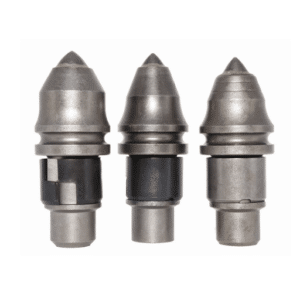
Percussion drilling has been a cornerstone of construction, mining, and geotechnical engineering for centuries. This comprehensive guide explores the core elements, advantages, and innovations that have shaped percussion drilling’s evolution from ancient manual techniques to today’s advanced automated systems.
What is Percussion Drilling?

Percussion drilling is one of the oldest and most reliable methods for penetrating hard surfaces and rocky formations. This technique involves the repetitive upward and downward movement of heavy drilling equipment to crush materials beneath the surface.
Key Principle: Unlike rotary drilling which cuts through materials, percussion drilling works by delivering repeated impacts to break through tough substrates like rock, clay, and consolidated sediments.
Why Choose Percussion Drilling?
- Simplicity: Minimal elaborate devices required
- Cost-effectiveness: More economical than automated drill systems
- Versatility: Effective in various geological conditions
- Reliability: Proven track record across multiple industries
History and Evolution of Percussion Drilling
Ancient Origins
The concept of percussion drilling dates back centuries, with ancient civilizations using crude but effective methods for water well drilling. Early practitioners employed:
- Manual labor with chisels and wooden hammers
- Repeated striking to break through hard soil layers
- Simple but effective techniques for accessing groundwater
Industrial Revolution Advances
The Industrial Revolution marked a significant turning point with the introduction of steam engines to power drilling rigs. This advancement:
- Increased drilling depth capabilities
- Improved operational speed
- Expanded applications to mineral prospecting and geotechnical drilling
Modern Technological Integration
Contemporary percussion drilling benefits from cutting-edge technology including:
- Pneumatic and hydraulic mechanisms for precise sequential impacts
- Advanced drill bits made from hardened steel and specialized alloys
- Automated systems with sensor coverage and real-time monitoring
- AI-powered analytics for optimal drilling location identification
Percussion vs. Rotary Drilling: A Comparison

| Aspect | Percussion Drilling | Rotary Drilling |
|---|---|---|
| Mechanism | Vertical striking action | Horizontal cutting with drill bit rotation |
| Best For | Very hard rocks and consolidated materials | Softer formations and deeper drilling |
| Cost | More economical to operate | Higher operational costs |
| Speed | Moderate, depends on material hardness | Generally faster in suitable conditions |
| Equipment Complexity | Simpler, more resilient | More complex, requires drilling fluids |
Applications of Percussion Drilling
Water Resource Development
- Groundwater exploration: Boring through consolidated sediments and rock formations
- Water well construction: Installing monitoring and resource management wells
- Borehole development: Creating access points for underground water sources
Geothermal Energy
- Drilling boreholes to access underground heat sources
- Installing geothermal systems for renewable energy
- Deep drilling in challenging geological conditions
Mining and Mineral Exploration
- Resource prospecting: Locating mineral deposits
- Sample collection: Retrieving core samples from hard rock formations
- Blast hole drilling: Creating holes for controlled explosions in mining operations
Construction and Civil Engineering
- Foundation construction: Deep foundations in dense soils and rocky terrain
- Infrastructure projects: Bridges, skyscrapers, and dam construction
- Pile installation: Deep basement construction in resistant soils
Environmental Applications
- Contamination monitoring: Installing monitoring wells for soil and groundwater assessment
- Remediation systems: Creating containment and treatment systems
- Environmental compliance: Subsurface investigation for construction projects
Key Benefits of Percussion Drilling

Economic Advantages
- Lower operational costs compared to complex drilling systems
- Minimal equipment requirements reduce capital investment
- Reduced maintenance due to simpler mechanical systems
Operational Efficiency
- High penetration rates in hard rock formations
- Versatile application across various soil and rock types
- Reliable performance in challenging geological conditions
Environmental Considerations
- Minimal environmental impact with proper operation
- Precise drilling reduces surface disruption
- Sustainable practices with modern monitoring systems
Modern Percussion Drilling Techniques
Basic Principles of Percussive Drilling
The fundamental principle involves rapid, repeated impacts delivered by a drilling bit to break rock into smaller fragments. The hammer mechanism transfers energy to the drill bit tip, generating high-impact forces for efficient material penetration.
Directional Drilling Techniques
Modern directional drilling incorporates:
- Real-time geological monitoring using advanced sensors
- Data-driven decision making for optimal drilling paths
- Environmental impact assessment through predictive analytics
- Precision guidance systems for accurate borehole placement
Laser Percussion Drilling Innovations
Cutting-edge laser percussion drilling combines:
- Precision laser technology with advanced percussion mechanisms
- Reduced material stress and cracking during drilling operations
- Enhanced environmental compliance through precise control
- Improved operational efficiency with real-time monitoring
Essential Tools and Equipment

Types of Hammers
| Hammer Type | Application | Advantages |
|---|---|---|
| Top Hammer | Mining, quarrying, hard rock drilling | Direct percussion force through drill string |
| Down-the-Hole (DTH) | Deep construction holes, water wells | Hammer located at drill bit for straight holes |
| Hydraulic Hammer | Precision drilling applications | High-frequency impacts with precise control |
Drill Bit Types and Functions
- Tungsten Carbide Bits: Extremely durable for hard rock formations
- Diamond-Coated Bits: Superior cutting performance and longevity
- Carbide-Tipped Bits: Balanced performance for various materials
- Specialized Bits: Custom designs for specific geological conditions
Support Equipment
- Drill rods and casings for structural integrity
- Pneumatic systems for consistent power delivery
- Stabilization systems for precise drilling control
- Real-time monitoring equipment for process optimization
Geotechnical and Environmental Applications

Geotechnical Investigations
Percussion drilling plays a crucial role in evaluating:
- Soil bearing capacity for foundation design
- Ground composition analysis for construction planning
- Rock formation assessment for infrastructure projects
- Subsurface condition mapping for engineering design
Environmental Monitoring
Advanced environmental surveillance applications include:
- Contamination assessment through precise sampling
- Groundwater monitoring system installation
- Remediation well placement for pollution control
- Long-term environmental tracking through monitoring networks
References
-
Well-Drilling Methods – New Mexico Water Resources Research Institute (NMSU) – Discusses the use of percussion drilling in hydraulic systems for loosening materials.
-
Modeling Percussion and Rotary Percussion Drilling – Harvard ADS – Describes models and methods for percussion and rotary percussion drilling.
-
Lesson 5.4: Drilling – Penn State Dutton Institute – Provides an educational overview of percussion drilling techniques and their applications.
Frequently Asked Questions (FAQ)
What will it cost and where is percussion drilling?
The simple meaning of ‘percussion drilling’ is a technique of drilling using a series of repeated and consistent strokes, penetrations or impacts. In drilling methods, such technique are commonly applied especially in cases where drilling of hard materials is involved hence the inherent inefficiency of simpler forms of drilling.
What is the difference between the drilling speed by percussion drilling and rotary drilling?
The speed of drilling in these two cases often does not depend on the materials used as such and at another level on the technique of penetration. Most significantly, the impact due to contact with the rock structure enables faster perforation of rocks in comparison to the rotational drilling technique which is the slowest in an almond shell drill and effective in them hooks and even other materials.
Percussive drilling in oil and gas exploration as a tool where?
Percussion drilling is used for drilling oil and gas fields where exploratory wells can be drilled with much effort. The technique allows the drilling of deep wells, it is fast in reaching through hard formations, and retrieving samples in form of chippings.
What is the equipment used in the method of percussion drilling?
Without hesitation, the drilling machine with a cutting or a hammering bit that is very heavy must serve the reason. Thanks to this special equipment, gauging the impact needed and concentrating it effectively, even hard-to-drill-rated conditions are not really a problem, the hole being deepened just mechanically.
How does the water table status affect the operations of in percussion drilling?
Incessantly worrying about the adequacy of percussion drilling is merited by the fact that these strive towards working in poor ground. Conquering various rock surfaces also helps because for haliatus rocks more drilling power needs to be utilized; for much lighter soil one can increase the operation speed. It can serve an economic purpose as it aids in the implementation of cost-effective drilling practices.
What is cable tool drilling? How does it differ from percussion drilling?
Cable tool drilling is a classical technique of drilling that depends on repeatedly dropping a very heavy bit on a cable to the ground. In percussion drilling, this is overcome by using a modern approach, which makes use of impact energy to only cut into the rock, reducing the time spent on the construction site appreciably.
Can small diameter hole drilling utilize percussion drilling?
Yes, it is possible to apply percussion drilling to small diameter holes. The method is mostly useful when it requires more accuracy since it is possible to create a fine laser spot diameter of the drill, thus enabling very accurate positioning.
Why is percussive drilling recommended for deep well drilling?
It is advisable to apply percussive drilling in this case because it is an efficient method for creating deep wells passing through hard rocks. This is very advantageous for oil and gas as it permits drilling more efficiently in harsh environments where other techniques would not be feasible.
Can Percussion Drilling Always be a Good Choice?
Appropriate use of percussion drilling is contingent on many conditions. Naturally raising or lowering the machine moisture level, hardness or presence or absence of fractures condition directly interferes with the process resulting in enhanced or lowering performance of percussion drilling. It is also necessary to apply proper equipment and methodology where such factors are being considered.