Digging through tough, solid rock is the most difficult and time-consuming work in any similar kind of project. It does not matter if you need to dig the frost line, plant a tree, or remove some rock for landscaping; it will just take longer and probably require the same tools and methods one would normally use in rock drilling and blasting. The patience factor is a must—the workers will have no choice but to keep on working until the rock is out, or they re-campaign for the whole situation. This guide will show you the most winning tactics to deal with stubborn rocky areas, so you will not only save your time but also check off “safety” on the list.
Understanding Solid Rock and Its Challenges

Massive rock presents major obstacles because of its high hardness and density, which turn it into a resistant material for conventional digging methods. Wasting time and tiring human labor, as well as tool damage, we are linked to the very issue. The penetration difficulty is determined by rock composition, crack patterns, and weathering. Employing the right tools, such as rotary hammers, chisels, or heavy machinery, along with techniques like scoring and splitting, is absolutely necessary to fight off these challenges. The safest and most efficient approach to solid rock will be provided by proper coordination and the right gear.
🔍 Characteristics of Solid Rock
Hardness
The most notable property of solid rock is its high hardness, which enables it to withstand scratching and deformation. The Mohs hardness scale is primarily used to assess this property, with granite being one of the examples that score 6-7, thus indicating its outstanding durability.
Density
Solid rock has high density, which depends on the type of rock. For example, basalt has an approximate density of 2.7-3.0 g/cm³, while limestone has a density of around 2.5-2.7 g/cm³. This quality is one of the major factors that make rock suitable for use in construction, as it gives strength to the structures.
Fracture Patterns
A number of solid rocks are characterized by the existence of natural fractures or joints that may have a direct effect on their structural properties and processing characteristics. These patterns usually develop over a long period of time as a result of tectonic forces or thermal stress.
Permeability
The majority of solid rocks are categorized as impermeable or having very low permeability, which implies that water is not able to penetrate them easily. However, there are some exceptions,s as fractured rocks or permeable materials such as sandstone.
Weathering Resistance
Granite and quartzite are two examples of solid rocks that show great weathering resistance and, hence, are used for monuments and outdoor structures. They can withstand the weathering effects caused by wind, water, and chemical reactions for a long time.
Comparing Rocky Soil and Clay Soil
Comparison of Rocky Soil and Clay Soil: Rocky soil is well-draining but low in nutrients, while clay soil retains water and nutrients but is harder to work with.
| Key Point | Rocky Soil | Clay Soil |
|---|---|---|
| Drainage | Excellent | Poor |
| Nutrient Content | Low | High |
| Workability | Easy | Difficult |
| Water Retention | Minimal | High |
| Temperature | Warms quickly | Warms slowly |
Identifying Rocky Ground
Rocky ground is mainly identified as a rocky or gravelly soil area that lasts for a long time and is very different in quality and structure from other soils. Such places are mostly found on mountains, in desert regions, and sometimes where soil has been washed away. The detection of rocky ground implies grasping its physical characteristics, affecting the environment, and the difficulties it brings in farming or construction activities.
🔎 Signs to Identify Rocky Ground
- Visual Inspection:
Large rocks that are easily spotted, a rough surface, and almost no fine soil particles are the major signs. In some cases, the ground may have a mottled look, with bedrock being visible in certain areas.
- Vegetation:
If the plants are thin or they only grow up to a few centimeters, this may be an indication that the soil is rocky and is thus unable to hold the water and nutrients that are important for the growth of plants.
- Drainage Patterns:
The water in the forests does not stay for long because it is consumed quickly by surrounding vegetation which is a consequence of the poor soil quality.
- Density Analysis:
The use of hand tools like trowels or spades to test the soil’s density may show that there is difficulty in penetrating the soil. This could mean that there is a high rock content.
📊 Statistical Insight: Rocky soil coverage is not uniform across its locations, but it is always more likely to be found in the hills. USDA, for instance, places the percentage of land area that is rocky ground and gravelly soils in the US to over 5% while concentrating it in the western part of the US, where semi-arid climates prevail.
Rocky ground usage for planting or constructing, for instance, often requires practitioners to amend the soil with topsoil or to practice high-tech groundwork methods. To be already trained on how to spot and to adjust to rocky soil conditions may very well mean the difference between it just turning out to be a limitation or a sown advantage for the farming enterprises.
Methods for Digging Through Rocky Soil

Digging through rocky soil can be a tedious task, but with proper techniques and tools, it becomes easier. Initially, the density and size of the rocks should be determined. In tightly compacted rocky areas, tools like mattocks or pickaxes work very well for breaking the soil and loosening the rocks that are stuck in the ground. Moreover, post-hole diggers and digging bars can be used to dig out smaller sections very accurately.
Furthermore, wetting the soil with water a day before the actual digging operation really helps since it makes the ground softer and more convenient to remove rocks. Heavy machinery like trenchers or mini-excavators can be rented for large digging projects, making the process a lot more efficient. Also, the relocating of rocks in usable dirt can be done so by the technique of sifting through the soil with a screen.
💡 Technology Advancement: The most recent search data point to the fact that technology advancements like power augers and rock drills are increasing the popularity of these tools for intensive digging in rocky terrains. These tools not only help in reducing the manual labor but also save a considerable amount of time. The preparation of the ground soil with the right tools and techniques is a guarantee for success even in unfavorable conditions.
Manual Digging Techniques
In the process of manual digging, especially in areas with difficult terrains, right techniques can transform the task into a more efficient one. The subsequent five manual digging techniques are very much effective.
1. Shovel and Spade Digging
This is a classic method that makes use of shovels and spades and is the most suitable for softer soils. The soil can be broken and then removed very fast by exerting consistent pressure and tilting the tools in the right position.
Efficiency Boost: User-friendly shovels with ergonomic handles are reported to lower the fatigue of the user by as much as 30% over the non-users.
2. Pickaxe Method
For the case of hard or compacted ground, a pickaxe is a must-have. This tool even more breaks up the rocky or hard soil thus making the extraction of the soil with a shovel easier.
Productivity Gain: Research shows that switching between the use of pickaxe and shovel can lead to an increase in productivity of 20%.
3. Trenching with a Mattock
Great in cutting through the roots and loosening hard soil, a mattock that merges the features of an axe and a hoe is the perfect tool for trenching tasks. This method tends to be mostly in usage in regions with clay-heavy soil.
4. Post Hole Digging
Post hole diggers offer the ability of separating cylindrical holes to the very depth that is necessary for the planting or fence installation. Hand-held Post diggers work well for the depths of up to two feet and are also light making them easy to use.
5. Sifting with a Soil Screen
Digging in rocky places can be made easier by using a soil screen along with a shovel to do the work of the rocks and at the same time being able to save the good soil. This technique is not only popular in gardening and landscaping but also improves the soil quality for planting.
Every technique has its own particular area of operation and thus no manual digging project is for the most part ineffective and unmanageable.
Using Tools for Digging
The effectiveness of the right tools for digging might be tripled by the technical efficiency, the physical effort reduced by the machine, and the overall quality of the work being the best. Here is a detailed list of five essential digging tools, each suitable for their specific tasks:
🛠️ Essential Digging Tools
Shovel
A multipurpose tool that is usually used for digging and moving soil or other materials. The shovels can be found in different forms and sizes, the most common being the rounded blades for general-purpose digging and flat-edge blades for cutting through tough soil or roots.
Spade
The blades of spades are flat and rectangular, and they are especially good for edging and transplanting, as well as working in tight spaces. The sharpness of their edges allows for cutting through even the densest of materials easily.
Pickaxe
No other tool is better for breaking up hard and rocky ground than a pickaxe, which is a sturdy tool that has a pointed end for breaking apart soil and rocks and a chisel end for prying materials.
Post Hole Digger
Dug narrow and deep holes, post hole diggers are especially designed for that purpose and are perfect for fence posts and even tree planting. The tool operates with two curved blades that clamp the dirt and then remove it from the hole.
Hoe
A hoe is the Korean War tool for gardening, but its usefulness has been extended to include removing weeds, breaking up soil, and creating furrows. It can also be employed in shallow digs in soft soil.
✅ All these tools are applied with their respective unique advantages and a digging process that is both efficient and productive can be ensured if the right one is chosen according to the specific task.
Tips for Digging Post Holes
In my opinion, planning plus technique are the main factors that determine whether one digs post holes effectively or not. To start with, I would never omit the step of marking with precision the spots which call for taking up holes and, in so doing, I would make sure that the distance between the holes is correct. After that, depending on the soil conditions, I go for either a post hole digger or an auger. When the earth is especially hard or compact, a good soaking of the area with water beforehand will be a helpful beginner’s luck in the whole process of digging. Also, every now and then I check the hole’s depth and width and stop when they reach the required dimensions that will hold the post securely. Finally, I take out the loose soil left at the bottom of the hole in order to provide the post with a strong base to be set on.
Essential Tools for Excavation

When talking about excavation, the right tools can significantly speed up the process and reduce labor intensity. The following five are the most important tools used for digging and preparing the ground:
Shovel
A multipurpose tool for digging, lifting, and moving soil. Shovels have different shapes, such as pointed or square blades, to meet the different needs of digging.
Post Hole Digger
Perfect for making deep, narrow holes for putting up fences and other vertical installations. Post hole diggers let you dig exactly where you want and how you want it even if the area is small or the soil is very soft or very hard.
Auger
A device, either mechanical or manual, that makes it possible to drill very deep holes in the ground. Augers are a big help when working on bigger excavation projects and are capable of treating the toughest soil conditions.
Pickaxe
A must when it comes to breaking up a hard or rocky ground. The pointed end is for penetrating the compacted soil, whereas the flat end is for removing the loosened material.
Wheelbarrow
This is not a digging tool, but it is a wheelbarrow that is of the utmost importance for moving soil, rocks, or debris that are required during the excavation, thus saving time and cutting down on the physical efforts.
There is a specific purpose for each tool, and keeping them all close by guarantees victory in a number of excavation tasks.
Types of Augers for Rocky Ground
The selection of a suitable auger type is very important for the efficient and good-quality drilling process when it comes to excavation in rocky ground. Here are five types of augers that are most likely to be the ones for working in such difficult terrain, each has its own purposes and features for dealing with withdraw of the toughest conditions:
Rock Auger
Rock augers that are made to break only through rocks show heavy-duty teeth and reinforced flighting. These are very good for cutting the most dense, tightly packed even rock layers and at the same time provide a stable drilling operation.
Bullet Tooth Auger
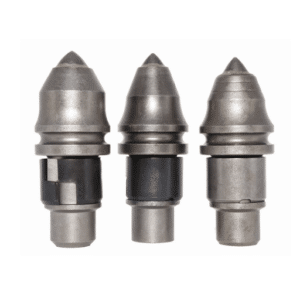
The augers with bullet-shaped carbide-tipped teeth are called bullet tooth augers and they penetrate through hard rocks and gravel very easily. The design of these augers eliminates wear and tear and gives them a longer life, even in the toughest conditions.
This particular auger type is used for drilling through extremely solid or densely-packed rock layers. It uses replaceable cutting heads and is designed for the highest efficiency in core extraction yielding clean and precise results.
Step Auger
The step augers are meant for the mixed terrain which has loose rocks and soil. Their imprinted design allows them to take little cuts at a time through rocky layers while keeping going at the same speed, thus lessening the load on the machine.
Multi-Purpose Auger
Multi-purpose augers that are versatile and adaptable are made for a combination of soil and rock conditions. They have a mixture of power and softness that allows them to be used in different excavation projects.
All these augers are made to withstand the strains of rocky ground and give steady performances that are not affected by the most challenging excavation tasks.
Choosing the Right Tools for Digging
Selecting the proper tools for digging is the key to not only the efficiency but also the successful completion of the project. Here are five tools that are most common for digging and excavation, with their characteristics and the areas of application they are most suitable for:
Shovel
Usage: Basic tool for cutting and loosening up soil, peat, and other materials, as well as moving them around.
Key Features: The different types include a pointed tip for difficult soil and a square tip for getting the best material up from the ground.
Material: Usually made from steel or aluminum to retain their properties for a long time.
Spade
Usage: Ideal for trenching, root cutting, and making it through hard-packed soil.
Key Features: Wide blade for easy cuts and sturdy handle for accuracy in the job.
Material: Mostly made of heat-treated steel for the best quality performance.
Post Hole Digger
Usage: Specifically made for creating narrow, deep holes for fence posts, signs, and landscaping projects, among others.
Key Features: Long arms and pointed blades for easy and fast digging.
Material: Made of reinforced steel blades for the toughest ground conditions.
Pickaxe
Usage: Good for loosening up soil, especially if it’s rocky or hard-packed.
Key Features: One side has a pointed heavy head and the other has a chisel or flat edge.
Material: Made of forged carbon steel for great durability and resistance to impact.
Garden Fork (Digging Fork)
Usage: Great for soil loosening, ground aeration, and compost turning.
Key Features: It has four strong tines that ensure effective penetration and soil manipulation.
Material: Made of stainless steel or heat-treated metal to last long.
The very nature of the tools implies that they have different specified functions. Thus, an assessment of the particular requirements of the excavation project will be of great help in choosing the right equipment in order to attain both maximum efficiency and effectiveness.
Tools for Removing Rocks and Roots
Going through terrains with rocks or roots can sometimes be tedious. But again, depending on the tools that you are coming with, the whole process can turn out to be easy and less time-consuming. Let’s get to know the five most popular and indispensable equipment that can assist you in getting rid of rocks and roots:
Pickaxe
Usage: It is the right tool for penetrating tough soil, getting rid of rocks, and cutting off hard roots.
Key Features: A two-ended head, one side comes with a sharply pointed tip for digging and the other flat for pushing and pulling.
Material: The head is made from durable forged steel, and either wood or fiberglass is used for the handle.
Mattock
Usage: It is most suitable for root cutting and ground breaking of less compact soils.
Key Features: A multi-purpose with a blade for cutting roots and a pick for breaking soil.
Material: The blade is made of high-carbon steel and the handles are designed ergonomically to ensure comfort and efficiency.
Root Saw
Usage: It is the best when it comes to cutting of roots that are thick, matted, and below the ground level.
Key Features: The blade is serrated, hence it is easy to slice the roots accurately.
Material: The blade is made of high-quality stainless steel that is resistant to rust and wear.
Rock Bar (or Digging Bar)
Usage: Suitable for pulling out big rocks, softening hard soil, and making deep holes.
Key Features: A heavy solid metal rod with either a wedge or chisel end for getting the force needed.
Material: It is made of super-steel with high tensile strength.
Landscape Rake
Usage: Very good for picking up small rocks and waste after the soil has been loosened.
Key Features: Long handle with wide and strong tines for efficient grinding and smoothing the ground.
Material: Aluminum or steel head with a lightweight, long-lasting handle that makes it easy to use.
These tools are prepared to cope with the specific difficulties that come up with rocky or root-filled projects, thus, you are guaranteed the flexibility and strength needed for a triumphant work.
Safety Precautions When Excavating

Excavation is a risky process that demands meticulous preparation and compliance with safety standards in order to alleviate risks. The following are the main precautions:
Check Utility Lines: Before digging, call up the utility providers in your area so they can identify the underground lines that include gas, water, or electricity so as to prevent accidents and interruptions of services from happening.
Wear Proper Safety Gear: You must be fitted with a hard hat, safety goggles, gloves, and steel-toe boots to get the ultimate protection against falling debris, sharp objects, and unstable ground.
Inspect the Site: Look at the whole site for weak ground, current erosion, or dangerous substances. Also, make the drainage system adequate to avoid the flooding problem, which may result in cave-ins.
Use the Right Tools and Equipment: Pick the right type of tools for the extent and nature of the soil that is going to be dug up. Inspect the equipment regularly to check for any damage and do repairs before the equipment is used.
Establish a Safe Perimeter: To protect the public and unauthorized personnel from coming too close to the excavation site, put up barricades and clear signage.
Monitor Weather Conditions: Never carry out excavation work when the weather is extremely bad, like storms or heavy rain, because of the risk of the ground becoming unstable.
You can greatly minimize the hazards by including these safety measures in your excavation plan, thus making the experience safer and smoother. Remember to always comply with the local laws and industry regulations for the best safety practices.
Protective Gear Recommendations
The use of proper protective gear is an important factor that guarantees the safety of the personnel involved in excavation projects. Here is a comprehensive list of the recommended protective equipment that will help in reducing the risks and creating a safe working environment:
Hard Hats: Hard hats offer protection to the workers against the falling of debris, tools, or any other objects which may cause injuries to the head. Make sure that they are ANSI-approved and also regularly inspected for any cracks or damage.
Safety Boots: Good quality steel-toed boots protect against heavy objects and injuries to the feet. The addition of waterproof and slip-resistant features is advisable to increase stability on uneven or wet surfaces.
High-Visibility Vests: These vests make a person more visible, especially when it is dark or there are a lot of vehicles moving around. Bright colors and reflective strips make it safer for the workers.
Protective Gloves: Different types of gloves, such as cut-resistant or waterproof ones, will keep the hands safe from sharp objects, chemicals, or extreme temperatures, which are likely to be experienced during excavation.
Dust Masks or Respirators: While dust masks filter out harmful particles, respirators provide further protection in situations where there are hazardous fumes or the oxygen level is low.
By providing the workers with these five essential items of protective gear, the chances of accidents and injuries can be significantly minimized, thus making the excavation process safer.
Safety Practices for Working with Heavy Equipment
Working with heavy machinery demands that the operators follow the safety measures to the letter, preventing and controlling accidents and also keeping the work site secured. Below are the leading safety measures:
Comprehensive Training: The employees will be provided a thorough training course on the particular piece of equipment that they will be operating. It is very important to know the controls, the operational limits, and the safety features in order to keep control and avoid mistakes.
Routine Equipment Inspections: Daily inspections should be conducted on the machines to spot any parts that have worn out, leaks, or other possible problems. Checking for mechanical faults guarantees that the machines are working properly during usage.
Clear Communication: Set up communication methods, like hand signals or radio systems, between the operators and the ground workers to improve coordination and minimize miscommunication at the site.
Safe Operation Zones: Keep areas for work that are designated where only the needed personnel are allowed to be. This restricts access to areas that may be dangerous and thus eliminates the possibility of accidental injuries.
Load Management: Do not exceed the load limit of the equipment since this can cause the machinery to become unstable, which can lead to tipping or failure to function. The manufacturer’s loading capacity regulations must always be followed.
Awareness of Surroundings: Operators must always be alert to their surroundings, including other workers, power lines, and uneven ground. The presence of blind spots can be a great risk during the operation.
These safety measures, when observed and the machines are in good condition, imply that the risks that come with heavy machinery are low. The latest figures from Google’s search engine indicate that workplace accidents involving heavy machines form a large part of injuries in construction sites all over the world. Nonetheless, the enforcement of safety standards can significantly lower the number of such accidents, thus safety of workers and the continuity of projects.
Understanding the Risks of Digging
It is well-known that digging operations, particularly in construction and excavation, present a variety of risks that can harm workers and delay projects. Therefore, it is very important to be aware of the hazards and take preventive measures. The five major risks linked to digging are:
Underground Utility Strikes
The inadvertent destruction of utility lines that are located underground, like gas, water, or electrical cables, creates enormous hazards that might include, among others, fires, and outages of power being supplied, and the flooding of areas. The annual statistics from safety organizations indicate that utility strikes are responsible for thousands of accidents that occur on construction sites every year.
Cave-ins or Collapses
Trenches and excavation sites are susceptible to cave-ins, which can then cause serious injuries or even death of the personnel working there. The Occupational Safety and Health Administration (OSHA) reports that cave-ins are among the primary reasons for employee deaths in excavation.
Exposure to Hazardous Substances
Digging may open a pathway for workers to come in contact with noxious materials or hazardous chemicals, such as asbestos or polluted soil, resulting in respiratory disorders or other chronic health conditions.
Falling Objects or Debris
Tools and materials that are not properly secured can fall into the excavation trench, causing injuries to the workers who are below. Good site management practice is the key to preventing such situations.
Unstable Surrounding Ground
Excavation activities, combined with heavy machinery and vibration, can lead to ground instability that might result in sudden shifts or even collapses. The implementation of correct techniques for soil analysis and provision of supports will help in avoiding such risks.
All the above-mentioned risks clearly illustrate the need for thorough planning, strict compliance with safety regulations, and continuous training of the workforce to create a secure environment for digging operations.
Conclusion and Key Takeaways
Excavation work is fraught with dangers, but careful planning and strict compliance with safety measures can drastically decrease the risks involved. Here are five major points that can help make excavation practices safer:
Comprehensive Risk Assessments
Thoroughly evaluate the site to find potential hazards like underground utilities, water intrusion, or unstable ground conditions. Risk assessment done right is the very first step to safety in operations.
Worker Training and Awareness
All personnel who engage in the operations must be properly trained on safety procedures and made aware of the particular risks that are associated with the site. Periodic drills and safety training help to entrench best practices.
Use of Proper Equipment and Tools
Utilize machines and tools that are suitable for the task at hand and service them regularly to avoid accidents that might result from malfunctions or deterioration.
Implementation of Support Systems
Put in place effective support systems like trench boxes, shoring or similar, so as to keep the excavation area safe by preventing falls and ensuring the area is strong enough for operations.
Adherence to Regulatory Standards
Comply with all the national and local safety laws and regulations to not only ensure that everyone on the site is safe but also to avoid fines or legal actions. Being aware of the standards is a risk-reducing factor and helps in establishing a stricter safety culture.
The implementation of these principles can translate into safer and more proficient excavation jobs, protecting both the site workers and the nature at the same time.
Summary of Effective Techniques
Rugged excavation techniques are a combination of safety measures, modern technology, and the application of industry standards to assure success and at the same time, risk mitigation. One of the examples is trench shields and hydraulic shoring systems which have improved the level of safety on the site, and as a result, the number of accidents related to soil collapses has decreased to a considerable extent. The latest safety studies indicate that the use of protective systems during excavation can lead to a reduction of up to 48% in worksite injuries.
Moreover, the use of advanced tools like GPS-guided excavation equipment has improved accuracy and speed of the work done. These technologies facilitate accurate mapping and digging, and thereby, the mistakes are minimized and the project completion time is estimated to be reduced by 20% at the most.
Besides technology utilization, regular site inspections and geotechnical studies are also very important factors. Studies show that doing routine soil stability assessments can eliminate almost 70% of the occurrences of unexpected collapses. When combined with observance of OSHA or local regulations, such actions guarantee legal compliancy and encourage a safety culture.
Thus, excavations that incorporate these proven methods along with the use of the latest tools and continuous safety assessments will not only be more productive but also more safe and environmentally friendly.
Final Tips for Successful Excavation
Successful excavation requires the combination of traditional best practices and modern data-driven insights. Google search data reveals that one of the most common questions is how to improve excavation performance and at the same time reduce risks. The solution to this is to use cutting-edge technology, namely, GPS-controlled devices and monitoring systems that work in real-time. With the use of these tools, digging is very accurate, lessening the chance of mistakes and, therefore, reducing the time the project takes to finish. Besides that, being familiar with the standards of the industry, as well as providing safety training to workers regularly, assists in creating a safe work environment. If one embeds smart technology, training, and compliance with regulations in excavation works, one can expect nothing short of the best results.
Encouragement for Future Projects
The future projects one undertakes provide a thrilling chance to bring in, develop, and use state-of-the-art solutions. Thus, to inspire trust and bring about success, we present five major points supported by data and tactics that can lead to effective results:
Invest in Modern Technology
Research indicates that utilizing advanced technologies such as AI-driven data analysis and 3D visualization can yield accuracy gains of 40% at the most, thus preventing costly mistakes and making the project more efficient.
Go for Eco-friendly Practices
The carbon footprint of the project can be cut by 30% by practising eco-friendly techniques such as using renewable materials and energy-efficient machinery, which, in turn, will shape the coming world of sustainability.
Invest in People’s Skills
According to workforce studies data, regular training on new technologies and safety protocols makes teams 25% more productive, and fewer incidents happen on-site.
Strengthen Planning and Risk Management
Sound project planning with the help of predictive modeling makes risk management more effective,e leading to up to 20% less unexpected delays and overruns of budgets.
Effectively partner and communicate
The use of real-time collaboration tools has resulted in team alignment and efficiency being increased by as much as 35% hence the communication is clearer and the decision-making process faster.
By adopting these strategies, future projects can not only deliver but also be associated with the areas of innovation, sustainability, and operational excellence.
References
- Host Rocks for Radioactive-Waste Disposal
This article discusses the excavation of high-strength rocks and their applications in waste disposal.
Link to source - Waste Disposal in Rock
This book provides insights into the excavation and characterization of solid rock for various engineering purposes.
Link to source - GROW: A Digital Library for Geotechnical, Rock, and Water Aspects of Civil Engineering
This resource focuses on geotechnical and rock engineering aspects, offering valuable academic insights.
Link to source
Frequently Asked Questions (FAQ)
What are the right tools for digging through solid rock?
When attempting to dig through solid rock, having the right tools is essential. Common tools include a jackhammer, auger, pickaxe, and digging bar. Heavy-duty tools like a skid steer can also be beneficial for larger projects. If you encounter particularly tough ground, consider using hydraulic equipment for increased efficiency.
How can I dig post holes in rocky soil?
To dig post holes in rocky soil, start by using a shovel to break the surface. Then, a post hole digger or an auger can be effective. If you hit solid rock, a digging bar or pickaxe can help loosen the material. Always dig a test hole first to assess the soil conditions.
What methods can I use to excavate dense rock?
Excavating dense rock can be challenging. Using a combination of tools, such as a hydraulic breaker and a pick mattock, can help. For larger boulders, a combination of a jackhammer and spud bar may be necessary to break up the rock effectively. Always ensure safety measures are in place when working with heavy equipment.
How does soil and rock type affect digging?
The type of rock and the surrounding soil conditions significantly affect your digging strategy. For example, limestone may require different tools compared to hard clay or solid granite. Understanding the composition of the soil and rock can help you select the right equipment and techniques for efficient digging.
What is the best way to remove rocks when digging?
When removing rocks while digging, it’s important to loosen the surrounding soil first. Tools like a digging bar or a pry bar can help break up the soil around the rocks. Once loosened, you can use a shovel to lift them out. For larger rocks, a skid steer equipped with a bucket may be necessary.
Can I use a drill to dig through solid rock?
Yes, using a drill can be an effective method to dig through solid rock. Specialized rock drills or augers are designed for this purpose. When using a drill, ensure it is powerful enough to handle hard layers of rock. Make sure to use it in combination with other tools for the best results.
What should I consider when digging in rocky terrain?
When digging in rocky terrain, consider the soil conditions and the type of rocks present. It’s important to assess whether the rocks are loose or tightly packed. Plan your approach by selecting the right tools, like a cutter mattock for tough areas, and ensure you have a strategy for removing any boulders or dense rock layers you might encounter.
How deep should I dig for post holes in rocky ground?
The depth of post holes in rocky ground typically depends on the type of project. Generally, holes should be at least 24 inches deep for stability, but you may need to dig deeper if you encounter solid rock layers. Always check local building codes for specific requirements related to post hole depth.