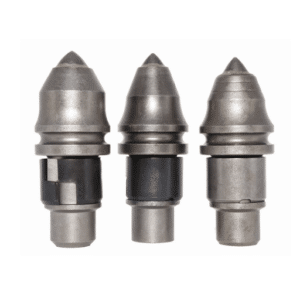
Drilling equipment buzzes away with the main purpose of making holes through any material, like the soil, rock, or concrete, for construction, exploration, or resource extraction. It usually consists of a power source-supported drilling rig or operation, the bits used to hack through a given material, and the drill pipe or shaft consisting of the actual force. Actually, one would select equipment depending on the material being drilled, the depth sought, and the purpose of such drilling. Proper maintenance of the equipment and operation by the user are necessary to maintain efficiency and safety.
Types of Drilling Tools

Drilling tools have been built, rebuilt, and revived through time in response to industrial, scientific, and construction needs. Today, tools are designed to operate with the highest precision and efficacy, using modern technology to meet contemporary demands. Some of the most common types are:
Auger Drilling Machines
These are very shallow drills used for drilling in soft materials like soil or wood. Special utility is found in agriculture, archeology, or smaller projects.
Rotary Drilling Machines
Versatile tools used in mining and construction; they drill through hard rocks and minerals with a cutting mechanism that rotates.
Percussion Drilling Tools
These instruments deal with a hammer-like force upon the drilling surface, best breaking through dense formations of rocks during any form of exploratory or infrastructural pursuits.
Core Drilling Machines
Core drills help core cylindrical samples from the ground, with their samples usually being used for geological surveys, testing in construction, or in diamond mining.
Horizontal Directional Drills (HDD)
In trenchless technology, HDD apparatus is used sometimes to drill under obstacles such as roads or rivers in installing utilities, with very little disruption to the surface above.
Every tool type has an ideal application, so excellently researching and choosing the right product for a project will ensure efficiency and safety; operational parameters such as kind of material, scale of work, and environmental conditions are all crucial in determining the most efficient drilling method for any given job.
Key Features of Quality Drilling Equipment
Precision and Efficiency
Quality drilling equipment aims at accomplishing the task accurately and efficiently, minimizing errors, and lessening the duration involved in project execution. The equipment, equipped with automated controls and digital monitoring, guarantees precision.
Durability and Reliability
Drilling equipment is made of high-quality materials and constructed robustly to withstand tough working conditions. Reliability implies that the equipment consistently performs over time, thus decreasing downtime and maintenance costs.
Versatility
Often, modern drilling tools find use in different applications-from working with varied materials, such as soil, rock, or concrete, to execution in several environments. Versatile equipment translates to cost-saving opportunities as it eliminates the purchase of specialized machineries.
Safety Mechanisms
Advanced safety features that come into play during emergencies include emergency stop options, vibration control, and protective enclosures. They put operators’ welfare as priority and arrest hazards that may emanate from job sites.
Environmental Responsibility
With rising awareness of environmental issues, there has been a lot of emphasis on eco-design. Drilling machines with the least emission levels, power consumption, and environmental impact are thus becoming the industry standards.
Integration of Smart Technology
Now that it is a smart world, the modern drilling equipment uses data analytics, real-time diagnostics, and Internet of Things (IoT)-enabled compatibility. This integration allows enhanced performance tracking and predictive maintenance to go forth towards superior productivity.
Importance of Reliable Drilling Supplies
All prosperous ventures are accompanied by reliable drilling supplies ensurance that will increase productivity and safety with consistent results. I rely on quality equipment to minimize downtime and costs associated with operations, while achieving accuracy towards results. Quality supplies give me confidence that the tools I am working with will endure the rigors of tough working environments.
Who will be the world’s top six drilling equipment suppliers in 2025?
1. Changsha Mingyi Machinery Equipment Co.

- Founded: (Details not available; placeholder for user-specified inclusion)
- Introduction: A leading manufacturer specializing in innovative and high-quality drilling equipment.
- Main Products: Drilling rigs, core drilling machines, and related accessories.
- Advantages: Strong focus on innovation and customer satisfaction.
- Disadvantages: Limited global reach compared to larger competitors.
- Website: https://drillingbucket.com
2. Schlumberger Limited (SLB)

- Founded: 1926
- Introduction: A global leader in oilfield technology and services, known for pioneering innovations in drilling and reservoir management.
- Main Products: Drilling tools, reservoir evaluation systems, and production optimization solutions.
- Advantages: Extensive global presence and cutting-edge technology.
- Disadvantages: High costs for advanced solutions.
- Website: Schlumberger
3. Halliburton

- Founded: 1919
- Introduction: A major player in the oilfield services industry, offering a wide range of drilling and production solutions.
- Main Products: Drilling services, completion tools, and reservoir evaluation technologies.
- Advantages: Comprehensive solutions and strong global presence.
- Disadvantages: Environmental concerns associated with oilfield operations.
- Website: Halliburton
4. Baker Hughes

- Founded: 1907
- Introduction: A global energy technology company providing innovative solutions for drilling and energy transition.
- Main Products: Drilling services, digital technologies, and subsea equipment.
- Advantages: Focus on sustainability and digital transformation.
- Disadvantages: High costs for advanced technologies.
- Website: Baker Hughes
5. National Oilwell Varco (NOV Inc.)

- Founded: 1862
- Introduction: A global leader in oilfield equipment, offering a comprehensive range of drilling and production solutions.
- Main Products: Drilling rigs, subsea equipment, and digital solutions.
- Advantages: Integrated lifecycle solutions and strong commitment to safety.
- Disadvantages: High investment costs for advanced systems.
- Website: NOV Inc.
6. Weatherford International

- Founded: 1941
- Introduction: A global oilfield service company specializing in drilling, evaluation, and production systems.
- Main Products: Drilling services, completion equipment, and intervention solutions.
- Advantages: Comprehensive service capabilities and innovative technologies.
- Disadvantages: Recent financial restructuring may impact operations.
- Website: Weatherford
Advancements in Drilling Technology

The drilling technology field has undergone significant evolution over the past few years coming into the limelight for innovation, sustainability, and efficiency. Automation is one of the main players in this evolution, with autonomous drilling systems minimizing human error while maximizing precision. Real-time data analytics is then used to monitor operations instantaneously and allow operators to make adjustments to maintain optimal performance and safety. Laser-guided drilling and advanced rotary steerable systems come in handy with more control over accuracy and less environmental impact when dealing with complex geological conditions.
Latest Innovations in Drilling Equipment
One of the most transformative changes in drilling has begun with employing artificial intelligence and machine learning algorithms. These mechanisms sift through enormous geological and operational data in real time and furnish actionable insights that allow for better drilling speed optimization, cost reduction, and enhanced safety. Now, predictive maintenance, another technological innovation, ensures equipment management in such a way that operational staff faces downtime for as little as possible as they can act to fix failures even before they actually happen.
Environmentally friendly drilling mud systems are another such innovation that reduces the impact on the environment while ensuring appropriate lubrication and stability within the wellbore. Additionally, hybrid-powered rigs combining conventional fuel sources with renewable energy solutions are picking up pace in reducing greenhouse gas emissions. Altogether, these innovations showcase how state-of-the-art technology is paving the way for an efficient and sustainable future for the drilling industry.
Impact of Technology on Drilling Efficiency
With the advancement of technology, the drilling industry saw enhancements in efficiency and productivity, enabling operators to achieve their goals faster and more precisely. This marks a notable development of data analytics and machine learning algorithms that process vast amounts of real-time operational drilling data to identify problems at an early stage, optimize performance, and improve decision-making. Automation is also instrumental in this regard; it reduces manual intervention, thereby enhancing accuracy and reducing operational costs. Furthermore, the more advanced and high-end drilling equipment, such as rotary steerable systems and premium drill bits, permits the highest precision and durability with less downtime and waste. In general, these innovations portray the ever-continual transformation that technology brings upon drilling efficiency, which manifests in the form of faster, safer, and more cost-effective operations across the entire industry.
Future Trends in Drilling Equipment Supply
The future of drilling equipment supply will largely depend on globalization and industrial innovations concerning automation, sustainability, and digital integration. The demand for automated drilling rigs and equipment will be on a rise for their ability to optimize operational efficiency while minimizing human intervention, given that they rely on AI and machine learning. As environmental concerns gain more attention from the public, a drive has started for suppliers to become conscious of their technologies in the hope for an environmentally sound future. They seek rigorous application of electric or hybrid drilling rigs as well as technologies that curb emissions and resource consumption. Incorporating IoT devices and comprehensive data analytics ensures equipment reliability and longevity through real-time monitoring and predictive maintenance.
Emerging trends from recent data show that more attention is being given to safety and adaptability. Furthermore, smart sensors would take precedence, as they detect wear and alert operators before mechanical failure occurs. The modularity of such equipment s further ensures it is customizable into various drilling environments, ranging from offshore areas to remote onshore locations. Together, technology excellence and service sustainability will eventually harbor the trajectory in the years ahead for the suppliers of drilling equipment.