Continuous Flight Auger (CFA) piles make for one of the latest deep foundation offerings. Being efficient, versatile, and environmentally friendly, they have stood as a major blessing to construction in tricky soil conditions. The question remains: What makes these works effective, and how does the design of the auger flight affect their workings? This article discusses the key parts of CFA technology, shedding light on the mechanics of the auger flight alongside the advantages it brings to foundation engineering unlike any other. Whether being a contractor, an engineer, or merely an interested learner in advanced construction techniques, the reader will obtain enough knowledge about the heart of the CFA piling systems. Let’s begin our journey into unearthing the breakthroughs that have made this technique a landmark choice in construction.
Introduction to Continuous Flight Augers

The Continuous Flight Augers (CFAs) are a very productive means in foundation engineering for the drilling of deep load-bearing piles. Thus by allowing the continuous auger to drill, the soil is removed and a space for the pile is created. Once the necessary depth is achieved, concrete is pumped through the hollow shaft of the auger to fill the space as the auger is pulled back. Temporary casing is thereby eliminated with no large soil movements. This piling system thus offers the advantages of speed, low noise, and complete environmental friendliness over all traditional piling methods.
What is a Continuous Flight Auger?
The capacity to carry a great load is important for Continuous Flight Auger piles, which vary due to certain factors such as diameter and depth. The normal range of diameter for typical CFA piles lies between 12 inches (300 mm) and 48 inches (1200 mm), reaching depths well beyond 100 feet (30 meters), contingent upon the requirements of the respective project. These dimensions serve an array of construction needs, providing efficient support for both axial and lateral loads.
Designing time becomes another aspect in favor of the installation process. Drilling equipment featuring embedded automated monitoring systems let operators observe drilling depth, torque, and concrete flow rates with crisp real-time data. It makes the process more error-proof and enhances safety and the construction’s overall performance.
History and Development of Flight Auger Drilling
The continuous flight auger method has undergone improvements since its inception and is today considered essential in a number of contemporary civil engineering projects. It most likely originated in the mid-20th century, when equally efficient and precise foundation solutions were needed. The earliest methods used a fairly simple machine, or sometimes just a manual turning of the auger. These proved to be adequate in early structural works but did not offer the rapidity and precision required later in monstrous projects.
With the passage of time, machinery and technology became more and more advanced and transformed the whole process. By the 1980s, the introduction of hydraulic rigs combined with computer-driven monitoring for greater productivity and depth accuracy transformed the continuous flight auger drilling into a process for highly accurate construction of deep shaft installations with minimal disturbances to the soils around-as is highly preferable in any urbanistic or sensitive environment.
Now, the process is of higher efficiency and safety levels due to the use of modern equipment. The modern rig is equipped with sensors and GPS systems that allow real-time monitoring of torque, drilling pressure, and flow rates of materials injected inside, making them very precise with respect to engineering standards, thus minimizing human error as much as possible.
Several reports and statistics highlight the rapid increase in the adoption of CFA drilling on a global scale. In Europe, for instance, the CFA method is extensively used in projects where swift execution is required without any compromise on the bearing capacity. It is estimated that by the end of this decade, the global foundation drilling market, including flight auger drilling technologies, would have grown to a substantial extent, thanks to rapid urbanization and infrastructure needs.
Flight auger drilling, from its inception to its current state, can truly be described as the evolution of the industry geared toward innovation, efficiency, and sustainability. It is evident that these modern methods are prepared to take on the more complex engineering challenges of today and, in doing so, create the foundation for the more advanced techniques of tomorrow.
Key Components of a CFA System
Continuous Flight Auger (CFA) systems are comprised of several critical components that work cohesively to ensure efficient and precise drilling operations. Below are the primary components and their roles:
- Drilling Rig
At the heart of the CFA system is the drilling rig, which provides the necessary power and stability for operation. Modern rigs are highly adaptable, featuring advanced control systems that allow for precise depth measurement and automated monitoring. Depending on the project requirements, rigs vary in size and capacity, with some offering torque levels exceeding 400 kNm for large-scale infrastructure work.
The auger is the central component responsible for removing soil during drilling. It consists of continuous spiraled flights, which transport excavated material to the surface. Standard auger diameters range from 300 mm to 1,200 mm, catering to a variety of foundation needs. The hollow stem of the auger also facilitates the injection of concrete or grout during the drilling process.
- Concrete Delivery System
Integrated seamlessly with the auger, the concrete delivery system ensures the efficient placement of concrete or grout directly into the drilled hole. This system uses high-pressure pumps to maintain a continuous flow, minimizing delays and ensuring structural integrity. Advances in sensor technology now allow for real-time monitoring of concrete flow rates, improving quality control.
- Monitoring and Control Technology
Modern CFA systems are equipped with sophisticated digital monitoring tools to ensure accuracy and enhance performance. These tools include real-time data logging, load sensors, and GPS tracking, enabling operators to analyze parameters such as drilling depth, torque, and concrete volume. Such capabilities optimize productivity and ensure compliance with engineering specifications.
- Tooling and Attachments
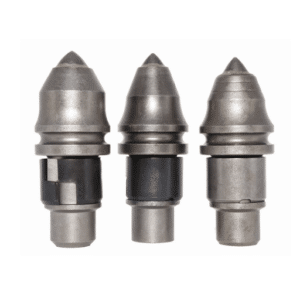
Specialized tooling options and additional attachments, such as soil picks and cutting heads, increase the versatility of CFA systems. These enhancements are tailored to different soil conditions, allowing the system to penetrate dense clays, loose sands, or even rocky substrata efficiently.
- Casing System (Optional)
For challenging geotechnical conditions, an outer casing can be employed to provide additional structural support during drilling. This is particularly useful in loose or unstable soils where maintaining hole stability is critical.
With advancements in automation, material sciences, and data integration, CFA systems continue to push the limits of traditional foundation drilling, delivering faster and more environmentally sustainable solutions for modern construction projects.
Advantages of Continuous Flight Auger Drilling

- Efficiency: CFA drilling provides fast and cheap methods, so the whole project timeline can be greatly reduced.
- Minimal Disturbance: The process is very quiet with little vibration and noise, well suited to constructions in sensitive areas and urban settings.
- Versatility: It handles a range of soil types-from very loose sands to more cohesive ones.
- Environmental Benefits: With reduced spoil generation and the usage of sustainable practices, CFA drilling promotes eco-friendly construction.
- Enhanced Stability: Borehole support kept constantly intact during drilling will reduce the chance of borehole collapse in unstable soils.
Efficiency in Soil Removal
The continuous flight auger design allows for simultaneous drilling and soil extraction, affording the CFA drilling method unprecedented efficiency in soil removal. This process fast-tracks material removal and cuts down waiting times since the excavation is never a separate activity.
Created to remove soil consistently without the risk of clogging, the machinery performs admirably in difficult materials, such as clay or saturated soils. Modern monitoring systems also enable operators to view depths, torques, and pressures while drilling in real time to ensure optimal operation and minimal waste. The benefits from these technological improvements can be income-saving, timely, and efficient in a gamut of applications, from foundation installations to ground improvement projects.
Reduced Vibration and Noise
Vibration and noise generation have reduced greatly with the conversion to clean drilling technologies, thus making periods more sustainable and less disruptive to surrounding villages. Enhancing the design of the drilling apparatus involved improving the hydraulics and precision of the engineering that make the operations smoother and generate less vibration amplitude. Studies, for instance, have shown that the vibration pollution can be reduced by 40% through the usage of an improved drill head and a damping feature, which is very much needed in areas near sensitive structures or in urban zones.
Noise pollution is another major concern being addressed with the latest tools. Higher-grade muffling systems and quieter engines have come in to lessen operational noise by at least 30% over the older models, fostering more comfortable and safer conditions for the workers and the nearby community. Their efforts in meeting stringent regulatory noise limits have also garnered goodwill from stakeholders, effectively ensuring that project execution goes on smoothly while being accepted by the community at large.
Cost-Effectiveness in Construction
The construction industry is increasingly focusing on cost-effective strategies. Newer innovations are being taken advantage of so that budgetary challenges may be addressed without compromising unnecessarily on quality. The implementation of modular construction techniques is one such innovation that can shorten project timeframes by almost 50%, while reducing project costs by nearly 20%. These methods prefabricate building components off-site and then assemble them on-site, minimizing labor costs and wastage of materials.
In addition, the use of Building Information Modeling has changed the landscape of cost control. BIM decreases the likelihood of unexpected costs and design errors largely by allowing for exquisite project planning and updates to be made in real-time. Recent studies show projects that used BIM save about 13% in costs by virtue of improved coordination and increased project team efficiency.
The other side includes advanced materials bearing ways such as self-healing concrete and lightweight composite materials to increase the durability of the structure and reduce long-term maintenance costs. Solar integration solutions for infrastructure projects offer huge savings on power bills while still maintaining green-needs.
These opportunities, alongside ever-increasing attention on ∼adequate utilization of resources and forecast technologies like AI, lead the construction sector into an entirely different phase of economy and innovation.
Common Uses of Continuous Flight Augers

Continuous Flight Augers (CFAs) are common in construction projects involving deep foundations. They are suited for reinforced concrete piles, especially where soft or loose soil affects drilling stability. CFA geology is commonly used in foundation construction, walls, bridges, and highways. Since they induce the least possible disturbance to the soil, they find widespread applications in urban constructions and projects in the vicinity of existing structures.
Applications in Pile Foundations
Continuous Flight Auger (CFA) construction technology nowadays has become an essential method in pile foundation construction, where accuracy and efficiency are paramount. Depending on soil conditions and project requirements, CFA piles generally have a diameter of about 12 to 48 inches (300 to 1200 mm) and a depth of up to 100 ft. These piles prove to be best suited for installations in urban areas or sites of loose or unstable soils, providing tight support while controlling noise and vibration through the installation process.
Quintessential data helps highlight an increased use of CFA piles in infrastructure developments. Since these keep stability even in the presence of complex geotechnical conditions, high load structures such as bridge abutments and high-rise buildings stand to benefit. Retaining wall projects see a lot more gains from CFA since it inhibits lateral movement of soil during drilling, which may share a stake in destabilizing surrounding structures. Also, high-strength grout or concrete, usually having compressive strength above 4,000 psi (28 MPa), can be poured through CFA technology ensuring a very durable foundation.
With the evolution of monitoring and automation systems, CFA technology is undergoing change. Real-time power, torque, pressure, and spoil removal monitoring during drilling lead to enhanced accuracy and consistency of results among various geological conditions. This way, CFA piling has been trusted in critical applications such as highways, railways, and seismic areas where safety and performance matter most.
Use in Environmental Drilling
CFA or Continuous Flight Auger piling forces its way into environmental drilling as the method of choice where precision and ensuring that the sensitive environment around a site is not disturbed are critical considerations. In other words, it is designed to bore holes and prepare foundations with the least possible noise and vibration that might hurt wildlife and other sensitive environments. Such features lying in the domains of urban projects, wetlands, or sites near critical biodiversity zones make it a preferred choice.
Recent studies highlight the role CFA piling plays in examining and restoring contaminated areas. For example, drilling deep foundations while installing monitoring wells can examine groundwater and recover it safely, thus minimizing the risk of contamination during construction. Moreover, bentonite or other environmentally friendly grouts are typically used in CFA installations, further minimizing the potential for chemical poisoning.
With technology advancing, the emission monitoring and use of low-carbon machinery have also improved. According to a report published by the industry in 2022, project times achieved by automated CFA systems have been cut down by 30% on average, which in turn substantially lessens energy consumption of the equipment and carbon footprints from operations. With sustainable advancement in view, these achievements set a standard for reinforcing the CFA methods as environmentally conscious and yet highly efficient on several environmental fronts.
Utility Installation Projects
Utility installation projects have evolved with modern infrastructure, changing environmental responsibilities included. Incorporating current technologies in the development of utility infrastructure, e.g., trenchless technologies and directional drilling, made the projects more efficient and sustainable. For example, trenchless technology helps reduce surface disruption and excavation needs, which greatly reduces construction costs and environmental impacts.
In utility installation, the evolution into smart sensors and real-time data analytics has allowed for optimal use and limited wastage of resources. Such technology keeps projects on time and finishes them within environmental and safety standards. Hence, innovations now highlight the involvement of the cutting-edge technology with eco-consciousness in utility infrastructure development, allowing for paving the way toward a better environment.
Flight Auger Drilling Techniques

Flight auger drilling is one of the preferred techniques for efficient penetration into soil and lift of material. The drilling action conducted with a continuously spiraled blade (auger) brings displaced material to the surface simultaneously. It is especially useful in preparing uniform boreholes for foundation piles and geotechnical investigations. Flight augers, due to their multitude of uses, serve well in most soil conditions, including clay, sand, and loose gravel. Besides, controlled operations enable minimal disturbance at the site and faster turnarounds: the two factors give precision and reliability to any modern drilling job.
Overview of the Flight Auger Drilling Process
Flight auger drilling is a precise and very adaptable technique of soil penetration that demands structure and efficiency. The flight augers are rotated into the surface by means of a high-torque drill rig. Normally, the auger flights carry soil upwards as they rotate so that no other excavation tools are required at the site. This reduces the clutter at the site while also maintaining the integrity of the borehole.
Another big advantage of the flight auger method is the speed. Modern rigs, coupled with sophisticated hydraulic systems, have drilled at speeds varying between 20 and 40 meters per hour depending upon soil conditions. This kind of efficiency is critical when dealing with massive projects that need hundreds or even thousands of piles, such as in the case of bridge supports or high-rise foundations. The diameters of flight augers vary from 150 mm to 600 mm so that they can accommodate various structural loads.
Steel cages or precast piles may be installed in the drilled borehole, depending on the job requirements, or concrete is pumped through the hollow stem of the auger, cause of making them a continuous flight auger or CFA piles. This also prevents collapsed boreholes in loose soils and forms an integrated pile. Advanced sensor techniques monitor a vast array of vital parameters during drilling, including the torque, drilling depth, and material volume, thus ensuring that the highest levels of consistency and quality are organized for and that safety rules are complied with.
Flight auger drilling was also attaining precision by integrating newer technologies into its evolving methodologies even under difficult soil conditions. Its wide range of applications covers both urban and relatively inaccessible areas and is preferred by geotechnical engineers and construction professionals for reliable, fast-track solutions.
Comparison with Traditional Drilling Methods
CFA drilling is faster, quieter, and more efficient than traditional methods, while traditional methods like Kelly drilling offer greater depth and versatility.
|
Parameter |
CFA Drilling |
Traditional Methods |
|---|---|---|
|
Speed |
Faster |
Slower |
|
Noise |
Low |
High |
|
Vibration |
Minimal |
Significant |
|
Soil Impact |
Minimal disturbance |
Variable |
|
Depth |
Moderate (up to 50m) |
Greater (up to 125m) |
|
Efficiency |
High (single process) |
Lower (multi-step) |
|
Suitability |
Urban areas, varied soils |
Deep foundations, rocky soils |
Innovative Techniques in CFA Operations
Technological and engineering means have recently brought unprecedented advancements in Continuous Flight Auger (CFA) drilling. The integration of real-time monitoring systems is among the most highlighted advances. These systems rely on the use of several sophisticated sensors to monitor the drilling parameters-tonque, penetration speed, and concrete flow rates. Right there, and then, this parametric information is analyzed, allowing the operator to fine-tune the process to maximize efficiency and reduce errors during drilling.
Further innovative systems introduced are environmentally friendly grouting methods. These methods minimize waste and carbon emissions by applying high-performance mixtures suited for specific soil conditions. Auger rig designs also saw changes that bring about less environmental footprint but more productivity; these include automated calibrations and better energy efficiencies.
The hybrid CFA technologies have been gaining interest and combine CFA with elements of other drilling methods to provide solutions to very complex geotechnical problems. For example, the addition of jet grouting to the CFA might improve soil stabilization in projects with high requirements for structural integrity. According to recent studies, these hybrid processes could potentially enhance load-bearing capacities by as much as 25%, thereby marking them as indispensable to highly demanding infrastructure projects.
Digital modeling and predictive analysis tools have revolutionized the CFA operation planning phase. By means of detailed 3D subsurface models endowed by geotechnical surveys, engineers can weed out potential problems well before the onset of the drilling stage, thus saving significant downtime and avoidable costs. These tools provide for a fluid alliance between design and operational counterparts who will share a single, consistent instrument for execution up to project completion.
These innovations improve safety and performance in CFA drilling while stressing it as flexible and sustainable enough to meet the demands of modern construction projects.
Equipment and Rig Types for Continuous Flight Auger Drilling

Continuous Flight Auger (CFA) drilling requires a special set of equipment capable of functioning with precision and efficiency. A complete description for each part is given below:
- CFA Rigs – These include rotary drives of great horsepower and are equipped with the latest monitoring systems to drill accurately and perform evenly in all soil conditions.
- Auger Flights – The continuous flight auger is the main tool used for drilling. It consists of a hollow shaft with helical blades designed to carry excavated material to the surface while keeping the borehole intact at the same time.
- Concrete Pumps – Integrated pumping systems enable concrete to be pumped directly through the interior of the hollow shaft of the auger so that the rotating drilling tool releases it into the borehole as the concrete is being withdrawn.
- Automation and Control Systems – Modern CFA rigs tend to have automated data monitoring and control systems that contribute to accuracy and less human errors in operation.
These key components satisfactorily contribute to the introduction and optimization of the CFA drilling process in terms of reliability, safety, and adaptability for various construction needs.
Types of Drill Rigs for CFA
Types of drill rigs for CFA include rotary rigs, cable crowd rigs, cylinder crowd rigs, and specialized rigs for displacement piles and cased CFA.
|
Parameter |
Rotary Rigs |
Cable Crowd Rigs |
Cylinder Crowd Rigs |
Displacement Pile Rigs |
Cased CFA Rigs |
|---|---|---|---|---|---|
|
Drilling Method |
Rotary drill bit |
Top drive CFA |
Bottom drive CFA |
Soil densification |
Secant wall construction |
|
Soil Removal |
Mechanical or fluid |
Auger flights |
Auger flights |
No soil removal |
Auger with casing |
|
Depth Capability |
High |
Moderate |
Moderate |
Moderate |
Moderate |
|
Applications |
Deep foundations |
CFA piles |
CFA piles |
Soil improvement |
Secant walls |
|
Advantages |
Versatile, deep reach |
Precise control |
High torque |
Increased skin friction |
High productivity |
Custom Augers: Design and Application
Customized augers provide a very important function in maintaining the efficiency and accuracy of CFA drilling operations. They are designed to meet different soil compositions so that excavation can be properly carried out. The design of augers could consider diameter, pitch, flight thickness, and material durability, each depending on the needs presented by the project and condition of the subsurface environment.
Augers are usually fabricated from high-strength steel in order to resist stresses during drilling in hard soil or even rock formations. Some designs also allow for replaceable wear parts, including carbide teeth and cutting edges, with the obvious objective being to prolong operational life and reduce maintenance costs. For instance, custom augers with tungsten carbide-tipped bits perform excellently when penetrating difficult soil layers such as dense clay or compacted gravel, providing both durability and increased drilling efficacy.
Recent developments in proposal treatment of auger construction using specialized coatings and hard-facing methods provide yet another way of improving resistance to wear, especially in abrasive environments. In addition, newer innovations, like variable-pitch flighting, operate to ease soil removals and avoid overloading, thus ensuring uniform drilling rates. In deep foundation works, generally, the undertakings are done by quite larger diameter augers from around 40 inches up to 120 inches in diameter that can carry a large load-generating requirement for high-rise and infrastructure construction.
Maintenance of Flight Auger Drilling Equipment
Flight auger drilling equipment maintenance must be conducted on a regular basis to ensure that it performs well on the job and lasts long. I prefer to inspect the augers for wear and tear as I use them, paying attention to cutting edges or flighting surfaces. Cleaning any soil or debris immediately after use will prevent clogging, which in turn affects performance. I also check for adequate lubrication levels in all moving parts as well as the hydraulic system to forestall any possible failure. By being proactive with these maintenance steps, I retain the equipment in good order and limit time lost to breakdown.
Reference Sources
-
Just-in-time Continuous Flight Auger Piles Using an Instrumented Auger
PDF on Academia.edu
Discusses the construction process and instrumentation of CFA piles. -
Axial Performance of Continuous Flight Auger Piles for Bearing
University of Texas Library
Explores the axial performance and load-bearing capacity of CFA piles. -
Design of Ground Improvement Using Continuous Flight Auger Columns for Railway Embankment
PDF on Academia.edu
Covers the use of CFA columns in ground improvement for railway embankments.
Frequently Asked Questions (FAQs)
What is a continuous flight auger and how does it work?
A continuous flight auger (CFA) is a specialized drilling tool used for creating deep foundations and bored piles. It operates by rotating a helical flighting to bore into the ground while simultaneously transporting the excavated material to the surface. The auger is designed to maintain a continuous operation, allowing for efficient drilling without the need for casing, which is beneficial for various soil conditions.
What are the advantages of using a flight auger drilling rig?
Flight auger drilling rigs offer several advantages, including enhanced versatility for different soil types, reduced vibration during operation, and the ability to create cast-in-place concrete structures. They also provide a low noise level compared to traditional drilling methods, making them suitable for urban environments where noise regulations are strict. Additionally, these rigs can achieve high penetration rates, ensuring quick completion of drilling tasks.
What are the common uses of continuous flight auger drilling?
Continuous flight auger drilling is commonly used for constructing bored piles, underpinning existing structures, and creating foundations for buildings and bridges. It is particularly effective for projects requiring high load-settlement performance and for installing deep foundations in challenging soil conditions. The method is also utilized for installing anchors and other reinforcement systems in civil engineering projects.
How does the design or specification of a flight auger drilling rig affect its performance?
The design and specification of a flight auger drilling rig significantly influence its performance, including the auger’s diameter, length, and flighting configuration. Custom augers can be designed to suit specific project requirements, optimizing penetration rates and extraction rates. Furthermore, the choice of materials and construction techniques can enhance the longevity and durability of the rig, impacting overall project efficiency.
What is the role of non-destructive testing methods in continuous flight auger projects?
Non-destructive testing methods are essential for evaluating the integrity of piles created using continuous flight auger drilling. Techniques such as pile integrity testing can assess the quality of the bored piles and the freshly placed concrete. These methods help identify potential issues like over-break or voids, ensuring that the foundations meet safety and performance standards.
What is the penetration rate of a continuous flight auger?
The penetration rate of a continuous flight auger can vary based on factors such as soil type, auger size, and drilling technique. Generally, CFA methods can achieve high penetration rates in cohesive and granular soils, making them ideal for rapid drilling operations. Understanding the expected penetration rate helps in planning and scheduling projects effectively.
How does continuous flight auger drilling minimize vibration compared to traditional methods?
Continuous flight auger drilling minimizes vibration by using a rotational drilling technique that eliminates the need for percussive actions common in traditional drilling methods. This feature is particularly advantageous in urban areas where vibration-sensitive structures are present. The reduced vibration also contributes to lower noise levels, enhancing the overall working environment during construction.
What factors influence the load-settlement performance of bored piles?
The load-settlement performance of bored piles is influenced by various factors, including soil type, pile diameter, and the quality of the concrete used during the auger cast process. Proper auger rotation and penetration depth also play critical roles in ensuring that the piles achieve their designed load-bearing capacity. An accurate assessment during the design phase can help optimize these factors for better performance in the field.