Two forming methods most often compete when it comes to choosing the right foundation for construction projects: CFA piles and driven piles. Each method has its own advantages and disadvantages, implemented for specific project requirements, soil conditions, and structural needs. But what really should determine the choice for a particular project? This article delves into the major differences between cfa piles vs. driven piles, highlighting their application, advantages, and challenges. Whether dealing with complex geotechnical problems or attempting to cost-effectively optimize time and material, this guide will shed some light on the choice for a stable and reliable foundation to rest on. Keep scrolling for some considerable insights into the pros and cons of each method and several factors that can influence your decision.
CFA Piles: Characteristics and Applications

These piles are constructed by the use of a hollow-stem auger drilled into the ground while filling the bore hole with concrete from the base up as the auger is withdrawn. In other words, it is a cast-in-place foundation without the use of casing to support it during construction. CFA piles are appropriate on sites with soft or loose soils where minimum vibration and noise are required. These piles are generally used in urban areas, for retaining walls, and for structures requiring medium to high load capacities. CFA piles installation is fast; they work with various soil conditions and have less environmental impact compared to driven piles.
Understanding CFA Piles
Continuous Flight Auger (CFA) offered an efficient and modern deep foundation system with versatility and performance. Their installation causes very little disturbance on the ground, making their employment suitable in environmentally sensitive areas and in urban areas where noise and vibration control is a must. The piles can take very high axial and lateral loads and, hence, can be used for the construction of various structures such as multi-storied buildings, bridges, industrial buildings, etc.
Recent developments in CFA technology have made these piles even more efficient and flexible. Improved monitoring systems now allow real-time recording of data during installation, guaranteeing exact placement and uniform quality. Computer-aided systems are used to monitor torque, concrete volume, and pressure so as to exert greater control over the installation process and reduce the chances of human error or defects in construction. Their ability to perform well in difficult ground conditions such as loose or variable soils has further strengthened CFA piles as an efficient and economical solution for foundations in a wide range of projects.
Advantages of Using CFA Piles
With numerous benefits, CFA piles are chosen as the foundation solution in modern construction work. A major gain is that installation-induced noise and vibration are reduced to a greater extent, which is fully required in an urban setting or near delicate structures. Also, the procedure precludes large-scale excavation and thus minimizes disruption to the surrounding areas as well as the disposal requirements for the excavated soil.
Multiple conditions mean further advantages: From very loose sands up to cohesive soils, CFA piles provide strong and secure foundations for both residential and commercial developments. Nowadays, with existing technology, these parameters- depth, pressure, and concrete flow- can be monitored in real time to augment the quality of installation of piles by proper adjustments. These new techniques also ensure a higher level of efficiency, thus saving time and cutting costs.
Finally, CFA piles are an environmentally friendly piling system. They assist in initiating sustainable construction practices owing to reduced operations involving heavy machinery and emissions generated in some other piling methods. Therefore, all the above utilities constitute what makes CFA piles a trusted and adaptable solution in the present-day geotechnical engineering domain.
Common Applications of CFA Piles
Because of their versatility and efficiency spectrum, CFA piles find application in various projects. They constitute building foundation structures for residential, industrial, and commercial establishments. Because of their strength despite the established soil conditions, they are perhaps the most suitable choices in an urban setting with limited space and vibration-sensitive structures.
With regard to infrastructure, CFA piles find great references in bridge constructions, retaining walls, and rail consumer markets. Keep the irresistible finish: in a fast pace to interrupt the least outside, thus having concrete contentious roll down fast. And the environment wouldn’t move through CFA piles for marine and coastal structures, where they ensure the stabilization of docks, jetties, and seawalls, mainly in environments where conventional piling might not be possible.
The work of CFA piles is principally for energy and utility constructions, such as wind farms, power stations, and undersurface pipelines. They deliver strong support of the environment as opposed to having a negative impact, which in itself gains importance in keeping infrastructure development sustainable. Their wide-ranging capacity to handle varying load conditions and site parameters makes their relevance even more cemented in today’s construction practice.
Driven Piles: Characteristics and Applications
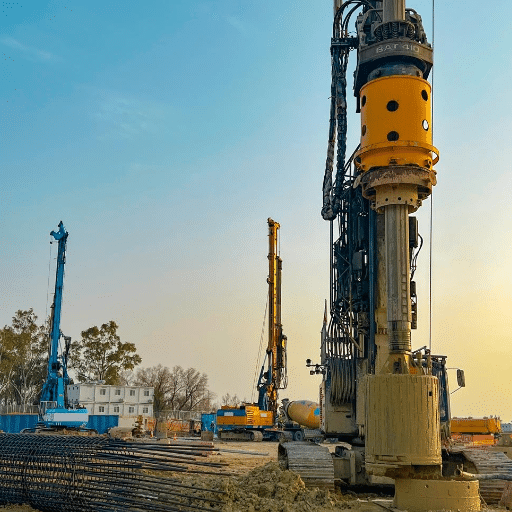
Driven piles are prefabricated structural elements placed into the ground by use of a hammer or press and intended to support a foundation. These piles are very effective in passing loads through weaker soil strata into the stronger, more stable strata below. Steel, concrete, or timber are common materials used in the manufacture of driven piles, with selection dependent upon the project and ground conditions.
Driven piles are applied in various fields such as bridges, high-rise buildings, and industrial buildings. Such is the environment with loosened or disturbed soils, where deep foundation support would be required. They are also advantageous as the quality of piles is assured owing to factory-controlled manufacturing and precise installation control, thus ensuring long-term stability.
Understanding Driven Piles
Driven piles are an integral part of modern construction as a result of their effectiveness, longevity, and versatility. They are usually cast concrete, steel, or timber, with their design allowing them to accommodate many types of loads. The piles are anchored into the ground by driving force, ensuring that they penetrate weak soil to reach some level of support from competent soil or bedrock. This minimizes soil disturbance as compared to other foundation constructions, whereby the disturbing factors in question can be crucial in some applications where environmental constraints are a concern.
Another factor that makes driven piles stand out is that they allow for evenly predictable behavior. The load capacity can therefore be calculated by engineers with a high degree of confidence and certainty, based on materials used or installation methods, hence reducing uncertainty during construction. Another saving factor can be attributed to a reduced project duration time where the piles are all pre-manufactured and ready for installation as soon as they are delivered; this therefore eliminates on-site curing or waiting time. Further data are received by engineers through data-oriented testing protocols such as dynamic pile testing during installation, ensuring long-term integrity of the structure.
Advantages of Using Driven Piles
Driven piles have the advantage of being suitable for almost all types of soil encountered and, as such, have become the most utilized foundation element in both simple and complex geotechnical environments. The amount of soil displaced during its installation is kept to a minimum to further increase the surrounding bearing capacity, thereby densifying it. Modern ways of driving piles with advanced equipment guarantee near-perfect positioning of the piles, thus eliminating any possibility of misalignment and consequent structural faults. The method is also a green approach since the materials for driven piles-steel and concrete-can be recycled and reused. Such green credentials are especially in line with current construction trends that literally attempt to reduce construction’s carbon footprint. Cost efficiency is another factor for choosing driven piles; minimal requirements for excavation and backfilling are some of the few reasons why.
Common Applications of Driven Piles
Driven piles find numerous applications in various sectors of the construction industry due to the utility and robustness of the pile. These are common occurrences in foundation works for bridges, ports, and marine structures where soil conditions may be less stable or provide vulnerable environments for stable bases. Skyscrapers and other high-rises would thus bear greater loads and, therefore, require support from driven piles to bigger, stronger soil layers.
Their greatest benefit to infrastructure projects is road construction, railways, and retaining walls, all of which need much strength and longevity. Industrial plants, shifting dynamics, and heavy vibrations choose driven piles because they could bear vast lateral pressures. Another advantage of these piles lies in highly disturbed soil profiles, such as clay, silt, or soft sands, which would otherwise drain other foundation systems; thereby, they offer the needed support. Moreover, new developments of pile design and material engineering build upon the adaptability of driven piles, hence affirming their position in modern and sustainable construction.
Comparing CFA piles vs. Driven piles
Installation Process:
Drilling into the ground and pumping concrete through the hollow stem of the auger before the reinforcement is inserted constitutes the working of CFA piles.
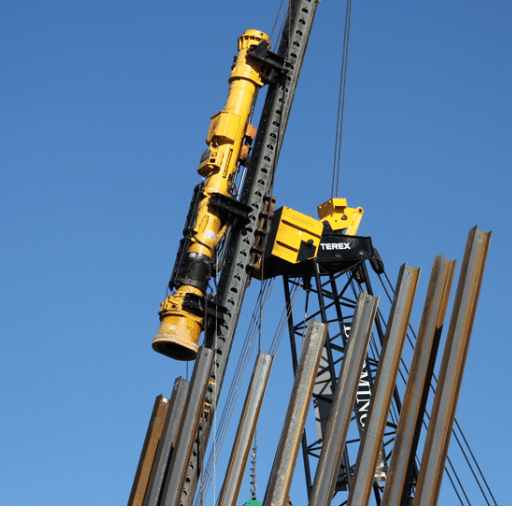
Driven piles, on the other hand, are pre-fabricated and installed by hammering or vibratory forces into position.
Noise and Vibration Issues:
Being relatively noise-free, CFA piling can be recommended for urban projects or any construction near sensitive structures.
Driven piles produce a loud racket and considerable vibrations; such noise can disturb the surroundings but might be required for ensuring stability under certain soils.
Suitability for Soil Types:
CFA piles are very suitable for soft soils or situations where ground displacement must be minimized.
Driven piles perform better in beds of denser soils or in those that demand high load-bearing capacity and lateral resistance.
Load-Bearing Capacity:
Driven piles perform best under high loading and are best suited in cases offering deep foundations.
Generally speaking, CFA piles are considered for moderate loading and are suitable either for cohesive or granular soils.
Both kinds of foundations and their different advantages largely allow the choice between them to be driven by project requirements, soil conditions, and environmental constraints.
Difference Between CFA Piles vs. Driven Piles
Installation Process
CFA Piles: Installation takes place with a hollow auger drilling into the soil while at the same time, concrete is being forced down the hollow stem of the auger. Any noise and vibration disturbance is kept to a minimum. Favorable sites are in urban or sensitive areas.
Driven Piles: Installation is realized by pounding a pre-formed pile into the soil by means of a pile driver. This method would be suitable insofar as penetration depth is concerned but more noise and vibration would be produced that might need some restrictions on usage in various environments.
Ground Conditions
CFA Piles: Good for soft developments when traditional displacement techniques are not possible, like displaced sands and silt.
Driven Piles: Best for soils that can lend rigidity and support for the piles, such as dense sand or rock, giving maximum support laterally and vertically.
Load-Bearing Performance
CFA Piles: Best for middle-weighted constructions in terms of cost versus performance. They also carry tension and lateral loads well, especially for residential or medium-sized traffic.
Driven Piles: Are able to withstand high load-bearing capacity and are deployed in large-scale works such as bridges or high-rise buildings.
Speed and Efficiency
CFA Piles: These are relatively fast compared to drilled piles because of continuous augering without the need for pre-drilling or sophisticated site preparation.
Driven Piles: Fast setting when there is a high number of repetitive elements, but tend to require much more site preparation and heavier equipment.
Environmental Considerations
CFA Piles: Produce less vibration and noise than driven piles, and hence, from a construction point of view, less environmental impact and possibly less disturbance in the community.
Driven Piles: Greater noise pollution and vibrations, which is of an adverse nature in sensitive locations, would possibly affect nearby structures or ecosystems.
Each type of piling boasts unique strengths with regard to the structural requirements and environmental constraints and project scale. By analyzing the peculiar demands of the construction site and weighing its performance, costs, and sustainability, one is presented with the best choice of foundation type.
CFA Piles vs. Driven Piles: Cost Considerations
Cost considerations for CFA piles and driven piles include material costs, labor, site conditions, and equipment. CFA piles are typically cost-advantageous when minimal noise and vibration are permitted on the site due to their speedy installation technique. The continuous flight auger method also diminishes the use of heavy machinery and thus saves some costs on the project.
Conversely, driven piles may be more expensive upfront owing to the robust machinery and pile materials involved. However, driven piles are relatively cheaper in terms of maintenance costs in the long run because of their durability and resistance to heavy loads. On the flipside, driven piles can be cost-prohibitive when a large number of piles need to be installed, but the speed of installation can equate to time savings.
Overall, the comparative cost-effectiveness of CFA versus driven piles would depend on the scale of the project, soil conditions, environmental regulations, and construction timeline, warranting a thorough cost-benefit analysis for project optimization.
Performance Comparison in Different Soil Conditions
As I see, the application and performance of CFA and driven piles largely depend on soil conditions at the site. CFA piles are suitable for soft or cohesive soils because they generate low vibrations and are well-adapted to weak ground conditions without causing disturbances. However, driven piles will be better in dense or granular soils by virtue of displacement and therefore achieve a higher load capacity. The final decision between the two methods should be in accordance with the specific soil characteristics and project demands.
Types of Piling Methods

- CFA Piles (Continuous Flight Auger)
It is great for the places with soft or cohesive soil conditions. It is installed by drilling into the ground with an auger, thereby pumping concrete through the hollow stem as the auger is withdrawn; thus, this method discourages vibration or disturbance of the soil. - Driven Piles
Prefabricated solid or hollow piles are hammered into the ground by use of an impact hammer or a vibratory one. They work well in dense or granular soils where compaction improves load-bearing capacity. - Bored Piles
Here, a hole is made into the ground and filled with concrete, which is often reinforced with steel. It best suits projects requiring deep foundations with little noise and vibration. - Sheet Piles
Usually used in retaining walls or excavation, the sheet piles are thin interlocking sections installed by driving. It is prevalent in waterfront construction and soil retention. - Micropiles
Micropiles are small-diameter piles that can be used in areas with restricted access or for retrofitting existing foundations. They are highly adaptable and effective in different soil conditions.
Each method has its pros and cons and is considered for selection based on the requirements of the project, soil, and environmental considerations.
Overview of Different Piling Methods
The choice of piling method depends principally on soil condition, load distribution needs, environmental concerns, and the site itself. For example, a driven pile might well be the piling method for loose or unstable soils, as it provides stability through compaction, whereas, if low noise and vibration are paramount, bored piles might be preferred for urban construction. Micropiles go well with dense or rocky terrain and challenging access owing to their diminutive diameters and adaptability.
In geotechnical fields, new technological advances have contributed to the development of piles, which are more productive and sustainable. Modern techniques now incorporate advanced materials such as high-strength concrete and corrosion-resistant steel to improve life expectancy. On environmental grounds, equipment for silent or low-vibration piling was developed to cut down noise pollution and the level of disturbance from works in urban or ecologically sensitive areas.
Having analyzed site-specific information such as soil surveys, load distribution analysis, and duration of projects, construction engineers could be able to select those piling methods that warrant the most cost-effectiveness and reliability, at the same time bearing both structural and environmental requirements. These newer solutions serve to consolidate performance while taking into account some of the most important ecological and urban issues in consecutive infrastructural projects.
Bored Piles vs Driven Piles
Helical piles or screw piles are a new and flexible foundation method being used in an increasing number of construction projects. These piles consist of steel shafts with helical-plate-like extensions that are rotated into the earth. Their working principle is to transfer the load efficiently from structures down to the soil, especially on projects having difficult soil conditions. Helical piles can be used to resist both compression and tension loads and thus provide stable support to buildings, bridges, and utility installations.
One of the main advantages of helical pile installation is its minimal disruption to the environment, very much in contrast to traditional driven piles, which rely on heavy impact force. This makes it an environmentally fitting choice for urban and ecologically sensitive areas. Further advantages include speed of installation and a load-bearing capacity that, in turn, reduces project timelines and costs.
Research has indicated that helical piles perform better in loose soils where traditional means would have faced many difficulties in providing stability. Their modular design also allows them to be modified according to project requirements, such as differing depths or loads. With durability, adaptability, and environmental friendliness, helical piles continue gaining in popularity as a cutting-edge alternative in foundation engineering.
Choosing the Right Piling Method for Your Project
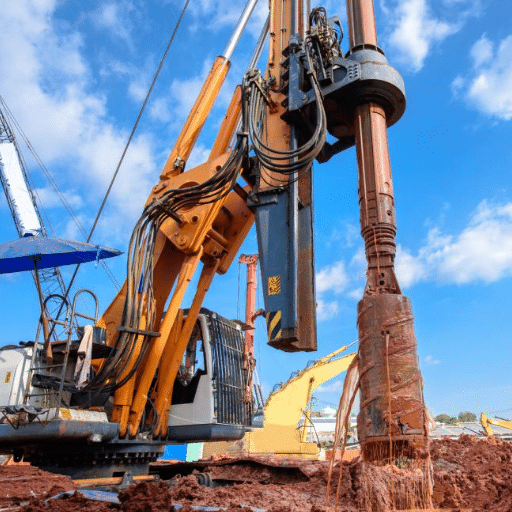
Your choice of piling method will depend on several key factors specific to your project, such as:
Soil Conditions – Identify the type of soil at your site (e.g., soft, dense, or rocky). Some methods offer advantages under soft soils; for example, helical piles perform strongly under such conditions. Others, such as ‘driven’ or ‘drilled’ piles, may do better under denser or rocky conditions.
Load Requirements – Consider how heavy the structure is that the foundation will support. Heavy loads may require methods with greater load-carrying capacities, such as concrete or steel piles.
Environmental Impact – Within environmentally sensitive locations, try to give preference to those methods having the least environmental impact. For example, helical piles minimize soil disturbance and require no curing time.
Project Timeline – When the construction schedule is of the essence for the piling work, a few systems are generally fast. Normally, that would include, at least, the prefabricated and the screw piles in comparison to put-in-place cast piles.
Budget Constraints – You are to consider the initial expenditure and even the maintenance costs, comparing alternative piling methods. In terms of long-term cost savings, an efficient and durable piling system might be the better choice.
This review of all the above issues will lead the way to securing your piling method for the specific demands of a building project.
Factors to Consider When Selecting a Piling Method
Piling methods have greatly come into a renaissance due to modern technologies, making them more efficient, versatile, and environmentally safe. For instance, significant improvements in geotechnical analyses now afford a more accurate study of soil conditions so that the right piling system can be selected from the very beginning. Furthermore, novel materials such as composite piles are gathering increased attention for long-term durability and corrosion-resisting properties, especially in harsh environments such as the coast or factories. There is also the continuous improvement of installation technologies, such as methods to reduce vibrations or to mitigate noise, making the piling operation safer, quicker, and much less of a nuisance. Undoubtedly, these developments highlight the need to keep oneself abreast of trends and advancements in the field when choosing a piling method for a particular project.
Evaluating Project Requirements and Site Conditions
Any construction project must appropriately assess the site description along with its requirements and conditions. Geological surveys must therefore be considered to analyze the soil profile, water table, and potential environmental impacts. Other considerations may include weather patterns, accessibility, and local regulatory frameworks that may arise to form a manipulation point during early planning. By adopting modern tools and datasets-aided discoveries-that will enable consideration of options for the team about the materials, machinery, and also methodologies to be deployed on the site. Consideration of geospatial mapping and predictive modeling techniques at an advanced stage of the design could help avert serious errors by ensuring that the proposed design conceptions meet the realities of the site. Integrating systematic evaluation of the environment and sites together with modern data also ensures that the project will meet both safety and efficiency standards from a better position.
Consulting with Experts for Best Practices
In particular, the industry professionals’ collaborative concept transplant specializes in the consideration of the experiences and focused knowledge of such persons. Experts can give project-specific recommendations that resolve issues peculiar to the project, ranging from structural considerations to material selection. Combining this expertise with the latest information sources and data keeps the team informed of trends, technological advancements, and market solutions. Such knowledge engenders solid decision-making, promotes flexibility, and thereby enhances the prospects for sustainability and profitability for any project. In accordance with an extensive data evaluation, expert guidance helps to realize a perfect balance between expert opinions and modern methodological innovations.
Reference Sources
-
Design And Construction Of Continuous Flight Auger Piles
This manual provides detailed insights into the design and construction of CFA piles.
Read more here -
Continuous Flight Auger Pile Bridge Foundation
A study exploring the use of ACIP piles as an alternative to driven piles for bridge foundations.
Read more here -
Comparison of Rapid Load Pile Testing of Driven and CFA Piles
An academic analysis of rapid load tests comparing driven and CFA piles.
Read more here
Frequently Asked Questions (FAQs)
What is the difference between CFA piles and driven piles?
The difference between CFA piles and driven piles lies primarily in their installation methods. CFA piles, or Continuous Flight Auger piles, are constructed using a drilling method that creates a hole into which concrete is poured. In contrast, driven piles are hammered into the ground, making them a displacement pile type. Driven piles tend to provide immediate load-bearing capacity, while CFA piles use a method of piling that allows for less disturbance to the surrounding soil. This distinction makes CFA piles ideal for projects in sensitive soil conditions while driven piles are often favored for their quick installation.
What are the different types of pile foundation used in construction?
There are various types of pile foundation, including CFA piles, driven piles, bored piles, and helical piles. Each type of pile serves unique purposes based on soil conditions and project requirements. For example, bored piles are constructed by drilling into the ground and then filling with concrete, which is particularly effective in cohesive soils. Driven piles are suitable for projects requiring a quick installation, while helical piles are often used in areas with unstable soil. Understanding the types of pile foundation available can help in selecting the most appropriate option for a construction project.
How are CFA piles constructed compared to driven piles?
CFA piles are constructed using a continuous flight auger, which drills a hole in the ground while simultaneously placing concrete, creating a continuous pile. This method minimizes soil disturbance and is suitable for various soil types. On the other hand, driven piles are mechanically hammered into the ground, making them a faster option but potentially causing more ground disturbance. The choice between these methods often depends on the project’s specific requirements and the types of foundation piling that are best suited for the site conditions. Additionally, CFA piles are known for their ability to handle lateral loads effectively, while driven piles excel in vertical load capacity.
What are the advantages of using driven piles in a construction project?
Driven piles have the advantage of immediate load-bearing capacity due to their installation method, which can significantly speed up foundation construction. They are often used in areas where quick project timelines are essential. Furthermore, driven piles can penetrate through various soil types, making them versatile for different construction environments. They are also suitable for heavy loads, as the hammering process compacts the surrounding soil, creating a stable foundation. However, it’s important to consider the noise and vibration during installation, which might affect nearby structures or environments.
What are the costs associated with different piling methods?
The cost of piling can vary greatly depending on the method used and the type of piles selected. CFA piles tend to be more expensive due to the specialized equipment and processes involved in their installation. Conversely, driven piles, while sometimes less costly, may incur additional expenses related to noise control and vibration mitigation. Other factors influencing the cost include soil conditions, project size, and the choice of materials, such as precast concrete piles or steel sheet piles. Evaluating the cost-effectiveness of each method is crucial for optimizing budget allocations in construction projects.