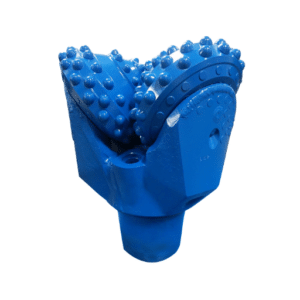
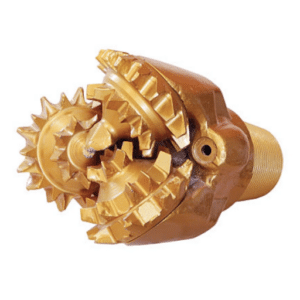
A driller named Tomas spent two hours at a weathered granite contact on a bridge foundation job, adding crowd force and watching the penetration rate fall to zero. The rock was only 40 MPa. When the crew finally pulled the conical auger, they found the problem: six worn flat teeth polished smooth against the stone. The teeth had come off a dirt auger from the last job, and nobody checked what was on the flights before the shift started. That is what poor auger teeth selection looks like in the field: good iron, wrong system.
The frustrating part is that the teeth themselves were not cheap or defective. They were simply the wrong cutting tools for that auger and that ground. Most selection advice starts with the tooth catalog: flat for clay, bullet for rock. In practice, the auger family and flight geometry decide how any tooth loads, cuts, and wear, so the catalog comes third, not first.
This guide works through the decision in the order the whole demands it. You will match auger families to teeth systems and see how flight geometry changes tooth behavior. Then you will learn what changes on a CFA auger, set holder wear limits, and keep the auger head alive with hardfacing and repair. The guide closes with a worked cost-per-meter teeth budget for one auger. For a broader look at selection logic across types of rotary drilling bits, see our rotary drilling bit selection guide.
In short:
- Pick the auger family first: dirt, rock, conical, or CFA. Each implies a teeth system.
- Let flight geometry refine the choice: pitch, single or double flight, and conical progressive cutting all change tooth load.
- Treat holders as wear parts with their own replacement rule, and hardface the flight edges that take abrasion.
- Budget teeth by cost per meter, not by unit price.
If you already know your auger model and ground report, we can shortcut the whole process. Request a matched auger teeth package with teeth, holders, and spares sized to your flights and formation.
Start with the Auger, Not the Tooth

How to choose auger teeth comes down to a fixed order: auger family first, flight geometry second, tooth model third. Four auger families cover nearly all rotary drilling work, and each one implies a teeth system before you open a catalog.
| Auger Family | Teeth System | Ground Range | Field Notes |
|---|---|---|---|
| Dirt (soil) auger | Flat teeth: V20, BFZ80 family | Clay, silt, sand, soft fill | Fast spoil transport, cheap changeouts |
| Rock auger | Bullet teeth: B47K series | Gravel, weathered rock, stiff clay | Point attack on the cutting head |
| Conical auger | Bullet teeth, progressive layout | Weathered to medium rock, roughly 15-60 MPa | Load spreads along the spiral |
| CFA (continuous flight auger) | Bullet or flat teeth along the flight string | Soft to medium ground, continuous drilling | Wear is distributed over the full string |
The auger family sets the cutting mechanics. A dirt auger shears and carries spoil on open flights, so wide flat teeth win. A rock auger concentrates crowd force on carbide points at the cutting head. A conical auger staggers those points along a spiral so each tooth takes a progressively deeper bite. A CFA drills to full depth in one pass, so teeth along the entire string share the work.
Choosing teeth before choosing the auger family inverts that logic. It is how flat teeth end up on a conical auger at a granite contact. For the full taxonomy of the four tooth types and their model specifications, see our guide to the four auger teeth types and their specifications. This article stays at the system level: which teeth belong on which auger, and why. If you are still deciding between tool families entirely, our overview of types of rotary drilling bits maps buckets, augers, and core barrels by ground.
Dirt Auger Teeth vs Rock Auger Teeth
Dirt auger teeth are flat, chisel-shaped cutters that shear soft soil and carry it up the flights. Rock auger teeth are conical bullet teeth with a tungsten carbide tip that fractures gravel and weathered rock under a concentrated point load. Dirt teeth are cheap and fast in clay and sand. Rock teeth cost more per piece but survive the ground that destroys flat edges.
That is the whole comparison in one paragraph, and it holds everywhere. The details matter at the boundaries. Dirt auger teeth in the V20 and BFZ80 families shear cleanly below about 20 MPa and clear sticky clay without clogging the flights. Above that, the thin edge chips and the holder takes an impact it was never shaped for.
Rock auger teeth in the B47K series climb a duty ladder. B47K19H suits mixed ground and softer weathered rock, B47K22H carries gravel and medium-hard weathered formations, and B47K25H handles abrasive rock. Supplier mappings such as the Drillmaster guidance place the series across roughly 35 to 90 MPa of weathered rock, and the round shank lets each tooth rotate in its holder so wear spreads evenly. Our article on rock auger bullet teeth design covers the carbide and body engineering behind that ladder.
The mistake to avoid is treating the boundary as a suggestion. A flat tooth at 40 MPa does not drill slower; it stops drilling, as Tomas learned. Step up the tooth family at the contact, not after the first burned set.
How Flight Geometry Drives Auger Teeth Selection

Two augers with identical teeth can perform nothing alike, because flight geometry decides how those teeth load and how spoil clears. Three geometry factors matter most for auger teeth selection.
Pitch and helix angle control cuttings transport. A tight pitch moves slowly and packs it against the teeth, which buries the cutting edges in their own debris. A wide pitch clears fast but demands more torque to keep flights full. Match pitch to soil: sticky clay wants clearance, free-draining sand wants retention.
Single flight vs double flight sets load per tooth. A double flight shares crowd force across more cutting positions, so each tooth bites less per revolution and wears more slowly. A single flight loads each position harder, which penetrates tough ground better but punishes weak teeth.
Conical progressive cutting spreads work along the spiral. On a conical auger, teeth sit at increasing radii and depths so every tooth takes a thin, continuous slice instead of one full bite. Product specifications for conical rock augers from suppliers like JZTG Piling rate the design for roughly 15 to 60 MPa rock. Tooth counts run 6 to 16 on DN600 to DN1200 tools and 18 to 28 on DN1500 to DN1800. That auger flight teeth arrangement is why conical rock auger teeth such as the B47K22H can outlive the same tooth on a flat rock auger head: the load per tooth is lower and steadier.
The practical rule: when teeth wear faster than expected, check geometry before metallurgy. An overloaded tooth position usually traces back to pitch, flight count, or a missing stagger, not a bad batch of carbide.
CFA Auger Teeth: What Changes
CFA auger teeth live a different life because the tool never comes out of the hole until the pile is done. On a conventional auger, teeth cut for a few minutes per trip and get inspected at every pull. On a CFA, the starter teeth at the tip cut for the full depth in one pass while every flight above them abrades against rising cuttings.
That changes three things. First, the starter teeth take all the impact work, so they carry the heaviest duty grade on the string. Second, the upper flights wear by abrasion rather than impact, so flight-edge hardfacing matters as much as tooth quality. Third, the hollow stem limits pilot bit projection and tooth standoff, so tooth geometry must clear the stem opening for the concrete pour.
Wear distributes along the whole string instead of concentrating at the bottom, which means CFA teeth checks are per-pile rather than per-trip. The Federal Highway Administration’s GEC-8 design manual for continuous flight auger piles remains the standard authority on the CFA process and its tooling demands. For auger-side specifications such as diameters, flight options, and rig matching, our CFA continuous flight auger guide picks up where this section ends.
Auger Teeth Holders Are Wear Parts Too
Every auger tooth lives in a holder, and holders wear on their own schedule. The bore that grips the shank opens up under vibration and side load, and once a pocket wears oval, every new tooth you install runs loose. A loose tooth chatters, self-rotation stops, and the carbide wears flat on one side within hours.
Use this field rule for auger teeth holders: install a new tooth and try to rock it by hand. Visible movement means the pocket has worn past the shank diameter tolerance and the holder needs replacement, not the tooth. Check retaining clips and wear sleeves at the same time; they cost almost nothing and they are the only things keeping a worn holder from losing teeth downhole.
A maintenance lead named Grace runs a fleet of nine augers across three piling rigs, and she budgets holders on a planned cycle instead of waiting for failures. Her crews swap quick-change holders during scheduled teeth changeouts, roughly every third set in abrasive ground. Since she started the cycle, downhole tooth losses on her rigs have dropped to near zero, and her welders only touch the weld-on tools in the yard.
Holder strategy belongs inside auger teeth selection, not after it. Quick-change holders cost more upfront but cut changeout time to minutes per position and suit multi-auger fleets. Weld-on holders cost less per piece but need cutting and welding labor for every replacement, which only pays on low-utilization tools.
Keeping the Auger Head Alive: Hardfacing and Repair

Teeth and holders get all the attention in auger teeth selection, but the flights carry them. Once flight edges wear thin, teeth sit lower, attack angles drift, and the whole head loses geometry. Hardfacing is how you buy that geometry back.
Tungsten hardfacing pays on the leading edges and outer flight faces, where abrasion is continuous. Supplier build guides describe tooth bodies at HRC 48 to 52 with copper-brazed carbide, and the flight steel around them is softer than either, so it erodes first. Rebuild the edge before it drops below the tooth line, not after.
When re-welding teeth or holders, check alignment against a straight edge after any impact with cobbles. A tooth welded three degrees off line cuts on its side, doubles its own wear, and loads its neighbors. Build an inspection rhythm around it: flight edges, holder pockets, pilot bit, and the Kelly bar connection, in that order, at every yard visit.
Cost Modeling: A Teeth Budget for One Auger
Auger teeth replacement is a cost-per-meter decision, and the math is the same discipline that governs bucket teeth. Fold tooth cost, changeout downtime, and rig rate into one number:
Cost per meter = (teeth cost + rig hourly rate x changeout hours) / meters drilled per set
A contractor named Anil priced teeth for a rock auger on a 30-pile retaining wall project in weathered sandstone, about 540 meters of drilling. His under-spec option was running the dirt auger’s flat teeth through the sandstone at a low unit price, lasting roughly 30 meters per set. His matched option was B47K22H bullet teeth at about four times the unit price, lasting roughly 160 meters per set on that ground.
Run the arithmetic at a rig and crew cost of $400 per hour and 40 minutes per changeout. The flat teeth need about 18 changeouts, roughly 12 rig hours of downtime, plus 18 sets. The bullet teeth need about 4 changeouts, roughly 2.7 rig hours, plus 4 sets. Even at four times the unit price, the matched teeth win clearly because rig hours dominate the bill; treat these as field example numbers, since your ground and rig rate set the real margin.
Spares follow the same logic. Keep one full changeout set per auger on site, plus clips, sleeves, and one spare holder for each position type. If you want this budget worked on your own project, send the auger model, flight specs, bore log, and rig rate. Our team will return a comparison of under-spec, matched, and heavy duty options. Get a matched auger teeth budget before you commit to the order.
Auger Teeth Selection Checklist

Complete these seven auger teeth selection checks before you order teeth for any auger:
- Confirm the auger family. Dirt, rock, conical, or CFA sets the teeth system before anything else.
- Read the ground report. Strength, abrasiveness, and contact depths for every layer.
- Check the flight geometry. Pitch, single or double flight, and whether the head is conical.
- Pick the tooth model and duty grade. Flat teeth below 20 MPa; B47K19H, 22H, or 25H up the rock ladder.
- Match the holders. Confirm shank class, pocket condition, and quick-change or weld-on by fleet needs.
- Set the spares stock. One full changeout set per auger, plus clips, sleeves, and spare holders.
- Schedule the inspections. Teeth at every pull on conventional augers, per pile on CFA, holders every third set in abrasive ground.
If the bucket fleet needs the same discipline, our drilling bucket teeth selection guide applies the same system logic to buckets, and the principles carry straight across. For more information, you can read our guide on Rotary Drilling Bit Selection by Ground Condition.
FAQ
What is the difference between dirt auger teeth and rock auger teeth?
Dirt auger teeth are flat, chisel-shaped cutters that shear soft soil and carry spoil up the flights. Rock auger teeth are conical bullet teeth with a tungsten carbide tip that fractures gravel and weathered rock under a concentrated point load. Flat teeth suit ground below about 20 MPa; bullet teeth take over above it.
How do I choose auger teeth for my soil?
Start with the auger family, then read the ground report. Clay and sand below 20 MPa call for flat teeth such as V20 or BFZ80. Gravel and weathered rock call for bullet teeth on the B47K ladder: 19H for mixed ground, 22H for medium-hard weathered rock, 25H for abrasive formations. Step up one duty grade for cobbles.
Can I use the same teeth on a CFA auger and a rock auger?
Sometimes, but the wear pattern differs. A rock auger concentrates wear at the cutting head and gets inspected every trip. A CFA wears starter teeth by impact and upper flights by abrasion over one continuous pass, so starter positions need the heaviest duty grade and flight edges need hardfacing. Check CFA teeth per pile, not per trip.
How often should auger teeth be replaced?
Replace a bullet tooth when the carbide wears back roughly 30 percent, or sooner if penetration drops, torque climbs, or a tip chips. Our auger teeth types guide details the full trigger set. Inspect at every pull on conventional augers and after every pile on CFA tools.
How many teeth does a rock auger need?
Count scales with diameter and ground strength. Supplier specifications for conical rock augers run 6 to 16 teeth on DN600 to DN1200 tools and 18 to 28 on DN1500 to DN1800. Too few teeth overload each tip; too many divide the crowd force until none of them bite.
When should I replace auger teeth holders instead of teeth?
Replace the holder when a new tooth rocks visibly in the pocket. An oval pocket turns every new tooth loose within hours, so a new tooth in a worn holder is wasted money. In abrasive ground, plan holder replacement roughly every third tooth set.
Conclusion
Auger teeth selection is a system decision in a fixed order. Choose the auger family first, let flight geometry refine the choice, then match tooth model and duty grade to the ground report. Treat holders as wear parts with their own replacement rule, and hardface flight edges before geometry disappears. Budget the whole package by cost per meter, never by unit price.
Tomas got his bridge piles finished once the conical auger went back down with bullet teeth matched to its flights. The rock had not changed. The system had.
If you want teeth, holders, and spares sized to your augers and ground, send us your auger model, flight specs, and bore log. The engineering team at Changsha Mingyi Machinery Equipment Co., Ltd. will return a matched auger teeth selection with a cost-per-meter budget for your project.