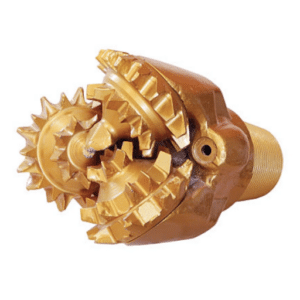
A rotary drilling bit that works well in clay can fail within minutes against hard limestone. The same bit that chews through weathered rock may overheat and lose its edge in abrasive gravel. For contractors running bored pile and foundation projects, the cost of a mismatched bit is not just the replacement price. It is lost meters per shift, extra rig hours, and missed deadlines.
That is why rotary drilling bit selection deserves a systematic approach. This guide explains what a rotary drilling bit is, how the main types differ, and how to match the right cutting structure to your ground conditions, tool type, rig capacity, and budget.
By the end, you will have a practical framework for choosing bits that improve penetration rate, extend tool life, and reduce cost per meter. If you need a recommendation for a specific project, you can also request a custom rotary drilling bit recommendation from our engineering team.
What Is a Rotary Drilling Bit?

A rotary drilling bit is the cutting structure mounted on the lower end of a rotary drilling tool. It breaks soil or rock through rotation, weight on the bit, and torque transmitted from the rig. In other words, a foundation drilling bit is the consumable cutting end of any rotary drilling tool used for bored piles and deep foundations.
In foundation work, the bit is rarely a standalone item. It is usually part of a larger tool: a drilling bucket, a rock auger, or a core barrel. The cutting elements may be bullet teeth, flat teeth, roller bits, or a combination. Their job is to create a clean, stable borehole while protecting the tool body and the rig from unnecessary load.
This is different from oil and gas rotary bits, where tricone or PDC bits are often the entire cutting assembly. In foundation drilling, the bit is a consumable cutting system that can be replaced or re-toothed while the main tool body stays in service.
Types of Rotary Drilling Bits for Foundation Work
Foundation drilling uses several bit families. Each is optimized for a different cutting action and ground condition. If you need to understand the types of rotary drilling bits, please read our article about Types of Rotary Drilling Bits.
Bullet Teeth
Bullet teeth are conical carbide-tipped picks mounted in replaceable holders. They concentrate force at a single point, making them effective for breaking hard soil, gravel, and weathered to medium-hard rock. Because they rotate slightly during cutting, they tend to self-sharpen and maintain a consistent attack angle.
Roller Bits
Roller bits use rotating cones studded with tungsten carbide inserts. The cones crush rock as they roll across the borehole bottom. Roller bits are the preferred choice for hard rock, boulders, and abrasive formations where point-attack teeth would wear too quickly.
Flat Teeth
Flat teeth, also called bucket teeth or soil teeth, have a wide cutting edge designed for soft soil, clay, and sand. They remove material quickly with low resistance and are commonly used on soil drilling buckets and cleaning buckets.
Core Barrel Cutting Structures
Core barrels use an annular ring of cutting teeth to remove rock around a central core. Depending on the ground, the cutting structure can be bullet teeth, roller bits, or cross cutters. Each configuration changes how the tool handles rock strength and core removal.
Drag Bits and Claw Bits
Drag bits use fixed blades to scrape or gouge soft ground. Claw bits use replaceable fingers for sticky clay. Both are useful for shallow or specialized work but are less common on large-diameter piling rigs than buckets or augers.
Bottom Expansion Bits
Bottom expansion bits, also called belling buckets, open mechanically at the bottom of the hole to enlarge the pile base. They improve bearing capacity in soil or weathered rock without requiring deeper drilling.
| Bit Type | Cutting Action | Best Ground |
|---|---|---|
| Bullet teeth | Point attack, chipping | Hard soil, gravel, weathered rock, medium rock |
| Roller bits | Crushing, grinding | Hard rock, boulders, abrasive formations |
| Flat teeth | Scraping, cutting | Clay, silt, sand, soft soil |
| Core barrel teeth | Annular cutting | Hard rock, bedrock, concrete |
| Drag / claw bits | Gouging, ripping | Soft soil, sticky clay, shallow holes |
| Bottom expansion bits | Mechanical enlargement | Soil, weathered rock for base enlargement |
How Rotary Drilling Bits Work
The cutting action of a rotary drilling bit depends on its geometry and the way force is applied.
Bullet teeth work like a chisel. As the tool rotates, each tooth concentrates crowd force and torque at a small contact area. This creates high stress in the rock or soil, causing it to fracture. The slight rotation of the tooth in its holder helps distribute wear and keep the carbide edge sharp.
Roller bits work like a rolling mill. The cones spin on bearings as the barrel turns, and the carbide inserts press into the rock surface. The repeated loading crushes the rock into small fragments. Because the inserts roll rather than scrape, roller bits generate less heat and last longer in abrasive hard rock.
Flat teeth work like a blade. They slice through soft material with minimal penetration resistance. This makes them fast in clay and sand, but they dull quickly if they encounter rock or gravel.
Spoil removal is just as important as cutting. Buckets lift material inside the body. Augers carry cuttings up the flight. Core barrels leave a central core that must be broken and removed separately. If cuttings are not cleared, the bit re-grinds the same material, overheats, and wears faster.
Matching Rotary Drilling Bits to Ground Conditions

Ground condition is the first and most important selection factor. Compressive strength, measured in megapascals (MPa), gives a useful starting point.
| Ground Type | Compressive Strength | Recommended Bit | Typical Tool |
|---|---|---|---|
| Soft soil, clay, silt, sand | < 20 MPa | Flat teeth, drag bits | Soil bucket, auger, cleaning bucket |
| Medium soil, gravel, weathered rock | 20–70 MPa | Bullet teeth (B47K19H, B47K22H) | Rock bucket, rock auger |
| Hard rock, limestone, sandstone | 70–150 MPa | Heavy-duty bullet teeth, roller bits | Roller bit core barrel, rock bucket |
| Very hard rock, granite, basalt, boulders | > 150 MPa | Roller bits, cross cutters | Roller bit core barrel, cross cutter |
This table is a guide, not a rule. Ground conditions are rarely uniform. A borehole may start in clay, pass through a gravel layer, and end in fractured limestone. Abrasiveness, moisture content, and the presence of boulders all change how a bit behaves.
For example, a contractor in Southeast Asia once drilled through 8 meters of soft clay before hitting a layer of weathered shale. The team started with a flat-tooth soil bucket and made good progress. As soon as penetration slowed and the teeth began to dull, they switched to a rock bucket with B47K22H bullet teeth. The change added half a day of tooling time but saved three days of slow drilling and two sets of prematurely worn flat teeth.
When you are unsure, choose the bit that handles the hardest layer you expect to reach. It is usually cheaper to over-spec slightly than to stop production for a tool change. To make the best choice for you, please read our article on rotary drilling bit selection.
Rotary Drilling Bits for Hard Rock
Hard rock is where bit selection becomes critical. In formations above 70 MPa, standard bullet teeth may still cut, but their rate of penetration drops and wear accelerates. At some point, the cost of tooth replacement and lost production exceeds the cost of switching to a roller bit or specialized rock drilling bit.
The transition point depends on several factors:
- Rock strength: Harder rock favors roller bits.
- Abrasiveness: Quartz-rich or siliceous rock wears bullet teeth quickly.
- Fracturing: Massive, intact rock is harder to break than fractured rock.
- Hole diameter: Larger diameters require more robust cutting structures.
For hard rock, roller bit core barrels are the standard choice for a rotary drilling bit in foundation drilling. The roller cones crush the annular ring, and the central core is then broken with a cross cutter or chisel. For very hard rock, sealed-bearing roller bits with tungsten carbide inserts last longer than open-bearing designs.
Heavy-duty bullet teeth such as B47K22H and B47K25H can still be effective in medium-hard rock, especially in mixed ground where roller bits would be slow in the softer sections. The key is monitoring wear closely and changing teeth before the steel body is damaged. For more information, you can read our article on Rotary Drilling Bit for Hard Rock.
Rotary Drilling Bit Selection by Tool Type
The same bit type can perform differently depending on whether it is mounted on a bucket, auger, or core barrel. Tool geometry controls how the bit engages the ground, how cuttings are removed, and how loads are transmitted.
Drilling Buckets
Soil buckets use flat drilling bucket teeth spaced widely across the cutting edge. The open design allows clay and sand to enter the bucket body easily. Rock buckets use closely spaced bullet teeth to break harder material before it enters the bucket. Cleaning buckets use flat teeth or minimal cutting edges to remove loose debris from the bottom of the hole. For help making this decision based on your specific ground conditions, you can read our Drilling Bucket Teeth Selection Guide.
Augers
Continuous flight augers use flat teeth for soft soil and bullet teeth for rock. Tooth spacing matters. Wide spacing works in soft ground where large cuttings can be lifted easily. Close spacing works in hard or compact ground where finer fragmentation is needed. For more details, see our article on auger teeth types.
Core Barrels
Core barrels rely entirely on the cutting structure around the bottom ring. Bullet-tooth core barrels work in medium-hard rock and fractured ground. Roller-bit core barrels are used for hard rock and boulders. Cross cutters are added to break the central core after the annulus is cut.
Casing Shoes
Casing shoes fit on the bottom of casing pipes and use cutting teeth to advance the casing through soil or soft rock. They protect the casing end and help maintain hole alignment.
| Tool | Common Bit Type | Best Ground |
|---|---|---|
| Soil bucket | Flat teeth | Clay, silt, sand |
| Rock bucket | Bullet teeth | Gravel, weathered rock, soft rock |
| Rock auger | Bullet teeth, flat teeth | Medium soil to medium rock |
| Core barrel | Bullet teeth, roller bits, cross cutters | Hard rock, boulders, bedrock |
| Casing shoe | Bullet teeth, flat teeth | Soil, weathered rock |
Operating Parameters and Rig Compatibility

A rotary drilling rig bit cannot perform if the rig cannot supply the right torque, RPM, and crowd force. Foundation piling rigs are built for high torque at low speed, which is exactly what hard-rock cutting requires.
Typical rig specifications by size class:
| Rig Class | Torque | RPM | Max Diameter | Best For |
|---|---|---|---|---|
| Small / excavator-mounted | 32–50 kN·m | 10–45 | 1,000–1,200 mm | Shallow holes, restricted sites |
| Mid-size | 150–220 kN·m | 7–26 | 1,500–2,000 mm | Standard bored piles |
| Heavy-duty | 250–320 kN·m | 6–26 | 2,000–2,500 mm | Large-diameter piles, hard rock |
For hard rock, lower RPM and higher weight on the bit usually give better penetration. In soft soil, higher RPM and moderate crowd force prevent the tool from clogging or getting stuck.
Kelly box size and tool connection type must also match. Common kelly box sizes include 130×130 mm, 150×150 mm, and 200×200 mm. Using a tool with the wrong connection reduces torque transfer and increases wear on both the kelly bar and the tool.
Material Specifications and Quality Standards
The material quality of a rotary drilling bit determines how long it lasts and how safely it performs. Two materials matter most: the steel body and the carbide cutting inserts. For a deeper look at how cutting structures are engineered.
Steel Body
High-quality bit bodies are made from alloy steels such as 42CrMo or 40Cr. After heat treatment, the body typically reaches 40-44 HRC. This hardness provides a balance of strength, toughness, and fatigue resistance. A body that is too soft deforms under load. One that is too hard becomes brittle and prone to cracking.
Carbide Inserts
Tungsten carbide inserts are graded by cobalt content and grain size. YG11C is a coarse-grain grade with approximately 11% cobalt binder. It offers high impact resistance and is well suited for bullet teeth and roller bit inserts in hard rock. Typical properties include:
- Hardness: ≥ 86.5 HRA
- Transverse rupture strength: ≥ 2,450 MPa
- Manufacturing: vacuum sintering plus hot isostatic pressing (HIP)
For softer ground, YG8C may be used. It is slightly harder and more wear-resistant but less tough under impact.
When evaluating a supplier, ask for material certificates. Confirm the steel grade, heat treatment hardness, carbide grade, and welding standards. A reliable manufacturer will document these and allow inspection before shipment.
Maintenance, Wear Monitoring, and Replacement
Even the best rotary drilling bit wears out. The goal of maintenance is to replace teeth before they damage the tool body or reduce drilling efficiency.
Daily inspection of every rotary drilling bit should include:
- Checking carbide tips for wear, chipping, or cracking
- Looking for loose or missing retaining clips
- Inspecting holder welds for cracks
- Measuring wear on flat teeth and bucket edges
- Confirming roller cones spin freely and bearings are clean
A common replacement threshold is more than 5 mm of carbide wear. Once the carbide is worn down, the steel body behind it begins to wear rapidly. At that point, replacing the tooth is cheaper than rebuilding the tool.
Uneven wear is also a warning sign. If teeth on one side wear faster than the other, the tool may be out of balance, the rig may be applying force unevenly, or the ground may be harder on one side of the hole. Correcting the cause prevents spiral hole walls and premature failure.
For roller bits, storage matters. Clean the cones, dry the bearings, and apply lubricant before idle periods. Dirty or corroded bearings fail quickly under load.
Cost Analysis: Cost Per Meter and Total Ownership
The purchase price of a rotary drilling bit is only part of the cost. What matters is cost per meter drilled. The formula is simple:
Cost per meter = Bit cost / Meters drilled before replacement
A cheap bit that wears out after 50 meters may cost more per meter than a premium bit that lasts 200 meters. Add downtime for tool changes, and the difference becomes even larger.
For example, suppose a set of bullet teeth for a rock bucket costs 300 and lasts 120 meters in medium−hard rock. The cutting cost is 2.50 per meter. If a lower-quality set costs 200 but lasts only 60 meters, the cost is 3.33 per meter. Over 1,000 meters, that difference adds up to $830 plus the extra rig time spent on changes.
This is why many experienced contractors keep a small inventory of replacement teeth and holders on site. The carrying cost of inventory is usually lower than the cost of a production stop waiting for parts.
Selecting a Rotary Drilling Bit Manufacturer

Not all rotary drilling bit manufacturers deliver the same quality. When choosing a supplier for rotary drilling bits or complete tools, evaluate the following:
- Material sourcing: Do they use certified 42CrMo steel and virgin tungsten carbide?
- Heat treatment: Is hardness tested and documented for each batch?
- Welding quality: Are holders welded consistently without cracks or porosity?
- Dimensional checks: Do tools meet the specified kelly box and diameter tolerances?
- Customization: Can they design bits for specific ground conditions or rig models?
- Testing: Do they perform load, fit, and performance checks before shipment?
Red flags include unclear material grades, refusal to provide test reports, inconsistent welds, and delivery promises that seem too good to be true.
Chinese manufacturers are increasingly competitive on quality because they control the full production chain, from steel and carbide sourcing to CNC machining and heat treatment. The key is choosing a supplier with documented processes and export experience rather than selecting purely on price.
At Changsha Mingyi Machinery Equipment Co., Ltd., we manufacture drilling buckets, augers, core barrels, and cutting structures for major rotary drilling rig brands. We can supply standard tooth configurations or design custom cutting structures based on your ground report and rig specifications.
Frequently Asked Questions
What is a rotary drilling bit?
A rotary drilling bit is the cutting structure at the bottom of a rotary drilling tool. It breaks soil or rock through rotation and crowd force, and it is usually mounted on a bucket, auger, or core barrel used in foundation drilling.
What are rotary drilling bits made of?
The body is typically made from alloy steel such as 42CrMo, heat-treated to 40-44 HRC. The cutting inserts are usually tungsten carbide, with YG11C being a common grade for hard rock applications.
How do I choose a rotary drilling bit for hard rock?
Start with the rock compressive strength. For rock above 70 MPa, consider heavy-duty bullet teeth or roller bits. Above 150 MPa, roller bit core barrels are usually the best choice.
What is the difference between a bullet tooth and a roller bit?
A bullet tooth is a fixed point-attack pick that chips rock. A roller bit uses rotating cones with carbide inserts that crush rock. Bullet teeth work well in medium ground. Roller bits perform better in hard, abrasive rock.
What is the difference between a rotary drilling bit and a tricone bit?
A rotary drilling bit is the cutting structure at the bottom of a foundation drilling tool such as a bucket, auger, or core barrel. A tricone bit is a type of roller-cone bit often used as the entire cutting assembly in oil, gas, or mining drilling. In foundation work, tricone bits are sometimes used inside core barrels, but the term rotary drilling bit usually refers to the replaceable cutting elements on piling tools.
How long do rotary drilling bits last?
Service life depends on ground conditions, operating parameters, and material quality. In soft soil, flat teeth may last hundreds of meters. In hard rock, bullet teeth or roller inserts may need replacement every 50 to 150 meters.
When should I replace drilling bit teeth?
Replace teeth when carbide wear exceeds about 5 mm, when tips are chipped or cracked, or when penetration rate drops noticeably. Waiting too long damages the tool body and increases repair costs.
Can I use the same bit for soil and rock?
Sometimes, but rarely efficiently. A soil bit in rock wears quickly. A rock bit in soft soil may be slow and over-dense the cuttings. Match the bit to the dominant ground condition, and change tools when you hit a major transition.
What kelly box size do I need?
Kelly box size depends on your rig. Common sizes are 130×130 mm, 150×150 mm, and 200×200 mm. The tool connection must match the kelly bar exactly to transfer torque safely and efficiently.
Conclusion
Choosing the right rotary drilling bit is not a guessing game. It starts with understanding your ground conditions, then matching the cutting structure to the tool type, rig capacity, and project economics.
Key takeaways:
- Use flat teeth for soft soil, bullet teeth for medium ground, and roller bits for hard rock.
- Match bit selection to the hardest layer you expect to drill.
- Monitor wear daily and replace teeth before they damage the tool body.
- Calculate cost per meter, not just purchase price.
- Choose a manufacturer that documents material grades, heat treatment, and weld quality.
If you are planning a foundation project and need help selecting the right rotary drilling bit, contact Changsha Mingyi Machinery Equipment Co., Ltd. Our engineering team can review your ground report, rig specifications, and production targets to recommend a cutting structure that fits your job. You can also request a custom rotary drilling bit recommendation based on your specific ground conditions and tool type.