A contractor in Southeast Asia kept stalling in dense sand. His single-bottom soil bucket was collecting material, but the spoil stuck to the base, and each lift took twice as long as expected. After switching to a double-bottom drilling bucket with a larger opening ratio, the same crew cut their cycle time by nearly one-third and finished the pile cap three days ahead of schedule.
That kind of improvement does not come from a bigger rig or a faster operator. It comes from matching the rotary drilling bucket to the ground conditions, the pile design, and the rig. This guide explains what a drilling bucket is, how it works, and how to select the right type for your project.
You will learn the main drilling bucket types, how to match buckets to soil and rock, how to choose cutting tools and rig connections, and how to control cost per pile. For the bigger picture on foundation tooling, see our foundation drilling tools guide. If you are comparing buckets with augers, our drilling auger complete guide covers continuous-flight applications.
What Is a Drilling Bucket?

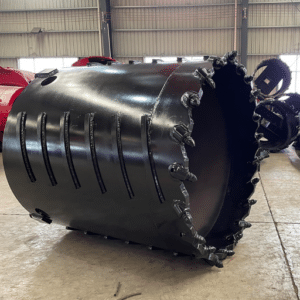
A drilling bucket is a cylindrical excavation tool mounted on the Kelly bar of a rotary drilling rig. It cuts material at the base, collects the cuttings inside the barrel, lifts them to the surface, and discharges them through a bottom opening. The cycle repeats until the borehole reaches design depth.
The main parts of a drilling bucket include:
- Cylindrical body: holds the spoil during lifting
- Cutting base or bottom plate: carries the teeth and does the cutting
- Opening mechanism: hinged or spring-loaded base that opens for discharge
- Kelly box: the square or hexagonal connection that mates with the Kelly bar
- Cutting teeth: flat teeth for soil, bullet teeth for rock, or carbide inserts for abrasion
Buckets are used for bored piles, drilled shafts, caissons, and other deep foundation work. They perform best in cohesive soils, granular soils, wet ground, mixed ground, and weathered rock. In dry, soft clay, a continuous-flight auger is often faster, but buckets excel when ground conditions are unstable, abrasive, or variable.
Types of Drilling Buckets
Soil Drilling Buckets
A soil drilling bucket is designed for soft to medium ground such as clay, silt, sand, and loose gravel. The base is usually fitted with flat or slightly angled teeth that scrape and scoop material into the barrel.
Soil buckets come in two main body styles:
- Single-bottom soil bucket: lighter, simpler, and lower cost; works well in cohesive clay where spoil stays inside the barrel
- Double-bottom soil bucket: stronger base with dual plates and a larger discharge opening; better for sand, gravel, and wet soils where spoil can slip out
If your ground is mostly clay and the hole is stable, a single-bottom soil bucket is usually enough. If you are working in loose sand or below the water table, a double-bottom bucket reduces spillage and speeds up discharge.
Rock Drilling Buckets
A rock drilling bucket is built for harder ground. The body is reinforced with thicker steel, the base is stronger, and the cutting tools are bullet teeth or tungsten carbide inserts rather than flat soil teeth.
Rock buckets handle:
- Weathered and fractured rock
- Gravel and cobble layers
- Mixed soil with boulders
- Dense, abrasive formations
The cutting action is different from that of a soil bucket. Bullet teeth concentrate force on small contact points, which fractures rock more efficiently than a flat scraping edge. For very hard rock with unconfined compressive strength above 80–100 MPa, a rock bucket is usually not the right tool; that is where a core barrel takes over. Our core barrel foundation drilling guide explains that transition in detail.
Double-Bottom Drilling Buckets
A double-bottom drilling bucket has two base plates. The upper plate is fixed to the barrel, and the lower plate can open for discharge. This design gives faster emptying, better soil retention during lifting, and more structural strength than a single-bottom bucket.
Double-bottom buckets are common in:
- Loose sand and gravel
- Saturated soils
- Large-diameter holes where single-bottom designs would flex
- Projects where cycle time matters more than upfront cost
The opening ratio, or the area of the discharge opening relative to the bucket cross-section, typically ranges from 30% to 60%. A higher opening ratio means faster discharge but slightly less support for the cutting base.
Cleanout Buckets
Cleaning bucket drilling is not a primary cutting operation. A cleanout bucket is designed to remove loose sediment, slurry, and debris from the bottom of the hole before concrete placement. Cleanout buckets usually have a flat bottom and tight seals to capture fine material.
Skipping the cleanout step can leave 50–100 mm of sediment at the base of a pile. That weakens the bond between the concrete and the bearing stratum and can reduce pile capacity. A proper cleanout bucket keeps the base clean in one or two passes.
Belling Buckets
A belling bucket expands the base of a drilled shaft in stable clay or weathered rock. Single-cut belling buckets work in softer soils, while double-cut designs handle harder formations. This article focuses on standard excavation buckets, but belling is worth mentioning because it uses the same Kelly bar connection and operating principles.
How a Drilling Bucket Works

The drilling cycle with a bucket follows four steps:
- Cut: the rig lowers the bucket and applies torque and crowd force; the teeth engage the ground
- Collect: rotation forces cuttings into the barrel through slots or openings in the base
- Lift: the Kelly bar raises the full bucket to the surface
- Discharge: the base opens, and the spoil falls out
In stable soil, this cycle is fast. In loose or wet ground, the bucket must retain spoil during lifting, which is why double-bottom designs and controlled opening ratios matter. In rock, the limiting factor is penetration rate, which depends on tooth type, crowd force, and RPM.
When Li Wei’s crew in Guangdong drilled 1,200 mm piles through clay and weathered limestone, they used a soil bucket for the upper section and switched to a rock bucket when the logs showed fractured rock. The switch took 30 minutes. Without it, they would have worn out soil teeth in the first meter of rock and added two days of unplanned tooth changes.
Selecting a Drilling Bucket by Ground Condition
The most important rule in bucket selection is to match the tool to the ground. The table below gives a practical starting point.
| Ground Condition | Recommended Bucket | Cutting Structure | Notes |
|---|---|---|---|
| Soft clay, silt | Single-bottom soil bucket | Flat teeth, clay bits | Fast penetration, easy spoil retention |
| Stiff clay, dense silt | Double-bottom soil bucket | Flat teeth, wear strips | Reduces sticking and base flex |
| Loose sand, gravel | Double-bottom bucket | Flat teeth, high opening ratio | Prevents spoil loss during lifting |
| Cohesive clay with boulders | Rock bucket or reinforced soil bucket | Bullet teeth | Switch to core barrel for large boulders |
| Weathered rock, 20–50 MPa | Rock bucket | Bullet teeth or carbide inserts | Monitor tooth wear closely |
| Medium rock, 50–80 MPa | Heavy-duty rock bucket | Bullet teeth, reinforced base | Consider core barrel for best efficiency |
| Hard rock, 80+ MPa | Core barrel | Roller bits or bullet teeth | Bucket used only for core removal |
Groundwater changes the decision. In dry ground, almost any bucket design will work. Below the water table or in flowing sand, you need a double-bottom bucket, casing, or slurry to keep the hole open and the spoil contained.
Cutting Tools and Tooth Selection
The drilling bucket teeth are the only part of the bucket that touches the ground, so their design directly affects penetration, wear, and cost per meter.
Flat Teeth
Flat teeth are the standard choice for soil buckets. They scrape and shear cohesive and granular material. They are inexpensive and easy to replace, but they wear quickly in rock or abrasive gravel.
Bullet Teeth
Bullet teeth have a tungsten carbide tip mounted in a steel body. They concentrate cutting force on a small point, which makes them effective in rock and mixed ground. Common models for drilling buckets include B47K19H and B47K22H. The number after the K usually indicates the carbide tip diameter in millimeters.
- B47K19H: suitable for soft to medium rock and mixed soil
- B47K22H: better for harder, more abrasive rock
- B47K30H: heavy-duty option for very abrasive conditions
Bullet teeth cost more than flat teeth, but they last much longer in rock. In weathered limestone or sandstone, a contractor can often drill several hundred meters before a full tooth change.
Carbide Inserts and Roller Bits
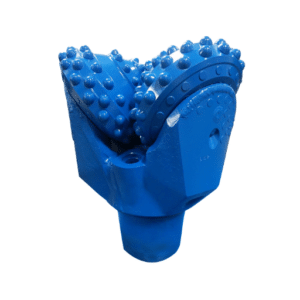
For highly abrasive rock, some rock buckets use larger carbide inserts or small roller bits. These tools cut by crushing and chipping rather than scraping. They extend tool life but require higher torque and crowd force.
Tooth Wear Monitoring
Worn teeth reduce penetration and transfer more load to the tooth holders and bucket base. Inspect teeth daily and replace them before wear exceeds the manufacturer’s limit, usually around 5 mm of carbide loss. Waiting too long damages holders, which are far more expensive than teeth.
Rig Compatibility and Key Specifications

A drilling bucket is only useful if the rig can drive it. The main compatibility points are Kelly box size, torque, crowd force, and bucket diameter.
Kelly Box and Connection
The Kelly box is the connection at the top of the bucket. Common sizes include 100 mm, 130 mm, 150 mm, and 200 mm. A mismatch means adapter plates, extra weight, lost torque, and more failure points. Always match the bucket Kelly box to the Kelly bar and rig connection specifications on your rig.
Torque and Crowd Force
Larger buckets and rock buckets need more torque. A 1,500 mm rock bucket in dense gravel can require 200 kNm or more. The crowd force pushes the bucket into the ground. Too little crowd force reduces penetration; too much accelerates tooth wear and can stall the rig.
Shell Thickness and Material
Standard bucket bodies use high-strength steel such as Q345B. Heavy-duty rock buckets may use Q460C or add Hardox wear plates in high-abrasion areas. Shell thickness typically ranges from 16 mm for light soil buckets to 40 mm for heavy rock buckets.
Opening Ratio
The opening ratio affects how quickly the bucket empties. A higher ratio speeds up discharge but can reduce base stiffness. For sticky clay, a moderate opening ratio often works better because it gives the base enough support to scrape material clean. For loose sand, a higher ratio prevents clogging.
Drilling Bucket vs. Auger
Buckets and augers are both rotary drilling tools, but they handle material differently. An auger uses helical flights to lift soil continuously to the surface. A bucket cuts, collects, and lifts material in discrete loads.
Choose a drilling bucket when:
- The ground contains rock, boulders, or mixed formations
- The soil is wet, loose, or unstable
- The pile diameter is large
- Precise base cleaning is required
Choose an auger when:
- The ground is dry, soft clay or silt
- Continuous flight auger piles are specified
- Speed in homogeneous soil matters more than versatility
Need more information? Please check out our Drilling Auger Complete Guide.
Cost Factors and Economics
The purchase price is only part of the cost of owning a drilling bucket. The real metric is cost per pile or cost per meter, which includes:
- Initial bucket cost
- Wear parts such as teeth, holders, and wear strips
- Rig downtime for tooth changes and repairs
- Welding, hardfacing, and maintenance
- Lost production from poor specification
A standard soil bucket might cost 800–1,500 factory-direct. A rock bucket with bullet teeth and reinforced construction can range from 1,500 to 4,000 or more, depending on diameter and specifications. In abrasive ground, the more expensive bucket often costs less per meter because it wears more slowly and drills faster.
When Marcus, a project engineer in Malaysia, reviewed a high-rise job in weathered limestone, he rented a standard soil bucket first. After 80 meters, the teeth were gone, and the base showed wear. He switched to a rock bucket with B47K22H teeth. The upfront cost was higher, but the cost per meter dropped by 40% over the next 400 meters.
Maintenance and Service Life
Regular maintenance extends bucket life and prevents downhole failures. Key practices include:
- Daily inspection: check teeth, holders, welds, and Kelly box for cracks or wear
- Tooth replacement: change teeth before wear damages holders
- Hardfacing: rebuild worn cutting edges and high-wear areas with weld overlay
- Cleaning: remove spoil after use and store buckets in dry conditions
- Opening mechanism: lubricate hinges and check springs or mechanical actuators
Common wear patterns include cutting edge erosion, shell abrasion from coarse material, base plate deformation from overload, and connection fatigue from mismatched Kelly boxes. Addressing these early keeps repair costs low and avoids the expensive work of retrieving a failed bucket from a borehole.
Selecting a Drilling Bucket Manufacturer

The right manufacturer does more than cut steel. A good partner helps match the bucket to your soil conditions, rig model, and project schedule. When choosing a supplier, consider:
- Material quality: high-strength alloy steel and quality carbide for teeth
- Manufacturing precision: CNC machining, controlled welding, and dimensional inspection
- Customization capability: ability to match Kelly box sizes, diameters, and cutting structures
- Lead times: standard sizes typically ship in 2–4 weeks, custom tools in 4–8 weeks
- After-sales support: technical guidance, spare parts, and troubleshooting
If you need a bucket built to your exact rig and ground conditions, request a custom drilling bucket quote from our engineering team.
Common Mistakes in Bucket Selection
Even experienced crews make these errors:
- Choosing by diameter only: a 1,200 mm tool is wrong if the rig cannot deliver enough torque
- Ignoring the geotechnical report: ground conditions determine bucket type more than any other factor
- Mismatched Kelly box: adapter plates add weight, cost, and failure points
- Running tools beyond wear limits: worn teeth damage holders and reduce penetration
- Skipping the cleanout bucket: sediment at the pile base weakens the foundation
- Buying on purchase price alone: total cost per meter is the better comparison
Avoiding these mistakes starts with treating bucket selection as part of the engineering plan, not just procurement.
FAQ
What is a drilling bucket?
A drilling bucket is a cylindrical tool mounted on a rotary drilling rig. It cuts soil or rock at the base, collects the material inside the barrel, lifts it to the surface, and discharges it through a bottom opening.
What are the main types of drilling buckets?
The main drilling bucket types are soil buckets, rock buckets, double-bottom buckets, cleanout buckets, and belling buckets. Each is designed for specific ground conditions and stages of the drilling cycle.
How do I choose a drilling bucket?
Start with the geotechnical report. Match the bucket type to the soil or rock, choose the right teeth, verify Kelly box and torque compatibility, and select a shell thickness and opening ratio that fit your ground conditions.
What is the difference between a soil bucket and a rock bucket?
A soil drilling bucket has flat teeth and a lighter body for soft to medium ground. A rock drilling bucket has a reinforced body and bullet teeth or carbide inserts for weathered rock, gravel, and abrasive formations.
When should I use a double-bottom drilling bucket?
Use a double-bottom bucket in loose sand, gravel, wet soils, or large-diameter holes where spoil retention and fast discharge matter.
What teeth are best for hard rock drilling buckets?
Bullet teeth such as B47K22H or B47K30H are best for hard, abrasive rock. For rock above 80–100 MPa, consider switching to a core barrel instead.
How much does a drilling bucket cost?
Factory-direct prices typically range from 800 for a small soil bucket to 4,000 or more for a large custom rock bucket. Total cost depends on diameter, material, tooth type, and quantity.
How do I maintain a drilling bucket?
Inspect teeth and welds daily, replace worn teeth promptly, hardface worn edges, clean the bucket after use, and check the opening mechanism and Kelly box regularly.
Conclusion
A drilling bucket is not a one-size-fits-all tool. The right choice depends on ground conditions, pile specifications, rig capacity, and total cost per pile. Contractors who match the bucket type, tooth configuration, and specifications to the job reduce wear, avoid delays, and finish projects more profitably.
Key takeaways:
- Use soil buckets in clay and sand; switch to rock buckets in weathered rock and mixed ground
- Match Kelly box size, torque, and crowd force to the bucket and ground conditions
- Use double-bottom buckets in loose or wet soils to reduce spoil loss
- Replace teeth before they damage holders
- Track cost per meter, not just purchase price
For the complete picture on buckets, augers, core barrels, and Kelly bars, see our guide to foundation drilling tools.