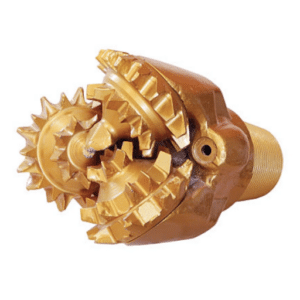
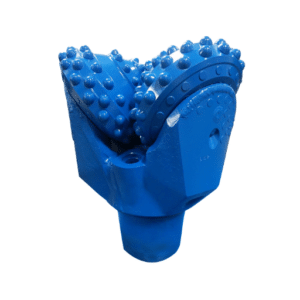
A Chilean contractor named Diego ran a standard rock auger with generic flat teeth into 100 MPa granite on a copper mining foundation contract. Forty hours later, the teeth were ground flat, three holders had cracked off the head, and the project schedule had slipped by a week. Total damage: about $8,000 in tooling plus the lost production.
The fix was not a different rig or more crowd force. It was the right tool. Once Diego switched to a roller bit core barrel to cut the rock ring, then used a rock auger with C31 conical bullet teeth to clean out the core, advance rates returned to 1.2 meters per hour.
This is the story of rock auger drilling in one sentence: the auger is a precision instrument, not a brute-force tool, and treating it as a single category is what destroys budgets. Get the tooth model right, match the flighting to the rock, and respect the UCS limits, and a rock auger will deliver 600 to 800 piles before retipping. Get it wrong and you face Diego’s invoice.
This guide gives you UCS-based selection tables, tooth-by-tooth recommendations, torque per diameter requirements, and clear transition triggers to know when to stop augering and start coring. For the full picture on auger types and applications, see our complete guide to drilling augers.
What Is Rock Auger Drilling?

Rock auger drilling is a foundation drilling method that uses a heavy-duty helical auger with conical carbide cutting teeth to bore through weathered to medium-hard rock formations. It combines reinforced flighting, a robust pilot bit, and tungsten carbide tooth holders to fracture rock at the cutting face and lift cuttings to the surface. Rock augers work economically in rock with unconfined compressive strength up to about 100 MPa.
The differences from a soil auger run deeper than just tougher teeth. A rock auger has thicker flight plate (15 to 25mm vs 8 to 12mm), heavier stem wall (25 to 40mm vs 10 to 20mm), a pronounced conical cutting head instead of a flat or curved bottom, and a tooth holder system designed for free-rotating bullet teeth. The pilot bit is taller and more aggressive, designed to fracture rock at the center before the peripheral teeth shear it outward.
Rock augers are most often used in weathered limestone, sandstone, weathered granite, weak claystones, and similarly classified rock. They are the workhorses of foundation projects in mixed ground where short rock sections need to be penetrated without switching tools.
How Rock Auger Drilling Works
Rock auger drilling looks similar to soil augering, but the mechanics are different. Each parameter must be tuned for fracture mechanics, not soil shear.
Step 1: Pilot bit fractures rock at center. The pilot bit penetrates first, creating a relief cone in the rock face. This central fracture provides a free surface for the peripheral teeth to shear toward, dramatically reducing the force needed at the cutting edge.
Step 2: Peripheral teeth shear outward. As the auger rotates, the bullet teeth ride in their holders and self-sharpen against the rock face. Each tooth removes a small chip rather than grinding the surface. RPM stays low (8 to 15 RPM typical) to prevent tooth glazing.
Step 3: Cuttings rise on the flights. Unlike soil work, rock cuttings are angular and abrasive. Flights must lift them without grinding against the borehole wall. Short strokes with frequent clean-out keep the flights from packing.
Step 4: Auger withdraws for spoil disposal. The operator pulls the auger up clear of the borehole, spins it to throw spoil off the flights, and inspects the cutting head before the next stroke. Tooth and pilot inspection at every withdrawal catches damage before it cascades.
The big differences from soil work: shorter strokes (often 1 to 2 meters at a time), lower RPM, higher crowd force, and constant tool inspection.
Rock Auger Design Decoded
Three design parameters separate a 200-hour rock auger from an 800-hour one: cutting head geometry, flighting thickness, and stem reinforcement.
Cutting Head Geometry
The cutting head is conical, not flat. Cone angle typically runs 30 to 45 degrees from horizontal. A steeper cone concentrates force at the center for harder rock; a shallower cone spreads load for mixed ground. Pilot height extends 50 to 150mm below the peripheral teeth so the center fractures first. Peripheral tooth count scales with diameter: 8 to 10 teeth on a 600mm head, 14 to 18 on a 1,200mm head.
Flighting and Wear Plates
Rock auger flights are 15 to 25mm thick with Hardox 400 or 450 overlay on the leading edges. Hardfacing patterns (often a zigzag bead) protect the top surface where spoil grinds against the flight. Without this protection, flights wear 4 to 6mm per 1,000 hours in abrasive rock. With it, wear drops below 2mm per 1,000 hours.
Stem Wall Thickness
Solid stems run 25 to 40mm wall thickness for rock work. Hollow stems (for CFA-style rock socketing) need 30 to 45mm walls with reinforcement at the kelly box. Welds at the flight-to-stem junction carry full torque load and must be full-penetration with NDT verification.
| Rock Condition | Flight Thickness | Hardfacing | Stem Wall | Cone Angle |
|---|---|---|---|---|
| Weathered, < 25 MPa | 15mm | Leading edge only | 25mm | 30° |
| Medium, 25-60 MPa | 20mm | Full leading + top | 30mm | 35° |
| Hard, 60-100 MPa | 25mm | Hardox + chromium carbide | 35-40mm | 40-45° |
Tooth Selection for Rock Augers

The single biggest performance driver in rock auger drilling is tooth selection. Get this wrong and even a premium auger fails. Get it right and a standard auger doubles in service life.
Conical Bullet Teeth (B47K, C31, BTK Series)
Conical bullet teeth are the default choice for rock work. They sit in a holder and rotate freely under load, which lets the tungsten carbide tip self-sharpen against the rock. The B47K22 is the most common shank size for foundation rock augers. C31 series teeth use a smaller round shank and suit lighter-duty heads. BTK series cover heavy-duty applications with reinforced carbide caps.
For a comprehensive tooth comparison, read our guide to auger teeth selection.
Flat Teeth with Hardfacing
Flat teeth do not rotate and wear asymmetrically, but they perform well in fissured or jointed rock where chips break loose easily. Heavy hardfacing on the leading edge extends life. They are also cheaper than conical teeth and suit projects where ground conditions are mixed and unpredictable.
Bauer Teeth and Roller Cutters
Bauer-style teeth (larger shank, integral carbide) suit big-diameter rock augers above 1,500mm. Roller cutters appear on hybrid heads for harder rock or boulder-rich ground, but they are rare on standard rock augers.
| Rock UCS | Recommended Tooth | Expected Life (hours) | Cost per Tooth (USD) |
|---|---|---|---|
| 5-25 MPa (weathered) | C31 conical or hardfaced flat | 300-500 | 15−25 |
| 25-60 MPa (medium) | B47K22 conical | 200-400 | 25−45 |
| 60-100 MPa (hard) | B47K22H or BTK heavy-duty | 100-250 | 40−70 |
| Mixed, fissured | Hardfaced flat + carbide | 250-450 | 20−35 |
A Polish operator named Tomasz on a wind turbine foundation contract was offered two tooth quotes: generic flat teeth at 12each, or C31 conical bullet teeth at 35 each. He chose the C31s. Tooth life jumped from 80 hours to 240 hours. Total tooth cost per pile dropped 35% despite the higher unit price. The lesson is direct: cheap teeth are usually the most expensive option in rock.
Need help matching tooth models to your geotechnical report? Our engineering team can recommend tooth model, count, and holder configuration based on your UCS and RQD data. Request a tooth selection assessment →
UCS Limits: When Rock Augers Stop Being the Right Tool
A rock auger is economical up to about 100 MPa UCS. Beyond that, it becomes uneconomical even when it can still be physically cut. The transition decision is one of the most important in foundation drilling.
Quantified Transition Triggers
Four field signals indicate the rock auger is being pushed past its limit:
- Advance rate drops below 0.5 m/hr despite full torque and crowd force
- Tooth replacement rate exceeds 4 per 8-hour shift in a single auger
- Torque spikes 30% or more above the soil baseline at the same diameter
- Visible glazing or polishing on teeth instead of self-sharpening wear
If two or more of these appear, stop and reassess the tool. Continuing produces tool damage faster than progress.
Tool Transition Matrix
| Rock UCS | RQD | Recommended Tool | Notes |
|---|---|---|---|
| < 25 MPa | Any | Rock auger, standard teeth | Workhorse range |
| 25-60 MPa | > 50% | Rock auger, heavy-duty teeth | Sweet spot for rock augers |
| 60-100 MPa | > 60% | Rock auger, premium teeth + Hardox | Last economical zone |
| 80-150 MPa | Any | Roller bit core barrel | Cut ring, clean with auger |
| > 150 MPa | Any | DTH cluster drill | Percussive territory |
Diego’s Chilean granite at 100 MPa fell into the upper limit zone. The hybrid approach (roller bit core barrel to cut the rock ring, rock auger to clean the core) is standard practice when UCS exceeds 100 MPa or when economics tip against pure augering.
Above 5 MPa UCS, CFA rock socketing also becomes more difficult. Our CFA continuous flight auger guide covers the related limits for CFA piling work.
Rig Compatibility and Torque Requirements

Rock work demands more from the rig than soil drilling at any given diameter. Torque, crowd force, and speed all need to be matched to the rock condition, not just the bore size. For the full torque calculation methodology, see our auger drill bit torque selection guide.
Torque per Diameter and Rock UCS
| Pile Diameter | Soft Rock (10 MPa) | Medium Rock (40 MPa) | Hard Rock (80 MPa) |
|---|---|---|---|
| 600-800mm | 180-260 kNm | 280-380 kNm | 380-500 kNm |
| 800-1,000mm | 250-350 kNm | 350-480 kNm | 480-640 kNm |
| 1,000-1,200mm | 320-450 kNm | 460-620 kNm | 620-850 kNm |
| 1,200-1,500mm | 450-600 kNm | 600-820 kNm | 820-1,100+ kNm |
Apply a 1.3 to 1.5 safety margin above the calculated requirement for rock (versus 1.2 for soil). Rock work involves shock loads from boulders and fracture zones that soil drilling does not.
Crowd Force and Rotary Speed
Crowd force for rock augers runs 200 to 600 kN, scaling with diameter and rock UCS. Too little crowd and the teeth ride the rock face polishing it; too much and the pilot bit overloads. Rotary speed stays low: 8 to 15 RPM for rock, versus 20 to 40 RPM for soil. Higher RPM glazes the carbide and accelerates wear without improving advance rate.
Kelly Box Sizing
Heavy rock work requires CH200 or larger kelly boxes for the torque ratings involved. Undersized boxes fatigue at the connection joints and fail mid-pile. For matching kelly box dimensions to torque output, see our kelly box sizes guide.
Material Quality and Wear Protection
The difference between a rock auger that lasts 200 piles and one that lasts 800 piles is usually in the steel grade, welding quality, and wear protection stack.
Steel Grades
Stem and flight steel for rock work should use 42CrMo heat-treated alloy steel or equivalent. S690 high-strength low-alloy plate works for flights in moderate conditions. Cheaper S355 plate accelerates wear and fatigue under cyclic rock loads, so it is best avoided on rock-rated tools.
Welding Standards
Full-penetration welding with multi-pass deposition is standard for rock augers. Every flight-to-stem weld carries the full torque load and shock loading from rock fracturing. Ultrasonic or magnetic particle NDT inspection on critical welds catches root flaws before delivery.
Wear Protection Stack
A premium rock auger uses a layered protection strategy: Hardox 400 or 450 plate on flight leading edges, chromium carbide hardfacing on top flight surfaces and the cutting head, and laser-fused tungsten carbide overlay on the most exposed wear zones. Tooth holders are replaceable, so when one cracks, the whole flight does not need rework.
An Indian foundation engineer named Priya specified a heavy-duty rock auger with B47K22 bullet teeth and Hardox 450 flight protection for a metro project in weathered limestone (UCS 35 to 55 MPa). The tool delivered 620 piles before retipping was needed. The local norm in that ground was around 200 piles per auger. The premium auger cost 30% more but delivers three times the service life.
For more on wear-resistant designs, see our guide to heavy-duty auger construction.
Maintenance and Service Life in Rock
Rock work is hard on tools. The maintenance protocols that protect tool life look different from soil auger maintenance.
Daily Inspection
Every shift, inspect tooth wear, holder condition, pilot bit alignment, and flight leading edges. Look for these specific patterns:
- Tooth tip rounding indicates polishing wear from glazing
- Crater wear at the carbide center signals correct rotation, but excessive use
- Holder loosening means the tooth has been hammering rather than cutting
- Pilot tip flattening says the center pilot is overloaded
Repair vs Replace Thresholds
| Component | Repair Threshold | Replace Threshold |
|---|---|---|
| Bullet teeth | 20% carbide loss | 50% carbide loss or broken cap |
| Tooth holders | Visible wear, no cracks | Any visible crack |
| Pilot bit | 30% tip wear | Cracked body or > 50% wear |
| Flights | 15% leading edge wear | 40% wear or any crack |
| Stem | NDT-detected weld flaw | Any crack > 20mm |
Retip teeth at 20% carbide loss rather than running them to failure. A failed tooth often damages the holder and the adjacent flight section, multiplying the repair cost.
Cost and ROI for Rock Augers

Tool cost per drilled meter, not purchase price, is the metric that decides whether your rock auger investment pays off.
| Rock Condition | Tool Life (piles) | Cost per Pile (1,000mm) | Cost per Meter |
|---|---|---|---|
| Weathered, < 25 MPa | 500-800 | 20−35 | 1.00−1.75 |
| Medium, 25-60 MPa | 300-600 | 35−60 | 1.75−3.00 |
| Hard, 60-100 MPa | 150-300 | 60−120 | 3.00−6.00 |
Custom rock augers earn their premium in three situations: oversized pilot bits for boulder-rich ground, hybrid heads with mixed tooth types for transitional rock, and non-standard kelly boxes for older or specialty rigs. Custom designs typically cost 20 to 40% more and ship in 6 to 10 weeks, but the matched performance usually pays back inside the first project.
Working in challenging rock conditions? Changsha Mingyi designs rock augers with tailored tooth configurations, Hardox protection stacks, and pilot geometries matched to your geotechnical report. Send us your rock data for a custom auger quote →
FAQ: Rock Auger Drilling
What is rock auger drilling?
Rock auger drilling uses a heavy-duty helical auger with conical carbide teeth to bore through weathered to medium-hard rock. The auger combines a reinforced cutting head, thick flighting, and a robust pilot bit to fracture rock and lift cuttings to the surface. It works economically up to about 100 MPa UCS.
What UCS can a rock auger handle?
Rock augers operate between 5 and 100 MPa UCS. Below 5 MPa, a standard soil auger is more efficient. Above 100 MPa, rock augers become uneconomical even though they can sometimes still cut. The 25 to 60 MPa range is the sweet spot for standard rock augers.
When should I switch from a rock auger to a core barrel?
Switch when at least two of these occur: advance rate drops below 0.5 m/hr, tooth replacement exceeds 4 per shift, torque spikes 30% above baseline, or teeth start glazing instead of self-sharpening. In rock above 100 MPa, switch immediately, often using a core barrel and auger in a hybrid sequence.
What teeth are used on rock augers?
Conical bullet teeth (B47K, C31, BTK series) are the standard for rock work. Flat teeth with hardfacing suit fissured or jointed rock. Tooth selection depends on UCS, RQD, and the abrasiveness of the rock matrix.
Conclusion
Rock auger drilling is precision work disguised as brute force. The auger looks simple, but every parameter (tooth model, flight thickness, pilot geometry, stem wall, rig torque, RPM) needs to be matched to the rock condition.
The five-step selection process works in any project. Assess rock UCS and RQD from your geotechnical report. Select the tooth model and count from the UCS table. Match the flight design and Hardox protection to the abrasiveness. Verify rig torque with a 1.3 to 1.5 safety margin. Define your transition triggers in advance so the team knows when to switch to a core barrel.
Diego lost a week and $8,000 because he ordered by diameter and trusted the standard tooth specification. Priya delivered 620 piles instead of 200 because she specified premium teeth and Hardox protection. Tomasz cut his per-pile tooth cost by 35% by paying more per tooth. The contractors who win in rock respect the auger as a system, not a part.
Ready to specify the right rock auger for your project? Changsha Mingyi Machinery Equipment Co., Ltd. manufactures rock augers in 42CrMo alloy steel with full-penetration welding, layered Hardox wear protection, and custom tooth configurations for any UCS profile. We support our customers with tooth selection, torque matching, and transition planning for hard-ground work. Contact our engineering team for a free rock auger assessment →