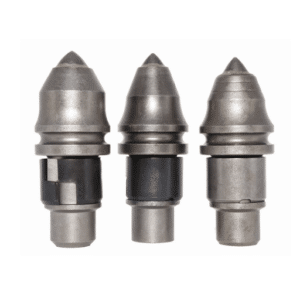
The success of a deep foundation project in the geotechnical and construction industries often stands or falls upon the precise selection of the tooling used. The drill rig, while offering the power, leaves the actual task of penetrating the ground to the ground engagement tools–such as the drilling buckets and augers. Selecting the wrong tools for the particular soil mechanics or rock hardness can result in equipment failure, project disruption, and significant budget overruns. To be wise about drill bucket auger sizes, designs, and applications does not hinge merely on putting a tool to a machine. It consists of the torque-force-strata interaction. This guide is about obtaining the right drilling tools through careful measurements of technical specifications and operational strategies and this will ensure work being done efficiently and with structural integrity in foundation work.
Understanding Auger Types

What is a Drilling Bucket?
It is interesting that a drilling bucket is made to get the soil into a hollow body other than to deliver it. The tool has a bottom portion, which is connected via a joint and equipped with cutting elements and through-slots for material intake. When the tool is rotated, the soil is cut off and pushed through the slots into the bucket. After becoming full, the operator will draw back the tool, move it away from the borehole, and open the bottom latch to release the spoil.
Drilling buckets perform substantially well in loose and non-cohesive terrain like loose sand or gravel, where in conventional flight augering, the material may be lost during extraction. They are similar to drilling fluid applications, in terms of the removal of material in more environmentally-friendly ways than loose sand or gravel in the same way as slurry forms. In addition, the borehole walls are not only disturbed less, but the drilling fluid is also not contaminated, as the design is closed and the spoil is drawn enclosed.
Different Sizes and Their Applications
There are all kinds of size augers that you can use for drilling buckets since they are designed to be used with different sizes of piles afa cations.
Small Diameter (12 to 24 inches): Mainly employed in soil sampling, small support piles, and monitoring wells. These functions demand high speed of rotation but low torque.
Medium Diameter (24 to 48 inches): This size exceeds the demands of most common applications. Be it commercial buildings, bridge piers, or cell tower footings, the medium diameter drilling is ideal.
Large Diameter (60 inches and above): These are got to be the larges diameter drilling bits ever. To be more specific, the enormous infrastructure is the place where the large diameter piles are usually found.
The height of the bucket completes the concern. Higher buckets can stockpile more debris thus enhancing the efficiency of the cycle time (less time needed to lift the bucket out of the hole and place it back in the hole). Simultaneously, a taller bucket will call for a crane with greater headroom and lifting capacity.
Comparison between flight augers and core barrels
The alternatives need to be understood and evaluated properly before the right tool is chosen.
Auger drill bits are the perfect solution for materials like clay, and silt and even soft rocks. The screw-like design of the auger bits also serves the purpose of taking the cuttings out of the hole easily. Moreover, these types of tools are mainly used for cutting through highly compacted soils and soft rocks. For cutting through soft rocks and clay soils, the bit can be an auger type. With the auger bit, soil is lifted up the tube which is being cut by the bit. In the end, you have a hole covered with the wall formed by the soil and rock particles being lifted up.
Standard bits are probably the most versatile of all but least efficient at the same time. The lift would be the slowest with a standard bit. At the same time, the whole tool would really depend on the operator and the soil condition. The drying or wetting of the soil will largely affect the performance of a standard bit which an operator must be aware of.
Choosing the Right Drilling Tools
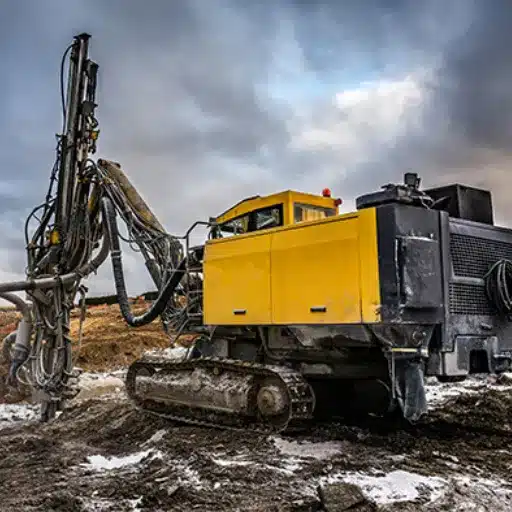
Factors to Consider When Selecting an Auger Size
The diameter of the drilling rig or auger must be not less than the one shown by the design documents, but the final judgment may still be guided by a variety of parameters:
Encasement: Should the hole need to be secured by means of temporary or permanent casing the diameter of the tool must be such that it is smaller than the inner diameter of the casing in order to avoid binding, yet still be large enough to allow maximum excavation. A common clearance figure is from 2 to 4 inches, and it depends on the project’s depth and verticality requirements and on the drilling conditions (presence of small boulders, boulders, etc.)
Under Torque: The use of larger diameter tools implies much more torque than smaller ones. An oversized cutting tool on a weak rig will cause lock-up and, consequently, no penetration can be achieved through hard layers.
Volume of Earth: In the course of deep drilling, the weight of the soil inside the bucket will contribute to the line pull load. The total weight of Kelly bar, the tool, and the fully loaded bucket will have to be calculated by the engineers to see if it still falls within the rig’s safe working load limits.
Heavy Duty vs. Standard Augers: Which one is Suitable for You?
In common cases, the manufacturers offer the tools in “standard” and “heavy-duty” types.
Important Note: The use of the standard (light-duty) tool in a situation of heavy-duty applications will result in a sudden breakage of the tool while the application of the heavy-duty tool in soft soil causes an unnecessary increase in fuel demand and wear of the rig as a result of the weight gain.
Typical Uses of Soil and Rock Augers
- Soil Augers/Buckets:
These are the top choices for clay and silt. The spacing of the slots is expanded to carry the sticky minerals in easier.
- Rock Augers/Buckets:
They differ in shape or patterning of the teeth. The teeth are arranged in a methodical cutting pattern which can aid in the rock breaking process, and the flight pitch is often not as steep. Rock buckets often have smaller intake openings so that large boulders are kept in place once dislodged.
Using Drilling Buckets Effectively
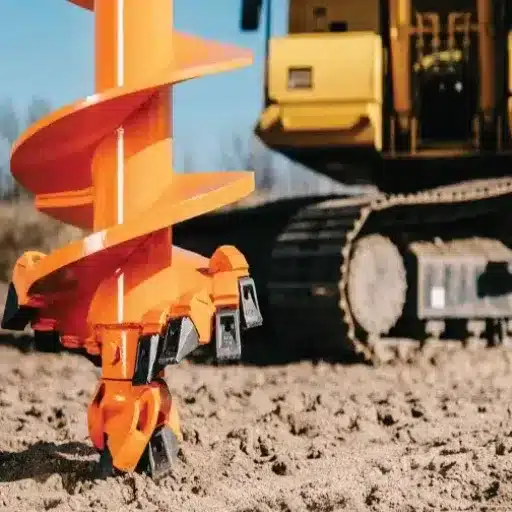
Using a Drilling Bucket the Right Way
The operator must not only keep the crowd pressure (downward force) in check but also regulate the speed of rotation.
- Entry: Start rotation even before the tool makes contact with the hole bottom.
- Cutting: Keep pushing down the tool at a constant rate of speed. The tool may block or stay still if the force is too high, the ground may polish the teeth and not cut, if it is too low.
- Filling: Watch the torque meter. One sudden rise in torque normally means that the bucket is already full of the soil or has hit a hard object.
- Extraction: Halt rotation and lift the tool a little to free the bottom. Raise the tool with great care so that the “piston effect” (suction) should not cause the collapse of the well wall.
Tips for Equipment Longevity through Maintenance
To the bottom of the hole with A through B (mode of drill rig/tool) a crack or a situation like that could be just around the corner. A regular checkup of the Kelly box and the pinholes is the only way to keep tabs on the integrity of the box and rig bond situation.
Tooth Rotation: The conical teeth that act as cutters are meant to rotate in their places to wear evenly. When they lock, however, they will lose their smoothness and will not be efficient cutters. By manually rotating the teeth on a day-to-day basis you will replace the retaining collars accordingly.
Hinge and Latch Mechanism: With drilling buckets, the dumping mechanism at the bottom is a very important aspect. The hinge pin is to be well greased so that the latch spring can be of a sufficient tension to easily keep the bucket closed during the drilling but also to allow easy dumping.
Common Mistakes to Avoid
- Overfilling: If you put excessive material into the bucket, you end up compacting it and making it difficult to unload. Furthermore, you also expose the bottom latch to the risk of failure due to the weight.
- Wrong Teeth for the Strata: The use of dirt teeth on hard surfaces will tear the teeth apart in minutes. On the other hand, the use of the rocks’ teeth in sticky clay may not cut anything and may even happen that the tool becomes less effective by “balling up.”
- Ignoring wear pads: The diameter of the hole is maintained by wear pads on the outside of the bucket. When these are worn off, the bucket drills a tapered hole, which can be problematic during rebar cages or casing insertion.
The Role of Drill Rigs and Excavators
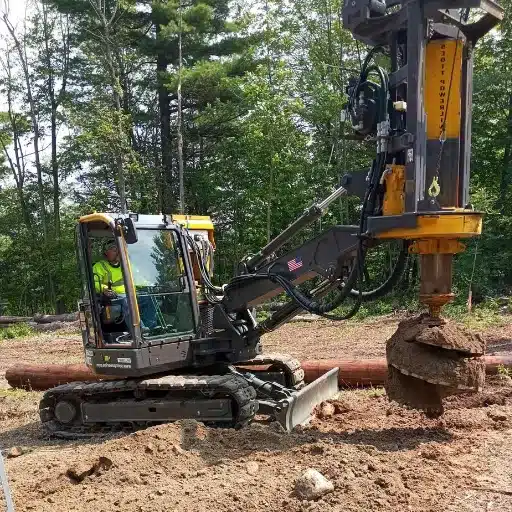
Integrating Augers with Drill Rigs
Dedicated rotary drilling rigs use a telescopic Kelly bar to transfer the torque and down force. The size of the Kelly bar (e.g., 150mm, 200mm square) decides the bucket’s box size. There can be adapters, but they not only extend the constructions but also add weak points.
With the help of the electronic monitoring systems installed, the limit of torque can be preset by the operators, and the settings are usually based on the kind of tool in use. Thus, not only the torsion but also the equipment and the Kelly bar, in particular, are protected from damage.
Advantages of Using Excavators for Drilling
For the shallower holes or the locations that are hardly accessible, having excavators with high-torque drill motors is another option than using rotary rigs. Among the mobility and reach, the latter is still listed as his only negative point since he lacks the thrust of the excavator. The cutting teeth of the drilling bucket are almost parallel to the direction of drilling.
Hydraulic Power in Auger Drilling
What gives life to the drilling operation are the Hydraulic flow (GPM) and pressure (PSI).
Flow
Rotation speed is decided by it. Uppermost spin-off speeds are indispensable for cleaning flight augers, whereas drilling buckets need rotation controlled, high-torque rotation.
Pressure
The torque is set by it. There is a need for larger buckets the use of high-pressure systems to turn the tool against the soil’s resistance.
It is indispensable to match the drill motor displacement to the excavator or rig’s hydraulic output to avoid overheating the hydraulic oil and damaging the pumps.
Specialized Applications and Techniques
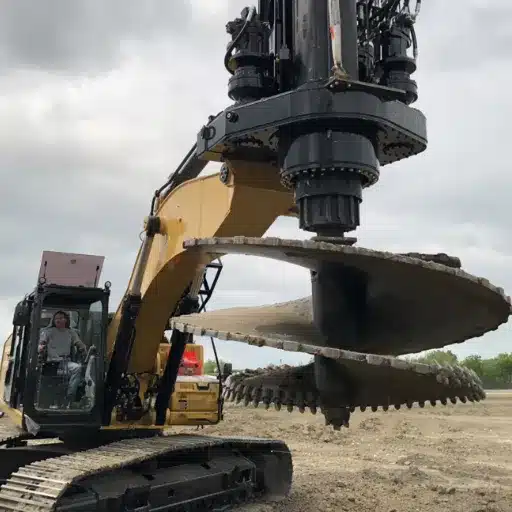
Environmental Drilling and Sampling Techniques
Whenever drilling in potentially contaminated sites, making sure that the spoil is not scattered is their first concern. It is better to use drilling buckets rather than to use flight augers, as they collect the spoil, holding it back and not letting it fall outside the hole. For cleaning the final few inches of the disturbed soil, specialized “clean-out” buckets with flat bottoms are used to have a clean interface for sampling or concrete placement.
Deep Foundation Drilling with Hollow-Stem Augers
The job of hollow-stem augers is not to bucket; they are poking tools; however, these are worthy of mentioning in conjunction with deep foundation. Because apart from drilling into rock, they at the same time are building the hole; this would be its temporary casing. The hollow center stem is where the sampling or the concrete injection happens. Frequently, this is the method chosen when the ground is stably steep as a borehole would collapse before a bucket could be tripped out.
Using Heavy Duty Rock Augers for Tough Conditions
When dealing with hard limestone, granite, or reinforced concrete (for instance, when drilling through old foundations), the standard geometry is no longer effective. Heavy-duty rock augers benefit from:
- Double Start Flighting: This means there are two cutting edges which helps spread the load.
- Progressive Cutting Angles: Teeth are laid in a pattern that cuts concentric grooves, and hence, less compression and the rock is more likely to fail in tension.
- Pilot Bits: A substantial middle drill that steadies the tool and directs the cut efforts.
Reference Sources
-
-
Study on Critical Drilling Parameters for Auger Drilling – Explores the design and parameters of auger drilling tools for efficient performance.
-
Size Distribution and Shape Characteristics of Ice Cuttings Produced by an Electromechanical Auger Drill – Focuses on auger drilling in ice, analyzing size and efficiency.
-
Drilling Fluids Processing Handbook – Provides insights into drilling systems, including auger tools and their practical applications.
-
Frequently Asked Questions (FAQs)
What is the most common size of drilling bucket augers that are used for piling purposes?
The sizes of drilling bucket augers for piling up to the large-diameter boreholes are usually very wide, ranging from a few inches to 48 inches according to the project needs. The heavy duty models that are intended for foundation construction and piling have considerable resistance to hard soil and in some cases rock formations. They are generally fastened to the excavator or drill rigs which facilitates their relocation from one site to another. The auger is composed of a central shaft and cutting teeth, and the bucket is activated by the hydraulic system of the rig to perform the onward task. The drilling in hard rock or difficult rock formations may require the use of heavy duty and stronger ones, and torque ratings are factors that need to be considered when selecting sizes for the drilling equipment for hard rock conditions.
In what ways the drilling process be different for the soil auger and rock augers?
One of the main issues is that there is a big difference in the drilling process itself. To begin with, soil auger systems are meant for operating in soft to medium soils, rock augers, core barrels and heavy duty rock cutters, on the other hand, are used for drilling in hard rock and for the very dense formations. By using soil auger or bucket auger, system buckets are turned to lift out boring spoil while in rock drilling and rotary drilling cutting teeth and high torque are the main methods to chip or core rock formations. The ground water can be managed and borehole integrity can be maintained by using specialized rock augers or casing and core barrels when operating on hard rock. Meanwhile, the hydraulic system and the drill rigs should provide enough torque and revolution speed for the chosen cutter and dry type. The use of hollow-stem augers or flight augers are recommended for sampling and environmental drilling applications as these types of augers are very good for undisturbed sample recovery.
What reasons is it that the maximum diameter of an auger depends on?
The primary factors, governing the maximum diameter of the auger, are the torque that the rig can produce and the capacity of its hydraulic system, the durability of the structural components of the auger, as well as whether the project demands large-diameter boreholes for foundation construction or piling. The resistance of the soil to be excavated and the design of the teeth on the cutting edge of the auger, as well as the use of casing or hollow-stem augers for drilling control, play a significant role in determining the maximum feasible size of the auger. Also, the existence of the ground in the form of hard soil or rocks and water table close to the ground surface, will not only require heavy duty drilling equipment but also probably some specialized rock augers or core barrels. Whereas, flight augers and bucket augers demand different types of loads, hence appropriate matching of the auger type to the rig and soil type is of the utmost significance. For a safe and efficient drilling and piling operation with the least wear and damage to the drill and cutter components, it is important to choose the right type of cutter and drilling equipment, have proper maintenance program, and select the suitable drilling technique and so on.
What is the specific role of cutting teeth and cutters in the case of hard rock and hard soil?
The cutting teeth and cutters for hard rock are built to be more resistant to impact and abrasion and they often make use of tungsten carbide or other materials that are wear-resistant in comparison to the ones used for hard soil. In the latter case of hard soil, the attention might be on efficient excavation and spoil removal to be obtained from flight augers and soil auger cutters while the rock augers and core barrels need to have very aggressive cutting teeth and even sometimes require the use of percussion or rotary drilling in order to get through the rock formation. An auger is typically made up of a shaft, flights or a bucket, and the appropriate cutter; this choice will determine the amount of torque required and the load applied to the hydraulic system of the rig. For the case of hard rock drilling, the operators could set the torque at a higher level and slow down the rotation speed to enable the cutting teeth to break the rock efficiently, and they may even use a casing system in order to maintain the hole’s stability. It is crucial to keep the cutting teeth maintained and also to monitor the durability of the drilling equipment in the case of heavy-duty and long-duration rock operations.
How is an auger attached to a drill rig and what safety considerations apply?
An auger is connected to a drilling rig by a drive head or a coupling transferring the torque from the hydraulic system to the shaft of the auger, and larger bucket augers are often non removable and require the use of heavy duty drive units or adapters. The right coupling guarantees that the bucket or flight auger will be able to move and lift the spoil, and thus the hole will be kept clean; casing may be used for large-diameter boreholes to avoid collapse. The operators have to take into account the capacity of the rig, the dimensions of the auger, the range of which is from the lowest in inches up to the 48″ auger, and the drilling process the most common one in order not to overload the hydraulic system or exceed the torque limits. Safety on job sites includes the following: rig is stable, groundwater and borehole are constantly monitored; and teeth and tools are replaced in case of badmorecondition to avoid breaking. One can reduce the risk during drilling and piling operations by conducting regular inspections and strictly following foundation construction and piling standards.