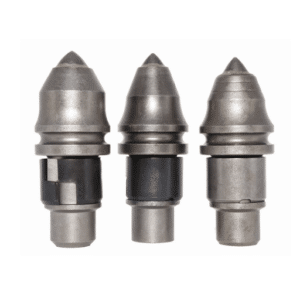
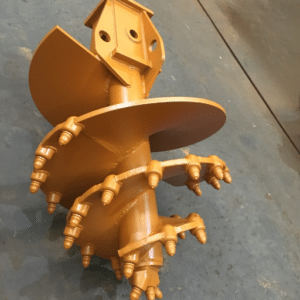
Great rock drilling practices are being implemented in construction and mining sites. Such practices play a crucial role in the removal of materials and the construction of infrastructure. At the same time, society is constantly facing new and even more complicated needs for the conservation of the planet. This has prompted the world to think of more environment-friendly ways besides growing the efficiency of the industries and thus creating the right environment for the search for new drilling techniques for the construction industry. Indeed, the times saw the need to come up with new ways in being more environmentally friendly and continuously more accurate, and that these demands would also foster the emergence of completely different methods of drilling. No wonder that, in our article, we are discussing such(direct) innovations in the field that give a glimpse of the wide range of futures that might result out of these researches including not only the tools but also new processes and materials alike. The article is a long stretch of information that makes it easy for the reader to go through a detailed list of all the benefits of the new technology and at the same time not missing any of the changes it brings to the industry. The author also takes the reader through the subject of the instruments of the future that are most likely to replace the ones that have been in use for decades. The aim of the drill-makers is to provide the market with affordable and more efficient products and at the same time environmentally friendly ones. The kicker is that the future drilling instrument is expected to be capable of drilling through the hardest rock with ease, following the path picked by artificial intelligence for robots that are able to teach themselves the natural features of rocks.
Understanding Rock Drilling Techniques

Rock Drilling: A Brief Overview
Rock drilling is a vital operation in various industrial applications like mining, construction, and energy sources, and hence very precise and efficient work is needed to get the best results. Basically, rock drilling comprises boring holes or rock cutting with the use of special equipment and techniques. The selection of a method depends on various factors, among them the hardness of the rock, the depth needed for the hole, and the use for the hole. Some common techniques are percussion drilling, rotary drilling, and directional drilling, with each having variations to adjust to the different conditions of the earth and operations.
The latest super modern advancements have been enhancing these strategies continuously which means implying the use of more and more innovations such as the drilling systems driven by computers, the sensor technology, and the very advanced drilling fluids to boost the performance. These improvements have not only boosted the productivity but also have minimized the environmental impact and wear of the equipment. It is important to have the skills to do the right thing in the technical complicated drilling rocks and also be aware that safety is the primary thing for the project and the earth.
Types of Rock Drills and Their Applications
There are different types of modern rock drilling solutions that can be categorized based on their design, functionality, and application environments. The main categories are rotary drills, percussive drills, and rotary-percussive drills, each playing distinct roles in the mining, construction, and exploration sectors.
Rotary Drills
They are designed to use the rotary motion of the bit to drill into the rock. Being used in the case of soft and medium rock, these drills are also capable of creating large-diameter boreholes through the combination of continuous rotary motion and the force which is applied. Oil and gas explorations as well as open-pit mining are the industries that commonly use these drills. The modern rotary systems incorporate computerized controls and real-time performance monitoring to ensure precision and high operational efficiency.
Percussive Drills
The high-impact percussion drills which are also known as hammer drills are machines that provide a fast and efficient way of cutting through rock that is very dense and hard. These drills are commonly used in the construction of tunnels, making of foundations, and mining underground. Their distinct feature is that they are provided with a rapid and strong percussion which produces the desired results.
Rotary-Percussive Drills
These are the twin action drills that by rotating and hammering are proficient to deal with all kinds of rocks. It is not practical to carry on with hard and soft rock drilling in separate areas with the use of these machines. They are the perfect equipment for projects that need a mix of both types of rock in the same layer and they are mainly used in the drilling of geothermal wells and in some select quarrying activities. Advanced technologies are now available in the market which has made possible the use of drill heads and drills which are most efficient as regards the use of both energy and materials. The cost of the machine has to go down as well due to the less actual material used and also because of longer usage by the client which will reduce costs for the client in the end. Thus, the heavy investment required initially for buying and subsequently operating such machines will be drastically reduced. Their most prominent feature today is that they are efficient and have lower use of materials and lower cost resulting in a quicker return of investment on the machine.
The choice of each drill type was based on specific project parameters such as rock hardness, depth requirements, and environmental conditions. The applications of these drills are made even more efficient by the use of innovations in materials science like diamond-coated drill bits and wear-resistant alloys, which at the same time made the service life of the tool longer and the cost efficiency of the drilling process more optimal.
Choosing the Right Tool for the Job
To pick the best tool for drilling, you have to carefully review the project parameters and have a good grip on the material’s behaviour at different conditions. For example, in very abrasive conditions, the most common recommendation would be tools with superior coatings such as polycrystalline diamond compact (PDC) layers; this is because these are the hardest and most wearable among them all. At the same time, the design of the tool should be identical to the drilling equipment, as unsuitable alignment or capacity for torque can lead to the drastic reduction of efficiency and intensification of equipment strain. The contemporary improvement in finite element analysis and computational modelling have allowed engineers to identify the best solutions that specific drilling issues are facing by accurately, reliably, and predictably modelling tools’ performance. This method, which is based on the fed data, guarantees the best possible mix of the three factors; performance, durability and cost-effectiveness in the most challenging operating environments.
Materials and Equipment for Effective Drilling
Overview of Diamond Drills and Their Benefits
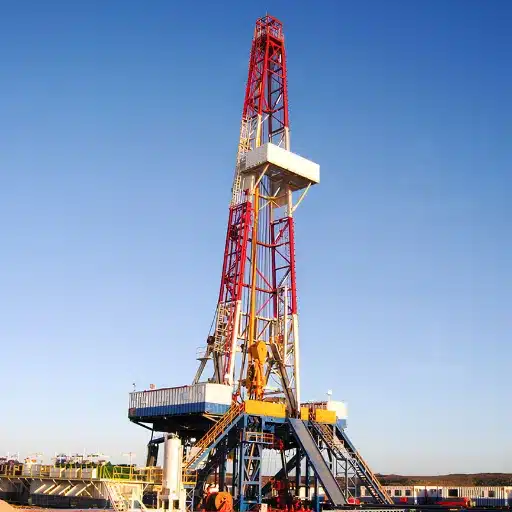
Diamond drills are known by everyone and are outstanding when it comes to cutting and drilling especially in materials like concrete, ceramic, and stone. They are made of segments that are above industrial grade and are able to cut and make holes because of the toughness and heat conductivity of diamonds. Besides their efficiency, they also stand out in wet drilling scenarios, where water cooling is applied to avoid overheating and reduce dust production, thereby, extending tool life and improving operator safety.
There have been many tech-boosted changes in the diamond drill produced lately, leading to even better functionality. This is mainly due to upgrades in the bond matrix technology and segment design; such improvements not only make the material removal rate faster but they also make the drill more durable and reduce the power requirements. Thanks to these properties, diamond drills become essential tools in the fields of building, mining, and precision engineering; where they are indispensable for reliable work with the same time, frugal use of the resources. Moreover, their long life and the variety of their usage confirm the diamond drills to be the very first choice in hard material operations mainly for the professionals.
Comparative Analysis of Rock Drilling Machines
The evolution of rock drilling machines has come a long way in terms of technology, efficiency, and applications for different industries. These machines can be broadly classified as rotary drills, percussive drills, and top hammer drills, and each has been designed to overcome different geological challenges and work in specific operational settings. Among these three types of machines, rotary drill stands out as the most efficient when it comes to soft rock formations. It uses a smooth, continuous rotary motion which ensures that the boreholes are drilled with the least possible vibration. On the other hand, percussive drills are a good choice for medium to hard rock, as they use the combined action of high-frequency hammering along with rotation thus achieving high rates of penetration and performance that is hard to beat.
Top hammer drills which are often used in tunneling or quarrying use percussive energy from a hammer mounted on the top and transmitted through drill rods, thus ensuring consistent energy transfer even at the deepest levels. One of the key factors in choosing the right machinery usually is the rock hardness, operational depth, and required hole diameter. Moreover, the introduction of automation, telemetry, and real-time monitoring for instance has made the system more efficient and safer, with more precision and overall operation efficiency and fewer working hours at the same time. The importance of rock drilling machines in the present industry is highlighted by these technologies, that have the key attributes of precision and durability in the process.
Necessary Items to Drilling a Hole
The application of specialized accessories that are capable of both getting the best work quality and drilling precision with a drilling machine is a must. Drill bits together with stabilizers and dust suppression units, each one targeting especially one specific weak area within the whole procedure, are the main accessories to be mentioned here. Meanwhile, they totally eliminate the hang-up for the new system at first sight. Drilling operation safety is improved by the removal of the airborne particles thus there is no more lungs and eyes irritation. On the other hand, with drill pipes and rods being the earliest critical components on site, their strength and hardness respectively are most emphasized in the selection of the steel type. Lubrication should also be taken seriously in the long run since apart from those cases mentioned, it will also have a big impact on tool quality and life as well.
Contained in this Category are drill bits which are specially designed for work on particular materials and have applications such as hard rock and diamond drill bits for high precision tasks. Stabilizers are important for the maintenance of hole trajectory and damping vibration so as to ensure the accuracy, especially in deep drilling. Dust suppression systems and high-efficiency collection units are the means to the ends of reduced worker exposure to particulates and, therefore, disability-causing diseases. The shafts can support specific applications such as hammer drilling, augering, and conventional drilling by the necessary variation of the rods but it is preferable to have them configured as a system by the manufacturer’s design so that they also look aesthetically good. All of which, one might say, makes drilling jobs dull and uneventful but the other school would argue differently that they are requisite.
Advanced Techniques in Rock Drilling
Innovative Ways to Create Holes Efficiently and Effectively
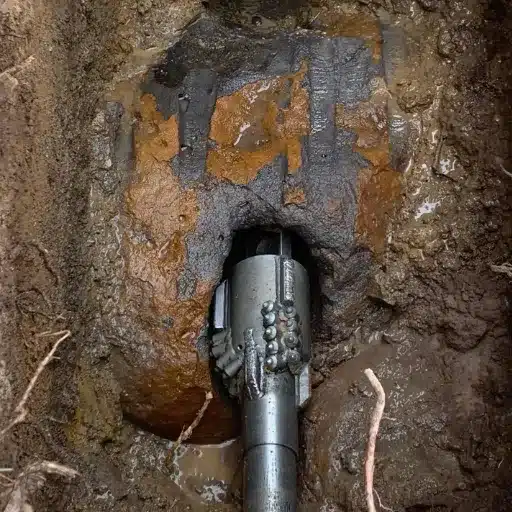
Discoveries in the field of rock drilling have come up with a number of interesting and useful methods and techniques to help improve the efficiency of drilling and also to save energy. One of these is the down-the-hole (DTH) drilling technology, with the method delivering the percussive energy directly to the drill bit with the help of compressed air. This reduces the energy lost and makes possible the creation of perfect, vertical holes with a very low-level of operational vibration.
Another method adopts percussive drilling in addition to the rotary mode, thus enhancing the breakage of hard rocks by the use of a higher frequency of percussion. When associated with the drill bits covered with diamonds, this way it rocks the rates of the penetration are quite remarkable, and the durability is also better even in the severest of the geological conditions.
In addition, the use of a laser to drill is being seen as a very modern and high-class solution for cutting; it uses heat from the laser to crack the rock. This new process significantly reduces the wearing out of the drill bit and -as well as- the uprightness and accuracy of drilling in complex situations are considerably improved. Further, the real-time monitoring of the drilling operation is made even more efficient and effective with the integration of monitoring systems that provide a detailed and continuous flow of data on critical drilling parameters like pressure, torque, and temperature. Instantaneous performance adjustment is therefore facilitated, whereas the overall performance is also optimized. These new developments mainly refer to the desire of the industry to move forward in terms of both precision and efficiency in rock drilling.
Technological Progress in Rock Drill Machinery
The incorporation of automation and artificial intelligence (AI) into drill rigs has totally changed the way we work with the machines and make decisions in the drilling and mining industry. Nowadays, drill rigs with automatic functions are programmed with smart algorithms which support technological drilling, which means the machinery is capable of changing settings such as feed rate, speed of rotation, and drill bit pressure,100 % according to the real-time feedback of the drilling machine. AI-driven predictive maintenance devices scrutinize the data from the sensor for anomalies and signs of wearing, therefore serious failures can be avoided, the down-time can be significantly reduced, and the relevant repairs can be spotted early. Moreover, self-driving or, as the other name goes, driverless drilling rigs are one the way one by one in the world of mining and tunnelling operations on an unprecedented scale pointing out human lives shall be prevented from long exposure to life-threatening conditions and, at the same time, strict standards of performance would be maintained throughout the entire project area of mining or tunnelling. So, there is no doubt that these new technologies are not only production friendly but are also pioneers in the environmental-friendly operation of rock drilling.
Safety Protocols in Rock Drilling Operations
When it comes to the heavy machinery, high-pressure systems, and unstable geological conditions that are part and parcel of rock drilling operations, proper safety protocols are necessary to reduce the risks down to an acceptable level. One of the tasks that your machine operators will not be allowed to do in the absence of proper wear of personal protective equipment (PPE) is to handle them with maximum caution. In addition, operators need to undergo a comprehensive and continuous training program that includes emergency procedures, equipment handling, and hazard recognition, as far as maintaining a safe working environment is concerned.
Moreover, as a significant factor, the introduction of high-end monitoring systems including real-time geotechnical sensors and automatic drill monitoring software locations is responsible for the identification and the elimination of potential hazards at the earliest warning. In addition, maintenance and inspection on a regular basis are a must in order to guarantee not only the operational integrity but also the failure-free equipment. Ventilation systems that are effective are a must for underground operations to control and get rid of dust and gas emissions, thereby diminishing the respiratory problems due to the risk of explosive environments.
Another point that is worth mentioning is that following the set of rules, like using the standards of Mine Safety and Health Administration (MSHA) or the International Organization for Standardization (ISO), will make sure that one is not only being obedient to the safety measures of the industry but also reaching the standard. Such steps, which will be part of a program that emphasizes the members’ being aware and, on the other hand, being answerable, are required for the safety and the smooth working of the processes in the rock drilling industry.
Applications of Rock Drilling in Various Industries
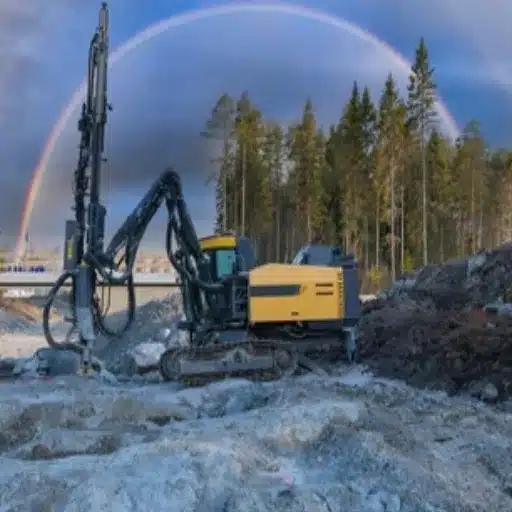
Construction Industry: Drilling for Foundations
The construction industry certainly relates rock drilling, especially for solid foundations of large-scale structures. The whole technique consists of going through various types of rock to check the subsurface conditions, make the removal of hard material easier, and make sure that the foundational elements will be able to be anchored securely. Nowadays, with the help of rotary and percussive drilling methods among others, the control of the process is more accurate and the efficiency is higher even in the worst geological conditions. On top of that, the utilization of DTH drills and the use of advanced monitoring systems are the factors that contribute a lot to the accuracy of the process and reduction of risks of the structure becoming unstable. By implementing rock formation type-specific protocols, the engineers have an easier task of using foundation design that will be the best for the tensile strength and, as a result, will support the longevity and safety of the infrastructure projects.
Mining Industry: Techniques for Extraction of Resources
One of the most active industry in the world that beside its capability of efficiently extracting wealth from the earth, as the use of open-pit mining to extract minerals that are near the surface, it is also committed to using the most advanced technology to extract resources in an environmentally friendly manner. The method called open-pit mining is used to get the minerals up to the surface in case the deposit is not too far down. Open-pit mining is very effective and economical for a certain depth of the deposit, followed by the ore extraction. For the deposits in the deeper areas, room-and-pillar mining as well as the longwall mining technique have been allegedly employed. Especially the longwall mining is a very automated process and one which compromised areas are controlled, therefore creating a more secure and efficient environment.
Exploration activities get an edge in finding out the precisely located mineral deposits and their structure as well by the deployment of the most sophisticated technology like geophysical mapping and 3D modeling. Indeed, these methods lead to an effective reduction in the number of exploratory drills which in turn save the environmental system. Equally important is the utilization of sensor-based ore sorting that introduces spread of valuables in real time and therefore results in better processing and less energy consumption.
Hydrometallurgical and pyrometallurgical methods are used to extract metals from the ore most of the times. Hydrometallurgy which is based on the usage of water chemistry for the metal recovery situations has been extensively used in the case of rare earth element and copper extraction. On the other hand, automation breakthroughs like the independent trucks and unmanned aerial survey technology are other means for the mine drones to step up their productivity alongside the reduction of worker’s health risks due to the presence of the harsh environment. In the end, these smart and green mining techniques contribute to the industry’s transformation from a traditional to a more sustainable practice.
Environmental Concerns in Rock Drilling
Rock drilling is indeed one of the most important activities in mining and energy production but it also causes the release of dust particles into the atmosphere which is a common issue and a public health concern. Dust particles or fine particulate matter (PM) with diameters below or equal to 10 micrometers can be inhaled easily through the respiratory system posing a threat to people’s respiratory health. The implementation of dust control measures that allow for the dry or wet collection of the dust is a way to prevent these particles from becoming airborne. Expensive and complex systems like dust collectors may be necessary for higher dust loads.
Another considerable issue is the noise and vibration which can be caused by drilling activity during the building of the wind park, it can negatively affect the animals and people living around the place. Therefore, it can be necessary to use low-vibration drilling methods apart from putting up barriers that will absorb noise. Furthermore, the penetration of the rock with a drill can change the underground water network through cutting across the natural flow and even polluting the water with the drilling chemical. High-performance, biodegradable drilling fluids and the strictest of containment practices are essential for avoiding the risks from water resources.
The promotion of sustainable drilling techniques in the use of electric and hybrid drill rigs has reduced not only carbon emissions but also the dependence on fossil fuel. Individually and collectively, these steps show the mining industry moving towards more sustainable practices while at the same time keeping the operation efficient.
Future Trends in Rock Drilling Technology
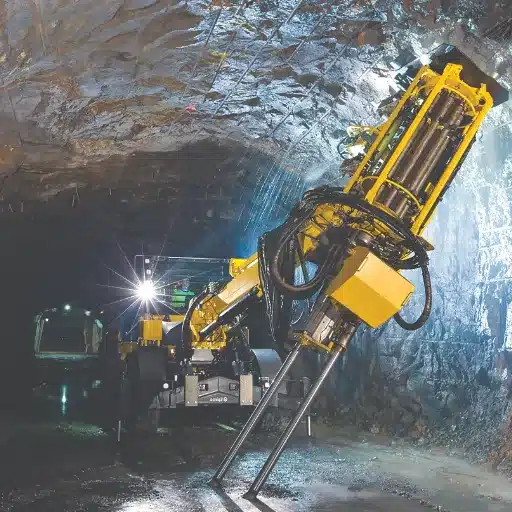
Emerging Technologies in Drill Design
New technologies of the 21st Century have drastically changed the way we design and use drills. Drill design as one of the most basic and necessary tools without which no energy, construction, mining, or many other industries can exist has gone through various stages of development in the past; but the rate of change and the impact on these technologies from the start of the new century is phenomenal. The whole drilling operation starting from the selection of the drilling site getting a borehole, etc. is almost fully automated now. It begins with the site location process which is carried out by Artificial Neural Networks and Fuzzy Logic followed by design instructions given to the robots to set up the drilling platform and from here on there is no human intervention in the whole process. The rate of advance in mechanization and automation is increasing with time and would soon result in low operating costs and high productivity.
Another thing worth mentioning is the installation of real-time monitoring systems. This equipment makes use of sensors with IoT technology for the measurement of several crucial and high-risk parameters such as pressure, rotation, and bit wearing, and thus, improves not only safety but also productivity. Furthermore, electric and battery-powered drill rigs’ development is also a major step in the quest for energy efficiency since they significantly decrease the discharge of exhaust gases and lessen the reliance on conventional energy sources. Altogether, these advancing tools mean more than just a change in the designing of rigs but industries’ adherence to green practices and application-of-the-art technology.
The Role of Automation in Rock Drilling
Automation is a major innovation that I am witnessing, and I am totally sold on the idea that it is a transformation very much needed for the rock drilling industry to catch up. When robots get integrated into the drilling machines, the work gets more precise and there are fewer mistakes which is a pleasing feature especially in the environments that are risky. The operators can control the machines at a distant place with their insight and the monitoring central; they only need to access the internet. The sensors and machine learning algorithms that are utilized by the automated rigs can make sure that drilling of oil or gas is done in a more optimized way, taking into consideration the parameters for drilling such as depth, penetration rate, and bit pressure more effectively and with less manual intervention. This practice does not just give you less downtime, but you also have the whole of drilling equipment, namely, the drilling components, being utilized most efficiently thereby adding to its life.
Automation offers yet another very important advantage, safety improvement. The elimination of the necessity of having a human in a hazardous drilling zone greatly decreases the likelihood of workplace accidents. Besides, the remote operational capabilities make it possible for several rigs to be observed and managed from one location, thus reducing the redundancies in communication and ensuring that the time for the emergency response to the unexpected issues is the quickest possible. The optimization of data analytics is the element that also reinforces the higher operational efficiency through those systems that are able to detect possible equipment breakdowns and suggest the preventive maintenance operations.
All in all, automation in rock drilling is a very important step in attaining more efficiency, environmental friendliness, and safety in the field. The firms that are taking up these technologies are poised to come up with a lot of advantages in the long run by decreasing the operating costs and environmental impact of their operations. The automation continuing to evolve, and that its marriage with robotics and artificial intelligence will reshape the sector making it more innovative and, at the same time, dealing, successfully, with the difficult issues in modern rock drilling operations.
Impact of Sustainable Activities on Drilling Operations
The drilling industry is being fundamentally transformed by the adoption of environmental sustainable practices, where a main focus is still kept on the performance. The use of these eco-friendly steps and the application of state-of-the-art techniques will absolutely minimize the damage to the environment. One good example of this is the employment of closed-loop systems, where the flow of drilling fluid is made possible according to the demand by recycling the fluid. This kind of system does not only prevent waste but also assures the quality of water outside the system as it is not coming in contact with it. Besides that, the drillers who are starting to use solar or wind energy for power in such remote areas are improving their environmental stance and minimizing their carbon footprints.
Moreover, the adoption of sustainable practices resonates with the increasing stress on corporate social responsibility (CSR) and stakeholder requirements. Apart from merely management of the ever-increasing environmental regulations, the sustainable operations contribute to the trust of the community and at the same time ensure that the natural resources will sustain for long-term use. In addition, the usage of big data and the internet of things (IoT) technologies together with advanced information technologies lead to the evolution of the extent of the resource usage monitoring and so the environmental impact checking that at present not only can be done in real-time but also can be done with the support of the instantaneous effectiveness of the data. Let’s look at some of the ways that the use of AI in predictive maintenance can reduce the downtime of equipment and therefore prevent the waste of energy which is among the main factors in the sustainable use of resources in the drilling industry.
In a nutshell, the sustainability measures introduced in the drilling industry these days are more than just a legal requirement – they are the only way to survive and prosper. The list of such proactive steps that will become obligatory and eventually integrated into the drillers’ standard operational procedures is already there. The group of such companies either becoming with such measures or leaving the industry altogether will be the first to be green. It is not just a law that enforces the adoption of these changes; it will be the businesses themselves demanding such practices. The companies that are smart enough to be the first ones in the industry to start with such measures will reap the many benefits both in the public’s perception and in the costs of adapting to the new environmental-friendly regulations. The external source of surprise that will finally hit the market is the green companies, the ones that are first to adopt some of the practices now that will be common occurrences in the future. By adopting the mentality of continuous improvement and using the tools that are made available due to sustainable practices, we are ramping up for a change where the importance of the environmental and economic missions are equally recognized.
Reference Sources
Thermal Spallation Drilling – Stanford University
Discusses spallation technology as an innovative method for rock drilling using hot fluid jets.
Angelwing Bivalve Inspired Rock Drilling – Georgia Tech
Explores advancements in drilling technology, including durable drill bits and enhanced penetration rates.
Technologies in Exploration, Mining, and Processing – National Academies Press
Covers traditional and advanced drilling and blasting methods used in mining and construction.
Well-Drilling Methods – Western Oregon University
Provides insights into various drilling methods, including dual-wall techniques for different geological formations.
Earth Mechanics Institute – Colorado School of Mines
Focuses on rotary and percussive drilling, along with customized testing for mining and tunneling projects.
Frequently Asked Questions (FAQs)
What are the most popular rock drill types that are used for rock drilling?
There are multiple drilling tools for drilling that can be selected among the top ones which are rotary, percussive (hammer), and down-the-hole (DTH) drills; according to the hardness of the rock and the size of the job, some drill types are better suited than others. Rotary drills are used for softer rocks and core sampling while percussive and DTH drills are used for hard rock and blast hole drilling due to the high power of the impact they generate. Surface rigs, portable jackleg drills, and tunnel boring attachments are some of the ways in which different types of equipment are used in the same application such as tunneling or geothermal. By pairing the right drill with its corresponding bit, the contractor will eventually get a higher penetration rate, will prolong the tooling life, and will not waste time and money. Also, quality of the haul road and the overall project schedule need to be taken into consideration.
Which rock bit should I select for different rock formations?
The choice of bits is greatly dependent on rock type – when drilling in softer to medium rocks, rotary drilling with tricone bits or PDC bits can be employed while the very hard formations might need either tungsten carbide button bits or steel-bodied bits for percussive and DTH drilling. On the other hand, diamond core bits would be required for core sampling to get a full-sample core for further analysis. The life span of the bit is determined by the materials that is being drilled, the presence of fracturing, and different drilling conditions like the speed of rotation and the pressure of the feed. By applying the right bit material and geometry to the formation the time losses due to wear could be reduced and the penetration rate could be improved. Regularly scheduled inspections and timely replacements will prevent unexpected shutdowns and the drilling process remains at an optimum level.
What rock drilling processes have the by-product of increasing efficiency during the rock drilling?
Structural collapse, rockbursting, and tunnel ventilation problems were the most common safety concerns in cutting hard rocks from tunneling in complex geology positions. Nevertheless, with the aid of new safety gear and the usage of explosives, the whole risk in tunneling can be eradicated. In general, frequent obstacles such as water inflow, gas emission, and other difficulties were met and solved by an experienced crew. Standard rescue facilities were necessary and provided by the contractors.
What are the primary safety concerns when you drill rock, and how can they be mitigated?
The main safety problems are the blast fly rock, inhalable dust, equipment catch points, and audible noise which are formed due to uncontrolled PPE. Minimize the dust release with the help of water spray, local exhaust ventilation, and personal respiratory protection especially while handling the silica-bearing rock. Safeguard the work area, a mat for blasts, or use a carefully controlled explosion method for the charge firing, and also establish and maintain a good communication system and exclusion zones to prevent fly-rock-related injuries. The mechanical hazards and entanglement can be controlled by routine maintenance of the drill rigs, shields on the moving parts, and the operator’s training. Faxing hearing protection and doing noise monitoring on the operations with a high decibel such as percussion drilling will help greatly in ensuring no hearing loss cases on-site.
How much maintenance is required for the rock drilling equipment?
Maintenance frequency is determined by the level of usage, the environment where drilling is carried out, as well as the equipment type in use, but it usually involves a daily inspection by the eye, a weekly check of lubrication and fasteners, and the replacement of components either once a month or as per the manufacturer’s recommendations. Be vigilant in checking the bits, shanks, seals, and hydraulic systems for signs of wear and change the consumables before they give up to prevent downtime. To know when their lifespan is almost over and to prevent sudden breakdowns, record the hours of operation and the conditions under which the drill works in the maintenance plan- this is especially important in operations where abrasive or wet conditions that accelerate wear are present. Maintain a log of the life of the parts, their repair history, and their performance to select the right time for replacement and to avoid unnecessary stock build-up. The proper and timely maintenance of the DTH hammers, rotary heads, and support equipment will prolong the life of these components and at the same time enhance the safety of the work site.
What are the environmental consequences of drilling for oil and how can that affect the living conditions close to the drilling area?
It is ground vibrations, dust and particulate emissions, groundwater contamination and landscape disturbance from access roads and staging areas that are among the major adverse effects on the environment. Some of the possible remedies are well-structured waste and cuttings management, dust suppression systems, and vibration monitoring to secure the nearby structures and ecosystems. Also, it’s possible to prevent aquifer or soil contamination by controlling fluids and drilling lubricants and using closed-loop systems. Furthermore, planning should be made with noise abatement, revegetation of disturbed areas and regulatory permits for protected areas as primary steps. The potential negative impacts will be greatly reduced through carefully performed environmental assessments and continuous monitoring during the operation of the project.