Understanding Auger Piles

Auger shore piles are deep foundation systems specialized for carrying and transferring loads to a deep layer of relatively stable soil. Drilling into the soil with a continuous flight auger creates a hollow space that is then poured with concrete to form a complete solid foundation. This method is highly efficient with low vibration and low noise; hence, it is best suited to urban or other sensitive environments. Considered very versatile with quicker installation, able to hold significant loads, and moderately priced, they fit a great variety of construction projects.
What are Auger Piles?
The biggest loads would require an auger pile, an alternative name being a continuous flight auger (CFA) pile. Basically speaking, they are drilled by a hollow auger, which is unable to create boreholes by itself. At the required depth, it is pumped with concrete through the hollow shaft of the auger in the reverse direction while the auger is slowly being withdrawn from the ground through the borehole, thus ensuring that the surrounding soil remains stable during this stage. Reinforcements, such as a rebar cage, may be lowered into the wet concrete to provide strength and accommodate specific load requirements.
Types of Auger Pile Systems
Auger Cast Piles
Having many advantages, auger cast piles are chosen for every modern construction project. Using continuous flight auger, the piles are installed with minimum vibration and noise, thus ideal for construction in urban and noise-sensitive areas. They are fast to install in different types of soil, thus making them more efficient and versatile. Also, these are capable of delivering huge bearing capacities and are cost-effective for residential as well as high-scale industrial structures.
Auger Pressure Grouted Piles
Modern construction carries with it its own plans for auger pressure grouted piles. These are barely creating vibrations—perfect for urban or disturbance-sensitive sites, so noise during installation must be kept minimum. Also, as these piles support large loads, they become apt for any range of constructions: from ordinary residential to large-scale industrial. By combining state-of-the-art techniques with rigorous quality controls and installation, they offer a highly dependable and economical foundation solution to modern engineering problems.
Helical Piles
According to the newly published information and trends, helical piles are preferred largely for their ease of installation, requiring little excavation, and causing minimal disturbance to the surrounding environment compared to traditional foundation systems. Also, they are more effective under poor soil conditions, since the helical design imparts stability and strength to transfer loads into deeper and more stable soil layers. Being adaptable for use in the residential, commercial, and industrial landscapes makes them a jack of all trades for the 21st-century solution to many engineering problems.
Benefits of Using Auger Piles

Auger piles, commonly known as Continuous Flight Auger (CFA) piles, offer numerous benefits to the construction industry amid evolving demands for efficiency and environmental consciousness. One pertinent advantage of this piling system entails limiting the noise and vibration ensuing from the piling process, thus finding favor for urban projects or sensitive zones capable of disruption by conventional piling practices either on the adjoining structures or communities. Besides, auger piles are set up rapidly and hence cut short construction timelines and costs down.
| Benefit | Description |
|---|---|
| Efficient Installation | Seamless process with minimal disruption and maximal precision, reducing installation time considerably |
| Low Noise & Vibration | Ideal for urban settings, complying with strict conformities while minimizing impact on nearby structures |
| Enhanced Load-Bearing | Dense soil displacement during installation provides robust footing for various structure types |
| Minimal Soil Displacement | Addresses concerns in restricted spaces or areas with loose ground conditions |
| Sustainability | Controlled use of concrete and reinforcement limits wastage, supporting green construction goals |
| Versatility | Suitable for varying geotechnical conditions across residential, commercial, and industrial projects |
Efficient Installation Process
Installing auger piles is an essentially seamless and efficient process that allows gentle disruption with maximal precision. The modern machinery drills the auger into the ground to the required depth, and at the same time, it removes the soil. Then, concrete is poured through the hollow stem of the auger as it is withdrawn and the pile starts to take shape. This can be immediately reinforced after concrete placing to improve strength.
Reduced Noise and Vibration
Auger piles are famed for being a low-noise, low-vibration pile installation method. Recent data mention noise and vibration as issues in an urban construction venture as being of concern with regard to their potential impact on nearby structures and residents. In other terms, auger piling allows construction work to comply with rigid urban conformities that perturb very little to its surroundings. For these reasons, auger piles are well suited for use in urban settings where promoting peaceful coexistence amongst the population and ensuring the safety of structural integrity are of the utmost importance.
Enhanced Load-Bearing Capacity
Manufacturing one type of pile produces fewer costs to generate auger pile with unprecedented lateral capacity and bearing capability; this is a favorite choice in certain construction projects that range from building houses to erecting large commercial structures. The load-bearing capacity is imparted by dense soil displacement during installation, offering the most robust footing. With all these modern-day engineering and technology advances, including real-time monitoring districts, the construction team can now better assess soil conditions and optimize the performance of auger piles.
Applications of Auger Piles in Construction

Support of Foundations for Buildings
Auger piles provide the base for residential, commercial, and industrial structures, more so in places with weak or expansive soils. They ensure permanence and safety of the building by transferring loads to the deeper or stronger layers of soil. Where soil is loose and water-saturated, auger piles drill deep to render them stable. With contemporary construction technologies and materials coming to the fore, the auger pile system can now be optimized for greater durability and minimal environmental impact.
Bridge Foundations
Because the design tends to minimize soil disturbance while providing the needed depth to support heavy loads originating from bridge traffic, they are commonly used in the construction of bridge foundations.
Slope Stabilization
Auger piles may be used in slope stabilization and on retaining walls. By strengthening weak soil layers, they halt landslides and soil erosion in steep or undulated terrain.
Marine and Waterfront Projects
Because they can be installed in wet or waterlogged conditions, auger piles are a great solution for marine infrastructure works involved with construction of docks and piers to provide high-performance piling systems in areas where soils and water conditions are challenging. The mooring and waterfront structures are the quintessence for carrying out maritime activities and provide docking solutions as well as coastal infrastructure.
Utility Pole and Tower Bases
Utility poles, transmission towers, and wind turbines are secured by it. The high load-carrying capacity of auger piles allows it to support these high and heavy structures in different soil conditions.
Utilization in Challenging Soil Conditions
The building of structures on inhospitable terrain calls for innovative ideas and materials that will assure stability and durability. Key techniques include:
- Soil Stabilization: Addition of binders like cement or lime to improve bearing capacity
- Reinforcement: Use of geotextiles or geogrids to reinforce soil layers
- Deep Foundations: Piles or caissons that transfer loads to stronger strata beneath weaker soil layers
- Soil Densification: Dynamic compaction or vibroflotation for densifying loose granular soils
Installation Process of Auger Piles
- Site Preparation: This is the actual working of preparing the construction site by analyzing soil conditions and clearing obstacles from the site. Soil tests are conducted to ascertain the potential type, strength, and behavior of the soil, making sure that the site is viable for auger pile installation.
- Drilling: Drilling starts with the hollow-stemmed continuous-flight auger being drilled into the ground to the required level of depth. A number of factors are taken into consideration during the process to avoid any possibility of collapse or instability during drilling, such as soil density and environmental conditions.
- Concrete Pumping: After the correct depth level is reached, concrete is pumped through the hollow stem as the auger is slowly withdrawn to form the pile. This action simultaneously keeps the integrity of the surrounding soil.
- Reinforcement Assembly: Steel reinforcement cages are then placed within the concrete pile for better transfer strength and load-carrying capacity. The reinforcement will be designed according to structural requirements and potential impacts of loads.
- Quality Control and Monitoring: Each step is controlled and monitored using advanced computational tools and data systems for precision. Employing historical data and real-time analytics, the engineers predict risks and take mitigating measures.
Preparation and Site Assessment
Preparation and site assessment are key steps to making any construction or engineering project successful. First, the site is surveyed in regards to its geographical, geological, and environmental conditions using the most advanced surveying instruments and geospatial technology available. GPR and other types of subsurface analysis might be used to find any hazards or subsurface features that could affect the project. Soil testing is also conducted to understand the bearing capacity and suitability of the soil to carry the load.
Drilling Techniques and Equipment
Advancements in drilling techniques and equipment have created an opportunity for geotechnists to conduct their subsurface investigations more efficiently and accurately. For example:
- Rotary Drilling: Works well in hard soil and rock layers
- Auger Boring: Still considered to be best in handling soft unconsolidated materials
- Sonic Drills: Promises soundness to the precision of work, coupled with minimal disturbances, holding preference in urban environments and environmentally sensitive areas
Quality Control Measures
To achieve the highest standards in drilling operations, advanced quality control methods must be applied. These methods include:
- Real-time monitoring systems that observe parameters such as depth and vibration
- Data analytic systems that help in predicting potential dangers before delays and costs accumulate
- Regular equipment inspections
- Adherence to strict safety protocols
- Comprehensive staff training programs
Comparing Auger Piles with Other Foundation Systems
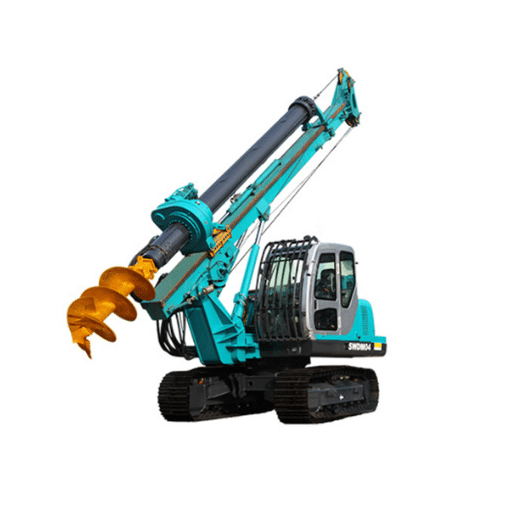
When discussing auger piles versus other foundation systems, the primary advantageous aspects relate to its adaptability to various soil conditions and environmentally friendly nature. Most appreciated is the ability of auger piles to be installed in soft ground without requiring special equipment. Hence, contrary to driven piles that involve vibrations and noise pollution during installation, the auger piles-and-a-drilled-displacement method procedure avoids causing any disturbances to neighborhood structures and ecosystems.
Auger Piles vs. Driven Piles
| Feature | Auger Piles | Driven Piles |
|---|---|---|
| Noise Level | Low – Ideal for urban settings | High – Can disturb surroundings |
| Vibration | Minimal impact on nearby structures | Significant vibrations during installation |
| Installation Speed | Fast and efficient | Varies by soil conditions |
| Best Applications | Urban areas, soft soils, tight spaces | Industrial projects, heavy loads, firmer soils |
| Load Capacity | High – Suitable for most structures | Very High – Extreme heavy loads |
| Environmental Impact | Lower – More sustainable | Higher – More disruptive |
According to recent trends, many construction professionals are shifting to auger piles for sustainable urban applications, though driven piles remain indispensable in heavy-duty scenarios.
Auger Piles vs. Traditional Concrete Piers
The choice to install auger piles over their traditional counterpart depends, in essence, on factors such as soil conditions, structural load requirement, and consideration of the environment. They are particularly suited in cases where little disturbance is desired against the existence of neighboring structures or when access is limited, as in urban surroundings. Installation of auger piles is faster, quieter, and environmentally sound, especially in cohesive- or soft-soil conditions.
Traditional concrete piers, conversely, are a better choice when selected for a more open environment in which huge material requirements and curing time are not major obstacles. Data from search trends has exposed the fact that the interest in auger piling has been on the rise, emphasizing their acceptance in present-day construction. However, when it comes to very big projects with extraordinary load-bearing requirements, traditional concrete piers remain a viable and cost-effective alternative.
Key Advantages of Auger Piles Over Other Systems
- Vibration and Noise Minimization: The continuous flight auger used in installing auger piles creates very little noise and vibration, unlike the alternative of driven piles. They are suitable for urban areas or projects close to sensitive structures, significantly reducing the chances of disturbances occurring during installation or damage being inflicted.
- Faster Installations: The drilling technology coupled with a simple installation procedure helps install an auger pile swiftly. This means a reduction of construction time, allowing for considerable cost savings in a project.
- Greater Load-Bearing Capacity: Because auger piles can be fixed with depth settings according to soil conditions, they provide remarkable bearing capacities. Even under adverse ground conditions, their performance is highly dependable, ensuring structural stability and durability.
- Lower Environmental Impact: This means less spoilage generation and no need for chemical stabilization methods. Therefore, these are greener options with the current sustainability goals of construction projects in mind.
- Sites with Restricted Access: Sites with restricted access can be accommodated using auger piles due to the small size of the machinery required. This flexibility proves to be an excellent solution for urban construction sites or spatially constrained development activities.
References
-
Design and Construction of Continuous Flight Auger Piles – Federal Highway Administration (FHWA)
A comprehensive manual on the design and construction practices for continuous flight auger piles.
Visit the site -
Auger Cast Grout Piles – University of Houston
A detailed specification document on the installation and requirements for auger cast grout piles.
Visit the site
Frequently Asked Questions (FAQ)
What are auger piles, and how are they constructed?
These piles are of the deep foundation variety, where a rotating hollowstem auger is used to drill a hole into the soil. After the auger is drilled to the desired depth, concrete or grout is pumped down the hollow stem to form a solid pile. This method causes very little disturbance to the surrounding soil and is most suitable for sites that experience restricted access.
How do auger-cast piles differ from other installation methods?
Auger-cast piles are installed by drilling a hole with a hollow-stem auger while simultaneously placing concrete or grout into the hole as the auger is withdrawn. This differs from conventional bored piles whereby the hole is drilled and then filled with concrete. The continuous flight of the auger allows for a faster installation process with lesser chances of the soil collapsing.
What is the role of grout in auger cast piles?
Grout is very vital to the auger cast pile processes. After reaching the required depth, the fluid grout is pumped into the cavity to fill the cavity and provide support to the structure. This grout confers further strength and stability to ensure that the pile could bear the load effectively. One other factor that seriously affects the effectiveness of the pile foundation system is the grout and its application.
How important are diameters when deciding on auger piles?
The diameters of auger piles are one of the most important parameters affecting their design and behavior. A bigger diameter has a larger load-bearing capacity and is, therefore, suitable for heavier structures. However, the choice of diameter must be suitable to the soil, equipment, and specifications for the project to guarantee optimum performance and stability.
How are the augercast piles installed using a grout pump?
During the installation of the auger cast piles, a grout pump injects fluid grout into the cavity formed by the hollow stem auger. The pump maintains the necessary head pressure to ensure that the grout completely fills the cavity without any voids. This process is very crucial for the strength and integrity of the finished pile that will adequately support the structure above.
What advantages do augercast piles offer with respect to driven piles?
Augercast piles can be installed with much less noise and vibration than driven piles (soils proved to be especially important in urban areas). The auger method also offers better control over hole diameter and depth, resulting in a more stable foundation. Because the auger method does minimal disruption of the soil while removing it, it preserves the surrounding environment.
What factors should be considered in choosing a suitable type of foundation?
Some important factors to consider in selecting a suitable foundation include soil conditions, load requirements, site elevation, and environmental impact. Auger piles may prove to be the right choice for a site where soil conditions pose a challenge or for a site with limited access, while in other situations, driven piles might prove more suitable. Design-build could speed up the decision-making process on the subject.
How does site elevation impact auger piles?
Elevation of a site would affect the installation and performance of auger piles in many ways. At higher elevations, additional considerations for drainage and soil stability are required. Site conditions would have to be well assessed to fix the required depth and diameter for the auger piles to act in support of the structural works above adequately.
What is the difference between auger cast and auger piles?
Despite both auger cast and auger piles utilizing hollow stem auger to install, the major difference is with regard to what material is used to fill the cavity. The auger cast piles use grout mainly, while other auger piles may be filled with concrete or other materials. The difference therefore affects their structural properties and suitability for different applications.