Within the realm of construction projects, Continuous Flight Auger (CFA) piles have gained prestige by virtue of being efficient, adaptable, and compatible with different soil situations. For engineers and contractors, or simply anyone with an interest in foundation systems, having insight into the pros and cons of CFA piles is fundamental when making decisions about projects.
This guide further seeks to present a balanced and thorough understanding of the different facets of CFA piles: their advantages, disadvantages, and situations where they shine. By the end of the article, one will have a clear appreciation of concepts regarding when it is right to select CFA piles and under what conditions they would give way to better alternatives. Stay tuned as we unravel everything you need to make the safest decisions in your construction pursuits!
Understanding CFA Piles

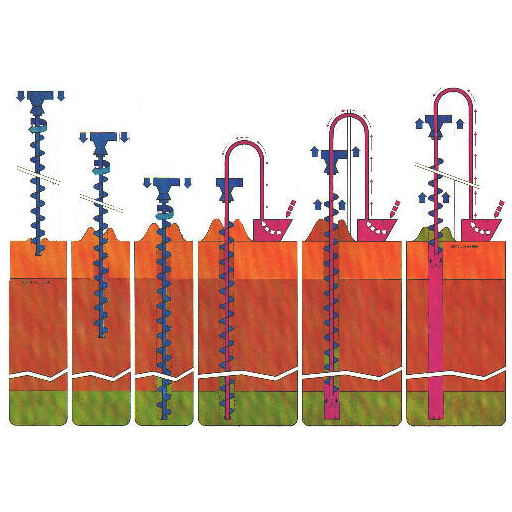
These piles are called CFA (Continuous Flight Auger) piles because they revolve around a continuous auger drilling into the soil while concrete is poured into the drilled hole as the auger is being withdrawn. The said method is environment-friendly and ideal for sites with strict noise and vibration tolerances.
They are particularly suited for medium to heavy load applications and find use for different types of soils; e.g., cohesive soils, sands, and gravels. Quick and efficient construction can take place, but the pile working specification must be carefully observed to ensure correct installation and performance.
What are CFA Piles?
Continuous Flight Auger (CFA) piles are one type of cast-in-place concrete pile, used extensively in construction works for foundation support and earth retention. Drilling continues while concrete is simultaneously poured inside the auger, which then gets withdrawn. Very little noise, vibration, or other disturbances are caused inside the soil, variable for situations in cities or otherwise sensitive environments.
CFA piles are an extremely flexible foundation option and suit many soil types: cohesive soils, sands, and gravels. Medium-to-heavy-load applications for buildings, bridges, and retaining structures are mostly implemented with CFA piles. Because CFA piles are quicker to construct and versatile, they can be completed before structural work proceeds under the condition that they have been installed correctly.
How CFA Piles Work
An installation rig with a hollow auger implement is necessary for drilling Continuous Flight Auger (CFA) piles. In the dissolution of the process, the auger is drilled to the required depth without casing, as its uninterrupted shaft serves to support the surrounding soil.
Following this, cages may be lowered into the wet concrete or grout for added structural strength, should such reinforcement be required. By combining both excavation and concreting activities into a single and efficient operation, CFA piles cause minimum disturbance to the ground and are well suited for use in urban developments or sensitive areas.
Applications of CFA Piles in Construction

Residential Building Foundations
CFA piles are normally furnished to residential buildings to set stable and reliable foundations for houses and apartments. These piles are particularly effective in soft or unstable soil conditions.
High-Rise Buildings
The skyscraper or high-rise building and development shall bear large vertical loads, thus imposing CFA piles for their carrying load requirements.
Infrastructure Projects
CFA piles are the type of piling used in infrastructure developments for bridges, overpasses, retaining walls, etc. Piling is important for this application, given its heavy load-bearing capacity coupled with low ground disturbance considerations.
Industrial Projects
Large industrial plants such as warehouses and factories require strong foundations to bear machinery and structural loads. Therefore, CFA piles are well suited for such industrial applications, ensuring the sustainability and stability of the construction.
Temporary Works
CFA piles find application in temporary piling, such as shoring systems for excavation support. This is due to their fast installation time and various transferable features to different soil types.
Advantages of CFA Piles
Key Benefits of CFA Piles
| Advantage | Description |
|---|---|
| Fast Installation | Being free casing or heavy excavation, CFA piles can be installed quickly with the continuous flight auger drilling method. Project delays are minimized and construction timelines are accelerated. |
| Low Noise & Vibration | CFA piling works are accompanied by very slight noise and vibration, perfect for urban projects or near sensitive facilities, ensuring compliance with environmental and noise standards. |
| Soil Versatility | CFA piles can operate efficiently in different soil conditions like clays, silts, sand, or gravel. This adaptability reduces the need for special applications for different subsurface conditions. |
| Cost Effectiveness | Low excavation requirements and fast installation bring about a cut in total project costs. Small-sized CFA equipment can access tight construction sites. |
| Environmental Benefits | Responsible limiting of soil displacements and adoption of minimum intrusion techniques aid in lessening the impact of construction activities on the environment. |
Speed of Installation
Due to their speedier installation, CFA piles find preference in projects that run against the clock. This method combines the steps of continuous auger drilling and simultaneous placement of the concrete in one operation, saving a considerable amount of time when compared to the conventional method.
Industry Insight: Based on recent data and trends analyzed through search engines, most contractors emphasize the importance of time-saving with regards to CFA piles as a project planning parameter. This fast installation reduces interruptions to workflows and enables early completion while maintaining top-grade structure safety and integrity.
Reduced Noise and Vibration
Since CFA piles entail relatively low noise and vibration during installation, great value is thus attached to them. Traditional piling methods, in contrast, typically involve percussive techniques that produce significant sounds and vibrations.
According to current trend analysis, many construction firms give prominence to CFA piles in projects near noise-sensitive areas such as residential districts, hospitals, or schools. With urban construction regulations monitoring noise from surrounding environments and more commitment to community considerations in tackling noise pollution, CFA piling has established itself as the frontrunner in contemporary construction.
Cost-Effectiveness Compared to Other Methods
Recent data definitely illustrate their cost benefits when comparing CFA piling with other types of foundations. Industry-specific details and insights indicate that CFA piling is highly efficient in terms of material usage and labor costs.
- Heavy and large machinery is less frequently used compared to traditional methods such as driven piles or bored piles
- Heavy machinery implementation and setup costs are largely avoided
- Greater nature of excavation is avoided by implementing a continuous auger process
- Faster completion times with lesser disruptions to existing surface activities
- Particularly effective in bustling urban environments
Disadvantages of CFA Piles

Key Limitations of CFA Piles
The main drawback in the operational aspects of CFA piles is the need to use highly specialized equipment and trained manpower, which in turn pushes up operational costs. The other setbacks relate to unfavorable working layers — layers that resist the drilling procedure or require special modifications for reinforcement.
On-site noise and vibrations, while less than those associated with driving piles, become issues in zones with stringent disturbance constraints or adjacent to sensitive structures. Moreover, keeping good-quality grout or concrete is fundamental; otherwise, inconsistency reduces load-bearing capacity.
Limitations in High Water Table Areas
CFA piles face the most severe challenges under the influence of high-water table conditions due to groundwater infiltration. Excess water during drilling and the pouring of concrete can destabilize the borehole and dilute the grout or concrete, putting the structural integrity of the pile on the line.
Also, achieving uniform concrete density becomes harder as it raises the possibility of defects such as voids or segregation. This issue can be mitigated using modern methods like polymers or drilling fluids, but there is the matter of increased cost and complexity. Therefore, a thorough geotechnical study and implementation of appropriate construction techniques become essential for coping with such limitations.
Soil Type Considerations
When analyzing soil types for construction activities, one must keep in mind their influence on the stability and performance of the foundation structures. Different soils have different characteristics that determine their load-bearing capacity, drainage ability, and propensity to erosion or settlement.
| Soil Type | Characteristics | Considerations for CFA Piles |
|---|---|---|
| Sandy Soils | Good drainage, requires compaction | Generally suitable, may need stabilization for adequate stability |
| Clay Soils | Water retention, expansion/contraction cycles | Can cause structural damage, requires careful analysis |
| Cohesive Soils | Good binding properties | Well-suited for CFA pile installation |
| Gravels | Excellent drainage, high bearing capacity | Compatible with CFA piles |
Recent reliable data suggest that soil stabilization and geosynthetics are frequently considered as remedial measures of complex soils. At the same time, further advancements in predictive modeling allow engineers to model the behavior of soils under different scenarios, thus informing their decisions better toward picking a soil treatment compatible with environmental and design considerations.
Potential for Equipment Limitations
Though in practice, when combining the latest advances in data analysis with soil stabilization, it seems evident that equipment limitations impose restrictions on the implementation of novel techniques. This means that treatments suggested by advanced modeling and data-driven approaches have to constrain themselves with what can be applied with existing equipment.
- Restrictions compound due to old equipment
- Inaccessible places may limit equipment deployment
- Budget limitations of acquiring new technology
- Need for operator training on new equipment
Solving these issues will entail procuring new equipment and training operators so practitioners can make use of the accuracy of data analysis and predictive modeling.
CFA Piles vs Other Piling Methods

While several benefits and downsides exist when CFA piles are compared with other piling methods, recent data shows the key points that require attention. However, CFA piles are advantageous when the installations are made speedily and are considerably quiet and vibration-free, which are most challenging considerations in urban areas or in the presence of very sensitive structures.
Selection Criteria: Piling methods are chosen largely based on certain factors peculiar to the sites being considered, such as soil conditions, load requirements, environmental constraints, and budgetary considerations. By coupling advanced technologies with up-to-date data, engineers can choose optimally and align most fittingly between project needs and piling methods available.
CFA Piles vs Driven Piles
| Aspect | CFA Piles | Driven Piles |
|---|---|---|
| Installation Method | Continuous auger drilling with simultaneous concrete placement | Hammering or driving pre-fabricated piles into ground |
| Noise & Vibration | Minimal – virtually vibration-free | High noise and vibration levels |
| Best Soil Conditions | Soft cohesive soils, loose to medium-dense soils | Dense or hard soils requiring high bearing capacity |
| Urban Suitability | Excellent for urban and sensitive areas | Limited due to noise restrictions |
| Installation Speed | Fast | Can be quicker in some soil types |
| Soil Disturbance | Minimal disturbance to surrounding soil | Higher disturbance and potential damage to adjacent structures |
Placing one alongside the other, the choice between the two often lies in the requirements of the particular project. With CFA piles, sites with soft cohesive soils or with very little vibration tolerance are preferred due to the almost vibration-free installation process. Conversely, driven piles find application in dense or hard soils where high bearing capacity is needed.
CFA Piles vs Rotary Bored Piles
Certain piles are considered in the comparison of Continuous Flight Auger piles versus rotary bored piles based on considerations required by the project, such as ground conditions, load needs, or even environmental conditions.
| Feature | CFA Piles | Rotary Bored Piles |
|---|---|---|
| Installation Speed | Rapid installation | Slower, more methodical process |
| Noise Constraints | Low noise – ideal for urban settings | Moderate noise levels |
| Soil Suitability | Loose to medium-dense soil conditions | Dense or difficult soils with greater bearing capacity |
| Diameter & Depth | Standard range | Greater diameter and deeper foundations possible |
| Best Applications | Medium-load buildings, urban projects | High-rise buildings, heavy infrastructure |
The latest information-source trends show that CFA piles are preferred for projects demanding a rapid rate of installation and constraints on noise or vibration, in an urban setting, for instance. On the contrary, rotary bored piles are known to be the best alternative for soil that is dense or difficult with greater bearing capacity.
Differences Between CFA Piles and Bored Piles
Continuous Flight Auger piles and bored piles are two well-known types of foundation systems used in the construction industry, and both have their specific contextual applications.
CFA Piles
- Used for medium-load buildings
- Noise and vibration-free installation
- Suitable for urban settings
- Environmentally-restricted areas
- Continuous auger drilling with simultaneous concrete pumping
- Uninterrupted operation with less disturbance
- Most durable in softer soils
- Quick to install
Bored Piles
- High-load situations (highway bridges, skyscrapers)
- Deeper excavation capability
- Excavation of drilled shaft followed by reinforcement
- Concrete pouring after shaft preparation
- Allows variations in diameter or depth
- Best in hard terrains
- Customization options for difficult ground conditions
- More flexible for complex requirements
Installation of CFA piles is primarily drilling with a continuous auger while pumping concrete simultaneously at the rate at which the auger is withdrawn from the ground. The installation process for bored piles, conversely, involves excavation of a drilled shaft, followed by reinforcement and pouring of concrete.
References
-
Design and Construction of Continuous Flight Auger Piles – Federal Highway Administration (FHWA)
A detailed document discussing the advantages and limitations of CFA piles, including soil spoil management.
Visit the site -
Advantages and Disadvantages of CFA Piles – University of Texas at Austin
A study summarizing the pros and cons of CFA piles compared to driven piles, with practical insights.
Visit the site -
Construction of New Substructures Beneath Existing Bridges – Iowa State University
A report evaluating foundation solutions, including CFA piles, for accelerated bridge construction (ABC).
Visit the site
Frequently Asked Questions (FAQ)
What are several CFA piles advantages or disadvantages?
Benefits that these piles confer are: they generate little noise and vibration, which makes them always good for urban areas. They also have a wide spectrum of load capacities and can work very well for tension loads. The disadvantages of these piles include problems with dewatering and specialized piling equipment, which may raise the cost of the project.
What is CFA versus bored pile?
The CFA pile versus bored pile case usually depends on the installation method and site condition. Considered bored piles are drilled into the soil and can be reinforced by steel cages; a continuous flight auger is used in CFA piles to inject the concrete through its hollow stem. This difference may influence load capacity, speed of installation, and cost of the project.
What is the major advantage of CFA piles?
This is primarily that the piles provide a solid foundation minimizing any disturbances to the adjacent area. Hence the installation is a quick process for which method will prove very useful in circumstances where noise and vibration form are paramount to be brought to minimum.
Are CFA piles good for tension loads?
Yes, CFA piles are great for tension loads, which makes them a good foundation choice for various forms of foundations. They resist uplift forces effectively, which is a necessary characteristic for structures that encounter such loads.
What about load capacity: CFA piles versus others?
Load capacity of CFA piles can be at par with that of conventional bored piles and driven piles concerning the site condition and design specification. They can be modified with a variation of auger sizes to fit specific project requirements, granting flexibility to their use in foundation design.
What are the disadvantages of CFA piles compared to driven piles?
Disadvantages of CFA piles vs driven piles would include problems occurring with wet soils and the fact that installation needs specialized equipment. While driven piles, at times, will be installed quicker in some soil types, the CFA piles stand out in reduction of noise and site disruption.
Can CFA piles be used all through soil types?
CFA piles can be used in many soil types, whereas in extremely loose and unstable soils, their efficiency is limited. The assessment of a site has to be carried out to know if CFA piles are viable under specific geological conditions before starting the work.