Core drilling represents one of the most precise and versatile techniques in modern construction, offering unparalleled accuracy for creating openings in hard materials. From installing plumbing and electrical systems to taking material samples for analysis, core drilling has become an indispensable tool in the construction industry. This comprehensive guide explores the world of core drilling, examining its applications, techniques, and the advanced equipment that makes it all possible.
Introduction to Core Drilling

Core drilling is a specialized technique used to create exact circular holes in various hard materials, including concrete, stone, and asphalt. The process utilizes cylindrical drill bits coated with diamonds or carbides to achieve smooth, precise cuts. This method has become vital in construction for installing utility pipes, plumbing systems, HVAC equipment, and electrical wiring.
Key Advantage: Core drilling produces clean, accurate cuts that maintain structural integrity while minimizing material waste and disturbance to existing structures.
What Makes Core Drilling Essential?
- Precision: Creates exact circular openings with minimal material waste
- Safety: Advanced dust collection and noise reduction standards
- Efficiency: Fast, accurate drilling with reduced downtime
- Versatility: Suitable for various materials and applications
- Structural Integrity: Maintains the strength of surrounding material
Industry Growth: Searches for “core drilling in construction” have consistently risen, reflecting the growing importance of this technique in infrastructure development.
Types of Core Drilling Techniques

Diamond Core Drilling
The most precise method using diamond-tipped drill bits. Accounts for approximately 40% of all core drilling worldwide due to its ability to cut through the hardest materials with minimal waste.
Rotary Core Drilling
Uses rotating drill bits to cut through geological formations. Popular in mining investigations and geotechnical exploration due to enhanced cutting speed and vibration control.
Wireline Core Drilling
Ideal for deep drilling projects, allowing core sample extraction without removing entire drill rods. Saves time and improves operator safety in mineral exploration.
Pneumatic Core Drilling
Uses compressed air instead of water for debris removal. Perfect for dry areas or water-sensitive subsurfaces, gaining momentum in energy and mining sectors.
Core Drilling Applications
| Application Type | Primary Use | Benefits |
|---|---|---|
| Exploration Core Drilling | Mining and geological studies | Analyzes rock formations and mineral content |
| Concrete Core Drilling | Construction and infrastructure | Precise holes for utilities with minimal vibration |
| Horizontal Core Drilling | Tunnel construction and utility laying | Maintains accuracy and structural integrity |
| Auger Core Drilling | Environmental work and shallow drilling | Effective in soft soil conditions |
Core Drilling Equipment and Technology
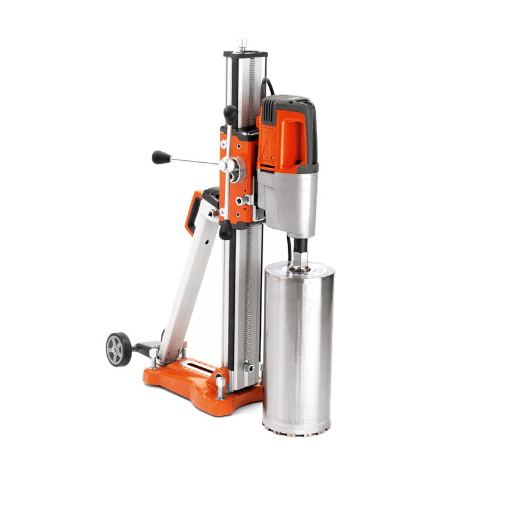
Types of Core Drilling Machines
- Handheld Core Drills: Compact units for small jobs and confined spaces
- Rig-Mounted Core Drills: Heavy-duty systems for reinforced concrete with increased precision
- Hydraulic Core Drilling Systems: Most powerful and dependable for demanding applications
Key Features of Modern Equipment
Advanced Controls
- Variable speed controls
- Automatic feed systems
- Cooling mechanisms
- Real-time monitoring sensors
Diamond Technology
- 30% faster cutting speed vs. carbide bits
- Superior performance on hard materials
- Extended tool life
- Cleaner cuts with less debris
Environmental Features
- Energy-efficient motors
- 20% reduction in energy consumption
- Dust suppression systems
- Noise reduction technology
Safety Innovations
- Automatic shutoff systems
- Ergonomic design
- Wireless monitoring
- AI performance optimization
Market Growth: The global core drilling machine market is projected to grow at a CAGR of 6% from 2023 to 2030, driven by infrastructure development and demand for eco-friendly equipment.
Wet vs. Dry Drilling Techniques

| Aspect | Wet Drilling | Dry Drilling |
|---|---|---|
| Cooling Method | Water cooling system | Air cooling or dust extraction |
| Dust Control | Excellent dust suppression | Requires dust extraction systems |
| Best Applications | Heavy-duty concrete and stone work | Areas without water access or sensitive materials |
| Tool Life | Extended due to cooling | Shorter but suitable for lighter work |
| Work Environment | Cleaner air quality | Requires proper ventilation |
Benefits of Core Drilling Methods
Industry Impact: Modern core drilling technology has improved cutting ability by 30%, significantly reducing project duration and labor costs while maintaining superior precision.
- Precision and Accuracy: Creates exact cuts without damaging surrounding structures
- Enhanced Efficiency: Diamond-tipped bits achieve faster drilling speeds with less equipment wear
- Low Noise and Vibration: Suitable for urban environments and noise-sensitive areas
- Environmental Responsibility: Lower emissions and reduced waste compared to conventional methods
- Versatile Applications: Suitable for utility openings, reinforcement positioning, and sample collection
- Clean Sample Extraction: Provides uncontaminated samples for material analysis
Choosing the Right Core Drill
Selection Criteria
- Material Type: Consider concrete, asphalt, masonry, or stone requirements
- Project Scale: Match equipment size to job demands
- Power Options: Choose between electrical, hydraulic, or pneumatic systems
- Site Conditions: Evaluate workspace constraints and power availability
- Special Features: Consider dust suppression, water connections, and ergonomic design
Safety Considerations
- Wear appropriate protective equipment (goggles, gloves, dust masks)
- Ensure proper equipment mounting and stabilization
- Maintain consistent drilling speed and pressure
- Regular equipment inspection and maintenance
- Follow manufacturer guidelines for optimal performance
Industry Applications and Market Value

Market Size: The core drilling market was valued at over $1 billion in 2023 and is forecasted for steady growth, driven by increased construction activities and infrastructure projects worldwide.
Primary Industries
- Construction: Building infrastructure and utility installations
- Mining: Resource exploration and geological surveys
- Oil & Gas: Deep drilling operations and site analysis
- Geotechnical Engineering: Soil and rock sample collection
- Environmental Studies: Subsurface investigation and monitoring
References
-
Core Drilling Method – University of Texas at Tyler
A detailed explanation of the core-drilling method for measuring in-situ stress in concrete structures.
Visit the site -
Coal Exploration Core – University of Kentucky
A resource on how core samples are obtained through drilling, specifically in coal exploration.
Visit the site -
Ice Core Drilling – Byrd Polar and Climate Research Center, Ohio State University
Information on ice core drilling techniques and equipment used for climate research.
Visit the site
Frequently Asked Questions (FAQ)
What is a core drill and how is it used?
A core drill is basically a specialized tool to remove a cylindrical section or “a core” from a hardened surface. The core drilling process is of great importance in various applications that include concrete work, subsurface exploration, and resource extraction. Often whenever a core drilling operation is carried out, the operator is able to obtain undisturbed samples of soil or rock, which are a matter of sheer importance for different geological studies or construction works.
What are the different types of core drilling?
There are primarily two types of core drilling: soft coring and hard coring. Soft coring applies to unconsolidated materials such as soil and sand, whereas hard coring is employed in competent rock and other solid materials. Techniques that are utilized for coring basically make sure to maintain the integrity of the sample during the processes of extraction.
How does the core drilling work?
In general, the core drilling procedure consists of a core drill bit fastening to the drilling machine. The drill bit rotates and is pushed forward as it advances into the material, picking up a cylinder of material in the process. A drilling fluid or air is used in the process to keep the bit cool and clear out the cuttings. The samples are finally retrieved for analysis and provide important subsurface data for reviews by engineers and geologists.
What is a diamond-coated drill bit and why is it used?
A diamond-coated drill bit is a kind of core bit that is coated with synthetic industrial diamonds, making it particularly capable of drilling through hard materials like concrete and rock. Because of its hardness and sharpness, it can drill very efficiently, which is highly needed for applications requiring drilling to depths of 500 feet or more. The use of this drill bit is integral in core drilling, particularly when attempting to extract competent rock samples.
What are the advantages of using a core drill in concrete work?
Precision and minimum disturbance to the surroundings are just some of the advantages that core drilling can offer to concrete works. Core drilling produces neat, circular holes that are essential for use in installing sprinkler systems, electrical conduits, or plumbing. The extracted undisturbed sample can also be used by contractors in checking the integrity of the concrete and assessing any problems underneath.
What is the role of drilling fluid in the core drilling process?
Drilling fluid, which in many cases is slurry, assumes a vital role in the core drilling process. It is used to cool the drill bit, thereby decreasing friction levels, and its other modes of action include removal of cuttings from within the hole. Depending on the material to be drilled through and the concrete condition of the drilling site, either drilling fluid or air can be used. If drilling fluid is properly handled, it can secure efficiency as well as safety of the entire operation.
How deep can core drilling reach?
Core drilling is quite capable of going down to 500 feet and above, depending on the equipment and techniques employed. For drilling deeper holes, it will be best to employ nested barrels-well, to say, consisting of an outer barrel and an inner barrel-to help retrieve samples more efficiently while maintaining the integrity of the core. In geological surveys and in mining ventures, this proves extremely useful.
What subsurface data can be gathered through core drilling?
Core drilling provides vital subsurface data to ground various engineering and geological decisions. By extracting a cylinder of material, a professional can analyze soil composition, rock layers, and groundwater conditions. These facts prove essential for project planning when building into an area, carrying out environmental impact, and exploring resources.