WordPress Editor Ready: The content below is formatted with HTML tags compatible with WordPress. You can copy and paste this directly into your WordPress editor (Text/HTML mode).
Rotary drilling tools are crucial in numerous industries involving construction, mining, and oil and gas exploration. They are very versatile, strong, and fast, making them indispensable for breaking through hard surfaces to gain access to deep-seated resources. This comprehensive guide provides an in-depth look into the different kinds of rotary drilling tools, their typical uses, and how they contribute to the success of various industries.
Overview of Rotary Drilling

Rotary drilling is a drilling method wherein a revolute-type drill bit is moved through rock or soil for the generation of a borehole. Being efficient and versatile, the method finds wide industrial usage in oil and gas, mining, and construction. The drill string comprises connected drill pipes and a drill bit that rotate about their central axis propelled by the rig.
What is Rotary Drilling?
Rotary drilling is a general term used in the oil and gas fields, mining, and construction to denote a drilling operation involving the creation of deep and precise boreholes into the Earth’s surface. In the essence of the procedure, a drill bit rotates, propelled by a rig, and is attached to a drill string consisting of numerous drill pipes.
Key Components of Rotary Drilling:
- Drill Bit: Rotates to cut through rock formations
- Drill String: Connected drill pipes that transmit rotation
- Drilling Fluid: Cools the bit, stabilizes borehole, carries away cuttings
- Rig: Provides power and control for the drilling operation
History and Evolution of Rotary Drilling
Rotary drilling has its roots in the 19th century, with its nascent stages beginning around the mid-1800s. Initially, it was meant to address the drawbacks of percussion drilling wherein the drill bit used a hammering motion and had no continuous cutting action.
Key Historical Milestones:
- 1863: S.F. Bowles well near Corsicana, Texas – early rotary drilling application
- 1920s: Introduction of tungsten carbide drill bits
- Modern Era: Real-time data monitoring, automation, and directional drilling
Types of Rotary Drilling Tools

| Tool Type | Best Applications | Key Features |
|---|---|---|
| Fixed-Cutter Bits (PDC) | Hard rock formations, oil & gas drilling | Polycrystalline diamond compact, high durability |
| Roller-Cone Bits | Soft to medium-hard formations | Rotating cones with tungsten/diamond inserts |
| Core Bits | Geological sampling | Extract cylindrical rock/soil sections |
| Specialty Bits | Specific drilling conditions | Customized for unique environments |
Drag Bits vs. Roller Bits
Drag Bits:
- Built with blades or wings
- Ideal for softer formations (clay, shale, sandstone)
- Lower rotational speeds
- Cost-effective for shallow drilling
Roller Bits:
- Feature rotating cones with teeth
- Designed for harder formations (limestone, basalt)
- Higher operational speeds
- Enhanced with tungsten carbide inserts
Rock Bits and Their Applications
PDC (Polycrystalline Diamond Compact) Bits
- Applications: Softer to medium geological formations, oil and gas drilling
- Features: High wear resistance, longer operational life, reduced downtime
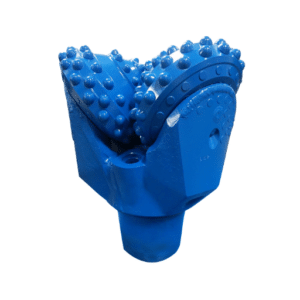
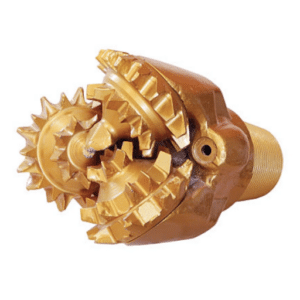
Tricone Bits
- Applications: Versatile drilling from soft to very hard rock, deep well drilling
- Features: Three rotating cones with steel or tungsten carbide teeth
Diamond Core Bits
- Applications: Core drilling in very hard or abrasive formations, mining exploration
- Features: Industrial-grade diamonds embedded for cutting tough materials
Applications of Rotary Drilling Tools

Oil and Gas Industry Applications
| Application Type | Purpose | Key Benefits |
|---|---|---|
| Exploration Drilling | Discover new oil and gas reservoirs | Assess underground reserve potential |
| Development Drilling | Create multiple production wells | Maximize field production rates |
| Directional Drilling | Access difficult-to-reach reservoirs | Higher yield from complex formations |
| Offshore Drilling | Extract resources from ocean floor | Access deep-sea energy resources |
Construction and Mining Uses
- Blast Hole Drilling: Create holes for explosive charges in mining operations
- Foundation Drilling: Prepare deep foundations for large-scale infrastructure
- Geotechnical Studies: Investigate soil and rock properties before construction
- Resource Exploration: Locate valuable mineral deposits
- Drainage Well Installation: Manage ground and surface water
Water Well Drilling Techniques
- Rotary Drilling: Most efficient for deeper wells, suitable for various geological formations
- Percussion Drilling: Effective for hard rock layers, slower but reliable
- Cable Tool Drilling: Precise method for smaller water wells
- Air Drilling: Uses high-pressure air, rapid drilling with minimal contamination
- Auger Drilling: Ideal for shallow wells in soft soils
Choosing the Right Rotary Drilling Tools

Factors to Consider When Selecting Drill Bits
Critical Selection Factors:
- Geological Conditions: Hard rock requires diamond-studded bits, soft soils favor PDC bits
- Depth and Diameter: Specific tools for deeper and wider applications
- Durability and Material Quality: Tungsten carbide and diamond materials for longevity
- Environmental Conditions: Temperature and moisture resistance
- Cost Efficiency: Balance initial cost with maintenance requirements
- Energy Efficiency: Growing demand for sustainable, eco-friendly options
Understanding Drill Pipe and RDT Compatibility
Drill pipe and RDT (Rotary Drilling Technology) compatibility is crucial for optimal performance. Key considerations include:
- Torque capacity alignment
- Rotational speed specifications
- Connection type compatibility
- Environmental parameter matching
- Energy transfer efficiency
Maintenance Tips for Rotary Drilling Tools

Regular Inspection Procedures
- Visual Inspection: Check for wear, corrosion, cracks, and loose connections
- Dimensional Checks: Use calibrated instruments to verify specifications
- Seal and Bearing Inspection: Check for lubrication, cracks, and leaks
- Safety Feature Testing: Ensure all safety mechanisms function properly
- Documentation: Maintain detailed inspection records for performance tracking
Cleaning and Storage Best Practices
Cleaning Guidelines:
- Remove all dirt, debris, and drilling residues after each use
- Use manufacturer-approved cleaning agents
- Avoid corrosive substances
- Ensure complete drying before storage
Storage Requirements:
- Cool, dry, dust-free environment
- Avoid direct sunlight and high temperatures
- Use moisture-control measures for electrical components
- Follow manufacturer’s storage recommendations
Common Issues and Troubleshooting
| Common Issue | Cause | Solution |
|---|---|---|
| Equipment Performance Decline | Dirt and residue buildup | Regular cleaning with appropriate solutions |
| Unexpected Breakdowns | Lack of maintenance or improper usage | Follow maintenance schedule, proper lubrication |
| Equipment Deterioration | Improper storage conditions | Temperature-controlled environment, protective covers |
References
-
The Rotary System – Penn State Dutton Institute – Explains the rotary system on a drilling rig and its role in wellbore operations.
-
Rotary Rigs – Penn State Dutton Institute – Details the mechanics of rotary rigs, including the application of torque and the use of drill pipes.
-
Well Drilling Techniques – Western Oregon University – Provides historical and technical insights into rotary drilling tools and their evolution.
Frequently Asked Questions (FAQ)
Define Rotary drilling and working of the tools?
Rotary drilling refers to drilling done to create boreholes through various rock types. The tools include rotary bits, drill pipes, and hydraulic systems, which allow them grounds penetration. The rotary bit spins, being pressed down; hence, drilling can be done through a variety of geological formations. Every tool is essential in improving performance and reducing total drilling costs.
How does the rotary bit affect drilling costs?
The type and quality of the rotary bit used can greatly influence drilling costs. Properly constructed rotary bits designed to work in specified rock types improve penetration rates and bit life, thus leading to lower total costs of drilling. This therefore means that buying bits of high quality may reduce down time and enhance efficiency, eventually lowering the total drilling costs.
What is the significance of the complete drill string in rotary drilling?
The complete drill string is of vital importance in rotary drilling as it links the surface equipment to the drill bit. This essentially consists of many types or kinds of so-called drill pipe, collars, and sometimes downhole tools. The arrangement of these components is essential to transmit the rotary force and drilling fluid onto the bit so as to maintain acceptable penetration rates and minimize deviation while drilling.
How do rock classes affect the performance of rotary drilling?
Different rock types present various challenges to the drilling process. For example, a hard rock formation may have to make use of a special type of rotary bit, such as a diamond drilling tool, to improve performance and ensure penetration. The knowledge of the geology of the drilling site is crucial, for the appropriate application of tools and techniques to achieve the best results.
Benefits of air drilling for rotary drilling tools?
Air drilling uses compressed air to remove cuttings from the borehole while drilling with rotary tools. It is a cheap method and increases the efficiency of drilling in certain rock types by increasing penetration rates and decreasing costs of fluids. The method is also useful where there exists a scarcity of water and the loss of fluid can potentially harm the drilling operations.
Does the configuration of the rotary head affect drilling efficiency?
Yes, the configuration of the rotary head affects drilling efficiency because the performance of any rotary drilling operation depends heavily on how the rotary head is configured. It can be said that the rotary head is designed to provide the best torque and speed control for the various drilling conditions. The correct configuration would equally provide accurate alignment of the drill bit guiding it down the hole with less deviation, thereby enhancing the overall drilling performance.
What is the function of journal bearings in rotary tools?
Journal bearings are a crucial component of rotary drilling tools that allow the smooth rotation of the drill string while minimizing friction. They are made to carry heavy loads and maintain excellent durability under extreme conditions. The proper maintenance of journal bearings will greatly improve the performance and the life of the rotary drilling tools.
In rotary drilling, what is the relevance of upset casing?
Upset casing in rotary drilling improves the strength properties of the casing pipe. The upset casing has a thicker wall section at the ends to allow for better connections and to prevent failure under high-stress conditions. Use of upset casing in drilling will go toward enhanced safety and efficiency.
Where can one learn more about rotary drilling and its tools?
One may consult industry publications or attend relevant workshops and training courses to learn more about rotary drilling and its tools. In addition, many manufacturers supply detailed information about their products-including specifications and recommended applications. Online forums and professional organizations offer great resources for exchanging knowledge and experiences pertaining to rotary drilling.