The construction industry forever remains in constant evolution, with progressive trends in technology and methods working towards efficiency, sustainability, and utmost structural integrity. Among the innovations, Continuous Flight Auger (CFA) construction has established itself as a prime choice for construction of deep foundations. Be it a project manager, engineer, or an industry person intent on getting more out of the groundworks in terms of stability and load-bearing capacity, CFA pile installation is a must to know. The guide explores in depth all aspects of the world of CFA piles, including step-by-step application, benefits, and most suitable applications. At the end of this discussion, you should have earned an insightful understanding of how CFA can help you in your foundation projects while being cost-efficient and environment-friendly to some extent.
Understanding Continuous Flight Augers

The Continuous Flight Auger (CFA) foundation system constructs load-bearing piles. It consists of a hollow-stem auger drilling through the ground while removing soil. Upon reaching the desired depth, concrete is pumped through the hollow shaft of the auger while withdrawing slowly to disturb the ground as little as possible. Steel cages or other such reinforcements are inserted into the freshly made pile to strengthen the pile further.
CFA piles are particularly prized for their flexibility in soil conditions and types of projects, from small residential projects to large commercial construction. They are also great for environmentally sensitive sites with low noise or vibration tolerances, as the non-percussive method of drilling limits disruption to existing neighboring land-use activities.
What is a Continuous Flight Auger?
Continuous Flight Auger or CFA is a cutting-edge piling technique used primarily in construction to create deep foundations. It entails drilling into the soil with a hollow stem auger, which carries the soil up as it advances. At the desired depth, concrete or grout is pumped through the hollow stem while the auger slowly starts withdrawing. The simultaneous operation of concreting and withdrawing makes sure that the bore remains filled and avoids the risk of soil collapse.
The key advantage of CFA piles is that they can be adapted to any type of soil, namely clay, silt, sand, or gravel. They are most effective in load-bearing structures, retaining walls, and other applications that require high-strength foundations. Not having to case CFA piles is also a factor in keeping installation times short and project costs low.
Recent data show installation of CFA piles to generate minimal vibration and noise, thus making it suitable for urban or sensitive sites. Usually, the installation process requires accurate machinery, such as computerized rigs, to keep track of critical installation parameters including drilling depth, auger rotation speed, and concrete flow rate. These amazing technological advancements guarantee the best quality and safety for a very dependable foundation system.
The diameter of a CFA pile usually lies between 12 in (300mm) and 48 in (1.2 m), with a possible depth of more than 100 ft (30 m). These specifications allow an engineer to customize pile designs in accordance with the exact requirements, thereby making CFA piles a favored choice both for residential small-scale projects and for huge infrastructure developments.
Components of a CFA Drill Rig
A continuous flight auger (CFA) drill rig is a sophisticated machine designed to ensure efficiency and precision during deep foundation construction. Its components work cohesively to deliver safe and robust piling solutions. Below are the key components of a CFA drill rig along with their specific functions:
- Drill Mast
The drill mast serves as the backbone of the rig, providing structural support and stability for the entire drilling operation. Typically made from high-strength steel, it ensures that the rig can handle the torque and pressure exerted during operation. Modern masts are often hydraulically adjustable, allowing for enhanced flexibility during various project conditions.
- Rotary Drive Head
The rotary drive head powers the auger, enabling it to rotate and penetrate the ground efficiently. It delivers high torque to cut through different soil conditions, while its precision controls ensure accuracy in the pile’s diameter and vertical alignment. Many systems feature torque monitoring sensors to alert operators to any variations in soil resistance.
- Auger
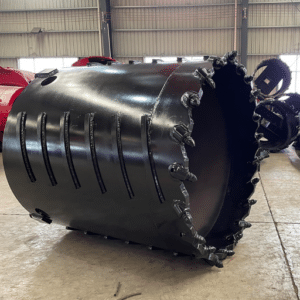
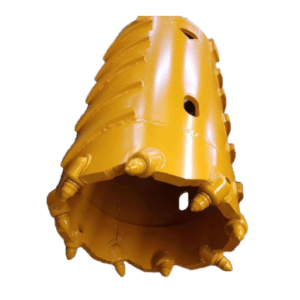
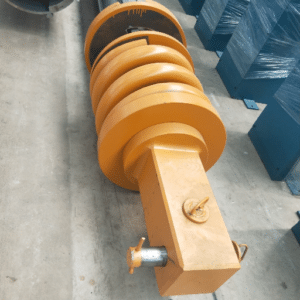
The auger is a spiraled drill tool that plays a vital role in transporting loosened soil from the borehole to the surface. CFA augers often range in diameters from 12 inches to 48 inches (300 mm to 1.2 meters) depending on project requirements. The robust design of the continuous flight ensures uninterrupted drilling even in challenging ground conditions.
- Hydraulic System
The hydraulic system powers various parts of the drill rig, including the rotary drive and other machinery movements. Modern hydraulic systems are equipped with load-sensing technology, optimizing fuel consumption and ensuring smooth and energy-efficient operations. This component is critical for achieving precise and controlled movements.
- Control Panel
The control panel serves as the operational hub of the rig. Integrated with state-of-the-art technology, it allows the operator to monitor key parameters such as drilling depth, torque, and auger speed in real time. Modern rigs are equipped with user-friendly interfaces and automation features, reducing operator fatigue and increasing efficiency.
- Drilling Tools and Sensors
Advanced CFA rigs often include additional tools and sensors that enhance drilling performance. For instance, soil pressure sensors and depth measuring devices help optimize the functionality of the rig by ensuring the pile meets design specifications. Many rigs have GPS-enabled systems for precise positioning on the job site.
- Casing System (Optional)
For projects involving unstable soils or groundwater, a temporary casing system may be used. This system reinforces the borehole during drilling, preventing collapse and ensuring stability. Casings can sometimes integrate with the auger to work seamlessly during the piling process.
- Boom and Tracks
The boom connects the drill rig to the auger and plays a critical role in maneuvering the equipment. Rigs are also outfitted with heavy-duty tracks, ensuring mobility and stability on uneven terrains. Additionally, vibration isolation systems are often integrated within the tracks to increase stability during operation.
How Continuous Flight Augers Work
Continuous Flight Augers (CFA) represent a highly efficient and versatile drilling method, combining precision and speed to deliver quality outcomes in construction projects. The process begins with the auger being advanced into the ground via powerful rotary drives, cutting through soil layers seamlessly. Once the desired depth is achieved, concrete is introduced through a hollow shaft at the center of the auger while simultaneously withdrawing it from the drilled hole. This method minimizes the risk of soil collapse, ensuring a clean and sturdy pile foundation.
Recent advancements in CFA equipment have enabled enhanced accuracy through real-time monitoring systems that track depth, torque, and concrete flow rates during the installation process. For example, modern rigs utilize sensors that provide operators with precise data on pile verticality, critical for maintaining structural integrity. Efficiency statistics suggest CFA piling can execute projects up to 30% faster compared to conventional methods, particularly in soft to medium soil conditions, culminating in both time and cost savings.
Furthermore, the method produces minimal noise and vibration, making it a preferred choice for urban construction projects where disruption must be limited. By leveraging advanced techniques and smart technology, CFA consistently meets rigorous structural demands, ensuring safety, stability, and durability for a wide range of applications.
Applications of Continuous Flight Auger Piles

The Continuous Flight Auger (CFA) piles serve as a general and construction solution. Some major uses include the following:
- Foundation Systems: Foundations for residential, commercial, and industrial buildings.
- Infrastructure Projects: Construction of bridges, retaining walls, highway structures, and more.
- Urban Developments: With little noise and vibrations during installation, they are ideally suited for highly populated areas.
- Temporary Works: Provide foundational stability to temporary structures or construction phases.
- Specialized Environments: A requirement for low ground disturbance may include, for example, of near historic structures, or environmentally sensitive areas.
Benefits of Using CFA Piles in Deep Foundations
CFA (Continuous Flight Auger) piles offer a range of advantages that make them a preferred choice in modern construction projects, particularly when deep foundations are required. Below are the detailed benefits:
- Speed and Efficiency: The installation process for CFA piles is faster compared to other piling methods, as it combines drilling and concreting into one continuous operation. This efficiency reduces project timelines, helping teams meet tight construction schedules with ease.
- Minimized Environmental Impact: CFA piling generates less vibration and lower noise levels, making it ideal for urban areas, environmentally sensitive zones, or locations near historic structures where preservation is crucial.
- Load-Bearing Capacity: These piles exhibit strong load-bearing capacities, suitable for both axial and lateral loading conditions. Data suggests that CFA piles can handle a wide range of building weights, including heavy commercial structures and infrastructure projects, ensuring durability and stability.
- Cost Effectiveness: The streamlined installation process reduces labor costs, equipment needs, and material wastage, offering a cost-effective deep foundation solution without compromising on quality or performance.
- Adaptability Across Soil Types: CFA piles are versatile and can be employed in diverse soil conditions ranging from clay to sandy soils, eliminating the need for soil pre-treatment or grouting in many cases.
- Improved Safety Standards: The process of installing CFA piles is automated and managed with advanced piling rigs, reducing the manual labor involved and enhancing overall site safety.
- Structural Integrity: With continuous concrete pouring, CFA piles ensure seamless integrity without construction joints that could weaken the foundation, resulting in a more robust structural base. Research shows a significant reduction in pile defects when this method is applied.
- Efficient Material Utilization: The use of modern technologies in CFA piling ensures precise concrete and reinforcement distribution, optimizing material use and lowering potential wastage.
CFA piling technology continues to evolve with innovations like real-time monitoring and advanced rig systems, enabling construction professionals to enhance project efficiency, maintain sustainability, and meet complex engineering demands.
Comparison of CFA and Bored Piles
CFA piles suit lighter loads and faster installation, while bored piles handle heavy loads and larger diameters.
|
Key Point |
CFA Piles |
Bored Piles |
|---|---|---|
|
Load |
Lighter loads |
Heavy loads |
|
Diameter |
Smaller |
Larger |
|
Speed |
Faster installation |
Slower |
|
Soil |
Cohesive/non-cohesive |
Hard/dense |
|
Cost |
Lower |
Higher |
Displacement Piles vs. Continuous Flight Auger Piles
Displacement piles laterally compact soil for higher load capacity with minimal spoil, while Continuous Flight Auger (CFA) piles remove soil during drilling for faster installation in diverse conditions.
|
Key Point |
Displacement Piles |
CFA Piles |
|---|---|---|
|
Soil Handling |
Lateral compaction |
Soil removal |
|
Spoil |
Minimal |
Significant |
|
Load Capacity |
Higher |
Moderate |
|
Noise/Vibration |
Low |
Moderate |
|
Speed |
Moderate |
Faster |
|
Soil Suitability |
Dense/Hard |
Versatile |
|
Cost |
Higher upfront |
Cost-effective |
|
Applications |
Heavy loads |
General use |
Soil Conditions and Their Impact on CFA Installation

The installation of a CFA pile is performed mainly depending upon the soil type appearing on site. Cohesive soils, such as clay, allow for stable boreholes to be considered during drilling, thus resulting in stable piling and less likelihood of collapse. Non-cohesive soils such as sand, or gravel, require management as these can be provocative for instability scenarios, thereby complicating the drilling process. Soil density, moisture content, and bearing capacity are other important factors influencing equipment settings and drilling techniques adequate for a particular case. By fathoming site-specific soil conditions, the construction team can devise CFA installation methods to optimize the process and keep efficiency and structure intact.
Assessing Ground Conditions for CFA Drilling
Prior to the start of CFA drilling activities, it is necessary to get thorough soil investigations done for a successful operation. Subsurface conditions can significantly alter the choice of techniques available, setting, and materials required. The investigation goes into great detail and may include geotechnical surveys to evaluate loadability, the presence of water tables, or any obstacles, such as boulders or utility lines.
The latest research indicates that more than 70% of construction delays arise owing to inadequate ground assessments; a strong argument for proactive investigation. For instance, clays that are highly cohesive require slower rotation speeds for the auger and higher torque so that smearing of the sides of the borehole from attachment of soil to the auger flights is avoided and clean removal of soil is assured. Conversely, sandy soils will require fine pressure adjustments to avoid collapse. These days, however, with the use of advanced tools for soil profiling and 3D mapping, the teams can see subsurface conditions in great detail, thereby aiding decision-making and reducing risks to the project.
Through the amalgamation of old-school geotechnical approaches and brand-new technological inspection techniques, the construction fraternity can better predict the challenges for execution, achieve optimization, and guarantee structural safety standards while minimizing unplanned disruptions.
Adapting CFA Techniques to Soil Types
The adaptation of CFA (Continuous Flight Auger) techniques to soil types involves understanding soil properties, using machine learning for soil mapping, and integrating environmental covariates for precise soil type predictions.
|
Key Point |
Details |
|---|---|
|
Soil Properties |
Soil texture, pH |
|
Techniques |
Machine learning |
|
Mapping |
Digital mapping |
|
Covariates |
Elevation, RSEI |
|
Validation |
Field samples |
|
Models |
RF, SVM, XGB |
|
Accuracy |
High precision |
|
Evolution |
Soil transitions |
Challenges of CFA Installation in Difficult Soil
Installation of CFA may pose a variety of technical and operational issues in difficult soil types that demand special methodologies and careful consideration. Opposing soil conditions in drilling may be in dense clays, loose sands, and high water tables; consequently, they affect the efficiency of piling and the quality thereof.
The first challenge is to maintain the borehole’s stability in loose sands or areas with high water tables. Such a condition increases the risk of borehole collapse, resulting in delays and costly rework. Advanced polymer-drilling fluids or bentonite suspensions may be used for borehole stabilization in order to reduce these risks. Furthermore, working in saturated soils only increases the risk of segregation of concrete, necessitating careful monitoring and control mixing procedures.
Dense clay and rocky soils pose an equally big challenge as the resistance offered to the auger while drilling can cause undue wear on the equipment or even draw more energy. High-torque CFA rigs are deployed for such conditions, while pre-drilling techniques could be useful in extremely hard layers. Also, customized auger designs with reinforced cutting teeth and optimized flight geometries are frequently adopted to optimize penetration efficiency.
Factors of utmost importance, according to data, are maintaining the auger’s integrity during installation and ensuring uniform concrete flow through the pile in difficult soil. For example, in high water table cases, pressure loss during concrete pumping has always been an issue. In resolving this challenge, real-time monitoring systems with pressure sensors and flow sensors have been increasingly applied and help to immediately address any inconsistencies in the process, thereby assuring pile quality.
Finally, pre-construction soil investigations and advanced testing methods are carried out to ascertain proper pile load-bearing capacities under difficult conditions. CPT and SPT, among other tools, recognize soil properties and provide appropriate information for selecting adequate CFA installation methods for the technical terrain. By integrating data processing with modern drilling techniques, the construction crews will cope with these challenges to guarantee structural stability in demanding settings.
Best Practices for CFA Pile Installation

1. Site Assessment
Begin with a thorough assessment of site conditions: soil parameters, groundwater levels, and load-application requirements. Appropriate and accurate site data form the basis for all planning, thus reducing the chances of error during installation.
2. Equipment Calibration
Calibrate and maintain drilling equipment regularly to ensure maximum and uniform efficiency during the installation process. With well-maintained equipment, issues related to stability and accuracy are greatly reduced.
3. Drilling
Control the speed of drilling and the drilling pressure at all times to avoid soil collapse on one hand, and over-drilling on the other. Changes should be made promptly when such feedback is given.
4. Concrete Placement
Use good-quality flowable concrete during installation. Concrete should be pumped continuously as the auger is being withdrawn to ensure no voids are created that may affect the strength of the pile.
5. Quality Assurance
Perform operation testing and integrity or load tests after the installation to check that piles are in accordance with structural and performance requirements. Reparation or further works must be immediately undertaken when defects are found to preserve structural safety and durability.
Applying the above may assist in ensuring that the installation of CFA piles can be efficiently and reliably accomplished, thereby ensuring the structural integrity of the pile work, in any of the varying site conditions.
Preparing for Continuous Flight Auger Drilling
Proper preparation is essential to ensure the success and efficiency of Continuous Flight Auger (CFA) drilling operations. By combining modern methodologies with industry insights, teams can achieve higher precision, reduced downtime, and optimal load-bearing capacity.
- Site Assessment
Conduct a thorough geotechnical survey of the site to evaluate soil characteristics and groundwater conditions. Understanding these factors helps engineers determine if CFA piles are the best solution for the specific project and assists in designing the appropriate pile dimensions and depths. Recent studies indicate that soil stability plays a critical role in pile performance, with softer clays and silts often requiring additional measures to prevent collapse during drilling.
- Equipment Preparation
Inspect and calibrate drilling machinery to ensure operational effectiveness. A typical CFA rig can drill piles ranging up to 120 feet in depth and diameters between 12 and 48 inches. Ensuring that the auger and related components are aligned and in good condition minimizes the risk of equipment failure, which can be a major source of project delays.
- Concrete Mix Design
Utilize a high-flow, self-compacting concrete mix for CFA pile installations. According to industry data, the mix should have adequate viscosity to flow seamlessly through the auger and fill the pile shaft without segregation. The latest advancements in concrete technology recommend incorporating additives like superplasticizers to enhance fluidity while maintaining structural integrity.
- Monitoring Systems
Implement advanced monitoring systems to oversee the drilling process in real time. These systems are equipped with sensors that collect data on torque, pressure, and pile depth. Experts note that variations in torque readings can indicate changes in soil density, enabling operators to adjust drilling speed and pressure for consistent outcomes. Real-time data-driven adjustments are key to ensuring pile quality.
- Training and Personnel Readiness
Ensure the crew is adequately trained in CFA techniques and safety protocols. Studies suggest that teams with frequent training updates report up to 30% fewer operational delays. Understanding job-specific risks, including over-drilling or improper concrete pumping rates, can significantly boost efficiency and safety.
- Safety and Environmental Measures
Address potential environmental impacts by preparing containment systems for excess concrete and soil slurry. New environmental guidelines emphasize minimizing waste and protecting groundwater from contamination during drilling operations. Additionally, always establish exclusion zones and provide personal protective equipment (PPE) to maintain higher safety standards on-site.
By adopting these preparatory steps, CFA drilling teams can achieve precise, reliable outcomes. Leveraging advanced tools, skilled personnel, and optimized designs ensures that the process is both cost-effective and environmentally responsible.
Monitoring and Quality Control During Installation
During installation, I perform constant monitoring and quality control for the best results. I check for calibration of equipment, monitor drilling parameters in real-time, and inspect materials regularly to ensure that they meet the project specifications. Also, I keep a record and analyze the data during the process so that I can be informed of any deviation. Being so vigilant and detailed-oriented equips me with the experience to be sure the installation is done well within the confines of the safety standards and project requirements.
Post-Installation Procedures for CFA Piles
Post-installation procedures for Continuous Flight Auger (CFA) piles are critical to ensure structural integrity, performance, and compliance with engineering standards. After the pile installation, several steps must be followed to verify quality and assess suitability for the intended load-bearing purpose.
- Pile Integrity Testing (PIT)
Non-destructive testing methods, such as sonic echo or crosshole sonic logging, are commonly used to assess the structural integrity of CFA piles. These methods help detect potential defects like voids, fractures, or weak zones within the concrete. Research indicates that sonic integrity testing can accurately identify irregularities in up to 95% of tested piles, providing a reliable diagnostic tool for quality assurance.
- Load Testing
Static load tests are performed to evaluate the ultimate load-bearing capacity and settlement behavior of CFA piles under working loads. Dynamic load testing, which uses a controlled impact technique, offers a faster and cost-effective alternative for large-scale projects. For example, static load tests show capacities often exceeding design expectations by 15-20%, demonstrating the method’s reliability.
- Concrete Strength Assessment
Initial samples of the concrete used in CFA piles are tested to ensure they achieve the required compressive strength. Standard curing tests measure compressive strength at intervals (e.g., 7 and 28 days), with most designs requiring strengths between 30 MPa and 60 MPa, depending on the application and project requirements.
- Survey and Alignment Verification
Accurate as-built surveys are essential to confirm the alignment and verticality of installed piles. Deviations in verticality typically should not exceed 1-2% of the pile length, as greater variations could affect the load distribution and structural performance.
- Documentation and Reporting
Comprehensive reports summarizing all post-installation tests and inspections should be prepared to provide a clear record of the pile’s quality and adherence to specifications. This documentation often includes integrity test results, load test data, concrete strength certificates, and survey records, ensuring transparency and accountability.
By diligently performing these post-installation procedures, project teams can enhance long-term reliability and safety, while mitigating risks associated with foundational elements in construction. With advancements in testing technologies and rigorous standards, CFA piles remain a highly effective solution for complex geotechnical challenges.
Future Trends in CFA Technology

The CFA technique for pile foundation will gain success through automation, integration of data, and sustainability. Automation in pile installation will guarantee much more precision and efficiency than nowadays, dramatizing the reduction of human errors and preventing construction from running behind schedule. Real-time developments in data monitoring and analytics may result in better decisions during installation to provide improved accuracy and project requirements. The other trend is the pursuit of eco-friendly construction alongside low-carbon concrete and energy-efficient equipment to comply with increasing sustainability criteria. Thus, with these advancements, CFA piles will be regarded even more highly as occasions and adaptable foundation solutions for modern developments.
Advancements in Auger Design and Efficiency
Recent advances in auger technology have had the effect of enhancing performance and reliability in the realm of Continuous Flight Auger (CFA) piling systems. Augers nowadays are built with materials of the highest strength and coated with wear-resistant materials to extend their working life and reduce the frequency of maintenance. With the help of improved cutting-head geometry and accurate calibration systems, more penetration with less energy expenditure is ensured feature with grave importance on huge-scale construction projects.
Another adjunct technology-based improvement is the realization of real-time monitoring systems tracking torque, depth, and soil resistance in the course of operation. Real-time operation allows operators to make changes dynamically, ensuring maximized efficiency and consistent integrity of pile quality under varying site conditions. Enhanced auger designs have been proven in studies to increase drill speed by up to 20% while reducing fuel consumption by about 15%, thus helping project completion time and sustainability targets. The modular configuration of the augers has been further improved upon such that repairs and customization have enhanced operations, with construction teams now able to customize designs according to specific soil conditions.
These advances make the technology more efficient from an operational standpoint and financially and environmentally sustainable with regard to CFA piling so that it is very much a top-layer solution in modern foundation engineering.
Innovations in CFA Drilling Techniques
Innovations include advanced drilling equipment, real-time monitoring, eco-friendly concrete, auger cleaning, hybrid techniques, and enhanced efficiency.
|
Key Point |
Details |
|---|---|
|
Equipment |
Advanced drilling rigs |
|
Monitoring |
Real-time systems |
|
Eco-Mix |
Green concrete solutions |
|
Cleaning |
Auger reuse techniques |
|
Hybrid |
Mini piling integration |
|
Efficiency |
Faster, precise methods |
Environmental Considerations in CFA Pile Installation
The technology for installing Continuous Flight Auger (CFA) piles has undergone major financial viability improvements to accentuate the green construction movement. Key adverse environmental factors include the noise and vibrations generated during drilling. Unlike the conventional piling methods, CFA piling methods minimize disturbance to the surrounding ecosystems and infrastructure, which makes them especially suitable for urban applications or ecologically sensitive areas.
On the other hand, CFA piling also supports efficient use of materials. With the help of precision technology and automated rigs, the process injects concrete in such a manner as to minimize wastage and overuse of resources. A material management study within construction showed that implementation of optimized CFA piling techniques can reduce concrete overuse by up to 15%, which, in turn, contributes directly to an immediate reduction in carbon emissions.
Another angle would look at the management of spoil generated during drilling. Modern CFA rigs are fitted with the latest spoil handling systems that greatly protect the environment by enclosing and disposing of the spoil with minimal contamination. Some of these systems even contain provisions for recycling of spoil into useful backfilling material.
Low-carbon concrete in itself is the force that propels Gareth G. into sustainable CFA piling. The concrete formulation technology, such as the use of fly ash or GGBS, drastically reduces the project embodied carbon, with an estimate of about 30% reduction in CO2 emission when using alternative binders, making a serious step toward sustainable construction.
Virtual emissions and noise pollution from machinery on site are now increasingly prevented with electric and hybrid CFA drilling rigs. These rigs considerably cut down on greenhouse emissions yet lower noise levels. Up to 40% operational emissions reduction over regular diesel rigs has been cited by projects with e-rigs.
Innovations and the integration of eco-friendly practices allow CFA pile installation to meet modern sustainability standards and contribute toward greener construction without a compromise in performance or efficiency.
Reference Sources
-
University of Memphis: Design And Construction Of Continuous Flight Auger Piles – A comprehensive manual on the design and construction of CFA piles, covering materials, equipment, and procedures.
-
Kansas University Transportation Center: DFI Augered Cast-in-Place and CFA – A detailed presentation on CFA piles and related techniques.
-
University of Houston: Continuous Flight Auger Pile Bridge Foundations (Phase II) – A research report on the use of CFA piles in bridge foundations.
Frequently Asked Questions (FAQs)
What are continuous flight auger (CFA) piles?
Continuous flight auger (CFA) piles are a type of cast-in-place piles that are constructed by rotating a hollow stem continuous flight auger into the soil to a designed depth. This method allows for the simultaneous drilling and placement of concrete, creating strong foundation piles ideal for various construction projects.
How is the continuous flight auger method used in pile construction?
The continuous flight auger method involves drilling into the ground using a specialized auger that maintains a continuous flow of concrete as it is extracted. This process minimizes soil disturbance and allows for the installation of large diameter piles in challenging soil conditions.
What types of soil conditions are suitable for CFA drilling?
CFA drilling is effective in a variety of soil conditions, including cohesive and granular soils. However, high levels of groundwater or unstable soil may require additional considerations to ensure the integrity of the foundation piles being constructed.
What is the role of the reinforcement cage in CFA piles?
The reinforcement cage is an essential component of CFA piles, as it provides structural strength. Piles are reinforced with a rigid cage as a minimum, ensuring they can withstand the loads imposed on them and enhancing the overall durability of the cast-in-place structure.
How is freshly placed concrete managed during the CFA process?
During continuous flight auger drilling, freshly placed concrete is monitored closely to maintain grout pressure and volume. This ensures that the concrete fills the auger hole effectively, creating a solid foundation while preventing the ingress of soil into the pile.
What are the advantages of using large diameter CFA piles?
Large diameter CFA piles offer several advantages, including increased load-bearing capacity and stability. They are particularly beneficial in deep foundation applications where traditional methods may not provide sufficient support, making them ideal for heavy structures.
Can CFA piles be used in conjunction with other pile types?
Yes, CFA piles can be used alongside other types of piles, such as displacement piles or tangent piles, depending on the specific requirements of the project. This versatility allows for tailored foundation solutions that meet the unique demands of various construction sites.
What is monitored during the CFA construction process?
During the CFA construction process, several aspects are monitored, including penetration rate, extraction rate, and the integrity of the concrete placement. Each pile is documented with an individual log to ensure compliance with engineering specifications and to maintain quality control throughout the project.
How do auger cast piles differ from traditional bored piles?
Auger cast piles differ from traditional bored piles primarily in their construction method. While bored piles involve the removal of soil before concrete placement, auger cast piles use a continuous flight auger to install concrete simultaneously, resulting in reduced soil disturbance and faster installation times.