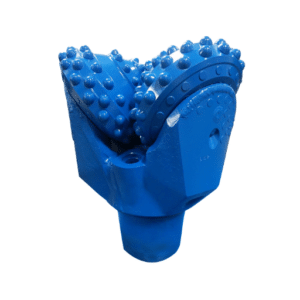
Introduction to Kelly Bar Drill Rigs

Knowing the Kelly bar-style drill rig is used as a deep foundation drilling engine. Having a telescopic Kelly bar to send torque to the pressure tool, therefore incising the ground with accuracy and efficiency under different soil and rock conditions, these machines are usually used in construction works like bridge piers, high-rise buildings, and retaining walls, where strong and stable foundations are required. Being so versatile and dependable, these are very important machines in foundation engineering.
What is a Kelly bar drill rig?
The Kelly bar drill rig is an engineering apparatus engineered for deep drilling operations and generally employed in massive construction and infrastructure work. The basic component, the Kelly bar, is a telescopic, segmented steel bar transmitting torque and pressure from the rotary drive of the drill rig to the actual drilling tool. This allows the rig to excavate soil efficiently and pass through hard rock layers to form stout bases.
Kelly bar drill rigs come in many sizes and configurations, adapting to various project requirements. Depending on the model design and soil conditions, they can attain depths of near 300 feet or close to 90 meters, with drilling diameters ranging anywhere from 20 inches to over 150 inches (or 50 cm to 380 cm). They provide high precision while equipped with modern monitoring systems to maintain safety and accuracy throughout the excavation processes.
While modern Kelly bar drill rigs earnestly incorporate the features of automatic verticality control and hydraulic systems to optimize energy efficiency and reduce environmental impact, their great versatility allows for their adaptation to widely varying geological conditions and hence becomes an indispensable tool for the construction of high-rise buildings, bridges, dams, and other vital infrastructure.
Key components and how they work
Contemporary Kelly bar drill rigs contain numerous essential parts that were designed for optimum performance during construction projects. One of the main parts would be the kelly bar—a telescopic or sectional drilling rod that transfers torque and axial force from the rotary drive to the drilling tool, designed to withstand challenging conditions. Kelly bars are capable of enduring enormous stresses, being made of wear-resistant materials for extended life. Usual setups for these bars are interlocking and friction; as interlocking bars maximize torque transmission, they offer the best service for deeper and more difficult drilling operations.
Then there is the rotary driver that develops the rotational force to drive the drilling. Hydraulic-powered rotary drives are the most common, since an operator requires sheer control of speed and torque, especially when using kelly bars designed to withstand tough conditions. Keeping fluid pressure moreover allows smooth and efficient operation of the rotary driver, irrespective of the ground condition.
Types of drilling bucket and auger tools differ in form, shape, and function due to soil considerations. Drilling buckets are suitable only for loose or somewhat cohesive soils, whereas rock augers have their teeth coated with tungsten carbide to break through hard rock formations.
Safety systems with load sensors and real-time monitoring have been catered to modern machinery. Inclination sensors keep the drilling alignment vertical; depth meters measure the depth accurately. Other advanced systems provide data logging for performance evaluation and project metrics optimization.
The more advanced component features bring a lot of versatility, plenty of efficiency, and sufficient reliability in meeting their demands on a wide variety of complicated constructions.
Overview of industries relying on Kelly bar drill rigs
It is unquestionable that Kelly bar drill rigs are needed throughout several industries requiring exact drillings and drilling efficiency. The construction industry is one of the main users of these rigs, in particular, in making deep foundations for skyscrapers, bridges, and other large infrastructures. These rigs get involved in bored piling construction, which is clearly an old technique for the new construction industry’s foundation.
Kelly bar drill rigs are widely used in energy, especially geothermal energy, where deep and accurate drilling is necessary for accessing heat below the earth. Their adaptability allows these rigs to be applied in different soil and rock conditions. The mining industry also capitalizes on the use of Kelly bar drill rigs with deep control and reliability for mineral exploration and extraction.
Recent industry data reveals a rising demand for these rigs in fast-developing urban areas and infrastructure projects such as in the Asia-Pacific and Middle East. For instance, infrastructure investments in the Asia-Pacific region, projected to reach over $1 trillion by the year 2030, are fostering the pace of adoption of advanced drilling equipment inclusive of Kelly bar rigs. Likewise, reports reveal that renewable energy projects across the globe are furthering the demand for precision drilling tools for sustainable energy purposes.
Owing to the accuracy and capacity for excellent performance offered by Kelly bar drill rigs, they continue to advance projects in the construction, energy, and mining sectors. These projects cut across various geological challenges and sit operationally well-agile under stressful situations.
Latest Industry Trends in Kelly Bar Drill Rigs

Rising Carbon Footprint by Control Solutions
The increasing demand for greener means and technologies has been feared to be recognized by the industry. Kelly bar drill rigs are, thus, being developed with energy-efficient configurations that meet environmental norms while trying to reduce their carbon footprint, aligning with the global inclination toward green construction.
Technology Upgrades
Upgrades pertaining to automation and real-time monitoring technologies are available in manufacturing plants. Kelly bar drill rigs are, therefore, improved in operational efficiency, precision, and safety, which ensures increased productivity and reliability in all types of projects.
Infrastructure Development is essential for implementing advanced techniques such as diaphragm walls and high torque kelly bars.
Continuing investments in infrastructure development at global levels in bridges, highways, and renewable energy installations are putting pressure on versatile and powerful Kelly bar drill rigs that can easily accept different terrains and challenging conditions.
Durability and Cost Effectiveness
A long-term option for durability with lesser maintenance is being prioritized by the end-users. Material and design innovations are being carried out to fulfill these needs and increase the life-cycle efficiency and cost-friendliness of the equipment.
Market growth and projections
The Kelly Bar Drill Rig Market is expected to witness steady growth over the coming decade. Factors contributing to the growth include investments poured into various infrastructure projects worldwide, including mechanisms for urban development, renewable energy projects, and other transportation systems. As per industry reports, the market stood at an approximate valuation of USD 2.5 billion in 2022, and by 2030, it is projected to be worth USD 4.1 billion at a CAGR of 6.5% approximately.
Region-wise, A-P is foreseen to command a market share on account of massive construction and infrastructure development programs being promulgated in China, India, and Southeast Asian countries. North American and European markets, on the other hand, are foreseen to contribute their innovations in kelly bars and pile drilling rigs to enhance global construction efforts.
The demand is additionally being driven by rapid advancements in drilling equipment like automation and high precision. The small footprint with efficiency attributes makes it suitable for a confined space environment, while green technologies have gained another boost for the end-user. The market appearance foresees a rising interest in multipurpose machinery that, besides environmental regulations, also meet requirements for operational efficiency, thereby ensuring sustained market growth over the years.
Integration of IoT sensors for real-time analytics
The industry is revolutionized with the real-time data collection and analysis afforded by IoT sensors embedded in drilling equipment. The various parameters that these sensors measure include temperature, pressure, vibration, and performance of equipment, which lend valuable insights to allow better operational efficiency. Now, with machine learning and smart analytics becoming more sophisticated, the data generated through IoT sensors can be used to thin down some instances of equipment failure and allow timely maintenance to minimize downtime.
According to the report, the global oil and gas IoT market has stronger growth prospects, with more IoT adoption for predictive maintenance activities. For example, sensors enabled via IoT evaluate parameters with respect to operations during drilling and give operator feedback for improving operational standards and thus cost reduction. Accordingly, through the support of cloud platforms, the company aggregates its IoT data from several locations to maintain uniformity and take informed decisions.
The integration of IoT sensors is also very important for environmental monitoring. The purpose of these sensors is to detect any emissions, measure resource consumption, check fuel consumption, and then certify that everything conforms to law and sustainability. Such pinpoint time precision enhances the safety of any operation; it also helps companies to meet environmental standards. The end users have come to appreciate the benefit of IoT solutions in delivering actionable insights, which has led to hastened adoption within the drilling equipment sector.
Environmental considerations and sustainability trends
The industries that provide drill equipment have been the subject of intense criticism concerning the environmental aspect, aiming to make everything more sustainable. The integration of renewable energy and the use of modern IoT-enabled systems, on the other hand, curb carbon footprints from being generated at operational levels. Such systems include electric drilling rigs and hybrid systems, which can cut down greenhouse gas emissions by as much as 30% compared to their conventional diesel counterparts. Water management is also an area of concern with closed-loop systems being put in place to recycle and reuse water, leading to a decrease of 50% in freshwater consumption.
Sustainability has a huge push in conformity with various regulations like net-zero emission targets and ESG standards. The companies are increasingly adopting green technologies in this field-a new generation of automated emission monitors, for instance, and predictive maintenance systems that are capable of balancing optimization with environmental protection. Sustainable supply chain practices-reuse of materials in drilling, in particular, and waste reduction strategies applied in the industry as well to align globally with their sustainability goals. These developments create a new wave within the drilling industry, thus allowing for and addressing complicated environmental situations with an eye toward sustainability.
Technological Advancements in Kelly Bar Drill Rigs

Modern-day Kelly bar drill rigs, in fact, have seen significant improvements in terms of efficiency and precision, all due to advancements in technology. The prominent features that materialize are mainly automated systems and their variants, which simplified procedures that explicitly required manual intervention, increasing safety on-site. An enhanced load-bearing material and telescopic design further enhance durability and operational efficiency across different drilling circumstances. Digital monitoring and control systems provide real-time feedback on drilling performance for operators to implement correct changes and therefore maximize output. With such improvements, Kelly bar drill rigs responded to modern demands of construction and kept their reliability and cost-effectiveness.
Hydraulic systems for raising and lowering Kelly bars
Hydraulic systems are the key to the mostly smooth operaïon of Kelly bar drill rigs. Here, they have specifically to lift and lower Kelly bars with a precise and controlled motion in a manner that would make safe and effective drilling operations possible. A good pump system powers the hydraulic cylinders, these in turn generating the great forces required to counterbalance the whole weight of the Kelly bars, which can weigh a heavy few tons depending upon a particular application.
Modern hydraulic systems incorporate pressure control and load sensing so that the operator may smoothly move the Kelly bars under varying load conditions. Others allow variable speed control to provide greater accuracy and to eliminate sudden movements that can damage equipment or reduce drilling accuracy.
As per industry reports, high-quality hydraulic systems reduce operational downtime by as much as 20% over those antique mechanical systems. Moreover, with these systems having feedback mechanisms, it is possible to perform real-time monitoring of the pressure level and other parameters, thereby increasing the general efficiency of the equipment. These technologies have, in turn, made hydraulic systems a necessity in complex drilling projects where operators can easily manipulate the systems on hard soil compositions and varied depths.
Remote monitoring and control capabilities
The new-age hydraulic systems with remote-monitoring capabilities have changed a lot when it comes to operational considerations in drilling and heavy machinery. With the most advanced IoT sensors and cloud platforms, the operator can now observe the performance of the equipment in real-time while offsite. Equipment pressure, temperature, flow rates, or overall system diagnostics are fed into a centralized dashboard that serves as a major determinant for predictive maintenance and unexpected breakdown conversions.
Keeping in view the timely detection of possible system failures and quick interventions, research assertions signify that remote monitoring systems can account for increased operational efficiency by up to 25%. GPS integration further facilitates the use of these machines by tracking the equipment in terms of location and runtime, leading to streamlined fleet management associated with large projects. Such systems enhance safety by minimizing the presence of personnel at hazardous sites, apart from saving extra money by enabling optimum allocation of resources and on utilities. The amalgamation of automation with lesson-driven management gives hydraulics system operations a connected, efficient, and greener imprint.
Comparison with top drive drilling systems
Kelly bar drill rigs are ideal for vertical, precise drilling in construction and mining, while top drive systems excel in horizontal, high-speed drilling with enhanced automation and safety.
| Key Point | Kelly Bar Drill Rig | Top Drive System |
|---|---|---|
| Drilling Type | Vertical | Horizontal |
| Precision | High | Moderate |
| Speed | Moderate | High |
| Automation | Limited | Advanced |
| Safety | Basic | Enhanced |
| Applications | Construction, Mining | Oil, Gas |
| Power Source The efficiency of Kelly bars is often enhanced by using hydraulic systems that provide high torque for effective drilling. |
Hydraulic, Mechanical | Electric, Hydraulic |
| Cost | Moderate | High |
| Maintenance | Moderate | High |
| Versatility | Limited | High |
Practical Applications of Kelly Bar Drill Rigs

These Kelly bar drilling rigs find primary application in the construction and foundation projects. Traditionally, they are used for boring large diameter holes to facilitate pile foundations that carry heavy weight of bridges, tall buildings, and industrial buildings. In addition, the rig may be installed to assist installation of retaining walls, mitigation of earth systems, and infrastructure works such as railroads or highways. Due to their very flexible nature and high level of accuracy, kelly bars are designed to play an important role in building solid and sound foundations.
Real-world examples in construction and mining
A significant use of pile drilling rigs within the construction sector is in the Hong Kong-Zhuhai-Macau Bridge. Advanced rotary drilling rigs were applied for the construction of large-diameter pile foundations in difficult marine environments. The rig would provide the basis of this 55-kilometer structure with a certain degree of stability so as to make it capable of supporting a heavy traffic load daily between major cities of the region.
In the mining sector, rotary drilling rigs are core components for ore exploration and extraction. For instance, the drilling of high-capacity rigs in the Pilbara region of Western Australia is required for iron ore deposits with the view of exploring and mapping mineral reserves efficiently. The rig enables the extraction of millions of tons of iron ore annually, making a considerable contribution to the global steel industry.
Here is an example Broadway Subway Project in Vancouver, Canada, where retaining walls are being installed, and soils stabilized, along the construction route under the most sophisticated drilling rigs available in view of the complex ground conditions. This is necessary to ensure the safety and stability of the underground rail system while minimizing the extent of disruption to urban infrastructure in surrounding premises.
They, therefore, show that working with the latest technologies in construction or mining will emphasize the need of drilling solutions being more precise, efficient, and reliable in complex environments.
Benefits in challenging environments
Modern drilling technologies provide ample benefits in tough environments, much to the changing ways of how construction and mining projects are carried out. The main advantage being the improvement in accuracy, with which errors decrease and, consequently, project delays set in. For instance, advanced directional drilling systems can achieve accuracies of deviation less than 1% over a long distance, even from the densest urban areas to the most difficult geological conditions.
Moreover, the equipment supports the safe working environment through its remote operation facility, which, in turn, lowers the risk of hazards to workers on-site. Industry reports suggest that, in the last decade, workplace accidents during drilling operations have been reduced by about 50% due to the employment of automated rigs. From the sustainability angle, drilling equipment, now manufactured, supports energy-efficient design and also consume less fuel, which means the carbon emission can be slashed down by 30% or so compared to conventional alternatives.
Drilled with state-of-the-art technologies, projects run efficiently with volumes of infrastructure supplied to match the growing global demand present across terrains or in urban setups. Drilling thus combines precision, safety, and eco-friendliness in showing their emerging talents brought to bear against the challenges of present-day construction and resource extraction.
Testimonials from industry professionals
“The use of modern drilling techniques has transformed the way we operate. Because automated drilling systems are more precise and allow us to work in different or challenging environments, project timelines have been cut by 35%.”
“Safety has always been our No.1 priority, and these systems have significantly lowered risks in the field. For example, automated monitoring systems have cut manual intervention in deep drilling by more than 40%, making the worksite much safer for all staff.”
“They’ve become very helpful in improving efficiency while cutting down on carbon emissions. Some of these innovations include water management systems employed during the drilling activity that have further helped in reducing water consumption by up to 25 percent, thus partnering sustainability with high productivity.”
Current phenomena in the industry have thus shown the ways in which drilling has been transformed in an emergent way-that is, given the ubiquity of efficiency, safety, and sustainability ingrained into the protocols of everyday operating processes.
The Future of Kelly Bar Drill Rigs

Kelly bar drill rigs have always had a bright future when integrating technology that increases accuracy, efficiency, and sustainability. The major upgrades that will be taking place in the future include automated control, monitoring systems in real-time, and energy-efficient designs. Minimizing fuel consumption and the level of noise generated by the rigs are considerations that flank environmental considerations, so the dust should also settle quickly. Modular design would give another level of adaptability to various drilling jobs, making it equally flexible in any given environment. In all, it will be a whole lot of performance meeting the eco-friendly side to make the industry fit for the present and evolving needs.
Emerging technologies and their potential impact
Emerging technologies are rapidly revamping industries across the globe, and its presence in drilling operations promises dire changes. AI and ML are employed for development, wherein big data analysis is done to predict equipment failure, minimize downtime, and maximize operational efficiency. Predictive maintenance using AI may slash maintenance expenses by as much as 30% and could bring down unscheduled outages by nearly 50%, cites a report.
In the very domain, process automation and robotics are being applied to set up offshore drilling rigs for their remote and autonomous operation and hence minimize safety personnel working in NDT areas. Drilling systems are equipped with high-end sensors and IoT devices so they could provide real-time monitoring and insight into data to further higher decision-making speed and process. According to industry figures, IoT implementation can improve operational efficiencies by 25%.
Renewable integration is likewise gaining in drilling. Conversely, providing energy to equipment via solar and wind could drastically reduce greenhouse-gas emissions from the operations and fulfill sustainability goals worldwide. According to studies, at certain sites, carbon emissions could be reduced by 20 to 30% as opposed to traditional operations.
By being brought under the umbrella of a transformative technology, it stands out in enabling productivity and safety, while at the same time, providing room for a commercial structure that increasingly favors sustainable practices-a reflection of the differing priorities in the energy sector.
Predictions for market growth and demand
The Kelly bar drill rig market is projected to grow steadily, driven by increased construction and mining activities, adoption of IoT, and demand for sustainable and efficient drilling solutions.
| Key Point | Details |
|---|---|
| Growth Rate | 3.84% CAGR |
| Market Value | $2.19B by 2030 |
| Key Drivers | Construction, Mining |
| Tech Trends | IoT, Hybrid Power |
| Sustainability | High Demand |
| Region Growth | Asia, North America |
| Challenges | High Costs, Maintenance |
| Opportunities | Automation, Efficiency |
The role of AI and automation in drilling operations
AI and the automation industry are drastically transforming drilling operations in terms of efficiency improvement, accuracy, safety, and many more. At one end, advanced AI algorithms use huge volumes of geological and operational data for optimizing the placement of wells and predicting probable challenges, thus reducing the risk of downtime, which is very costly. Now, this predictive maintenance, particularly when set in an AI mode, can predict equipment failure and thus save costs on maintenance by about 30% and increase the life span of great equipment.
Meanwhile, automation is helping to facilitate the execution of repetitive and dangerous tasks like pipe handling and drilling assemblies, thereby reducing potential incidents and accidents. Fully automated rigs possess robotic systems that perform operations independently and are also monitored by real-time AI to ensure quality. Fully automated drilling seems to have a potential to increase operational efficiency by 20 to 25%.
Besides, AI-enabled systems assist in decision-making on the spot while processing huge datasets from a variety of sensors. The systems channel actionable insights to the drilling crews and improve speed and accuracy simultaneously. In essence, the energy industry’s move toward automation endorses the sustainable and cost-efficient initiatives since AI solutions are forecasted to save billions for the sector every year while lessening the environmental impact through optimized use of resources.
Frequently Asked Questions (FAQs)
Reference Sources
-
Determine the Potential Drill Utilization Improvements
This academic paper discusses Kelly bar loading as a solution for drilling challenges, providing insights into its applications. -
Chapter 7 – Well-Drilling Methods
A detailed document on drilling methods, including references to Kelly bars and their usage in various drilling setups. -
SOP: Giddings Coring and Sectioning – Soils Lab
This protocol from the University of Illinois provides technical details on using Kelly bars in soil coring and sectioning.