Most industries—construction and mining, to name a few—have drilling operations at their cores, with the excavator drill rig standing out as an extremely versatile and highly demanding piece of machinery used for challenging drilling operations. Then again, just what are these rigs that they are considered an integral part of contemporary projects, and how do they apply rotary drilling techniques to provide precision and efficiency?
Here is an all-encompassing guide to excavator drill rigs, covering activities, design, and application. Any professional who spectra for some practical insights or is just keen to know about a technology behind critical infrastructure projects would find an interest in this write-up. We cover from the principles of rotary drilling to applications and best practices in real-world scenarios, all aimed at enriching your understanding of this key piece of machinery.
Understanding Excavator Drill Rigs

Excavator drill rigs are special attachments that convert normal excavators into powerful drilling machines. They are used in construction, mining, and geotechnical work in drilling holes for foundations, anchors, or even soil sampling. The most valuable feature of this rig is its adaptiveness to excavation needs and ground conditions. Rotary and percussion systems are used to attain fine-grained precision and efficiency, so for projects where reliable solutions are a must, drill rigs are indeed indispensable.
What is an Excavator Mounted Drill Rig?
An excavator-mounted drilling rig is a complex piece of machinery requiring a very precise setup with a chosen excavator to complete the transformation into a highly efficient and multi-function drilling machine. These rigs find vast applications within the construction, mining, and civil engineering industries for foundation drilling, anchoring, rock bolting, and soil sampling. From the operator’s perspective, by mounting the drilling system onto the boom of an excavator, one of the greatest advantages is that the machine can utilize the advantages of mobility, stability, and hydraulic power to carry out accurate drilling jobs even when it is in an awkward or confined position.
The modern excavator mounted drill rigs are able to provide a rotary and percussion drilling mechanism to handle all varieties of ground conditions-from hard rock to clay and mixed soils. One of the main advantages lies in the flexibility of these systems; they can be offered with a variety of drilling attachments and tooling to cater for the particular needs of the job at hand. Augers, for instance, are suited to shallow drilling and soft terrain, while down-the-hole (DTH) hammers work well for deeper drilling in rock.
As major developments have proven in recent years, the rigs have become more automated, feature more ergonomic control systems for their operators, and have gained better energy efficiency. Hydraulics afford greater torque coupled with faster rotation and drilling speeds, keeping the rig operating at utmost productivity. Some variants even come equipped with noise and vibration damping systems, powering down environmental impact and thus enhancing on-site working conditions.
With their astounding performance attributes, these excavator mounted drill rigs come with a modern-day system achieving up to a maximum diameter of 36 inches (90 cm) while drilling beyond depths of 100 feet (30 meters), subject to model and configuration. Having such specifications gives this kind of rig their place as an absolute necessity for projects that demand precision and versatility with quick implementation while eliminating the use of separate drilling machines.
Components of a Rotary Drill Rig
A rotary drill rig is composed of various integral components, each of which performs a specific role to ensure efficient and precise drilling operations. Below is a detailed breakdown of the primary components:
- Drill Mast: The drill mast serves as the structural backbone of the rig, providing a stable framework to support the entire drilling assembly. Modern masts are often made of high-strength steel for durability and can be adjusted to various angles for angled drilling applications.
- Rotary Head: The rotary head is responsible for turning the drill string and the drill bit. It generates the rotational motion necessary to penetrate the ground surface. Advanced rotary heads often come with variable speed options and torque control, allowing adaptation to different soil and rock densities.
- Drill Pipe (or Drill String): These are long cylindrical pipes that connect the rotary head to the drill bit. Drill pipes transfer torque and pressure down to the bit while also bringing up cuttings through the circulation of drilling fluid.
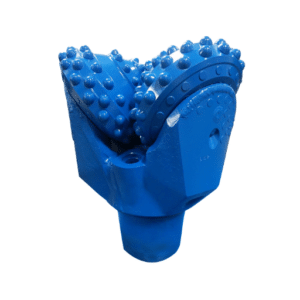
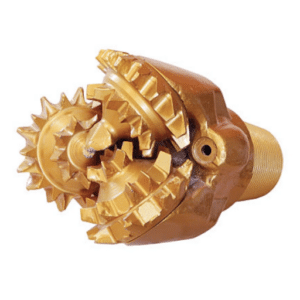
- Drill Bit: The drill bit is the cutting tool that breaks into the soil or rock formation. Various types of drill bits are available, including roller-cone bits, PDC bits (polycrystalline diamond compact), and tricone bits, each suited for specific geological formations and conditions.
- Hydraulic System: The hydraulic system powers key functions of the rig, including the rotation, feed, and pullback of the drill string. This system ensures that sufficient force is applied for penetration and retrieval in tough drilling conditions.
- Mud Pump and Circulation System: This system ensures the continuous circulation of drilling fluid (or mud) during operations. The mud serves multiple purposes, including lubricating the drill bit, cooling the drilling system, and carrying cuttings to the surface.
- Control System: Modern rotary drill rigs are equipped with highly advanced control panels that allow for digital monitoring and precise manipulation of the rig’s functions. Many rigs now feature automated or semi-automated control systems for increased safety and operational efficiency.
- Crawler Tracks or Base: The base of the rig, which is often mounted on crawler tracks, ensures mobility while providing a stable platform during drilling. Crawler tracks are particularly advantageous when navigating uneven terrain or confined spaces.
- Power Source: Rotary drill rigs typically operate using powerful diesel engines or sometimes electric motors. The power source not only drives the mechanical systems but also supplies energy to auxiliary equipment. Advanced engines are designed to maximize fuel efficiency while minimizing emissions.
- Safety Systems: Modern rigs include a range of safety features, such as emergency shutoff systems, overload protection, and enhanced operator cabins with safety glass and ergonomic controls to minimize risks during operation.
Rotary drill rigs have been revolutionized with state-of-the-art technology to maximize performance under various geological scenarios, making them an indispensable tool in industries such as construction, mining, and energy exploration. These key components work in harmony to ensure precision, efficiency, and reliability throughout the drilling process.
Types of Excavator Drill Attachments
The main types of excavator drill attachments include augers, rock drills, hydraulic hammers, pile drivers, and rotary heads.
|
Key Point |
Augers |
Rock Drills |
Hydraulic Hammers |
Pile Drivers |
Rotary Heads |
|---|---|---|---|---|---|
|
Use |
Drilling holes |
Rock and soil drilling |
Breaking hard surfaces |
Driving piles |
Precision drilling |
|
Material |
Soil, clay |
Rock, hard soil |
Concrete, pavement |
Steel, wood piles |
Various terrains |
|
Power |
Hydraulic |
Hydraulic |
Hydraulic |
Hydraulic |
Hydraulic |
|
Application |
Landscaping, foundations |
Mining, earth retention |
Demolition, quarrying |
Construction, foundations |
Soil nailing, micropiles |
|
Durability |
High |
High |
High |
High |
High |
Applications of Excavator Drill Rigs

Excavator drill rigs are widely used across industries due to their versatility and efficiency. Key applications include:
- Construction: Used for foundation drilling, pile installation, and soil stabilization in building projects.
- Mining: Essential for mineral exploration, blasting preparation, and sampling.
- Energy Sector: Facilitates geothermal drilling and infrastructure development for renewable energy.
- Environmental Projects: Aids in soil testing, groundwater monitoring, and remediation work.
- Utilities Installation: Enables precise drilling for pipelines, cables, and utility poles.
These applications underline the adaptability of excavator drill rigs in meeting diverse project demands.
Surface Drilling in Construction
In the present time, construction has engaged surface drilling for site preparation, making structural foundations, and testing for a particular form of structural integrity. Drilling teams employing workplace techniques will efficiently penetrate all kinds of soils and rock formations to establish solid grounds for infrastructure projects.
Alongside this, recent development and upward trend in surface drilling technology have created avenues for higher productivity. For example, pneumatic and hydraulic drill rigs are now controlled by automated systems that considerably cut human error and consequently increase drilling efficiency. According to industry statistics, an automated system can increase operation efficiency by up to 40%, significantly shortening the working duration of the project. Another point to note is that the designs on modern rigs strongly consider the issue of environmental attention and include noise suppression systems and low fuel consumption.
The attention of surface drilling towards sustainable construction is another point to consider. These techniques allow for selective materials recovery and reduced wastage while encouraging greener framework. With the technological feats focusing on strength and versatility, surface drilling has become a good trade-off in construction between techno-fantasies and on-ground realities.
Foundation Drilling Techniques
Foundation drilling techniques provide stable and long-lasting bases for different structures, especially in difficult terrains or large projects. Various methods are employed today, the suitability of which depends upon the particular soil condition, load requirement, and specification of every project.
1. Auger Drilling: Very efficient for making deep, straight holes in soil and soft rock. Continuous flight augers are employed for depths greater than 60 m and hence are suited for foundation construction of tall buildings and bridges. It excels in speed in aiding excavation with minimal disturbance of soil, keeping in view close-lots in urban areas.
2. Rotary Bored Piling: This method is generally used for large-diameter piling where transfer of heavy loads into deep soil strata is involved. Capable of 3-meter diameters, the kelly bars and drilling buckets, according to modern project evidences, find rotary bored piles very good in soils of mixed profiles, very versatile, and reliable.
3. Impact Driving: Illustrated by setting piles into the ground by means of powerful hammer force, it is a traditional method. Reduction of noise and disruption could be achieved with newer vibratory hammers. The modern technology has, however, improved the efficacy of some systems to the extent that piles may be set at a rate of about 200 ft an hour, depending on soil density.
4. CFA Piling: This method is one-step in a way that the drilling and the pouring of the concrete is carried out simultaneously. It is a quick method able to work well in loose soils. Data indicates that CFA piling is commonly used in mid-sized buildings and infrastructure projects because it helps keep structural integrity without much soil disturbance.
5. Micropiling: Where space is limited, or when reinforcement of existing foundations is required, micropiling holds the prime option. These piles are of small diameters but are highly resistant, taking loads of over 500 kN, as per recent construction engineering.
The development of equipment and computer-aided drilling techniques enhanced the precision, safety, and efficiency of foundation drilling. Real-time monitoring techniques ensure that depth and alignment were accurately estimated and consider changes on-site due to geological variations. Using these tools and techniques, the industry continues to rise to the challenge of evermore complicated projects.
Mining and Quarry Applications
The activities of mining and quarrying are vital when it comes to resource extraction, so essential materials may be provided for different industries like minerals, metals, and aggregates. The present technology has tremendously altered these fields, working to enhance productivity, and all the while safeguarding sustainability and safety. The innovation of autonomous mining equipment, drone surveying, and advanced methods of blasting allows operators to maximize the extraction process and minimize environmental impacts.
Autonomous hauling systems, which are becoming increasingly popular in large mining operations, have up to a 15-20% increase in productivity while cutting down on equipment downtime. Drone-based aerial surveys also allow for very accurate mapping, massively advancing the precision of exploration and operational planning; this is especially advantageous when covering large and remote sites by speeding up the process while reducing costs by approximately 30% compared to conventional survey methods.
Another such area is sustainability. Quarries are now employing intelligent water management systems, such as closed-loop water systems, that restrict the use of freshwater. Moreover, dust suppression technologies are improving so that the particulate emissions they suppress are also better-regulated.
Mining and quarrying also benefit hugely from data integration and IoT (Internet of Things) solutions. Mounting sensors on equipment and throughout sites furnishes real-time data, which can then be used to predict maintenance requirements for optimizing machine performance, thus preventing expensive downtime. The same systems watch for dangerous conditions that jeopardize worker safety and instantly respond to any emerging risk.
Radical breakthroughs have provided a promising appearance for a sustainable future for mining and quarrying while efficiently using resources and environmental measures.
Benefits of Using Excavator Drill Rigs

- Increased Efficiency: An excavator drill rig boosts the productivity of workers, facilities, or industries, since drilling is combined with excavation works, thereby greatly reducing the time and effort required for operations.
- Versatility: These rigs are capable of performing an assortment of tasks-from drilling in cramped quarters to working on multiple types of ground conditions.
- Cost-Effective: Because these machines combine several functions, they help reduce costs relative to equipment and maintenance.
- Better Safety: They were designed with controls and safety features that help minimize hazards to the operators and ensure a safer working environment.
- Environmental Benefits: These rigs reduce environmental impact with their accurate drilling and lesser fuel consumption, an attribute-favorable considering the present-day sustainability requirement.
Efficiency in Drilling Operations
Efficiency in drilling operations has come to be the higher emphasis for industries that seek maximizing productivity while minimizing costs and environmental degradation. Modern drilling rigs employ state-of-the-art technologies, such as automation, real-time data analytics, and AI-driven controls, for performance optimization. For example, automated drilling can enhance the precision of the control processes and reduce downtime by continuously monitoring the conditions and adjusting parameters in real time.
Based on recent industry reports, automated rigs were found to speed up drilling by even 30% over conventional methods, thereby drastically cutting down the time required for project completion. On the flip side, an advanced predictive maintenance system prevents operators from realizing equipment failure, thus nearly reducing maintenance costs by 20%. These innovations increase the reliability of the equipment and ensure better resource allocation.
Energy efficiency comes to mind next, with hybrid power systems inbuilt into several modern rigs for reducing fuel consumption. Studies have indicated that hybrid rigs can save fuel by 15-25%, thus contributing toward greener operations and lower greenhouse gas emissions. Companies that allow themselves to change will fulfill their operational goals as well as their sustainability goals and consequently gain a competitive edge in the market.
Cost-Effectiveness and Versatility
I opt for operational solutions that ensure maximized efficiency with minimal expenses when thinking about cost-effectiveness and flexibility. With today’s improvements, such as hybrid power systems, fuel consumption and overall costs can be decreased, allowing me to achieve sustainability targets without having to compromise output or profitability. Another aspect of versatility is that they can adapt to different operational requirements, which in turn allows for flexibility and resilience in fast-changing markets.
Enhanced Performance with Hydraulic Power
The latest hydraulic power systems are changing the drilling rigs’ effectiveness and precision level of operation, offering higher precision and reliability than ever. Advanced hydraulics promote a smooth operation with the best possible levels of control under difficult conditions. Hydraulic fracturing, for instance, relies on high-pressure systems for creating lucrative opportunities from reservoirs that were considered inaccessible earlier. Industry figures indicate that such systems can increase operating efficiency by 30% compared to conventional systems.
Moreover, the recent advances in hydraulic technology now consider energy recovery systems that reduce power consumption and promote an environmentally sustainable approach. It is possible to build energy-efficient hydraulic pumps and circuits that keep leakage to a minimum, thus reducing maintenance costs and being able to withstand severe operating conditions. From these improvements, rigs have become more efficient and more in harmony with both environmental and economic concerns of today, thus guaranteeing a sustainable future for the industry.
Innovations in Excavator Drill Technology

Advanced Sensor Integration
Modern excavator drills are adopting cutting-edge sensor technologies to ensure precision and efficiency. These sensors monitor drilling depth, angle, and pressure in real-time, allowing operators to adjust their actions accordingly. Thus, with the accuracy in place, less stress is imposed on the equipment due to incorrect operations, hence minimizing maintenance charges.
Automated Control Systems
Automation in excavator drilling is taking root. With automated control systems, drilling can be semi-autonomous or fully autonomous, with the system maximizing performance in complex environments. Such systems afford a reduction of constant manual intervention, thereby enhancing the safety and productivity levels of the system at large under reduced operator fatigue.
Eco-Friendly Drilling Solutions
The implementation of green technology remains one of the driving trends very much in the modern excavator drill market. A low-emission engine coupled with energy-efficient components serves to ensure minimal environmental footprint of the drilling operations running through. Given that these solutions respond to growing regulations and demand for environmentally sustainable working practices from the construction and mining industry.
Latest Trends in Rotary Drilling Equipment
The market of rotary drilling equipment is undergoing a big change, brought about by advances in technology and the desire for greater efficiency. One landmark trend is the rise of automated systems. Today, automated rotary drilling rigs allow operators to optimize drilling precision and minimize downtime by means of real-time monitoring and control. These systems create a safe working environment and foster quick decision-making by way of AI- and IoT-based technologies.
Another major swing is the rising power of choosing hybrid energy systems. Hybrid rotary drills are operating on electric and diesel power sources, with the latter option enabling operators to cut down fuel consumption by as much as 40%, according to the recent industry analysis. This switch enhances operational efficiency and fits well into the global agenda in cutting down carbon emissions.
Besides, modular drill designs are moving to the limelight. Modular equipment is flexible and works well for companies that need to adapt to different drilling environments while avoiding the complexities of transporting large-scale systems. This becomes crucial in remote construction or mining sites.
More importantly, advances in material sciences are creating innovations in the longevity of rotary drills. The use of high strength and wear-resistant materials in drill bits and components, as well as the rest of the equipment, has allowed this extension of lifecycle and reduction in maintenance time and operational cost. All these together imply how drilling technologies for rotary drills are profoundly different in seconds compared to their needs for the industry for increased performance and sustainability.
Advancements in Hydraulic Rock Drills
Advancements in hydraulic rock drills include automation, energy efficiency, high-frequency drilling, improved materials, and extended maintenance intervals.
| Key Point | Description |
|---|---|
|
Automation |
Enhanced control systems for precision and safety. |
|
Energy Efficiency |
Optimized energy use for cost-effective operations. |
|
High Frequency |
Increased drilling speed and efficiency. |
|
Improved Materials |
Advanced alloys and coatings for durability. |
|
Maintenance |
Longer intervals and simplified servicing. |
Future Directions in Drilling Techniques
With the integration of cutting-edge technologies into drilling and a heavier emphasis on sustainability, drilling methods are evolving fast. With automation and AI on their side, drilling companies will be able to perform predictive maintenance, optimize drill performance, and drastically reduce downtime. For instance, an AI-driven system can sift through huge amounts of drilling data in real-time to deliver insights that would help in more precise use of resources and in minimizing environmental disturbances.
Energy efficiency is likely to be another big scenario in these developments. So, electric or hybrid-powered drilling systems would reduce dependency on fossil fuels while minimizing emissions in general. The biggest change in the industry is going to come through the development of digital twin technology. Simulating real drill operations in a virtual environment allows companies to model performance, test solutions to problems, and prove safety procedures without putting anyone at risk for real.
New materials and coating methods for the drill parts continue to hold the promise of better durability and cost efficiency. Nanostructured coatings, for example, can improve resistance against extremely high temperatures and pressures going beyond the normal expectation of their working life, even in a hostile environment such as deep-sea drilling.
Integration of such innovative techniques buys well into the concept of greener, smarter, and efficient drilling so that the industry could pursue future energy and resource requirements in a sustainable way, all while working to cut down on operational costs.
Reference Sources
-
Boise State University – OSHA Guidelines
Vehicle-Mounted Drilling Rigs for Rock and Concrete
This document provides detailed safety and operational guidelines for vehicle-mounted drilling rigs, including excavator-mounted systems. -
University of Alaska Fairbanks
Heavy Equipment Work at Matanuska Experiment Farm
Discusses the use of excavators and drill rigs for subsurface testing and resource evaluation, providing practical applications in research and development. -
Federal Highway Administration (FHWA)
Context Sensitive Rock Slope Design Solutions
Explores the use of hydraulic hammers and excavator-mounted systems for rock excavation and slope design, emphasizing environmental and operational considerations.
Frequently Asked Questions (FAQs)
What is an excavator drill rig?
An excavator drill rig is a specialized piece of construction equipment that combines the functionalities of an excavator and a drilling rig. It is designed to perform drilling operations in various applications, including foundation drilling, water well drilling, and mining. This versatile machinery can be equipped with different drilling tools and attachments, making it capable of drilling in both soil and rock conditions.
How does an excavator-mounted drilling rig work?
An excavator-mounted drilling rig operates by utilizing the hydraulic power of the excavator to drive the drilling tools into the ground. The excavator’s boom and arm provide the necessary reach and maneuverability, allowing the rig to access limited or challenging areas. The drilling process can be controlled remotely, ensuring precision and safety during operation.
What types of drilling tools can be used with a rotary drilling rig?
Rotary drilling rigs can use a variety of drilling tools, including augers, DTH (down-the-hole) hammers, and hydraulic rock drills. These tools are designed for different soil and rock conditions, enabling the rig to effectively drill holes of varying diameters and depths for various drilling projects, such as quarrying and foundation works.
What are the advantages of using a hydraulic crawler drill?
A hydraulic crawler drill offers several advantages, including enhanced stability and mobility on uneven terrain. The hydraulic system provides high torque and speed (rpm), making it efficient for heavy-duty drilling tasks. Its compact design allows it to access restricted areas, making it ideal for construction sites with limited access.
Can an excavator drill rig be used for piling operations?
Yes, an excavator drill rig can be effectively used for piling operations. With the appropriate attachments, such as augers or rotary drilling tools, it can create deep, stable holes for piling foundations. This adaptability makes it a valuable asset in engineering and construction projects where robust foundation support is required.
What should I consider when choosing a supplier for drilling equipment?
When selecting a supplier for drilling equipment, consider factors such as the supplier’s reputation, the variety of products offered, and their ability to meet your specific drilling needs. It’s also important to evaluate customer service, warranty options, and the availability of replacement parts. A reliable supplier will ensure you have access to the latest technology and support for your projects.
What is the role of torque in drilling operations?
Torque plays a critical role in drilling operations as it determines the rotational force applied to the drill bit. High torque is necessary for breaking through tough soil and rock formations, ensuring efficient and effective drilling. Understanding the torque requirements can help in selecting the right drilling tools and equipment to meet project specifications.
How do rotary drilling rigs differ from other drilling methods?
Rotary drilling rigs differ from other drilling methods primarily in their use of continuous rotary motion to penetrate the ground. This method allows for faster drilling and is particularly effective in hard rock formations. In contrast, other methods, like percussion drilling, rely on impact forces to break through materials. Rotary drilling is often preferred for projects requiring deep holes and high drilling efficiency.
What are the applications of an excavator drill rig in construction?
Excavator drill rigs are versatile and can be used in various construction applications, including foundation drilling, water well installation, and road construction. They are particularly beneficial in projects that require deep holes or precise drilling in challenging environments, such as urban areas with limited access. Their adaptability makes them essential in modern construction practices.