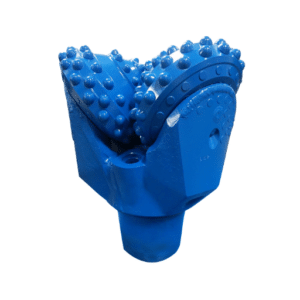
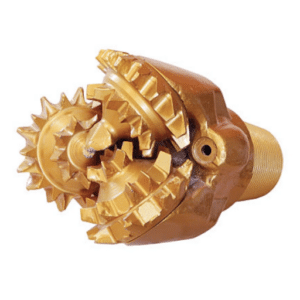
Carlos stood at the edge of borehole seventeen near Mexico City and watched his standard auger being pulled from the ground. The flights, which had been straight that morning, were now bent into shallow curves like overcooked pasta. Eight meters of compacted glacial till had done what three hundred meters of soft clay never could. Two bays over, a competitor’s rig was running a heavy-duty double-cut auger with 20 mm flights and B47K22H bullet teeth. They had not stopped once.
If you have ever watched an auger deform, a kelly connection strip, or a weld crack under load, you already know the real problem. Most operators assume all augers are built to the same standard until the ground teaches them otherwise. A heavy-duty auger is not a marketing label. It is a different class of engineering with thicker flights, harder steel, larger connections, and design logic built around torque, impact, and abrasion that would destroy standard tools.
In this guide, you will learn exactly how heavy-duty augers differ from standard augers, the quantitative thresholds that tell you when heavy-duty is required, the specifications you should demand from your supplier, and the maintenance practices that protect your investment. We will use the material grades, torque tables, and cost data that separate educated selection from guesswork.
What Is a Heavy Duty Auger?

A heavy-duty auger is a reinforced drilling tool designed for hard rock, dense soil, and abrasive conditions that would damage standard augers. Heavy-duty augers feature thicker flighting (16 to 25 mm), double-cut heads, hardfaced wear strips, high-strength steel bodies (42CrMo or Q355B), and larger kelly box connections. Use them when ground strength exceeds 15 MPa, when standard auger flights show bending or cracking, or when drilling depths exceed 20 meters in demanding material.
The engineering logic is straightforward. Standard augers distribute torque and crowd force across thin flights and mild steel tubes. In soft clay and loose sand, this is sufficient because the ground yields easily. In dense gravel, compacted till, or weathered rock, the resistance exceeds the structural capacity of standard construction. The flights bend. The welds crack. The Kelly box rounds off. A heavy-duty auger solves this by increasing wall thickness, upgrading material grade, reinforcing the cutting head, and sizing the connection to match the torque output of modern rigs.
For a broader overview of how augers function across all ground types, see our complete guide to drilling augers.
Standard vs Heavy Duty Auger: Construction Comparison
The difference between standard and heavy-duty augers is not cosmetic. It is structural, material, and geometric. Understanding these differences is the first step in choosing the right tool.
Flight Thickness and Geometry
Standard augers typically use flighting 8 to 12 mm thick. This is adequate for soft soils where the primary load is torsional and relatively low. In rock or dense soil, the flights experience both high torque and significant lateral impact from cobbles and boulders. Heavy-duty augers use flights 16 to 25 mm thick, often with hardfaced leading edges that raise surface hardness to HRC 55 to 65.
Flight pitch also differs. Standard augers for soft soil often use a pitch of 1.0 to 1.3 times the diameter to maximize spoil removal speed. Heavy-duty augers for rock use a shallower pitch, typically 0.7 to 1.0 times the diameter, to reduce the torque required per revolution and maintain continuous engagement with the rock face.
Body and Tube Materials
Standard augers are generally built from Q235 or mild structural steel with no specified hardness rating. The focus is on cost and weight rather than wear resistance. Heavy-duty augers use 42CrMo alloy steel or Q355B high-strength structural steel, heat-treated to HRC 42 to 50. This material upgrade more than doubles the yield strength and significantly improves resistance to abrasive wear and impact fatigue.
Cutting Head Design: Single Cut vs Double Cut
Single-cut augers have one continuous helical cutting edge. They are simpler, lighter, and less expensive. They work well in cased bores and smaller diameters where torque imbalance is manageable. Double-cut augers split the cutting load across two opposing helical edges. This design is mandatory for uncased bores, diameters above 1,500 mm, and secant pile walls where a single-cut head would create uneven torque loads and hole deviation.
Double-cut heavy-duty augers reduce torque imbalance by approximately 30 percent in large-diameter uncased bores. The trade-off is slightly more complex manufacturing and a higher cost. In hard rock applications above 40 MPa, the double-cut design is almost always worth the premium.
Connection and Kelly Box
The Kelly box is the square or hexagonal drive connection at the top of the auger that mates with the rig’s Kelly bar. It is the most commonly overlooked failure point. Standard augers use 130 x 130 mm Kelly boxes. Heavy-duty augers require 150 x 150 mm or 200 x 200 mm connections. An undersized Kelly box strips under high torque long before the flights or teeth fail. The connection must be sized for the rig’s maximum torque output, not the auger’s nominal rating.
When to Use a Heavy-Duty Auger

Knowing when to upgrade from standard to heavy-duty is a decision that should be based on ground mechanics, not habit or budget pressure.
Ground Condition Thresholds
| Ground Type | MPa Range | Standard Auger | Heavy Duty Auger | Notes |
|---|---|---|---|---|
| Soft clay, silt | < 5 | Suitable | Overkill | Save money; use standard |
| Sand, loose gravel | 5 to 15 | Usually suitable | Optional for gravel | Watch for cobbles |
| Dense sand, compacted soil | 10 to 25 | Marginal | Recommended | High abrasion risk |
| Weathered rock | 15 to 40 | Unsuitable | Required with bullet teeth | Standard flights will bend |
| Hard rock | 40 to 70 | Unsuitable | Required, double-cut recommended | Use B47K22H or C31HD |
| Very hard rock, granite | 70 to 100 | Unsuitable | Required, reinforced | May need roller cutters |
The 15 MPa threshold is the practical dividing line. Below it, standard construction is usually adequate. Above it, the risk of flight deformation, weld cracking, and rapid tooth loss makes heavy-duty construction the economically rational choice.
Project Triggers
Beyond ground hardness, several project-specific factors demand heavy-duty construction:
- Depth exceeds 20 meters in abrasive material. The cumulative wear and torque load over long drill strings multiply stress on every component.
- Diameter exceeds 1,200 mm. Larger diameters increase the torque arm and require more robust construction to prevent deflection.
- Continuous cobbles or boulders. Impact loading from large stones exceeds the fatigue limit of standard flights.
- Previous standard auger failures. If you have already bent flights, cracked welds, or stripped connections, the ground has told you what it requires.
Rig Requirements
Not every rig can productively run a heavy-duty auger. The table below maps minimum rig specifications to heavy-duty applications.
| Application | Min Torque | Crowd Force | Rig Class |
|---|---|---|---|
| Dense soil, hardpan | 50 to 80 kN·m | 80 to 150 kN | Mid-size tracked |
| Weathered rock | 100 to 200 kN·m | 150 to 300 kN | Large rotary |
| Hard rock | 200 to 400 kN·m | 300 to 500 kN | Heavy-duty rotary |
| Very hard rock | 400 to 600 kN·m | 400 to 800 kN | Specialized heavy rig |
Attempting to run a heavy-duty auger on an underpowered rig is counterproductive. The auger may survive, but the rig will stall, overheat, or fail to achieve productive penetration rates.
Carlos, the contractor in Mexico City, applied this logic retroactively after his standard auger bent. The geotechnical report showed the glacial till at 18 to 25 MPa with cobble inclusions up to 200 mm. His standard auger was rated for soil under 10 MPa. He switched to a heavy-duty double-cut auger with 20 mm flights and B47K22H teeth. The new tool completed 120 meters without deformation, and its replacement interval went from every 8 meters to every 85 meters.
Heavy Duty Auger Specifications by Application

Heavy-duty augers are not a single product. They are a family of tools optimized for different ground conditions.
Hard Soil Augers
Hard soil augers bridge the gap between standard soil augers and full rock augers. They use Q355B high-strength steel bodies with hardfaced flight leading edges and aggressive cutting angles.
- Body material: Q355B, HRC 38 to 44
- Flight thickness: 14 to 18 mm with hardfacing
- Teeth: BFZ80, BFZ72, T25 flat or chisel profiles
- Best for: Compacted clay, dense sand, asphalt, frozen ground
- Rock strength: Not applicable; soil and soft formations only
Rock Augers
Rock augers use 42CrMo alloy steel bodies, reinforced boring heads with Rockwell 65 hard facing, and bullet tooth holders designed for high-impact conditions.
| Auger Type | Body Material | Flight Thickness | Teeth | Rock Strength |
|---|---|---|---|---|
| Conical rock auger | 42CrMo, HRC 42 to 50 | 18 to 22 mm | B47K22, B47K19 | 15 to 60 MPa |
| Flat rock auger | 42CrMo, HRC 42 to 50 | 16 to 20 mm | BFZ80 with carbide | < 5 MPa weak rock |
| Heavy rock auger | 42CrMo, HRC 45 to 52 | 20 to 25 mm | B47K22H, C31HD | 40 to 100 MPa |
For detailed tooth selection, see our auger teeth types guide.
Double-Cut Heavy Duty Augers
Double-cut designs are used when torque balance and hole straightness are critical.
- When to use: Uncased bores, diameters above 1,500 mm, secant pile walls, any application where single-cut torque imbalance causes deviation
- Advantages: Balanced torque distribution, straighter holes, reduced rig vibration, longer bearing life
- Trade-offs: Higher cost, slightly heavier, more complex tooth layout
Matching Heavy Duty Augers to Equipment
The auger and the rig are a system. A mismatch wastes money and risks failure.
Kelly Box Compatibility
| Auger Diameter | Standard Duty Kelly | Heavy Duty Kelly | Max Recommended Torque |
|---|---|---|---|
| 300 to 800 mm | 130 x 130 mm | 130 x 130 or 150 x 150 mm | 120 kN·m |
| 1,000 to 1,500 mm | 150 x 150 mm | 150 x 150 or 200 x 200 mm | 300 kN·m |
| 1,800 to 2,500 mm | 200 x 200 mm | 200 x 200 mm + reinforcement | 600 kN·m |
Anja, a rig operator on a highway project in Germany, noticed the kelly box on her standard auger was rounding off after every shift in dense gravel. Her rig produced 180 kN·m of torque, but the 130 x 130 mm connection was only rated for 120 kN·m. She upgraded to a 150 x 150 mm heavy-duty kelly box with matching drive dimensions. The stripping stopped immediately. Her lesson was simple: the connection is the weakest link, and it must be sized for the rig’s output, not the auger’s label.
Make sure your kelly box sizes match the rig drive and auger connection for the torque you plan to use.
Hydraulic Flow and Pressure
Heavy-duty auger drives for excavator attachments require high hydraulic flow and pressure to deliver sufficient torque.
| Drive Model | Torque | Pressure | Flow Rate | Weight |
|---|---|---|---|---|
| EHD 350 | 350 daNm | 250 to 350 bar | 70 L/min | 185 kg |
| EHD 900 | 900 daNm | 250 to 350 bar | > 158 L/min | 265 kg |
| EHD 2250 | 2,250 daNm | 300 to 450 bar | > 272 L/min | 370 kg |
Cost and Efficiency: Standard vs Heavy Duty

The upfront cost of a heavy-duty auger is higher. The total cost of ownership is almost always lower in demanding ground.
Unit Cost Comparison
| Cost Factor | Standard Auger | Heavy Duty Auger | Ratio |
|---|---|---|---|
| Purchase price (index) | 1.0 | 1.5 to 2.0 | 1.5 to 2.0x |
| Flight Life in Rock | 50 to 100 m | 200 to 400 m | 3 to 4x longer |
| Weld repair frequency | Every 50 to 100 m | Every 200 to 400 m | 3 to 4x less |
| Downtime per project | 2 to 4 days | Less than 1 day | 2 to 4x less |
| Tooth replacement rate | High | Moderate | 30 to 50% lower |
Total Cost of Ownership
Raj, a project manager on a metro foundation job in India, tracked tooling costs across two identical rigs drilling through 2,000 meters of mixed soil and weathered basalt. Rig A used standard augers that cost 40 percent less upfront. Rig B used heavy-duty augers. After six months, Rig A had spent 2.3 times more on repairs, re-welding, emergency replacements, and downtime. Rig B’s heavy-duty tools were still on their first hardfacing cycle. The standard augers seemed cheaper on the invoice. The heavy-duty augers were cheaper on the balance sheet.
Tooth Selection and Cost per Meter
The choice between self-rotating and fixed bullet teeth also affects the total cost of heavy-duty rock augers. Self-rotating teeth distribute wear evenly around the conical tip and typically last 30 to 40 percent longer in abrasive rock than fixed teeth. The unit cost is 15 to 20 percent higher, but the cost per meter drilled is lower. For a detailed comparison, see our auger teeth types guide.
Troubleshooting Heavy Duty Auger Problems
Even heavy-duty augers can fail if they are mismatched to the ground or poorly maintained.
Bent or Cracked Flights
Symptoms: Flights show visible curvature, stress cracks at weld points, or complete separation from the tube.
Causes: Exceeding the auger’s rated torque; using standard construction in rock; poor weld penetration during manufacturing; impact from boulders exceeding design limits.
Fixes: Step up to a heavier-duty grade with thicker flights. Verify the body material is 42CrMo or Q355B, not Q235. Inspect weld quality with dye penetrant testing if failures recur.
Stripped Kelly Connections
Symptoms: The Kelly box rounds off, the drive square slips, or the connection chatters under load.
Causes: Undersized kelly box for rig torque; excessive crowd force; misalignment between auger and kelly bar; worn drive bushings on the rig.
Fixes: Match the Kelly box size to the rig’s maximum torque output. Inspect the drive square for wear. Ensure the auger hangs vertically before engaging rotation.
Uneven Wear and Wobbling
Symptoms: The auger vibrates excessively, the hole wall is irregular, or some teeth wear rapidly while others remain nearly new.
Causes: Misaligned tooth holders; uneven hardfacing distribution; a bent pilot bit directing load to one side; worn rig bearings allowing eccentric rotation.
Fixes: Check holder alignment with a template. Re-hardface leading edges evenly. Replace the pilot bit if it shows asymmetric wear.
Premature Tooth Loss in Hard Rock
Symptoms: Carbide tips chip or detach after only a few meters; steel shanks bend or break.
Causes: Wrong tooth model for the rock hardness; insufficient holder strength; excessive RPM causing impact rather than cutting; loose retaining clips.
Fixes: Step up to B47K22H or C31HD teeth for rock above 50 MPa. Inspect holders for bore wear. Reduce RPM and increase crowd force to maintain continuous cutting engagement.
For more on tooth selection and replacement criteria, see our rock auger drilling guide.
Maintenance and Hardfacing Schedule

Heavy-duty augers last longer, but they still require disciplined maintenance to reach their full service life.
Inspection Checklist
Inspect before every shift and record findings:
- Flight thickness: Measure with a caliper at the leading edge. Replace or re-weld when wear exceeds 3 mm from the original thickness.
- Weld cracks: Visually inspect all flight-to-tube welds. Cracks propagate quickly under cyclic loading.
- Kelly box wear: Check the drive corners for rounding. A 1 mm radius on a sharp corner indicates significant wear.
- Tooth and holder condition: Replace teeth when carbide erosion exceeds 30 percent. Replace holders when the bore is oval or galled.
Hardfacing Intervals
| Ground Type | Interval | Wear Indicator |
|---|---|---|
| Soft clay, silt | Every 500 to 800 m | Visual check |
| Dense sand, gravel | Every 200 to 400 m | 2 to 3 mm wear |
| Weathered rock | Every 150 to 250 m | 2 to 3 mm wear |
| Hard rock | Every 100 to 200 m | 1 to 2 mm wear |
Hardfacing alloys such as chromium carbide or tungsten carbide composite rods can extend flight life by 200 to 300 percent in abrasive conditions. The cost of hardfacing is typically 5 to 10 percent of replacement flight cost.
Re-Welding vs Replacement
Re-welding is economical when the tube body is structurally sound and only the flights or wear strips need renewal. Replace the entire auger when:
- The tube shows ovality or bending
- Multiple weld repairs have created stress concentrations
- The Kelly box is worn beyond machined tolerance
- The cost of repairs exceeds 60 percent of the replacement cost
FAQ: Heavy Duty Auger
What is the difference between a standard auger and a heavy-duty auger?
A standard auger uses 8 to 12 mm flights, Q235 mild steel, and 130 x 130 mm kelly boxes. A heavy-duty auger uses 16 to 25 mm flights, 42CrMo or Q355B alloy steel, and 150 x 150 mm or 200 x 200 mm connections. The heavy-duty design is built for ground above 15 MPa, deep drilling, and abrasive conditions.
When should I use a heavy-duty auger?
Use a heavy-duty auger when ground strength exceeds 15 MPa, when drilling depths exceed 20 meters in abrasive material, when diameters exceed 1,200 mm, or when standard augers have previously failed through bending, cracking, or rapid wear.
What is a double-cut auger, and when do I need one?
A double-cut auger has two opposing helical cutting edges that balance torque loads. It is required for uncased bores, diameters above 1,500 mm, and secant pile walls. Double-cut designs reduce torque imbalance by approximately 30 percent compared to single-cut heads.
What material should a heavy-duty auger be made from?
The body should be 42CrMo alloy steel or Q355B high-strength structural steel, heat-treated to HRC 42 to 50. Flights should be hardfaced to HRC 55 to 65 on the leading edge. Avoid Q235 mild steel for any rock or dense soil application.
What Kelly box size do I need for heavy-duty drilling?
For torques up to 120 kN·m, a 130 x 130 mm or 150 x 150 mm kelly box is adequate. For 120 to 300 kN·m, use 150 x 150 mm. For torques above 300 kN·m, use 200 x 200 mm with reinforcement. Always size the connection for your rig’s maximum torque, not the auger’s nominal rating.
Conclusion
Heavy-duty augers are not premium upgrades for contractors who want the best. They are engineering requirements for the ground that destroy standard tools. The 15 MPa threshold is a practical dividing line. Below it, standard construction with Q235 steel and 8 mm flights is rational. Above it, the cumulative cost of bent flights, cracked welds, stripped connections, and lost production time makes heavy-duty construction the only sensible choice.
The contractors who protect their margins are the ones who read the geotechnical report before ordering the tool, who match Kelly box size to rig torque, who inspect flights for wear before each shift, and who hardface proactively rather than waiting for failure. A heavy-duty auger costs more on the invoice. It costs far less on the job site.
If you are planning a project and need help matching heavy-duty auger specifications to your ground conditions, Changsha Mingyi Machinery Equipment Co., Ltd. manufactures heavy-duty augers in 42CrMo and Q355B grades with single-cut and double-cut heads, hardfaced flights, and kelly boxes sized for all major rig classes. Contact our engineering team for a specification review.