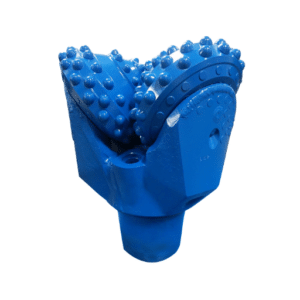
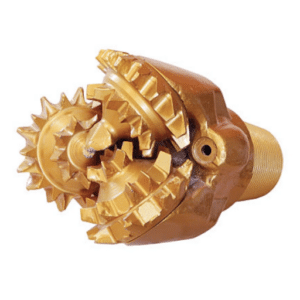
What is Rotary Drilling?

Rotary drilling is a popular method used for creating holes in the earth’s surface for purposes such as:
- Oil extraction
- Gas extraction
- Groundwater extraction
- Geothermal energy development
- Mining operations
In rotary drilling, drill bits rotate and cut through soil and rock layers while being pushed downward. The drill bit is turned by a rotating device generally housed on a drill rig, with drilling fluid circulated to cool the bit, carry debris to the surface, and support the well wall.
History of Rotary Drilling
| Year/Period | Milestone | Significance |
|---|---|---|
| 1863 | First rotary drilling patent by M.L. Beardsley | Foundation of modern rotary drilling technology |
| Early 1900s | Widespread adoption in Texas oil fields | Established rotary drilling in oil and gas extraction |
| Mid-20th Century | Introduction of hydraulic systems | Dramatically improved efficiency and accuracy |
| 21st Century | Integration of AI and real-time analytics | Enhanced precision, reduced costs, and environmental impact |
Key Components of a Rotary Drill

Essential Equipment Overview
| Component | Function | Key Features |
|---|---|---|
| Drill Bit | Cuts through geological formations | Available in tricone, PDC, and hybrid designs |
| Drill String | Transmits rotational force and circulates fluids | Consists of connected pipes for debris removal and cooling |
| Rotary Table/Top Drive | Generates torque to rotate drill string | Modern rigs use top-drive systems for better control |
| Mud System | Maintains borehole stability and removes cuttings | Controls pressure and cools drilling equipment |
| Hoisting Equipment | Manages drill string weight and movement | Includes drawworks, traveling block, and crown block |
Drilling Fluid (Mud) Types
- Water-based fluids: Most common and environmentally friendly
- Oil-based fluids: Better performance in challenging formations
- Synthetic-based fluids: Combines benefits of both types
Modern Drilling Techniques and Operations
Advanced Drilling Methods
| Technique | Description | Primary Applications | Advantages |
|---|---|---|---|
| Directional Drilling | Guides drill bit toward precise underground targets | Oil and gas extraction | Access difficult-to-reach resources |
| Horizontal Drilling | Follows horizontal pathway through reservoirs | Resource extraction | Maximizes extraction with minimal surface disruption |
| Rotary Steerable Systems | Real-time data and automatic direction control | Precision drilling operations | Enhanced productivity and safety |
Types of Drill Rigs
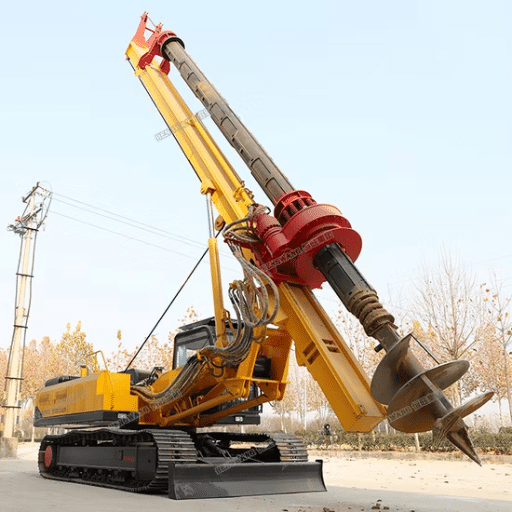
Onshore Rigs
- Mobile truck-mounted rigs: Portable and versatile for smaller operations
- Large stationary rigs: Designed for deep and complex well drilling
- Automated systems: Enhanced safety and operational efficiency
Offshore Rigs
- Jack-up rigs: Suitable for shallow water drilling
- Semi-submersibles: Stable platform for deeper water operations
- Drill ships: Highly mobile for remote offshore locations
Specialized Rigs
- Auger drilling rigs: Environmental and geotechnical applications
- Percussion rigs: Traditional method for hard rock drilling
Rotary Drilling vs. Percussive Drilling
| Aspect | Rotary Drilling | Percussive Drilling |
|---|---|---|
| Method | Continuous rotary motion with downward pressure | Repeated high-force impacts |
| Best For | Softer soil, fractured rock, deep boreholes | Hard, dense rock formations |
| Speed | Faster for most applications | Slower but effective in tough materials |
| Hole Size | Larger diameter capabilities | Generally smaller diameter holes |
| Applications | Oil/gas, water wells, geothermal | Mining, hard rock formations |
Industry Applications

Oil and Gas Industry
- Hydrocarbon exploration and development
- Advanced rotary systems for extreme conditions
- Integration of Measurement While Drilling (MWD) technology
- Real-time data acquisition for enhanced accuracy
Mining Industry
- Mineral exploration through core sample extraction
- Discovery of rare earth elements
- Integration of smart mining technologies
- Sustainable mining practices with reduced environmental impact
Construction Industry
- Foundation work for bridges and skyscrapers
- Deep pile construction
- Adaptability to varying soil conditions
- Ensuring structural stability
Geothermal Energy Sector
- Access to underground heat reservoirs
- Sustainable energy generation
- Minimal environmental impact
- Reliable power output
Water Well Drilling
- Urban and remote area water access
- Penetration through various soil and rock types
- Community and industrial water supply
- Reliable water resource development
Common Challenges and Solutions

Major Operational Challenges
| Challenge | Impact | Modern Solutions |
|---|---|---|
| Drill Bit Wear | Increased costs and project delays | PDC bits and advanced materials for high-temperature resistance |
| Trajectory Deviation | Impaired well performance | Real-time monitoring with MWD and LWD technologies |
| Environmental Concerns | Regulatory compliance issues | Improved well-casing and eco-friendly drilling fluids |
| Equipment Reliability | Downtime and safety risks | Predictive maintenance using big data analytics |
Technological Innovations
- Autonomous drilling systems: AI-driven algorithms for optimal performance
- Modular drilling rigs: Enhanced assembly/disassembly efficiency
- Advanced water management: Recycling and treatment systems
- Satellite communications: Remote technical support and supervision
Best Practices for Effective Rotary Drilling
Equipment and Technology
- Utilize modern automated rigs for improved accuracy and efficiency
- Implement real-time data monitoring with advanced sensor systems
- Optimize drilling fluids based on geological conditions
- Integrate machine learning algorithms for predictive maintenance
Operational Excellence
- Conduct comprehensive pre-drilling studies
- Seismic surveys
- Core sampling
- Geophysical mapping
- Implement sustainable practices
- Biodegradable drilling fluids
- Low-power engine technology
- Continuous environmental monitoring
- Invest in training and skill development
- Safety protocols
- Advanced machinery operation
- Best drilling practices
References
-
The Rotary System – Penn State Dutton Institute – Explains the rotary system on a drilling rig and its role in wellbore operations.
-
Introduction to Rotary Drilling – Petroleum Extension, University of Texas at Austin – Provides an overview of rotary drilling, including its history and advancements in equipment.
-
Types of Drilling Rigs – Missouri University of Science and Technology – Discusses various drilling methods, including mud rotary drilling and its applications.
Frequently Asked Questions (FAQ)
What is rotary drilling, and how is it performed during drilling operations?
Rotary drilling, one major methodology used to drill deep boreholes in diverse applications, is a method performed by a rotary drill bit that either cuts or scrapes the rock, soil, or the surface, the depth into the earth’s surface from where the drill bit is taken. The rotary system also consists of the rotary table and kelly, which provide torque and rotation to keep the drill moving efficiently.
How does rotary speed affect drilling?
Rotary speed determines the drilling performance, and the drill relative to its rotary speed cuts through the drilled material. When a drill bit rotates faster, the higher the speed PageSpeed sits on a higher rate of penetration, but if brakes are not applied timely, these speeds can quickly destroy the drill bit and other drilling equipment. The optimum rotary speed should be set to work efficiently and preserve the life of the drilling tools.
Which types of drill bits are more appraised among different drill bits in use for rotary drilling?
Among the most common types of drill bits in use for rotary drilling are PDC drill bits, perhaps due to the durability and efficiency of these bits. These bit types have been engineered for the application of high pressure and impact energy and could be used for several drilling conditions. The nozzle configurations of drill bits can be further modified to optimize fluid flow and contribute to drilling performance.
Which roles do drilling equipment play in rotary systems?
Drilling equipment serves a very vital function in rotary systems. It comprises drilling devices, including the rotary head, drill pipe, and an assortment of mechanical devices. These devices intermix and unite to ease the drilling process, with each element designed to withstand the rigors of drilling where high pressure is applied, stopped short as an example, or downward force needs to be exerted to advance the drill bit effectively.