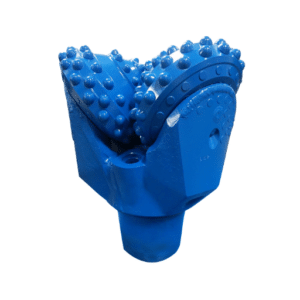
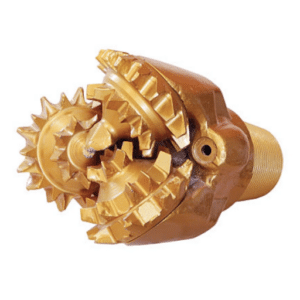
When drilling through hard, unyielding rock formations, having the right tools is essential. Enter the core barrel auger—a powerful and specialized drilling tool engineered to overcome the challenges posed by hard rock drilling. Whether for construction, mining, or geotechnical projects, understanding the benefits and functions of a core barrel auger is paramount for successful outcomes.
This comprehensive guide examines the qualities that make this tool worthy of attention, exploring the underlying technology and how it transforms formerly laborious drilling operations into highly efficient ones.
Understanding the Core Barrel

Core barrels are specialized cutting tools designed to create cylindrical holes that accommodate cores of the required diameter. They cut into rock, concrete, or soil and are particularly effective for drilling through hard surfaces. These tools are highly popular in construction, mining, and geotechnical work.
A typical core barrel features a barrel section with cutting teeth or bits at one end that grind into the material to obtain intact samples. Core barrel systems are essential for detailed subsurface investigations as they provide crucial data on material composition and stability, enabling engineers to make informed decisions in challenging projects.
Definition and Purpose
Core barrels are utilized whenever precision and reliability are needed in subsurface investigations. Modern core barrel systems leverage advanced materials and engineering to enhance performance. Many designs incorporate hard alloys and diamond-tipped bits for improved durability and efficiency when drilling through hard rock formations or varying soil types.
Key Innovation: Recent improvements in sealing mechanisms safeguard samples from contamination and degradation, ensuring reliable subsequent analytical data. These technological advances allow core barrels to integrate with digital logging systems for real-time monitoring, providing enhanced accuracy and repeatability across multiple applications.
The safety and project outcome improvements offered by core barrels are significant. Through core samples, engineers can assess and manage risks from ground instabilities and unforeseen conditions, saving both time and costs directly.
Components of a Core Barrel Auger

A core barrel auger comprises several essential components, each designed to optimize the drilling process and ensure accurate retrieval of subsurface materials:
Cutting Head
Constructed from high-strength steel or tungsten carbide, designed for penetrating various rock formations with precision-engineered cutting bits that efficiently bore into hard and soft geological layers.
Core Barrel Tube
Cylindrical structure that houses and protects extracted core samples during drilling, manufactured from robust materials to withstand high rotational and compressive forces.
Inner and Outer Barrels
Inner barrel collects core samples with minimal contamination, while outer barrel rotates with cutting head, providing structural support and torque transfer.
Latch Mechanism
Core lifter assembly crucial for securely holding core samples in place once cut, ensuring sample integrity during retrieval from borehole.
Drill Rods and Couplings
Connect core barrel to drilling rig, transmitting necessary torque and pressure to cutting head with high-grade threaded couplings for system stability.
Waterway and Flushing System
Integrated system allowing drilling fluid circulation to cool cutting tools, remove debris, and stabilize borehole for improved efficiency and precision.
Core Catcher
Specialized component that grips drilled core securely while preventing slippage back into hole, maintaining sampling integrity in loose or fractured conditions.
Shock Absorbers
Modern systems incorporate shock-absorbing mechanisms to mitigate vibrations and protect assembly during high-impact operations, enhancing tool longevity.
Each component works in unison as part of an advanced core sampling system. Modern core barrel augers leverage cutting-edge materials and engineering innovations to ensure high efficiency, adaptability, and reliability across mining, geotechnical, and construction industries.
How Core Barrels Function in Drilling
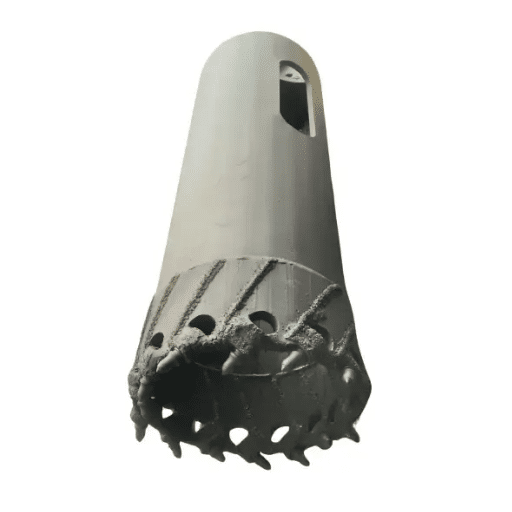
Core barrels are integral to drilling operations, especially those requiring sampling of undisturbed subsurface materials. The process begins with the core barrel being fitted to the drill rig, which then exerts rotary or percussion forces against subsurface materials. The cutting mechanism at the core barrel’s tip, usually featuring diamond or tungsten-carbide points, cuts through rock and soil layers with precision even in the hardest geological formations.
Modern core barrels typically employ dual-tube design with inner and outer tubes. The inner tube collects and preserves samples for extraction while maintaining physical integrity and composition. The outer tube absorbs drilling impacts and torque, maintaining stability and protecting the tool. Advanced designs feature double-wall or triple-wall construction for enhanced sample protection and contamination prevention—crucial for geotechnical testing.
Performance Statistics:
- Modern tools in oil and gas operations reach borehole depths of 6,000+ feet
- Optimally designed tools achieve 90%+ intact core sample recovery in mining operations
- Wireline systems enable faster core sample retrieval without removing entire drill string
These improvements reduce downtime and enhance sample integrity—critical factors directly affecting project timelines and accuracy. Complementary technologies like wireline systems allow operators to retrieve core samples efficiently, particularly valuable in deep drilling applications.
Applications of Core Barrel Augers

Core barrel augers are utilized extensively across various drilling operations for soil sampling, geotechnical investigations, and construction projects. They excel in sampling undisturbed soils or rocks to examine subsurface conditions, playing defining roles in foundation engineering, environmental studies, and mineral exploration with maximum accuracy and reliability.
Foundation Drilling in Hard Rock
Hard rock drilling requires advanced techniques and machinery to meet challenges from dense and abrasive geological formations. Essential tools include diamond-embedded drill bits and rotary rigs designed to withstand extreme pressure and friction.
Rotary drilling employs continuous rotation of drill bits on rock surfaces to create deep, stable foundations for large infrastructure projects like skyscrapers and bridges. Diamond core drilling, falling under rotary techniques, can penetrate hard rock up to 1,000 feet per day under favorable conditions, depending on rock type and equipment specifications.
Hard rock drilling generates significant pressure and heat, requiring excellent cooling systems. Most advanced drill bits utilize water or specialized drilling fluids to reduce heat and maintain core integrity. Advanced shock absorbers limit vibrations, protecting surrounding structures from damage.
The global construction industry increasingly relies on down-the-hole (DTH) hammer and pneumatic drilling advances. These improvements significantly enhance drilling speed in hard rock while maintaining accuracy, making modern foundation projects more efficient and cost-effective.
Environmental and Geotechnical Investigations
Environmental and geotechnical investigations are vital for construction projects, ensuring environmental sustainability and structural safety. These investigations examine soil composition, groundwater levels, and contamination, providing crucial information for design and engineering considerations.
Soil tests evaluate properties including shear strength, permeability, and compressibility. Clayey soils require stabilization considerations, while sandy soils need different approaches for load-bearing purposes. Groundwater assessment is imperative for checking potential aquifer contamination or flooding issues. Proper groundwater evaluations can mitigate up to 30% of construction delays, making these assessments invaluable on construction sites.
Environmental assessments are conducted site-specifically to limit ecological impacts from development projects.
Mining and Resource Exploration
Mining and resource exploration provide essential raw materials—metals, minerals, and fossil fuels—to worldwide industries and economies. Recent exploration technologies have become more advanced, making deposit identification more efficient and accurate.
Modern advancements include:
- Remote sensing tools: Satellite imagery and aerial drone surveys enabling geological surveys of large, inaccessible areas
- Seismic surveys and electromagnetic methods: Enhanced subsurface mapping capabilities
- Critical mineral focus: Lithium, cobalt, and rare earth elements for renewable energy and electronics
Market Growth: Industry reports indicate the lithium market will experience compound annual growth rates exceeding 25% until 2030, primarily driven by electric vehicle adoption.
Environmental priorities focus on water recycling and energy-efficient machinery to address environmental concerns and meet legislative requirements. Companies utilize data analytics and AI to enhance exploration and field operations, improving resource prediction accuracy while minimizing risks and reducing operational costs and environmental impact.
Specifications and Features

- Advanced Exploration: Utilizes modern sensors and geophysical instruments for precise deposit location with reduced exploration uncertainty
- Eco-Friendly Practices: Employs methods ensuring minimal environmental impact through water recycling and low-emission equipment during field operations
- Data-Driven Decisions: Uses AI-powered analytical software for exploration strategy development, efficient operations, and improved resource location predictions
- Safety Enhancement: Employs automated monitoring with real-time hazard detection for improved worker safety and on-site risk mitigation
- Operational Efficiency: Streamlines processes through automation and logistics optimization to reduce costs and project timelines
Core Barrel Types and Sizes
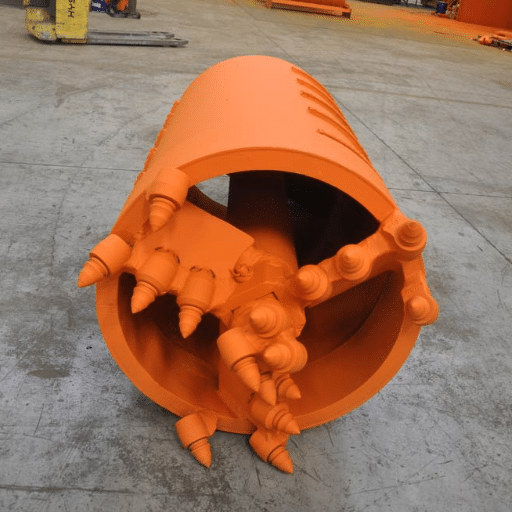
| Specification | Details |
|---|---|
| Types Available | Standard, Rock, Custom |
| Diameter Range | 16″ to 144″+ (customizable) |
| Height Options | Fully customizable based on project requirements |
| Tooth Patterns | 3, 5, 7 tooth configurations available |
| Wear Parts | .990mm, 38mm options |
| Primary Applications | Soil sampling, rock sampling, drilling operations |
| Customization | Yes – project-specific modifications available |
| Construction Material | High-grade steel with specialized coatings |
| Compatibility | Equipment-specific designs available |
Cutting Tools and Tooth Configurations

| Specification | Details |
|---|---|
| Tool Types | .990mm, 38mm wear parts |
| Specialized Tooth Types | Dragon’s Tooth® design available |
| Pattern Options | 3, 5, 7 tooth patterns |
| Construction Material | Hardened steel for maximum durability |
| Primary Usage | Soil cutting, rock cutting operations |
| Durability Rating | High-performance, long-lasting |
| Customization Available | Yes – project-specific modifications |
| Applications | Drilling, sampling, excavation |
| Holder Types | Standard, Dragon configurations |
| Equipment Compatibility | Equipment-specific designs |
Customizable Options for Specific Projects
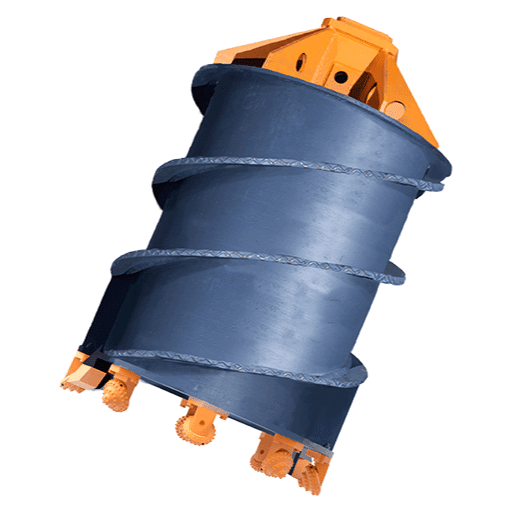
Tailor-made drilling and extraction tools provide targeted solutions for specific challenges, maximizing service efficacy and efficiency. Projects in differing geological settings—sedimentary, igneous, or metamorphic terrains—benefit significantly from custom features.
Operators can choose from multiple interchangeable cutting tooth configurations:
- Tungsten carbide: For strength and wear resistance
- Polycrystalline diamond: For precise cutting of hard formations
Adaptive drilling technologies offer data-driven flexibility, allowing real-time parameter adjustments:
- Bit pressure optimization
- Rotational speed control
- Fluid management systems
Core barrel size variations accommodate different drilling depths and diameters, particularly crucial for mineral exploration, infrastructure, and energy-extraction projects requiring utmost precision and efficiency.
Performance Benefits: Research demonstrates that customized tools improve operational productivity by at least 30% while drastically reducing wear and tear costs, extending critical equipment lifespan. This emphasizes the paramount importance of aligning tool design with specific project requirements for optimal safety, sustainability, and performance.
Advantages of Using Core Barrel Augers

- Efficiency in Hard Material Excavation: Core barrel augers are engineered to penetrate and break through solid rock and hard soil formations, expediting excavation processes
- Precision and Accuracy: These tools enable highly technical drilling with minimal deviation margins, performing consistently even in adverse conditions
- Durability and Longevity: Constructed using wear-resistant materials ensuring extended lifespan, reducing maintenance costs and operational downtime
- Versatility: Capable of handling foundation work, utility installations, and various projects with reliability across diverse applications
- Cost-Effectiveness: Core barrel augers provide substantial overall project cost savings by increasing drilling speed and reducing machinery wear
Efficiency in Hard Rock Drilling
Core barrel augers excel in rigorous hard rock drilling environments where operations demand the strongest materials combined with cutting-edge designs for optimal results. Contemporary technological innovations feature high-strength tungsten carbide teeth with precision cutting edges, promoting enhanced penetration into dense rock formations.
Research findings indicate drill penetration rates can increase up to 25% when specialized augers are employed in difficult geological conditions, shortening project durations without compromising quality. Wear-resistant coatings further extend operational life, allowing continuous tool operation even with highly abrasive materials.
When integrated with rotary rigs providing optimal torque, core barrel augers consume minimal energy even with the most challenging materials, promoting fuel efficiency and environmental responsibility. These characteristics make such tools dependable, enduring solutions for hard rock drilling while reducing equipment replacement and repair frequency.
Innovations in Core Barrel Technology

Core barrel technology advancement emphasizes proficiency, durability, and accuracy. Modern designs employ high-strength materials for extreme condition endurance while reducing wear and tear. High-quality sealing systems maintain sample integrity preventing contamination, while intelligent modular components facilitate easier, less time-consuming maintenance for dependable operation across diverse applications.
Recent Advancements in Drill Design
Automation for Higher Efficiency
Modern drills feature automated controls governing drilling parameters—torque, rotation speed, pressure—according to material and environmental conditions, minimizing human error. Intelligent automation systems show 30% higher operational efficiency compared to manual alternatives.
Advanced Sensor Integration
Sophisticated sensor networks monitor essential drilling data including depth, material density, vibration, and wear. Real-time feedback improves accuracy while minimizing equipment failure, with sensor-aided systems extending equipment life approximately 20%.
Green Technologies in Drilling
Eco-friendly developments focus on energy efficiency and reduced environmental impact through electric or hybrid-powered systems over traditional fuel-based alternatives. Sustainable composite materials ensure durability while reducing ecological footprints.
Safety Innovations
Enhanced safety features include automated shutdown systems, pressure-release valves, and controlled operation modes for critical scenarios. Ergonomic designs and vibration-dampening reduce operator fatigue, contributing to 25% reduction in drilling equipment-related workplace accidents.
Modular and Adaptive Components
Modern drills feature modular designs enabling rapid component replacements, minimizing downtime and maintenance costs. Adaptive components adjust to variable operating conditions, with modular drills reducing repair time by 40%.
Impact of Technology on Core Sampling
Technology has significantly improved core sampling approaches, enabling maximum precision, efficiency, and reliability through advanced tools and software. Real-time data collection and automated systems accelerate processes while reducing human error and saving time. These innovations enhance sample quality and provide crucial knowledge for geological structure decisions in project implementation.
Future Trends in Core Barrel Auger Development
Core barrel auger technology develops rapidly, utilizing cutting-edge materials and engineering innovations to meet contemporary geological and environmental exploration requirements. Major developments include:
- Smart sensor and IoT-enabled systems: Advanced sensors monitoring real-time drilling parameters (torque, pressure, temperature) for optimal data collection under extreme conditions
- Lightweight, high-strength materials: Carbon composites and advanced alloys ensuring durability while maintaining equipment portability for easier transportation and operation
- Automated drilling systems: Increasing efficiency by reducing human labor and operational downtime while maintaining accuracy
- Sustainable design focus: Environmental protection through green lubrication and energy systems
- Modular, customizable systems: Allowing operators to customize equipment for specific project needs across different geological conditions
Industry Growth: The global advanced drilling and sampling technologies market is poised for significant growth due to enhanced demand from construction, energy, environmental management, and other sectors. Reports indicate core barrel auger operations can decrease project duration up to 30%, enhancing efficiency and cost-effectiveness.
Frequently Asked Questions (FAQs)
Core barrel augers provide additional stability in extremely hard rock through robust design and construction. The auger’s ability to maintain structural integrity while drilling minimizes bending or breaking risks under pressure. This stability is crucial for ensuring effective core.
Reference Sources
-
The PrairieDog: A Double-Barrel Coring Drill for ‘Hand’ Augering
Published in the Annals of Glaciology, this article discusses the design and functionality of core barrel augers for hand augering.
Read more on Cambridge Core -
Design and Construction of Continuous Flight Auger Piles
This manual from the U.S. Department of Transportation provides insights into the design and construction of auger piles, including core barrel applications.
Read more on ROSA P -
On the Evolution of Drill-Bit Shapes
Published on ScienceDirect, this article examines the historical and technical evolution of drill bits, including core barrel augers.
Read more on ScienceDirect