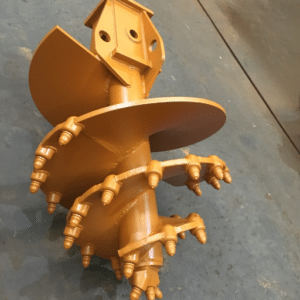
Selecting the right tool is an essential aspect when it comes to performing drilling operations with accuracy and proficiency. Among the numerous options which are at one’s disposal, one can mention the auger bit as the one that could be considered as a prominent tool that is as functional as it is essential for not only a specific range of projects but rather most of them from wood working to construction. This is the reason this paper discusses the intricacies of an auger bit aside from its value in drilling performance upgrade Moreover, it is a well-rounded guide where the advantages of auger drill bits are laid out in detail while at the same time giving the reader the wherewithal to select the right type of drill for his or her requirements. Therefore, whether you are a do-it-yourselfer or a professional contractor, this post will definitely be your go-to source of information for you to take on the world with the best drilling practices and numerous successful projects.
Understanding Auger Bits

Definition and Function of Auger Bits
Auger bits are precisely engineered drills that are specifically used to remove the material very precisely and very accurately. The bits’ construction is unique, with the help of a helical screw blade, they can go deep into wood, earth, or other soluble materials, and create a clear hole. The uniform removal of material from the hole as the bit rotates is one of the reasons the design reduces the problem of sticking and also provides for easy drilling. The adoption of innovation has made auger bits considerably more durable through advanced materials, high-speed steel or carbon steel, and the use of the pointed tips of the bits has also been a success for the project. Additionally, the spiral flutes on the bits are the way the bits come ready to move debris with much less resistance out of the hole, leading to smooth working. Auger bits have also been used in standard drilling applications and come with the bonus of the above operations being transported by the debris removal equipment. The merger of these design features and the introduction of new materials have made the use of auger bits necessary in the construction, carpentry, and even the landscaping business.
How Auger Bits Enhance Drilling Efficiency
Auger bits are able to greatly intensify the effectiveness of the drilling procedure thanks to a very unusual material composition and design structure. Their spiral flute design has not only the capacity to direct the bit through the material but also has the necessity of enabling the continuous withdrawal of material in the form of shavings, which in turn lessens the friction within the hole and prevents clogging. This uninterrupted removal of material results in almost no heating as well as guarantees smoother operation, even under heavy-torque conditions. The ultra-sharp cutting edges of the auger bits do not only make the operation clean and accurate but also save time and tool wear. Besides the cutting edges being ground with utmost perfection, the overall cutting performance of the auger bits would decrease with the same effort and in the same time the tool wear would be reduced. With the use of modern coatings like titanium or black oxide on auger bits, performance potential is driven to the top level enabling the differentiation of the product by gaining such benefits as being more resistant to rust, showing improved corrosion resistance and enduring more different challenges of the most neglected or uncertain drillings and cuttings outside of controlled workshops. Such alterations and improvements are the things that make the auger bits part mother of or the private vertical or horizontal drill or in a not self-controlled single or multiple drills, thus, among the must-have tools for all kinds of drilling tasks in very good and hard working conditions where the drill motor should last for a long time.
Auger Bits in a popular Light: Common Uses
Auger bits are morphing the world of technology by their great number of applications they’ve practically become plumbing fixtures in the industries and businesses. This is simply due to the possibility of boring different materials in a precise and clean way. One of the uses that is the most widespread is in wood working when the bits are necessary for making holes that are deep and clean in the timber for the production of furniture, carpentry, and construction purposes. In the same way the bits are irreplaceable in utility installations. For example, when drilling holes for fence posts, utility poles, and deck constructions, where consistent and accurate boring through wood or soil is required, the bits are still critical.
During the application of agriculture auger bits are the tools of choice when it comes to soil samplings and planting, as they allow for very effective penetration and at the same time reducing the disturbance of the soil in the surrounding area. Furthermore, in the energy industry, geotechnical and environmental drilling is where they appear to extract core samples or for the placement of monitoring wells. With the help of the advanced coatings and material a wide variety of auger bits applications, including the heavy-duty ones like tunneling and mining, is already a reality, as the two main requirements of durability and performance are being achieved. It is the very acceptance of these tools in various sectors irrespective of their being very different that upholds their considerable importance and even much higher demand than just a portion of the market.
Types of Auger Bits

Different Types of Auger in a Nutshell
Auger bits are broken down according to their structure, purpose, and performance criteria, which makes it possible for us to easily choose for the tasks we need. Below are the following types that are widely used:
- Hand Augers: Hand augers are part of the hand tools category and are used for shallow soil drilling products such as garden planting, landscaping, and soil sampling. They commonly have spiral blades that will penetrate soft or moderately stiff materials that provide them with the advantages of being easy to carry and simple to operate.
- Continuous Flight Augers (CFA): CFA augers are made especially for large construction projects and geotechnical works like pile foundations. The characteristic of continuous helical flights running from one end to the other of the auger is the standout feature for efficient soil removal during drilling, while also being able to go through different types of soils with equal ease. The CFA system is thus quite versatile and this promotes fast drilling by simply not using the casing tubes and consequently the entire drilling process is becoming shorter apart from an overall reduction of project timelines.
- Hollow Stem Augers: Hollow stem augers are commonly and extensively used in environmental and geotechnical surveys. Because the central shaft is hollow, the monitoring equipment, soil sampling devices, or well casings can be inserted through the hollow stem auger without the need of removing it from the borehole. In this way, the activities would cause less disturbance to the surrounding material and be more precise.
Every single auger type is always created for a certain working condition, making the performance always superior and reliably the best in such applications. Understanding these classifications enables precise planning and enhances the efficiency of drilling and excavation projects.
Continuous Flight Auger vs. Bucket Augers
Continuous Flight Augers (CFA) and its counterpart Bucket Augers have been built with the simplest of designs and methods that make them completely different in their operational features. CFA has a shaft which is composed of a continuously rotating helical flight. While the auger goes deeper the soil is removed to the surface without any interruption due to the design. At the same time the non-stop extraction of soil and the avoidance of the collapse of the hole are concerned, these are the areas where they are mostly and effectively used, like, for example, in unstable strata or areas where huge reinforced concrete piles are needed. Besides, CFAs are also capable of creating driven cast-in-place piles thus keeping the ground surface highly undisturbed.
Bucket Augers, on the contrary, are known for having a cylindrical shape and a bigger amount of soil they can carry. So, in the case of cohesive soils like clay, they perform very well, as they do also in the case of harder soils till rock. It is easy to empty the cuttings, though, the bucket auger has to come out of the borehole making it a little bit less efficient in the case that we have the harder constraints of time when the holes are to be made deep. A slower penetration rate minimizes the risk of contamination through the hole.
Different types of augers have different applications that depend on the site peculiarities, each of the auger types being very crucial in the right specific setting. That is to say, in situ soil mixing, the augers are used having precise parameters and very little vibration, commonly the continuous flight auger technique by skilled engineers. Nonetheless, in silty and clayey grounds, especially in thin layer conditions, bucket augers may be used. After all, bucket augers are the best choice for working with soil of low strength and mixed with cobbles or gravels.
The project pipeline is designed in a way that the right type of auger is selected and the other types of augers are analyzed for their application and performance. As the construction requirements of different work sites are also unique, the details on the operational requirements including the soil type and geology of the site are very important. It is important to mention about the machinery tools used and the equipment set-up. The tools include the auger, borehole drilling, and the rig for the drill. The equipment set-up refers to the surrounding area in the drill floor where the drill rig is located.
The Ins and Outs of Helical Screw and Flight Augers
Versatile tools that can be used in various applications, such as drilling, and are even used in the transportation of materials are helical screw augers and flight augers. A common element in a helical screw auger is a single spiral cutting blade called a helical flight, which spins around a center axis. This form of the tool helps to easily displace the soil, gravel, or other granular materials and thus suits the jobs that involve the conveying and handling of the bulk materials, and it is also ideal. Contrariwise, flight augers are primarily used for the purpose of drilling. The use of the spiraled form of flight augers helps penetrating soil, clay, and rock geologies as well, resulting in high precision drilling and easy removal of the drill cuttings thereby creating boreholes with minimum debris.
Both types have their adaptability as a key advantage. The vertical and inclined transport system users highly appreciate helical screw augers when it comes to the flow-rate optimization ability of the system as they are the main source of the flow rate balance. In contrast, flight augers are the first option when it comes to the engineering and construction industry due to the drilling preciseness and environmental friendliness that the flight augers possess. Moreover, current technological trends, such as variable-pitch designs and the use of tough alloy materials for the augers, have hugely extended the options for the material and the process by increasing their economics and robustness in difficult areas. The selection of the right type of auger necessitates a full evaluation of the operational, material and site conditions, as well as the project-specific requirements.
Choosing the Right Auger Drill Bit

Factors to Consider When Selecting an Auger
What you should not forget to take into account when choosing an auger are materials it is composed of and its hardness. The matter to be bored is a very important factor in determining the correct auger for use. If the ground to be drilled is soft, then standard steel bits maybe necessary, while harder substances like rock or frozen ground might need an auger with tungsten carbide or other hard alloys. Making sure that the material matches the base prevents overuse and gives better results.
Diameter and Length Specifications: Auger diameter and length are the things that tell you about the operation size and the project’s specific drilling depth. By opting for the proper measurement, the operator not only gets the best material removal but also the structural soundness of the assembly during the operation. For the deeper and more accurate applications, an extension and a stabilizing component are required.
Flight Configuration: The material transport and drilling speed are the two factors that are significantly influenced by flight design, for example, single helix or double-helix configurations. If there is loose material or high-volume removal involved, designs with flights lengthened or variable-pitch systems ought to be chosen for faster material extraction. On the other hand, sites where debris removal is very limited, may be better off with shorter flights.
Operational Environment and Conditions: The temperature, moisture level, and substrate variability, considered as environmental factors significantly affecting the performance of an auger. Augers having their surfaces coated with non-corrosive material or blades heat-treated are the ones which are less likely to experience corrosion in humid or highly abrasive surroundings; hence, the function of the auger is sustained over an extended period.
Power Source Compatibility: It is necessary to select the right power source for the auger attachment to the handheld, hydraulic, or mechanically driven system to which it is to be attached. Each kind of power source provides a different level of torque, speed, and flexibility. The usage of the properly balanced auger and power unit in combination increases productivity and at the same time assures operational safety.
Maintenance and Wear considerations: the inspection and maintenance must be performed regularly to ensure the long service life of the auger. Wear indicators, bolt-on cutting edges, or replaceable teeth are some of the features that will help you in maintenance and at the same time save you money in the long run. It is advisable to have an auger that offers maintenance options easily so that time during maintenance operations on the field is not wasted.
By considering these variables very well, contractors and operators can increase the effectiveness of drilling, the life expectancy of the equipment, and at the same time be able to perform the works required on different locations respectively.
Understanding the Right Auger Bit Size for Your Project
Auger size is the most critical factor in determining the right auger bit size for hole dimensions and the type of soil. There is more to the selection process of the auger bit size than just looking up the hole size on a graph and ordering the next size up. Auger size is the key factor to take into account in designing the size and shape of earthworks. The diameter and the depth of the holes are always the basic features that the auger bit should be specified by, but then the bit’s size has to be also adjusted to the other conditions like ground nature, and the particular project demands. It may be indicated by the smallest-diameter auger bits, which are about 4 to 12 inches in diameter, being for the fine work of putting in fence or doing soil examinations. The other end of the spectrum, the big bit diameters that go over 24 inches, is in proper working projects like planting foundations or poles on roadsides which have extremely high energy consumption.
One of the primary determining criteria for a bit size in the drilling tool is the torque producing capability of the drilling tool that the auger bit is designed for. If a big auger bit is used in a small machine, the motor will struggle and it might even cause that the machine is set in idle, thus causing the drilling equipment to be very unproductive and inefficient. Moreover, the soil characteristics such as clay content, moisture levels, and the presence of rocky obstructions have to be considered in the process of purchasing the correct size of augers as they might need different types of teeth or the requirement for some kind of an extension to be able to accommodate them all and get the desirable results at the end.
Correct sizing is not only an issue of technical compatibility but it also means a good realization of the project in regard to the specifications and efficiency standards of a particular project. Moreover, with the right auger bit size and the right equipment, the operators can improve the precision of the drilling process, they can cut the drilling time and thus project timelines, and they can even prolong their tool life.
Optimizing Performance with the Right Auger
A thorough evaluation of the major factors is essential for getting excellent auger performance; there are, among other things, such as soil quality, the depth of the hole, and the rotative velocity. Each type of soil poses different difficulties affecting, amusingly, both the productivity of the cutting edge and the wear and tear of the auger. The same is true for the drilling depth due to the fact that it affects the torque and the power required for the equipment operation, which clearly indicates the necessity of the auger length and diameter to be properly selected for the intended application.
It’s crucial to have the right speed when you are digging. Speed that is too high can make the equipment get hot, waste the drilling point and extract too little material at the same time, even though it will wear very quickly; while speed that is too low can stop the auger from penetrating the ground. Coating the edges of the auger with advanced materials and coatings can boost the resistance to wear caused by abrasion and the durability of the auger especially in harsh or abrasive conditions. By monitoring the process with embedded sensors and real-time data collection systems, the operation is more reliable and the maintenance is less frequent. These measures, and the selection of the ideal auger specifications, are a way for the projects to save time, reduce the number of downtimes and properly processing of the material at peak efficiency levels.
Applications of Auger Drill Bits

Foundation Drilling Projects
Foundation drilling requires precision, durability, and ability to manage different geological conditions. Among different tools, like auger drill bits, are used for the same purpose in constructing deep foundations such as drilled shafts, or caissons, and of which are very important in the support of heavy loads for structures like bridges, tall buildings, and even industrial facilities. The use of modern drilling technology, such as carbide-tipped augers and high-strength steel shafts has significantly increased the performance of the tools in penetrating very tough soils and stony substrates, while at the same time, this has led to reduced wear and increased operational efficiency. Moreover, torque monitoring systems with high-tech features are used to provide greater control of the drilling operation, hence keeping proper alignment and avoiding structural instability. Along with the enhanced systems, projects have become simpler to manage, while accuracy has increased, project timelines are now shorter, and construction and safety standards are strictly observed. To overcome geotechnical challenges resulting from a variation in subsurface conditions, these projects are implemented by the use of customized auger designs with latest equipment.
Soil Auger Drill Bits for Agriculture
Despite the numerous demands of agricultural applications, the advanced soil auger drill bits have been tailor-made to meet various needs, hence providing accuracy and effectiveness in soil sampling, planting, and installation of irrigation systems. The drill bits have been made in such a way that they work well in all kinds of soil, from loose sandy soils to hard clay layers, thereby being suitable for different terrains. The drill bits are durable because they are very strong made of high-quality steel that sometimes, they are coated with a material that resists wear and tear.
Moreover, the soil auger and soil sample unit are spirally designed and have unique geometry to minimize the damage done to the ground and to produce samples of the soil that are consistent throughout and have a uniform size. This is highly beneficial for the agricultural individuals who are carrying out analyses on soil to know the pH levels, the nutrient compositions, or the moisture content. Quick and reliable data gathering is promoted while the time spent in the field is shortened.
At the same time, the usage of soil auger drill bits together with the latest mechanized drill systems on the premises of bigger farming operations will considerably save the farmers’ time. The drill systems constantly make all the holes of the same depth needed for precision agriculture practices and thus give the farmer a peace of mind regarding land management strategies. Soil auger drill bits used along with the modern mechanized drill systems play a vital role in such vital and fruitful agricultural venues by being made of robust material and utilizing the most advanced engineering methods.
Advanced Auger Techniques for Efficient Drilling
Advanced auger technology, integration and calibration of these machines to the soil’s type and moisture content, etc., are the major ways to increase efficiency and production in drilling. One example of the methods is keeping the speed of the auger low and the torque high for the hard and no-moisture soil cases which is directly related to the other way around for easy and wet soil. This operation will wear out parts such as the engine and drilling head less and result in faster penetration speeds at the same time, especially when working in the most densely packed soils. Moreover, the use of screw helix pattern screw augers with the most optimized pitch angles will result in a more regular and smoother flow of the material and less intermittent blockages during the process.
Another method concerns the continuous examination and regular maintenance program for assuring the best tool capability. The key to this modern technology is the scheduled inspection of the wear parts like cutting edges and the condition of flighting, etc., vital for making holes/removing materials accurately and for decreasing robot downtime. The introduction of real-time monitoring systems also complements the efficiency of drilled-through; by giving the operator instant information regarding the drilling scene’s dynamics pressure changes and resistance. These moves, when taken together, not only reduce the time that machines are not in use and exceed the performance of other methods in their adaptability to geophysical and environmental factors.
Drilling Methods Involving Auger Bits

Rotary Drilling with Auger Bits
One of the most important factors in working with auger bits in rotary drilling is to understand how these tools operate in the midst of both traditional and modern settings. By rotating, auger bits work their way into the soil and use their screw-like shape to transport the cuttings efficiently to the surface. The simplest term to use for cutting the types of formations specified above and the unconsolidated materials such as clay, sand, and loam is to call it a drilling method of high efficiency as the combined effect of the drill bit and the cuttings removal system is utilized to the utmost. Still, the other good term for such a low rate, if the oppositewise situation is meant, is the low effectiveness as the drill rate is low per each foot (meter) drilled. Auger drilling stands as one of the most cost-effective drilling methods and worthily gets engaged in different site investigations (e.g., exploration of mineral deposits, testing plot areas for contaminants, etc.), and construction work processes (e.g., foundation work). On my side of thinking, it is this reliability that makes auger drilling a wide range of purposes like environmental sampling, geotechnical investigations, and construction where precision and minimal disturbance are on the top of priority list.
Lately auger drilling technology’s gets benefits from features such as carbide-tipped cutting edges and modular auger designs. This is leading to higher quality and adaptability of the machine. As a result, deeper holes and higher performance are available even in tough ground conditions, where wear is also less and the operational life is better. Also, most of the systems nowadays are being equipped with digital monitoring technology which provides the real-time data of torque, depth, and drilling speed. With the help of this technique, project planning and execution become more precise. In my personal opinion, this is the most ideal way to gain the efficiency of drilling through two main components; the perfect tooling and the useful data for decisions made based on telemetry which provides the machine performance status in a continuous and reliable way.
It is of great significance to also mention the environmental benefits of using auger drilling techniques. The quite simple designing and the operation of the drilling machine make the need for the sophisticated equipment or the excessive fuel less, hence, decreasing the overall carbon footprint. Moreover, the fluid-free system of the technique in most cases not only eliminates groundwater contamination but also makes the site cleanup much easier. Personally, I think auger rotary drilling that is eco-friendly and technically strong has made it an excellent way of underground exploration for both ecology and efficiency.
Bucket Auger Drilling Methods
In my point of view, bucket auger drilling is still the most adaptive and the most feasible method for subsurface exploration, especially in the case of the loose or unconsolidated soils. The drilling is done with a cylindrical bucket that has the cutting edges and is attached to the drill rig. The bucket rotates, cuts the ground, collects the soil or debris inside, then it is lifted to the surface and disposed of or analyzed. The method’s main benefit is that it can work well in many soil types and places such as sandy, clayey, and gravelly terrains. Thus, it remains very versatile through various geographical conditions.
Bucket auger drilling is also often praised for its capability to efficiently open up the large-diameter boreholes which are often used for such purposes as environmental sampling, geotechnical investigations, and even the installation of small-diameter water wells. The machine is effective in soil collection that is very close to being accurate, and one of the reasons for this is the simplicity of the bucket auger system, which in turn reduces the need for power and equipment, thus saving the cost, especially in faraway areas.
One of the biggest advantages in terms of operation is that the bucket auger drilling method requires limited to no drilling fluids at all and minimal soil removal. It is one of the eco-friendlier drilling technologies and is therefore increasingly becoming the best solution for green-oriented projects. The use of bucket auger drilling because of its clear sample provision and minimal ground disturbance enables it as an effective tool for contemporary drilling operations where reliability and environmental factors play a major role.
Comparison of Drilling Techniques
While analyzing various methods of drilling, I take juxtaposition as to the very important operational characteristics as well as the environmental results being the prime reason for the different methods being either appropriate or non-appropriate in different circumstances. An example of a method that caters for these two aspects is the rotary method which drills through hard rocks to the depths possible and is the most common method used in the oil and gas industry. The operation of this method is by rotation of the bit which is mostly with the help of lubricating, stabilizing, and cuttings carrying drilling fluids. Still, a disadvantage of this method is the heavy consumption of natural resources such as water and chemicals. Such consumption can bring about environmental issues like groundwater pollution or waste disposal problems as the chemicals used in the drilling process might leach into the ground.
Nonetheless, it is sonic drilling, which stands out in specific scenarios as the modern innovative technology. The essence of this method lies in the application of high-frequency sonic vibrations that facilitate the penetration of soil and rock formations, and in many cases, drilling fluids are not necessary. The environmental investigations and scientific studies are highly defined because the accuracy and cleanliness of the sample include one of the key points. This technique being least site disruptive and least in environmental impact also places it in the category of a sustainable choice when compared to the conventional methods thus particularly suitable in areas of the environment that are highly sensitive.
In the final analysis, a choice between the most suitable drilling method would sooner or later be made considering project-specific variables such as the depth of target, the geological formation, the required samples, and the environmental laws. By taking into account such matters as the effectiveness in operations, the quality of the samples, and the impact on the environment, I can come up with a decision based on a comparison of these factors and the selection of the most appropriate method for a particular project.
Reference Sources
- Well-Drilling Methods – Western Oregon University – Explains the bucket auger drilling method and its applications in excavating materials.
- Coring in CRM and Archaeology – University of Washington – Discusses the use of bucket augers in penetrating various substrates with rotary motion.
- Subsurface Exploration Program – Iowa State University – Highlights the use of bucket auger drills for removing and obtaining large soil samples.
Frequently Asked Questions (FAQs)
What does an auger bit do in an auger drill?
An auger bit is a specialized drilling tool that creates holes in soft materials or in the ground by rotating and lifting material up the flight. In the drilling process, the auger bit creates a hole or bore while the auger is rotating, and the auger drive provides the necessary torque. Auger bits have cutting edges and a helical screw or flight that moves the material to the surface, which makes them effective drilling machines in loose soil and some types of soil or rock. For construction and deep foundation projects, the selection of the right auger drill bit for soil conditions is critical for maintaining high productivity. The auger bit size can vary from small spade bits and Forstner bit to bigger, more specialized auger and bucket auger that cut the material when making holes in the land.
In What Ways an Auger Drill Bit for Soil is Different from a Standard Drill Bit?
An earth auger drill bit is virtually similar to a regular drill bit still it has an added feature of a spiral section that along with boring takes out the additional material, in contrary to a standard drill bit that just simply makes the chips get ejected in small-scale applications. The purpose of the auger bits is for ground drilling, borehole and deep holes making while the role of the regular bits is supposed to be in the materials such as metals, plastics or woods with the requirements of slim holes. An auger pattern to a certain point is quite self-cleaning and, therefore, future clogging and necessary cleaning after usage are put to the minimal, especially when the geological conditions are such that they include sedimentary soils among which the layering can be fine resulting to possible erratic and unpredictable borings. You are also required to choose the bit size and the exact type according to the project requirements. The considerations that must be taken into account during this exercise include the requirement of a cylindrical bucket or a continuous flight auger for deeper drilling. A proper choice of auger makes the drilling very effective thus less strain on the drilling rig and auger drive.
Types of Auger bits: Which types of auger bits are the best for my project?
Various types of augers are out there. They are continuous flight augers, helical screw augers, bucket augers, and specialized auger heads for deep holes or hard rock. The screw or flight augers are a great drilling tool in the case of deep foundation drilling operations and creating deep holes in wood or soil, whereas the drilling bucket (a cylindrical bucket) is used to lift the material out of the borehole during the course of deeper drilling works. The best auger for a given situation is the one that meets the surface material you are dealing with, be that hard rock or soil, and the drilling rig and the auger drive at your disposal. The operator should also consider the bit diameter and if he is to use a larger bit or stick to a standard one; the right bit dims torque requirements and prolongs the life of the cutting edges. Using the correct auger bit together with the proper drilling method will guarantee the utmost performance and meet the needs of your project.
Defining the best auger is like selecting an auger for a deep foundation or construction project.
The first step in selecting the correct auger is to comprehend the geological conditions, the desired borehole diameter, and the depth of the hole for your construction project or the needs of deep foundation. In the case of deep holes and heavy work, the best choice might be to go with advanced auger or continuous flight auger powered by hydraulic drilling or a powerful drill rig to supply the torque and penetration rate required. When it comes to drilling through heavy layers or hard rock, it is advisable to use a distinct auger or an auger head made for the drilling of the hard material and to make sure that the sharp edges are the type suitable for abrasive conditions. In the case of shorter holes in wood or loosened soils, the bit choices for the Spade bits or Forstner bits may be less expensive alternatives and might be more fitting. Additionally, always make sure the tools and the drilling equipment are matched according to the project specifications to carry out the drilling operation and clean up afterwards with no trouble, then drilling boreholes that are both safe and efficient.
Which drilling operation role is performed by a drilling bucket and what is its mode of operation?
The drilling bucket auger, usually a cylindrical bucket, is utilized to extract cuttings and material from a borehole and to transport the material to the surface by rotating the auger. The bucket auger, as an example, has the ability to excavate a much larger quantity of material in comparison to the standard auger flights and, thus, is excellent for the purpose of drilling holes in the construction of foundations or for use as utility pole supports. On the other hand, the bucket is reliant upon the auger drive and torque adequate to lift the material but, on the other hand, it plays a role in keeping the borehole cleaner by removing the spoil. In the case of deep foundation work, a specialized drilling bucket or a larger auger is better suited for the job as compared to simple mild rock conditions which might still need extra specialized drilling equipment for hard rock drilling. Selecting the right auger and bucket type contributes hugely to the overall success of performance and the fulfillment of the special needs of the given project.
Is it possible to drill using an auger in both soil and rock, and what are the respective limitations?
Augers are mainly utilized when it comes to drilling into various types of soil and distinct geological features that are of a softer nature, especially when it comes to creating holes in soft ground and hauling off loose soil to the top surface. Standard auger bits might not be very effective in case they meet hard rock or have hard formations to drill through and so you would have to make use of a special auger or other drilling tool like rock augers, down-the-hole tools, or different drilling method. It is actually the kind of attachment that could affect the performance of an auger in such areas as the soil it’s working with, moving parts, and the power of the machine that is executing the drilling; the existence of high torque and blades modified for hardness with that combined power can efficiently be used in driller conditions. A combination of the already mentioned methods could be the answer to the question of using a floating auger in soils that are not completely weak and would pose a challenge for cutting.
How does one go about maintaining auger bits that are so crucial for the performance enhancement of future drilling projects?
Your main duty is to check out cutting edges, flights, and the auger head for tear and wear, and you have to do it every time you use it, then follow it by the repair, sharpening, or replacement of worn parts in order to still get the peak performance! It is quite necessary to keep the auger bit free from trash and, especially, to see that the helical flight or flights have not been distorted for the latter issue might drag back the hole-creating ability as well as the material to fall on the ground. As for the bucket augmenters, safeguard that the cylindrical bucket is not jammed and that the links are fastened properly so that no time is lost during the construction work. It is advised that the specific bit size and type are always matched with the material and that the augers are kept in a rust-free area as dampness aids in the formation of corrosion that cut the bit’s quality. Initially where the three pointed bits were used, the maintenance program when used as per schedule and the proper tools are adapted for sharpening and repair will greatly add to the life of your auger and will ensure that it is the right tool to be used for the next drilling operation.