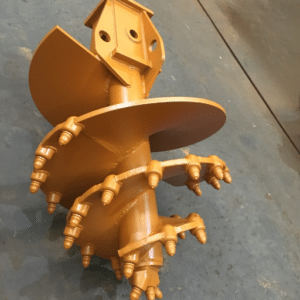
The construction industry has been developing new technologies and methods to solve the present-day engineering problems by making it more precise and efficient. One of these innovations is the implementation of the Continuous Flight Auger (CFA) technology that has, indeed, turned into a pioneering solution for deep foundation engineering. The method has been characterized by its efficiency, versatility, and pinpoint accuracy, thus making it a common choice for the projects that need a high load-bearing capacity through ground of different natures.
This blog entry will go into the basic principles and the most common applications of the CFA piling, presenting the inherent superiority of this new technique as well as the ways it can be accommodated to the contemporary infrastructure projects. When working in dense urban areas, addressing geotechnical issues, or trying to mitigate the impact on the environment, CFA is the path towards a foolproof foundation design. Let us keep going and get absorbed in the peculiarities of the new technique and the way it has become a key element in the engineering practices of today.
Understanding Continuous Flight Auger (CFA) Technology

What is Continuous Flight Auger Drilling?
The Continuous Flight Auger (CFA) drilling is the name of a special method applied on prominent ground and soil engineering related projects such as the construction of strongly reinforced concrete piling with a maximum of precision and disturbance. It comprises the action of a cavity-rotated drill that advances into the ground and, at the same time, preserves the borehole with its motion. When the auger reaches the desired point, the removed hollow stem drill pipe is replaced by concrete forced through it, thus a continuous supply of flowing concrete and a well built pile without resorting to casing rills and tubes are achieved.
CFA drilling, being one of the most efficient and adaptable processing techniques, has been associated with loose sands, silts, and clays. The CFA drilling method results in minor spoils impact and reduced environmental impact when the elimination or addition of the casing or the use of bentonite slurry is avoided. Thus, after incorporating sophisticated instruments, one can real-time monitor vital drills’ parameters like the auger depth, torque, and concrete pressure. That leads to complying with the engineering requirements and providing only the best quality of works to engineers.
The mixture of exactness and care for nature displays the CFA drilling method as a great overall modern construction need.
Components of a CFA Drill Rig
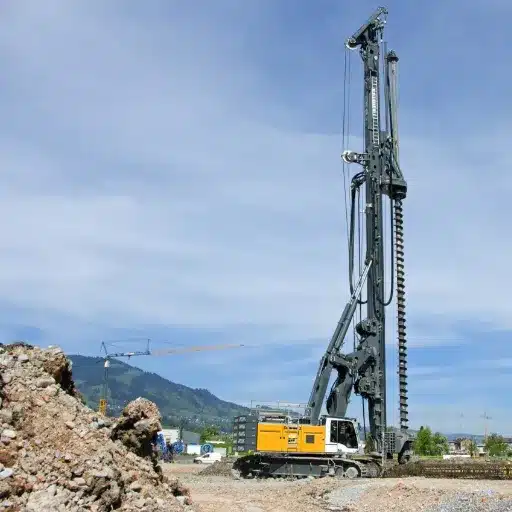
A Continuous Flight Auger (CFA) drill rig is a novel piece of machinery made up of several closely connected components that enable it to perform drilling operations accurately and efficiently. The main components are:
Drilling Mast
The mast’s primary function is to carry loads and at the same time serve as the path for the auger during the drilling process. Its design ensures alignment and stability even under the toughest ground circumstances.
Continuous Flight Auger (CFA)
The auger itself has a helical screw shape that allows the drilling and removal of soil concurrently with the possibility of the concrete being placed through its hollow core.
Rotary Drive
The mentioned drive is the unit that is the direct cause of the movement and turning of the auger into the soil. The torque intensity has to be high enough to handle situations where the soil is dense or where it varies.
Hydraulic System
The hydraulic system is responsible for various operational functions, including the rotation of the auger, its vertical advancement, and retraction, ensuring that all movements are very accurate and flexible at the same time.
Concrete Pumping Mechanism
The built-in pump will pump the concrete through the hollow auger stem, allowing the controlled and continuous material placement for the pile formation.
Control Cabin
The cabin, equipped with an advanced instrument panel, offers the possibility for operators to control and watch over drilling activities. Real-time data about torque, depth, pressure, and other parameters are shown there, creating a hard-to-break bond with engineering standards.
Undercarriage and Tracks
The undercarriage with its strong tracks guarantees the drill rig’s mobility and stability ensuring it can travel over a wide range of terrains as well as keeping the balance during operation.
Cutting-edge technologies such as GPS tracking, and automated monitoring systems are used by modern CFA drill rigs to improve precision, safety, and efficiency in project construction. Every single component is carefully designed to add to the rig’s overall performance and to meet all regulatory and environmental standards.
The CFA Pile Installation Process
The process of installation of the CFA (Continuous Flight Auger) pile is highly efficient and accurate, and it is one of the best processes in the construction industry when carrying out the foundation work. The process is operated by advancing the hollow-stem auger of the CFA drilling rig into the ground to the required depth. This drilling process is carried out continuously; thus, soil displacement and vibration are minimized; this advantageous feature is very useful especially in urban or sensitive environments.
- Drilling Phase: The hollow-stem auger advances into the ground to the required depth continuously, minimizing soil displacement and vibration.
- Concrete Pumping: Upon reaching the required depth, concrete is pumped through the hollow stem above the auger, which is settlement-coupling the entire time the rotation has been stopped.
- Monitoring: Automated systems monitor parameters like drilling depth, concrete volume, and pressure to ensure everything is done right and the structure is sound.
- Reinforcement: After the pouring of concrete, builders put a reinforcement cage into the freshly poured pile either by hand or with a device specially designed for the task.
Every step of the process is continuously watched and then recorded for the sake of keeping the work within the limits of the engineering norms and the construction project set forth in the specifications, and that means the foundation of the structure will be both safe and reliable at the same time.
Advantages of Using Continuous Flight Auger in Foundation Projects
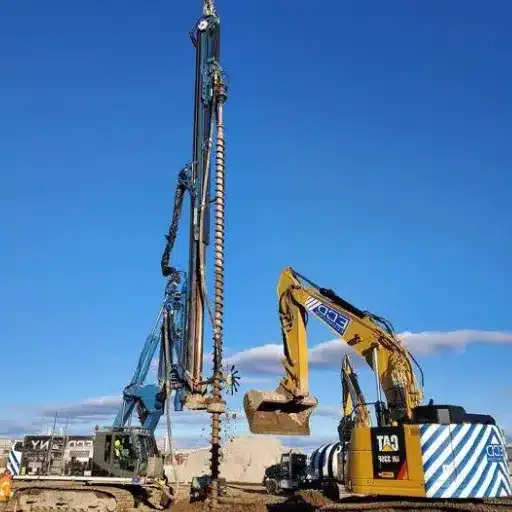
Reduced Vibration and Noise During Installation
The use of Continuous Flight Auger (CFA) piles shall bring vibration and noise levels way down upon their installation compared to the other various foundation method; the driven piles. CFA technique gives the reduction of the vibration and noise produced by installing the piles because it is similar to an extraction of cores and not hammering or any impact forces which in a way require more power and cause more disturbance in the surroundings. The reduction of the vibration and noise makes the CFA piles perfectly fit for the construction on the urban streets or any other heavily populated places where very little noise and vibration around the construction site is a major issue for the residents. Not only is this advantage used as a tool for the future of sustainability, but it also plays a role as a way of getting closer to the public by the noise and vibration produced by construction that is being limited most of the time due to the usage of CFA method that results in people from the outside not being the holders of noisy benefits from construction. The technology used in CFA construction not only saves space but it also plays a great part in using less power which is another important environmental advantage on top of the noise and vibration issue.
Versatility in Various Soil Conditions
Continuous Flight Auger (CFA) piles have the unique advantage of being adaptable in various soil conditions, hence being a dependable solution in many different geological sites. The fact that they could go through heavy soils, sandy soils, gravel, and even somewhat softer rock formations consistently means that their load capacity is not reduced. This adaptability is due to the continuous drilling and grouting operation that is securing the hole in the loose or the unstable soil. Also, by the use of the sophisticated equipment such as torque and pressure monitoring systems, it is possible to make installation adjustments in real-time. With these improvements, not only are the piles’ performance optimized and made more reliable but they are also made to the set geotechnical design standards to ensure the CFA piles’ performance even in the toughest environment.
Large Diameter CFA Piles for Increased Load Capacity
A growing number of modern construction projects are resorting to the use of CFA (Continuous Flight Auger) piles with large diameters due to their improved load-carrying ability and ability to fit a variety of soil types. Such piles are the best choice when the construction project requires deep foundations to be placed in tough conditions since they quickly move the main loads down to a more secure layer. With the aid of increased diameters, it is possible to create stronger and larger loads that can be accommodated by high-rise buildings, industrial facilities, and infrastructure projects like bridges and retaining walls.
Improvements in precision drilling and automated monitoring systems have made the installation of large diameter CFA (Continuous Flight Auger) piles easier. As a matter of fact, the machine-guided drilling also implies a process less depended on the worker’s usual real-time operation instructions. The primary concern of alignment is still being taken care of and only with this point we would have continuous efforts in placement, and the newly developed technologies would just be useful. A very close monitoring is absolutely necessary when the process of construction is being interrupted in many ways, here in slow monitoring and low efficiency. This is, of course, a good thing, in terms of the reliability one would gain and obviously the overall performance. The use of large diameter CFA piles with the new technologies has made significant progress and decreased the time to be able only to a small fraction of that which was required previously for the same job. The requirements for continuity of supply and scheduling are more easily met by surely the most thickly populated (if still distant from its ultimate goal) area of construction–the building site itself. At the same time, it may be said that the purchaser of the building will have many other benefits that outweigh the small loss of parking space adjacent to the building.
Applications of Continuous Flight Auger in Deep Foundation Engineering
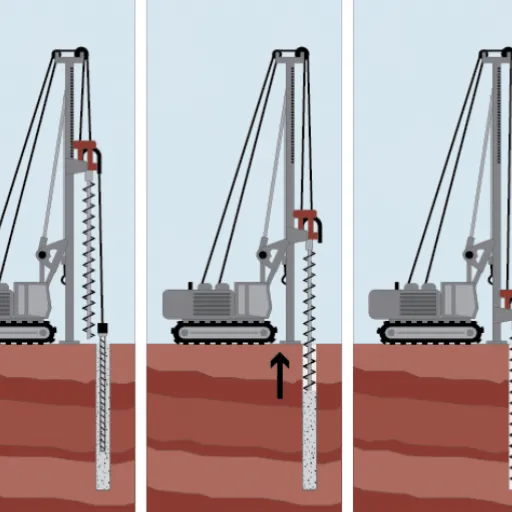
CFA Use for Bored Piles
With the growing popularity of Continuous Flight Auger (CFA) technology in the bored pile construction, its precise and effective deep-foundation applications are more and more desired. CFA devices drive piles into the soil in one continuous step which eases the installation and avoids soil disturbance, reducing vibrations to a minimum, that are essential in urban areas or environments with great sensitivity. This technique also provides support for the borehole throughout with the auger and thus reducing the danger of collapse in more or less loose and granular soils.
The are also monitoring systems in So this perfectly of modern analytical tests and continuous data transfer in the range, auger penetration, torque, and soil. The great benefit of this controlled technique is a faultless setup with the subsequent strong points of the foundation: pile intact preservation and homogeneity of the area’s load-bearing capacity. Moreover, CFA piles are suited to different soil types such as clays of the softest of the softest category and surfaces of the densest of the densest category hence making the approach highly adaptable to a variety of geotechnical conditions.
The use of such a combination of earth, the other dust performers that are in existence as well as the high-frequency observation of data, CFA technology, one would say, is but for the more traditional bored pile construction. This invaluable tool allows engineers the opportunity to come up with effective, economical, durable, and high-performance foundations, thus they meet the demands of the complex infrastructure projects.
The Implementation of Successful CFA Technologies
In the construction sector, the usage of Continuous Flight Auger (CFA) piles has shown to be very successful in the infrastructure of a lot of different kinds of projects, from tall buildings to big transportation systems. For example, in the cities where there are severe restrictions on noise and vibration, the contractors prefer CFA piles as a method to control shock and at the same time to introduce the foundation effectively. The use of CFA piles is also specified in metro station building due to the necessity of being accurate and not disturbing the neighboring structures too much.
CFA type of shallow foundation is also referred to as a bored cast-in-situ pile. The concrete being poured directly into the drilling hole makes the foundation particularly suitable for lightweight and medium-sized structures. While the load of the building is being transmitted directly from the structure to a more favorable soil layer bypassing weak soil layers, the base of the concrete pile serves well as a buffer for lateral friction/earthquake loads. There are no vibrations produced during the casting of the concrete in the drilling hole because no hammer is used, etc. This method hence results in a virtually no-noise foundation construction regardless of the urban noise restrictions.
Comparing CFA with Other Deep Foundation Methods
The continuous flight auger (CFA) piles are a kind of piling used where the soil as molted and is made up of absolutely mud made ups and the piles are enclosed with the help of the flight, and afterward the pile is pulled out from the ground and is then loaded with concrete. It is the only method in which the additional reinforcement is done before concreting which is in the piles up to… the actual…applies. Pouring continuously through the casing…. the bottom up to the design level for the individual pile. Also, it is used when soil improvement is to be made before building construction.
Risks we are avoiding or removing are (1) damage to near or adjacent structures, (2) vibrations that could prevent the operation of equipment in neighboring buildings, and (3) sudden and total collapse of the building. This is a technique extensively used in Europe, and its use is increasing in the US.
In comparison to bored piles, the CFA method is designed with a continuous auger that makes the casing unnecessary in soft grounds, therefore, the borehole stability is still maintained despite the project being in a difficult area. Moreover, CFA setting up is monitored by the implementation of high-tech systems which provide real-time pile data (depth, torque, and grout pressure) and hence, the accuracy and quality of works are higher compared to the traditional bored pile systems. But as for the CFA, they could be length-limited when compared to bored piles which could be pushed even deeper if needed through the hard strata.
Micropiles, on the other hand, are more appropriate for smaller load demands and for working under limited space conditions. Though CFA piles are hands down the best choice when it comes to bigger projects for their load-bearing capacity and cost-effectiveness, micropiles might still excellently meet the demands of very small areas or very difficult load transfer problems.
The engineers will be able to find the most suitable foundation solution for their project and thus guarantee high-quality performance and the most economical cost by evaluating critically the site-specific circumstances, design needs, and environmental issues.
Innovations and Advancements in CFA Technology
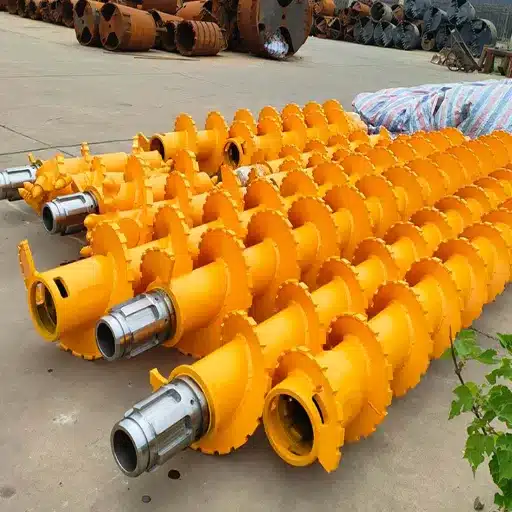
3D Animation of CFA Drilling Techniques
The adoption of CFA drilling method with 3D animation gives a spectacular and precise view of the drilling process. The high-quality animations that are only possible with the latest technology enable engineers and project stakeholders to have an idea the entire operation starting from the auger punching through to the concrete pouring and pile reinforcement. Also, by feeding the right geotechnical data and the specific site conditions, the animations are able to mimic the soil stratigraphy intricacies and show the CFA system reacting to different ground conditions. Thus, the technology not just boosts training to the operators by presenting the correct procedural workflows but also greatly enhances the pre-construction planning and communication, making sure that all project stages are in accordance with the technical requirements. Moreover, such tools also help in getting a better idea of the stress distribution, load transfer mechanisms, and pile integrity which means that they play the role of the all-important and ultimate decider in terms of making and carrying out the project.
Recent Developments in CFA Equipment
Digital technology with CFA has made huge progress in modern times, mainly thanks to the integration of digital systems and innovative designs for equipment. Today, CFA rigs are equipped with complex monitoring and control systems that can instantly deliver data about the drilling rate, torque, crowd force, and the flow of concrete. These systems make drilling more precise and make the project meet the technical requirements. Therefore, the risk of errors happening during the construction process is lower. Apart from that motor efficiency and the improvement in the design of the auger can contribute to the performance of the rigs in soils that are considered almost impossible to work and at the same time enable the installation of piles deeper and with high precision. The use of components that are friendly to the environment, such as low-emission engines, and systems that make less noise, has also been a significant contributor to the greening of general construction site operations. These technological advances help to bring about a more efficient operation that will not only last long but also keep a check on the need for maintenance among other things while promoting sustainability in both economics and the environment in the industrial sector as seen in the modern construction practices.
Future Trends in CFA Applications
The future of Continuous Flight Auger (CFA) applications is the use of the improved machine and communication digitization. One of the driving factors is the utilization of artificial intelligence (AI) and machine learning (ML) technologies to support predictive maintenance, optimize drilling parameters, and provide real-time decision-making. This will lead to more accurate piling and less risk because of challenges peculiar to the site.
A further critical advancement in the same field is the broader adoption of highly precise data analytics in combination with the geotechnical modelling. This combination of tools is what allows the engineers to create and implement plans with an unprecedented level of precision by considering the factors such as soil conditions, load requirements, and environmental restraints. Moreover, the automated monitoring systems along with the IoT (Internet of Things) sensors are getting closely connected in the CFA rigs, so that the performance is continuously followed up and the data is collected without any operational interruptions.
Moreover, the area of sustainability is also still considered critical as a whole, and at the moment, the studies are on the lookout for other building materials, especially, for grout and concrete mixes. The use of the grout and concrete mixes has a very big share of the carbon footprint during the piling activity of CFA, but recent innovations in this area are almost ready to reduce the CFA carbon footprints to a big extent. The innovations that minimize the use of energy at the drilling stage through different means such as electric or hybrid-powered rigs, are proving to be environmentally conscious solutions, which are indeed an environmental need nowadays. The growing trend in these innovative solutions is making the drilling rigs more and more environment-friendly. In the end, these progressions suggest that the primary nature of CFA applications lays in its improvement in coping with the prevailing requisites of the current construction industry, and thus, assuring efficiency, accuracy, and sustainability attributes in the complex projects are to remain the key benefits.
Challenges and Considerations in CFA Projects
Identifying Soil Conditions for Optimal Performance
In the soil case of CFA (Continuous Flight Auger) applications, a complete geotechnical analysis is always the mainstay of any project that is to be successful. The geotechnical analysis that consists of soil type, moisture content, and density is crucial as it has a direct impact on drilling efficiency, load-bearing capacity, and structural stability. A good example of this is the need for different torque and pressure applications, as is the case between clayey and sandy or gravelly soil. Nonetheless, the SPT or CPT are very helpful in identifying the major problems like the non-uniformity in the layers of the soil or the existence of groundwater when they are carried out first and on a timely basis.
Moreover, I consider the attitude of the land during drilling. The reason for this is very soft or loose soils might cause the situation of over-excavation or even collapse, while, on the other hand, hard, compact materials may be significantly increasing the wear and tear of the machinery. The way I try to eliminate these hazards is by installing monitoring systems that work in real-time so as to always bring drilling parameters to the forefront and let me adjust the methods on the fly. Precise maintenance of soil logs and their proper synchronization with the project specs is among the ways whereby the deviations from normal conditions can be taken care of very quickly.
In the end, finding out and accommodating the peculiarities of the soil conditions greatly helps me in achieving drilling precision and in minimizing ecological disturbance caused by drilling. The above tells us that it is the informed stance, along with the latest developments in geotechnical engineering and data analysis, which results in the optimization of CFA performance throughout various construction projects.
Environmental Concerns in the Installation Phase
I take a full-blown approach that is a blend of the newest technology and sustainable practices to make things right with the environment during the installation process. The major process was soil analysis and project planning which was important in the preservation of the normal underground water and the surrounding ecosystems. The use of highly qualified monitoring equipment made it possible for me to make real-time adjustments during the Continuous Flight Auger (CFA) installation, thus causing less material displacement and at the same time avoiding inadvertent contamination or destabilizing of soil strata. Having in mind the impeccable patience and precision as the key to achieving the structural integrity and keeping the ecological balance as well the lot.
Moreover, efforts are taken by me to reduce noise and vibration during the process of installation. Today’s CFA (Continuous Flight Auger) rigs are the kind of drilling machines that come with the provision of noise-attenuating technologies and they work with the combination of lower vibration mechanisms, which is the most critical part especially in densely populated or eco-sensitive regions. I have also deployed processes which help in tracking the fluids and cuttings so that these are not causing any harm and are being disposed of at sites while taking a good care of the environmental laws governing this action. This is supported by waste manifesting systems together with enclosed tank systems which in turn are backed up by good management practices for the waste. Hence, no way will the groundwater or habitat near the drilling site get affected by contaminants as long as these measures are followed.
In the end, I am still dedicated to making the installation processes carbon-free. The way of doing it is by putting in energy-efficient machines and using materials that are locally or regionally produced and sustainably made. Regular emissions monitoring and strict environmental regulations adherence are the means by which my projects are always in line with the best practices of the sector and the ecological requirements of the local area. The two working together nicely is my way of saying that I am very committed to making the construction process efficient and, at the same time, being a steward of the environment.
Cost Factors and Project Planning for CFA Projects
In the process of planning CFA projects I put my emphasis on cost factors that influence the overall budget and the completion time tremendously. Among the very many factors that could lead to the increasing cost of the project, the type of the soil and its condition in the place of the work are primary. The Soil test, therefore, is a very important step, that lets you make a choice accordingly of drilling technique, grout mix proportions, and reinforcement schemes which directly affect costs. Moreover, the issues like site accessibility and the problems with logistics, including the material hauling and equipment setting up, are also a cause for the project to spend more money.
I consider the variables which are connected with the depth and diameter of the CFA piles and that are required for the purpose of supporting structural loads efficiently. The bigger piles that are also of a deeper nature require not only more material but also a special type of machinery in addition to a greater time of production, all of which lead to greater differences in the costs involved. The optimization of costs is done while still keeping the structure strong and conforming to the regulations because I make sure of the exhaustive geotechnical assessments and the engineering calculations at the start-up stage of designing.
Beyond immediate cost considerations, effective planning incorporates resource allocation and scheduling. By employing sophisticated project management tools and methods, I make sure that activities proceed in a well-arranged and resource-efficient way, identifying delays and waste production as the main targets. Besides, I am preparing myself by always monitoring movement of raw material prices such as cement and steel in the market, as it can greatly affect project costs if they are going up. To sum up, I am incorporating these insights into planning which is the reason for me being proactive in mitigating and avoiding financial risks of CFA projects.
Reference Sources
- Assessment of the Theoretical Methods to Estimate the Tension Load Capacity of CFA Piles – A study on the behavior and load capacity of CFA piles in various conditions.
- Geotechnical Engineering Circular No. 8: Design and Construction of Continuous Flight Auger (CFA) Piles – A comprehensive guide on the design, construction, and applications of CFA piles in the U.S. market.
- Acceptance Procedures for Structural Foundations of Transportation Structures – Discusses the use of CFA piles in transportation infrastructure, including design and application details.
Frequently Asked Questions (FAQs)
What is the impact of displacement on the drill rig operation with continuous flight auger piles installation?
Torque and Penetration are two of the most significant parameters that the continued displacement of the piles during the installation of the continuous flight auger cause to change and upset the whole operating situation, so the operator must be constantly keeping an eye on the rotation and hydraulic pressures. Extrusion force can be increased by the excessive penetration which occurs when the auger is sucked back; therefore, to maintain the pile’s integrity, the rotation and extraction rate should be appropriately adjusted. The power of the rig pump and hydraulic system must provide a stable flow throughout the process in order to rotate and pull out the whole stem, while still keeping the borehole open by injecting the concrete and preventing the collapse of soil. The principal repellent such as soils with high density or obstruction conditions might contribute to the amplification of the vibration and the effect on the bearing capacity, hence the need for vibration damping and controlled rotation to be put to the highest priority. For the operational efficiency and for being a good neighbor, the proper parameters like the maximum depth and diameter must be chosen rightly so that they are close to the least problem and best money-saving.
What is the superiority that continuous flight auger piles have over bored piles?
The empty space that is created while the continuous flight auger pile displacement progress is helping reduce the dirt that needs to be taken away by the auger and other machines, therefore, it is practically a cleaner job than some of the existing bored piles. This new method of working is really quiet and not to mention that there is less vibration, which means it is of the highest interest in the building of high-rise flats and wall foundations where noises have to be kept at the lowest. Besides being able to take drag load directly (in effect the out-of-bounds man being allowed to hit the line-backer hard instead of taking the beating in the face-off), which gives a higher capacity for compression that often negates the low tension capacity, a continuous lag is also used to improve the axial ductility of the pile section. But most importantly the stress relieving of steel reinforcings is accomplished all around as opposed to being concentrated in one area, which eliminates crack formation that can easily lead to a part-of-pile break down. Additionally, it would be a wise choice to utilize the in-place soil pile, and not starting from scratch, when trying to remedy an unsatisfactory field condition.
Can the large-size and deep-seated foundation requirements be the ones that are handled by the CFA (Continuous Flight Auger) piles on the flights always running in the spiral?
Yes, by changing the flight dimensions, the pilings will be scaled, but in an in-place manner, the new pilot, the auger, and the drill rig will all be selected for larger flights and, therefore, increased torque and extraction force. Additionally, in lower locations, the continuous column shall be a column of concrete in the most literal sense, achievable only when the extraction rate and pump pressure are rigorously controlled. In the end, it may be clear, after the project is over, that the pile has to be more than one intact one, and so fresh concrete stiffened by the insertion of reinforcement cages or temporary casings may be the way to go. To reach the maximum depth and at the same time keep the pile in perfect condition, the operators’ skills and the monitoring of the parameters have to be taken into account and to ensure the safe penetration to the ground max both at once. But when the ground is unfriendly, the engineering professionals may also blend the method with secant and other unknown methods to meet the project’s requirements.
How does continuous flight auger piles’ displacement influence reinforcement cage installation?
Inserting reinforcement cages in a proper way and at the right time for continuous flight auger piles is very important because in the freshly injected concrete the cage must be put before it sets, to make sure the bonding and the proper placement can be done. In the CFA drilling, concrete is pushed by the extruder through the hollow stem thereby reinforcement is in general lowered simultaneously or immediately after concrete has been in place to reinforce the cast-in-place pile. The flip side of the coin is that the pressure and turning of pump and the hollow stem should be synchronized so that the borehole is stable and there is no risk of the cage displacement due to the excessive rotating or extraction force. The diameter and length of the cage should be carefully matched to the construction parameters growing pile and strengths of the anticipated forces so as to have the best chance of the foundation accommodating the force and the ground to respond well. The mode of the setting also contributes to the lessening of the requirement for temporary casings and reducing the soil’s disturbance as a result
Could you, please, clarify what are the functions of concrete pumping and grout in the case of continuous flight auger piles displacement?
Concrete is put through the hollow stem or pumped into the borehole when the auger is being pulled out, thus creating an auger cast pile that is in continuous contact with the surrounding soils and thus the spoil excavation is minimized. Grout is sometimes applied for soil improvement or to close gaps between the different elements, and it may also be used to enhance the pile-to-soil interaction and thus the bearing capacity. It is crucial that the pump and the hydraulic equipment are sufficient to produce a steady flow of concrete that matches the extraction rate, prevents voids and segregation in the concrete column. The injection parameters such as pump pressure and flow will have an effect on the pile’s integrity and penetration behavior, particularly in the case of cohesionless soils where grouting can restrict the displacement and leak the pile. The correct coupling of the pumping, rotating, and extracting will result in accurate and optimal pile construction.
How do ground conditions and displacement affect pile integrity in continuous flight auger piles?
The implementation of the construction project may have taken a catastrophic turn or provide a benefit if the site was chosen meticulously and the plan followed closely. Certain variables such as land quality, air conditions, and the highest threat to water pollution by means of hazardous substances should always be kept in mind when selecting the site of a construction project. Soft or loose soils favor the use of the hollow stem and continuous concrete injection to cut down on the excavation disturbance and make a steady borehole, while stiffer layers may demand a higher torque and force to pull out the auger. The control parameters including rotation speed, torque, and rate of extraction will tell the operators if there is a chance of the pile quality being compromised or whether either temporary casings or secant pile techniques are required. One of the quality control measures taken is to carry out pile integrity testing and making sure max depth and diameter tolerances are not exceeded as it guarantees that the piles are built according to the design specification. By selecting the right drilling methods and strengthening strategies at the very beginning, the piles will be joined in a way that supports the required structural load and overall performance for many years to come.
What operational aspects should be taken into consideration to minimize displacement while installing a continuous-flight auger pile incessantly?
For operators to limit the unwanted movements to a minimum, they have to be aware of several processes such as rotation and extraction rate. Also, they have to use the right flight configuration and be very careful not to suddenly change the pump flow during concrete injection which might result in soil heave or voids as the auger is withdrawn. Moreover, the choice of the drill rig and the lifespan of the hydraulic system are the two main contributors to the prevention of unexpected changes leading to an increase in activity or vibration. It is possible to prevent such changes by the use of temporary casings or pile construction adjustments which commonly include such simple methods as the use of a grout injection to accommodate and connect different soil types or to protect the structures and adjacent walls. But it is the regular inspections with the focus on reinforcement cages, concrete quality and pile integrity tests that will give the best assurance that the pile installation was in full compliance with design parameters for bearing capacity and accuracy. The only way to get the best reduced noise quality output and strong power is by proper training along with the coordinated actions of the rig operator, the pump operator, and the site engineer.