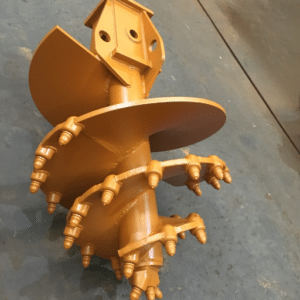
Augers are tools that have been acknowledged as very important tools to spread from the construction to the agricultural industry. Not only that, they are still utilized in mining and manufacturing among others. These devices are multifunctional and are primarily used for drilling, boring, or material transport. They are playing one of the most important roles in the field of very precise and very efficient operations. This paper, on the other hand, takes an in-depth look at augers, their basic principles of design, and the technological progress that has led to a broader range of industrial processes where their usage is possible. Lastly, the audience is going to be given an in-depth view of the crux of the matter, i.e., the relationship of the augers with the industries, the array of their applications and, on the other hand the driving force of their progress, i.e., the technical progress.
Understanding Augers: A Comprehensive Guide

What is an Auger?
Augers are spiral-shaped tools or instruments conceived mostly for the boring, fragmentation, and shifting of materials by way of a rotating mechanism. It features a twisted blade known as flighting that is screwed into the central shaft. This structure allows for the ease of the compound like soil, and even granular matter to be pushed through the auger length while it is being revolved. In agriculture and extraction as well as in fabrication plants and storage, the use of augers is so extensive, where they demand a variety of tasks like shifting materials, mixing, and pumping. The flexibility of the augers is notably promoted by such design features as choosing the diameter, pitch, and the material of the flighting. They, thus, adapt to the specific needs of each place of work and the intensity of the operations taken.
Types of Augers and Their Functions
Earth Augers
Earth Augers are commonly utilized to drill into soil or soft ground primarily. Their applications are widespread in the fields of agriculture, landscaping, and construction where they are needed for the purpose of digging post holes, planting trees, or soil sampling. The present-day earth augers have improvements in the flighting and torque areas allowing them to work in different terrains that are either dense or uneven.
Ice Augers
Being made for the purpose of the cutting of the ice these ice augers are tools that should not be missed in the activities such as ice fishing. These augers are generally included metal with different lengths that have been fabricated and are operated by man power, gas, or electric motors. Being compact the power unit is easy to carry around and the stored energy is not influenced by sudden heating.
Grain Augers
Grain augers are a common sight in the agri-food sector where they used to transfer dry grains into storage or silos. They usually include handling systems that are very smooth to avoid any loss of the grains through damage and they are also supplied with inclines that are changeable to suit the various installations that are there or the operational setups.
Industrial Augers
Industrial augers are technology used in industries, such as mining and construction, that are engineered to handle heavy-duty tasks like rock drilling, material extraction, or concrete mixing. The strong construction and the increased robustness make them ideally suited for operations with performance requirements in demanding or abrasive environments.
Screw Conveyors
Screw conveyors are a specific kind of auger meant to be there constantly for material moving purposes. They are largely employed in manufacturing and food processing. These systems are customized to balance the rates of flow required, the type of material used, and the cleanliness (hygiene) level, all this ensuring that the operation is both productive and contamination-free.
Key Insight: In this way, each category of auger receives its own optimization as accomplished variously via the main factors of design, material composition, and operational capabilities while both industry-specific requirements are met and the efficiency and reliability are kept.
Common Auger Sizes and Their Uses
There are some effects of the sizes of the auger in order to define the application’s fields and performance efficiency, and sizes of common auger are considered with the diameter of the auger and length of the shaft, as well as the pitch of the flights.
Augers with smaller sizes, which are usually about 2 to 6 inches in diameter, are more often seen in the laboratory or in the industries with high demands in the handling of materials very precisely such as the pharmaceutical industry and the chemical industry. In fact, these sizes’ problem is that the flow control is over-fine and the material to be retained is very little. Nevertheless, these features are the key essence for tasks requiring very high levels of precision.
In between large and small sizes, there are medium-sized augers with diameters ranging from 6 to 12 inches, and they are multi-purpose and can be used in a wide range of fields including agriculture, food production, and the handling of bulk materials. They are of great importance in the moderate quantities of grain, flour, or granular fertilizers transportation sector, effectively balancing the capacity and the portability requirements.
Augers larger than 12 inches in diameter are required for the big factories to run smoothly. That makes them designed for the quick and continuous movement of materials such as minerals, cement, and biomass in the fields of mining, construction, and power generation. Among the most common features of these unit operations are their heavy-duty and wear-resistant materials that enable them to cope with the severe mechanical stress of the materials that they are dealing with.
Important: The main advantage of understanding the concepts of auger size, material of the kind being transported, and the operational needs is that industries can manage to have more output with less downtime and less wear on their plants. Auger selection that is done accurately based on the question of size will not only have a favorable effect on the flow rate, but will also determine the extent of the damage that may be caused to the materials and will influence the amount of power that is used up.
Auger Drilling Techniques and Methods
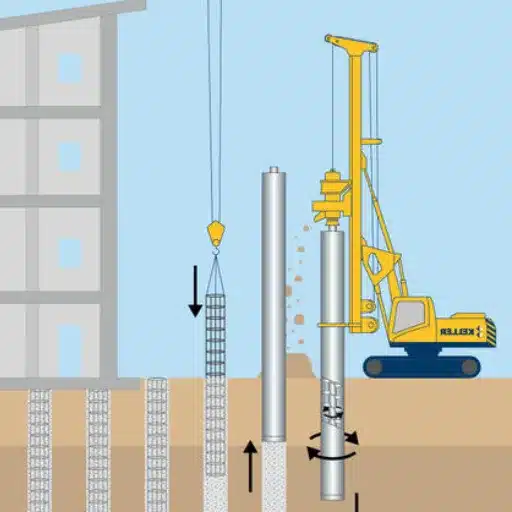
Auger Drilling Process in a Nutshell
Auger drilling is a precise and effective method used mainly for sampling, geotechnical analysis, and shallow drilling. The technique utilizes an auger, which is a helical screw blade that rotates to cut soil or sediment and move the cuttings to the surface. Augers are usually continuous flight or bucket ones, and each type is engineered for and works best in its own range of soil conditions and depths. The continuous flight type is most effective when the material is loose and has not been compressed because in that case there will be a good and even sample recovery process, whereas, the bucket type is recommended for stiff soils and clays due to the robustness of the construction.
Over time auger drilling has undergone a series of changes that have brought about a revolution in the way it is used. Major elements like the drilling speed control systems as well as monitoring of these variables and overall process through data have been evolving along with which the drilling equipment has improved on safety issues. Drilling rigs in general seem to be at the center of the whole breakthrough by their innovations as they have managed the comprehensive nature of the new processes. In the end, one can see that the entire system of drilling through the earth has been put through major changes thus affecting all operations and the methods of achieving optimum safeness in the whole process are fully dominating the new situation. Naturally, consumers of the technology have to be part of the game by influencing over the operator for the tools that are capable of giving us safe working sites with minimum environmental footprints. Auguring has taken a new place in the industrial scene among the instruments that are unchangeable as the auger doesn’t pretend to deliver partially correct information for project due to inaccuracy of soils data still availabe. These and other issues like groundwater pollution issues gradually solved with auger Sample profiling became less and less a daunting task on the side of the environment and engineers working on suitable soils could also benefit. When the drilling machines are running at their optimum speed and the augers apply the right amount of thrust, the equipment life and efficiency will be at their best and there will be no need to invest in prematurely worn-out equipment. Auger drilling, with or without the use of safety, has become the ultimate tool in disciplines that need to make exact site surveys and mineral searching, among others.
Auger Drilling: Principles and Applications
The principle of operation of auger drilling is straightforward still very efficient as it is powered by the rotation of a helical blade screw, or auger, that performs a cutting action to the soil or softer rock. Auger blades are designed to take the cut soil to the surface and thereby stopping the soil or material of the surface from piling up around the drill rig; this way, operational efficiency is maintained as well. The whole drilling operation starts with the choice of the auger size that best fits the drilling depth required of the particular material. The rotation of the drill rig and the pressure are applied with a very well-controlled calibration in order to get the even speed required for the soil, minimizing the pen-stock wear and maintaining the sample quality as well.
Modern auger systems are built with cutting-edge technology. The hydraulic drives are the major component to increase the torques control and the real-time monitoring of drilling parameters to do the same job vice versa. As in, further restructuring to the practice, one huge advantage of auger build by wear-resistant materials is the longer period of service, even if the surroundings are not so friendly. The application of relatively new but very effective methods coupled with an additional increase in the use of bucket auger drilling machinery caused the breakthrough. This should be stipulated: in this way, auger drilling could be the preferred technique for soil investigations, environmental sampling, and even preliminary mineral exploration since it could be very precise and repeatable, demonstratin.
Bucket Auger Drilling: Advantages and Applications
The very specialized bucket auger drilling is extensively used in the geotechnical and environmental fields. The technology is all the more effective and dependable especially in soft to medium-hard soils, with a lot of published evidence. The power of the bucket auger to drill the holes with a large diameter but with very little disturbance to the substrate around is key to its use in projects that need soil samples to be left undisturbed or infrastructure like utility poles or caissons to be installed.
Also, the development of the bucket auger has been improved by the design, made it a more material efficient process along with a good measure of operational accuracy improvement. The bond of modern bucket auger bits can have either spiral teeth or cutting shalt teeth, thus achieving a perfect blend of all three functions – cutting, wear protection and power. Additionally, bucket augers are also designed to be mounted and used on various rigs, making drilling feasible even in the most confined or difficult areas. It is important to realize that the drilling method that utilizes a bucket auger is outstanding as it enables an operator to drill to a great depth with a small deviation, hence making it a great tool for the foundation, land, and environmental cleanup projects. This facility is also seen during the set-up process of modern drilling operations where every screw-motor connection is done carefully to avoid vibration.
Applications of Augers in Various Industries
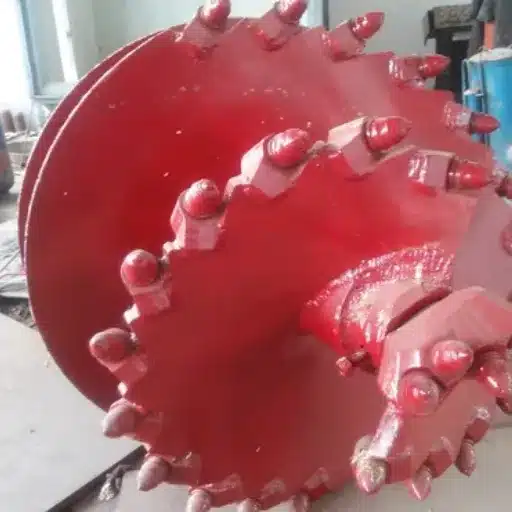
Using Augers in Construction and Landscaping
Augers are a significant part of the construction and landscaping services used by the highly efficient soil and material changing tools they are. In the construction field, these tools are greatly used for making drills for the construction of buildings and other structures such as fences, decks, and electric poles. Their capacity to drill in different types of soil like the hard, soft, and mixtures makes them a very adaptable choice for many different sites. Moreover, the drilling machines that are the ones with the auger as the main part are the same ones used in anchoring, soil stabilization, where both precision and depth consistency of the drill hole are the significant considerations.
Augers are also very useful in forestry, as they speed up the tree and shrub planting process, installation of the irrigation system, and construction of the water drainage system. and this is an ongoing problem due to the use of manual workforce that is not only slow but also prone to errors. The tools apart from these not only are they able to add to the productivity but also are able to work with minimum soil injuries hence conserving the ecological balance of the place. It is not a problem for professionals to complete the projects in rocky terrains or soil which is very hard due to the helical and carbide cutting edges and earth augers powered by the technology that has been reached up to the present time. The auger devices that are very much innovative and versatile have thus an important role in the new technology and landscape construction.
Heavy-Duty Augers for Industrial Application
Augers designed for heavy-duty tasks have been developed to withstand the harsh conditions of the industrial sector, such as foundation drilling, utility line pole setting, and mining work. They are made of premium grade steel alloys and have a reinforced flighting design, which makes them tough and resistant to wear in the most severe environments. The latest heavy-duty augers are usually equipped with sophisticated torque monitoring and hydraulic drive motor and gearbox with a high loading capacity to enhance the task and thus precision even in the most difficult situations. Moreover, the advent of the changeable wear parts such as tungsten-carbide cutting edges and heads for the pilot drill increases the machine’s life period and cuts the maintenance downtime to the minimum. These new abilities provide the importance of heavy-duty augers in future industries including ground drilling among their features of being both trustworthy and high efficient.
Sampling with Augers: Techniques and Best Practices
Choosing an auger type is straightforward, but first one must be certain of the material type and its behavior. IBC ‘& (e.g., eps;although) ductile, filled (e.g., lacks hard fragments), and soft cohesion, on the other hand, indicate cohesive soil. Bucket augers, which are heavy and do not rotate, are the best in this scenario. Helical augers work perfectly in the case of sand or similar materials. It is true that in loose or granular ground the stability of these equipments may be affected but there would be no need for more than ten minutes of penetration instead of 15. When handling such a piece of equipment, the operator should be careful and precise so as not to break the upper part of the auger or push the soil in the bucket thereby decreasing the total bucket volume spiked with water and partly full. ‘It is important that the backfill of the drilled hole is done at the same time as the sample removal, so that the material is not disturbed and the reason for the contamination is recognized with no risk of reporting a misleading cause-to-effect/ vice versa finding. On the other hand, the lack of backfill does not necessarily mean that the face area with a closed bottom is left open;% it is a tiny fraction of a single soil block% located at or on the surface% and checked for purity in the laboratory at a later time.
Best Practices for Auger Sampling
- Depth measuring is among the main aspects that have to be taken into account while still on the field, and for such a thing, depth indicators or graduated rods are used to guarantee precision.
- Professionals need to apply systematic sampling methods like undergoing the incremental sampling every n number of meters done purposely to get a complete and detail profile of the site.
- The issue of material handling in the sample process has to be the next subject in the careful management list to avoid mishandling the samples that are prone to moisture loss or compaction.
- The environmental variables, which are inclusive of soil moisture, temperature, and stratification, must be well-documented to further improve the analysis accuracy.
- Following of safety protocols, e.g. equipment stability and usage of protective clothing, is a must. This is not the time to take operators’ safety and collected data reliability for granted.
The application of these above-stated measures guarantees that the use of augers for sampling is an effective and scientifically reliable method.
Choosing the Right Auger for Your Needs
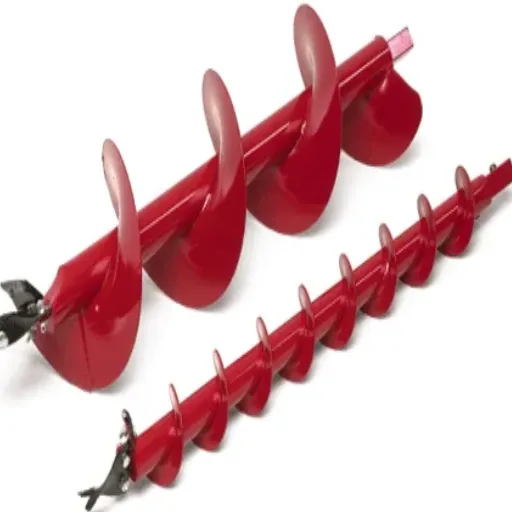
Various Auger Varieties with their Approvals
Hand Augers
Hand augers are manually operated instruments that are traditionally used for the measurement of the soil and the collection of soil samples especially in shallow soils of about the depth of 10 meters. It is easy to handle and transport due to the fact that it is strong and light and is suitable for use in a variety of contexts, but industrial sites and pits. There are 3 types of blades available, namely, spiral, Edelman, and sand types, and this blade variety makes them ideal for such materials ranging from clay to sandy soils. As far as cost is concerned, the hand augers are the cheapest but being manual they are not at all suitable for heavy-duty or hard soils.
Motorized Augers
Motorized augers are connected to a motor for more straightforward and intensified penetration through the soil, and sometimes the soil depth reached is 20 meters or more. They are commonly employed in geological studies, construction planning, and advanced agricultural projects. Their elevated torque output simplifies their operation with solid soil profiles, which may include hard clay layers or rocks. Normally, a motorized auger comes with different bits for the user to decide what application to use; on the other hand, the machine needs to be operated correctly and maintained properly to prevent a decrease in its life span.
Bucket Augers
Bucket augers are the unique tools for sticking and heavy soils like clay. A bucket auger collects the intact soil sample with its cylindrical and bucket-like design and therefore is an essential instrument for geotechnical surveys and sediment context researches. However, when it comes to loose and granular soils, bucket augers are less efficient as they have a poor sample retention capacity.
Hollow-Stem Augers
Hollow-stem augers are innovative instruments which are extensively applied in the fields of environmental engineering and hydrogeology. The hollow design makes it possible to take samples and install monitoring devices, as piezometers and well casings, at the same time. Their durable nature enables them to work in different soil conditions while also keeping the borehole stable. The hollow-stem augers also find great use in the groundwater studies, but since their systems are very sophisticated and expensive, they need very professional hands and a lot of money to operate them.
Flight Augers
Flight augers are spiral-shaped blades or flights which remove the soil very effectively while the drilling is going on. These are best suited for soils that are of soft to moderately hard category where there is a continuous boring-like process involved. Even though the flight augers only embody superior cutting and high-speed features, the soil may not cooperate well at every stage and accordingly, the users’ may have some issues, especially when it is too rocky or too hard.
Auger Selection Considerations
Choosing the right auger depends on the soil type, depth of drilling, purpose of taking samples, and the size of the operation amongst other factors. Small projects get a hand auger which is the lightest and the most portable option available, but when motors and hollow-stems are used for auger drilling, no one can deny that the latter has it all for the job with a faster and larger portion covered. Compatibility with the local conditions would be a factor further pushing the ease of the work and validity of the data.
Power Sources for Augers: Electric vs. Manual
The choice of power source for the augers is very much determined by the readiness of the project, where it is, and the project’s other constraints. Using physical strength-controlled manual augers is quite common in the case of small projects with power source limitations and hard-to-access areas. They are cheaper, portable and most suitable for digging up to a certain depth in loose soil types.
On the other hand, electric augers are the best solution for those who need to work in some kind of mixed arrangement or who have limited time for work. Banish the burden of manual labor by using electric augers, and you can dig in hard soil or get deeper much faster. Such tools are usually driven by electricity or a battery and thus the operator needs to be well aware of the power as well. The most important factor, that being the ability to handle extreme conditions and the diligence of the work, will be the least issue for those who choose an electric auger, whereas site-specific requirements will play a dominant role regarding the use of manual ones.
It is best to choose the manual ones when it comes to being portable and having fewer costs to maintain, as it might be hard to connect the electric one. While, on the other hand, by using an electric one, the project shall be done faster and in a more consistent way. Bringing all of the sides of the case to the judge’s table will clearly indicate the best tool to be chosen for a project, and this in turn will help in a much better final outcome for all runs.
Impact of Auger Diameter on Soil Density and Power of Auger
The diameter of an auger is a major factor when it comes to efficiency and use for specific areas. The diameter of the auger is directly related to the region of the ground that the auger will/uniformly get or the volume of the material that can be removed per rotation, thus affecting the efficiency prominently. Augers with large diameters are the best options for the applications that require a big amount of material to be excavated fast, for example, when drilling wells for infrastructure or during the exploration activities in the loose soil. In contrast, small diameter augers suit well the precision tasks, e.g. collection of very fine-grained samples of soil from the ground for laboratory analysis, or creating holes in the compacted ground.
The auger size not only has to fit the logic and the functions but also needs to match the power capacity of the motor ultimately selected. A demonstration, in case there is a motor that is too small to be matched with a large-diameter auger, it might result in a power inefficiency or motor damage, while a too small diameter would mean a waste of time in terms of the tasks. Auger diameter can be chosen by professional engineers combining site needs, material properties, and motor compatibility, for the best job performance and the longest life of the tool, both for performance and durability.
Maintenance and Care for Augers
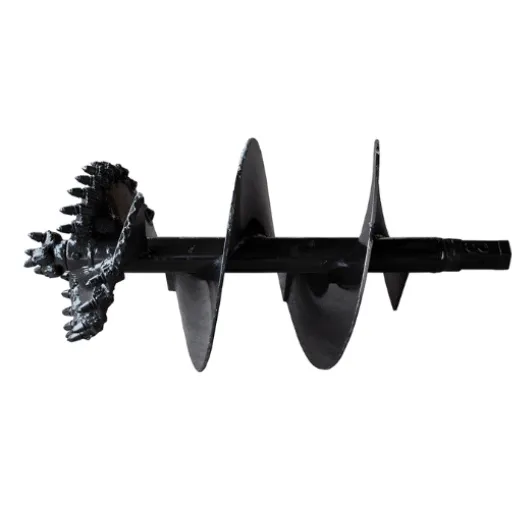
Guidelines on How to Maintain an Auger
Proper maintenance of an auger is vital to lengthen its life, guarantee its performance, and cut downtime in operations to a minimum. One of the first things to do is to always check the auger for any signs of tear or damage both before and after each use. Pay attention to things like cracks, bent flighting, and loose bolts because these problems will escalate if not attended to. The best practice is to always lubricate the moving parts- a critical part of the whole process. Most likely, such parts are bearings and drive mechanisms, with the right grease all the time to lower the friction and prevent the premature wear.
Essential Maintenance Steps
- Inspection: Check for cracks, bent flighting, and loose bolts before and after each use
- Lubrication: Apply appropriate grease to bearings and drive mechanisms regularly
- Cleaning: Remove material residues after every operation to prevent blockages or corrosion
- Blade Maintenance: Sharpen blades or tips regularly to maintain cutting efficiency
- Protective Coating: Apply coatings to flighting when handling corrosive or abrasive materials
- Storage: Store in a dry, sheltered place to prevent rust and deterioration
Besides, washing the auger thoroughly after every operation is very crucial, because it helps to remove the materials residues that can cause blockages or corrosion with time. Especially for the case of the augers carrying the corrosive or abrasive materials, it is highly recommended to have protective coatings on the flighting to minimize the damage. Also, have regular checkups of the power source, be it from an engine or a motor, to make sure it is compatible with the auger and that the system does not go through any strain unnecessarily.
Maintenance is important in order to maintain high cutting efficiency on earth augers. By sharpening the blades or tips on a regular basis, the efficiency of the auger will be kept at a high level. Also, it is important to store the tool in a dry, sheltered place where no moisture can come in contact with it and cause rust and deterioration. Maintaining the earth auger in this way will not only bring about good operational performance but also protect the customer’s investment in key equipment.
Common Issues and Troubleshooting
Whenever I need a solution for the earth auger under-performance problem, I find out that the first to look for is the reduced drilling efficiency. In my point of view, a large number of times, this situation happens due to the fact that the blades or the tips got blunt and they have not been sharpened as needed. If the auger cannot grip through the soil or its work is not uniform, the wise thing to do is to check the condition of the blade edges so that you just make sure that they are not worn and damaged. Usually, grinding or replacing tips that have gone dull is the option to take to get rid of the problem and to recover the best functioning. Moreover, the residue accumulation is another factor that might make the cutter work with less energy. This can be the case where soil gets hard or there is trash, etc., building up on the blade. do-dong the blades in and out of the work should help prevent this issue.
Common Problems & Solutions
⚠️ Reduced Drilling Efficiency
Cause: Blunt blades or tips, residue accumulation
Solution: Sharpen or replace cutting edges, clean accumulated material
⚠️ Engine Problems
Cause: Soiled fuel lines, blocked air filters, contaminated fuel
Solution: Use proper fuel mixture, clean filters regularly, inspect fuel system
⚠️ Drive Shaft Issues
Cause: Misalignments, wear on connections
Solution: Inspect drive shaft and connections regularly for proper alignment
⚠️ Overheating
Cause: Inadequate lubrication, prolonged use without breaks
Solution: Apply manufacturer-approved lubricant regularly, allow cooling periods
Furthermore, it has been my observation that engine-related problems, especially with motorized augers, are the main cause of frequent operational issues. Engine starting problems or loss of power that varies a lot can frequently be due to fuel-related issues like soiled fuel lines, blocked air filters, or the use of fuel that has aged or become contaminated. It is very important to have the fuel mixture, if any, be the one stated by the producer and the filters to be clean and free from any blockages. Moreover, to the augers that get their power from external sources, it is essential to carry out an inspection of the drive shaft and the connections for any misalignments or signs of wear which might lead to the snapping of the driven components or the unit just failing.
The final concern associated with the prolonged use of an earth auger is that it can overheat and thus it can lose the two perspectives of the safety and the efficiency at the same time. This happens mainly because of the wrong lubricant application or the long use of the tool without interruptions. My advice is to look over the shaft and apply a lubricant that is approved by the maker of the grain drill frequently. By following these standard procedures and fixing these ordinary problems quickly your post-hole digger equipment will have a longer life-cycle and also have less down time due to unexpected problems. By doing the maintenance and diagnostic checks properly, you take the main obligations of a professional or user of an earth auger.
When to Replace Your Auger
The decision of replacing your auger is a key consideration in equipment maintenance. No matter how hard you try, over time, the machine will get less efficient and safe because of the wear and tear. I strongly recommend from my own experience and as it is also the current practice in the industry that one should keep an eye closely on his / her auger’s condition, if they want to avoid an unexpected and severe degradation. The fact that the edges of the auger are no longer sharp and have cracks or chips speaks by itself that only sharpening will not bring the same back, and hence, a new one will have to be bought. Moreover, any type of structural damage, i.e. cracking on the length of the flighting or even shaft deformation, may render the auger useless in terms of both efficiency and safety, and the only wise choice would be to go for a bright new one.
⚡ Signs It’s Time to Replace
- Severely worn, cracked, or chipped cutting edges beyond repair
- Structural damage such as cracking in flighting or shaft deformation
- Excessive vibration during operation
- Significant decline in penetration speed
- Motor overloading or equipment misalignment issues
- Repair costs exceeding replacement costs
The next performance appraisal is very important during the operation. Factors such as the equipment having too much vibration, getting slow, or experiencing a decline in penetration speed can be warnings that the machine has gone beyond its useful life. Major issues like motor overloading and equipment misalignment indications are on the same footing as the latter and may need full machine replacement instead of mere repairs. Always remember that a wore out auger, if used still, is not only a productivity killer but also a hazard in case of costly damages on the powerhead and/or gearbox.
It is important to evaluate when to replace your auger by looking at various trade-offs such as effectiveness, operational precision and risk. I recommend using the manufacturer’s guidelines frequently and looking at the price of a new one over costs of frequent repairs. To choose to replace an old auger as it turns into a problem is saving time off the job and ensuring performance to the peak condition.
Reference Sources
- Auger Conveyors – Oklahoma State University Extension – Explains the use of auger conveyors in handling grain and feed, particularly in agricultural settings.
- Coring in CRM and Archaeology: A Reminder – University of Washington – Discusses the role of augers in sampling and their impact on substrates.
- Chapter 14 – Trenchless Construction – Iowa State University – Highlights the use of augers in trenchless construction and excavation processes.
- Design and Construction of Continuous Flight Auger Piles – University of Memphis – Provides insights into the design and construction of continuous flight auger piles in engineering.
Frequently Asked Questions (FAQs)
❓ How do you describe the power auger and its drilling method in hole drilling?
The power auger operates in the same way as a manual hand auger but it uses electric or fuel motor a supply of obvious energy. Because of this, the machine is less exerting compared to the manual hand tool. The working principle is the same. The rotational movement of the screw in the power auger cuts and moves the dirt or soil from the hole, making a perfect cylinder as the final product. To a certain degree, it also brings the mixed dirt around the hole to the surface. The drill bit is the last part to break off into the hole, and it acts as the cutter to finally remove the soil. The mixed soil is collected in the spiral flute of the drill bit, and the straight shank assures there is only a small disturbance of the gouged-out dirt following the drill as it cuts.
❓ What auger sizes in inches are commonly used for boring a borehole?
Common auger sizes range from small hand augers having a few inches’ diameters up to large holes used for fence post or tree planting applications. For geotechnical or environmental drilling, hollow stem auger drilling often utilizes standardized diameters that are used to take soil samples and set up monitoring wells. The choice of the right auger is depending on the soil conditions, the depth of drilling that is required, and if there is need for a drill bit or a bucket auger. The auger drilling utilizes several types of augers—such as helical auger, bucket auger, or earth augers—to match the operation. The larger diameter augers are made for working in tough conditions and are the key to move materials up and down through the system with an efficient flighting.
❓ How do bucket auger drilling and cutters and their usefulness differ from other auger types?
Bucket auger drilling is a technique that employs a bucket-shaped cutting head for the excavation of greater volumes of materials, hence the areas where this method is utilized include sample taking, sediment removal, and formation of humongous holes. On the other hand, unlike helical screws or auger bits that offer the material from the hole continuously using them otherwise, bucket augers stop the loads separately and then remove them, a situation in which the technique is applied effectively is when total integrity of the soil is needed or the mixing is reduced. Augers as well as their uses are very different and this has been illustrated by garden augers for planting, ice augers for ice fishing, grain augers for agricultural materials moving, and earth augers for work in the field of geotechnical science. The shape of the flights and the type of cutting edges have a huge impact on the efficiency of the drill, hence the augers are built to withstand the wear and tear that comes with the use of abrasive soils or rocks. If the right bucket or helical auger is chosen, it can lead to an increase in penetration and the preservation of sample integrity for laboratory testing.
❓ What are the applications of earth augers and drilling a sampling auger string in the environmental drilling industry?
Ecology professionals need to know a variety of things about borehole drilling and environmental drilling machines. They must tackle variegated working conditions, subsoil characteristics, drilling equipment peculiarities, etc. All these should be modified by constant and careful operations in accordance with the company’s policies, methodologies, and conditions to avoid expenditure and to achieve the best results. One of the most significant types of machines used in geotechnical work is the drilling machine, usually consisting of a number of different bits, cutting heads, etc. If the operation machine is used properly and the maintenance is performed well, then the machine will last long and will not need costly repairs.
❓ How do the manual auger, garden auger, and the earth auger relate to the hole-making work and what are the chief principles of such utilization?
Hand auger and garden augers are tools intended to be used in the soil manually or with a small power source for the purposes of making holes for planting, fence post installation, or small-scale landscaping tasks. Garden augers typically come with smaller diameters and simplified cutting edges that are very much adapted for soft soil drilling and also for fast hole digging of bulbs or plants. Working with augers mechanically by a power auger augments the speed and efficiency, and reduces the physical effort to a great extent, but at the same time; operators needs to take the torque limitations into consideration and also the augers could possibly get stuck in root-filled or rocky grounds. There are different auger designs for different purposes, and selecting the right auger type means no extra wear and tear and clean cutting in ice, soil, or other materials. In the process of auger selection, the matter of soil conditions, hole depth, and whether or not an auger bit or bucket attachment for material removal will be needed should be taken into consideration.
❓ Why are geotechnical and construction augers used, and what are the signs of wear that should be watched for?
Augers can be seen to be fundamental equipment in geotechnical and construction projects. This is because they are able to make the drilling of holes for foundations, sampling, pile installation and installation of utilities more efficient and precise. In more demanding applications, their operation and application include but are not limited to the following: drilling of deep boreholes for piles, holes in foundations of large diameter, or soil core extraction for testing. Show wear of the auger machine can be in the form of the blunt edges, excessive vibrations, reduced penetration rate, and the damaged flighting are all signs of the machine wear which can all lead to the loss of efficiency and Quality of the hole Altered. A combination of inspection and replacement of the auger bits and cutting elements checking the auger string and the resulting maintenance thus extends the performance life of the auger in rock or abrasive soils. The correct match of the auger, drill method, soil type, and power source assure a long-lasting and even productive service over hole to hole consistent resultsaggota
❓ How do varied auger types and auger uses relate to ice augers, grain augers, and heavy-duty operations?
Different auger types are each designed for a special task: with an ice auger’s specialized cutting patterns, and short and helical flights, for instance, cutting through ice for ice fishing, grain augers are also long, smooth-flight augers constructed to transport materials in the most efficient way and heavy-duty augers have their reinforced cutting edges and cutting edges for hard ground and rock. The augers are used for drilling applications that range from drilling holes through ice, to digging holes for fence post installation or boring geotechnical holes deep underground; and every application necessitates a different auger design and auger power rating. There are no two ways about it, matching the right torque delivery, proper drill bit geometry and the choice of the right auger size and diameter in line with the task, will ultimately bring about the desired efficiency and precision. Augers benefit a lot by speeding up the progress in many tasks through the mechanical transport of material to the surface and lessening the need for manual labor. The quality and quantity of work done is significant to the lifespan of the augers and to the maintenance of the drilling performance at a high level whatever the different applications may be.