The CFA method is the most popular method for drilling foundation in recent times and it is one of the most efficient and precise methods to build deep foundations. It is also very versatile. The drilling technique has been praised for making the construction site and its activities almost invisible in the environment but at the same time allowing the highest level of structural integrity to be achieved. I am going to talk about the CFA technology high-level and go deep into its definition, mechanism, and use in the geotechnical engineering field. No matter your age or if you do not know anything about this already, reading this article is the best way to acquire the basic knowledge of how CFA drilling is revolutionizing the whole project landscape. Just follow us through the infos till we get to the root of this great solution and how it contributed significantly to the adoption of good construction practices.
What is a Continuous Flight Auger (CFA)?
What is a CFA and why is it so popular?
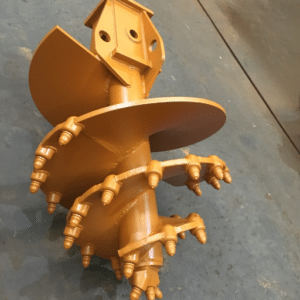
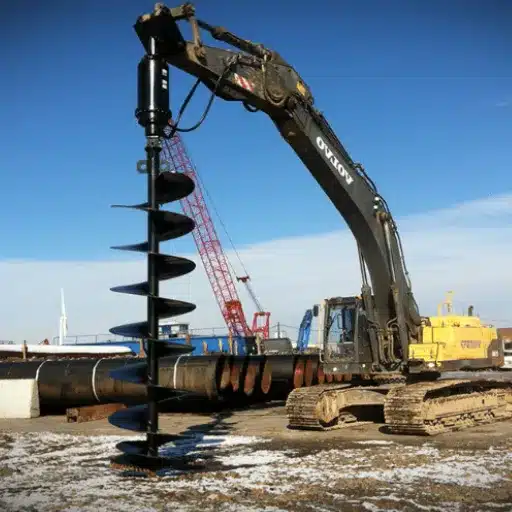
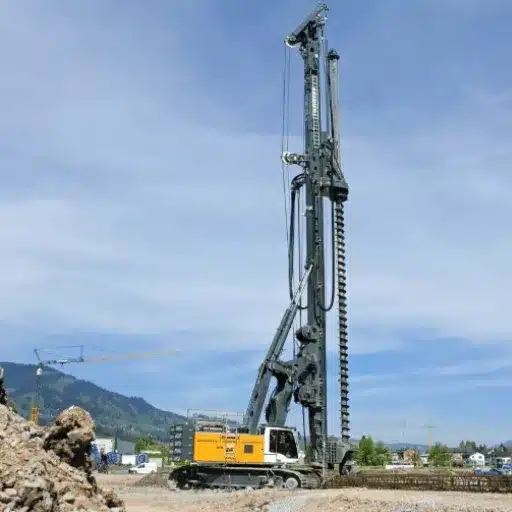
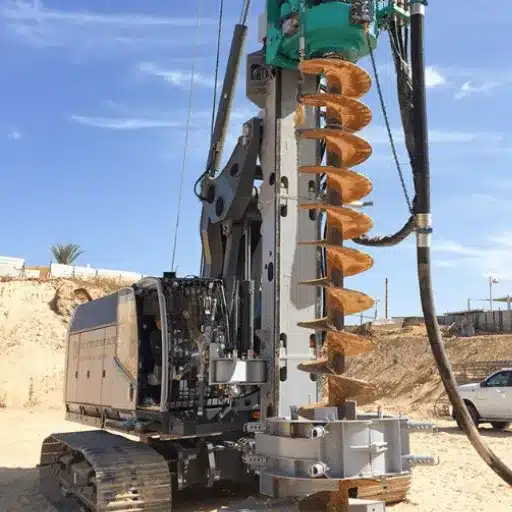
A continuous flight auger, commonly known as CFA, is one of the excavation methods that are extensively used in the construction industry for such purposes as deep foundation creation. Especially in soil conditions that have to be disturbed as little as possible and have to be in possession of a highly reliable load-bearing capacity, the application of CFA technology becomes significant. The tool used is a drill that has a helical screw head, thus, it removes soil at the same time as it is penetrating the ground. The spiral screw nature of the auger assists in maintaining the stability of the borehole; because the drilled material is taken away simultaneously while drilling.
When the desired depth is achieved, concrete is pumped down into the hollow stem of the auger and under high pressure while it is being retracted at the same time. Procedures that are going to be the most efficient and safe have to be completed in demanding circumstances, particularly in mining operations like construction. This type of concrete placement system is quite similar to deep foundation operations. A foundation could be enhanced remarkably with the introduction of such products or services as steel fiber additives to the concrete mix that forms the column.
CFA drilling is very much in demand because of its precision, productivity, and flexibility over various soil types which is why it is the first choice for projects with almost no environmental consequences, low noise levels, and accelerated schedules. The pointing out of its applications as a very effective way to highlight its importance in contemporary construction methodologies is another interesting point that can be brought up.
Continuous Flight Auger Systems Components
The components that make up Continuous Flight Auger (CFA) systems are many and they all play a very important part in drilling that is accurate and very productive. The most basic part is the continuous flight auger, which is, in fact, a spiral-shaped drill used to cut through the soil without disturbing the ground that is formed by the wall. Frequently the material used for its construction is high-strength steel to make it able to endure the torque and the ground conditions of the drill site that may vary and still do the job.
Drilling rig is one more cornerstone that is there to provide all of the required torque and force in order to make the auger slither down the ground with accuracy and at verticallity at the same time. Modern rigs usually come with different high-tech monitoring systems that are more than capable enough to trace various parameters of the drilling process such as drilling depth, torque, and the rate of rotation—so the drilling is done in an optimal manner.
Moreover, the grouting system is such an essential aspect in the whole process of CFA operations that without it, the whole system might not be efficient at all. Pump with a high pressure is there to push the concrete or the grout through the hollow stem of the auger as it is coming out. The pump is also there to provide continuous support along the borehole and make a strong, smooth foundation. This way, the system has the advantage of totally eliminating the possibility of having voids and, at the same time, making a pile with increased structural strength.
The functioning of CFA systems relies on supporting equipment like control panels, hydraulic systems, and load monitoring tools that provide the drilling and grouting process with precision through their accurate adjustments. In this way, they go from being less efficient and versatile to a highly efficient and adaptable system capable of handling complicated constructions in a very precise and reliable manner.
Types of Drilling Machines Used in CFA
Different types of drill machines are used in CFA piling operations depending on the site conditions and construction requirements and each of them is designed to address certain aspects. The most common among them are rotary drilling rigs, continuous flight auger rigs, and hybrid multifunction rigs.
Rotary Drilling Rigs
Rotary Drilling Rigs use a high-powered rotary head to push the auger into the ground to make a hole. They have a very advanced depth monitoring system and a high-tech torque capacity built in and they are therefore used for deep foundations and in places where the soil is compact. Their solid structure prevents wobbling and assures precision in moments of drilling.
CFA Rigs
CFA Rigs were made not only for drilling but also for pumping concrete, a necessity in urban areas where space is limited. Additionally, during the drilling and pumping process, the extraction of soil and the injection of grout go hand in hand with the help of the CFA Rigs. The rigs of today rely heavily on computers, this means that the drilling process is closely monitored, and this contributes to better quality control in construction.
Hybrid Multifunction Rigs
Hybrid Multifunction Rigs unite the powers of various drilling machine technologies in a sole and unique system, giving the needed flexibility to work in different and varied ground conditions. These equipments are specially good for those projects where different drilling techniques are needed, like for example when you want to switch from CFA to displacement piles.
Along with the technological advances, the introduction of other technological systems, like the use of GPS systems for the accuracy of the machine and the automated protective measures, also, the performance and the flexibility of the CFA piling projects that it is used in, are all increased and complemented by the Hybrid Multifunction Rigs. The choice of each machine type is done according to the conditions of the project to help secure the best productivity, safety, and structural reliability.
Advantages of Continuous Flight Auger Drilling
Efficiency in Foundation Construction
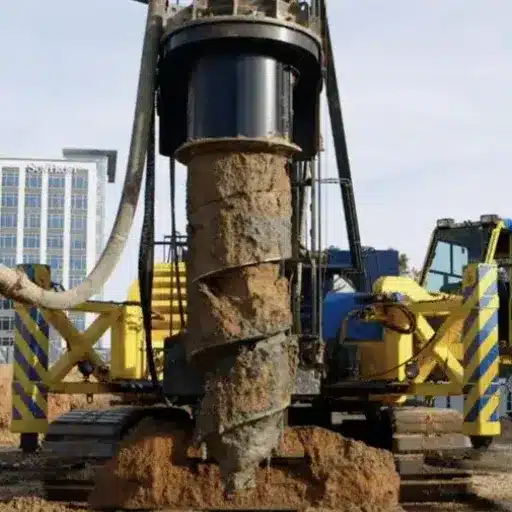
It is a fact that Foundation Construction has reached incomparable efficiency with the advent of Continuous Flight Auger (CFA) drilling. It is by no means to be found in any other method in construction practices as it combines drilling and concrete pouring in a single, uninterrupted process. The technique even reduces the time of the traditional method by several steps and consequently projects run very fast without the need of lateral quality loss. The simultaneous drilling and grouting process minimizes the risk of soil collapse, ensuring structural stability even in challenging ground conditions. Modern CFA rigs, equipped with advanced monitoring systems, allow operators to analyze real-time data, such as torque, depth, and concrete volume, ensuring optimal performance and adherence to design specifications. Furthermore, the elimination of casing requirements in many instances streamlines operations and reduces material costs, making CFA drilling not only efficient but also a cost-effective solution for a wide range of geotechnical applications.
Minimized Vibration and Noise Levels
The reduced noise and vibration effects of Continuous Flight Auger (CFA) drilling are clearly beneficial, especially in urban and ecologically fragile places. Unlike the conventional drilling methods, CFA drilling rigs produce very limited vibration energies, which results in less possibility of causing damage to the structural integrity of buildings close by and also to the underground utilities. In addition, the noise level is comparatively low since to achieve the same the machines are not to be used violently or with hammer blows. These characteristics make the CFA drilling mainly serve the regions with high-population densities and the one where the local and environmental noise restrictions are strictest at the same time the operational efficiencies are kept. Noise and vibration reductions are also related to the surrounding communities and on-site personnel’ working conditions and, thus, lead to less vulnerable and more pleasant working areas. CFA drilling practices have been the guidelines of the eco-friendly and sustainable construction practices through these improvements.
Versatility in Various Soil Conditions
CFA (Contiguous Flight Auger) drilling is truly a versatile method that has the ability to adapt to almost every kind of soil conditions, whether it is loose sands and gravels or cohesive clays and silty terrain. The main reason behind its versatility is that the auger can do the work of both excavating and supporting the borehole at the same time with the help of the surrounding soils, thus decreasing the danger of falling in the case of less stable places. The method helps a great deal in working with lands of small bearing capacity since the concrete, which needs to be stored in-situ, no longer requires casing or other additional stability measures. Moreover, the forthcoming upswing in the design of auger-like tools, say high torque machines and tough-wearing materials, is giving a bullish stance that the performance of the components will be appreciably unaffected by the becoming the hotspot for this type of soil drilling, even the highly abrasive or most compact toughest substrata. This adaptability is the very source of the versatility of the technique, and thus it remains one of the best for the projects where the requirements are for precision, stability, and fast working and not to mention the ones where the geological conditions become complex. It is a challenge to encounter these typical problems but the method persists as the most reliable and most straightforward solution through its presence in the construction field.
CFA Method for Pile Installation
Procedure of CFA Pile Installation
The system of installing Continuous Flight Auger (CFA) piles is a predetermined one in order to achieve precision and reliability even under changing geotechnical conditions. It’s quite noteworthy that the very first stage is the alignment of the CFA rig and its positioning at the prearranged pile location according to the construction plan. The helical auger (one with a single spiral) and the carrier Kelley bar move together; the cuttings are thus brought up to the ground level whenever the flights for a while remain beneath the surface.
As soon as the specified depth is reached, concrete is poured out into the system. The process, also called tremie concreting, begins with the auger being slowly taken out, thus the concrete continuously fills the bore that results in no soil collapse. At the same time, monitoring systems are measuring auger rotation speed, penetration rate, and concrete pressure to guarantee that the design specifications are met.
Finally, a reinforcement cage is installed into the freshly placed concrete before it cures, typically using either manual or hydraulic insertion to attain the required depth. This reinforcement adds up to the structural load-carrying capacity of the pile, so that it fulfills the load-bearing requirements. Developments in monitoring and automation technologies have not only helped in the optimization of every stage of the process but also have made CFA pile installation more efficient and reliable which is a basic requirement in modern construction.
Comparing with other pile installation techniques
Compared with driven piles and bored piles, pilings with continuous flight augers (CFAs) have become very popular for three reasons: noise, vibration, and applicability to different soil types. In contrast to the other two types of piles, piles driven by driving machines are very noisy and make the ground shake, while CFA piles are quite the contrary, causing almost no disturbance, thus they are more suitable in urban or environmentally sensitive projects. The other big advantage of the CFA scheme is that it greatly reduces the possibility of the soil heaving or being displaced, which is a common worry with driven piles.
When compared to bored piles, CFA technology makes it possible to carry out the piles without the need for a temporary casing or without resorting to too much dewatering, thus making the operations simpler and less time-consuming. Additionally, CFA piles become quite efficient in the midst of heavily cluttered soil, as they give continuous reinforcement by interlocking the pile shaft with the soil that remains untouched in its natural structure. Augmentation avenues like the ability to collect real-time data for the torque, grout pressure, and pile depth monitoring have definitely worked towards making the CFA pile installation more accurate and revealing, thus demonstrating that the technology is far superior to traditional ones on a technical basis.
Although the driven and bored piles methods are still to be very useful for particular purposes, the CFA piles offer each time the most environmentally less disruptive and high-efficiency solutions in the projects where soil quality and noise are very sensitive. Geotechnical engineering, on the whole, is becoming more and more synonymous with the CFA method of piling and thus there is consistency across the sectors in applying the method.
Applications in Modern Construction Projects
CFA piles have gained a significant position in the construction of high-tech buildings and are widely used in public constructions. Like urban construction where the noise and vibration levels had to be taken into consideration, this is where these piles have a zero imprint on the surrounding, and they work best in such environments. Apart from that, the pile is the usual procedure in making projects like high-rise buildings a reality, and it also plays a major role in the construction of bridges, retaining walls, and industrial facilities where a massive load capacity is vital. The technique becomes very effective in the presence of difficult soil conditions such as soft clays and loose sands as it minimizes the risk of ground disturbance and ensures high structural integrity. The use of modern technologies allows better control over CFA pile installation, so-at the unmitigated pile length, and thereby, complying with strict regulatory requirements and delivering reliable results in different engineering applications. This mix of productivity, nature care, and at the same time, flexibility makes CFA piles, as an ultimate solution, one of the main actors in the modern geotechnical practices.
Continuous Flight Auger Technology

Innovations in the sphere of CFA drilling technology:
Recent innovations in the field of CFA drilling technology have been mainly due to exploiting advanced automation and real-time monitoring systems. It is an innovation that aims at improving the accuracy, productivity, and safety of the CFA piling job. Automation allows the drilling parameters like rotational speed, penetration rate, and grout flow to be controlled adaptively, hence the performance remains almost constant in the case of a variable soil condition. The engineers are well-informed by the digital sensors of the monitoring system, which help in identifying and rectifying problems in real-time. One of the main advantages of this system, among others, is that it minimizes the chances of error and hence, a structural failure, if any.
In addition to this, data acquisition systems that are able to store and analyze on-site geotechnical data have become an essential part of CFA machines. Proceses of transferring and using the data by different machines and the whole computers. Also, the introduction of predictive maintenance algorithms is keeping operation downtime at a minimum. They do this by uncovering equipment ineffectiveness before it leads to failure. All these new technologies together are revolutionizing CFA drilling prвctices by providing professional drillers with state-of-the-art tools that will help them successfully face complicated foundation projects.
Impact of Technology on Drilling Efficiency
Drilling technology has been taking advantage of real-time data, automation, and precision tools to become more efficient in modern days. The encounter of the sensor-based monitoring systems within the drilling process has been a big step forward. They are able to give precise information about torque, pressure, and drilling speed, among others. This capability allows operators to adjust their processes on the spot, thus performing fewer tasks and drilling more accurately. Furthermore, the use of machine learning models in the process offers predictive analytics, which in turn, results in the effective and early detection of the issues in the subsurface, and the changing of the methodologies in a preventive way. This helps in avoiding costly delays and making drilling quality consistent. Putting together the digital world with advanced machinery is, therefore, a revolutionary move in the commodities market where operations will become more efficient and thus a raise of the productivity as well as sustainability in the construction sector.
Future Trends in CFA Techniques
The world is currently witnessing a major transformation in the field of Continuous Flight Auger (CFA) since tech-savvy companies are on the way to more accurate, safer and more efficient operation by employing state-of-the-art technologies. One such significant development is the use of real-time data monitoring systems in the course of drilling. These systems use complex sensors and IoT connectivity to continuously report on parameters like torque, pressure, and soil conditions. This, in turn, enables the operators to know the status of the project instantly and make the appropriate adjustments.
The future holds many promises as the software will also enter the arena.egration of machine learning algorithms, along with the already mentioned data sources, and the application of predictive analysis will be used in order to anticipate potential issues such as soil collapses or equipment wear among other things, and consequently, reduce downtime, and provide improved operational reliability. Besides, sustainability is a matter of growing importance as indicated by the introduction of eco-friendly machinery and the use of green concrete mixtures to curb the growing popularity of global sustainability initiatives.
One of the most significant breakthroughs in CFA (Continuous Flight Auger) technology is the integration of automation and robots. The robots are being used in very large numbers with the AI system that controls them making it possible to have a much smaller construction crew. The combination of these two technologies can be expected to lead to the establishment of very efficient, highly flexible, and environmentally friendly CFA technology in the near future, which will lead to its acceptance by all soil engineers as a practice not only new but also more advanced.
Best Practices for CFA Drilling Projects

Site Preparation and Planning
Effective site preparation and comprehensive planning are two very essential factors from my professional view when it comes to the success of CFA (Continuous Flight Auger) drilling projects. As for the first step, it is all about the thorough site investigation which means to carry out geotechnical surveys and soil sampling in order to point out the subsurface conditions. Knowing the underground structure and the physical conditions of the site is very crucial as it helps in the process of retarding project risks. Furthermore, the piling configuration to be used must be precisely designed based on such conditions as soil type, water]./topic, age, and load-bearing capacities. In addition to rigorous planning and careful procedures, which are inherent in CFA drilling, the site must be a constraint-free environment when it comes to safety management, working conditions, monitoring, and among other factors.
Design phase is equally essential, where accurate modeling, and predictive analysis is essential. With the help of technologies such as 3D ground modeling and advanced simulation tools, the pile requirements and subsurface dynamics are aligned very precisely. Consequently, it results in the right choice of pile dimensions, depths, and reinforcement configurations and eliminates the problems of over-penetration or structural instability. Another step and just as crucial is the planning of the construction activities, and that includes setting aside ample time for a stringent technical review process and involving all stakeholders in case of any potential challenges regarding quality, materials, and logistics, e.g., site access and material delivery.
Besides the investigations and design processes, the establishment stage must see to it that the site is physically well-prepared for the operation. This encompasses the removal of any rubble, flattening the grounds, and making sure that the drilling rigs and the support equipment are up to the required standards. A beforehand execution list about the machine’s calibration, safety checks, and planning ahead for possible geotechnical alterations is a must-have. Why? The answer is as simple as the systematic approach with CFA prepared drilling sites being in a much better position to achieve the highest operational standards resulting in less downtime, lower resource consumption, and always successful pile installations.
Selecting the Appropriate Equipment and Machines
Accommodating the precise needs and the complexity of a CFA (Continuous Flight Auger) drilling project, proper selection of the right gear that matches the particular project requirements as well as subsurface conditions is necessary. CFA machines nowadays are made to be powerful, precise, and flexible which guarantees that they will slot into the conditions of the site effortlessly for example, the soil, the depth, and the load-bearing requirements. The important parameters to be looked at are torque capacity, kelly bar length, and auger flight diameter, which must all be carefully made to meet the needs of different geotechnical conditions. Advanced rigs that have monitoring systems that are automated and provide data in real time about the performance of drills make the operation operators to be able to change dynamically the operations and keep the pile installation operation consistent. Also, the use of top-quality auxiliary systems, such as spoil management, which is a machine that manages leftovers and concrete pumps, is another way through which operational efficiency can be increased and at the same time the environmental impact minimized. It is worth mentioning that failure of the machine when it is least expected could mean project failure, therefore, the putting of money in the cutting-edge project-specific machinery
Monitoring and Safety Protocols during Drilling
It is necessary to have proper monitoring and safety protocols in place to make sure drilling operations are not only effective but also free from any kind of threat. Modern monitoring systems are known to frequently rely on the use of real-time data collection equipment and sensors for monitoring drilling parameters and the fluctuations in pressure while also indicating the stress levels of equipment. These systems go through some of the critical parameters such as torque, penetration rate, and fluid flow units- which then give the operator the possibility to quickly act on any abnormality. The incorporation of predictive analytics will further prevent any risks of being escalated by identifying them as soon as possible.
In order to comply with the rules and regulations, safety measures must be adopted to include the must-use personal protective equipment (PPE), regular safety drills, and the clear definition of the emergency response plans. A hazard area should be cordoned off and automated shutdown should be placed in case the breaking of critical threshold occurs, these being necessary steps to control the risks. Next to this, environmentally conscious decisions, e.g. the handling of drilling fluids and air emissions reduction, need to be part of the safety protocols to secure environmentally friendly and compliant operations. A constant enforcement of training and the following of the set best practices is the reason behind a very strong safety and compliance oriented working environment.
Reference Sources
- Design And Construction Of Continuous Flight Auger Piles – FHWA – A comprehensive manual on the design and construction of CFA piles.
- Continuous Flight Auger Pile Bridge Foundation – University of Texas – Discusses CFA piles in the context of bridge foundations.
- Design And Construction Of Continuous Flight Auger Piles – ROSA P – Another detailed guide on CFA pile design and construction.
- Foundation Manual Chapter 6, Cast-in-Drilled-Hole Piles – Caltrans – Includes information on continuous flight augers and their use in foundation projects.
Frequently Asked Questions (FAQs)
❓ What is a continuous flight auger (CFA) drilling technique for foundation piles?
Drilling procedure uniting continuous flight augers and concrete as well as reinforcement piles (umbrella term) by use of a hollow shaft auger and providing a borehole with the structural units’ stability undivided is Continuous Flight Auger (CFA) drilling technique. In terms of auger rotation the operator can easily reach his desired depth and start pumping concrete if conditions are right (taking concrete with it) while the auger is making a slow withdrawal operation. This method results in the in-situ concrete piles, at the same time the auger operation does not bring about the need for spoil picking to the surface, therefore, there will be a potential reduction of excavation and material handling costs. After the holding of the reinforcement cages and/or reinforcement, they can be set in place giving a pile that is fully reinforced by the cast-in-place concrete core. The whole process offers a very reliable, fast and cost-saving method for deep foundation construction and is very popular in the construction sector.
❓ How does the cfa method maintain borehole integrity and allow concrete through the hollow stem?
Borehole stability is guaranteed by the use of the CFA method in which concrete is injected into the hole from the bottom as the hollow-bar auger remains in the ground. When the concrete is pumped, the auger is simultaneously pulled out with a steady rotation and the auger flights sweep up any loose material minimizing the possibility of turnouts or fluid leakage. It is possible to place reinforcement cages into the fresh concrete to yield in strength the pile and thus meet the structure’s design loads for bored piles or foundation piles. It is a single casting process which reduces the use of casing and minimizes the impact of vibration and disturbance to the structures that are nearby. The technology is efficient that it brings about a high-quality concrete pile construction with oxpeinsable, quiescent operation hence making construction projects that allow sustainability a wise choice.
❓ Why select continuous flight auger machine technology instead of regular bored piles?
If you opt for the continuous flight auger method, you gain a lot of drilling speed, probably the lowest air, and noise emissions. To compare the traditional bored piles, as well as the rotary drilling techniques, the CFA method is far superior in creating less dirt and noise. The construction cycle is both fast and efficient due to the fact that the concrete is continuously being pumped through the hollow stem while the auger is being withdrawn out of the ground, thus safeguarding the bore and enabling rapid construction cycles on a vast range of soils. Moreover, a continuous system solves the problem of spoil handling and the necessity for temporary casing, which can be favorable for environmentally friendly and sustainable projects. The system facilitates grouting and concreting where there is a need for it, thus providing higher load capacity with reinforced concrete having reinforcement cages. The main output is resulting in a faster, economic and more secure way to the piling system through cfa drilling technology method.
❓ Tell me the basic phases of the auger drilling method with continuous flight for the foundation purposes.
The process commences by setting the machine and boring into the ground using the helical auger at the set speed or drilling to the specified depth. When the depth is reached, the worker starts to deliver concrete through the stem as the auger is gradually pulled back, giving way for concrete to replace the soil and come up the pile. A while later, the insertion of reinforcement cages or other reinforcement into the newly poured concrete could be done to make the pile even more solid. The method is not only environment friendly but also saves a lot of time for the construction of high-rise buildings and other structures where the use of large amounts of concrete is necessary. This is the case when compared to traditional methods such as driven piles (precast piles, bored piles, or steel H piles). Finally, before the handover of the structure, the piles are checked and the concrete piles should have a satisfactory result according to the design specification of tensile, compressive, and durability performance.
❓ What practical benefits and project productivity improvements does CFA provide?
Several benefits of the CFA method are the rapid rate of installation, the higher quality of concrete placement, and decreasing the need for casing. This makes it a suitable and efficient solution to many structural works that are time-consuming. Little vibration, quiet operation, and less spoil handling are the outcomes of the CFA method used in areas that are an integral part of a city or with a high sensitivity level. The continuous pumping of concrete through the hollow stem results in a pile that is consistent and no void or other irregularities that would make the foundation of the pile not sound. The major benefit is the fact that the system is valid for different kinds of soil, different depths, and economy-wise. On top of that, it is possible to design the piles according to a specific structure requirement. The cfa method in general is a very costly but very precise method.
❓ Is the reinforcement inserted after the casting? How is the final quality of the reinforced concrete pile being ensured?
When the concrete from the hollow stem is poured and still soft enough to work with, the cages made of reinforcement are slowly introduced into the pile of freshly cast concrete until they reach the desired position. The correct timing for such insertion is very important, i.e. the pile is loosened with a drill for concreting keeping the concrete cover and preventing any movement or separation at the same time. The visual aspect is carried out by proper concrete pumping practices, checking of the depth and rotation data, and veryfing that grout or concrete is in the state with the necessary strength and uniformity. Regular training of operators, the complete range of appropriate equipment like the present-day boring machines and constant flight auger machines, as well as the verification through field testing, all contribute to the high-grade standard of the foundation piles made out of reinforced concrete. This follows a series of steps that begin with procedures, continue with supervision, and end with the use of correct devices, thus, a long-lasting and dependable structure is created.